Sungang Arts & Crafts City: Shenzhen's Wholesale Market Built for Display, Design and Export
Not a warehouse of identical cartons. Sungang is a dense cluster of showrooms where ceramic vases, decorative mirrors, art lighting, artificial flowers, seasonal gifts and collectible tea ware are merchandised by room — and where hotel projects, concept stores and export traders come to build a range rather than buy a single item. This guide covers what it sells, how it differs from Yiwu, how to work the buildings on a first visit, what to inspect, and where the money actually goes.
300,000 m²Trading area across Phases 1–3, per 2009 trade reporting
4Trade sections: home decor, craft gifts, collectibles, creative office
500,000 m²+Craft and gift cluster across the wider Sungang district, 2023 reporting
RMB 30bn+Annual trade reported for the district cluster in 2023
Editorial note: this is a factual introduction to a market and to buying practice. It does not represent any merchant, and it is not a quotation or a sales recommendation. Buildings, floors, tenants and opening hours change with urban renewal; confirm with your target merchant before traveling.
01 / MARKET OVERVIEW
First, What This Place Is — and What It Is Not
Sungang Arts & Crafts City (Sungang Gongyi Cheng) sits in the Sungang logistics zone of Luohu District, Shenzhen, along Bao'an North Road and Taoyuan Road. It is made up of several buildings across Phases 1, 2 and 3. The shortest way to understand it against Yiwu International Trade City: Yiwu is built on unlimited SKU breadth and selling by the carton; Sungang is built on display wholesale, interior-decoration packages and original design.
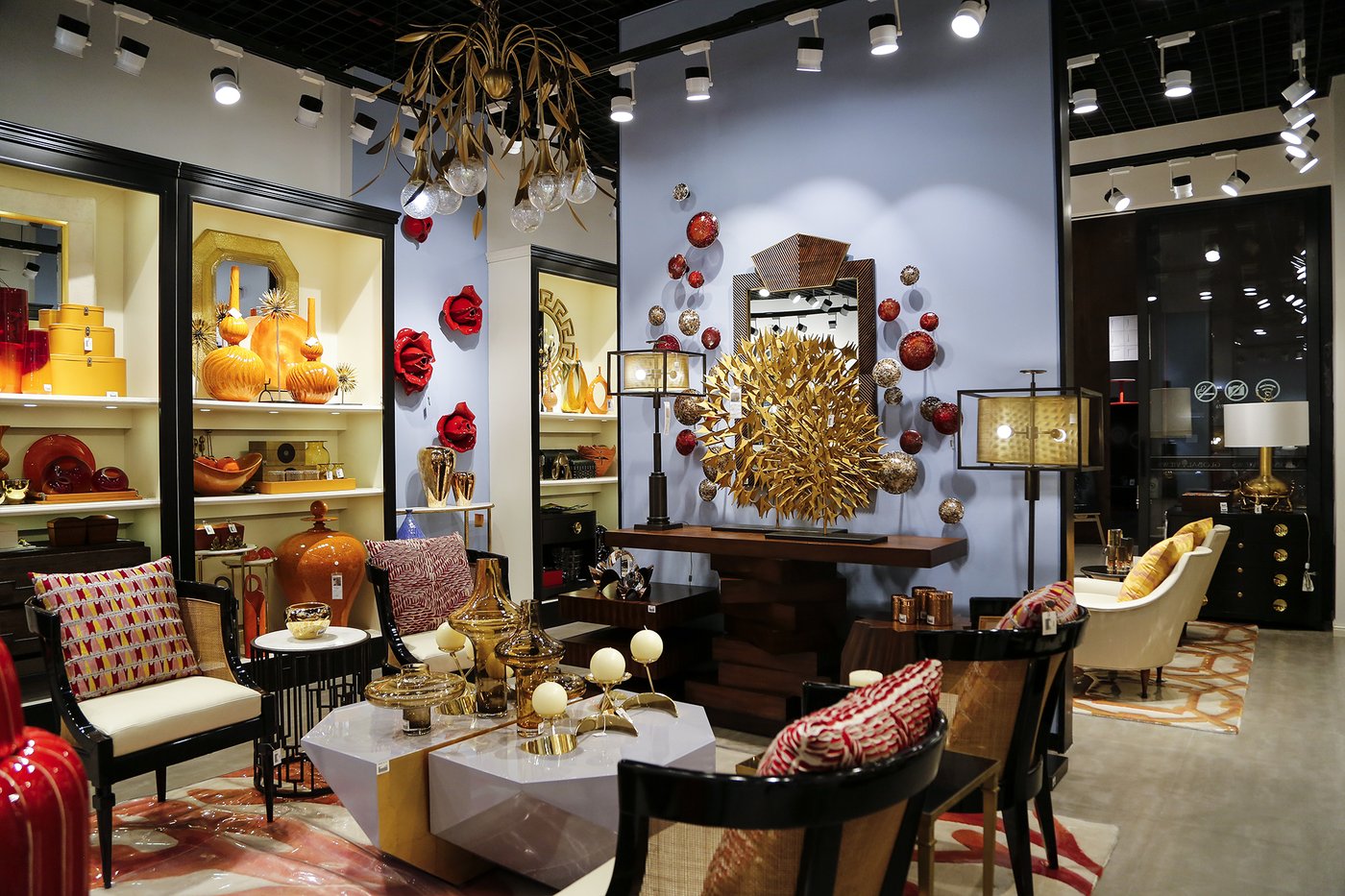
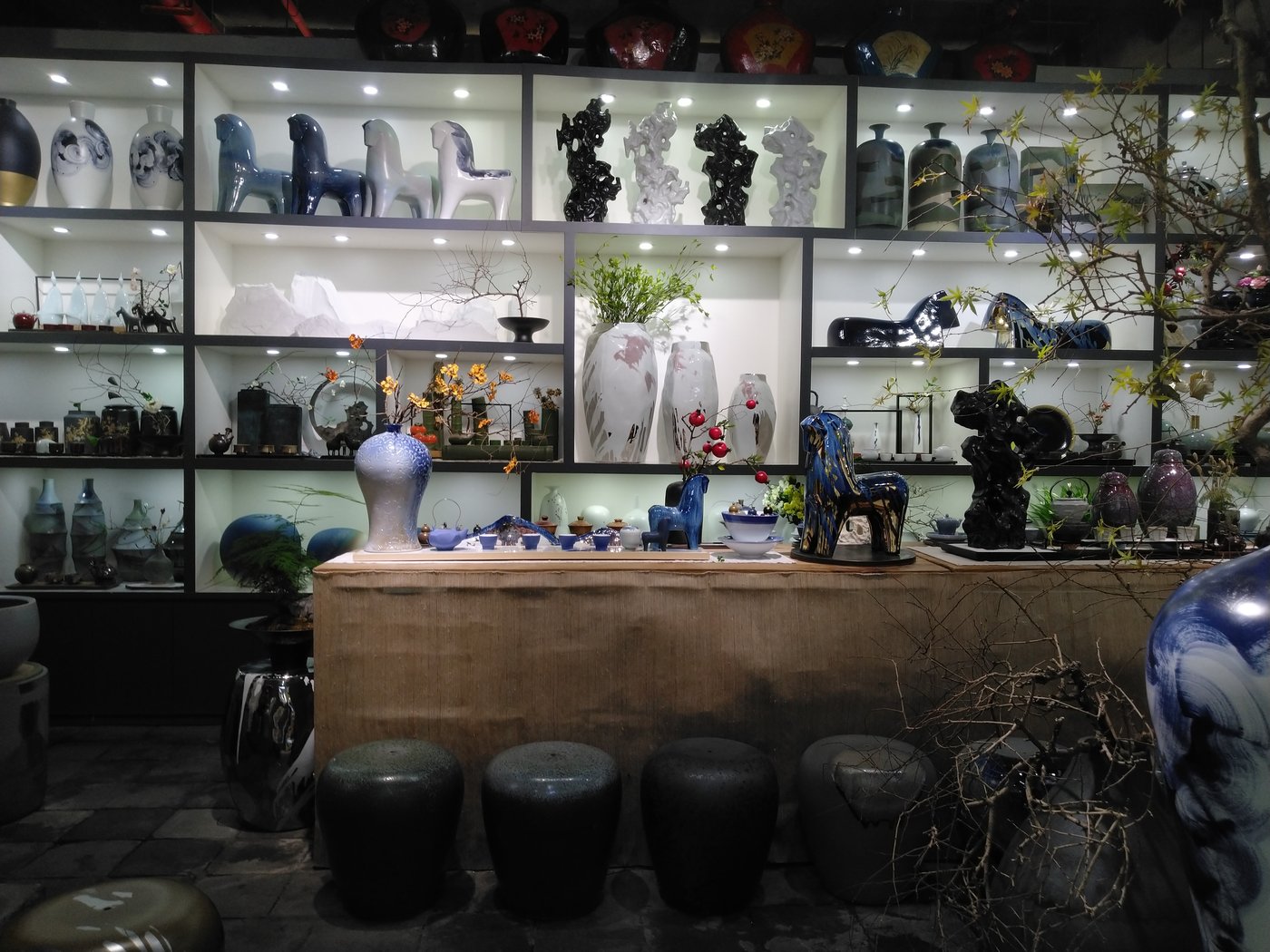
That distinction matters to an overseas buyer. Sungang is not a source market where every shop stacks ten thousand copies of the same item. It behaves more like a very large sample room. One unit may sell only Chinese-style ceramic vases; the next sells only decorative mirrors; a third sells only Christmas figurines. The lighting is deliberate, the displays are styled by collection, and the stock is arranged to show a complete look — because the customers are not only wholesalers, but also hotels, restaurants, model apartments, design studios and export trading companies. Your job here is not to find the cheapest piece. It is to find, within a limited number of hours, the few suppliers who are genuinely right for the category you came for.
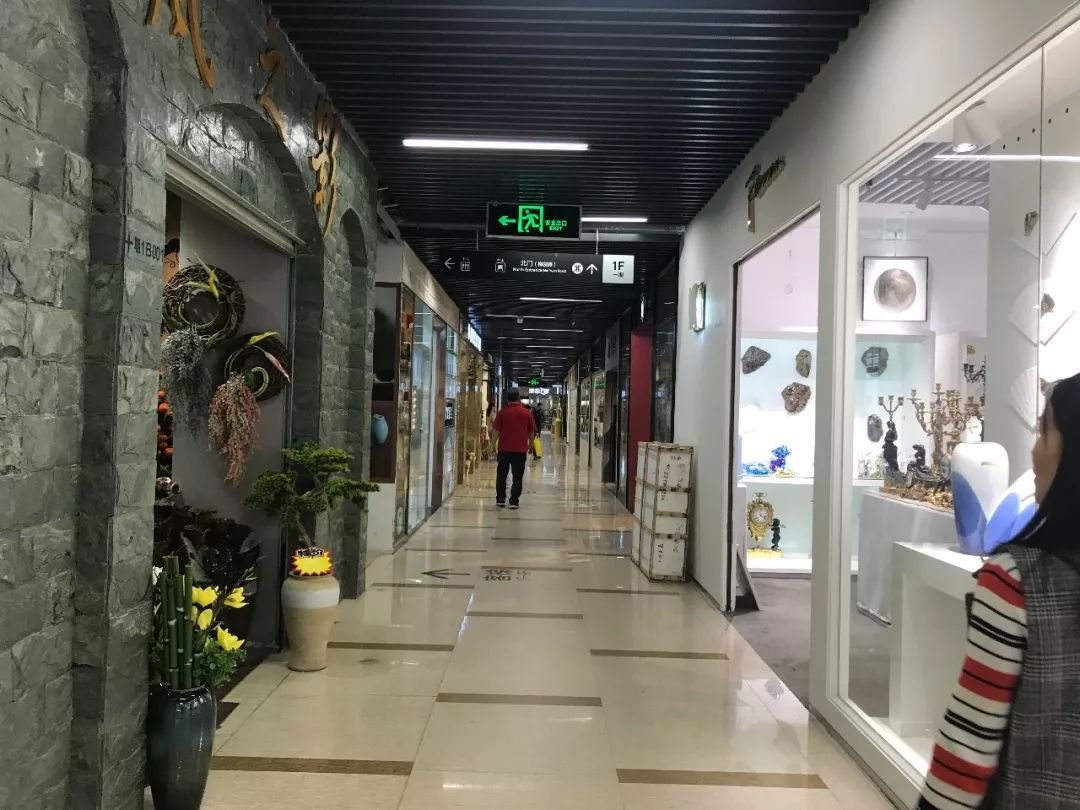
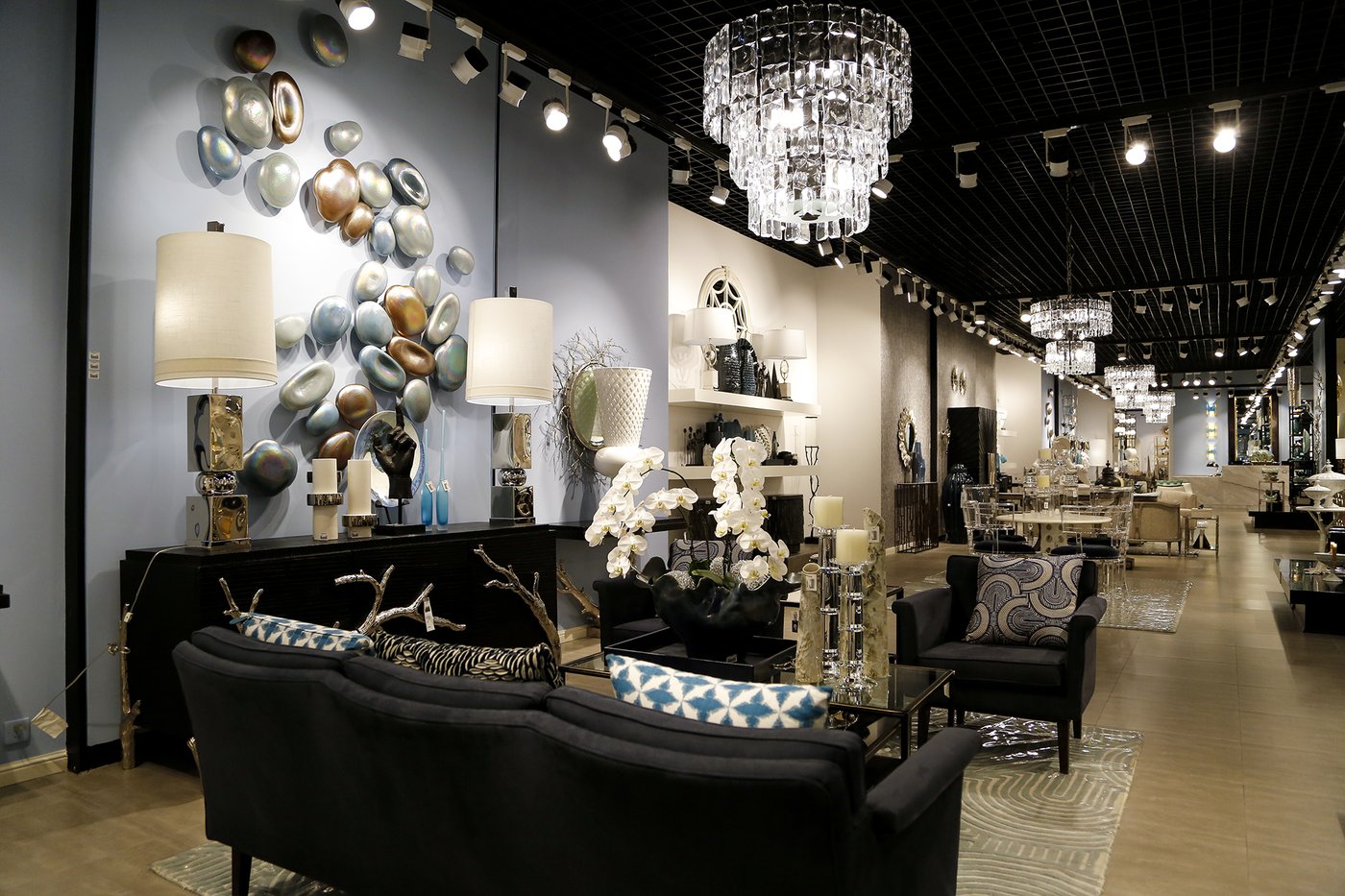
The typical spatial format in Sungang: not an open-air stall market, but a series of showrooms with styled displays. When you walk the market, judging the storefront, the merchandising and the completeness of the sample set is more useful than judging which shop looks busiest. This corridor is in a soft-furnishing building in the district.
Who will get real value here
Project buyers furnishing hotels, restaurants, show flats and sales centers
Export traders and cross-border e-commerce sellers in home decor, seasonal and gift lines
Independent owners of concept stores, home collections and gift shops
Brands that need small-run customization, private label or new packaging
Overseas buyers building a "Chinese style" or "modern Eastern" product line
Who may leave disappointed
Buyers chasing pennies per SKU who compare nothing but unit price
Anyone looking for electronics, apparel or fast-moving consumer goods — this is not that market
Buyers who only accept stock on hand and want to take goods away the same day
People who assume a wholesale market is always cheaper than a factory (showrooms carry display costs)
Visitors with no product direction, hoping to "look around and see what sells"
What does it sell? The four trading sections can be remembered as one sentence: make the home look good (home decor), make the gift look good (craft gifts), make collecting interesting (antiques and jewelry), and give the office some character (creative office). Section 04 breaks the categories down one by one. First, the geography: Phase 1 sits on the Taoyuan Road side and is the oldest, most "classic Sungang" building. Phases 2 and 3 extend toward Bao'an North Road and Nigang West Road, and are walkable from one another. On a first visit, do not try to walk from the first building to the last. Choose your categories first, then work floor by floor.
One background point that visitors often miss: Sungang's gift trade is not isolated. Next door are the ADC Art Design Center (soft furnishings and design), the Sungang Stationery, Toy & Gift City (stationery, toys, New Year goods), Yimao Center, Haobainian Home, and Shenzhen Yitian Plaza. Together they form the Sungang arts and gifts cluster. Experienced buyers often work in this order: arts and crafts plus collectibles at Sungang Arts & Crafts City, soft furnishings and design pieces at ADC, then seasonal and promotional items at the stationery and toy city. One day, three stops, far less backtracking.
Key facts at a glance
Item
Detail
Location
Luohu District, Shenzhen; Bao'an North Road and Taoyuan Road, Sungang logistics zone
Composition
Phases 1, 2 and 3; multiple buildings within walking distance
Trading sections
Home decor · craft gifts · collectibles and jewelry · creative office
Metro
Line 7 Sungang Station Exit E (about 500 m); Line 9 Hongling North Station Exit D (about 700–900 m); Line 3 Hongling Station (about 1 km)
Typical hours
Around 9:30–18:30; some units open earlier or close earlier; many close on Sunday; the market is usually closed for about a week around Spring Festival
Best buying window
Weekdays 10:00–16:00, avoiding pre-holiday weekends and the last hour before closing
Typical minimum
Stock mixing is negotiable; custom orders commonly start at 50–500 pieces per color, higher for complex work or new molds
Shipping base
Shenzhen, with Yantian and Shekou as the usual seaports; FCL, LCL and air available
Figures and time windows are common ranges drawn from public reporting and market practice. They are not a quotation, and they change with renovation, tenancy and season.
02 / WHAT MAKES IT DIFFERENT
What Makes Sungang Different from Yiwu, Guangzhou and Jingdezhen
"They are all wholesale markets" is the sentence that makes buyers underestimate the cost of choosing the wrong one. Sungang's advantage is not size. It is that display, design and project coordination sit in the same building.
Display wholesale: the room comes before the price
Most units merchandise by collection and by scene: one group of vases paired with artificial flowers, a tray and a candlestick. What you see is a complete corner scheme, not loose stock. For soft-furnishing, hotel and show-flat buyers, that is more useful than a single-piece quote.
Design-driven: new models surface faster than at the source
Shenzhen itself is a design and prototyping center for gifts and decorative accessories. Public reporting indicates that a significant share of new Chinese gift products is designed and first-tooled in Shenzhen. Units here tend to be more receptive to "change the color, change the size, change the packaging" than pure production-region markets.
Project capability: one purchase order can furnish a whole scheme
A hotel room, a restaurant table setting or a sales-center interior does not need one hero product. It needs dozens of SKUs in one visual language. Sungang's density makes it possible to source an entire set from one supplier group, which reduces color drift and mismatched delivery dates.
An export gene: Christmas, oil paintings and Western orders
Shenzhen's gift industry has a long record of supplying European and American seasonal and decorative programs. Public reporting puts Shenzhen's share of the Western Christmas-decoration and decorative-oil-painting market at roughly 70%. The seasonal traders here plan their year around Western retail calendars, not Chinese ones.
Collectibles plus tea ware: a combination rarely found elsewhere
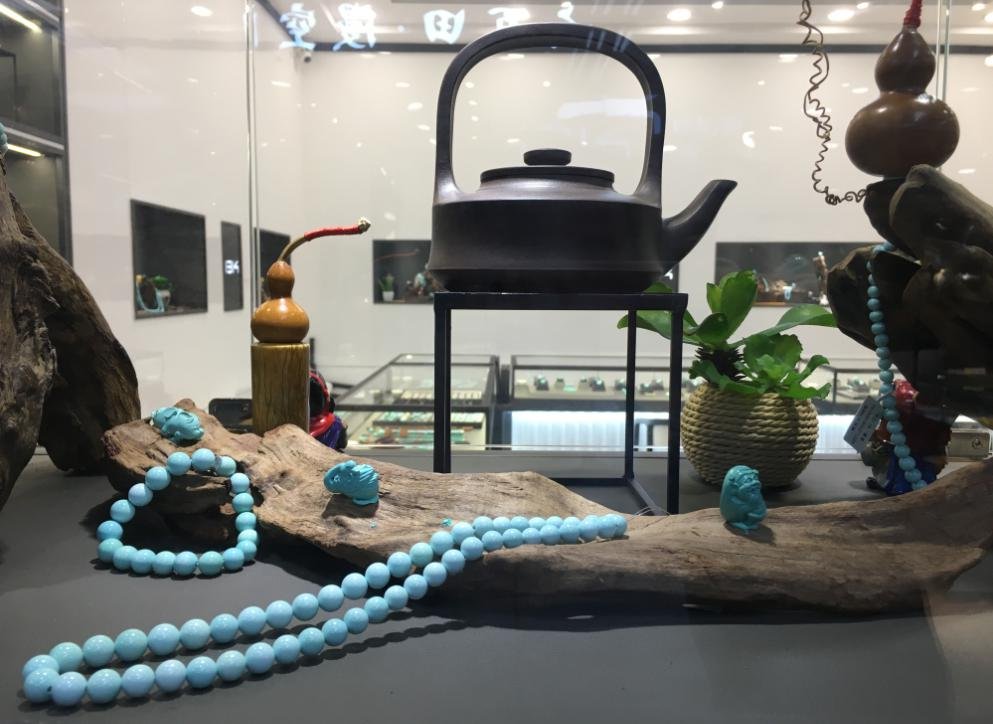
The basement level concentrates jewelry and collectibles, tea ware, incense ware and carved root-wood tea tables. These goods carry high unit values, resist standardization and depend heavily on eye and trust. The buying method is completely different from home decor upstairs, and this floor is part of what makes Sungang distinctive.
"Showroom in front, warehouse or factory behind"
The piece you see is usually a sample; production comes from a warehouse or a partner factory after the order. The advantage is that changes and matching are possible. The catch is that the word "in stock" has to be confirmed line by line, and the delivery date has to be written into the contract.
In one line: Yiwu is a supermarket where everything exists; Guangzhou is a set of specialist streets organized by industry belt; Jingdezhen is a production kiln region; Putian is a craft production region. Sungang is a display and trading center that puts design, samples, project coordination and export order-taking under the same roof.
Table 1: How Sungang compares with other common sourcing channels (qualitative, for setting expectations)
Dimension
Sungang Arts & Crafts City
Yiwu International Trade City
Guangzhou specialist markets
Jingdezhen / Putian production regions
Core logic
Display wholesale + interior packages + design and sampling
All categories, maximum SKU breadth, volume by carton
Organized by industry belt and category; strong private label and quick response
Direct from production; deep craft and kiln resources
Strong categories
Home decor, craft gifts, wall art, lighting, collectibles and tea ware, seasonal gifts
General merchandise, seasonal goods, accessories, household consumables
Bags and leather, apparel, accessories, beauty tools
Single categories such as ceramics, wood carving, classical furniture, oil paintings
This is a structural, qualitative comparison to help a first-time buyer decide whether to come and what to buy. It is not a ranking of markets and not an assessment of any individual merchant. Market mixes change as the district is redeveloped.
03 / SAME NAME, DIFFERENT BUILDINGS
Before You Navigate: Four Places That All Sound Like "Sungang Arts & Crafts City"
This is the single most common first-visit mistake. Tell a driver "Sungang Arts & Crafts City" and you may be dropped at the stationery and toy building. If you cannot answer "which phase?", you can spend two hours in a toy-dominated building and never find the ceramics or the wall art.
Sungang's wholesale property is a cluster of adjacent buildings with overlapping names. When local media reported the relocation of the Sungang warehouses in 2021, they pointed out the same confusion: Sungang Stationery, Toy & Gift City, Sungang Arts & Crafts City and the Sungang warehouses are routinely called by each other's names. For a buyer, what they sell is very different. Learn these four before you leave the hotel.
The subject of this guide
Sungang Arts & Crafts City
Phases 1, 2 and 3, several buildings along Taoyuan Road and Bao'an North Road. Home decor, craft gifts, wall art, decorative lighting, collectibles and jewelry, creative office.
Keywords: ceramic vases, decorative mirrors, artificial flowers, art lighting, tea ware and collectibles
Next door
Sungang Stationery, Toy & Gift City
Around No. 2011 Bao'an North Road, floors 1–4. Stationery, toys, models, New Year goods and low-priced seasonal novelties. Mass-market price band.
Best for: stationery shops, toy shops, New Year and promotional giveaways.
Keywords: stationery, models, plush toys, Spring Festival goods
Soft-furnishing benchmark
ADC Art Design Center (Yizhan Zhongxin)
Near Meiyuan Road; opened around 2000. It is Shenzhen's best-known soft-furnishing and home-design sourcing center, with more polished showrooms and more design-led pieces.
Best for: designers, show flats, hotel soft furnishings, higher-end pieces.
Keywords: designer brands, imported home goods, interior styling
Nearby supplement
Yimao Center / Haobainian Home
Both sit in the Sungang–Meiyuan area. Yimao leans toward craft gifts and home decor; Haobainian leans toward furniture and household goods. Worth a stop if you are nearby, not a dedicated trip.
Best for: furniture, large home items, package filling.
Non-standard goods; go with an expert or build one
A full hotel or show-flat package
ADC + Arts & Crafts City
Furniture, lighting, accessories, textiles
A single unit
Build a style board before buying
Stationery, toys, New Year goods
Sungang Stationery, Toy & Gift City
Stationery, models, plush, small seasonal items
Arts & Crafts City
More mass-market pricing
Floors and tenants shift with renovation. The table gives direction only; it does not guarantee that a particular unit is still in the same place. Call the target merchant before you travel.
How to avoid going wrong: three moves. First, do not navigate to "Sungang Arts & Crafts City" alone — add "Phase 1" or the specific building. Second, before you get in the car, ask the merchant to send a location pin with building + floor + unit number. Third, when you arrive, read the ground-floor directory and confirm what the building actually trades in before you go upstairs. Confirm the building, then the floor, then the unit. That sequence saves about half a day.
04 / WHAT THEY ACTUALLY SELL
The 12 Product Groups That Decide Which Floor You Visit
The categories below are organized by how a buyer actually searches, not by trade taxonomy. Each entry covers the usual materials, the pricing logic and the points to inspect. Images build a category impression; some are representative of the product type rather than a specific unit's current stock.
Decorative Mirrors & Wall Ornaments Home decor
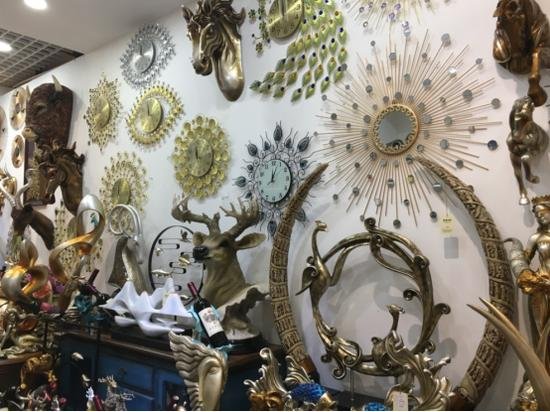
The most "soft-furnishing" category here. Sunburst mirrors, arch mirrors, irregular cluster mirrors and metal wall pieces are usually hung as a full collection, and price is driven by size and frame material.
Inspect: mirror distortion; sanded weld points; wall hardware and packaging included. Mirrors are fragile and need a wooden crate. Price them by CBM before you negotiate the unit price.
Ceramic Vases & Decorative Porcelain Home decor
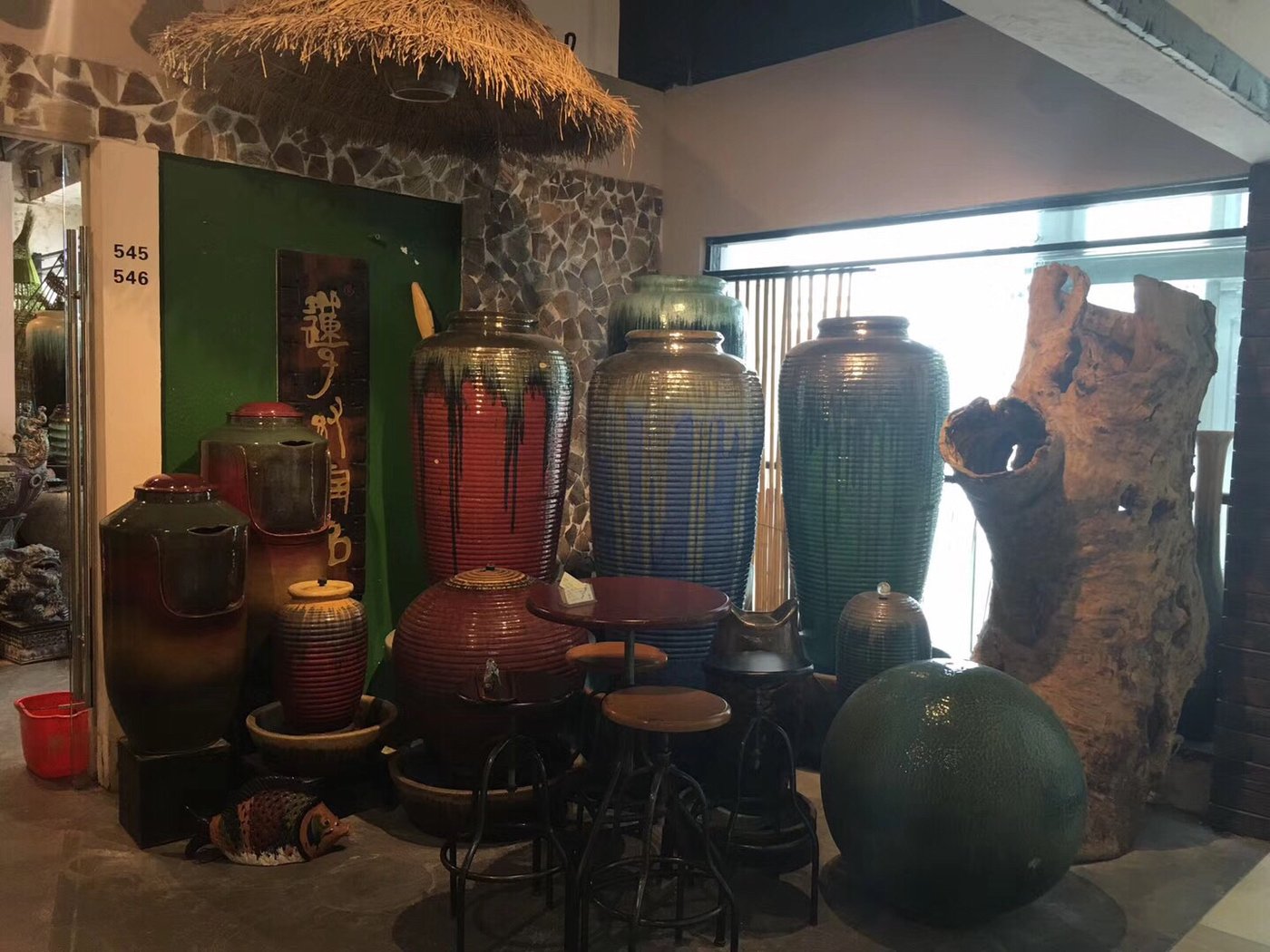
From small tabletop bud vases to floor-standing urns. Common supply origins are Chaozhou, Jingdezhen and Dehua. Glaze color, hand painting and kiln variation justify a premium — and are also where color drift and breakage concentrate.
Inspect: glaze smoothness, pinholes and crawling; hand-painted versus decal versus transfer print; thermal shock and whether the piece is watertight or display-only.
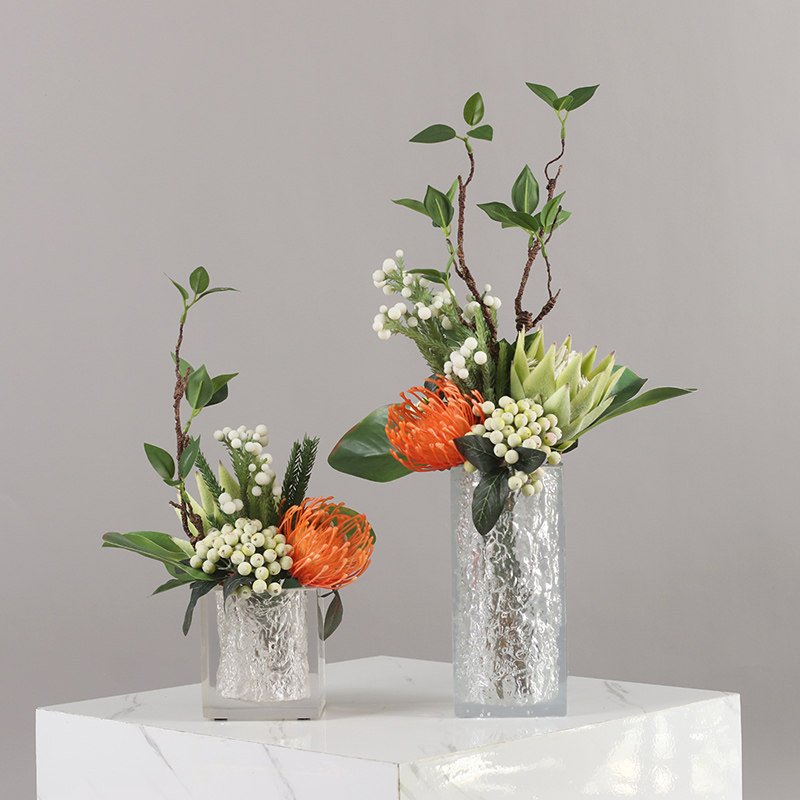
Artificial Flowers & Floral Styling Home decor
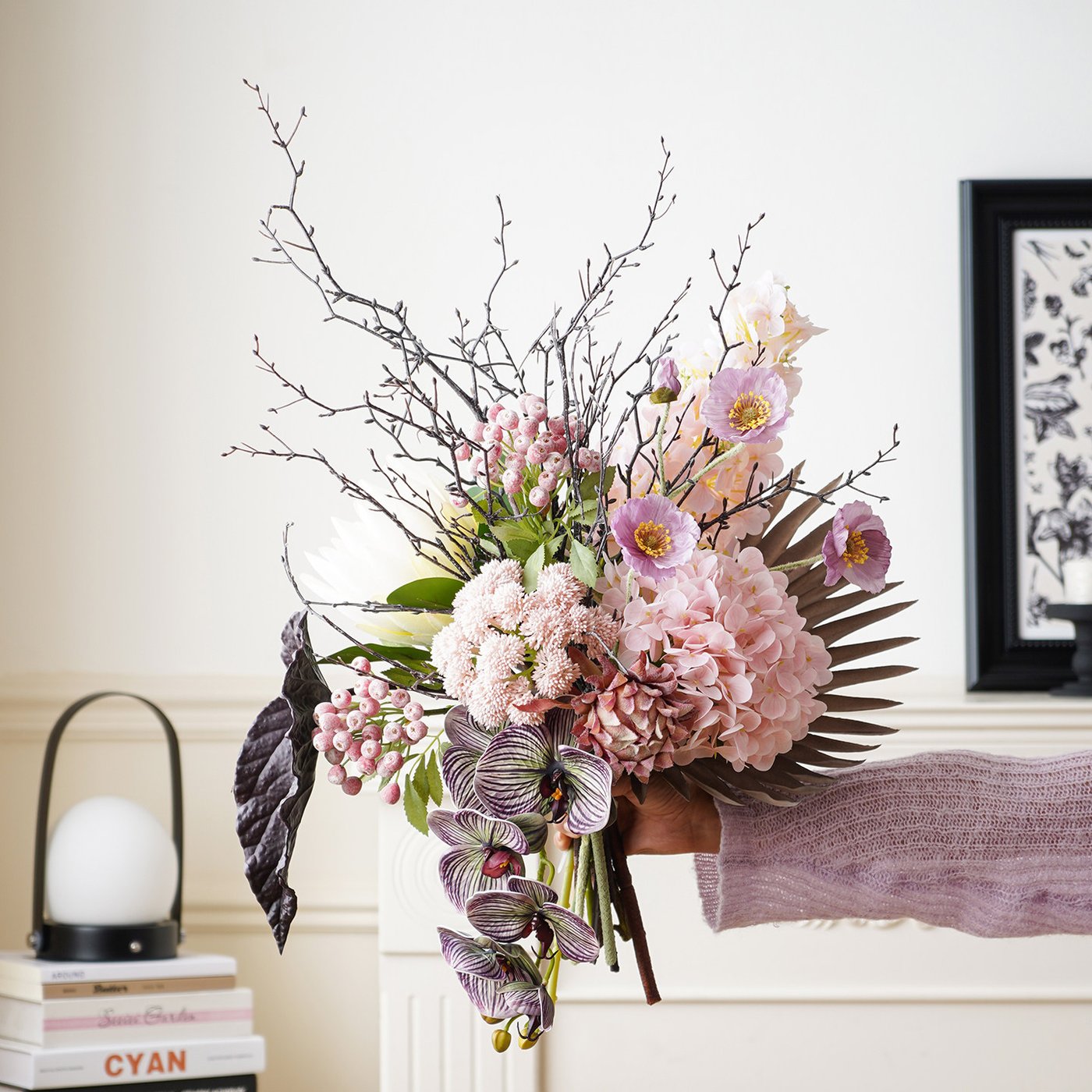
The low-cost atmosphere product for hotels, restaurants and show flats. Sold as coordinated color-and-shape sets, or by the single stem. Higher-end lines use "touch-feel" petals with texture and thickness.
Inspect: frayed or fading petal edges; flame-retardant rating, often required on project orders. Flowers are low-density cargo, so carton utilization affects landed cost more than unit price.
Wall Art, Frames & Wall Decor Home decor / gifts
From reproduced oil paintings and abstract canvases to new Chinese ink styles, organized by style and size. Frames are a business of their own: solid wood, PS foam and aluminum differ sharply in cost.
Inspect: print versus hand painting; corner damage; tempered glass where specified. Famous artworks and cartoon characters carry copyright — clear the license before export.
Decorative Lighting & Ambient Lamps Home decor
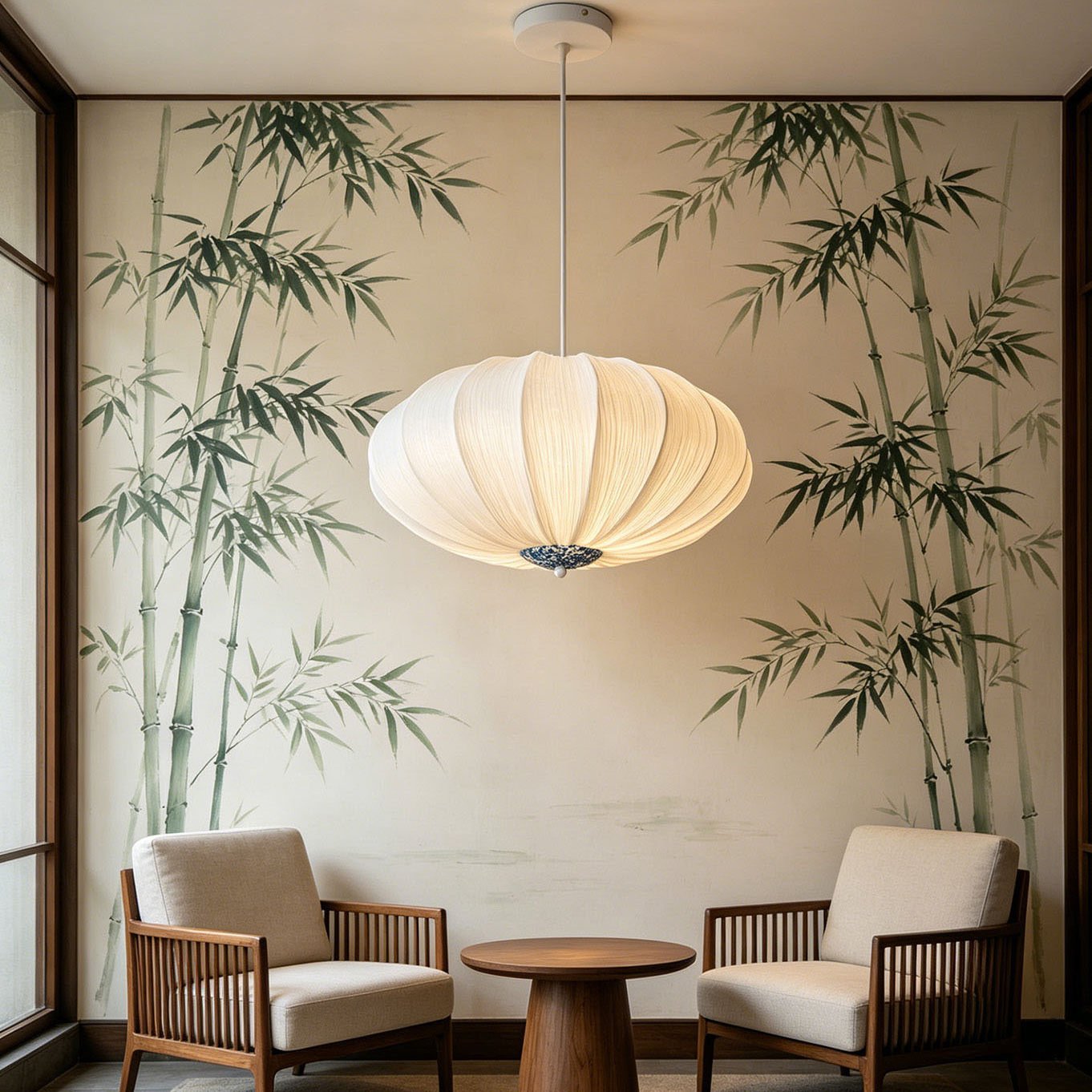
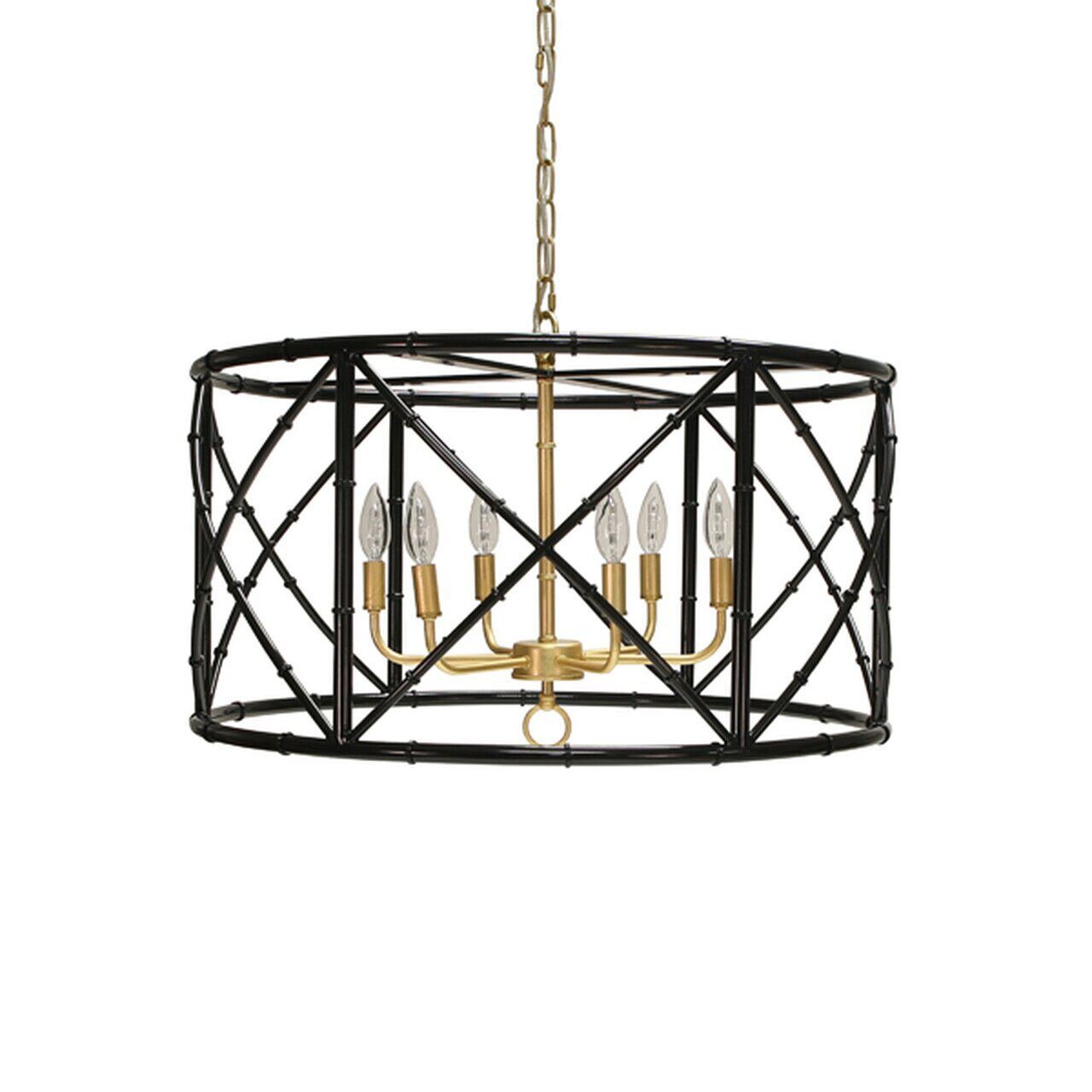
Sungang lighting is decorative rather than architectural: fabric pendants, paper lanterns, iron candle lamps, mirrored ambient lights. Built for restaurants, guesthouses and retail interiors.
Inspect: 110V/220V options and destination plug; CE/UL/CCC certification and IP rating for project work; shade protection with an individual inner box.
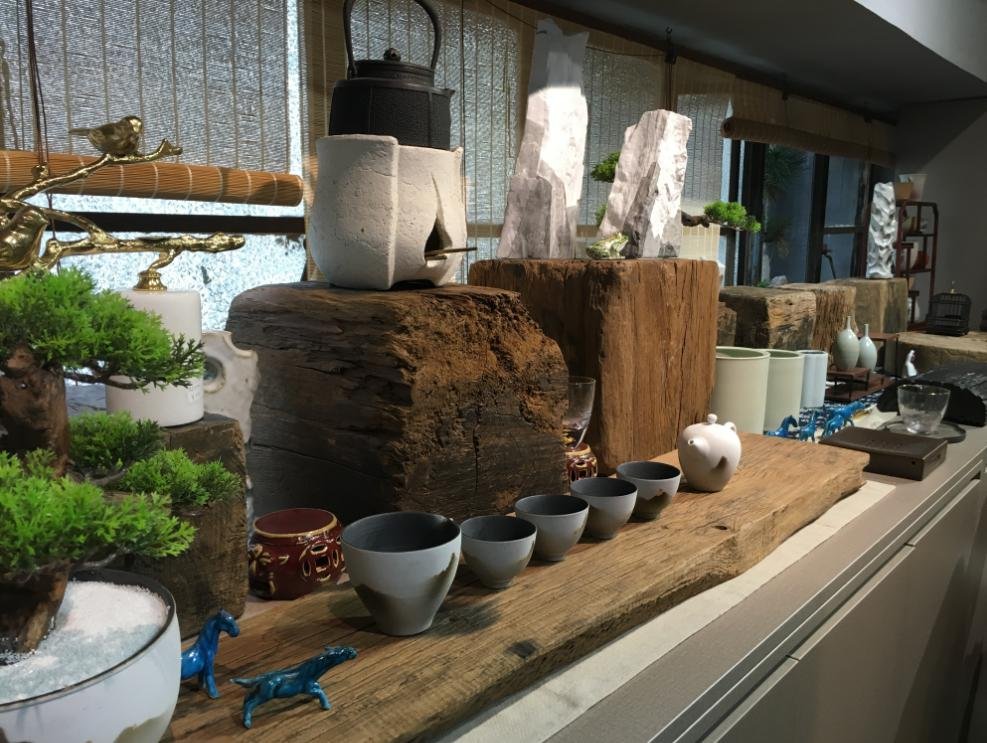
Collectibles, Tea Ware & Incense Ware Collectibles
Concentrated around the Phase 1 basement. Bead strands, hand pieces, tea tables, Yixing ware, incense burners and root carvings, with an enormous unit-price range. This floor tests your eye and shows how deep non-standard goods can go.
Inspect: ask for a material description, not the word "natural"; bead holes, color drift, glue and heat treatment; third-party testing for expensive pieces. Do not buy on impulse.
Seasonal Gifts & Christmas Decor Seasonal export
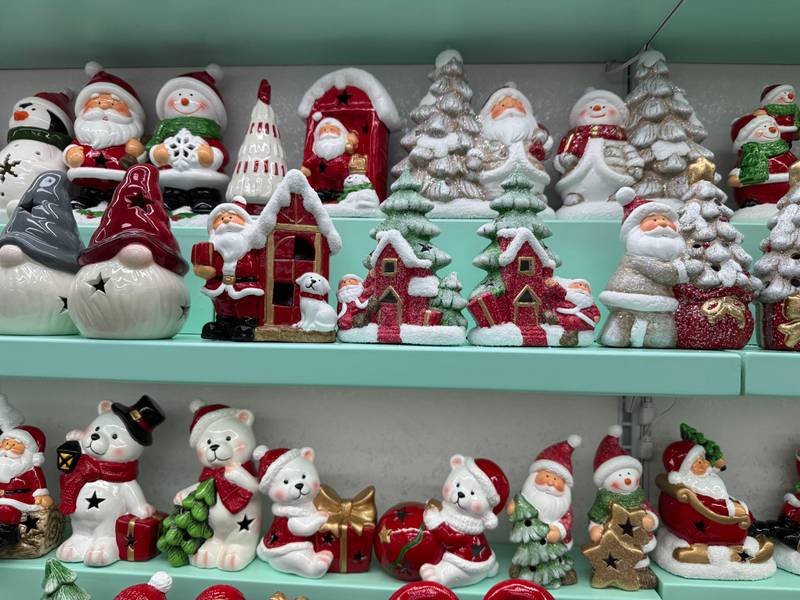
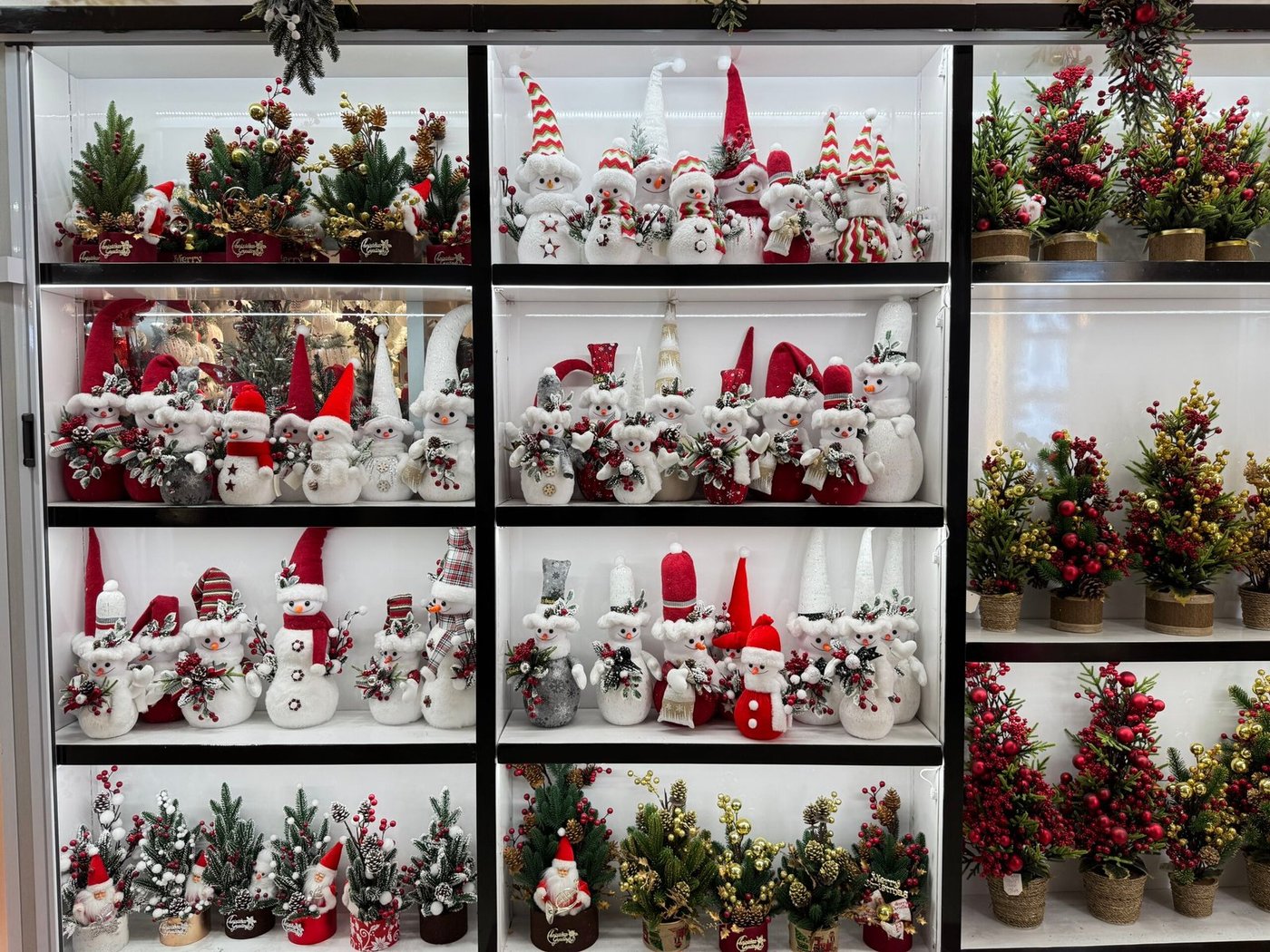
A traditional Shenzhen strength. Santa figures, snowmen, tree ornaments, gift bags and tabletop scenes, often developed as a complete story set that maps directly onto a Western retail shelf.
Inspect: destination holiday-safety and labeling rules; IP and brand licenses. The order window is August–September; later than that, you are buying leftovers or paying air freight.
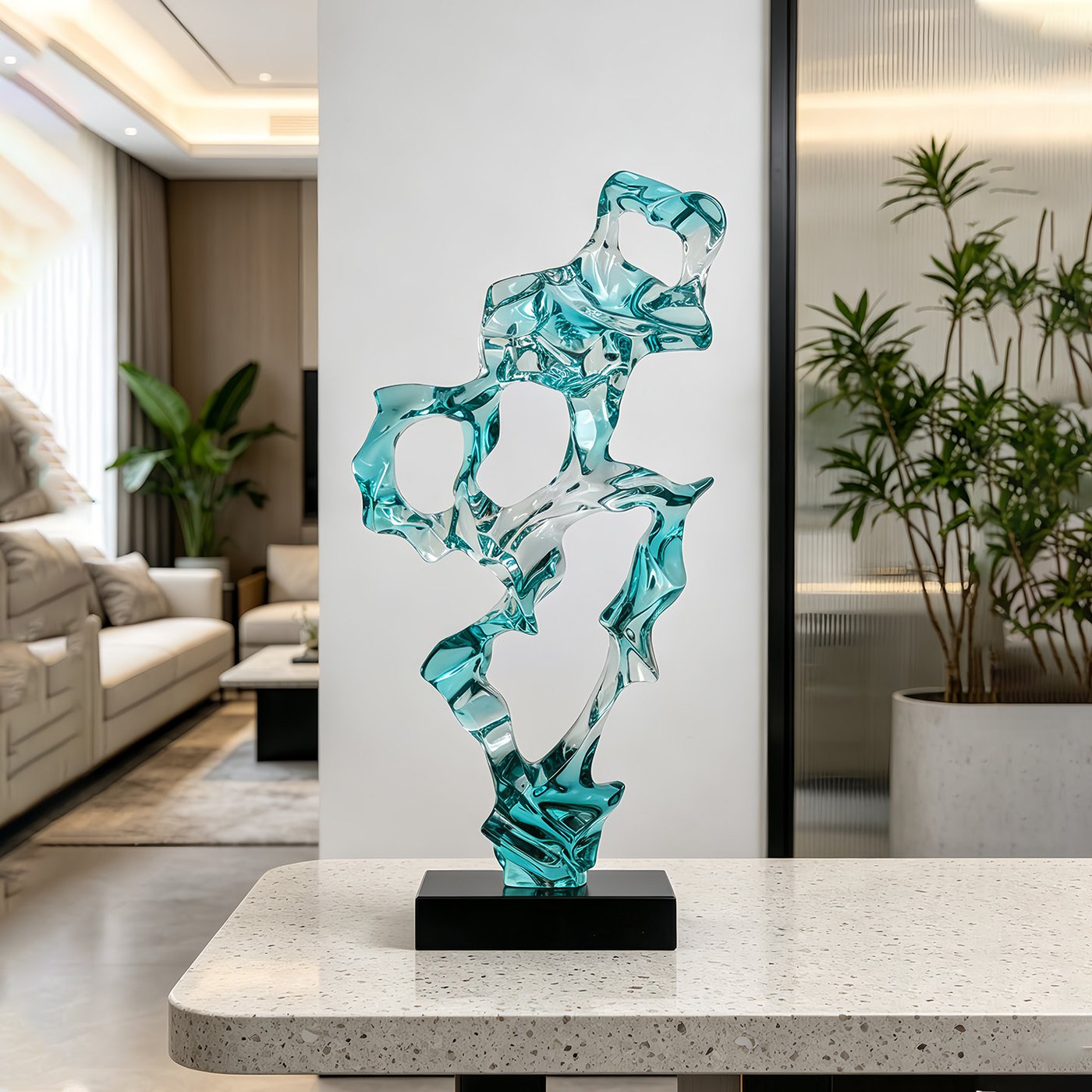
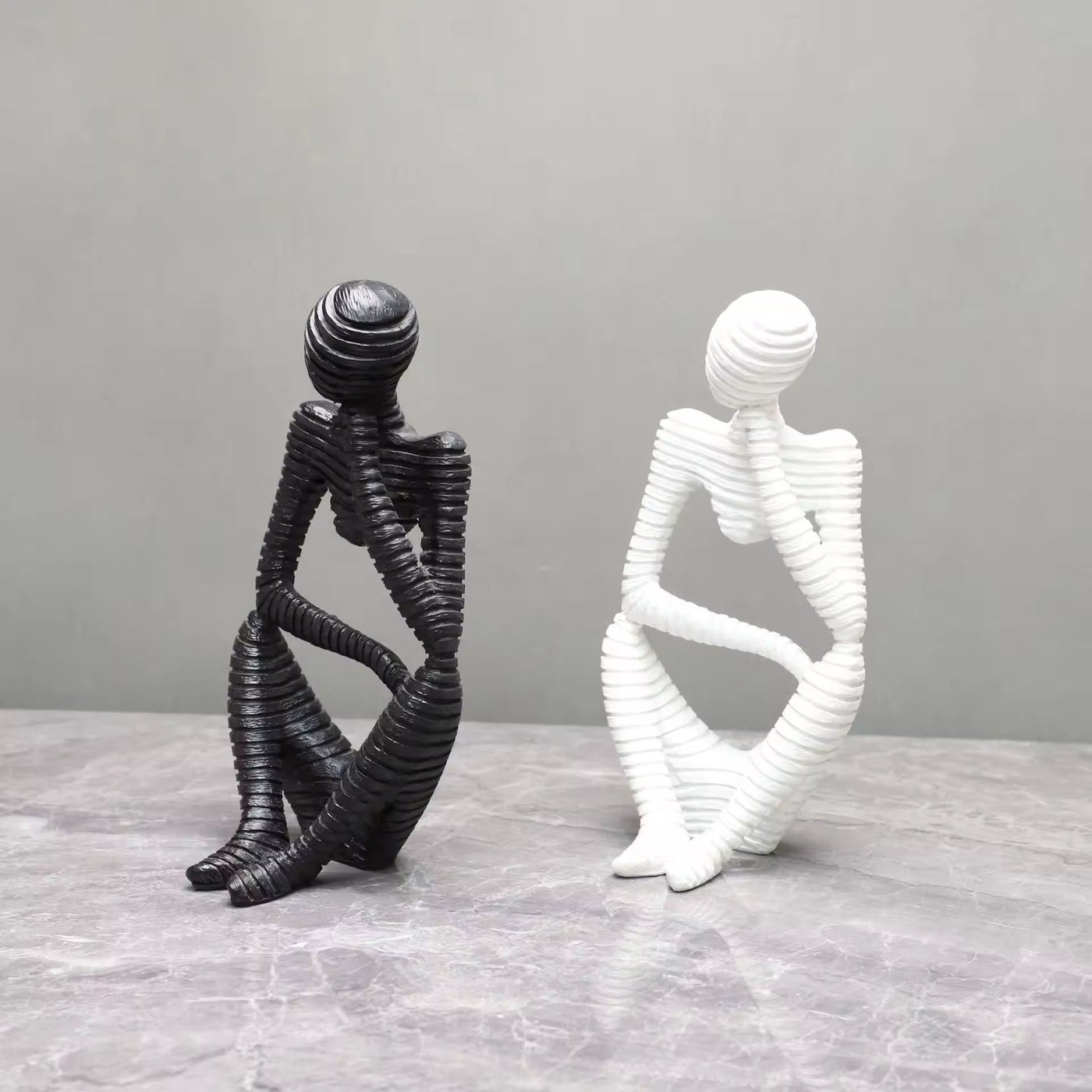
Resin, Fiberglass Sculpture & Designer Toys Home decor
From abstract art sculpture to cartoon designer toys and floor objects. Tooling cost is the barrier, but once a mold exists it is an easy way to differentiate. Surface treatment — matte, gloss, electroplating, distressed — sets the grade.
Inspect: hand-finished versus molded; weight and split packing for large pieces; who owns the mold and what the sampling fee covers before tooling starts.
Hospitality & Show-Flat Tableware Hotel / restaurant
Trays, candle holders, tissue boxes, ice buckets, vases and desk organizers. Project buyers usually purchase against three lists — guest room, tabletop and reception — and require one visual language plus replenishment.
Inspect: long-term replenishment and same-batch color; food-contact compliance for anything used with food; a breakage-replacement clause on project orders.
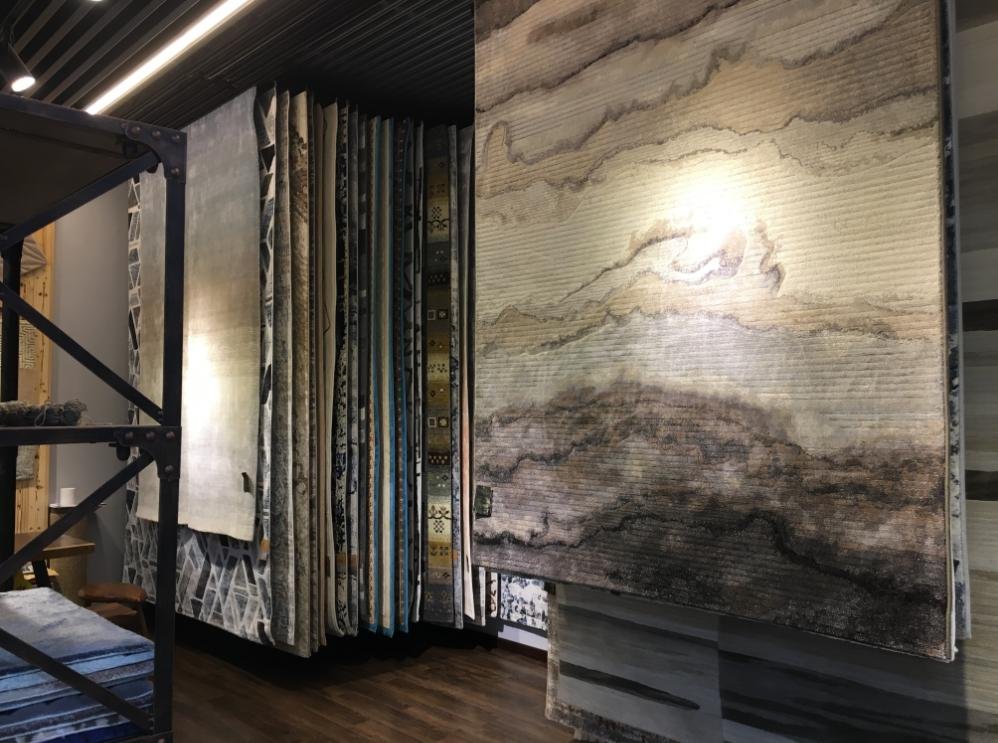
Rugs, Textiles & Soft Furnishings Home decor
Rugs, cushions, table runners, curtains and wall hangings. Sungang's textile offer is coordinated rather than greige: made to fit a complete interior scheme.
Inspect: weight per square meter, pile height and shedding; flame retardancy and anti-slip for contract and public spaces; roll-packed shipment, moisture and crush marks.
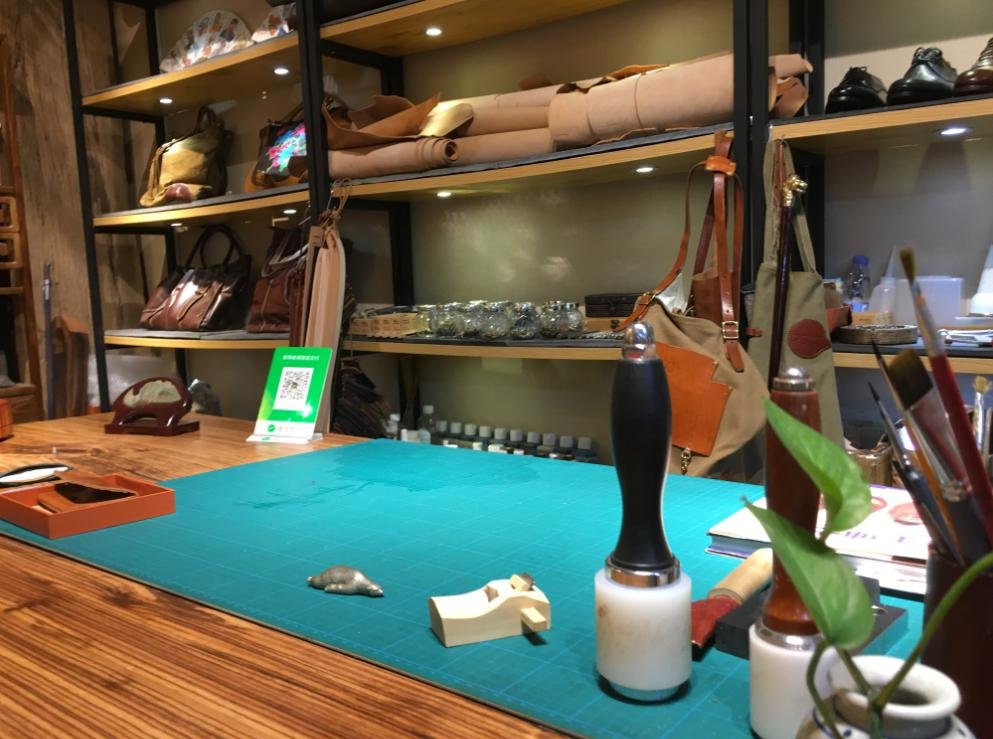
Leather items, notebooks, pen cups, desk organizers and DIY craft kits in the creative-office section. Suited to corporate gifts, custom gifting and niche brands.
Inspect: full-grain, split leather or PU; foil stamping and embossing plate fees plus MOQ; gift-box assembly labor and packaging cost before you quote.
Vintage Home & Display Props Creative office / retail
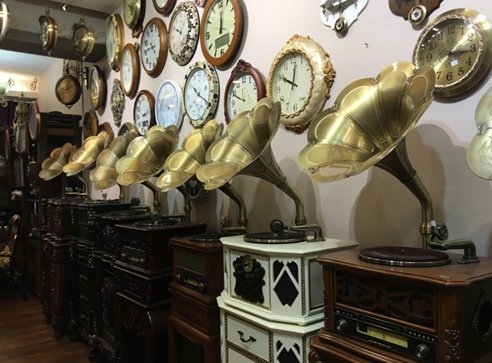
Gramophones, old clocks, retro telephones, coffee-machine models and display props. A favorite atmosphere category for restaurants, guesthouses, concept stores and photo studios.
Inspect: whether electrical items actually work, voltage and certification; distressed finishes that flake or cannot be wiped; large props are low-density cargo — measure the carton first.
These are category-level buying points, not recommendations for a specific unit. Some images show comparable products or spaces to help you recognize the category; they were not necessarily shot inside Sungang Arts & Crafts City.
05 / FIRST-TIME BUYING FLOW
Your First Buying Trip: 12 Steps from Preparation to Container Loading
Buying in Sungang is not "walk in, ask the price, pay, carry it out." It works more like a small project: set the direction, review samples, prototype, confirm bulk, then hand over to logistics. Here are the 12 steps in the order they happen.
Step 01
Before you leave: fix category, style and budget band
Do not arrive with "let's see what's here." Pick two or three categories (for example ceramic vases, artificial flowers and decorative mirrors), then a style (modern Eastern, French, wabi-sabi, Christmas), then an acceptable price band per category. The more specific the brief, the less you walk and the better you buy.
Step 02
Confirm the building and opening status — ignore old guides
Check whether the target merchant is in Phase 1 or Phases 2/3, which floor, and whether they open on Sunday. The market has been through several renovations, so a unit number in an old blog post may now belong to someone else. Add the merchant on WeChat first and send a photo: "Is this still available?"
Step 03
Bring the working kit: images, tape measure, cards, business identity
Save reference images on your phone (both room shots and product shots). Bring a tape measure, business cards, a passport copy and company details. If you need a Chinese VAT invoice, bring the company's registration information. Download offline translation packs; signal inside some buildings is unreliable.
Step 04
Walk the building first; do not start with price
Do one full loop and do only three things: map the category layout, note which units have complete displays, and look for "wholesale / export / custom" signage at the door. Photograph the promising storefronts with their unit numbers, then go back for a second pass. Allow at least half a day for a first visit.
Step 05
Open with the use case, not "how much?"
State the channel (hotel, retail, e-commerce), the approximate quantity, the target retail price and the date you need it. The merchant will then recommend materials and techniques that fit. Opening with a price question usually earns you either "this one is expensive" or "this one is cheap" — neither is a quote.
Step 06
Review the sample set: hero sample, color range and packaging together
Do not judge from one piece. Ask to see different sizes and colors in the same collection, and the packaging used for previous shipments. One question filters out a share of resellers: "Will the bulk order come from the same factory as this sample?"
Step 07
Ask what the price includes
Confirm tax included or excluded, packaging included or not, domestic freight to the warehouse or not, how long the quote holds, and which exchange rate it uses. Decorative products are notorious for a low unit price that doubles once packaging and freight are added.
Step 08
Negotiate MOQ, lead time and sampling
Stock mixing and custom production are two different rulebooks. For custom work, settle the minimum quantity, sampling fee, sampling lead time, bulk lead time, and whether color, size and logo can change. Write down what the lead time counts from — deposit received, or sample approved.
Step 09
Place the order: proforma invoice and deposit
At minimum, use a proforma invoice (PI): product name, material, size, color, quantity, unit price, total, packing method, lead time, inspection standard and payment terms. A common structure is 30% deposit and 70% before shipment. Do not send the full amount to a personal account.
Step 10
Follow production in the middle — do not appear only at the deadline
Get one photo or video confirmation at the mid-production stage: unfired or raw body, coloring, packing. Decorative goods fail most often on color and detail. If you can, visit the factory or hire a third-party inspection; do not judge bulk from the showroom sample.
Step 11
Inspect against AQL, with breakage and color drift as the focus
Sample ceramics, glass and mirrors by breakage rate; check coating and weld points on resin and metal; power-test lighting; check colorfastness on textiles. Put the inspection standard into the order. "Close enough" is not a standard.
Step 12
Ship: packing, drayage, export declaration, ocean or air
Crate fragile goods and use EPE foam; calculate CBM before you quote low-density cargo. Shenzhen usually ships via Yantian or Shekou; allow 30–40 days at sea for seasonal deadlines. Complete documents — invoice, packing list, customs declaration authorization — are what make the VAT export refund possible.
A one-day itinerary that actually works
09:00–09:30 Metro to Sungang or Hongling North. Start at the Phase 1 ground-floor directory and confirm the building mix.
09:30–11:30 First pass through Phase 1: home decor, ceramic vases, artificial flowers, wall art. Record five to eight target units.
11:30–13:00 Lunch nearby; sort photos and quotes; drop the stores that look good but do not fit your range.
13:00–15:30 Second pass on target stores: review collections, ask MOQ, discuss sampling, add WeChat.
15:30–17:00 Move to Phase 2/3 or ADC for soft furnishings and design pieces. Keep collectibles and tea ware for last.
17:00–18:00 Review: pay sampling fees for what you can decide today; photograph full documentation for the rest and set a one-week quote deadline.
Pre-trip checklist
Passport and visa copy; business cards; company registration details
Reference images: room shots and product shots, saved offline
Tape measure, power bank, calculator, notebook, sample bags
Translation app with offline Chinese pack
Wet wipes for checking ceramics and mirrors
A small amount of cash; a phone number that works with WeChat and WhatsApp
06 / HOW TO JUDGE QUALITY
How to Select: Different Materials Fail in Different Places
There is no single quality standard for decorative products. Ceramics are judged by glaze, resin by the mold, metal by the weld, textiles by colorfastness, lighting by electrical safety. Here are checks you can perform on the floor.
01 Ceramics & stoneware
Turn the piece under a lamp: pinholes, crawling, orange-peel texture, color spots.
Tap the rim: a clear ring suggests proper vitrification; a dull thud may hide a hairline crack.
Check the foot: flat, stable, no visible distortion.
Ask hand-painted, decal or transfer; hand painting shows brush strokes.
For water-holding pieces, ask about leakage; for display pieces, ask about UV fading.
02 Resin & fiberglass
Look into recesses and fine detail: a good mold gives clean lines and no flash.
Run a hand over the coating: even, no sagging or grit.
Ask the weight: too light usually means thin walls and easy cracking in transit.
For large pieces, ask how head, body and base are split for packing.
Ask about UV resistance; outdoor use will yellow.
03 Glass & mirrors
Check edges for chipping, bubbles and ripples.
View the mirror at a side angle: the reflection should not distort.
Ask whether glass is tempered; packaging should be an inner box plus a wooden crate.
Ask about the coating: silver mirror is more durable than aluminum and costs more.
Confirm wall-hanging hardware is included.
04 Metal & ironwork
Check whether welds are ground and whether burrs remain.
Ask electroplated or spray-painted; request a salt-spray test if outdoor use is planned.
Press down on the structure: does it wobble? Does it need a weighted base?
For outdoor pieces, ask about rust treatment and coating thickness.
Ask for scratch protection and paper interleaving between layers.
05 Textiles, artificial flowers & rugs
Rub with white paper: check color transfer and shedding.
Inspect stitching density and edge binding for skew or skipped stitches.
Ask for weight, pile height and fiber content; "premium feel" is not a specification.
Ask for flame-retardant rating and whether the item is washable.
For flowers, check petal layering and whether stems feel substantial.
06 Lighting & electrical
Power it on: flicker, noise, heat.
Ask voltage (110V/220V), plug type and cable length.
Ask for CE/UL/CCC and whether certificates can be supplied.
Check the shade packaging: individual inner box to prevent crushing.
Ask whether the light source is replaceable and whether bulbs are included.
The "six looks, one question" test — usable on any category
Look at display completeness: a full collection, full color range and packaging on hand usually signal reliable supply.
Look at sample wear: chipped corners and repeated touch-ups reveal the real craft floor.
Look at the back and the base: anyone can finish a front; the cost lives at the back.
Compare the same item at two prices: put two units side by side and ask "what is the difference?" It teaches you the craft gap fast.
Look at the packaging: inner box, dividers, EPE, wooden crate — packaging decides the breakage rate.
Look at the orders the merchant actually runs: project photos and export shipment photos on the wall are more reliable than a promise.
Ask: "What happens if bulk does not match the sample?" Only the supplier willing to put that in the contract is worth an order.
07 / WHERE THE MONEY IS
Eight Business Models That Actually Exist Around This Market
"What business can this market support?" matters more than "what does it stock?" The eight paths below are long-standing demand patterns around display-wholesale markets like Sungang, ordered from low to high barrier. Each lists the entry barrier, a typical order size and the main risk, so you can judge the fit.
Low capital
01 Home concept store / buyer-shop selection
Build a curated range with one visual language and clear price tiers: artificial flowers and small objects as traffic drivers, mirrors and lighting as margin drivers, sculpture as the image piece. Suited to small shops or online concept stores.
Barrier: low — visual judgment and styling are enough; MOQ is negotiable. Order size: a few thousand to a few tens of thousands of RMB for a first store order. Risk: sameness; taste decides survival; freight can wipe out the margin on low-ticket goods.
Low capital
02 Seasonal gift export (Christmas, Halloween, Easter)
A traditional Shenzhen strength. Overseas retailers, party-goods stores and supermarkets want complete seasonal scenes: figurines, hangings, tabletop pieces, gift bags. Sungang's seasonal traders know how a Western shelf planogram works.
Barrier: medium — destination compliance and reliable sailing schedules. Order size: by the container; a 40HQ often carries several hundred thousand RMB of goods. Risk: missing the August–September window; IP infringement; seasonal stock loses value after the holiday.
Medium barrier
03 Hotel, restaurant and show-flat packages
The project channel is Sungang's deepest moat: furnish an entire scheme from a room list — vases, trays, candle holders, wall art, lighting, rugs. The client is not buying the lowest price; they are buying one look, replenishability and breakage replacements.
Barrier: medium-high — list management, delivery control, styling knowledge. Order size: tens of thousands to several hundred thousand RMB per project. Risk: suppliers miss different dates; color drift; unclear project acceptance criteria.
Medium barrier
04 Corporate and opening-gift programs
Turn craft gifts into branded business gifting: leather notebooks, desk objects, fragrance sets, tea sets. Suited to corporate-services firms, gift companies and chamber-of-commerce channels.
Barrier: medium — design, sampling and packaging coordination. Order size: hundreds to thousands of sets per run. Risk: foil or embossing plate fees; gift-box labor; orders all land before the holiday.
Medium barrier
05 Cross-border e-commerce home-decor line
"Wall decor" and "home accent" are permanent demand categories on Amazon, Shopify and TikTok Shop. Sungang's advantage is small-batch testing, packaging changes and content-ready samples — better for a curated store than for catalog dumping.
Barrier: medium — platform compliance, dimensional weight, return rates. Order size: tens to hundreds of pieces per SKU. Risk: fragile returns; size descriptions that do not match; design patents.
Medium barrier
06 Regional wholesale and re-export distribution
Local wholesalers in Southeast Asia, the Middle East, Latin America and Africa need fresh designs, mid-level pricing and mixed loading. Sungang is well suited to assembling a multi-category mixed container, then breaking it down locally.
Barrier: medium — local channel and customs capability. Order size: mixed containers, 20GP or 40HQ. Risk: HS classification on mixed loads; local after-sales; exchange rates.
Medium-high
07 IP collaboration and designer-toy development
Resin and fiberglass tooling barriers are falling, and Sungang has sculpture and designer-toy supply chains. Suited to teams with original IP, artist resources or brand collaboration plans.
Barrier: medium-high — tooling cost, sampling cycle, rights chain. Order size: hundreds to thousands of pieces per model. Risk: mold ownership; color drift between sample and bulk; the scope of the IP license.
Content-led
08 Content commerce and live-stream selection
"Walking a wholesale market" is content in itself. Use Sungang's displays as a set, explain materials, styling and pitfalls, and sell higher-ticket home decor. Suited to TikTok, Instagram or Xiaohongshu creators.
Barrier: medium — shooting, scripting and product selection all required. Order size: hundreds to tens of thousands of RMB per session. Risk: merchants unwilling to appear on camera; sample and stock mismatch; returns.
A reality check: the opportunity in Sungang is not "the cheaper, the better." Its value is in design, coordination and sampling capability. If your business is extreme-low-price commodity sourcing, Yiwu or a production region fits better. If you need design-led goods with a story, Sungang's premium can hold.
08 / PITFALLS
16 Traps You May Hit — from the Wrong Building to "Great Sample, Ugly Bulk"
Each item is written as symptom, consequence and fix. This is not scare tactics; these things happen every day in wholesale markets. Knowing them in advance can save one wasted trip, one loss-making order or one dispute.
01
Wrong market, wrong building
"Sungang Arts & Crafts City" has several map pins, and next door sit the stationery/toy gift city, ADC and Yimao Center. Arrive at the toy building looking for ceramics and you can search all day.
Fix: get the merchant to send a pin with building, floor and unit number before you leave. Read the ground-floor directory on arrival. If unsure, ask security what the building specializes in.
02
Treating showroom samples as stock on hand
The shop looks full, so you assume the warehouse is full. Only after ordering do you learn it is made to order, with a 15–45 day lead time that misses your sailing.
Fix: ask three numbers for every line — how much is in stock, how much is future production, and what date the lead time counts from. Put it in the PI. For urgent orders, buy only confirmed stock.
03
Quotes with unclear scope: tax? packing? freight?
The unit price sounds low until packaging, domestic freight and tax are added, and the landed cost ends up higher than the other quote. Decorative packaging is often a meaningful share of total cost.
Fix: ask four fixed questions — is tax included, is packaging included, is freight to the warehouse included, how long is the quote valid? Write the answers on the quotation.
04
Misunderstanding MOQ and "mixed wholesale"
You assume you can take a few pieces of each design, then hear "one carton per design" or "50 pieces per color." Custom work is higher still.
Fix: ask the minimum for stock mixing first, then the minimum per color for custom. Write the mixing rule down. Do not negotiate with retail assumptions.
05
Material and technique quietly downgraded
Resin described as ceramic, veneer described as solid wood, gold plating described as brass, print described as hand painting. Photos cannot show it, and the price gap is several times.
Fix: look at the back and the cross-section; feel the weight; require material and technique in writing; seal the sample and compare bulk against it.
06
Handmade tolerance and color variation
For ceramics, hand painting, distressing and weaving, ±3–5% size variation and batch-to-batch color shift are normal. Inspecting to a "commodity" standard guarantees an argument.
Fix: agree acceptable ranges before the order — size, color, glaze defects — and keep a "limit sample." Inspect against the agreement, not against mood.
07
Low-density cargo: freight costs more than the goods
Artificial flowers, lampshades, large vases and rugs are bulky and light. When freight is charged by CBM, the margin disappears.
Fix: get the packed dimensions and carton pack ratio before ordering. Calculate CBM and container utilization first, then decide the design and quantity.
08
Fragile goods packed below standard
Ceramics, glass and mirrors in a single carton can arrive with a 3–8% breakage rate. The seller then says "some damage in transit is unavoidable."
Fix: require an individual inner box, EPE or air column, five-ply corrugated outer, and a wooden crate or pallet. Buy cargo insurance. Write a breakage replacement ratio into the contract.
09
Lighting that fails electrical compliance
A beautiful decorative lamp with the wrong voltage, the wrong plug and no CE/UL cannot be sold in the destination and may be seized.
Fix: confirm voltage, plug, certification and manual language before ordering. Ask for certificate numbers. If they cannot be supplied, sell the item as a non-electrical ornament only.
10
Missing the seasonal order window
Ordering Christmas goods in September means the factory is already full; shipping in October means arrival after the season. Halloween and Easter follow the same logic.
Fix: Christmas orders in August–September, sailing September–October; Halloween before July; Spring Festival before November. Work backward from the required arrival date.
11
IP and copyright
Cartoon characters, famous paintings, brand logos and artists' works produced and exported without a license can be detained by customs or delisted by platforms.
Fix: require the license chain. For original artwork, ask the factory for an originality declaration. If unsure, change the design — do not gamble.
12
Sampling fee and bulk that does not match
You pay for a sample, and it is excellent. Bulk arrives with different color, size and hardware. The merchant says "handmade products are all like this."
Fix: seal and photograph the sample. Write into the contract that bulk inconsistent with the sealed sample is reworked or refunded unconditionally. Pay the balance after inspection.
13
Payment to a personal account, no contract, no invoice
Paying a personal WeChat or Alipay account is convenient, but there is no legal entity to pursue. Without a Chinese VAT invoice, the export refund cannot be processed either.
Fix: pay the company account. Sign a PI or contract. Request a special VAT invoice. The payee name must match the contracting entity.
14
The "double clearance, tax included" low-price trap
A suspiciously cheap all-in clearance quote may rely on gray clearance, under-declaration or transshipment. If the cargo is seized, the loss dwarfs the freight saved.
Fix: ask for the trade term, the clearance port and the HS classification. Require a formal export declaration. If the price is far below market, walk away.
15
Renovation, tenant movement and closures
Sungang is under continuous urban renewal: buildings are renovated, tenants move, some units close on Sunday, and the market closes around Spring Festival. Unit numbers in old guides may no longer exist.
Fix: confirm by phone or WeChat the day before. Avoid the week before and after Spring Festival. On a Sunday, ask whether the target store is open before you go.
16
Truck restrictions, parking and drayage
Shenzhen restricts truck movements, and parking around the market is tight. If you collect large items yourself, a car will not fit them, and a truck called at the last minute may not be allowed in.
Fix: book the truck in advance and confirm the permitted time window. Let the merchant arrange delivery. For large pieces, use the market–warehouse–port drayage chain.
09 / COST STRUCTURE
Where the Money Goes: A Landed-Cost Structure for Craft and Decor
The cost of a decorative product is not unit price × quantity. Sampling, packaging, volume, breakage, certification and the VAT refund each change the final landed cost. Fill this table in at the quotation stage, line by line.
Table 3: Purchase cost structure
Cost item
Typical share
What to watch
Goods value (EXW)
Baseline
Tier by design, material and technique. Never blend different techniques into one average price.
Sampling / sample fee
Tens to hundreds of RMB per design
Can it be credited against the bulk order? Who pays courier? Keep the sealed sample.
Packaging
5%–15%
Inner box, EPE, wooden crate, shipping marks. Never save here on fragile goods.
Domestic transport / drayage
Distance-based
Market to warehouse, warehouse to port. Include Shenzhen truck restriction windows.
Export declaration and documents
Per shipment
Brokerage, commodity inspection if applicable, certificate of origin, insurance.
Ocean / air freight
Per CBM or per kg
Low-density cargo is charged on volume. A 40HQ is about 68 CBM; a 20GP about 28 CBM (theoretical; actual depends on loading).
Cargo insurance
A few per mille of goods value
Recommended for fragile goods. Keep loading photos and the packing list.
Classification drives the rate. Different craft materials can fall under different codes.
Last mile / storage
By project
Overseas warehouse, FBA inbound, local delivery. Oversize items carry surcharges.
Shares are experience ranges to build cost awareness, not a quotation. Actual costs move with category, packaging, trade lane and season.
The calculation most buyers skip: multiply the packed volume per piece by planned sales volume, then check whether the container holds it and what freight adds per unit. Many products with attractive gross margin die at this step. Calculate volume before you negotiate price — that is the basic discipline of home decor and seasonal gift sourcing.
10 / FIRST-TIMER FAQ
First-Timer FAQ: 18 Questions Buyers Ask Before Their First Visit
These come from real purchasing situations: not being able to find the building, not knowing how to negotiate, not knowing whether single pieces are sold, not knowing whether an invoice is possible. The answers are written so you can act on them.
Where exactly is Sungang Arts & Crafts City, and how do I get there by metro?▾
In the Sungang area of Luohu District, Shenzhen, along Bao'an North Road and Taoyuan Road, made up of several buildings across Phases 1, 2 and 3. Metro is easiest: Line 7 Sungang Station Exit E, about a 500 m walk; Line 9 Hongling North Station Exit D, about 700–900 m; Line 3 Hongling Station is farther. Buses serve stops named Sungang Arts & Crafts City and Sungang Village. When taking a taxi, set the destination to "Sungang Arts & Crafts City Phase 1," not just the market name.
What are the opening hours? Is it open on Sunday and during Spring Festival?▾
Most units run about 9:30–18:30; a few open at 9:00 or close before 18:00. On Sunday some units open and some close. The weeks before Spring Festival are peak season, and the market usually closes for about a week during the holiday. This is not a mall with one master switch — each shop sets its own hours, so confirm with your target merchant on WeChat before traveling.
How long should a first visit take, and which building do I start with?▾
Allow at least half a day, ideally a full day. Start with Phase 1: ground floor for home decor and craft gifts, fourth floor for floral, textiles, large ceramics and lighting, basement for collectibles and tea ware. Then move to Phases 2 and 3 for the categories you still need. Do not walk every building end to end; fix the categories first, then follow the floors.
I do not speak Chinese. Can I still buy?▾
Yes, but efficiency depends on preparation. Only a minority of merchants negotiate in English; most work through WeChat, translation apps, photos and samples. Prepare a one-page brief in Chinese and English: category, material, size, quantity, target price, delivery date. Bring a calculator. For important negotiations, hire an interpreter for a day (roughly RMB 300–600), which is cheaper than a misunderstanding.
Can I buy retail? Will they sell a single piece?▾
Many stalls will sell a single piece, but at a retail price that is noticeably higher than wholesale; some will simply say they do not sell retail. If you want a sample, say so clearly and pay the sample price. Do not demand single-piece pricing at wholesale rates.
Is bargaining possible? How much can I expect off?▾
Yes, but the room depends on quantity, payment terms and whether there is a repeat program. Small stock orders commonly move a few to low-teens percent; project and full-container orders have more space. Do not open by halving the price — you will often just get an inflated counter-quote. The more effective approach: state quantity and repeat plan, then trade on price, packaging and lead time.
Does the quote include tax? Can I get an invoice?▾
The default is often tax-excluded. An invoice adds a tax point; a special VAT invoice and a general invoice are different, and the export refund usually requires a special invoice matched to the customs declaration. Before ordering, write "tax included or excluded, how many points, which invoice type" into the PI. Do not wait until shipment to fix it.
How do I pay? Can I use a foreign card?▾
The common methods are WeChat, Alipay and company bank transfer, with a little cash. Foreign cards generally cannot be used at a stall. For overseas buyers: pay the deposit by company transfer or a traceable cross-border remittance, and the balance after the inspection report. Never send the full amount to a personal account before a contract is signed.
What is the typical minimum order quantity?▾
Stock mixing often starts at one carton or one dozen per design. Custom work is usually priced by color and size, commonly 50–500 pieces per color, higher for complex techniques or new molds. Categories differ: artificial flowers by carton, ceramics by piece or carton, lighting by piece, seasonal figurines by carton. The merchant's actual quote governs.
How long does sampling take, and is there a charge?▾
Simple color or logo changes take about 3–7 days; new molds or complex techniques about 7–15 days. Sampling fees commonly run from tens to hundreds of RMB per design, sometimes credited against the bulk order. Seal the sample, photograph it, keep the chat record, and write "bulk to be judged against the sealed sample" into the contract.
How long from order to shipment?▾
Stock: 3–7 days. Standard production: 15–30 days. Ceramics, hand painting, new molds and peak seasonal periods can take 30–45 days. Clarify whether the lead time counts from deposit received or sample approval, and leave time for inspection and drayage. If you have a sailing deadline, work backward.
Can they do private label, custom packaging and custom colors?▾
Usually yes, but settle MOQ, plate fees and responsibility. Common changes: logo, color card, gift box, manual, barcode. Packaging design touches destination labeling rules (composition, origin, warnings), so ask the factory for the die line and a packaging sample.
How do I inspect the goods? Is third-party inspection available?▾
You can inspect yourself, or appoint a third party such as SGS, TÜV or ASI to inspect at the factory or warehouse. A common approach is AQL 2.5 sampling, focusing on breakage, color drift, dimensions and function. Inspection fees are per person-day, often a few hundred US dollars per day. Put the inspection standard into the order; do not judge only from the showroom.
How do I ship it home? Ocean or air?▾
Samples and small batches by air or courier; bulk by ocean. Shenzhen normally uses Yantian and Shekou, with FCL (20GP/40HQ) or LCL. Crafts are often low-density, so CBM-based pricing is usually better. Seasonal goods need 30–40 days at sea. Confirm the lane and transit time with your freight forwarder.
How should ceramics, glass and mirrors be packed to survive?▾
The standard is: individual bubble bag or EPE, individual inner box, dividers, five-ply corrugated outer, then a wooden crate or pallet. Oversized vases need a crate; mirrors need corner protection. Do not accept "just add more paper," and require a breakage replacement ratio in the contract.
Can lighting be exported directly? What about voltage and certification?▾
Yes, but it must be built for the destination: 110V with UL or ETL for the US, 220V with CE for Europe, CCC for China. Plugs, cable and manual language must match. Decorative lamps without certification can only be sold as non-electrical ornaments and must not be presented as powered. Write voltage, plug and certification into the order.
When is the best time to order Christmas gifts?▾
European and American retail shelves are usually set from September to November, and ocean transit takes 30–40 days, so the order window is mostly August–September, no later than mid-September. Order in October and you are limited to leftover stock or air freight, with the margin eaten by freight. Halloween: before July. Easter: three to four months ahead.
Can I take photos and video? What else is nearby?▾
Most stalls allow photos, but ask first; design-led or original pieces may be off limits. Do not photograph price tags or other customers' information. Nearby, you can combine: ADC Art Design Center (soft furnishings and design), Sungang Stationery, Toy & Gift City (stationery, toys, New Year goods), Yimao Center, Haobainian, and Shenzhen Yitian Plaza for food and a break.
11 / MARKET IN PICTURES
See It First: A 29-Second Walkthrough Before You Plan the Route
The clip is edited from site and category footage in this order: exterior, wall decor, vintage home, tea ware, rugs, large ceramics, collectibles and leather craft. It is meant to build spatial sense, not to show a specific unit's stock. Click any image to enlarge.
Sungang Arts & Crafts City · 29-second market overview (1280×720). Footage is site and category material, representative of the market type, not a statement of any specific unit's current stock.
Transport, Timing and Practical On-Site Information
Sungang sits in the old Luohu urban area; the metro is easier than driving. On a first visit, take the metro and walk — you will pass several of the district's market buildings on the way.
How to reach the market
Mode
Route
Metro
Line 7 Sungang Station Exit E, about 500 m on foot; Line 9 Hongling North Station Exit D, about 700–900 m; Line 3 Hongling Station, about 1 km.
Bus
Stops named Sungang Arts & Crafts City, Sungang Village and Meiyuan Road are served by multiple routes.
Taxi / ride-hail
Set the destination to "Sungang Arts & Crafts City Phase 1" or the specific building. About 15–20 minutes from Luohu Port, 20–30 minutes from Futian Port.
Self-drive
Navigate to the Sungang Arts & Crafts City car park. Parking is tight, trucks face time restrictions, and self-collecting large items by car is not recommended.
From Hong Kong / border
Fastest by taxi after clearing Luohu Port; alternatively take the metro and transfer to Line 7. Declare samples when crossing the border.
Distances and times are approximate and depend on traffic and the specific building.
On-site tips
Hours
Mostly 9:30–18:30; some units closed Sunday; about one week closed around Spring Festival.
Best time
Weekdays 10:00–16:00; avoid pre-holiday weekends and the last hour before closing.
Food
Limited inside the market; use Shenzhen Yitian Plaza or the Sungang / Hongling North commercial area.
Accommodation
Plenty of hotels around Luohu MixC, Sungang and Hongling North, all metro-accessible.
Cash
ATMs are available nearby; use company bank transfer for large transactions.
What to wear
Comfortable flat shoes. There is a lot of walking between buildings; carry water in summer.
METHODOLOGY & DISCLAIMER
How this guide was researched, and what it does not claim
The market description draws on public reporting listed in the sources at the bottom of this page, plus field practice common to Shenzhen gift and home-decor sourcing. Scale figures are attributed where they appear: about 300,000 m² of trading area across Phases 1–3 comes from 2009 trade reporting; the 500,000 m²+ cluster and RMB 30 billion+ annual trade come from 2023 reporting on the Sungang arts and crafts cluster. They describe a district and a moment in time, not a guaranteed current measurement.
This guide introduces a market and a buying method for overseas buyers and first-time China sourcing visitors. It is not a recommendation of any merchant, brand or market, and it is not a quotation, investment advice or legal advice. Markets change with urban renewal: buildings, floors, tenants and hours may differ. Distances, lead times, MOQs, payment terms, packing and logistics practice are given as common ranges and are governed by what you see on site and what the contract says. Some images are site photography; others illustrate comparable products or spaces and are captioned as such.