International shipping costs are determined by both actual weight and volumetric weight (also known as dimensional weight). High-volume, lightweight items—such as empty plastic bottles, sofas, or chairs—are often charged based on their volumetric weight.
Why is volumetric weight used? The reason is straightforward: lightweight but bulky cargo occupies more space in a vehicle or aircraft than smaller, heavier items. Therefore, carriers charge based on the space the shipment utilizes.
Different international shipping modes utilize different calculation factors. Below are the standard formulas for each shipping method.
For DHL, FedEx, and UPS courier services, use the following calculation methods:
| CM / KG | Inches / Pounds (lbs) |
|---|---|
| (Length × Width × Height) / 5000 | (Length × Width × Height) / 139 |
By measuring each carton, you can determine its volumetric weight. For example, if a carton's dimensions are 50cm(L) × 68cm(W) × 38cm(H), the volumetric weight = (50 × 68 × 38) / 5000 = 25.84kg (rounded to 26kg). If the actual weight is only 5kg, and the FedEx rate from China to the US is RMB 38/kg, the total cost will be calculated as 26kg × RMB 38 = RMB 988, rather than using the 5kg actual weight.
For shipments consisting of multiple cartons (DHL, FedEx, or TNT), the total volumetric weight is the sum of each individual carton's volumetric weight. For instance, for 6 cartons measuring 38cm × 18cm × 58cm sent via DHL, the total volumetric weight is 6 × (38 × 18 × 58) / 5000 = 47.6kg (rounded to 48kg).
Formula: (L × W × H) in cm / 5000 = Volumetric Weight in KG
Note: Length is defined as the longest side of the package.
UPS applies a specific rule for determining chargeable weight. Unlike some carriers that may sum the totals, UPS evaluates each package individually. The chargeable weight for each package is the greater of its actual weight or its volumetric weight. The total shipment weight is then the sum of these individual values.
| Pkg # | Dimensions (cm) | Gross Weight (KG) | DHL Vol. Weight (KG) | UPS Vol. Weight (KG) | UPS Billable Weight (KG) |
|---|---|---|---|---|---|
| 1 | 50*28*58 | 8.20 | 16.24 | 17 | 17 |
| 2 | 26*38*48 | 6.50 | 9.48 | 10 | 10 |
| 3 | 8*18*28 | 16.00 | 0.8 | 1 | 16 |
| Total | 3 Items | 30.70 | 26.52 | 28 | 43 |
As shown above, the calculation methods can result in different billable weights between DHL/FedEx/TNT and UPS. Depending on the dimensions, UPS might result in a higher chargeable weight for certain shipments.
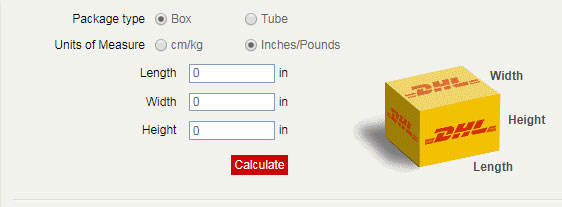
The air freight volumetric weight factor is typically higher: (Length × Width × Height) / 6000.
Learn how to calculate volumetric weight for sea freight here.
How to calculate volumetric weight for road freight
Comparison: Volumetric Weight vs. Actual Weight
Ready to ship or have more questions about shipping from China? Get in touch with our expert sales team today.