
Home / Shipping to Afghanistan / How to Ship from China to Afghanistan
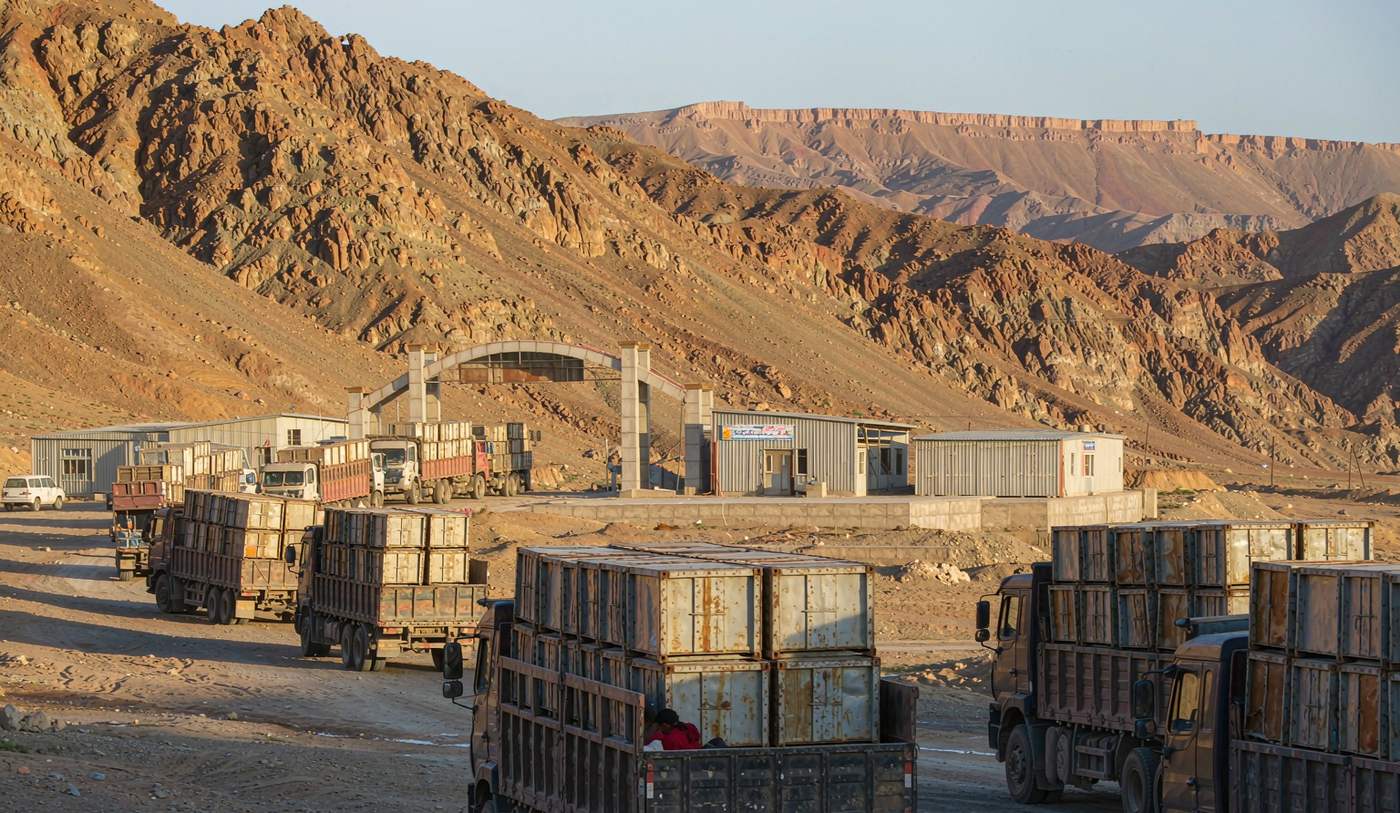
How to Ship from China to Afghanistan: the Transit Corridor, the Bond & the Border
Afghanistan has no seaport, and that one fact shapes everything else on this lane. Every container leaving China discharges in somebody else's country and finishes its journey on a road or a railway through a border crossing. Pakistan supplies the most-used corridor, through Karachi and Port Qasim and then overland at Torkham or Chaman. Iran supplies the western corridor through Bandar Abbas and Chabahar. Central Asia supplies the northern rail route into Hairatan and Torghundi.
What that means for a first-time importer is that the freight is only part of the shipment. The other part is transit — a legal arrangement that lets your goods cross a country they are not being imported into, backed by a bond, and documented on a manifest that cannot be corrected once it is filed. Get that right and the lane works. Get it wrong and the container sits at a border while people argue about paperwork.
The third thing to understand is that this is a corridor purchase, not a rate purchase. The questions that decide cost and time are which country you transit, which crossing you use, and whether your product is allowed on that route at all. Rates come after those are settled.
A note on scope: this page is operational and commercial information about moving cargo. It is not legal or compliance advice. Transit arrangements, border requirements and sanctions-related restrictions change, and they differ depending on who you are, where you operate and what you are shipping. Confirm the position that applies to your shipment with qualified advisers before you commit.
At a glance
Country: landlocked, bordered by Pakistan, Iran, Turkmenistan, Uzbekistan, Tajikistan and China; capital Kabul; a WTO member and a party to SAFTA and to the Afghanistan–Pakistan Transit Trade Agreement. · No seaport: all ocean cargo discharges at a neighbouring port and continues overland. · Main corridors: Pakistan via Karachi and Port Qasim under APTTA, crossing at Torkham or Chaman; Iran via Bandar Abbas or Chabahar, crossing at Islam Qala or Zaranj; Central Asia by rail into Hairatan and Torghundi. · Airports: Kabul, with Kandahar, Mazar-i-Sharif and Herat also served. · Customs: the Afghanistan Customs Department under the Ministry of Finance, with declarations handled through an automated customs system; published references describe ASYCUDA being used for the import declaration. · Duty: published ranges run roughly 2.5 to 25 percent of CIF by HS code, with most general goods reported around 5 to 16 percent. · Business receipt tax: commonly quoted at 2 to 10 percent on the CIF value plus duty; one source describes a flat 10 percent. · Transit: sea plus overland commonly 28 to 42 days; air about 4 to 9 days. · Restricted on the Pakistan route: a reported list of around eighteen categories including tyres, electronics, certain chemicals, vehicle parts, refrigerators, air conditioners and televisions.
How your cargo moves: China to Afghanistan
Eight steps from your supplier's door to yours. The last four are the ones shaped by local rules.
- Pickup from your supplierWe collect the goods anywhere in China and bring them to our consolidation point.
- Export clearanceChina customs declaration filed and released before the goods move to the port.
- Loading and departureContainer loaded, sealed and handed to the carrier at the Chinese port.
- Main carriageOcean, air or rail movement booked on the route agreed for your cargo.
- Arrival at the gatewayDischarge at the port or airport of entry, recorded on the carrier's manifest.
- Import clearanceCustoms declaration filed locally, with duty and tax assessed on the declared value.
- Customs releaseGoods released into free circulation once duty and tax are settled.
- Final deliveryOnward movement to your delivery address, warehouse or nominated depot.
Duty rates, VAT rates and clearance times move, and the figure that applies to your goods is the one set for your commodity code on the day of clearance. We check the current position against your code before your goods sail and confirm it to you in writing — ask for that check when you request a quote.
Everything arrives overland, because there is no Afghan port
This is the part new importers underestimate, because on almost every other lane in this series the story ends at a container terminal. Here the container terminal is only the middle of the story.
A consignment from Shenzhen to Kabul is not one movement. It is a sailing to Karachi, a discharge, a transit arrangement that lets the goods cross Pakistan without being imported into Pakistan, a road haul to a border, a crossing, Afghan import clearance, and a final delivery. Each step has its own documents and its own clock, and the steps are sequential — a delay at any one of them is a delay to the whole shipment.
Two consequences follow immediately. First, the transit country's rules matter as much as Afghanistan's, because your goods spend more time under Pakistani or Iranian control than under Afghan control. Second, insurance and packaging deserve more attention than usual, because the cargo is lifted, set down and re-handled several times more than on a port-to-port shipment.
The corridors into Afghanistan, and what each buys you
The Pakistan corridor
The most-used route, and the one most references describe first. Containers discharge at Karachi or Port Qasim. The movement across Pakistan runs under the Afghanistan–Pakistan Transit Trade Agreement (APTTA), which replaced an earlier transit arrangement and sets out the routes, the goods covered and the customs procedures both sides apply. Cargo crosses at Torkham for Kabul and the east, or Chaman for Kandahar and the south.
The Iranian corridor
Serves the west. Cargo discharges at Bandar Abbas or at Chabahar, which sits close to the Afghan border and was developed with that purpose in mind, then crosses at Islam Qala for Herat or Zaranj for the south-west. Published references also describe a rail connection into Herat on the Iranian side. Where the delivery address is in the west, this route often beats the longer haul up from Karachi.
The third option is the northern rail route, running from China through Central Asia and into Afghanistan at Hairatan near Mazar-i-Sharif or Torghundi in the north-west. It suits bulk and project cargo destined for the north, and it avoids the subcontinent entirely. It also has its own constraint: gauge changes and the availability of rolling stock and wagons, which is a booking question rather than a routing preference.
How to choose: start from the delivery address, not from the port. A Kabul consignment normally wants Torkham. A Herat consignment normally wants Islam Qala. A Mazar-i-Sharif consignment may want the northern rail route. Choosing a port first and working backwards is how shipments end up crossing a country twice.
One further point that surprises people: Afghanistan does share a short border with China, in the Wakhan corridor. It is not a commercial freight crossing in practice, and cargo does not move over it.
The transit manifest you cannot amend afterwards
If there is a single piece of paper on this lane that deserves more care than any other, it is the transit documentation — and specifically the manifest that tells the transit country your cargo is passing through rather than being imported.
Published guidance on the Pakistan route sets out two requirements that catch people out:
- The annotation. Every document on the file should state that the goods are in transit to Afghanistan via Karachi or Pakistan. Without that wording, Pakistani customs may treat the consignment as a domestic import and assess Pakistani duties on it.
- The manifest. The Afghan Transit Manifest declares the cargo as transiting. Guidance notes it cannot be changed after submission. A small error in it is not a quick correction — it can produce weeks of delay and penalties.
Alongside those sits the bond or guarantee. Transit goods are not subject to Pakistani import duty because they are not meant for Pakistani consumption, but the movement is covered by a financial guarantee that secures the duty which would fall due if the goods were diverted into the local market instead of leaving the country. The documentation has to be properly closed out when the cargo exits into Afghanistan, or the guarantee can be called on.
The practical rule is simple: the transit file must be complete and correct before the container discharges, not after. Everything downstream depends on it.
The restricted list behind the Pakistan corridor
Transit is a privilege the transit country grants, and it comes with conditions that change. Pakistan has maintained a list of goods that cannot move in transit to Afghanistan without special permits — reported at around eighteen categories, including tyres, electronics, certain chemicals, vehicle parts, refrigerators, air conditioners and televisions.
Two things make this more than a footnote. The list has been revised more than once, generally in response to concerns about transit goods being diverted into the Pakistani market. And route restrictions have applied at times as well, meaning some goods may only use particular crossings.
What to do with this: tell us your HS code early enough that we can check it against the current transit list, and accept that the answer may push you to a different corridor. A shipment structured on an outdated list can be delayed or refused at the border — and by then the container is already there.
Customs duty and the business receipt tax
Afghan duty is assessed on the CIF value, by HS code. Published references give a band of roughly 2.5 to 25 percent, with most general commercial goods reported around 5 to 16 percent; raw materials and essential goods sit at the low end and non-essential goods at the top. One reference quotes 0 to 20 percent with a flat 10 percent on top. The spread between sources is real, which is itself the lesson:
On top of the duty sits a second charge, described variously as a business receipt tax or a VAT-type levy. Published references quote it at 2 to 10 percent applied to the CIF value plus duty; one describes a flat 10 percent on the same base. That is the step people forget, because it is calculated on a number that already includes the duty.
Duty on the CIF value
By HS code under the Afghan tariff. Raw materials and essentials at the low end, non-essential goods at the high end.
Business receipt tax on the duty-inclusive value
Commonly quoted at 2 to 10 percent of CIF plus duty. Not of CIF alone — which is why a modest duty rate still produces a larger bill than expected.
Clearance, broker and inland costs
Brokerage, border handling, storage where the file is not ready, and the final delivery leg. On this lane these are rarely small, because the handling count is high.
A worked example published for a US$20,000 electronics shipment from Shenzhen to Kabul put the total landed cost at roughly 33 percent above the FOB product value once freight, insurance, duty, the second levy and delivery were included. Use that as an order of magnitude, not as a quotation — but do note that budgeting only for the freight leaves you short by more than the freight itself.
What Afghan customs asks to see at the border
Declarations are filed through the customs authority's automated system, and published references describe ASYCUDA being used for the Afghan import declaration. What matters more than the system is that the file is internally consistent: customs reads the invoice, the packing list, the transport document and the transit papers together, and inconsistency between them is what triggers examination.
| Document | What it has to do |
|---|---|
| Commercial invoice | Complete description, value, HS code and Incoterm, with freight and insurance shown separately; several original copies are commonly requested on this route |
| Packing list | Line-by-line contents, weights, dimensions and carton count, matching the invoice exactly |
| Through bill of lading | Showing the Afghan destination, not just the port of discharge |
| Certificate of origin | Issued in China; establishes origin and supports any preference claimed |
| Afghan transit documentation | The transit manifest and the goods-in-transit annotation on every document in the file |
| Import licence | One published reference states a licence issued by the Afghan Chamber of Commerce is required for commercial shipments — |
| Sector permits | Health certificates, laboratory reports and compliance certificates as the product requires |
| Insurance certificate | Not less than 110 percent of CIF, with cover running through the transit period |
| ISPM 15 evidence | Stamp on every wooden pallet or crate |
Three failure modes account for most of the delays we see described on this lane: vague descriptions such as "parts" or "electronics", an HS code that does not match the goods, and a declared value that looks low. Under-declaration is penalised heavily, and customs has the right to re-assess value against comparable goods. Keep the purchase contract and the payment evidence with the file.
Transit times that include a border, not just a sailing
Published 2026 figures for sea plus land on the Karachi route run at roughly 28 to 42 days to Kabul depending on the Chinese origin port, of which the ocean leg is about 18 to 22 days and the road leg another 12 to 16 days. Shenzhen and southern origins come in at the faster end; northern origins routed via Iran run longer, around 35 to 42 days.
Air freight into Kabul is quoted at about 4 to 9 days. That is where the lane's geography shows: a direct air movement removes the entire transit problem, because the aircraft lands in Afghanistan rather than in a neighbouring country.
| Route | Sea plus overland | Air | Fits |
|---|---|---|---|
| Shenzhen / Guangzhou → Karachi → Torkham → Kabul | 28–36 days | 4–7 days | Fastest southern routing; electronics, general cargo |
| Shanghai / Ningbo → Karachi → Torkham → Kabul | 30–39 days | 4–8 days | East China machinery and apparel |
| Northern China → Bandar Abbas → Islam Qala → Herat | 35–42 days | 5–9 days | Western Afghanistan deliveries |
| China → Central Asia rail → Hairatan / Torghundi | Rail, quoted in weeks | — | Northern deliveries, bulk and project cargo |
Treat every figure in that table as a planning range. The variable is not the ocean carrier's schedule — it is the border. Published references also note that border crossings and crossings-adjacent roads can be affected by seasonal conditions and by congestion, and that Afghan religious and public holidays including Nowruz, Eid al-Fitr and Eid al-Adha close offices for several days at a time.
Air freight into Kabul, and when the premium is worth it
Air freight into Kabul — with Kandahar, Mazar-i-Sharif and Herat also served — removes the transit arrangement entirely. That is worth more than the speed alone suggests.
The case for air on this lane:
- High value, low volume. Electronics, pharmaceuticals, samples and spare parts, where the freight is a small share of the goods value.
- Anything on or near the restricted transit list. If your product may not travel overland through Pakistan, air into Kabul is not just faster, it may be the only clean path.
- Time-critical project cargo. Where a delay at a border costs more than the freight differential.
- First shipments. Many importers run one air shipment to prove the paperwork and the consignee's ability to clear, then move the volume to sea.
The case against is straightforward: air costs several times sea per kilo, and on bulky, low-value goods it destroys the margin. Consolidated air, where we group several consignments, sits between the two and is worth asking about.
What we finish before the truck reaches the crossing
On a port-to-port lane the document file is closed before the vessel sails. On this lane it has to be closed before the container discharges, because the transit papers — the ones that cannot be amended — are created at that point.
- Confirm the corridor against the delivery address, and confirm the crossing, not just the port.
- Check the HS code against the current transit restrictions before you commit to a route.
- Get the annotation onto every document in the file, not onto one of them.
- Get the transit manifest right first time, because it will not be corrected.
- Confirm the consignee can clear and can pay, and that the named importer is consistent across the invoice, the transport document and the declaration.
- Insure through the transit period, at not less than 110 percent of CIF.
Why this lane gets quoted as a corridor rather than a rate
Most lanes are bought by comparing rates for a defined movement. This one is bought by deciding a corridor, a crossing and a transit arrangement, and only then pricing it. The rate follows from those decisions; the decisions do not follow from the rate.
That is also why the useful work happens before anything is quoted. It means checking your HS code against the transit list, matching the corridor to the delivery address, establishing what the bond requires and who provides it, and telling you which permits your product needs and how long they take. None of that appears as a line on a freight quotation, and all of it costs more than the freight when it goes wrong.
Why importers use Goodhope on this lane
Six things that are different about working with us on China to Afghanistan shipments.
Real moves into Afghanistan
Five shipments bought in China and delivered into Afghanistan, told end to end — where the order came from, how it moved, where it nearly went wrong, and how it finished. Client names are withheld at their request; the situations and the handling are what we deal with on this lane.
Transit paperwork · Karachi corridor · Yiwu to Torkham to Kabul
The purchase. A buyer sourcing household goods in Yiwu had a supplier who quoted CIF Karachi and assumed that was the end of the transport question.
The move. Container to Karachi, then movement under the transit arrangement through the corridor and across at Torkham, with inland delivery to Kabul.
Where it nearly went wrong. The transit documentation is filed before the goods move, and it cannot simply be corrected afterwards. A inaccurate weight or description discovered at the crossing costs days rather than hours, because nothing about an overland corridor can be amended at the border itself.
How it finished. We had the documents reconciled to the actual cargo before the container left China, and we always ask about any item that may appear on the restricted list for the corridor in use.
Central Asia routing · rail option · Shenzhen to Hairatan
The purchase. A buyer in the north wanted to avoid the southern crossing entirely because of congestion and uncertain crossing times.
The move. Rail through Central Asia into Hairatan rather than the Pakistan corridor, then road onward inside Afghanistan.
Where it nearly went wrong. Choosing a corridor on distance alone ignores what is actually happening at the crossing that week. The rail route is longer on paper and often better in practice, depending entirely on the destination inside the country.
How it finished. We mapped the delivery town first and then chose the corridor. The northern route took the delay risk out of his supply plan.
Urgent cargo · air into Kabul · Guangzhou to KBL
The purchase. A buyer had production-critical spares held up and could not wait for the surface corridor.
The move. Air freight from Guangzhou direct into Kabul, quoted against the surface alternative so the premium was visible rather than assumed.
Where it nearly went wrong. Air into Kabul costs a great deal more per kilo. The decision only makes sense when the cost of waiting exceeds the freight premium, and most buyers have never been shown both numbers side by side.
How it finished. We ran both routings at once. He took air for the spares and kept his regular volumes on the corridor.
Compliance screening · before any booking · payment and permits
The purchase. A first-time buyer had agreed an order without checking whether his payment route or the product itself raised any compliance question.
The move. Nothing was booked until those questions were settled.
Where it nearly went wrong. On this lane, restricted-item checks and payment screening decide whether a shipment moves at all. Booking freight first and asking afterwards produces cargo stranded at the crossing.
How it finished. We told him to settle sanctions screening, permits and the payment channel before committing to the supplier, then handled the movement on a normal schedule.
Consolidation · several factories · Zhejiang to Kabul
The purchase. A buyer had four suppliers across Zhejiang, none willing to consolidate, each quoting separately.
The move. All four collected to our warehouse, consolidated into one consignment with one set of transit documents and one movement plan.
Where it nearly went wrong. Four separate consignments means four transit files, four chances for a document mismatch, and four lots of minimum charges at the destination.
How it finished. One consolidation, one document set, one party accountable end to end. He has consolidated every order this way since.
Why importers use Goodhope on this lane
Six things that are different about working with us on China to Afghanistan shipments.
Price the corridor with us before you commit to the crossing
Tell us what you are shipping, the HS codes if you have them, the packed dimensions and gross weight, the pickup city in China and the delivery address in Afghanistan. We will tell you which corridor and crossing fit that address, whether your product is restricted on the transit route you were considering, what the bond and the transit documentation require, and what the duty and the business receipt tax come to — so you can see the landed cost before the container moves.
Get a quote Talk to usRelated pages
Frequently asked questions
Does Afghanistan have a seaport?
No. It is landlocked, so no ocean vessel reaches it. Every sea shipment discharges at a neighbouring port — most often Karachi or Port Qasim, or Bandar Abbas and Chabahar — and continues overland. That overland leg is not an add-on; it defines the lane.
Which corridor is used most often?
The Pakistan corridor under APTTA, discharging at Karachi or Port Qasim and crossing at Torkham for Kabul and the east or Chaman for Kandahar and the south. Iran via Bandar Abbas or Chabahar serves the west through Islam Qala and Zaranj. Central Asian rail serves the north at Hairatan and Torghundi. Choose by delivery address.
Do I pay Pakistani duty on transit cargo?
Not normally, because the goods are not for Pakistani consumption. Instead a bond or guarantee secures the duty that would apply if the goods were diverted into the local market, and the documentation must be closed out once the cargo exits into Afghanistan or the guarantee can be called.
What is the goods-in-transit annotation?
Every document should state that the goods are in transit to Afghanistan via Karachi or Pakistan; without it, Pakistani customs may treat the cargo as a domestic import. The Afghan Transit Manifest alongside it cannot be changed after submission, so errors cost weeks, not minutes.
Are there goods that cannot transit through Pakistan?
Yes — a list reported at around eighteen categories, including tyres, electronics, certain chemicals, vehicle parts, refrigerators, air conditioners and televisions. The list has been revised more than once. Check your HS code against the current version before choosing the route.
What duty and tax will I pay?
Duty on CIF, published in a band of roughly 2.5 to 25 percent by HS code with most general goods around 5 to 16 percent, plus a business receipt tax commonly quoted at 2 to 10 percent on the CIF value plus duty. One source describes a flat 10 percent. Confirm your own tariff line.
How long does it take?
Sea plus overland is commonly 28 to 42 days to Kabul, of which the ocean leg is about 18 to 22 days and the road leg 12 to 16 days. Air into Kabul is about 4 to 9 days. The border, not the sailing, is where schedules are won or lost.
Do I need an import licence?
One published reference states that every commercial shipment needs an Afghanistan import licence issued by the Afghan Chamber of Commerce and that it is not optional. Requirements change, so confirm with your consignee and broker before shipping.
Can you deliver door to door?
We can quote DDP with the transit leg, border formalities, Afghan clearance and inland delivery in one number. That is usually right for a first shipment, because the alternative is asking a first-time consignee to manage a bond, a manifest and a crossing alone.
Is insurance worth it here?
Yes, more than on most lanes. The cargo is handled at a seaport, again at a border and again at delivery. Insure at not less than 110 percent of CIF with cover running through the transit period rather than stopping at the port of discharge.