
Home / Shipping to Algeria / How to ship from China to Algeria
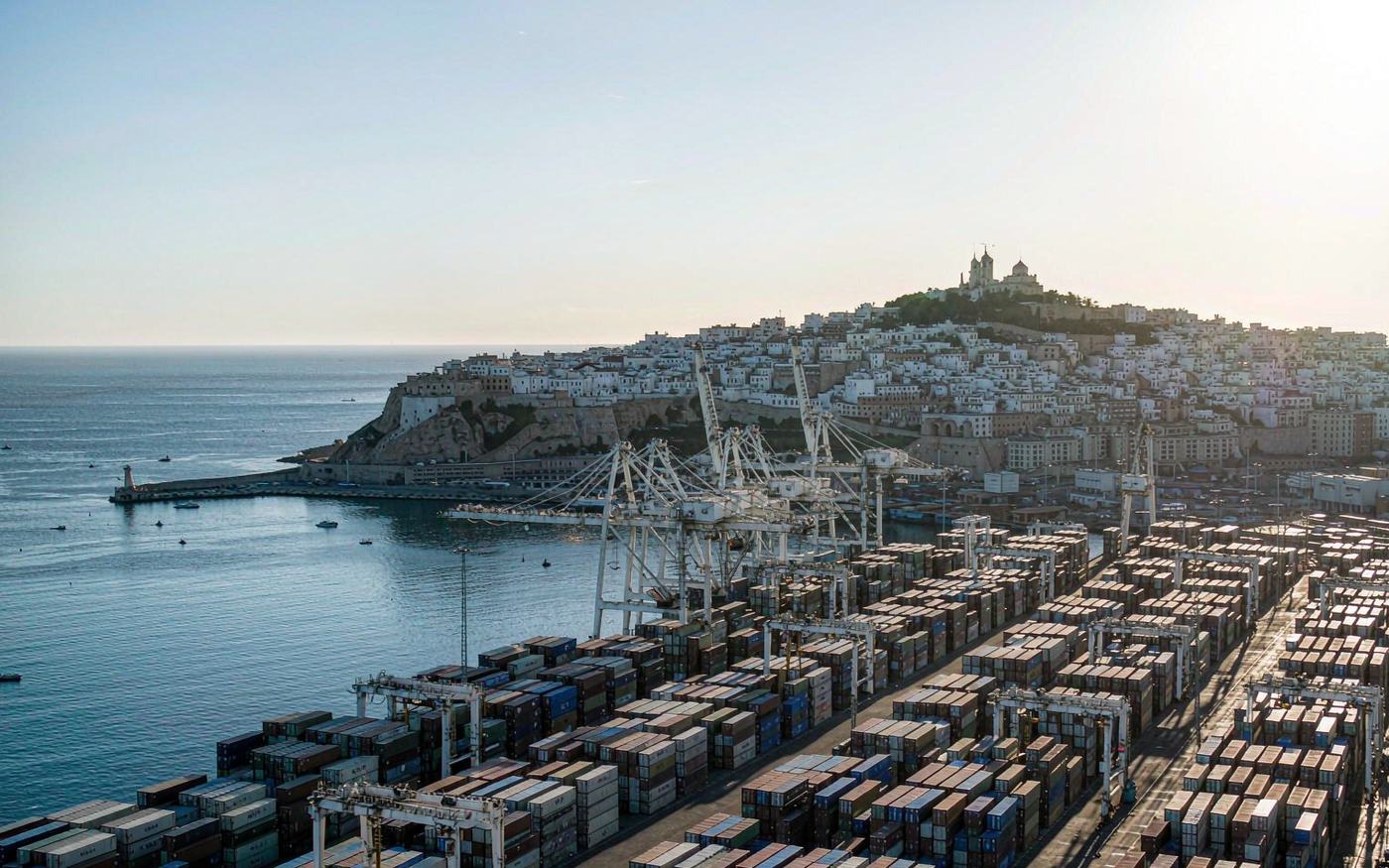
How to ship from China to Algeria
Algeria is the largest country in Africa by land area and a substantial importer of Chinese machinery, building materials, vehicles and consumer goods. It is also one of the more demanding destinations in the Mediterranean, because the paperwork is French, the banking steps come before the shipment rather than after it, and the tax is built in layers rather than as a single rate.
None of that makes Algeria a bad place to ship to. It makes it a place where a first-time importer needs to understand the order of operations before the goods leave the factory. This page sets out that order: what has to be approved before you buy, what has to be filed before the vessel sails, how the charges are calculated, and which ports and airports the cargo actually moves through.
At a glance
Customs runs through the Direction Générale des Douanes on an electronic SAD declaration. Commercial documents must carry French, otherwise they are rejected. Bank domiciliation has to be registered before shipment, with the bill of lading dated after it, and the PPI import forecast has to be approved before any import transaction. Duty of roughly 5 to 30 per cent by HS code, plus a 2 per cent customs service fee and a 1 per cent solidarity tax, then VAT at 19 per cent. Ports at Algiers, Oran, Constantine and Annaba, fed through Mediterranean hubs. Red Sea rerouting has added time to every sailing.
How your cargo moves: China to Algeria
Eight steps from your supplier's door to yours. The last four are the ones shaped by local rules.
- Pickup from your supplierWe collect the goods anywhere in China and bring them to our consolidation point.
- Export clearanceChina customs declaration filed and released before the goods move to the port.
- Loading and departureContainer loaded, sealed and handed to the carrier at the Chinese port.
- Main carriageOcean, air or rail movement booked on the route agreed for your cargo.
- Arrival at the gatewayDischarge at the port or airport of entry, recorded on the carrier's manifest.
- Import clearanceCustoms declaration filed locally, with duty and tax assessed on the declared value.
- Customs releaseGoods released into free circulation once duty and tax are settled.
- Final deliveryOnward movement to your delivery address, warehouse or nominated depot.
Duty rates, VAT rates and clearance times move, and the figure that applies to your goods is the one set for your commodity code on the day of clearance. We check the current position against your code before your goods sail and confirm it to you in writing — ask for that check when you request a quote.
Where Algerian cargo lands, and why the paperwork is in French
Algeria sits on the Mediterranean and almost everything arriving by sea comes through its northern ports. Algiers is the principal container gateway, with Oran in the west and Constantine and Annaba in the east handling significant volumes. Which one you use depends on where the consignee is, because inland haulage across a country this size is not a small add-on.
The first thing to absorb is the language requirement. Algerian law requires commercial documents submitted to customs to be in French. Invoices and packing lists written only in English or Chinese are rejected, and a rejection at this stage is not a delay of a day, it is a delay measured in the time it takes to reissue and resend documents. Have your supplier prepare French versions alongside the English ones, or have them translated before the goods ship.
The second thing is that Algerian customs is document-driven and unforgiving about consistency. The five most common causes of a rejected entry are a declared value that does not match the market reference, a wrong HS code, missing French translations, a mismatch between the invoice and the packing list, and missing product certificates. All five are preventable in China, and none of them are fixable at the port.
Domiciliation at the bank must happen before the goods are shipped
Every commercial import into Algeria is routed through a bank, and the bank has to register the transaction before the goods move. This is called domiciliation. Under the instruction issued in 2026, the registration has to be completed before shipment, and the date on the bill of lading has to be later than the date the domiciliation was registered.
Read that carefully, because the ordering is the whole point. If your supplier ships first and the paperwork is sorted afterwards, the dates run the wrong way and the file does not work. Set the sequence up front: contract, then domiciliation, then production release, then shipment.
In practice this makes payment terms part of the logistics plan rather than separate from it. Letters of credit are common on this route, and banks enforce strict compliance, so a discrepancy in the documents is a payment delay as well as a clearance problem. Agree the payment route with your buyer, in writing, at the same time as you agree the Incoterm.
PPI: the import forecast that gates the whole purchase
The PPI, or Programme Prévisionnel d'Importation, is an import forecast that the Algerian importer has to have approved by the relevant trade authority before carrying out an import transaction. Banks cannot process the payment without it. For a supplier in China this matters because it means your buyer cannot simply decide to buy and then sort out the formalities afterwards: the approval has to exist first.
If you are exporting to Algeria for the first time, ask your buyer directly whether the PPI for the current period is approved and covers your product category. It is a reasonable question, and a serious buyer will have an answer. A buyer who does not know what you are talking about is a buyer who has not imported before, and the shipment will stall at the banking step.
The same logic applies to the import licence. Certain categories need one, and where it is needed it has to be held before the goods arrive. Ask the buyer to confirm which of the two applies to your goods.
The conformity certificate, and the ninety-day clock on it
Algeria runs a conformity certification regime administered through the national standards body, with inspection and certification carried out by approved agencies. It covers a broad list of industrial and consumer goods, and electronics, machinery, household appliances, building materials and vehicles are squarely inside it. Food, cosmetics and medical goods attract their own separate certification.
Two features catch people out. First, the certificate is per shipment: it is valid for a defined period, commonly around ninety days, and it has to be current for the batch you are shipping rather than for the product in general. Second, it is applied for by the Algerian importer, using their own registration and tax numbers, not by the supplier in China.
Because the application starts on the Algerian side, it has to start early. Confirm with your buyer who is applying, and when, before you release the order to production. A shipment that arrives without a valid certificate faces fines, and in serious cases re-export or destruction.
Product labelling is part of the same regime. Labels are expected to carry the product name in Arabic, the country of origin, the importer details, and a shelf life where one applies. Missing elements can fail the inspection even where the certificate itself is in order.
How the tax stack is built: duty, two fees, then VAT
Algerian import charges are not a single percentage. They are a sequence applied to the CIF value, and the VAT sits on top of everything that came before it.
| Charge | Indicative rate | Applied to |
|---|---|---|
| Customs duty | 5% to 30% by HS code | CIF value |
| Customs service fee | 2% | CIF value |
| Solidarity tax | 1% | CIF value |
| VAT | 19% standard, 9% on essentials | CIF + duty + the two fees |
| Excise | Varies | Tobacco, alcohol and similar |
The practical consequence is that VAT is charged on a figure that already includes the duty and the fees, so the effective burden on a finished consumer good is materially higher than the duty rate alone suggests. Model it properly before you quote, and get the HS code confirmed first, because the code sets the duty band that everything else is stacked on.
Do not under-declare. Algerian customs compares declared values against reference data, and a value that looks too low is reassessed upwards with penalties attached. Declare the true transaction value and budget for the real number.
Red Sea rerouting added time to every sailing
Since late 2023, carriers serving the Mediterranean from Asia have largely routed around the Cape of Good Hope rather than through the Red Sea and Suez. That decision added roughly ten to fourteen days to every sailing, and it is now the baseline rather than an exception.
Any transit estimate that does not reflect Cape routing is out of date. When you are given a number, ask which route it assumes. This matters most when you are working backwards from a delivery date: the extra two weeks have to come out of your production schedule, not out of your buffer.
On top of the main leg, most Algeria-bound cargo tranships through a western Mediterranean hub. Hub congestion, industrial action and feeder scheduling gaps can roll a container to a later vessel, which is a further delay on top of the main leg. Build the schedule as a range and tell your buyer a range.
The ports themselves, and the Mediterranean hubs feeding them
| Port | Position | What it serves |
|---|---|---|
| Algiers | Centre | Principal container gateway, largest broker pool |
| Oran | West | Western Algeria, industrial and project cargo |
| Constantine / Annaba | East | Eastern Algeria, shorter inland haul for eastern consignees |
Choosing the port is an inland-transport decision as much as a shipping one. A container landed at Algiers for a consignee near Annaba has a long road journey ahead of it, and on Algerian roads that is time and money. Ask where the consignee actually is, and pick the port accordingly.
Free time on containers is typically one to two weeks, after which detention accrues daily. Because clearance depends on documents and banking steps that sit with the importer, the clock can run while paperwork is sorted. Make sure the buyer knows the free-time window before the vessel arrives, not after it.
Air freight into Houari Boumediene, and when it is worth it
Algiers is served by Houari Boumediene airport, and air freight works well for the categories it always works well for: urgent spare parts, medical supplies, samples and small high-value items. It does not work for bulk, and it does not bypass any of the documentation requirements above.
That second point is worth stating plainly. An air shipment still needs a declaration, still needs French documents, still needs a conformity certificate where one applies, and still meets the same banking sequence. Flying goods in saves time on the ocean leg only. If the file is not complete, the cargo will sit at the airport.
For anything time-critical, tell us before you book so the document set can be prepared in parallel with the flight rather than after it. See air freight from China for how the long-haul leg works.
Used equipment has an age limit here
Algeria restricts the import of used goods, and where used equipment is permitted there is an age ceiling on it. Published figures describe industrial equipment needing to be no more than about five years old and agricultural equipment no more than about seven. Used vehicles are broadly prohibited, subject to narrow exceptions.
If your shipment contains used machinery, establish the position before the goods ship rather than discovering it at the port. You will need the year of manufacture, and in most cases a document evidencing it, and the buyer will need the right import licence.
Related restrictions apply to certain foodstuffs and agricultural products through seasonal bans and quotas, and to a standard list of prohibited items. If you are unsure whether your product is affected, ask us to check before booking rather than after loading.
Documents that get a container out of Algiers
The set is conventional in shape but strict in content. Everything has to agree with everything else, and everything has to be available in French.
- Commercial invoice in French, with a specific description, quantity, unit and total value, currency, HS code, country of origin and the Incoterm used.
- Packing list in French, with piece count, net and gross weights and dimensions, matching the invoice line for line.
- Bill of lading or air waybill, dated after the bank domiciliation was registered, with consignee details matching the import licence.
- Certificate of origin, chamber-certified.
- SAD customs declaration, filed by the licensed broker.
- Certificate of conformity where the product category requires one, applied for by the importer and valid for the batch.
- Import licence where the goods are controlled.
- Insurance certificate, which is effectively mandatory on CIF terms.
Vague descriptions are the most common cause of a hold. "Machine parts" will be queried; a specific description with an HS code will not. Our shipping documents page shows the format we ask suppliers to follow.
Who this route suits
Algeria rewards preparation and punishes improvisation. That is worth knowing before you commit.
- Buyers who already import and hold the registrations, licences and PPI approval
- Machinery, building materials and industrial inputs on a planned programme
- Consumer goods where the conformity route is understood and budgeted
- Shipments planned far enough ahead for the banking sequence
- The buyer has never imported and has no registrations in place
- You need the goods delivered by a fixed, near-term date
- The goods are used equipment of uncertain age
- You are planning to sort out documents after shipment
If it is a good fit, the single highest-value thing you can do is start the paperwork conversation with your buyer before the production order is placed. On this route the documents, not the vessel, are what determine the arrival date.
Why importers use Goodhope on this lane
Six things that are different about working with us on China to Algeria shipments.
Case notes into Algeria
Five shipments bought in China and delivered into Algeria, told end to end — where the order came from, how it moved, where it nearly went wrong, and how it finished. Client names are withheld at their request; the situations and the handling are what we deal with on this lane.
Domiciliation caught late · bank formalities · Shanghai to Algiers
The purchase. A buyer had his goods ready to load before anyone had told him that bank formalities had to be registered first.
The move. Held the booking until the bank domiciliation was in place, then shipped and filed the declaration with the required dates aligned.
Where it nearly went wrong. Bank domiciliation must be registered before shipment, with the bill of lading dated after it, and the import forecast approved before the transaction. Loading before that is done creates a document trail that cannot be corrected after the ship sails.
How it finished. We stopped the booking, got the sequence right, and shipped three days later with a file that would stand up to inspection.
French documents · rejection avoided · Guangzhou to Oran
The purchase. A buyer submitted English-language documents because that is what his supplier issued.
The move. Documentation reissued with French before submission, then the shipment moved to Oran.
Where it nearly went wrong. Commercial documentation must carry French here, and English-only paperwork is rejected. It is one of the simplest reasons a consignment sits at the port.
How it finished. We checked the documents before they were submitted and had them corrected in China at no great cost, rather than in Oran at considerable cost.
Conformity certificate · ninety-day clock · Ningbo to Algiers
The purchase. A buyer had obtained the conformity certificate weeks early and let it lapse before the vessel sailed.
The move. Certificate revalidated, then shipment sailed and cleared.
Where it nearly went wrong. The conformity requirement carries a validity window. Obtaining it too early is almost the same mistake as obtaining it too late.
How it finished. We now schedule certificate timing backwards from the actual sailing, and every clearance since has run clean.
Used equipment · age limit · Qingdao to Constantine
The purchase. A buyer sourced second-hand machinery on price and discovered late that the age of the equipment mattered.
The move. Reviewed the equipment age before booking; where it fell outside the limits, we told him before he committed to the purchase.
Where it nearly went wrong. Used equipment carries an age restriction here. Freight cannot be routed around it, and cargo that arrives in breach is a total loss rather than a delay.
How it finished. He avoided one purchase entirely and adjusted the specification on the next, having been told before rather than after.
Tax stack · budgeting error · Shenzhen to Annaba
The purchase. A buyer was working out landed cost using the duty rate alone.
The move. Shipment to Annaba with the full assessment walked through before he placed the second order.
Where it nearly went wrong. Duty here is only the first layer. A customs service fee, a solidarity tax and then VAT sit on top, each calculated on the running total, which is why duty-only estimates fall well short.
How it finished. He priced his margin against the real stack and avoided an unpleasant surprise at clearance.
Why importers use Goodhope on this lane
Six things that are different about working with us on China to Algeria shipments.
Getting a quote for Algeria
Send us the commodity, the HS codes if you have them, the weight and dimensions, and the city the goods are going to. We will tell you which port makes sense, what has to be in place before shipment, and what the tax stack is likely to look like.
Get a quote Talk to usRelated pages
Frequently asked questions
Do my documents really have to be in French?
Yes. Algerian law requires the commercial documents submitted to customs to carry French, and invoices or packing lists provided only in English or Chinese are rejected. Have French versions prepared before the goods ship rather than after a rejection.
What is bank domiciliation, and when does it have to happen?
It is the registration of the import transaction with an Algerian bank. It must be completed before shipment, and the bill of lading date must be later than the date the domiciliation was registered. Ship first and sort the paperwork later, and the dates run the wrong way.
What is the PPI?
The Programme Prévisionnel d'Importation is an import forecast that the Algerian importer must have approved before carrying out an import transaction. Banks cannot process payment without it. Ask your buyer whether it is approved and covers your product category.
Do I need a certificate of conformity?
If your goods fall within the covered categories, which include electronics, machinery, household appliances, building materials and vehicles, yes. It is applied for by the Algerian importer, it is per shipment, and it is valid for a limited period. Arriving without one risks fines and, in serious cases, re-export or destruction.
How are import duty and VAT calculated?
In layers on the CIF value: duty of roughly 5 to 30 per cent by HS code, a customs service fee of about 2 per cent and a solidarity tax of about 1 per cent, and then VAT at 19 per cent on the total of all of those. Essentials may attract a reduced VAT rate.
Which port should I ship to?
Whichever is closest to the consignee. Algiers is the principal container gateway, Oran serves the west, and Constantine and Annaba serve the east. Inland haulage across Algeria is significant, so the port choice is an inland transport decision.
How long does shipping from China to Algeria take?
Longer than pre-2023 schedules, because carriers route around the Cape of Good Hope rather than through the Red Sea, which adds roughly ten to fourteen days. Transhipment through a Mediterranean hub and any document delay sit on top of that. Treat any date as a range.
Can I ship used machinery?
There are age limits where used equipment is permitted: published figures suggest about five years for industrial equipment and about seven for agricultural equipment. Used vehicles are broadly prohibited. Establish the position before shipping.
Can I fly the goods in instead?
Yes, into Houari Boumediene airport, and it suits urgent, compact, high-value cargo. It does not bypass the paperwork: the declaration, the French documents, the conformity certificate and the banking sequence all still apply.
How long do I have to collect the container?
Free time is typically one to two weeks, after which daily detention charges accrue. Because clearance depends on documents and banking steps held by the importer, make sure the buyer knows the window before the vessel arrives.