
Home / Shipping to American Samoa / How to Ship from China to American Samoa
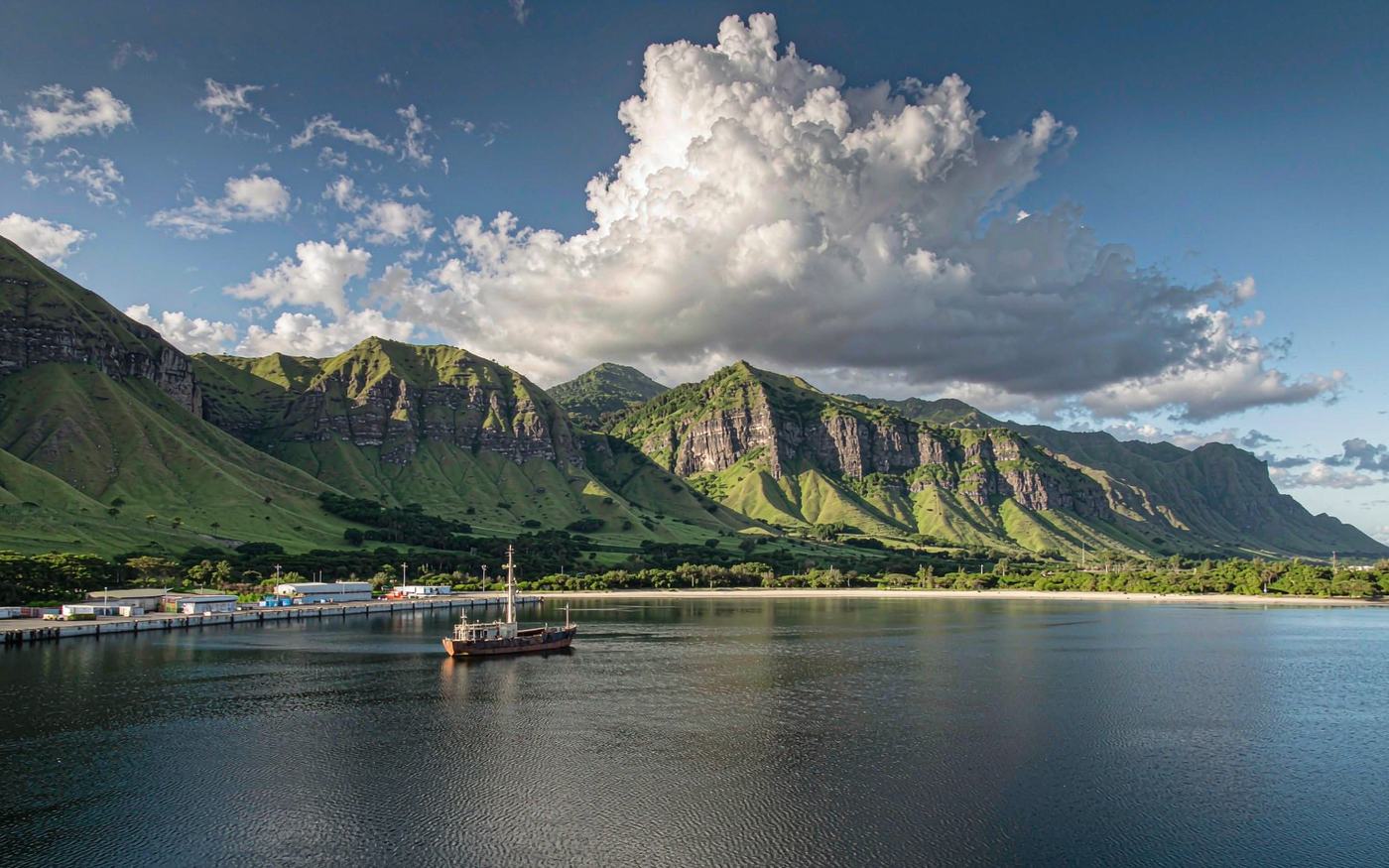
How to Ship from China to American Samoa: Pago Pago, the Excise Tax & the Long Way Round
American Samoa is the smallest kind of market and the longest kind of route. Roughly forty-five thousand people live in the territory, almost everything they use arrives by sea, and the ships that bring it do not come from China directly. If you are quoting a buyer in Pago Pago for the first time, three facts will shape the whole job: the territory runs its own customs, it taxes the CIF value instead of charging VAT, and it has one deepwater harbour.
The customs point is the one that surprises people. Under 19 CFR 7.2, the insular possessions of the United States other than Puerto Rico — American Samoa, Guam, Wake Island, Midway Islands, Johnston Atoll and the Northern Mariana Islands — are American territory but sit outside the customs territory of the United States. Importations into American Samoa are not governed by the Tariff Act of 1930. The customs administration of American Samoa is under the Government of American Samoa, and in practice that means the Customs Division of the Department of Treasury, which handles entries, collects the excise tax and controls goods at the points of entry and exit.
The tax point follows from it. American Samoa levies no general value added tax and no sales tax. What replaces them is an import excise tax charged on the CIF value — the cost of the goods, plus insurance, plus freight. That detail matters more than it looks: because the base includes freight and insurance, the freight figure you declare is not just a shipping cost, it is part of the taxable amount.
At a glance
Territory: unincorporated, unorganised territory of the United States, five volcanic islands and two coral atolls in the South Pacific, population in the region of 45,000 · Status: outside the US customs territory; customs run by the Government of American Samoa · Main port: Port of Pago Pago, Tutuila · Main airport: Pago Pago International Airport (PPG) · Tax: no VAT, no general sales tax; import excise tax on the CIF value, with higher rates on vehicles, alcohol, tobacco and sweetened drinks · Currency: US dollar · Cyclone season: roughly November to April
How your cargo moves: China to American Samoa
Eight steps from your supplier's door to yours. The last four are the ones shaped by local rules.
- Pickup from your supplierWe collect the goods anywhere in China and bring them to our consolidation point.
- Export clearanceChina customs declaration filed and released before the goods move to the port.
- Loading and departureContainer loaded, sealed and handed to the carrier at the Chinese port.
- Main carriageOcean, air or rail movement booked on the route agreed for your cargo.
- Arrival at the gatewayDischarge at the port or airport of entry, recorded on the carrier's manifest.
- Import clearanceCustoms declaration filed locally, with duty and tax assessed on the declared value.
- Customs releaseGoods released into free circulation once duty and tax are settled.
- Final deliveryOnward movement to your delivery address, warehouse or nominated depot.
Duty rates, VAT rates and clearance times move, and the figure that applies to your goods is the one set for your commodity code on the day of clearance. We check the current position against your code before your goods sail and confirm it to you in writing — ask for that check when you request a quote.
American Samoa runs its own customs, and its own tax logic
It is worth being precise about what "outside the customs territory" does and does not mean, because both directions matter on this lane.
Going in. Goods imported into American Samoa are not governed by the Tariff Act of 1930. The Customs Division administers the entry, applies the territory's own excise structure and controls the goods. A broker who has only ever filed mainland US entries will not find the same mechanics here, and assuming otherwise is how a shipment ends up waiting for paperwork nobody knew was required.
Coming out. The reverse direction is different. Goods sent from American Samoa into the customs territory of the United States are subject to the column 1 rates of the Harmonized Tariff Schedule unless they qualify for an exemption under the insular possession rules. So the same territory is duty-free in one direction and dutiable in the other. If your buyer intends to re-export to the mainland, that asymmetry belongs in their business case before they order, not after.
What that means for you as the shipper. You are not filing this entry. But you are supplying the documents it is built on, and you can remove most of the delay risk by preparing them to a standard that survives a manual check: a real product description, weights that reconcile, an invoice that states freight and insurance separately so the CIF base can be computed without argument.
Pago Pago is the single deepwater gate, and almost everything goes through it
The Port of Pago Pago, on the southern coast of Tutuila, is the territory's only deepwater port and is reported as handling the overwhelming majority of American Samoa's trade — commonly cited at around ninety-five percent. It is a natural deep harbour, sheltered by the shape of the bay, and it takes container vessels, reefers and general cargo. It is operated by the Department of Port Administration, which also runs the airport.
Air cargo arrives at Pago Pago International Airport (PPG) near Tafuna. Its runway is long enough to handle very large aircraft, which is why heavy and out-of-gauge air cargo is a realistic option here when it would not be at many comparable island airports. The main exports through both gateways are fish products, particularly canned tuna from the local canning industry; the main imports are food, fuel and petroleum products, consumer goods and building materials.
For a new importer the operational point is concentration risk. When one harbour carries nearly all trade, anything that slows that harbour slows everything. Berth congestion, a storm, or a customs backlog will affect your consignment regardless of which carrier you chose. Plan the arrival date with a margin and treat the port as a single point of failure.
Excise tax on the CIF value instead of a VAT line
There is no VAT here, and no general sales tax. Instead the Customs Division charges an excise tax on the CIF value of imported goods. Structurally this is the same arrangement you find in several other island territories: the government raises revenue at the border rather than at the till, because there is no broad consumption tax to collect from.
Two consequences follow, and both are practical.
Your declared freight is taxable
Because the base is CIF rather than FOB, the freight and insurance figures on your invoice feed directly into the tax calculation. Declare them accurately and separately. Understating freight to make the invoice look smaller is a valuation problem, not a saving, and it is the kind of thing that turns a routine entry into an examination.
The rate depends on the product
Excise here is not one flat number. Published references describe higher rates applying to particular categories — vehicles, alcohol, tobacco and sweetened beverages among them — with ordinary goods at the general rate. Before you quote, ask the consignee's broker for the rate that applies to your specific HS code rather than working from a general figure.
Do not quote a landed cost you cannot support. We deliberately do not publish freight rates or tax percentages on this page, because the rate that applies depends on the HS code and the current territorial schedule, and because a wrong figure quoted to a buyer is worse than no figure. Ask us for the current position on your specific product.
What the Customs Division asks for at the entry
The document set is short, and that is exactly why each item has to be right. On a thin route with few sailings, a missing certificate does not cost a day — it costs a sailing, which is worth weeks.
Commercial invoice
Complete product description, quantity, unit and total value, currency, and — usefully on this lane — the freight and insurance figures shown separately so the CIF base is visible on the face of the document. Include the HS code if you have it.
Packing list
Contents of each package, piece count, net and gross weights, dimensions, and the marks and numbers that appear on the packages. It must reconcile with the invoice.
Transport document
Bill of lading for sea cargo, airway bill for air. On a transhipped route, check the consignee and notify party before issue — amendments after sailing are slow enough to miss the connection.
Customs entry
Lodged with the Customs Division of the Department of Treasury, by the importer or their agent. Confirm in advance who lodges it and on what basis, because the mechanics are local.
Product permits
Required for food, plant and animal products, pharmaceuticals, and vehicles, among others. Biosecurity control is strict in Pacific territories and agricultural imports are closely managed. Establish the requirement before the goods sail.
No direct service exists, so the cargo changes ships somewhere
This is the defining operational fact of the lane. American Samoa is small and remote, the volume from China does not justify a dedicated direct loop, and in practice cargo is transhipped through a Pacific hub — Honolulu, Los Angeles and Auckland are the ones most often used. What that means for planning:
- Transit is measured in weeks. Not days. Set buyer expectations accordingly and in writing.
- The connection decides the date. Two quotes that look the same on price can differ materially on arrival because the routings differ. Ask which hub, and ask what the connecting service is.
- Missed connections cost more here. On a trunk route a missed sailing costs days. On a thin island route it can cost weeks, because the next departure may be a fortnight away.
- Air is a genuine alternative. Because PPG can take heavy freighter types, air freight is not limited to small parcels. For high-value or time-critical cargo it is often the better answer despite the cost.
Cyclone season and the sailing calendar it disturbs
The cyclone and rainy season in this part of the South Pacific runs roughly from November to April. Storms and heavy rain in that window can disrupt both sea and air services, and on a route this thin the disruption is not absorbed by frequency — there is no second sailing the following day to fall back on.
Plan around it rather than through it. If a shipment is tied to a fixed date — a construction milestone, a retail opening, the start of a school year — either ship ahead of the window or build a margin that assumes one missed connection. A buyer who is told in advance that the arrival estimate has a two-week band is far easier to work with than one who is told a date and then watches it slip.
Higher rates on vehicles, alcohol, tobacco and sugary drinks
Excise structures in island territories are rarely flat, and American Samoa's is no exception. Published references describe elevated rates on vehicles, alcohol, tobacco and sweetened beverages. Vehicles additionally attract their own utilisation tax — commonly quoted at around four percent of the vehicle's value — and must be registered and licensed locally on arrival, since any foreign registration exemption ends when the vehicle lands.
If you are shipping any of these categories, treat the entry as a special case. Get the rate and the documentary requirements confirmed by the Customs Division or a local broker before the goods are booked, because these lines are individually assessed and a general-purpose quotation will not be accurate.
How a small Pacific consignment is planned end to end
The sequence below is the order we work to. It is worth reading as a dependency chain — each stage gates the next — rather than as a timetable, because the elapsed time depends on the routing and the season.
| Stage | What happens | What it depends on |
|---|---|---|
| Confirm the product is importable | Check the product against restricted and controlled lists, and establish whether a permit is needed | The product category. Do this first — it can stop the shipment entirely |
| Confirm the excise rate | Get the rate for your HS code from the consignee's broker | Accurate HS classification, which is your responsibility to supply |
| Choose the mode and routing | Sea via a named hub, or air to PPG | Value, urgency, and the sailing calendar at the time of booking |
| Pack for the route | Export packing, moisture protection, ISPM 15 marked timber | Whether the packing spec was set at order time rather than at load time |
| China export clearance | Declaration filed and goods released | Complete documents before the truck is booked |
| Transhipment | Container discharged and re-loaded at the hub | The connecting sailing — the largest single variable |
| Arrival at Pago Pago | Discharge and entry lodged with the Customs Division | Whether the entry and permits were prepared in advance |
| Assessment and release | Excise assessed on the CIF value, examination if selected, release | Whether the declared values and permits stood up |
Where American Samoa shipments tend to lose days
In our experience the delays on this lane are not exotic. They are the ordinary ones, amplified by infrequent sailings and manual processes.
- A vague product description. "Spare parts" or "electronic items" invites a query, and a query here costs a sailing rather than an hour.
- Freight and insurance not shown separately. The CIF base has to be computed. Make it easy.
- Wood packaging without the ISPM 15 mark. Pacific territories enforce this. Unmarked timber can stop a consignment at the gate.
- A permit discovered after loading. Food, plant-derived and pharmaceutical lines need permits that should be established at order stage.
- Amending the bill of lading after sailing. On a transhipped route the amendment can outrun the connection.
- Shipping into the cyclone window with no margin. Assume one missed connection.
Questions worth settling before you quote a Samoan buyer
- Is the product importable, and does it need a permit? Establish this before you price anything.
- What is the excise rate for this HS code? Get it from the broker, not from a general guide.
- Who lodges the entry? Name the party and confirm they work the local system.
- Which hub does the cargo route through, and what is the connection? Compare routings, not just prices.
- Is the wooden packaging marked? Check before the container is sealed.
- FCL or LCL? LCL for a first order; FCL once volume is regular.
- Does the shipment land inside the cyclone window? If so, build in a margin.
- Will the buyer re-export to the mainland? If yes, warn them that goods leaving American Samoa for the US customs territory are dutiable.
Why importers use Goodhope on this lane
Six things that are different about working with us on China to American Samoa shipments.
Real stories into American Samoa
Five shipments bought in China and delivered into American Samoa, told end to end — where the order came from, how it moved, where it nearly went wrong, and how it finished. Client names are withheld at their request; the situations and the handling are what we deal with on this lane.
Excise surprise · no VAT, excise instead · Shenzhen to Pago Pago
The purchase. A buyer moving goods from the mainland US assumed the Samoan entry would work the same way.
The move. Consignment routed via a transshipment hub into Pago Pago and cleared through local customs.
Where it nearly went wrong. American Samoa sits outside the US customs territory and applies its own import excise on the CIF value rather than a VAT line. Assuming US mainland rules apply here produces the wrong budget.
How it finished. We explained the assessment method before he confirmed pricing, so his landed cost was right the first time.
Higher rates · sweetened drinks · Guangzhou to Pago Pago
The purchase. A retailer imported beverages without realising those lines carry a higher excise rate.
The move. Small retail consignment transshipped into Pago Pago and cleared, with the higher rate applied.
Where it nearly went wrong. Vehicles, alcohol, tobacco and sweetened drinks attract higher rates. On low-margin grocery lines that difference decides whether the import is worth doing.
How it finished. He restructured his order towards lines that were not penalised and kept the beverage volumes smaller.
Cyclone season · sailing calendar · Shanghai to Pago Pago
The purchase. A buyer working to a store opening date booked a routing without considering the season.
The move. Advised the booking forward so transshipment connections were not made in the worst of the cyclone window, then cleared and delivered.
Where it nearly went wrong. Cyclone season disrupts the sailing calendar, and a missed connection into Pago Pago can cost weeks on a route with very few sailings.
How it finished. Booking against the calendar rather than the machine saved the opening date.
Transshipment reality · no direct service · Ningbo to American Samoa
The purchase. A buyer assumed there was a direct sailing from China and wondered why transit was longer than the distance implied.
The move. Routed through a Pacific hub onto a feeder service, with the connection built into the transit estimate from the start.
Where it nearly went wrong. No direct service exists. Everything reaches Pago Pago by changing ships somewhere, and the waiting time for that connection is the largest and least predictable part of the journey.
How it finished. He stopped measuring transit against direct distance and started planning around the connection.
Small cohort · first purchase · Yiwu to Pago Pago
The purchase. A first-time buyer needed a modest mixed order and was quoted several thousand dollars for shipping it.
The move. Consolidated the mixed purchase at our China warehouse and moved it as one LCL consignment rather than several small parcels.
Where it nearly went wrong. On a route with few sailings, minimum charges apply at every step, and splitting a small order multiplies them.
How it finished. One consolidated shipment, one entry, at a fraction of what he had been quoted for separate parcels.
Why importers use Goodhope on this lane
Six things that are different about working with us on China to American Samoa shipments.
The routing and the permit question to settle before booking
Tell us what you are shipping, the HS codes if you have them, the packed dimensions and gross weight, the pickup city in China and the delivery address in American Samoa. We will confirm the current routing to Pago Pago and which transhipment hub it uses, tell you plainly which permits the product needs before it leaves China, check the wooden packaging and moisture protection requirements with you, and quote the sea and air options separately so you can see what the extra speed costs. We do not publish freight rates on this page; we quote them, against your actual cargo.
Get a quote Talk to usRelated pages
Frequently asked questions
Is American Samoa part of the US customs territory?
No. It is American territory but lies outside the customs territory, and its customs administration is under the Government of American Samoa. Goods travelling from there into the mainland are subject to HTSUS column 1 rates.
Is there VAT or a general sales tax in American Samoa?
No. Instead the Customs Division charges an import excise tax on the CIF value — cost, insurance and freight — with higher rates on vehicles, alcohol, tobacco and sweetened beverages. Your declared freight is part of the taxable base.
Which port handles cargo from China to American Samoa?
The Port of Pago Pago on Tutuila, the territory's only deepwater port, reported as handling around ninety-five percent of trade. Air cargo uses Pago Pago International Airport (PPG), whose runway can take heavy freighter types.
Is there a direct shipping service from China to American Samoa?
No regular direct service. Cargo is normally transhipped through a Pacific hub such as Honolulu, Los Angeles or Auckland. Transit is measured in weeks, and the connecting sailing decides the arrival date.
What documents does the Customs Division require?
Commercial invoice, packing list, bill of lading or airway bill, and a customs entry lodged with the Customs Division of the Department of Treasury. Additional permits apply to food, plant and animal products, pharmaceuticals and vehicles.
How long does shipping from China to American Samoa take?
Plan in weeks rather than days, because cargo transships. Air freight is substantially faster and PPG can handle heavy freighters. Ask for the current rotation including the hub, since island schedules change seasonally.
Does the cyclone season affect shipping to American Samoa?
Yes. The season runs roughly November to April, and storms can disrupt sea and air schedules with no alternative sailing the next day. Build slack into fixed-date shipments.
What taxes apply to importing a vehicle into American Samoa?
Vehicles fall in the higher-rate excise categories, and a vehicle utilisation tax of around four percent of value is commonly cited. The vehicle must then be registered and licensed locally. Confirm current rates with the Customs Division before shipping.
What goods are prohibited or restricted?
Narcotics, explosives and flammable materials, weapons and ammunition, counterfeit goods and obscene material are prohibited. Permits are required for medicines, food and beverages, plants and seeds, live animals, and lithium battery products. Biosecurity is strict.
Should the first shipment to American Samoa be FCL or LCL?
LCL is usually right for a first order on a lane with infrequent sailings. Move to FCL once volume is regular. Quote consolidation and destination charges explicitly, because fixed costs are a larger share of the total here.