
Home / Shipping to Andorra / How to Ship from China to Andorra
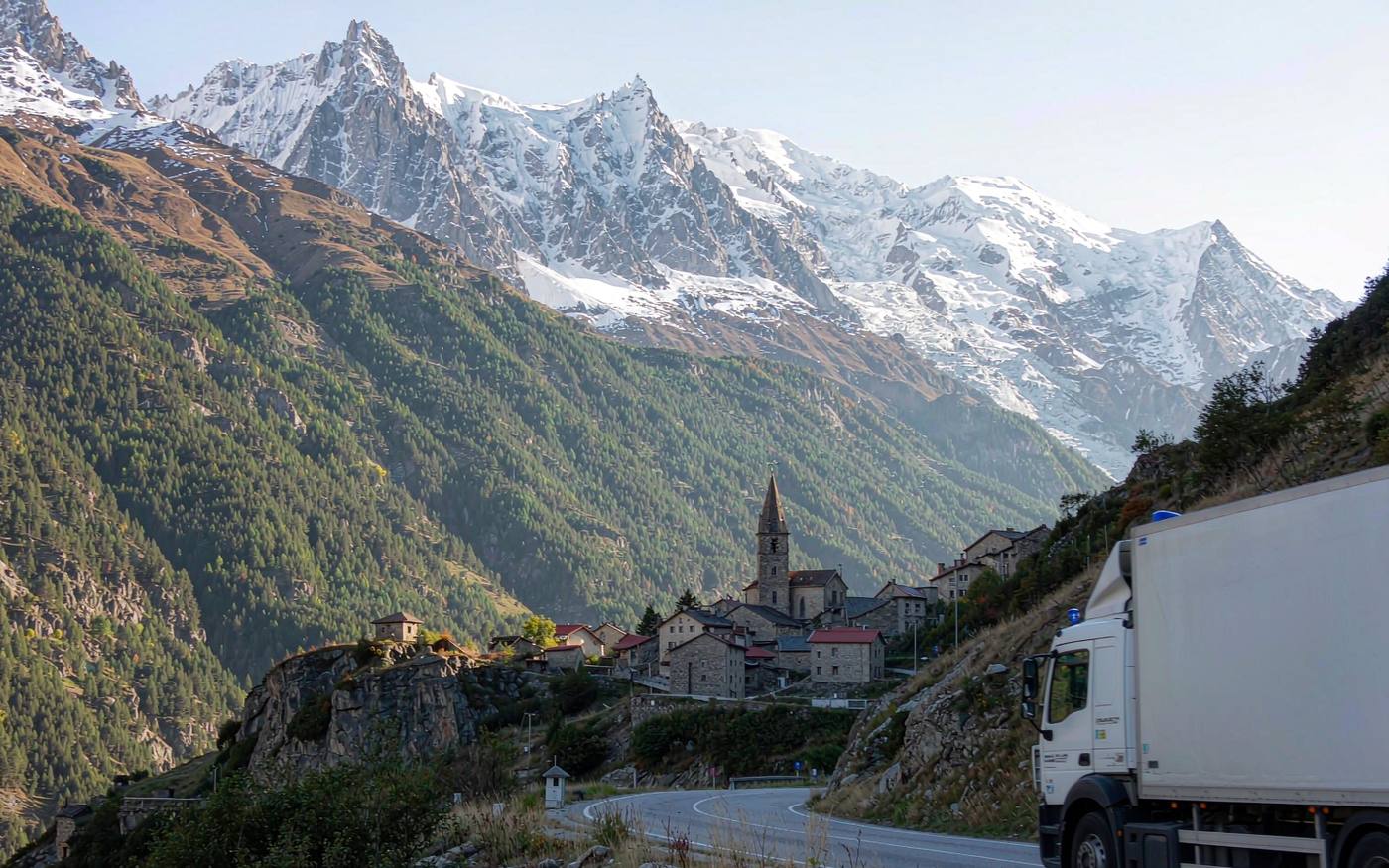
How to Ship from China to Andorra
Andorra has no seaport, no airport and no railway. Every single thing that arrives in the country comes in over a road from Spain or France, and that single fact shapes the entire shipping plan. You are not shipping to Andorra - you are shipping to Barcelona, Tarragona or Toulouse, clearing there, and then running a mountain road leg into the principality.
This guide is for buyers doing it for the first time. It covers the two road corridors and the sea and air gateways they depend on, how long the journey takes and what winter does to it, where the customs formalities actually happen, how the Andorran indirect tax works and why agricultural goods are treated differently, which goods need a permit, and how final delivery works inside the country. We do not publish freight rates here; the aim is to give you the structure to plan and to read a quotation properly.
At a glance
No seaport, airport or railway - road only. Gateways: Barcelona or Tarragona by sea, Barcelona-El Prat or Toulouse by air. Road entry: La Seu d'Urgell from Spain, Pas de la Casa from France. Customs: Duana Andorrana, using the single administrative document. Indirect tax: IGI at 4.5 per cent. Currency: euro.
How your cargo moves: China to Andorra
Eight steps from your supplier's door to yours. The last four are the ones shaped by local rules.
- Pickup from your supplierWe collect the goods anywhere in China and bring them to our consolidation point.
- Export clearanceChina customs declaration filed and released before the goods move to the port.
- Loading and departureContainer loaded, sealed and handed to the carrier at the Chinese port.
- Main carriageOcean, air or rail movement booked on the route agreed for your cargo.
- Arrival at the gatewayDischarge at the port or airport of entry, recorded on the carrier's manifest.
- Import clearanceCustoms declaration filed locally, with duty and tax assessed on the declared value.
- Customs releaseGoods released into free circulation once duty and tax are settled.
- Final deliveryOnward movement to your delivery address, warehouse or nominated depot.
Duty rates, VAT rates and clearance times move, and the figure that applies to your goods is the one set for your commodity code on the day of clearance. We check the current position against your code before your goods sail and confirm it to you in writing — ask for that check when you request a quote.
No port, no airport, no railway: how freight gets into Andorra
Andorra sits in the eastern Pyrenees between Spain and France and has no port, no commercial airport and no rail connection. All freight moves by road, and there are two practical corridors. From Spain, goods come up through La Seu d'Urgell in Catalonia. From France, they come through Pas de la Casa on the eastern side.
Which corridor you use is usually determined by where your cargo clears and where your carrier's network is stronger. The Spanish route is the more commonly used of the two for containerised cargo arriving at Barcelona, simply because Barcelona is the bigger gateway with more services from China.
The consequence for planning is that an Andorran shipment always has three stages: an international leg to a Spanish or French gateway, a clearance at that gateway, and a mountain road leg into Andorra. Each has its own cost, its own documents and its own schedule risk. A quotation that covers only the first is not a quotation for delivery to Andorra.
Andorra is also a small market with limited warehousing. If your consignee does not have storage capacity, plan delivery windows tightly rather than assuming goods can be held indefinitely at the gateway.
Sea freight via Barcelona or Tarragona and the road leg over the Pyrenees
For anything bulky or heavy, sea freight to Barcelona is the backbone of the route. Barcelona is a major Mediterranean port with frequent services from Chinese ports, good container handling and a well-developed road network inland. Tarragona is a secondary option and can be worth quoting if your consignee is in the western part of Andorra or if Barcelona is congested.
From the port, the road leg into Andorra is a mountain run of a few hours depending on the gateway and the season. It is a separate service with its own price, and it should be quoted as a line item rather than assumed.
Because cargo arriving from China is not in free circulation in the European Union, it has to clear before it can be moved onward into Andorra. That means the customs formalities happen at the Spanish gateway, not at the Andorran border, and the goods then move under the appropriate procedure for the final leg.
Ask your forwarder three questions: which port, whether the quotation includes the road leg to Andorra, and who handles the customs formalities at the gateway. Those three answers tell you whether you are looking at a real through quotation or half of one.
Flying cargo in through Barcelona or Toulouse for Andorra
Air cargo for Andorra arrives at Barcelona-El Prat or Toulouse-Blagnac and then moves by road. For small, urgent or high-value shipments this is often the more sensible choice, because it removes weeks of sea transit and shortens the total journey substantially.
Given the size of the Andorran market, most air shipments are relatively small, and express courier is frequently the simplest answer. Express carriers serve Andorra through their Spanish and French networks, and door-to-door transit is typically measured in a few business days rather than weeks.
There are limits worth checking. Hazardous materials and loose lithium batteries are handled more cautiously on this route, and not every carrier serves Andorra for every dangerous goods category. If your cargo is regulated, confirm acceptance before you book rather than after collection.
Air does not remove the customs work. The goods still clear at the gateway and the Andorran indirect tax still applies. What you gain is time, not exemption.
Transit time to Andorra and the winter road factor
Total transit is the sum of the international leg, the clearance at the gateway and the road leg into Andorra. Published trade commentary describes typical through times in the range of seven to twelve working days for a standard sea-based movement, extending in peak periods.
The variable that is unique to this route is winter. Snow and ice in the Pyrenees affect the mountain passes, and in bad conditions the road leg can be delayed or require different routing. If your shipment has a hard deadline between roughly November and March, build in extra time or consider whether the French corridor is the better bet on current conditions.
Clearance at the gateway is the other variable. Because goods from China are not in EU free circulation, they have to be declared, and a documentation problem at Barcelona costs days before the truck has even started climbing.
Ask for a through estimate broken out by stage, and add a buffer that reflects the season rather than a flat percentage.
The DUA declaration and where Andorran customs actually sits
Import and export formalities in Andorra are handled by the Andorran customs administration using a single administrative document. In practice, the Andorran border posts work alongside the Spanish or French customs administration, because goods cannot reach Andorra without crossing one of them first.
What this means for you is that there are two moments of control, not one. Goods arriving from China are declared at the European Union gateway, and then there is an Andorran customs step at the border. Both need documentation, and a mismatch between them stops the goods.
The document set is the standard one: commercial invoice, packing list, the transport document - a road consignment note for the final leg - and the single administrative document. Where a preferential origin claim is available, origin evidence is required to support it.
If your company appears as a party in the customs declaration at the European gateway, an economic operators registration and identification number is normally required. Confirm whether your forwarder, your broker or your Andorran consignee is the declarant, and get that settled before the goods ship rather than at the border.
Andorra's IGI instead of VAT, and the agricultural exception
Andorra is not in the European Union VAT area. Instead of VAT it applies its own indirect tax, the IGI, at a general rate of 4.5 per cent - one of the lowest rates of its kind in Europe. Reduced rates apply to certain categories, including a lower rate for many food products and exemptions for healthcare and education.
On duties, the position is unusual and worth understanding. Andorra has a partial customs union with the European Union covering industrial goods - broadly the tariff chapters from 25 to 97 - under which those goods move without standard customs duty. Agricultural products, in chapters 1 to 24, sit outside the customs union and are subject to Andorran tariffs and, in some cases, excise.
So the tax position depends entirely on what you are shipping. A consignment of industrial goods may attract little or no customs duty plus the IGI. A consignment of food, drink or agricultural products faces a genuinely different calculation - tariff, possible excise, the IGI rate for that category plus labelling, ingredient, storage, health certificate and quantity requirements.
Get the calculation done before you quote your customer. For agricultural and food products especially, the answer is rarely a single percentage, and discovering the real figure at the border is an expensive way to learn it.
Andorran licences, restricted lines and the categories needing approval
The categories needing a licence or prior approval are a recognisable set: tobacco, alcohol, firearms, and pharmaceuticals. Andorra also applies its own rules for agricultural and food products that are separate from European Union requirements, so a product that is straightforward to import into Spain may not be straightforward to import into Andorra.
Because the market is small and the border is a real control point, the practical advice is to confirm the position for your specific product in writing before shipping. Give your broker the full commodity list, including packaging materials, and ask what is needed.
Regulated electronics, cosmetics and anything with a lithium battery also attract attention on this route, and dangerous goods acceptance varies by carrier. Confirm acceptance before booking.
Finally, note that Andorra maintains controls on quantities for certain goods brought in for commercial purposes. If your consignment is large relative to the size of the market, expect questions about its intended use and be ready to answer them with documentation.
Packing and documentation for a two-border journey
Cargo to Andorra is handled more times than cargo to a single-border destination: at origin, at the gateway port or airport, onto the mountain truck, and at the Andorran border. Pack for more handling events than you would normally assume.
Use export-grade cartons, palletise where the volume justifies it, and wrap securely. Mountain roads are winding, so load securing matters - cartons that shift in transit arrive damaged.
Wood packaging must meet the international phytosanitary standard and carry the corresponding mark. This is checked at the European gateway, and non-compliance there stops the shipment before it ever reaches Andorra.
On documents, keep one consistent set. The commercial invoice, packing list and transport documents should tell the same story in the same figures, because they will be read twice - once at the European gateway and once at the Andorran border. Any inconsistency will be found, and the second reading is the expensive one to fail.
Incoterms and the EORI question for Andorran deliveries
Under FOB, the seller loads in China and you contract the international leg, the gateway clearance and the Andorran road leg. Under CIF to Barcelona, the seller pays freight and insurance to the port but risk still transfers at loading in China. Under DAP or DDP, the seller carries more, and DDP includes clearing the goods and paying the applicable duty and indirect tax.
Given the two-border complexity, DDP is worth considering seriously on this route - but only if you confirm precisely what it covers. Ask whether the price includes the road leg into Andorra, whether the Andorran indirect tax is included, and who is the declarant at each border.
The registration question catches people out: if your company appears as a party in the customs declaration at the European gateway, an economic operators registration and identification number is normally needed. Decide early who the declarant is - your forwarder, a broker, or your Andorran consignee - and confirm the number exists before shipping.
For higher-value or heavier consignments, a formal export declaration at the gateway may also be required. Ask your broker what the thresholds are and whether your shipment crosses them.
Last-mile distribution inside Andorra
Andorra is a small, mountainous country with a compact but awkward distribution geography. Valleys, steep roads and winter conditions all shape delivery times, and the population is concentrated in a handful of parishes along the main valley.
Delivery vehicles are generally small relative to those used in larger European markets, partly because of road geometry and partly because of urban access. If your consignment is full-pallet or oversized, confirm in advance that the delivery vehicle can actually reach the address.
Storage is limited. If your consignee cannot receive the goods on the day they arrive, you may be paying for redelivery or for holding the cargo at the gateway. Confirm the delivery window in writing before dispatch.
Because everything is imported, lead times on replacement stock are long. If you are supplying the Andorran market regularly, holding buffer stock either at a Spanish gateway warehouse or inside Andorra is usually cheaper than expediting replacements.
Where Andorran shipments lose days
The most common is a quotation that stops at the gateway. A price to Barcelona is not a price to Andorra, and the road leg plus the Andorran border step are where the extra time and money sit. Always specify the final delivery point.
The second is assuming that clearing in Spain or France is the end of it. It is not - there is an Andorran customs step behind it, and the two declarations have to agree.
The third is underestimating winter. Snow in the Pyrenees is a normal operating condition, not an exception, and a plan that assumes summer transit times in February will disappoint someone.
The fourth is the customs union boundary. Industrial goods and agricultural goods are treated differently, and importers who assume a single rule for everything get an unpleasant surprise at the border.
Last: registration. If your company is the declarant at the European gateway and does not have the required registration number in place, the goods will wait while that is sorted out.
Why importers use Goodhope on this lane
Six things that are different about working with us on China to Andorra shipments.
End to end into Andorra
Five shipments bought in China and delivered into Andorra, told end to end — where the order came from, how it moved, where it nearly went wrong, and how it finished. Client names are withheld at their request; the situations and the handling are what we deal with on this lane.
No port, no airport · first order · Foshan to Barcelona to Andorra
The purchase. A buyer new to importing ordered hotel furniture and asked why there was no Andorran port on the booking.
The move. Container from Shenzhen to Barcelona, cleared, then road transport over the Pyrenees with the Andorran entry filed at the border.
Where it nearly went wrong. Andorra has no seaport, no airport and no railway. Every consignment arrives through Spain or France, and the inland mountain leg is a separately planned job rather than the tail end of the sea freight.
How it finished. We quoted the whole chain including the mountain leg. Nothing about the route surprised him.
Winter delivery · February · Guangzhou to Andorra la Vella
The purchase. A buyer scheduled a delivery for February without accounting for winter road conditions.
The move. Sea freight arriving earlier than strictly needed, held and released, then delivered once the road over the Pyrenees was open.
Where it nearly went wrong. Winter conditions close or slow the mountain approach regularly. A delivery timed as if it were a summer run misses its own deadline.
How it finished. We pulled the booking forward and held the goods rather than promising a February delivery date we could not control.
Wrong tax assumption · IGI not VAT · Ningbo to Pas de la Casa
The purchase. A buyer used to importing into Spain assumed Spanish VAT rates applied.
The move. Entry handled at the French border with Andorran customs, indirect tax assessed under Andorran rules.
Where it nearly went wrong. Andorra applies its own indirect tax rather than Spanish VAT, and the rate is far lower. Budgeting on Spanish figures both overstates your cost and misrepresents what you will actually pay.
How it finished. We confirmed the assessment basis before he committed to retail pricing.
Gateways compared · Barcelona against Toulouse · Shanghai to Andorra
The purchase. A buyer was offered one gateway by another forwarder and wanted to know whether the other made more sense.
The move. Quoted both sea via Barcelona and air via Toulouse, including crossing choice at La Seu d'Urgell against Pas de la Casa.
Where it nearly went wrong. The better gateway depends entirely on where in Andorra the goods are going and which side the consignment enters from. Nobody had shown him the comparison.
How it finished. He took the Spanish routing for regular stock and keeps Toulouse for anything urgent going to the north.
Documentation · two borders · Yiwu to Andorra
The purchase. A buyer crossing two borders had documents prepared for only one customs authority.
The move. Documents prepared for both the Spanish and Andorran stages, then reviewed before departure.
Where it nearly went wrong. This is a two-border journey. Paperwork that satisfies one stage of it leaves the consignment stuck at the second, which is the expensive place to discover the problem.
How it finished. Everything was reconciled before the container left China, and the movement ran end to end without a stop.
Why importers use Goodhope on this lane
Six things that are different about working with us on China to Andorra shipments.
Plan an Andorra delivery through the right gateway
Tell us the commodity, volume and the delivery address inside Andorra. We will pick the gateway, confirm who declares at each border, set out the IGI and any duty that applies to your product category, and quote the road leg as part of one through price.
Get a quote Talk to usRelated pages
Frequently asked questions
Does Andorra have a port or airport?
No. Andorra has no seaport, no commercial airport and no railway. All freight arrives by road from Spain - usually through La Seu d'Urgell - or from France through Pas de la Casa. Sea cargo comes in via Barcelona or Tarragona and air cargo via Barcelona-El Prat or Toulouse.
How long does shipping from China to Andorra take?
Plan as three stages: the international leg to a Spanish or French gateway, clearance there, and the mountain road leg into Andorra. Published commentary describes typical through times of around seven to twelve working days for a standard sea-based movement, longer in peak periods, and winter weather in the Pyrenees can add more.
What tax applies to imports into Andorra?
Andorra is not in the EU VAT area. It applies its own indirect tax, the IGI, at a general rate of 4.5 per cent, with reduced rates for some categories such as many food products and exemptions for healthcare and education.
Is there customs duty on goods imported into Andorra?
It depends on the product. Andorra has a partial customs union with the European Union covering industrial goods - broadly tariff chapters 25 to 97 - under which those goods generally move without standard duty. Agricultural products in chapters 1 to 24 sit outside the customs union and attract Andorran tariffs and sometimes excise.
What is the DUA?
The single administrative document used for Andorran import and export formalities, processed by the Andorran customs administration. In practice the Andorran border posts work alongside the Spanish or French customs administration, because goods must cross one of those countries first.
Do I need an EORI number to ship to Andorra?
If your company appears as a party in the customs declaration at the European gateway, an economic operators registration and identification number is normally required. Decide early who the declarant is - your forwarder, a broker or your Andorran consignee - and confirm the number is in place before shipping.
Which goods need a permit for Andorra?
Tobacco, alcohol, firearms and pharmaceuticals commonly need prior approval, and Andorra applies its own rules for agricultural and food products separate from EU requirements. Regulated electronics, cosmetics and lithium batteries can also attract scrutiny. Confirm your product in writing before shipping.
Should I use sea or air for Andorra?
Sea to Barcelona is the backbone for bulky or heavy cargo. Air via Barcelona or Toulouse, and express courier, are usually better for small, urgent or high-value shipments - and express transit is typically measured in a few business days rather than weeks.
Can dangerous goods or lithium batteries be shipped to Andorra?
With care. Acceptance varies by carrier and not every carrier serves Andorra for every dangerous goods category. Built-in batteries are generally easier than loose ones. Confirm acceptance before booking rather than after collection.
What documents are needed for an Andorran import?
A commercial invoice, a packing list reconciling with it, the transport document including a road consignment note for the final leg, and the single administrative document, plus origin evidence where a preferential claim is made. Keep one consistent set, because it is read at both the European gateway and the Andorran border.