
Home / Shipping to Aruba / How to Ship from China to Aruba: Barcadera, the 7% Border Tax and the Persoonsnummer
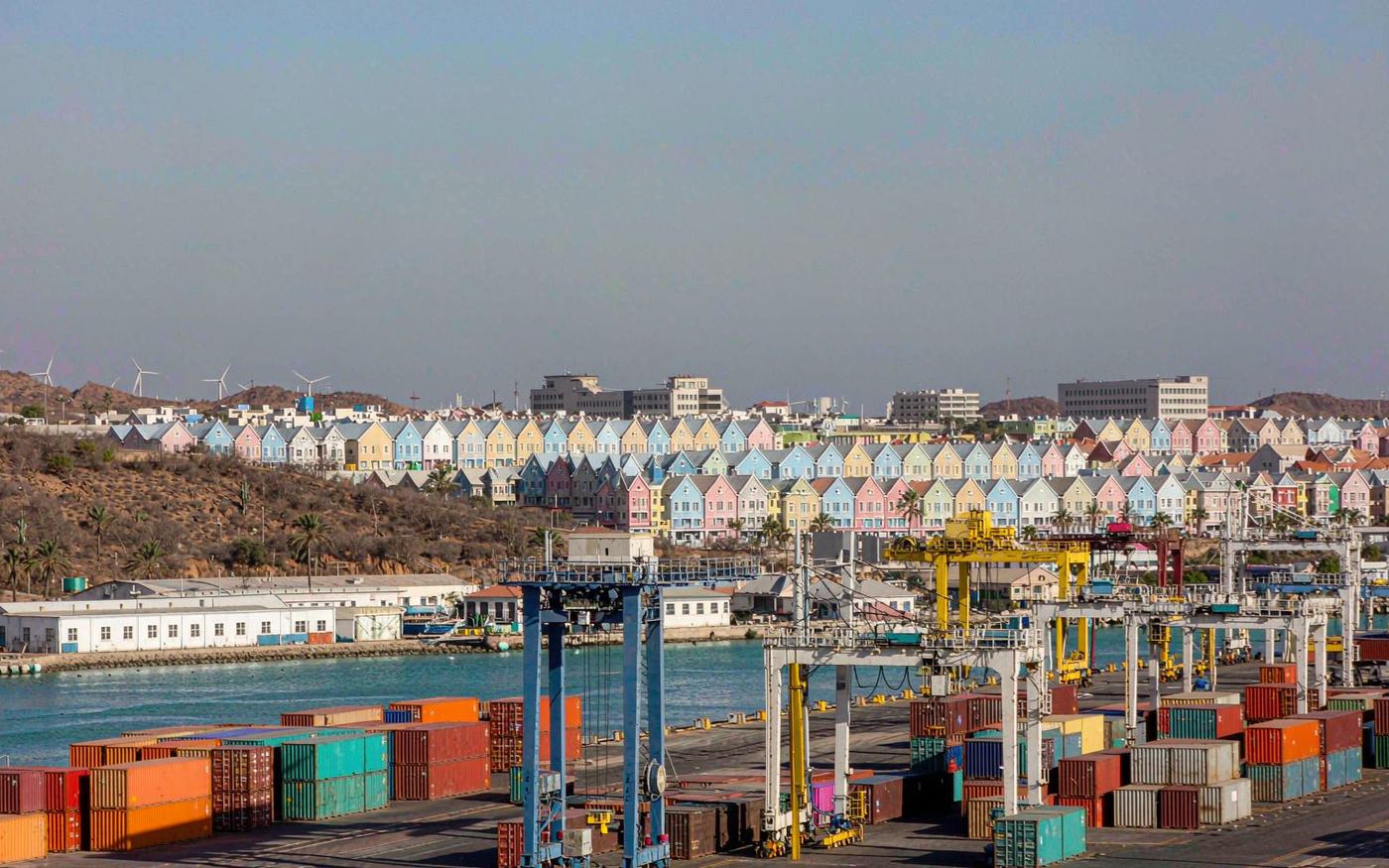
How to Ship from China to Aruba: Barcadera, the 7% Border Tax & the Persoonsnummer
Two things about Aruba cost first-time importers real money, and both are easy to get right. The first is the port. Barcadera Container Terminal is the island's only container facility. The Port of Oranjestad handles cruise ships and breakbulk and has no container infrastructure at all. A bill of lading that names Oranjestad will need a discharge-port correction, and that correction delays release.
The second is the tax. Since 1 August 2023, a turnover tax has been levied at import — a combined 7 percent made up of BBO at 2.5 percent, BAVP at 1.5 percent and BAZV at 3 percent, on the customs value, on top of import duty. A great deal of published material about Aruba still states that imports are not taxed, because that was true before August 2023. It is not true now, and a landed-cost model built on an older source will be short by seven percent.
The third thing is administrative rather than financial. Recurring importers need a persoonsnummer, the Aruban tax identification number, on every declaration. If your buyer does not have one, or gives you a number that does not match the importer of record, the declaration cannot be filed correctly — and storage accrues while that is sorted out.
At a glance
Status: autonomous country within the Kingdom of the Netherlands; EU Overseas Country and Territory, not in the EU customs union · Customs: Departamento di Aduana, douane.aw · Container port: Barcadera Container Terminal — the only container facility · Oranjestad: cruise and breakbulk, no container infrastructure · Duty: by HS classification, published ranges roughly 0–22% on the CIF value in Aruban florin · Border turnover tax: since 1 August 2023, 2.5% BBO + 1.5% BAVP + 3% BAZV = 7% · Registration: persoonsnummer required on declarations · Airport: Queen Beatrix International, AUA · Currency: Aruban florin, AWG, pegged to the US dollar · CARICOM: not a member · Storms: largely outside the main hurricane belt
How your cargo moves: China to Aruba
Eight steps from your supplier's door to yours. The last four are the ones shaped by local rules.
- Pickup from your supplierWe collect the goods anywhere in China and bring them to our consolidation point.
- Export clearanceChina customs declaration filed and released before the goods move to the port.
- Loading and departureContainer loaded, sealed and handed to the carrier at the Chinese port.
- Main carriageOcean, air or rail movement booked on the route agreed for your cargo.
- Arrival at the gatewayDischarge at the port or airport of entry, recorded on the carrier's manifest.
- Import clearanceCustoms declaration filed locally, with duty and tax assessed on the declared value.
- Customs releaseGoods released into free circulation once duty and tax are settled.
- Final deliveryOnward movement to your delivery address, warehouse or nominated depot.
Duty rates, VAT rates and clearance times move, and the figure that applies to your goods is the one set for your commodity code on the day of clearance. We check the current position against your code before your goods sail and confirm it to you in writing — ask for that check when you request a quote.
Name Barcadera on the bill of lading, not Oranjestad
Aruba has two ports that people confuse. Barcadera Container Terminal, on the south-eastern coast, is the island's only container facility: containerised cargo, customs examination, unstuffing and release all happen there. The Port of Oranjestad handles cruise traffic and breakbulk and has no container handling capability.
What to do about it. Name Barcadera as the discharge port from the outset. If a document has already gone out naming Oranjestad, correct it early — a discharge-port correction after the vessel has sailed is one of the more avoidable causes of a delayed release on this lane.
Since August 2023 the border turnover tax exists, and most guides have not caught up
Before 1 August 2023, turnover tax was not levied at import in Aruba. That is why so much published material still says Aruba does not tax imports. That position ended. Since that date a turnover tax has been charged at import, on the customs value, on top of duty.
| Component | Rate | Note |
|---|---|---|
| BBO — belasting op bedrijfsomzetten, turnover tax | 2.5% | The base component |
| BAVP — a health-related surcharge | 1.5% | Applied alongside BBO |
| BAZV — a crisis levy | 3% | Applied alongside the others |
| Combined at the border | 7% | On the customs value, in addition to import duty |
How to handle it with a buyer. State plainly that the seven percent exists, that it is charged at the border, and that it sits on top of duty rather than replacing it. If the buyer's accountant is working from a pre-2023 source, they will not be expecting it.
Where the duty lands by product category
Import duty is assessed by HS classification on the CIF value in Aruban florin. Published ranges put the schedule broadly between zero and twenty-two percent, with a median around twelve percent, and with a clear pattern: machinery and basic food at the bottom, consumer goods at the top.
| Category | Range commonly published | What it tells you |
|---|---|---|
| Books | 0% | Bottom of the schedule |
| Industrial machinery | 0–5% | Inputs are kept cheap |
| Electronics | 0–12% | Wide spread — the code matters |
| Basic and processed food | 0–12% | Basic items at the low end |
| Toys | Around 12% | Middle |
| Clothing, footwear and cosmetics | 12–22% | Top of the schedule |
Excise duties also apply to alcohol, tobacco and mineral oil products, on top of everything above. As always: these are published ranges from secondary sources, not the statutory schedule. Confirm the rate for your code with the Departamento di Aduana before you price.
The persoonsnummer that has to be on the declaration
The persoonsnummer is the Aruban tax identification number. Recurring importers are required to supply it to their broker on every declaration. It is the same class of administrative detail as the CRIB number in Curaçao or the TIN in the Cayman Islands: trivial to sort out in advance, and expensive to discover at the port.
- Get it before the goods ship. It is a field on the declaration.
- Make sure it matches the importer of record. A parent company's number is not the same thing.
- A newly established buyer may not have one. Registration takes time; build it into the plan.
- Use a licensed Aruban broker. The declaration is filed with the Departamento di Aduana, and the broker will ask for the number early.
South of the storm track, with a tourism season that drives the bookings
Aruba sits well south of the main hurricane belt. There is still a tropical storm risk from roughly June to November, but the seasonal closures that disrupt ports further north are far less likely here — a genuine advantage for a project with a deadline in the second half of the year.
The calendar pressure comes from somewhere else. Aruba's economy is tourism-driven, and the procurement cycle for hotels, restaurants and retail clusters around the season from October through April. That means booking pressure and freight rates rise together. Ordering against that calendar rather than into it is worth more than negotiating the rate.
Free zones and where they actually help
Aruba operates free zone and free trade zone facilities, including at Barcadera and in Oranjestad. The proposition is the usual one: goods held or processed in the zone without duty, where the qualifying conditions are met, with duty becoming payable if the goods are subsequently sold into the domestic market.
What to confirm before relying on it. That the operator holds the status they say they hold; that this movement qualifies; what happens if the goods are sold locally, because that is a duty event; and what the record-keeping obligations are. Ask the operator's broker and the Departamento di Aduana, not the counterparty's sales team.
How a China shipment is relayed to Aruba
There is no direct sailing from China. Containerised cargo is consolidated and relayed through a regional hub — Panama and Cartagena are the names that come up most often on this lane — and then carried to Barcadera on a feeder. The practical consequence is the usual one for a small island: a missed feeder connection at the hub costs more time than a slow ocean leg, so book against the relay cutoff rather than at it.
Air freight arrives at Queen Beatrix International Airport, AUA, and is the right answer for spares, samples and urgent consignments. Aruba's air connections are better than its size alone would justify, because the island's tourism economy depends on them.
From a Chinese factory to an Oranjestad warehouse
| Stage | What happens | What decides it |
|---|---|---|
| Code and rate | HS code fixed, duty rate identified, 7% border tax allowed for | Doing it before quoting |
| Importer set-up | Persoonsnummer confirmed, importer of record named, broker appointed | Whether the buyer is registered — check early |
| Routing | Consolidated and relayed, commonly via Panama or Cartagena | The relay cutoff, not the ocean transit |
| Documentation | Bill of lading naming Barcadera, invoice, packing list | Catching the port name before documents are issued |
| China export clearance | Declaration filed, goods released | Documents complete before the truck is booked |
| Arrival and entry | Declaration filed at Barcadera, duty plus 7% assessed | Classification accuracy and complete paperwork |
| Release | Charges paid, cargo released and moved | Funds and transport arranged in advance |
Nail down the tax base before you quote an Aruba buyer
- Does the bill of lading name Barcadera? Oranjestad has no container infrastructure.
- Has the 7% border turnover tax been included? It has applied since August 2023.
- What is the HS code, and what duty rate attaches to it? Published ranges run 0–22%.
- Does the buyer have a persoonsnummer? It goes on every declaration.
- Which hub is the cargo relayed through? Name it, and book before the cutoff.
- Is a free zone involved, and does this movement qualify? Verify the status.
- Is the arrival inside the October–April procurement peak? Book early.
- Is the wooden packaging ISPM 15 marked? Check before sealing.
Why importers use Goodhope on this lane
Six things that are different about working with us on China to Aruba shipments.
How it happens into Aruba
Five shipments bought in China and delivered into Aruba, told end to end — where the order came from, how it moved, where it nearly went wrong, and how it finished. Client names are withheld at their request; the situations and the handling are what we deal with on this lane.
Wrong terminal on the bill · Barcadera, not Oranjestad · Shenzhen to Aruba
The purchase. A buyer's documents named Oranjestad, which is the port he had always seen on quotes.
The move. Bill of lading corrected to name Barcadera Container Terminal before the shipment moved.
Where it nearly went wrong. Barcadera is the island's only container facility. Oranjestad handles cruise and breakbulk cargo and no containers, so naming it creates a mismatch that has to be fixed while the cargo is already on the water.
How it finished. Caught before issuance rather than after arrival. Every booking since names Barcadera.
New tax missed · border turnover tax · Ningbo to Aruba
The purchase. A buyer priced his landed cost from guidance written before the border turnover tax came in.
The move. Tax base confirmed before quoting, then shipment moved and cleared on the current basis.
Where it nearly went wrong. The border turnover tax has applied since August 2023 and a great deal of published guidance has not caught up. Pricing from an older source understates the real figure.
How it finished. We confirmed the base in writing before he quoted his customer, and he avoided repricing an order after it was already sold.
Missing persoonsnummer · declaration detail · Guangzhou to Aruba
The purchase. A first-time buyer submitted a declaration missing one identifier.
The move. Persoonsnummer added before submission, clearance completed without a query.
Where it nearly went wrong. The persoonsnummer has to appear on the declaration. It is a small field with a large capacity to hold an entire file.
How it finished. We added it to the pre-filing checklist, and this buyer's later consignments have cleared on the first pass.
Tourism season · hotel refurbishment · Foshan to Aruba
The purchase. A buyer refurbishing a property worked to a reopening date that left no slack for seasonal capacity.
The move. Booking pulled forward, with delivery timed ahead of the peak tourism window.
Where it nearly went wrong. Hotel and resort demand drives bookings into Aruba in season, and capacity tightens exactly when everyone needs it. A schedule that works in the low season does not survive the high season.
How it finished. He now books against the season, and the reopening date held.
Free zone question · where it helps · Yiwu to Aruba
The purchase. A buyer assumed free zone status would remove his tax problem.
The move. Reviewed what the free zone actually does for his cargo type before he committed to it.
Where it nearly went wrong. Free zones help with particular flows and do nothing for others. Using one as a general tax answer adds cost and administration without changing the outcome.
How it finished. He used it where it genuinely paid and kept the rest of his volume on a straightforward entry.
Why importers use Goodhope on this lane
Six things that are different about working with us on China to Aruba shipments.
Confirm the tax base and the terminal before you price
Tell us what you are shipping, the HS codes if you have them, the packed dimensions and gross weight, the pickup city in China and the delivery address. We will confirm the relay routing into Barcadera, quote the sea and air options through AUA separately, check the discharge port on the documents before they are issued, and tell you where the arrival sits against the tourism procurement peak. Where the question belongs to the Departamento di Aduana or to a licensed Aruban broker — the rate on your code, the treatment of the border turnover tax on your facts, whether a free zone regime applies — we will say so plainly rather than guess.
Get a quote Talk to usRelated pages
Frequently asked questions
Which port in Aruba handles containers?
Barcadera Container Terminal, on the south-eastern coast. It is the island's only container facility, and containerised cargo, customs examination, unstuffing and release all happen there. The Port of Oranjestad handles cruise and breakbulk traffic and has no container infrastructure, so name Barcadera on the bill of lading.
Does Aruba tax imports?
Yes, since 1 August 2023. A turnover tax is charged at import on the customs value, made up of 2.5% BBO, 1.5% BAVP and 3% BAZV — a combined 7% — on top of import duty. Much published material predating that change still states that Aruba does not tax imports; it is out of date.
How is import duty calculated in Aruba?
By HS classification, applied to the CIF value in Aruban florin. Published ranges run roughly zero to twenty-two percent, with a median around twelve: machinery and basic food at the bottom, clothing, footwear and cosmetics at twelve to twenty-two percent. Excise duties apply additionally to alcohol, tobacco and mineral oils.
What is the persoonsnummer?
The Aruban tax identification number. Recurring importers must supply it to their broker on every declaration. If the buyer does not have one, or it does not match the importer of record, the declaration cannot be filed correctly and storage accrues while it is arranged.
Is Aruba in the EU customs union or in CARICOM?
Neither. Aruba is an autonomous country within the Kingdom of the Netherlands and an EU Overseas Country and Territory, but not part of the EU customs union. It is not a CARICOM member either, so there is no Common External Tariff and CARICOM origin earns no preference.
Is there a free zone?
Yes, including facilities at Barcadera and in Oranjestad. Relief attaches to a licensed operator working under the approved conditions rather than to the cargo automatically, and duty becomes payable if the goods are sold into the domestic market. Verify the operator's status and the qualification of the movement.
Is Aruba in the hurricane belt?
It lies south of the main hurricane belt. There is a tropical storm risk from about June to November, but the seasonal closures that affect ports further north are far less likely here. The real calendar pressure is the tourism procurement season from October to April.
What currency is used?
The Aruban florin, AWG, pegged to the US dollar at 1.79. US dollars are widely accepted in practice. Agree the settlement currency with the buyer in advance.
How long does shipping from China take?
There is no direct sailing; cargo relays through a regional hub such as Panama or Cartagena and arrives at Barcadera on a feeder. We will quote the actual service rather than a generic figure, because a missed relay connection at the hub is what moves the arrival date.
Should the first shipment be FCL or LCL?
Consolidated shipping usually wins below roughly ten to fourteen cubic metres; above about twenty a container usually wins, with a band in between worth pricing both. Because Barcadera is a single-terminal operation with a small container freight station market, deconsolidation charges sit higher than the regional average.