
Home / Shipping to Azerbaijan / How to Ship from China to Azerbaijan
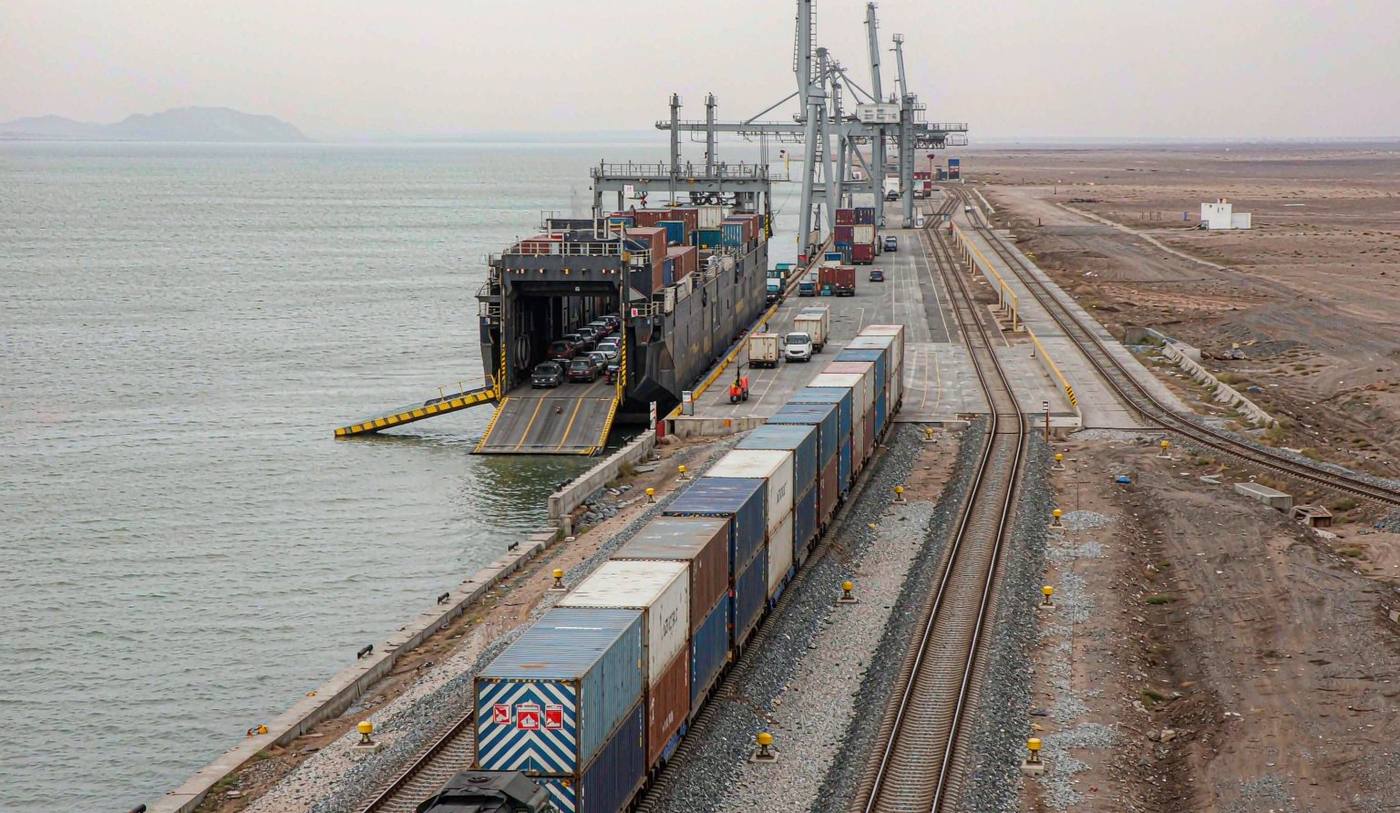
How to Ship from China to Azerbaijan: the Caspian Crossing, Alat & 18% VAT
Azerbaijan sits on the Caspian, and the Caspian is a lake. That sounds like a piece of trivia, and it is the single most important fact on this lane. There is no ocean feeder that sails into Baku from a Chinese port, because there is no ocean route to get there. Everything arrives by rail across Central Asia with a ferry leg in the middle, by sea to a neighbouring country and then overland, or by air.
That is why this is a corridor lane in the same sense Afghanistan is, but for the opposite reason: not because the destination is landlocked, but because the sea it touches does not connect to anything. The Middle Corridor — the Trans-Caspian International Transport Route through Kazakhstan, across the Caspian and onward through Georgia — is the reason this lane has become a serious routing rather than a curiosity.
The third thing to understand before you price anything is the tax stack: duty from zero to fifteen percent on the CIF value, then VAT at eighteen percent on the duty-inclusive value, plus a small processing charge. That is a bigger combined burden than most importers expect on a lane that is often described as low-tariff.
At a glance
Country: around ten million people at the crossroads of the Caucasus, Central Asia and Iran; capital Baku; borders Russia, Georgia, Iran and Armenia, with a Caspian coastline. · Geography: the Caspian is a closed basin — no ocean access; cargo arrives by rail, by sea through a neighbouring country, or by air. · Main port: the Port of Baku at Alat, with the ferry terminal that carries Caspian traffic. · Corridor: the Trans-Caspian International Transport Route, known as the Middle Corridor, via Kazakhstan and the Caspian ferry. · Airport: Heydar Aliyev International (GYD) at Baku, with Ganja and Nakhchivan also served. · Customs: the State Customs Committee, with electronic declarations; not an EAEU member and not a full WTO member, so classification is national. · Duty: published range 0–15 percent of CIF by HS code; machinery reported around 0–5 percent, clothing and footwear around 10–15 percent. · VAT: 18 percent on the CIF value plus duty. · Processing charge: commonly quoted at around 0.15 percent of value. · Excise: 20–50 percent on defined luxury goods. · De minimis: reported around US$30. · Clearance: typically 2–7 days; around 12 days where documents mismatch or value is reviewed. · Transit: rail 12–20 days, sea plus overland 25–35 days, air 4–6 days.
How your cargo moves: China to Azerbaijan
Eight steps from your supplier's door to yours. The last four are the ones shaped by local rules.
- Pickup from your supplierWe collect the goods anywhere in China and bring them to our consolidation point.
- Export clearanceChina customs declaration filed and released before the goods move to the port.
- Loading and departureContainer loaded, sealed and handed to the carrier at the Chinese port.
- Main carriageOcean, air or rail movement booked on the route agreed for your cargo.
- Arrival at the gatewayDischarge at the port or airport of entry, recorded on the carrier's manifest.
- Import clearanceCustoms declaration filed locally, with duty and tax assessed on the declared value.
- Customs releaseGoods released into free circulation once duty and tax are settled.
- Final deliveryOnward movement to your delivery address, warehouse or nominated depot.
Duty rates, VAT rates and clearance times move, and the figure that applies to your goods is the one set for your commodity code on the day of clearance. We check the current position against your code before your goods sail and confirm it to you in writing — ask for that check when you request a quote.
A Caspian crossing rather than an ocean leg
New importers usually start by asking which port to ship to, and on this lane that is the wrong first question. There is a port — the Port of Baku at Alat — and it is a real, working, modern facility. But nothing sails to it from Shanghai.
So the real choice is between three arrival modes:
Rail across Central Asia
China to Kazakhstan, then west to a Caspian port, then a ferry to Azerbaijan. This is the Middle Corridor, and it is the routing that has made this lane commercially interesting. It suits containerised general cargo and it is faster than the sea route by a wide margin.
Sea to Georgia, then overland
A conventional ocean movement to a Black Sea port such as Poti or Batumi, then road or rail east into Azerbaijan. It is slower than the corridor but it is a familiar, well-serviced routing and it suits heavy or bulky cargo where transit time matters less than rate.
Air into Baku is the third option, and it is used more than the country's size might suggest, because the alternative modes are slow. Air freight is published at roughly four to six days, and it is the sensible answer for high-value, low-volume goods and for anything where a two-month certificate lead time has already eaten the schedule.
The Middle Corridor and what a fast run really proves
The Trans-Caspian International Transport Route runs from China through Kazakhstan to a Caspian port — Aktau or Kuryk — across the sea to Azerbaijan, and on through Georgia towards Turkey and Europe. A Xi'an to Baku movement was reported at 11 days in March 2024, and that number gets quoted a lot.
What it proves is that the corridor works. What it does not prove is that your shipment will take 11 days. Published planning figures put rail transit on this corridor at roughly 12 to 20 days, and the spread is there for a reason: the corridor is a chain of handovers, and the two that slip are the ferry and the gauge change.
Where the time goes: the Caspian ferry is a vessel with a schedule and a capacity, and it is the narrowest link in the chain. The rail gauge changes between China and the 1520mm network used across the region, which means a transhipment rather than a through run. Both are booking questions, and both should be confirmed in writing at the time of booking rather than assumed from a published average.
The corridor's advantage is not only speed. It removes the long ocean leg entirely, which for central and western Chinese origins can shorten the door-to-door time by weeks compared with a sea routing through the Black Sea. For a first shipment, ask for the corridor and for the sea option side by side and compare them on total time, not on freight alone.
Alat and the ferry behind Baku Port
The Port of Baku at Alat is Azerbaijan's main seaport and the Caspian end of the corridor. It handles containers, general cargo and the ferry traffic that connects the two sides of the sea, and it sits on the rail network so that a container can come off a ferry and onto a wagon without a road leg.
Practical points for planning:
- The port is a waypoint, not a destination. Consignees in Baku are close to Alat; consignees in Ganja, Sumgait or the regions add an inland leg.
- Ferry capacity is the capacity constraint. Ask whether space on the ferry is confirmed at booking, and what happens if a sailing is missed.
- Georgia matters on this lane. Poti and Batumi are the alternative sea gateways, and the Baku–Tbilisi–Kars railway is part of what makes onward movement through the Caucasus work.
Zero to fifteen percent duty, then eighteen percent VAT
Duty is assessed on the CIF value by HS code. Published references give a range of 0 to 15 percent, with a shape worth knowing: machinery is reported around 0 to 5 percent, electronics 0 to 15 percent, clothing and footwear 10 to 15 percent, cosmetics 5 to 15 percent, and books at zero. One Chinese-language trade reference quotes an average around 9.7 percent, with machinery at 5 to 12 percent and light consumer goods including clothing at 15 to 20 percent — a reminder that published ranges differ and that your own code is what matters.
Duty on the CIF value
By national HS classification. Azerbaijan is not in a customs union, so there is no bloc tariff to look up.
VAT at 18 percent on the duty-inclusive value
Not on CIF alone. This is the step that turns a modest duty rate into a material tax bill, and it is the step most first-time importers leave out of their spreadsheet.
Processing charge, and excise where it applies
A customs processing charge commonly quoted at around 0.15 percent of value, plus excise of 20 to 50 percent on defined luxury goods.
One structural point that catches people: Azerbaijan is not a member of the Eurasian Economic Union, and it is not a full WTO member. There is no bloc tariff and no bloc certificate to rely on. Classification is national, and where the code is genuinely uncertain, an advance ruling from customs before the shipment moves is worth the effort — it converts a valuation and classification argument at the border into a settled position before you ship.
The small processing charge nobody puts on a quote
Alongside duty and VAT sits a customs processing charge, commonly quoted at around 0.15 percent of the value. It is small. It is also the kind of line that turns an otherwise clean landed-cost model into a number that does not quite reconcile with the assessment, which is annoying when you are trying to work out whether the duty was calculated correctly.
The bigger unquoted costs on this lane are the ones attached to time. Where documents do not match or the declared value is reviewed, published figures put average dwell at around 12 days, with demurrage quoted at roughly US$127 a day for a 20ft container and US$232 a day for a 40ft high cube. Twelve days at those rates is more than most of the charges on the freight invoice, and it comes out of a documentation failure rather than a market movement.
Conformity certificates, and the months some of them take
This is the section that decides schedules on this lane more often than the freight does.
Many products need a certificate of conformity against Azerbaijani technical regulations. On top of that, regulated categories need a sector approval from the responsible body — the Food Safety Agency for food, the Ministry of Health for pharmaceuticals and medical devices, and type approval from the communications ministry for telecoms equipment.
| Category | Approval | Published lead time |
|---|---|---|
| General consumer goods | Certificate of conformity | Obtain before shipping; confirm scope for your product |
| Food products | Food Safety Agency approval | Part of the 2–6 month band reported for sector approvals |
| Pharmaceuticals and medical devices | Ministry of Health registration | Part of the 2–6 month band reported for sector approvals |
| Telecoms equipment | Type approval from the communications ministry | Part of the 2–6 month band reported for sector approvals |
Published guidance puts these sector approval processes at two to six months. Read that again: the approval can take longer than the transit by an order of magnitude. If your product is regulated, the approval is the critical path, and shipping before it is in hand is how containers end up parked at Alat.
The grey clearance question you should not touch
It would be dishonest to write about this lane without mentioning it: informal or "grey" clearance arrangements have historically been offered on Caucasus and Central Asian routes, usually framed as a way to avoid duty and paperwork.
Published reporting describes Azerbaijan tightening enforcement against these arrangements from 2025 onwards, with hundreds of consignments penalised in the first half of 2026 and total reported fines in the tens of millions of dollars. The consequences described are not limited to the seizure of one shipment: they include being placed on a customs blacklist, after which subsequent shipments are examined as a matter of course.
Our position: we do not arrange informal clearance, and we would not advise it on this lane. The duty here is not punitive — a zero to fifteen percent duty plus recoverable-ish VAT is a normal cost of doing business — and the downside of getting it wrong is a blacklist that follows every future shipment you send.
A related trap: falsified or inconsistent certificates of origin. Published guidance notes that Azerbaijani customs has data exchange with Chinese customs on origin documents, and that a falsified certificate can attract a penalty of twice the goods value plus the full duty. Do not "improve" an origin document. There is no China–Azerbaijan free trade agreement to claim a preference under anyway; a standard certificate of origin issued by CCPIT or China Customs supports most-favoured-nation treatment, which is what you are entitled to.
Transit times by corridor, rail and sea
| Mode and route | Published transit | Fits |
|---|---|---|
| Rail via the Middle Corridor, China → Kazakhstan → Caspian ferry → Alat | 12–20 days | Containerised general cargo; the default question on this lane |
| Rail, Xi'an → Baku | A record of 11 days was reported in March 2024 | A demonstration of the corridor, not a planning figure |
| Sea to Poti or Batumi, then overland into Azerbaijan | 25–35 days | Heavy or bulky cargo where rate beats speed |
| Air into Heydar Aliyev International (GYD) | 4–6 days | High value, low volume; urgent spares and samples |
Add clearance on top of every one of those: two to seven days typically, and around twelve where the file is not right. A fifteen-day rail movement with a twelve-day customs hold is a twenty-seven-day door-to-door shipment, which is still faster than the sea route but not by the margin the headline rail number suggests.
The file to close before the train leaves China
| Document | What it has to do |
|---|---|
| Commercial invoice | Full description, value, HS code and Incoterm, signed and stamped, with freight and insurance shown separately |
| Packing list | Line-by-line contents, weights, dimensions and package count, matching the invoice |
| Bill of lading, rail waybill or air waybill | Consignee consistent with the importing entity across the whole file |
| Certificate of origin | Issued by CCPIT or China Customs in English; supports most-favoured-nation treatment. Do not alter it — origin data is checked |
| Certificate of conformity | Where the product requires one; confirm scope before shipping |
| Sector approvals | Food Safety Agency, Ministry of Health, telecoms type approval, as applicable — months of lead time |
| Insurance policy | Not less than 110 percent of CIF, covering the multimodal movement including the ferry leg |
| Translated documents | Non-Azerbaijani documents generally need translation, in some cases notarised |
| ISPM 15 evidence | Stamp on every wooden pallet or crate |
The recurring theme across all of it is consistency. Azerbaijani customs reads the set together, and where the declared value looks low it has the right to re-assess against comparable goods. Keep the purchase contract and payment evidence with the file so that a valuation question can be answered rather than argued.
Why a Baku broker is worth the money
On some lanes a broker is optional. On this one, for a first shipment, it is close to essential — not because the rules are unusually harsh, but because the classification is national, the certificates can take months, and the penalties for an informal workaround are structural rather than one-off.
The four things a good Baku broker does that you cannot do from abroad: obtain an advance ruling on the HS code so the rate is settled before the cargo moves, tell you which conformity or sector certificate your product actually needs and start it early, file the electronic declaration in the local language with consistent values, and represent the file if customs opens a valuation review. On a lane where a valuation review costs twelve days of demurrage, that last one pays for the rest.
Why importers use Goodhope on this lane
Six things that are different about working with us on China to Azerbaijan shipments.
Real shipments into Azerbaijan
Five shipments bought in China and delivered into Azerbaijan, told end to end — where the order came from, how it moved, where it nearly went wrong, and how it finished. Client names are withheld at their request; the situations and the handling are what we deal with on this lane.
Grey clearance refused · the offer we turned down · Guangzhou to Baku
The purchase. A buyer was offered a clearance route that avoided the normal assessment, and asked us to quote it.
The move. We declined and quoted the straightforward declaration instead, which is what he shipped on.
Where it nearly went wrong. Informal clearance arrangements on this corridor cost less today and create exposure that lasts years — no clean document trail, no defensible records, and nothing to produce when an audit arrives.
How it finished. He shipped on the declared route. His records are complete and his later shipments have cleared without difficulty.
Conformity certificate · months, not weeks · Shanghai to Baku
The purchase. A buyer ordered regulated equipment and booked freight before checking the certification timeline.
The move. Certification identified as the long-lead item, freight booked after it was under way.
Where it nearly went wrong. Some conformity certificates here take months. Freight booked first simply means cargo waiting, and storage is charged for the whole wait.
How it finished. We told him which step was the slow one and he sequenced the order around it.
Corridor choice · Middle Corridor claims · Xi'an to Baku
The purchase. A buyer had read about very fast Middle Corridor runs and planned his stock around the best published figure.
The move. Rail on the Middle Corridor, with a transit estimate built on realistic performance rather than the best-case run.
Where it nearly went wrong. A single fast demonstration run proves something can be done, not what your consignment will experience. Planning stock around the headline number is how shelves end up empty.
How it finished. We quoted a realistic band. He planned around it and stopped missing replenishment windows.
Processing charge · the line nobody quotes · Ningbo to Baku
The purchase. A buyer compared two forwarders and could not understand why the quotes differed on the destination side.
The move. Full destination breakdown provided, including the processing charge the cheaper quote had left out.
Where it nearly went wrong. There is a small processing charge on Azerbaijani entries that routinely goes unmentioned in quotes. It is small, but its absence tells you what else may be missing.
How it finished. He took the quote that listed everything, and nothing extra appeared at clearance.
Broker value · Baku · Shenzhen to Baku
The purchase. A buyer considered filing through a general agent to save money.
The move. Appointed a Baku broker, with the declaration prepared while the goods were still in transit.
Where it nearly went wrong. A broker established at Baku knows how the port, the ferry and the declaration system actually interact. Saving the fee costs more than the fee when a file sits unresolved.
How it finished. The consignment cleared on arrival and he has used the same broker since.
Why importers use Goodhope on this lane
Six things that are different about working with us on China to Azerbaijan shipments.
Give us the commodity and we will route it overland
Tell us what you are shipping, the HS codes if you have them, the packed dimensions and gross weight, the pickup city in China and the delivery address in Azerbaijan. We will tell you whether the Middle Corridor or the Georgian sea routing fits your cargo and your timing better, whether ferry space and the gauge change are confirmed at booking, which certificate your product needs and how long it takes, and what the duty plus the eighteen percent VAT come to before you commit.
Get a quote Talk to usRelated pages
Frequently asked questions
Does Azerbaijan have a seaport I can ship to?
It has the Port of Baku at Alat, but the Caspian is a closed basin with no ocean outlet. Cargo arrives by rail across Central Asia with a ferry leg, by sea to Poti or Batumi and then overland, or by air into Baku. The question is which of those, not which port.
What is the Middle Corridor?
The Trans-Caspian International Transport Route: China through Kazakhstan to a Caspian port, across by ferry to Azerbaijan, then on through Georgia. A Xi'an–Baku run was reported at 11 days in March 2024 — a record, not a schedule. Planning figures put rail at 12–20 days.
What duty and VAT will I pay?
Duty published at 0–15 percent of CIF by HS code, with machinery around 0–5 percent and clothing around 10–15 percent. VAT is 18 percent on the CIF value plus duty. Add a processing charge of about 0.15 percent, and excise of 20–50 percent on defined luxury goods.
How long does clearance take?
Typically 2–7 days. One published report put pre-clearance at 1.5–2 working days and on-arrival clearance at 3–4, rising to around 12 days where documents mismatch or value is reviewed. Demurrage in that case has been quoted at roughly US$127 a day for a 20ft container.
Do I need certificates?
Many products need a certificate of conformity, and regulated categories need a sector approval: the Food Safety Agency for food, the Ministry of Health for medical goods, type approval for telecoms. Published lead times run 2–6 months.
Is there a duty-free threshold?
One reference gives around US$30. That is far below any commercial shipment value, so treat it as trivia rather than planning information.
What documents do I need?
Commercial invoice, packing list, transport document, certificate of origin, insurance policy and a conformity certificate where required. Non-Azerbaijani documents generally need translation. Consistency across the set is what keeps a valuation review from opening.
Is Azerbaijan in a customs union?
No. It is not an EAEU member and not a full WTO member, and runs its own tariff. There is no bloc tariff to look up, so an advance ruling on the HS code is worth obtaining before you ship.
Should I use an informal clearance arrangement?
No. Published reporting describes tightened enforcement from 2025, with hundreds of consignments penalised in the first half of 2026. The consequence is seizure plus a customs blacklist that follows every future shipment. File properly.
How long does shipping take?
Rail on the Middle Corridor 12–20 days, sea via Georgia plus overland 25–35 days, air into Baku 4–6 days. Add 2–7 days for clearance on top of each.