
Home / Shipping to the Bahamas / How to Ship from China to the Bahamas
Shipping from China to the Bahamas, step by step
Goodhope Freight is a licensed NVOCC in Shenzhen, registered as GD20230925153335, moving cargo out of China since 2012. To the Bahamas we run full containers and shared containers port-to-port into Nassau and Freeport, air freight airport-to-airport into Lynden Pindling International, and express parcels dispatched from our depot. Every service ends at the port, the airport or the depot. Your consignee clears the goods and collects them.
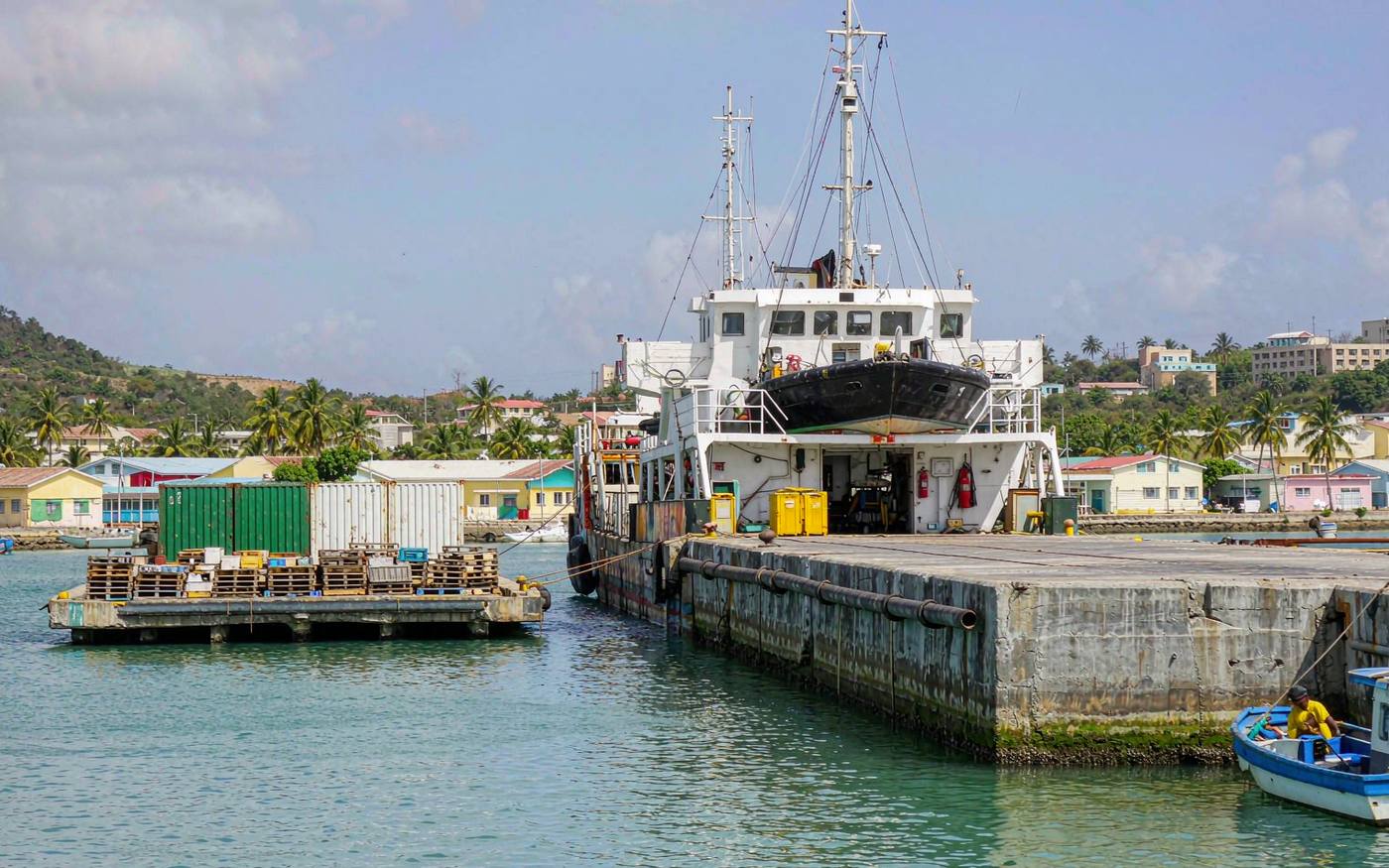
The archipelago is the first thing to understand. The Bahamas is more than 700 islands spread over a very large stretch of ocean, and the commercial freight system is built around two gateways: Nassau on New Providence, which serves the population centre, and Freeport on Grand Bahama, which serves the industrial and transhipment side. Goods for anywhere else arrive at one of those two and then move onward on inter-island vessels, which is a second booking with its own schedule.
The second thing to understand is the rule that surprises almost every first-time importer. The Bahamas publishes no duty-free allowance for commercial imports. A box worth fifty dollars, invoiced to a company and intended for resale, is still a formal entry, still assessed for duty, and still charged value-added tax at 10 per cent. There is no value below which commercial goods stop being commercial goods.
At a glance
Main ports: Nassau on New Providence and Freeport on Grand Bahama · Main airport: Lynden Pindling International (NAS) · Currency: Bahamian dollar, pegged to the US dollar · No duty-free allowance for commercial imports · Value-added tax at 10 per cent on the CIF value plus duty · Customs entry required above BSD 100, filed by a licensed Bahamian broker for commercial goods · Our service ends at the port, the airport or the courier depot
How your cargo moves: China to the Bahamas
Eight steps from your supplier's door to yours. The last four are the ones shaped by local rules.
- Pickup from your supplierWe collect the goods anywhere in China and bring them to our consolidation point.
- Export clearanceChina customs declaration filed and released before the goods move to the port.
- Loading and departureContainer loaded, sealed and handed to the carrier at the Chinese port.
- Main carriage via the Panama Canal or a Florida relayOcean or air movement booked on the route agreed for your cargo, with one relay on most routings.
- Discharge at Nassau or FreeportContainers are worked at the gateway you booked; air cargo is worked at the NAS cargo terminal.
- Entry filed by a licensed brokerYour broker files the customs entry, classified under the Bahamian tariff, with the customs value taken from your invoice.
- Duty and VAT assessed togetherDuty is assessed by commodity code and 10 per cent VAT is applied to the CIF value plus duty, then settled before release.
- Release and onward movementGoods are released to your consignee at the gateway. A Family Islands address adds an inter-island vessel leg arranged separately.
Duty rates, VAT rates and clearance times move, and the figure that applies to your goods is the one set for your commodity code on the day of clearance. We check the current position against your code before your goods sail and confirm it to you in writing — ask for that check when you request a quote.
Two gateways, and a second leg for everywhere else
Nassau on New Providence and Freeport on Grand Bahama handle essentially all of the containerised freight that enters the Bahamas. Which one you book determines where your consignee collects, how far the goods travel afterward, and in some cases whether the equipment you need is available. Freeport is the stronger choice for industrial cargo and for anything heading to the northern islands; Nassau is the stronger choice for the population centre and the eastern chain.
If the delivery address is on any other island, the goods arrive at one of those two gateways and then move onward by inter-island vessel. That leg is booked separately, runs to a published schedule that has nothing to do with your vessel's arrival, and involves additional handling. Tell us the final island at quotation stage so the onward leg is quoted rather than discovered.
Choosing a mode: whole container, consolidated, air or courier
Below roughly 15 cubic metres a shared container is usually the cheaper answer, rated by volume with a weight conversion applied. Between about 15 and 28 cubic metres the comparison between a 20GP and a per-cubic-metre rating is worth running both ways, because it flips depending on the commodity and the season. Above that, or for bulky light cargo, a 40GP or 40HC normally wins on cost per unit.
Air freight into Lynden Pindling makes sense from about 45 kg when the goods are urgent, high in value relative to weight, or tied to a date you cannot move. There is no direct freighter service from China, so consignments connect through Miami, New York or Atlanta, and the connection rather than the distance sets the transit time. Express courier is the right tool for documents, samples and single cartons, and ends at the depot.
The entry: form C13 and the broker who files it
Bahamian law requires a licensed customs broker to file the entry on commercial shipments, and the declaration is submitted through the customs department's electronic system against the standard import form. The importer needs a tax identification or business registration number, and the entry is classified by commodity code with the value taken from the commercial invoice.
This is not a formality you can leave until the ship arrives. The broker needs the invoice, the packing list and the bill of lading or air waybill before the vessel berths, and a missing document at that point costs you storage rather than merely time. We send a pre-alert with the documents attached so your broker can prepare the entry while the goods are still at sea.
Why there is no small-parcel relief on commercial goods
Most Caribbean destinations publish a value below which imports are free of duty and tax. The Bahamas does not, at least not for commercial goods. Personal effects and low-value personal parcels are treated differently, but a commercial consignment is assessed from the first dollar, whatever it is worth.
That has a direct consequence for how you send samples. If you are sending samples to a Bahamian buyer, expect them to be assessed, and expect the buyer to be asked for duty and VAT before the parcel is released. If the goods are genuinely samples with no commercial value, they need to be documented that way at the point of dispatch, not at the point of arrival.
How the 10% import tax is built up
Value-added tax in the Bahamas is charged at 10 per cent on the CIF value of the goods plus the duty payable. The standard rate was reduced from 12 to 10 per cent under the 2026 value-added tax amendments, and unprepared food sold in food stores moved to a zero rate from 1 April 2026, so confirm the rate in force on the day your entry is assessed.
The taxable base is larger than the invoice value: it includes the freight and insurance to the point of arrival, and it includes the duty itself.
A handful of goods are zero-rated or exempt, including some basic food items, medicines and educational materials, and excise duty applies on top for alcohol, tobacco and motor vehicles. Whether a particular product falls into an exempt category is a question about the commodity code, not about the product's marketing description, so we check it before you ship rather than after your buyer is invoiced.
Duty bands, and the goods rated above them
Bahamian customs duty is assessed ad valorem on the CIF value and spans a very wide range, from nil on some capital and technology goods to very high protective rates on a small number of consumer lines. Most general cargo falls somewhere in the low-to-middle part of that range, but the spread is wide enough that assuming an average is a reliable way to misprice a deal.
Specific rates rather than percentage rates apply to some alcohol and tobacco lines, and excise and environmental charges sit on top for particular categories. The practical rule is the same one that applies everywhere else: get the commodity code right, and get it right before the goods sail.
Packing for a relay and a salt-laden climate
Most cargo from China into the Bahamas is discharged and reloaded at least once, whether the relay is the Panama Canal, a Florida port or a regional hub. Every relay is another handling cycle, and the inter-island leg, if there is one, is a third. Cartons should be palletised or strapped, heavy items boxed rather than bagged, and anything fragile built to be stacked under other cargo.
Corrosion and moisture cause more claims on Caribbean lanes than rough handling does. Use internal moisture protection for textiles, paper and electronics, avoid unprotected steel on goods that will sit outside at the port, and assume that a container standing in the sun at Nassau is a considerably harsher environment than a warehouse in Guangdong.
Documents the entry depends on
- Commercial invoice with a specific description of each item, quantities, values, currency and country of origin.
- Packing list matching the invoice, with weights and dimensions.
- Bill of lading for sea freight or air waybill for air freight.
- Import declaration filed by the licensed broker on the standard form.
- Tax identification or business registration for the importer.
- Certificate of origin where a preferential rate is claimed.
- Import permit for pharmaceuticals, chemicals, food, live animals and agricultural goods, and a phytosanitary or health certificate where the commodity requires one.
Bahamian customs compares declared values against reference data, and undervaluation is penalised rather than merely corrected. An accurate invoice is the cheapest form of insurance on this lane.
Seasonality: tourism peaks, storms and cut-offs
Sea freight from the main Chinese ports typically runs 30 to 40 days when the routing works through the Panama Canal, and 35 to 45 days when it relays through Miami or Kingston. Air freight usually connects through Miami, New York or Atlanta and runs roughly 4 to 8 days terminal to terminal, depending on the service level.
The tourism season from December to April drives a pronounced surge in imports of food, beverage and hotel supplies into a harbour with finite working space, so book earlier than you would elsewhere. The Atlantic hurricane season runs from June to November and can close ports or delay relays at short notice. Build both into your planning rather than discovering them.
What we do, and what your consignee does
We handle the China side: collection from your supplier, consolidation, export declaration, loading, and the main carriage to Nassau, Freeport or NAS. We issue the transport document, send a pre-alert with the documents attached, and check the commodity code and duty exposure on the Bahamian side while the goods are still in China.
Your consignee, through a licensed Bahamian broker, files the entry, pays duty and VAT, and collects the goods. We do not offer door-to-door delivery to the Bahamas and we do not collect destination charges on the carrier's behalf. Saying so at quotation stage is kinder than discovering it at the port.
How to start, if this is your first container
Send us the commodity, the volume and weight, the pickup address in China, and the island the goods are ultimately going to. We will come back with the gateway that makes sense, the routing including any relay, the onward island leg if one is needed, and the charges broken out individually.
If this is your first import, ask us for the sequence in writing: which document is needed at which stage, who files the entry, and when the money is due. Most of the cost on a first shipment comes from a step nobody realised was theirs.
Actual moves unpacked: the Bahamas
Five shipments bought in China and delivered into the Bahamas, told end to end — where the order came from, how it moved, where it nearly went wrong, and how it finished. Client names are withheld at their request; the situations and the handling are what we deal with on this lane.
Resort renovation, 40HC out of Shenzhen
The purchase. A resort on New Providence was refurbishing guest rooms and had ordered case goods, soft furnishings, lighting and bathroom fittings from three suppliers across Guangdong.
The move. We collected from all three, consolidated into one 40HC, shipped port-to-port to Nassau, and issued one bill of lading for the whole consignment.
Where it nearly went wrong. The freight was straightforward. The risk was the entry: three suppliers meant three invoices, and the buyer's broker had been given only a summary sheet with values rounded to the nearest thousand.
How it finished. We rebuilt the commercial invoice set before loading so each line carried a specific description and a true value. The entry was filed against clean data and cleared without a revaluation request, which on this lane is where most of the delay usually comes from.
Marina chandlery restock, 8 CBM out of Guangzhou
The purchase. A chandlery supplying yachts around Nassau was restocking ropes, hardware, electronics and safety equipment ahead of the winter charter season.
The move. The goods moved as a shared container out of Guangzhou and were deconsolidated for collection at Nassau.
Where it nearly went wrong. The buyer wanted everything shipped before the charter season opened, and booked on the assumption that a December arrival was safe. December is also when the harbour is working at its busiest.
How it finished. We moved the booking two weeks earlier than the buyer's original plan and flagged the peak-season congestion in writing. The goods were available before the first charter, and the buyer has booked on the same calendar since.
A sample parcel that was not treated as a sample
The purchase. A buyer in Nassau asked for a single carton of consumer goods as a sample before committing to a container order.
The move. It went by express courier from our depot with a commercial invoice showing the full product value, because that is how the order was placed.
Where it nearly went wrong. The Bahamas applies no duty-free allowance to commercial imports, so the parcel was assessed in full. Duty plus 10 per cent VAT plus the carrier's clearance fee came to more than the goods were worth, and the buyer refused the parcel.
How it finished. We re-documented the next round properly as samples for evaluation with no resale intent and a nominal declared value, and moved the buyer to a small consolidated sea shipment for the trial quantity. The trial order then landed at a reasonable cost and converted into a standing account.
Frozen food into Freeport, 40RF
The purchase. A food distributor was moving frozen product into a cold store on Grand Bahama and needed temperature control for the whole journey.
The move. One 40ft reefer, booked port-to-port to Freeport with the temperature set and monitored for the full transit.
Where it nearly went wrong. Reefer equipment and reefer plugs are not available in unlimited numbers on Caribbean relay routings, and a missed connection can leave a container standing without power.
How it finished. We confirmed equipment and plug availability at the relay before accepting the booking, set the temperature in writing on the booking instruction, and tracked the container through the relay. The load arrived in specification and the buyer now books reefers on the same lead time.
Building materials for a Family Islands project
The purchase. A contractor was building on an island outside the two main gateways and had ordered tiles, sanitaryware, doors, windows and fixings from Foshan.
The move. One 40GP shipped to Nassau, cleared there, and then moved onward to the outer island by an inter-island vessel arranged separately.
Where it nearly went wrong. The buyer had assumed a single freight quote covered delivery to the site. It did not. The inter-island vessel ran to its own schedule, charged its own freight, and handled the cargo a third time, and ceramic tile does not forgive a third handling.
How it finished. We flagged the onward leg at quotation stage, quoted it separately, and had the tiles crated rather than shrink-wrapped for the crossing. The materials arrived intact and the buyer rebuilt their budget around the real structure.
Why importers use Goodhope on this lane
Six things that are different about working with us on China to the Bahamas shipments.
Get a quote for the Bahamas
Tell us the commodity, the volume, the pickup address in China and the island the goods are going to. We will confirm the gateway, the routing, any onward leg, and quote every charge as a separate line.
Get a quote Talk to usRelated pages
Frequently asked questions
What is the sea transit time from China to the Bahamas?
Plan on roughly 30 to 40 days from the main Chinese ports when the routing works through the Panama Canal, and 35 to 45 days when the relay is via Miami or Kingston. Air freight connects through Miami, New York or Atlanta and runs roughly 4 to 8 days terminal to terminal.
Which port should I ship to, Nassau or Freeport?
Nassau on New Providence serves the population centre and the eastern chain; Freeport on Grand Bahama serves the industrial side and the northern islands. Book the gateway nearest to where your consignee will collect, and tell us if the final address is on another island, because that adds a separately booked inter-island leg.
Does the Bahamas waive duty on low-value goods?
Not for commercial goods. The Bahamas assesses duty and value-added tax on commercial imports regardless of value, so there is no threshold below which a commercial consignment stops being assessed. Low-value personal parcels are treated differently, but the purpose recorded on the entry is what decides.
What is the 10% charge worked out on?
It is applied to the CIF value of the goods plus the duty payable, so the base is larger than the invoice value because it includes freight, insurance and the duty itself. Some goods are zero-rated or exempt, including certain basic foods, medicines and educational materials.
Do I need a customs broker in the Bahamas?
Yes for commercial shipments. Bahamian law requires a licensed customs broker to file the entry on the importer's behalf, and the importer needs a tax identification or business registration number. Your broker needs the invoice, packing list and transport document before the vessel berths.
Can you deliver to an address in the Bahamas?
No. Sea freight and air freight are port-to-port and airport-to-airport, and express courier dispatch ends at the local depot. Your consignee clears the goods and collects them, and any onward movement to another island is arranged separately.
Which documents are needed to clear goods in the Bahamas?
A commercial invoice with specific item descriptions and values, a matching packing list, the bill of lading or air waybill, the import declaration filed by your broker, the importer's tax identification, and any import permit or phytosanitary certificate the commodity requires.
Do you carry lithium batteries to the Bahamas?
Built-in and packed-with lithium batteries can be carried subject to proper documentation and packaging. Standalone lithium batteries and other dangerous goods classes are assessed case by case and need to be declared at quotation stage, not after booking.
Does the winter tourism peak slow down clearances?
Yes. December to April brings a pronounced surge in imports of food, beverage and hotel supplies into harbours with finite working space, so book earlier than you would for a comparable lane elsewhere. The hurricane season from June to November can also close ports at short notice.
What information gets me an accurate Bahamas quote?
The commodity and its code if you have it, the volume and weight, the pickup address in China, and the island the goods are ultimately going to. We will come back with the gateway, the routing, any onward leg and the charges broken out individually.