
Home / Shipping to Belarus / How to Ship from China to Belarus
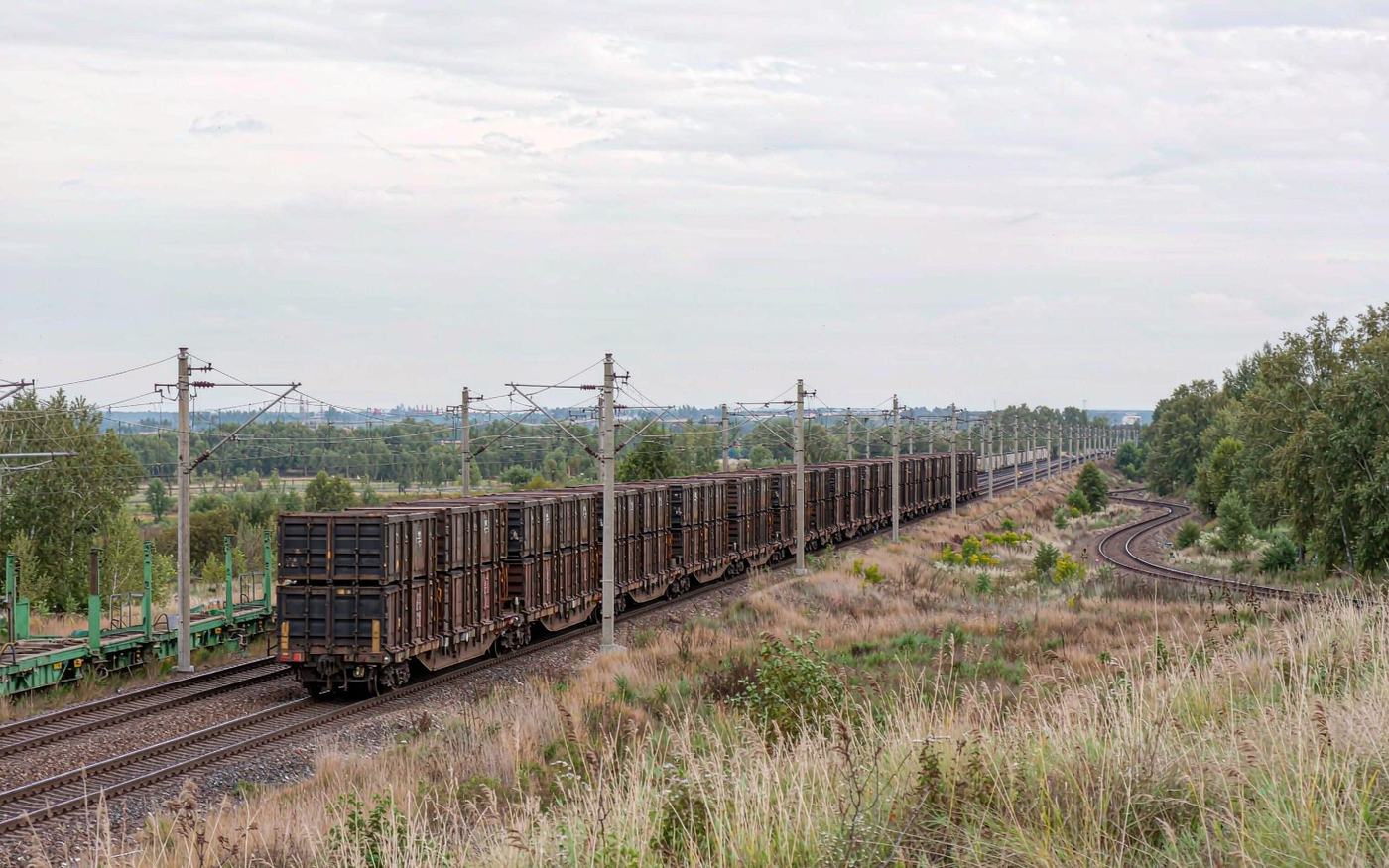
How to Ship from China to Belarus
Note on scope. This page is an operational logistics guide only. It describes how cargo is moved and cleared, and it takes no position on political questions. Belarus is subject to extensive sectoral sanctions imposed by the European Union, the United States, the United Kingdom and others, and border and transit conditions have changed repeatedly in recent years. Any importer must screen their counterparties and goods against the sanctions and export control regimes that apply in their own jurisdiction, and verify current transit conditions, before shipping. Requirements change frequently - confirm every point with your broker at the time of booking.
Belarus is landlocked, and that determines the transport plan. The country sits on the main China-Europe rail corridor, and rail is the mode that makes it work: a direct container service from China to Belarus is measured in weeks rather than the month-plus that a sea-plus-truck routing requires. Customs operates under the Eurasian Economic Union framework, which means the tariff is not set in Minsk and the classification system is not the European one.
This guide covers the three transport options, transit times, how declarations and classification work under the Eurasian framework, how duty and VAT are calculated, the conformity marking that regulated products need before they ship, payment and currency, inland delivery, and the compliance screening that has to happen before anything is booked. We do not publish freight rates here; the aim is to give you the structure to plan and to judge a quotation.
At a glance
Landlocked - no seaport. Main modes: rail on the China-Europe corridor (typically 12 to 18 days for a full container), sea plus truck via Baltic or Black Sea ports, and air. Customs: EAEU Customs Code, electronic declaration with the State Customs Committee. Classification: TN VED. Duty: commonly 0 to 20 per cent by code. VAT: 20 per cent, reduced 10 per cent for some categories.
How your cargo moves: China to Belarus
Eight steps from your supplier's door to yours. The last four are the ones shaped by local rules.
- Pickup from your supplierWe collect the goods anywhere in China and bring them to our consolidation point.
- Export clearanceChina customs declaration filed and released before the goods move to the port.
- Loading and departureContainer loaded, sealed and handed to the carrier at the Chinese port.
- Main carriageOcean, air or rail movement booked on the route agreed for your cargo.
- Arrival at the gatewayDischarge at the port or airport of entry, recorded on the carrier's manifest.
- Import clearanceCustoms declaration filed locally, with duty and tax assessed on the declared value.
- Customs releaseGoods released into free circulation once duty and tax are settled.
- Final deliveryOnward movement to your delivery address, warehouse or nominated depot.
Duty rates, VAT rates and clearance times move, and the figure that applies to your goods is the one set for your commodity code on the day of clearance. We check the current position against your code before your goods sail and confirm it to you in writing — ask for that check when you request a quote.
Getting to a landlocked market: the three routes in and out
Belarus has no coastline, so cargo arrives either by rail, by road from a neighbouring port or country, or by air. Each suits a different profile.
Rail is the defining option. The China-Europe rail corridor runs directly into Belarus, and a full container typically moves in a range of roughly 12 to 18 days, which is substantially faster than sea and more expensive than it but cheaper than air. For regular, medium-volume cargo with a predictable schedule, rail is usually the right default.
Sea plus truck is the cheapest option per unit for large volumes. Container cargo is discharged at a Baltic or Black Sea port and trucked in, with total transit commonly cited in a range of 35 to 45 days. It suits cost-sensitive full container loads where time is not critical - but note that port choice and the onward road leg are both affected by current border and transit conditions, which must be verified before booking.
Air is the fastest and most expensive, typically measured in single-digit days, and it is the mode to use for urgent, high-value or small consignments.
Whichever you choose, confirm the current position on the specific route at the time you book. Transit conditions on the corridors into Belarus have changed more than once in recent years, and a routing that worked last quarter may not be available now.
Full boxes or consolidated rail on the China to Belarus corridor
The consolidation-versus-full-container arithmetic follows the familiar pattern, with one adjustment for rail. Below roughly 15 cubic metres, consolidated rail usually costs less, because you pay only for the space you use. Above that, a full container becomes competitive, and the rail corridors are well set up for full container movements.
The rail-specific point is gauge. The corridor crosses from standard gauge to the wider gauge used across the Eurasian customs area, and the change happens at a border interchange rather than en route. In practice this means a transhipment or bogie change operation, and it is a fixed part of the schedule that adds time. Ask your forwarder where the gauge change happens and how long it is currently taking.
Consolidated rail also has a schedule dimension: consolidations run on published departures with cut-offs, and missing a cut-off means waiting for the next departure rather than losing a few hours. Get the cut-off in writing.
Ask for the destination and inland charges separately. A rail quotation that covers only the line-haul is not a quotation for delivery, and terminal handling, documentation and the final road leg are real costs on top.
Air freight to Minsk and the routings available at the time
Air cargo arrives at Minsk and is the answer for urgent, high-value or small shipments - pharmaceutical supplies, electronics, spare parts for equipment that is down, and samples. Transit is typically measured in single-digit days.
The important caveat is availability. Major international express carriers have substantially restricted or withdrawn direct service to Belarus, and postal and courier routings have been affected by sanctions and by border conditions. Confirm what is actually operating at the time you ship rather than relying on a carrier's standard network map.
Air does not reduce the customs or compliance burden. The declaration still runs under the Eurasian framework, duty and VAT are still assessed, and screening obligations are unchanged. What you gain is days.
If air is not available on your lane, the realistic alternatives are rail, or a sea-plus-truck routing with a longer transit. Ask your forwarder to price both rather than assuming one exists.
Transit time to Belarus and what the gauge change costs you
Transit depends heavily on mode. Published figures for the China to Belarus trade commonly cite roughly 12 to 18 days for a full container by rail, 35 to 45 days for sea plus truck, and single-digit days for air. Treat all of these as estimates for a specific service and a specific date, not as guarantees.
The gauge change is the rail-specific variable. Crossing from standard gauge to the wider Eurasian gauge involves an interchange operation at the border, and it is a fixed step that can be quick or slow depending on volumes and conditions. Ask where it happens and what the current experience has been.
Clearance itself is generally fast where documents are complete. Published trade commentary describes release within one to two working days in that case. The delay risk is almost never the customs officer - it is a declaration that could not be filed because the documents were not ready.
The dominant risk on this route is not operational but regulatory: border conditions and corridor availability have changed repeatedly. Build a contingency that reflects that, and verify the position immediately before each shipment.
EAEU declarations, TN VED codes and the electronic filing
Belarus is a member of the Eurasian Economic Union, which operates a single customs territory with Russia, Kazakhstan, Armenia and Kyrgyzstan. Imports from outside the union are handled under the union's customs code and the union's common external tariff, and a declaration filed in one member country is valid across the union.
Classification uses the union's own commodity nomenclature rather than the European Combined Nomenclature. If you have only ever classified a product for an EU destination, do not assume the code transfers - get it confirmed under the union's nomenclature before you ship, because the code sets your duty rate.
Declarations are filed electronically with the State Customs Committee, typically through a licensed customs representative. The supporting set is the familiar one: commercial invoice, packing list, the transport document - a rail consignment note, road consignment note or air waybill depending on mode - and a certificate of origin.
Valuation is assessed on the transaction value with the costs of getting the goods to the border brought in, so budget as though duty is charged on a CIF-equivalent figure rather than on the factory invoice. Keep the payment records that support the declared value; a valuation query is settled with documents, not arguments.
The EAEU common tariff, the VAT rate, and where excise bites
Duty comes from the union's common external tariff, applied by commodity code. Published indicative ranges for the Belarus market run from zero to around 20 per cent depending on the product, with raw materials and industrial equipment at the low end and finished consumer goods higher. Confirm the rate for your code rather than assuming a band.
VAT is applied at 20 per cent, with a reduced rate of 10 per cent for certain categories including some food products, children's goods and medical items. As everywhere, note the base: VAT is charged on a figure that already includes duty and the costs of bringing the goods in, not on the invoice value alone.
Excise applies to fuel, alcohol and tobacco, and certain goods need a licence - including alcohol, pharmaceuticals, weapons and encryption devices. If your product falls in those categories, establish the licence requirement before shipping rather than at the border.
Worked simply: on a customs value of USD 12,000 with duty at 10 per cent, duty is USD 1,200, and VAT at 20 per cent on USD 13,200 is USD 2,640. Your tax before terminal, brokerage and inland charges is USD 3,840. Brokerage fees are commonly quoted in the range of USD 50 to 150 where not covered by a delivered-duty-paid arrangement. Do this calculation for your own commodity before you commit.
EAC conformity marking and technical regulations before you ship
This is the requirement most likely to stop a first shipment. Many product categories sold within the Eurasian Economic Union must carry the Eurasian Conformity marking, obtained through certification or declaration against the union's technical regulations.
The products commonly in scope are consumer-facing ones: electrical and electronic goods, machinery, equipment, toys, products for children, and personal protective equipment. If your product is in scope, the certificate or declaration has to exist before the goods are released, and in practice the work is done before shipment.
The process typically involves submitting technical documentation and, depending on the product and the scheme, testing or inspection. Build it into your production schedule. It cannot be produced retroactively without difficulty.
Where preferential origin treatment is claimed within the union or with Commonwealth of Independent States partners, the correct origin certificate form is required - the standard form for that trade rather than a generic certificate of origin. Ask your broker which form applies to your transaction.
Packing and documents for rail transit and customs inspection
Rail transit is generally gentler on cargo than road, but it involves a long journey, a gauge-change interchange, and outdoor storage at both ends. Pack for a long transit with handling at intermediate points. Use export-grade cartons, secure pallets properly, and strap and wrap loads so they do not shift.
Temperature swings across the corridor are substantial - a container can pass through very hot and very cold conditions on the same journey. Moisture-sensitive and temperature-sensitive goods need appropriate protection and, where relevant, a controlled-temperature container.
Wood packaging must meet the international phytosanitary standard and carry the corresponding mark. It is checked, and non-compliance is an avoidable cost.
On documents, consistency is everything. The commercial invoice, packing list, transport document and certificate of origin must agree on description, quantity, weight and value, because the declaration is built from them and any mismatch becomes an inspection.
Incoterms, currency and payment on a Belarusian import
Under FOB, the seller loads in China and you contract everything from there. Under CIF to a named port, the seller pays freight and insurance to that port, but risk still transfers at loading. Under DAP or DDP, the seller carries more, and DDP includes clearing the goods and paying Belarusian duty and VAT.
Delivered-duty-paid arrangements are common on this lane precisely because the clearance is administratively demanding, and published trade commentary quotes all-in DDP figures for air, rail and sea modes. If you take DDP, confirm who is named as the declarant, because that party carries the customs liability, and confirm what happens if the goods cannot be cleared.
Payment is the operational problem that most often gets underestimated. Correspondent banking into Belarus is constrained, and Western payment channels are heavily restricted. Confirm with your bank - before you ship, not after - that a payment can be made at all, through which channel, and how long it will take. A payment that cannot be processed is a shipment that cannot be released.
Agree the currency in writing. The local currency is the Belarusian ruble, and settlement arrangements vary by counterparty and by what is permitted in the paying jurisdiction. Take advice where there is any doubt.
Inland delivery from the rail terminal or port to your consignee
Clearance is not the end of the journey. Goods arriving by rail are discharged at a terminal and then moved by road; goods arriving by sea plus truck come overland from the port. Either way the final leg is a road move that should be quoted as a line item.
Confirm the delivery point and the access conditions with your consignee before dispatch. Industrial sites, in particular, may have vehicle restrictions or loading windows, and a failed delivery on a long corridor is expensive because there is not always a second truck available the same day.
If your consignee is outside Minsk, or in a neighbouring country within the customs union, note that goods moving within the union do so without further customs duty, because the union operates as a single customs territory. That is a genuine distribution advantage, but the documentation has to reflect the movement correctly.
Ask your forwarder what the current road transit conditions are on the final leg. On this corridor that is a question worth asking every time, not once.
Compliance and sanctions checks before anything is booked
This section is not optional. Belarus is subject to extensive sectoral sanctions from the European Union, the United States, the United Kingdom and other jurisdictions. The restrictions cover, among other things, dual-use and military goods, luxury goods, and significant categories of technology, electronics and vehicles.
Screen the parties first. Every counterparty - buyer, consignee, intermediary, bank - should be checked against the sanctions lists that apply in your jurisdiction. Then screen the goods: classification alone is not enough, because controlled items can sit inside ordinary-looking product categories.
Confirm the corridor. Border and transit conditions have changed repeatedly, including closures affecting road and rail crossings. Verify what is actually operating at the time you ship, through official sources in your own country and through your forwarder's local agent.
Keep the file. End-use and end-user information, screening records, and the commercial documents should all be retained, because the question you may eventually be asked is not whether the goods moved but whether you checked.
And take advice. Where there is any doubt about whether a transaction is permissible, that question belongs with a qualified professional in your jurisdiction, not with a freight quotation.
Why importers use Goodhope on this lane
Six things that are different about working with us on China to Belarus shipments.
Real orders into Belarus
Five shipments bought in China and delivered into Belarus, told end to end — where the order came from, how it moved, where it nearly went wrong, and how it finished. Client names are withheld at their request; the situations and the handling are what we deal with on this lane.
Rail versus sea · first container · Shenzhen to Minsk
The purchase. A buyer new to importing was offered rail without anyone explaining what happens at the border where the track gauge changes.
The move. Full container on the China–Europe rail corridor, with the transfer at the gauge change built into the transit estimate rather than presented as an unexpected delay.
Where it nearly went wrong. Rail is quick on paper and the transfer is where time actually goes. Quoting the headline figure and then blaming the gauge change is how buyers lose confidence in a whole routing.
How it finished. We quoted a realistic band that included the transfer. He planned his stock around it and stopped being surprised.
EAC marking · before the train leaves · Guangzhou to Belarus
The purchase. A buyer importing regulated equipment assumed the certificate could follow the goods.
The move. EAC conformity identified as a pre-shipment task, completed before the container was loaded.
Where it nearly went wrong. Conformity marking here is a production-stage obligation backed by technical documentation and testing. It cannot be produced at the frontier, and cargo waiting on it accrues charges for the whole wait.
How it finished. He sequenced certification first and freight second. Nothing has waited at the border since.
Compliance checks · before booking · payment and screening
The purchase. A first-time buyer agreed an order and went looking for freight before anyone had checked whether the payment could actually be made.
The move. Nothing was booked until screening, the payment channel and any permit questions were settled.
Where it nearly went wrong. On this lane, compliance and sanctions screening and the payment route decide whether a shipment moves at all. Booking first produces cargo that cannot be paid for, or cargo stranded at the border.
How it finished. We told him to finish those checks before committing to the supplier. Once they were clear, the movement ran on a normal schedule.
Currency and terms · contract detail · Ningbo to Belarus
The purchase. A buyer agreed Incoterms and a currency without considering how they interacted with customs value.
The move. Terms reviewed before the contract was signed, with the customs value basis worked out in advance.
Where it nearly went wrong. The delivery term and the currency on the contract feed directly into the declared value and the timing of payment. Two decisions made early remove a whole category of later argument.
How it finished. He signed with both settled, and the declaration matched the contract without correction.
Packing for inspection · rail transit · Yiwu to Minsk
The purchase. A consolidating buyer had cartons of mixed sizes and no pallet plan, which made inspection slow.
The move. Consolidated with a proper pallet plan and a packing list that matched the cartons exactly.
Where it nearly went wrong. Rail transit and customs inspection both punish loose, inconsistent packing. A consignment that cannot be checked quickly is a consignment that waits.
How it finished. Palletised and reconciled before loading. Inspection became a formality rather than an event.
Why importers use Goodhope on this lane
Six things that are different about working with us on China to Belarus shipments.
Speak to our team before a Belarus routing is fixed
Tell us the commodity, volume and mode you are considering. We will set out what is currently operating on the corridor, what the Eurasian declaration and conformity requirements are for your product, and what we cannot cover - before you commit to anything.
Get a quote Talk to usRelated pages
Frequently asked questions
What is the best way to ship from China to Belarus?
Rail on the China-Europe corridor is usually the default: a full container typically moves in roughly 12 to 18 days. Sea plus truck via a Baltic or Black Sea port is cheaper per unit for large volumes at around 35 to 45 days, and air is fastest at single-digit days. Confirm what is currently operating on your chosen corridor before booking.
How long does shipping from China to Belarus take?
Published figures commonly cite roughly 12 to 18 days for a full container by rail, 35 to 45 days for sea plus truck, and single-digit days for air. Clearance itself is generally fast where documents are complete - often cited as one to two working days. Treat all of these as service-specific estimates.
Which customs framework applies to Belarus?
Belarus is part of the Eurasian Economic Union, which operates a single customs territory with Russia, Kazakhstan, Armenia and Kyrgyzstan. Imports from outside the union are handled under the union's customs code and common external tariff, and classification uses the union's commodity nomenclature rather than the European one.
What duty and VAT apply to imports into Belarus?
Duty comes from the union's common external tariff applied by commodity code, with published indicative ranges from zero to around 20 per cent. VAT is 20 per cent, with a reduced 10 per cent for certain categories including some food, children's goods and medical items. Excise applies to fuel, alcohol and tobacco.
Do I need EAC conformity marking?
Many product categories do, including electrical and electronic goods, machinery, toys, children's products and personal protective equipment. The certificate or declaration has to exist before the goods are released, so the work should be done before shipment. Confirm whether your product is in scope at quotation stage.
Are there sanctions I need to check before shipping to Belarus?
Yes, and this is your responsibility. Belarus is subject to extensive sectoral sanctions from the EU, US, UK and others covering dual-use and military goods, luxury goods, and significant categories of technology, electronics and vehicles. Screen all parties and goods against the regimes that apply in your own jurisdiction and take professional advice where there is any doubt.
Is air freight or express courier available to Belarus?
Availability is constrained. Major international express carriers have substantially restricted or withdrawn direct service, and postal routings have been affected. Confirm what is actually operating at the time you ship rather than relying on a standard network map.
Can I pay for a shipment to Belarus normally?
Not necessarily. Correspondent banking into Belarus is constrained and Western payment channels are heavily restricted. Confirm with your bank before shipping that a payment can be made, through which channel, and how long it will take. A payment that cannot be processed is a shipment that cannot be released.
Should I use DDP for Belarus?
Delivered-duty-paid arrangements are common on this lane because the clearance is administratively demanding. If you take one, confirm who is named as the declarant - that party carries the customs liability - and confirm what happens if the goods cannot be cleared.
What documents are needed for a Belarusian import?
A commercial invoice, a packing list reconciling with it, the transport document for your mode - rail consignment note, road consignment note or air waybill - and a certificate of origin, plus any conformity certificate, licence or origin form required for your product and trade. Consistency across the set is what keeps clearance fast.