
Home / Shipping to Benin / How to Ship from China to Benin
How to Ship from China to Benin
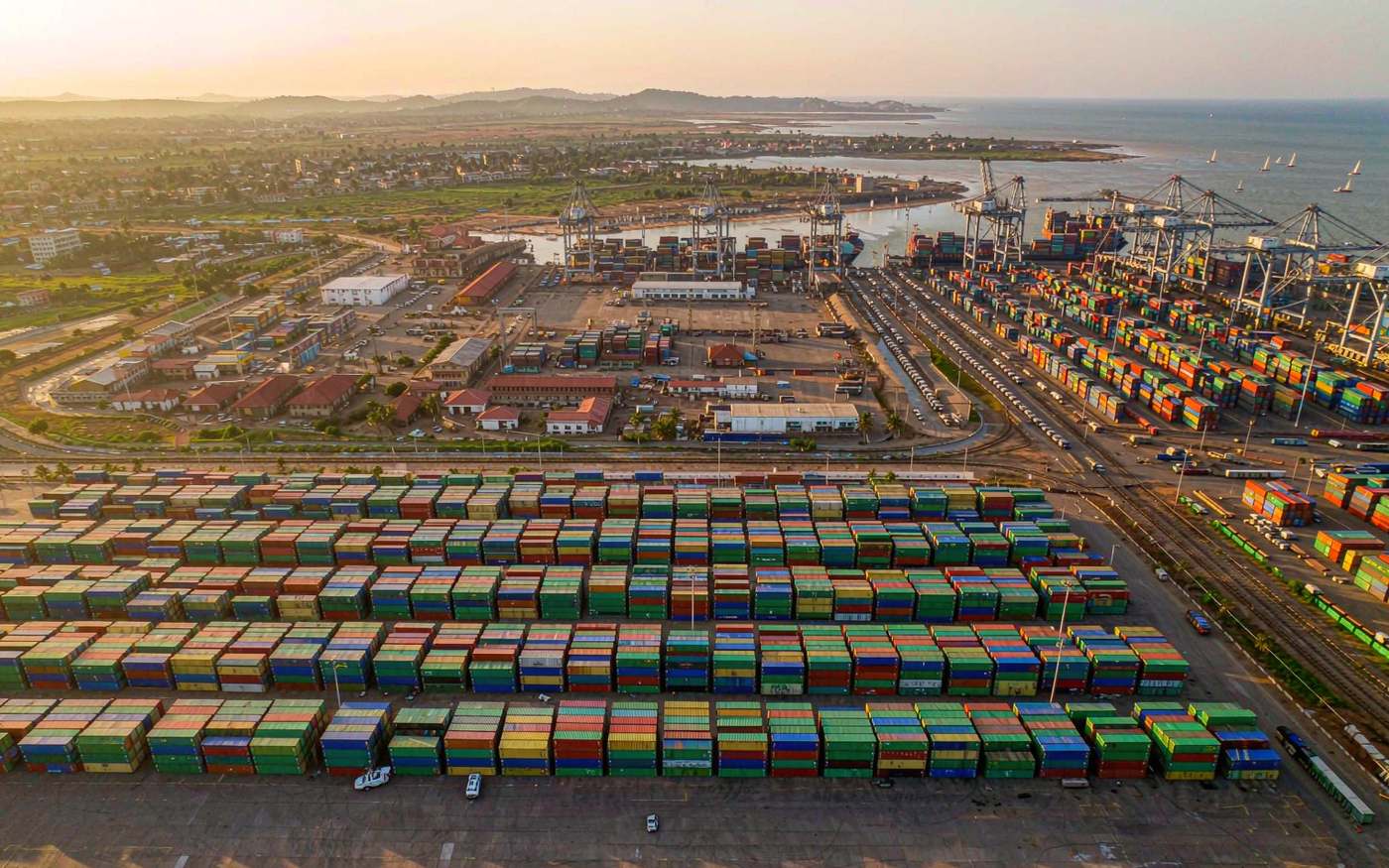
Benin is a small country with one of the busiest gateways in West Africa. Plenty of first-time importers meet Cotonou not because they sell into Benin but because Cotonou feeds Nigeria, Niger and Burkina Faso. Whether your goods stay in Benin or cross a border afterwards changes the paperwork and who collects the duty, so settle that question before you book anything.
This guide follows one shipment from a Chinese factory to a Beninese consignee: which port and airport serve the country, which certificate has to be issued before the vessel sails, how duty, levies and VAT stack on top of each other, and the points where first shipments most often stall.
At a glance
Main port: Cotonou. Working language of customs documentation: French. Certificate required before loading: BESC (Bordereau Électronique de Suivi des Cargaisons, also written ECTN). Import duty: ECOWAS Common External Tariff bands of 0, 5, 10, 20 and 35 per cent of CIF value. VAT: 18 per cent, charged on CIF plus duty plus levies. Additional levies: statistical tax 1 per cent, ECOWAS community levy 0.5 per cent, community solidarity levy 0.8 per cent, African Union levy 0.2 per cent.
How your cargo moves: China to Benin
Eight steps from your supplier's door to yours. The last four are the ones shaped by local rules.
- Pickup from your supplierWe collect the goods anywhere in China and bring them to our consolidation point.
- Export clearanceChina customs declaration filed and released before the goods move to the port.
- Loading and departureContainer loaded, sealed and handed to the carrier at the Chinese port.
- Main carriageOcean, air or rail movement booked on the route agreed for your cargo.
- Arrival at the gatewayDischarge at the port or airport of entry, recorded on the carrier's manifest.
- Import clearanceCustoms declaration filed locally, with duty and tax assessed on the declared value.
- Customs releaseGoods released into free circulation once duty and tax are settled.
- Final deliveryOnward movement to your delivery address, warehouse or nominated depot.
Duty rates, VAT rates and clearance times move, and the figure that applies to your goods is the one set for your commodity code on the day of clearance. We check the current position against your code before your goods sail and confirm it to you in writing — ask for that check when you request a quote.
Starting out: what a first shipment to Cotonou actually involves
The first decision is not which shipping line to use. It is whether the goods are being cleared in Benin or moving on. A Cotonou consignee who sells locally pays Beninese duty and VAT. A consignee whose cargo is bound for Nigeria, Niger or Burkina Faso moves it under a transit regime and pays at the destination instead. Tell your forwarder which one it is at the quotation stage, because the quote, the bill of lading routing and the certificate you apply for all follow from it.
From there the sequence is ordinary enough: your supplier finishes the goods, your forwarder books space from the Chinese port, the container is loaded and declared for export in China, and the vessel sails. What is unusual about West Africa is how much of the work happens before that loading. The BESC tracking note is applied for at the port of loading, not on arrival, and a shipment that sails without one has a problem that cannot be fixed cheaply afterwards.
On the Benin side you need a consignee who can be identified to the customs administration. For a company that means a tax identification number (NIF) and, for commercial cargo, a licensed customs broker. The port does not release commercial consignments to an unrepresented importer.
Cotonou is not only a Beninese port
Cotonou sits on the Gulf of Guinea roughly 100 kilometres from the Nigerian border, and a large part of what it handles leaves the country again by road. Nigerian dealers have used it for years as an alternative to the congested Lagos terminals; landlocked Niger and Burkina Faso route through it because they have no port of their own.
Three practical consequences follow. First, the port and its access roads get congested, and storage costs start if you are slow to clear. Second, the re-export trade means customs pays close attention to declared values and to vague cargo descriptions. Third, your own specification may be set by the final market rather than by Benin: left-hand drive vehicles suit Benin, while buyers re-exporting to Nigeria need right-hand drive, and Nigeria caps used vehicles at 15 years while Benin applies no age limit at all.
If your goods will cross a border after Cotonou, say so at booking time. It changes the transit documents, the guarantee that covers the inland leg, and which country's duty you actually pay.
Choosing between a full box, a shared box, an aircraft hold and a courier bag
A full container is the default once you have enough cargo to fill one, and it is the simplest to clear because the seal stays intact from factory to port. A shared container (LCL) suits smaller orders: you pay for the space you use, your goods are consolidated with other shippers in China and deconsolidated at a warehouse in Cotonou, and you should allow extra days for that split.
Air freight into Cadjehoun airport (COO) costs far more per kilo but removes several weeks from the plan, and it is the usual answer for electronics, spare parts and samples. Express courier covers documents and small parcels with true door-to-door delivery, and it is the only one of the four where the carrier handles the customs interface as part of the service.
Roughly speaking, sea freight from a Chinese port to Cotonou takes several weeks door to port plus clearance, air freight takes days, and express takes a few days more than the flight itself. Ask for the destination charges in writing before you compare quotes; the freight number alone is not the landed cost.
BESC: the tracking note Benin has required since 2006
Beninese customs introduced the Bordereau Électronique de Suivi des Cargaisons in 2006 and it applies to all sea cargo discharged at Cotonou. It is also referred to as an ECTN, which is the same idea under the name used in other African countries. The note carries the details of shipper, consignee, vessel, cargo and freight, and the administration uses it to anticipate arrivals and to check that the declared values match what is actually landed.
You apply at the port of loading, before departure. A draft bill of lading is normally accepted, along with the commercial invoice, the packing list and a freight invoice if freight is not shown on the commercial invoice. The agent issues a draft for you to check, and once you confirm it the final note is released. Because the details have to agree with the documents used later for clearance, this is the moment to make sure the consignee name, the description and the values are the ones you intend to defend.
A container that arrives without a valid BESC is a problem, not a formality. Expect clearance to be refused until it is produced, plus penalties and storage while it is sorted out. Budget the application into your pre-loading checklist in the same breath as export customs clearance in China.
ECOWAS band first, then three smaller levies behind it
Benin applies the ECOWAS Common External Tariff, which sorts goods into five duty bands: 0, 5, 10, 20 and 35 per cent of the CIF value. Raw materials and capital equipment sit at the bottom of the range; finished consumer goods, clothing and shoes sit at the top. The rate is not chosen by category name but by HS code, and the difference between two neighbouring codes can be substantial.
On top of the duty itself come four small levies, each calculated on the CIF value: the statistical tax at 1 per cent, the ECOWAS community levy at 0.5 per cent, the community solidarity levy at 0.8 per cent and the African Union levy at 0.2 per cent. Individually they look negligible. Together they add about 2.5 per cent of CIF, and they are included in the base on which VAT is charged, so they cost slightly more than their face value.
Get your HS code right before you quote your customer. Misclassification is treated as an attempt to underpay, and it is one of the most common triggers for a physical inspection.
How the VAT base is built: CIF, duty, then the levies
VAT in Benin is 18 per cent, and it is not charged on the invoice value. It is charged on the CIF value plus the customs duty plus all of the levies. That compounding is what surprises first-time importers who estimate tax on the commercial invoice alone.
Take a shipment of consumer electronics with a CIF value of USD 10,000 in the 20 per cent duty band. Duty is USD 2,000. The four levies add USD 250. The VAT base is therefore USD 12,250 and VAT at 18 per cent is USD 2,205. Total duty and tax comes to USD 4,455, or roughly 44.6 per cent of the CIF value. Move the same shipment into a 5 per cent band — industrial machinery, say — and the total falls to somewhere near USD 2,424.
That gap is why the HS code matters more than any negotiation on freight. It is also why a quote that looks cheap on the freight line can end up more expensive than one that does not, if the cheaper one was built on an optimistic classification.
When your goods are only passing through to Nigeria or Niger
Cargo that arrives at Cotonou but is destined for another country travels under the ECOWAS transit regime. In broad terms the goods move under bond: you do not pay Beninese import duty, and duty is assessed and collected at the destination instead. The container is sealed at the port and the guarantee covering the inland leg is discharged when it arrives.
This works well when the paperwork is done by someone who knows the specific corridor. The Sèmè-Kraké crossing into Nigeria has its own rhythm, and the northern routes towards Niger and Burkina Faso have theirs. Choose a clearing agent on the strength of the corridor, not only on price.
Be precise about it on the shipping documents. If the true destination is somewhere else and the documents present the cargo as a Beninese import, you will be assessed for Beninese duty and VAT, and recovering that afterwards is slow.
Personal parcels versus a Beninese company entry
Both are possible, and they are treated differently. A private individual can import personal effects and, in the case of vehicles, one unit for personal use. Anything commercial — multiple units, goods for resale, regular shipments — expects a registered importer with a NIF and a licensed customs broker acting on the file.
The licence question is separate from the tax question. Controlled categories including pharmaceuticals, chemicals, food products and certain electronics need permits or licences issued in Benin before the goods arrive, and phytosanitary certificates are required for plant products. Used vehicles are a notable exception in one respect: Benin applies no age limit, which is unusual in West Africa and is one reason the re-export vehicle trade is concentrated here.
Declared values are cross-checked against regional data. A value that sits far below market level for the goods described will be queried, and penalties for confirmed under-declaration are reported to reach 200 per cent of the goods value, with seizure of the cargo in serious cases. Declare the price you actually paid.
What your Chinese forwarder does and what the Cotonou broker does
On the China side your forwarder books space, arranges trucking to the port, handles export customs clearance, issues the bill of lading, and applies for the BESC on your behalf. They also prepare the commercial invoice and packing list if your supplier's documents are not usable, which is common.
On the Benin side the broker lodges the declaration in the customs system, answers queries, arranges inspection if the container is selected, calculates and pays duty and VAT, and obtains the release. They cannot fix a wrong consignee name on a bill of lading, and they cannot produce a BESC that was never applied for.
The clean handover is: correct documents produced in China before loading, a consignee in Benin who is properly registered, and one person on each side who talks to the other before the vessel sails rather than after it berths.
Three cargo examples from Chinese factories to Benin
Solar equipment, 40 foot high cube, staying in Benin. Panels, inverters and mounting hardware from a single supplier, cleared at Cotonou for a local installer. Duty band depends on the HS code of each line; the shipment is one container with one BESC, and the consignee is a registered company with a NIF. Clearance runs to about a week if nothing is selected for inspection.
Textiles and footwear, LCL, for a Cotonou wholesaler. Two or three suppliers consolidated in China into one shared container. The goods are deconsolidated at the Cotonou warehouse, which adds days and a handling charge, and each supplier's invoice has to match the packing list line by line. This is the format where vague descriptions cause the most trouble.
Used trucks, RoRo or container, intended for re-export. Left-hand drive suits the Beninese market; right-hand drive is what a Nigerian buyer wants. Benin applies no age limit, so older units remain importable here that would attract penalties elsewhere in the region. If the trucks are genuinely moving on, they travel under transit and duty is paid at the destination, not in Cotonou.
Paperwork mistakes that hold containers at Cotonou
- Vague cargo descriptions. "Gift", "sample", "accessories" or "general merchandise" on an invoice invite an inspection. Describe the item, its material and its use, and put the HS code on the invoice.
- Invoice, packing list and bill of lading disagreeing. Different values, different piece counts, or a consignee name that does not match the entity clearing the goods. These are the most frequent cause of delays on this route.
- No BESC, or a late one. Applied for at the loading port before departure. Left until arrival, it becomes a penalty plus storage.
- Under-declared values. Cross-checked against regional data, and expensive to defend.
- Missing permits for controlled goods. Pharmaceuticals, food, chemicals, plants and seeds all need documents issued in Benin, and they take time.
Timings you can plan a first Benin order around
Sea freight from the main Chinese ports to Cotonou typically runs several weeks, with transshipment through a Mediterranean or West African hub depending on the service. Add a week or more for clearance in normal conditions and longer when the port is congested or the container is selected for physical inspection. Air freight cuts the transit to days but not the clearance. Express courier is the fastest end to end for small parcels.
Work backwards from when the goods need to be on the shelf. Book space and start the BESC application while the goods are still in production, not after they are packed, and confirm with your Beninese consignee that their registration and any permits are in place before the vessel sails.
Why importers use Goodhope on this lane
Six things that are different about working with us on China to Benin shipments.
Cotonou first: what to settle before you book a Benin shipment
Tell us what the goods are, where in Benin they are going, and whether they stay in the country or move on to Nigeria, Niger or Burkina Faso. We will confirm the routing, the certificate you need before loading, and the destination charges in one quote.
Get a quote Talk to usRelated pages
Frequently asked questions
Is a BESC the same thing as an ECTN?
In practice yes. Benin introduced its own electronic cargo tracking note, the Bordereau Électronique de Suivi des Cargaisons, in 2006; other African countries call the equivalent document an ECTN. For a Benin shipment you need the Beninese note, issued before the vessel departs, and its details must match your commercial documents.
When exactly do I apply for the BESC?
Before the vessel sails, at the port of loading. A draft bill of lading is normally accepted for the application, along with the commercial invoice, packing list and freight invoice. Do not leave it until the cargo has arrived at Cotonou.
What duty rate will my goods attract?
Benin applies the ECOWAS Common External Tariff with bands of 0, 5, 10, 20 and 35 per cent of CIF value. The band is determined by the HS code, not by the product name, so classify your goods before you quote your customer.
How is VAT calculated in Benin?
VAT is 18 per cent, charged on the CIF value plus customs duty plus the levies (statistical tax 1 per cent, ECOWAS levy 0.5 per cent, solidarity levy 0.8 per cent, African Union levy 0.2 per cent). On a USD 10,000 CIF shipment in the 20 per cent band the total duty and tax comes to roughly USD 4,455.
Do I pay Beninese duty if the goods are going to Nigeria or Niger?
Not normally. Cargo moving under the ECOWAS transit regime travels under bond and duty is assessed at the destination. The transit has to be declared correctly on the shipping documents, and you should use a clearing agent who knows the corridor concerned.
Can I import as a private individual?
Personal effects yes, and one vehicle for personal use. Commercial imports — multiple units, goods for resale — expect a registered importer with a tax identification number and a licensed customs broker.
Is there an age limit on used vehicles into Benin?
Benin applies no age limit, which is unusual in West Africa and part of why the re-export vehicle trade runs through Cotonou. If the vehicle is genuinely bound for Nigeria, the Nigerian limit applies instead. Benin drives on the right, so the local market wants left-hand drive.
Which port and airport serve Benin?
The port of Cotonou handles almost all sea cargo. Cadjehoun airport (COO) near Cotonou handles air freight. Express courier covers documents and small parcels door to door.
How long does clearance take at Cotonou?
Roughly a week when the file is clean and nothing is selected for inspection; longer when the port is congested or the container is opened. Storage charges begin after the free period, so a slow file costs money every day.
What documents do I need?
Commercial invoice with clear descriptions and HS codes, packing list, bill of lading or air waybill, certificate of origin, a valid BESC for sea cargo, and any permit required for controlled goods such as pharmaceuticals, food, chemicals, plants and seeds. Documentation should be in French.