
Home / Shipping to Botswana / How to Ship from China to Botswana
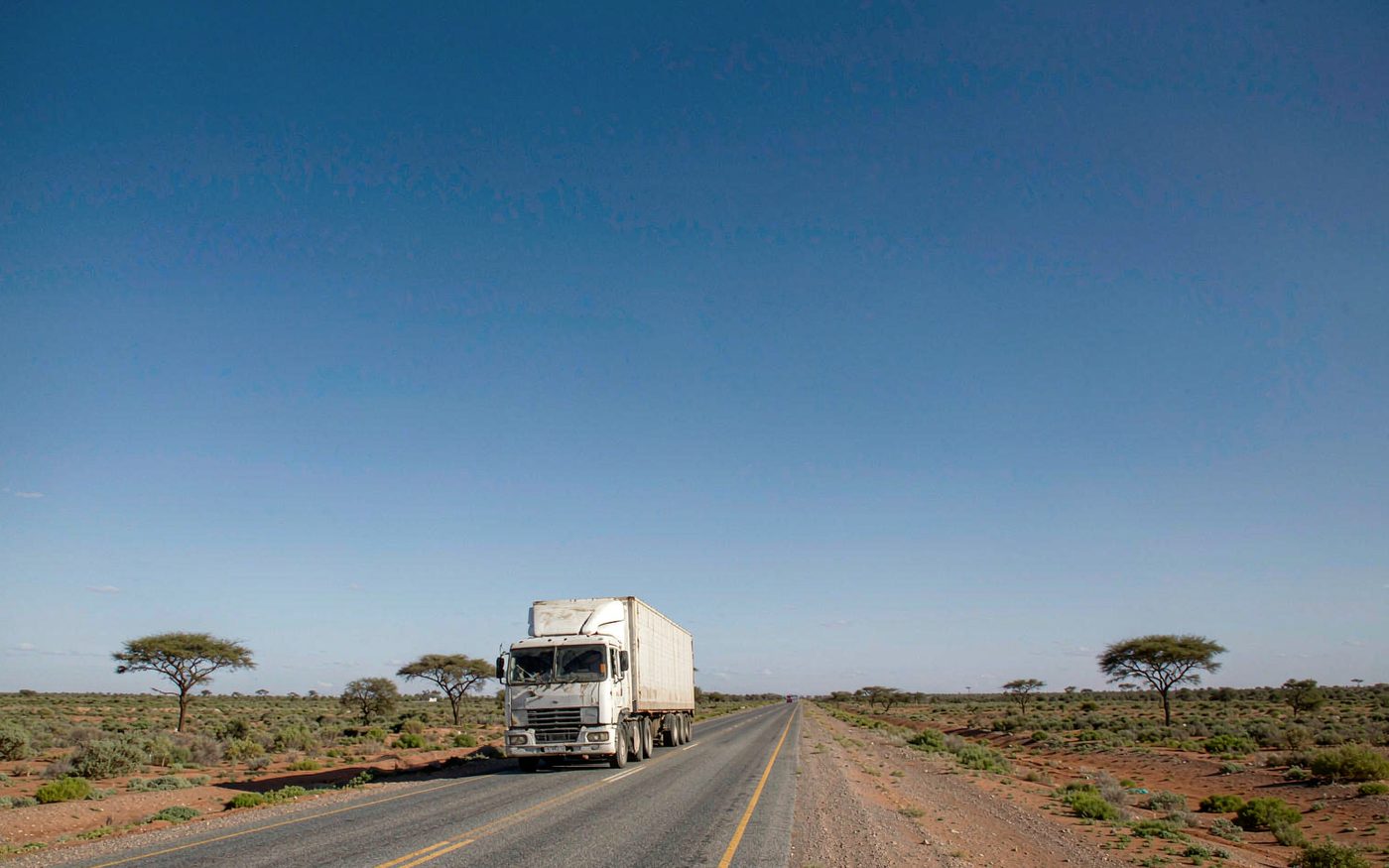
How to ship from China to Botswana
Botswana is landlocked, and it sits inside a customs union. Those two facts together make it one of the more predictable import markets in southern Africa: the tariff comes from a shared external schedule, the administration is comparatively efficient, and the only real variable is which gateway your container uses.
That gateway choice is worth making deliberately. Durban handles the great majority of Botswana's sea freight and is the natural choice for Gaborone and the south. Walvis Bay, across the Kalahari, is often the better answer for the north and for importers who want to avoid Durban congestion.
This guide covers how the two gateways compare, what happens during the transit leg, how duty and VAT are calculated under the customs union, which goods need permits or conformity certificates, and the sequence from a Chinese supplier to a Gaborone address.
At a glance
Customs is administered by the Botswana Unified Revenue Service, with declarations now running on ASYCUDA World and a risk management system used for post-clearance audits. Botswana is a member of the Southern African Customs Union, so duty follows the SACU common external tariff, with rates commonly quoted from 0 to 40 per cent by HS code. VAT is 14 per cent on a customs value that includes product value, freight, insurance and duty. Personal imports below a modest value may be exempt. Regulated products require conformity certification from the Botswana Bureau of Standards, and permits apply to agricultural products, medicines, alcohol, tobacco and vehicles.
How your cargo moves: China to Botswana
Eight steps from your supplier's door to yours. The last four are the ones shaped by local rules.
- Pickup from your supplierWe collect the goods anywhere in China and bring them to our consolidation point.
- Export clearanceChina customs declaration filed and released before the goods move to the port.
- Loading and departureContainer loaded, sealed and handed to the carrier at the Chinese port.
- Main carriageOcean, air or rail movement booked on the route agreed for your cargo.
- Arrival at the gatewayDischarge at the port or airport of entry, recorded on the carrier's manifest.
- Import clearanceCustoms declaration filed locally, with duty and tax assessed on the declared value.
- Customs releaseGoods released into free circulation once duty and tax are settled.
- Final deliveryOnward movement to your delivery address, warehouse or nominated depot.
Duty rates, VAT rates and clearance times move, and the figure that applies to your goods is the one set for your commodity code on the day of clearance. We check the current position against your code before your goods sail and confirm it to you in writing — ask for that check when you request a quote.
Landlocked, in a customs union: how Botswana-bound cargo travels
Every container is discharged at a port in South Africa or Namibia and then moves overland into Botswana, where it is cleared. That means two distinct phases: a transit movement from the port, and an import clearance at the Botswana border or at an inland office.
Being inside a customs union simplifies the second phase. Duty treatment follows the shared external tariff rather than a purely national schedule, which is one reason this corridor is described as operationally simpler than several of its neighbours.
The practical consequence for a buyer is that the inland leg is a first-class cost. It is frequently larger than people expect, and a quotation ending at the port is not comparable with one ending in Gaborone. Ask for the inland figure separately if it is not included.
Durban or Walvis Bay: choosing the gateway by the delivery town
Durban is the main gateway and handles roughly 80 per cent of Botswana's sea freight, connecting to Gaborone by the main overland corridor. For Gaborone and the south, it is the default.
Walvis Bay in Namibia offers a shorter route to northern and central Botswana. Francistown is roughly 1,350 kilometres from Walvis Bay against more than 1,700 from Durban, which is a significant difference, and Walvis Bay has a structural advantage in predictability when Durban is congested.
| Gateway | Border post | Usually suits |
|---|---|---|
| Durban, South Africa | Ramatlabama or Pioneer Gate | Gaborone and the south; roughly 80 per cent of sea freight |
| Walvis Bay, Namibia | Mamuno, via the Trans-Kalahari | Francistown, Kasane and the north; shorter and more predictable |
Sea transit to Durban or Walvis Bay is commonly quoted at 30 to 45 days, with overland transit into Botswana adding roughly 3 to 7 days. Air freight to Gaborone is the fast option for urgent cargo.
Incoterms on a shipment that clears at a border post
EXW leaves you with the Chinese export formalities and no control over the loading. It is the least suitable term here.
FOB is what most experienced buyers use: the supplier loads in China, risk passes there, and you control the carriage, the gateway and the forwarder. It also keeps the ocean leg and the inland leg visible as separate numbers, which matters when the inland leg is the larger of the two.
CIF and CIP cover carriage and insurance to the port of discharge, which is Durban or Walvis Bay, not Gaborone. Read the term carefully; CIF Durban does not include the haul into Botswana.
DAP and DDP to a named place in Botswana move the whole burden to the seller, including under DDP the Botswana duty and VAT. It is convenient and widely offered, but you are delegating the classification, the declared value and the tax payment.
From a Chinese supplier to a Gaborone address, in stages
Order confirmed, gateway chosen, trade term agreed
Durban or Walvis Bay at quotation stage, and an Incoterms 2020 term in the contract.
Register for a tax number
Commercial importers need a Botswana tax identification number. Do it before the vessel sails.
Check conformity and permit requirements
Regulated products need certification, and controlled categories need permits issued before arrival.
Pickup, consolidation and export declaration in China
Your forwarder collects or consolidates, declares the export and provides the seal number and loading photographs.
Ocean leg to Durban or Walvis Bay
Usually direct or with one transhipment. Check the draft bill of lading carefully.
Transit processing at the port
At Walvis Bay, for example, the transit declaration is prepared and submitted and release and delivery orders are issued before the truck leaves.
Overland leg and the border crossing
The truck crosses at Ramatlabama, Pioneer Gate or Mamuno, where the revenue service processes the goods into Botswana.
Assessment and payment
Duty under the SACU tariff and VAT at 14 per cent are assessed and paid.
Release and final delivery
Release, then delivery to Gaborone, Francistown or another destination.
Transit and the SAD 500: what happens before Botswana sees the cargo
Botswana-bound cargo is handled as Botswana-bound cargo from the port, not as an import into South Africa or Namibia. It moves under customs transit or bond arrangements before the final import clearance in Botswana.
On the Walvis Bay route the transit declaration, the SAD 500, is prepared and submitted by the Namibian clearing agent, who coordinates duty assessment and obtains the release and delivery orders before handing the documents to the transporter for the crossing. No additional duty is levied at that stage under the customs union arrangement.
Getting the transit paperwork right is the single most useful thing you can do on this route. Errors in it are the main reason trucks sit at borders, and the cost of a sitting truck is demurrage plus a missed delivery date.
Border modernisation work is under way at the main posts, including Ramatlabama and Pioneer Gate, so procedures there do change. Ask your clearing agent what the current process is rather than relying on last year's description.
Duty under the SACU tariff, and VAT at 14 per cent
| Charge | Indicative rate | Base |
|---|---|---|
| Customs duty | 0 to 40 per cent by HS code under the SACU tariff | Customs value |
| VAT | 14 per cent | Value including freight, insurance and duty |
| Excise | Product-specific | Alcohol, tobacco and petroleum products |
The customs value is not the invoice value. It includes the product value, freight, insurance and the duty itself for VAT purposes, which is why a landed cost estimate matters more here than a supplier quotation.
Personal imports below a modest threshold may be exempt from duty, which is worth knowing if you are moving personal effects rather than commercial stock.
Botswana also benefits from wider preferential arrangements, including the African Continental Free Trade Area and the tripartite arrangement across the region. Those preferences apply to qualifying originating goods, not to Chinese-origin cargo, so do not budget for a preference your shipment cannot claim.
BOBS conformity, and the permits that must exist in advance
The Botswana Bureau of Standards runs conformity requirements for regulated products. Where your category is regulated, certification has to be arranged before the goods arrive, because a permit obtained after arrival is a permit obtained after storage has started.
Permit categories to check carefully are agricultural and food products, which need ministry permits plus phytosanitary certificates, animal products, which need veterinary permits, medicines, which need registration or an import permit from the medicines regulatory authority, and alcohol and tobacco, which carry their own licensing. Vehicles need registration through the road transport department at the point of entry.
For most general merchandise, machinery, equipment and industrial supplies, no specific permit is required beyond the standard clearance process. The rule is to check the category rather than assume.
Wood packaging must carry the ISPM-15 treatment mark, and the revenue service uses post-clearance audits, so keep the file.
Product rules: agriculture, medicines, alcohol and vehicles
Agricultural goods need phytosanitary certificates from the exporting country and ministry permits for plant material and seeds. Meat, animal products and live animals need veterinary import permits.
Pharmaceuticals need registration or an import permit from the medicines regulatory authority, and telecommunications products and certain chemicals attract standards control. Firearms and security-related goods are controlled, and some used goods are restricted.
Vehicles are registered through the road transport department at the point of entry, which is a step that happens at the border rather than later, so have the documents with the truck.
The paperwork behind a BURS release
| Document | What it has to show |
|---|---|
| Commercial invoice | Complete description, value and HS code |
| Packing list | Contents, weight and dimensions |
| Bill of lading or air waybill | Consignee matching the importer of record |
| Certificate of origin | For preferential rates where they apply |
| Import permit | Controlled goods, obtained before arrival |
| Conformity certificate | Regulated products |
| Transit documents | For cargo passing through South Africa or Namibia |
| Tax identification number | Required for commercial importers |
Consistency across the invoice, packing list, transport document and customs entry is what keeps a file moving. The description, quantity, value, weight, consignee details and HS code should all tell the same story.
Clearance is commonly quoted at two to five days for commercial consignments with correct documents. Every correction resets that clock.
Importing privately or through a registered Botswana business
An individual can import personal goods, and personal imports below a modest value may be exempt from duty. Commercial importing is done by a registered entity holding a tax identification number, and that route is also the one that allows VAT to be accounted for.
The VAT difference matters. At 14 per cent on a base that already includes freight, insurance and duty, the recoverable amount on a container is significant, and an individual pays it with no route to recovery.
Register before the goods ship. If you have no Botswana entity, appoint a clearing agent before the container sails, agree the scope in writing, and agree who pays storage if the file stalls at the border.
Choosing a Chinese forwarder and a Botswana clearing agent
In China your forwarder collects or consolidates, books the space, handles the export declaration and obtains the bill of lading. At destination a clearing agent prepares the customs declaration, submits supporting documents, handles duty and VAT assessment and secures release.
On a landlocked lane the most useful question you can ask is which gateway they would use and why. A good answer names the port, the border post and a reason tied to the delivery town or to congestion. A vague answer means they are selling you a rate, not a route.
Judge them on specifics: legal entity name, years trading, a written quotation split into origin charges, ocean freight, the inland leg and the destination charges, and a clear statement of who pays storage if clearance is delayed. Ask whether they check permit and conformity requirements at quotation stage.
Warning signs are consistent: pressure to declare a lower value, no written breakdown, an address that is only a phone number, and vagueness about who carries the risk during the voyage.
Three sample loads into Botswana
These three examples are illustrative, not client records. They show how the gateway follows from the delivery address.
A 40ft container of shop fittings for Gaborone. Routed through Durban, the default for the south, with the overland leg quoted together with the ocean leg. The lesson is to compare delivered prices, not port-to-port rates.
Machinery for a business in Francistown. Routed through Walvis Bay and the Trans-Kalahari corridor, because the distance advantage to the north is substantial and Durban congestion was a factor at the time. The lesson is that the northern towns are better served from the west coast.
A consignment of agricultural inputs. Delayed at the border for want of a ministry permit. The lesson is that permits are the critical path for controlled goods and must exist before the truck reaches the border post.
Why importers use Goodhope on this lane
Six things that are different about working with us on China to Botswana shipments.
Get your Botswana shipment moving
Send us the commodity, the volume and the delivery town, and we will come back with a gateway comparison that puts permits and conformity checks on the calendar before you book.
Get a quote Talk to usRelated pages
Frequently asked questions
Which gateway should I use, Durban or Walvis Bay?
Durban handles roughly 80 per cent of Botswana's sea freight and is the default for Gaborone and the south. Walvis Bay is shorter to Francistown, Kasane and the north, and is more predictable when Durban is congested.
How much duty will I pay?
Botswana is in the Southern African Customs Union, so duty follows the SACU common external tariff, commonly quoted from 0 to 40 per cent by HS code. Confirm your classification before ordering, because the code decides the rate.
What is the VAT rate on imports?
VAT is 14 per cent, calculated on a customs value that includes the product value, freight, insurance and duty. A registered business can normally recover it; an individual cannot.
Is there a duty-free allowance?
Personal imports below a modest value may be exempt from duty. Commercial imports have no general threshold, so duty applies regardless of value.
Do I need a certificate from the standards bureau?
Regulated products require conformity certification from the Botswana Bureau of Standards. Check your category at quotation stage, because it has to be arranged before the goods arrive.
Which goods need permits?
Agricultural and food products, seeds and plant material, animal products, medicines, alcohol and tobacco, and vehicles, among others. Most general merchandise, machinery and industrial supplies need no specific permit.
How long does clearance take?
Commercial consignments with correct documents are commonly quoted at two to five days, with express courier shipments in the range of three to seven days.
Do I need transit documents?
Yes, for cargo passing through South Africa or Namibia before final clearance in Botswana. Errors in the transit paperwork are the main reason trucks are held at borders.
Can an individual import commercially?
Not really. Personal goods can be imported by an individual, but commercial importing needs a registered entity with a tax identification number, which is also the route that allows VAT recovery.
How long does sea freight take from China?
Ocean transit is commonly quoted at 30 to 45 days to Durban or Walvis Bay, with overland transit into Botswana adding roughly 3 to 7 days.