
Home / Shipping to Bulgaria / How to Ship from China to Bulgaria
How to Ship from China to Bulgaria
Bulgaria is an European Union member state, and that is the single most useful fact for an importer. The duty is set by the European Union's common customs tariff rather than in Sofia, the declaration is filed through an electronic customs system, and the formalities are the same ones that apply at any European Union border - which means a great deal of the guidance you would follow for a shipment to Germany or the Netherlands applies here too, with Black Sea logistics on top.
This guide covers the choice between the two Black Sea ports, how to choose between container options, air alternatives into Sofia, realistic transit times, the registration and pre-arrival declaration requirements, how duty and VAT are calculated, product compliance, and the inland haulage that connects the coast to Sofia and Plovdiv. We do not publish freight rates here; the aim is to give you the structure to plan a shipment and read a quotation properly.
At a glance
European Union member - duty from the EU common customs tariff (TARIC). Ports: Varna and Burgas on the Black Sea. Air gateway: Sofia. Registration: EORI number mandatory. Pre-arrival: entry summary declaration. VAT: 20 per cent, reduced 9 per cent for some goods. Currency: euro from 1 January 2026.
How your cargo moves: China to Bulgaria
Eight steps from your supplier's door to yours. The last four are the ones shaped by local rules.
- Pickup from your supplierWe collect the goods anywhere in China and bring them to our consolidation point.
- Export clearanceChina customs declaration filed and released before the goods move to the port.
- Loading and departureContainer loaded, sealed and handed to the carrier at the Chinese port.
- Main carriageOcean, air or rail movement booked on the route agreed for your cargo.
- Arrival at the gatewayDischarge at the port or airport of entry, recorded on the carrier's manifest.
- Import clearanceCustoms declaration filed locally, with duty and tax assessed on the declared value.
- Customs releaseGoods released into free circulation once duty and tax are settled.
- Final deliveryOnward movement to your delivery address, warehouse or nominated depot.
Duty rates, VAT rates and clearance times move, and the figure that applies to your goods is the one set for your commodity code on the day of clearance. We check the current position against your code before your goods sail and confirm it to you in writing — ask for that check when you request a quote.
Varna or Burgas: picking your Black Sea gateway into Bulgaria
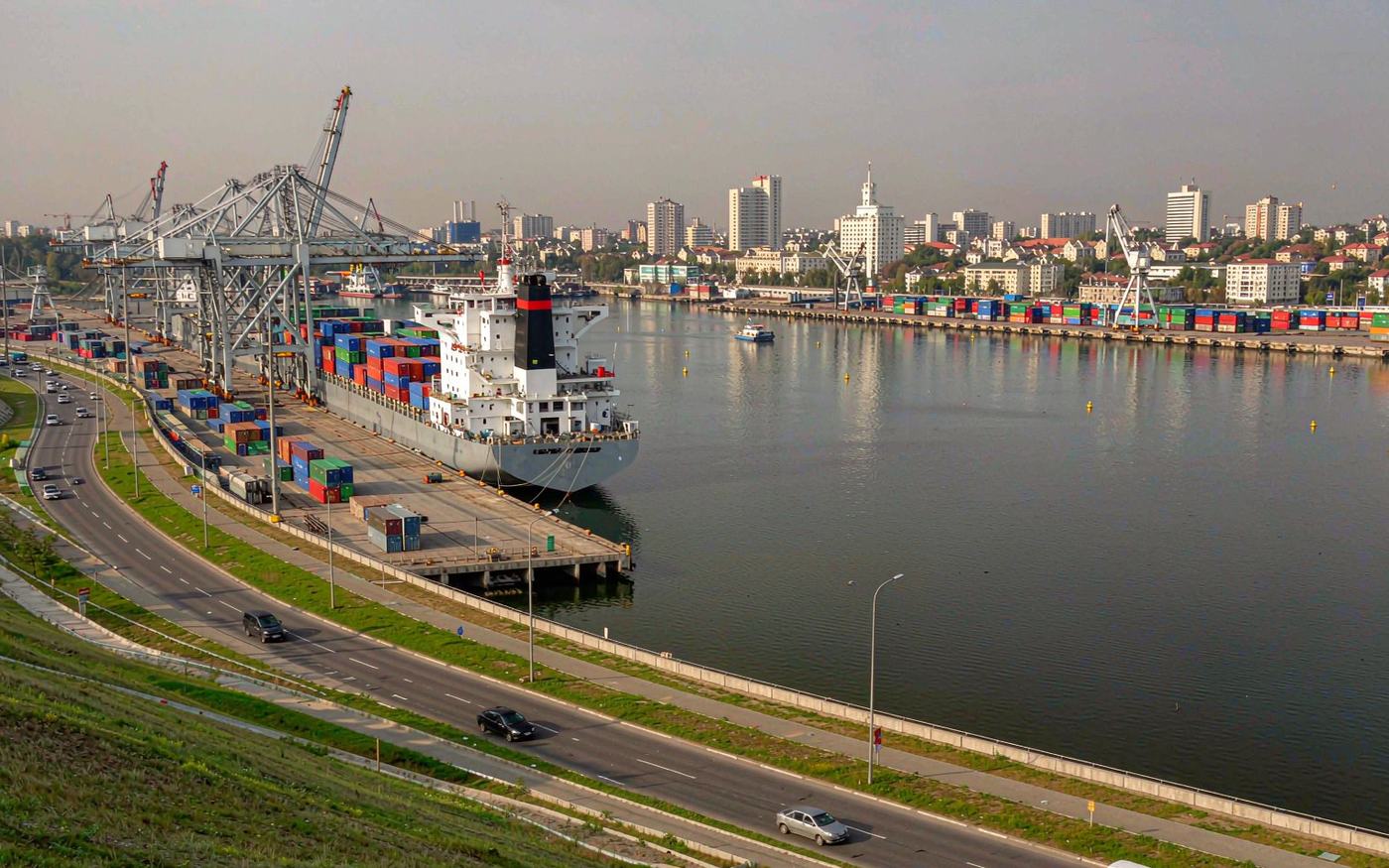
Bulgaria's container trade runs through two Black Sea ports. Varna is the larger of the two and handles the majority of container volume; Burgas is the second gateway and is used for a significant share as well. Both are served by feeder and direct services connecting to Mediterranean hubs.
Which you choose is usually decided by your consignee's location and by which services your carrier operates. Varna sits in the north and is generally the better base for deliveries toward the north and the Danube corridor; Burgas is in the south and works better for southern and central deliveries. Ask your forwarder which services call at each and how frequently.
Services from China are often routed via a Mediterranean hub before the Black Sea leg, and some routings include a Suez transit. That makes the routing, not the distance, the main driver of transit time - and it means geopolitical developments affecting Red Sea and Black Sea shipping can change schedules. Ask what the current routing is at the time you book.
Also worth confirming: how the port handles your specific cargo type. Both ports handle containers, general cargo and project cargo, but out-of-gauge and heavy-lift movements need to be arranged in advance rather than assumed.
Containers or consolidation into Bulgaria, and the volume threshold
The usual arithmetic applies with a commonly cited threshold: below roughly 12 cubic metres, consolidated sea freight is generally the cheaper option; from about 12 to 18 cubic metres it is worth comparing both; above roughly 18 cubic metres a full container usually wins on unit cost.
The local twist is the inland leg. Both Black Sea ports are some distance from Sofia and Plovdiv, so if your consignee is inland, the cross-country haulage is a meaningful part of the total - and it favours a full container delivered whole, because consolidated cargo has to be deconsolidated before the onward move.
Consolidation has a schedule dimension too. Consolidations run to a cut-off and a sailing schedule, and missing the cut-off means waiting for the next departure. Get the cut-off in writing and work backwards from it.
Ask for the destination charges separately - terminal handling, deconsolidation, documentation and delivery order. They are a real share of the total on Black Sea routes and they are frequently missing from a headline freight rate.
Air freight to Sofia and the European hubs used
Air cargo arrives at Sofia International Airport and is the right answer for high-value, urgent or time-critical goods - electronics, pharmaceuticals, automotive parts and spare parts are the typical cases. Published transit figures for the China to Bulgaria air trade commonly fall in a range of four to seven business days for economy service, faster for priority.
There is no direct freighter service from China in most schedules. Cargo typically transits through a European or Gulf hub - Frankfurt, Istanbul, Vienna and Doha are commonly used - so transit includes a handling stop.
For small consignments, express courier offers genuine door-to-door coverage across Bulgaria, including Sofia, Plovdiv, Varna, Burgas and Ruse, with transit typically measured in three to seven days. Below roughly 100 kilograms that is usually the simplest answer.
Air does not remove European Union customs formalities. You still need the registration number, the declaration and the duty and VAT. What you gain is days.
Transit time to Bulgaria and the ENS clock before arrival
Total transit is the ocean leg from China, the Mediterranean or Suez routing, the Black Sea call, and clearance. Published figures for the trade vary with routing; ask your forwarder for the current service rather than relying on a generic number. Peak season from roughly September to December tightens space and can add days and cost.
The requirement specific to European Union entries is the pre-arrival declaration. Goods arriving from outside the European Union must be covered by an entry summary declaration lodged before the cargo reaches the border, and published commentary for this market describes a deadline of roughly 24 hours before arrival with penalties and clearance delays where it is missed.
That makes the shipping instructions deadline a hard one. If your bill of lading details change after the pre-arrival declaration is filed, the two documents disagree and the cargo is held. Freeze your instructions early.
Clearance itself is risk-based: low-risk entries are typically released quickly, while selected or high-risk entries take longer. Complete, consistent documentation is what keeps you in the fast lane.
EORI, the e-Customs declaration and the entry summary
Any business importing into the European Union needs an economic operators registration and identification number. It is a one-time registration, it is free, and it is valid across all member states. If your company will be named as the importer, get one before you ship - a declaration cannot be filed without it.
Declarations are lodged electronically through the national e-Customs system, and advance submission speeds processing. In practice your broker or forwarder files on your behalf, but the importer of record is the party carrying the obligation, so make sure you know who that is.
The supporting set is the standard one: commercial invoice with a full description, HS code and value, packing list, bill of lading or air waybill, and a certificate of origin where a preferential claim is made. The classification must be to the level the European Union's integrated tariff requires, which is more detailed than the six-digit code many suppliers quote.
Product certificates apply to regulated categories, and for goods with a preferential origin claim the origin evidence has to be correct for the claim to hold. Where you are unsure, a binding tariff information ruling from customs is the cleanest way to fix classification before shipping rather than after.
EU TARIC duty, VAT at 20 per cent and the reduced nine
Duty is set by the European Union's common customs tariff, applied by commodity code through the integrated tariff system. Published indicative ranges for the Bulgarian market run from zero to around 17 per cent depending on the product, with machinery and electronics at the low end, textiles and clothing in the middle, and footwear higher. Some categories also carry anti-dumping duties, which can be substantial - bicycles and certain steel products have been cited with very high additional rates.
VAT is charged at 20 per cent, calculated on the total of the customs value plus duty, with a reduced rate of 9 per cent for certain goods including books, some food products and pharmaceuticals. Excise applies to alcohol, tobacco, energy products and motor vehicles.
There is a de minimis rule worth knowing: consignments below a modest value threshold are exempt from customs duty, but VAT is still due. That matters for e-commerce and sample shipments - duty-free does not mean tax-free.
One genuine advantage for businesses: a VAT-registered importer can generally recover import VAT, so the effective cost is the duty plus the financing cost of the VAT between payment and recovery. If you are importing regularly, registration is usually worth it. Note also that Bulgaria adopted the euro on 1 January 2026, so customs values, duty and VAT are now stated in euros.
CE marking, technical files and the categories that need certification
Products placed on the European Union market need to meet the applicable product rules, and CE marking with a supporting declaration of conformity is the mechanism for most regulated categories. If your product falls under a directive or regulation requiring it, the marking, the technical file and, where relevant, an authorised representative in the European Union all need to be in place before import.
Practically, this is an origin-side task. Confirm the marking, have the technical documentation available, and make sure the instructions are in a language the market can use. Goods arriving without the required conformity documentation are held, and fixing that at the port is expensive.
Categories that attract particular attention include electrical and electronic goods, toys, personal protective equipment, medical devices, cosmetics and food-contact materials. If your product is in any of those, confirm the requirements before you ship rather than when the container lands.
Restricted and prohibited items follow the European Union lists, and some goods need licences or additional certification - pharmaceuticals, chemicals, food and live animals among them. Give your broker the full commodity list and get written confirmation.
Packing, ISPM-15 and labelling for an EU entry
Wood packaging entering the European Union must meet the international phytosanitary standard and carry the mark. This is enforced strictly at European Union borders and it is one of the most common avoidable holds. Instruct your supplier before production - it is far cheaper than dealing with it at Varna.
Otherwise, pack for a long routing and outdoor storage. Cargo from China to the Black Sea passes through varied climates and then sits at the port before collection. Use export-grade cartons, palletise where volume justifies it, and wrap against moisture.
Labelling should meet European Union requirements for your product category before the goods ship. Relabelling at destination is expensive, slow and, for regulated categories, sometimes not permitted.
Lithium batteries, aerosols and other regulated items trigger dangerous goods handling. Declare them accurately at booking - a misdeclared dangerous goods shipment is a serious matter at a European Union port, not just an administrative error.
Incoterms and VAT recovery on a Bulgarian import
Under FOB, the seller loads in China and you contract the ocean leg, destination handling, clearance and inland delivery. Under CIF to Varna or Burgas, the seller pays freight and insurance to the port, but risk still transfers at loading in China. Under DAP or DDP, the seller carries more, and DDP includes clearing the goods and paying Bulgarian duty and VAT.
DDP to Bulgaria is available and is often attractive for e-commerce and smaller importers - but it requires the seller or their agent to have a Bulgarian VAT registration, and obtaining one takes time. If a supplier offers DDP without that, ask how they intend to clear the goods, because the importer of record still carries the obligation.
For a business importing regularly, the better structure is usually to import under your own registration number, pay the duty and VAT, and recover the VAT. That requires planning the cash flow - VAT sits with the tax authority between payment and recovery - but it is generally cheaper than paying a delivered-duty-paid margin.
Make sure the trade term matches what you agreed commercially. A quotation for ocean freight only is not a quotation for delivery, and the gap is usually the destination charges plus inland haulage.
Inland haulage from the Black Sea ports to Sofia and Plovdiv
Both Black Sea ports are several hundred kilometres from the main inland markets. Cross-country haulage from Varna or Burgas to Sofia or Plovdiv is a real cost line - published figures for the trade run into several hundred US dollars per container depending on the route and the season. Always ask for it as a separate item.
Deliveries to the port's own hinterland are naturally cheaper than cross-country moves. If your consignee is in Varna or Burgas, expect the inland element to be modest; if they are in Sofia or Plovdiv, budget for the full haul.
Rail and combined transport exist on some corridors and can be worth pricing for regular full-container volumes. Ask, but do not assume - road is the default for most importers.
Confirm the delivery window with your consignee before dispatch, and check vehicle access at the delivery address. European city centres and industrial estates often have restrictions, and a failed delivery costs the vehicle and a re-booking.
Bulgarian import errors that turn into storage bills
The most common is no registration number. A business cannot import into the European Union without one, and discovering that at the port means the goods wait while it is obtained. Get it before you ship.
The second is a late or amended pre-arrival declaration. The entry summary has to be filed before the cargo reaches the border, and a mismatch between it and the bill of lading holds the shipment. Freeze instructions early.
The third is classification to the wrong level. The European Union's integrated tariff requires more detail than the six-digit code many suppliers quote, and a wrong code means wrong duty - plus an amendment and possibly a penalty.
The fourth is non-compliant wood packaging. It is enforced strictly at European Union borders and it is entirely avoidable.
Last: a quotation that stops at the port. With two Black Sea gateways and a long inland haul to the main population centres, the inland leg is frequently where budgets break. Always ask for an all-in figure to your consignee's door.
Why importers use Goodhope on this lane
Six things that are different about working with us on China to Bulgaria shipments.
How it happens to Bulgaria
Five shipments bought in China and delivered into Bulgaria, told end to end — where the order came from, how it moved, where it nearly went wrong, and how it finished. Client names are withheld at their request; the situations and the handling are what we deal with on this lane.
Varna or Burgas · first container · Shanghai to Bulgaria
The purchase. A buyer new to importing picked Burgas because the ocean rate quoted two hundred euro less, without looking at the inland leg.
The move. Full container, gateway chosen after comparing the total door cost to his warehouse rather than the ocean freight alone.
Where it nearly went wrong. The inland haulage from the port is where Bulgarian schedules slip, and a cheaper port with a longer truck run is often the more expensive door. Comparing ocean rates alone hides the whole comparison.
How it finished. We quoted both gateways door to door. Varna won on total cost and four days on the inland leg.
EORI first · before sailing · Ningbo to Varna
The purchase. A first-time buyer assumed the EORI number could be applied for while the container was on the water.
The move. Full container, with the EORI registration completed before departure.
Where it nearly went wrong. The EORI number is mandatory and the declaration cannot be filed without it. A container waiting on a registration number is a container paying storage, and the free time at the port runs out quickly.
How it finished. He registered before booking. The declaration was filed the day the vessel berthed.
The ENS clock · deadline missed · Qingdao to Burgas
The purchase. A buyer treated the entry summary declaration as paperwork that could follow the goods.
The move. Sea freight with the entry summary filed against the pre-loading deadline.
Where it nearly went wrong. The entry summary has to be lodged before the vessel loads, not on arrival. Miss it and the cargo is flagged for checks that consume the port free time.
How it finished. We built the deadline into the booking cut-off. He has not missed a sailing since.
CE and the technical file · electronics · Shenzhen to Sofia
The purchase. A buyer importing mains-powered appliances assumed CE was a mark the factory could print.
The move. Consolidated sea freight into Varna, with CE conformity handled as a documentation task before shipment.
Where it nearly went wrong. CE marking on an EU entry is backed by a technical file and, for many categories, testing by a notified body. The mark without the file behind it is what gets a consignment stopped rather than cleared.
How it finished. We flagged the file requirement at quote stage. His supplier produced it, and the goods released without examination.
ISPM-15 and the pallet · held at the port · Tianjin to Plovdiv
The purchase. A buyer whose supplier shipped on untreated wooden pallets did not know the pallets were a separate compliance item.
The move. Full container, re-palletised to ISPM-15 standard before loading.
Where it nearly went wrong. Wood packaging entering the EU has to carry the ISPM-15 treatment mark. Untreated pallets can cost you the whole container rather than just the pallets, and the re-packing happens at your cost at the port.
How it finished. We made the stamp a condition of booking. No Bulgarian shipment of his has been held on packaging since.
Why importers use Goodhope on this lane
Six things that are different about working with us on China to Bulgaria shipments.
Request a Bulgarian landed cost with duty and VAT worked out
Tell us the commodity, volume and delivery city. We will classify it against the EU tariff, confirm your EORI and pre-arrival declaration are in place, and give you a landed cost that includes duty, VAT, port charges and inland haulage from Varna or Burgas.
Get a quote Talk to usRelated pages
Frequently asked questions
Which port does cargo from China arrive at in Bulgaria?
Bulgaria's container trade runs through two Black Sea ports: Varna, the larger of the two, and Burgas. Varna generally suits northern deliveries and the Danube corridor; Burgas suits southern and central deliveries. Services from China are often routed via a Mediterranean hub, and some routings include a Suez transit.
How long does shipping from China to Bulgaria take?
Total transit depends on the routing - the Mediterranean or Suez leg plus the Black Sea call plus clearance. Ask your forwarder for the current service rather than a generic figure, and note that the peak season from roughly September to December tightens space and can add days and cost.
Should I ship FCL or LCL to Bulgaria?
Consolidation is generally cheaper below roughly 12 cubic metres, both are worth comparing between 12 and 18, and a full container usually wins above 18. If your consignee is inland, factor in that consolidated cargo must be deconsolidated before the onward haul to Sofia or Plovdiv.
Is air freight to Sofia practical?
Yes for high-value, urgent or time-critical cargo. Published transit figures for the China to Bulgaria air trade commonly fall in a range of four to seven business days for economy service, usually via a European or Gulf hub such as Frankfurt, Istanbul, Vienna or Doha.
Do I need an EORI number to import into Bulgaria?
Yes. Any business importing into the European Union needs an economic operators registration and identification number. It is a one-time, free registration valid across all member states, and a declaration cannot be filed without it. Get one before you ship.
What is the entry summary declaration?
It is the pre-arrival declaration required for goods arriving from outside the European Union, lodged before the cargo reaches the border. Published commentary for this market describes a deadline of roughly 24 hours before arrival, with penalties and clearance delays where it is missed. Freeze your shipping instructions early so it matches the bill of lading.
What duty and VAT apply to imports into Bulgaria?
Duty comes from the EU common customs tariff applied by commodity code, with published indicative ranges from zero to around 17 per cent depending on the product, and anti-dumping duties on some categories. VAT is 20 per cent on the customs value plus duty, with a reduced 9 per cent for certain goods. Excise applies to alcohol, tobacco, energy products and vehicles.
Is there a de minimis threshold for Bulgaria?
Consignments below a modest value threshold are exempt from customs duty, but VAT is still due - duty-free does not mean tax-free. Note that EU rules for low-value e-commerce imports have been changing, so confirm the current threshold at the time you ship.
Do I need CE marking for goods imported into Bulgaria?
Where your product falls under an applicable European Union directive or regulation, yes - the marking, the technical file and, where relevant, an authorised representative need to be in place before import. Categories that attract particular attention include electrical goods, toys, PPE, medical devices, cosmetics and food-contact materials.
Can I recover the import VAT in Bulgaria?
A VAT-registered business can generally recover import VAT, so the effective cost is the duty plus the financing cost of the VAT between payment and recovery. That usually makes importing under your own registration cheaper than paying a delivered-duty-paid margin if you import regularly.