
Home / Shipping to Burkina Faso / How to Ship from China to Burkina Faso
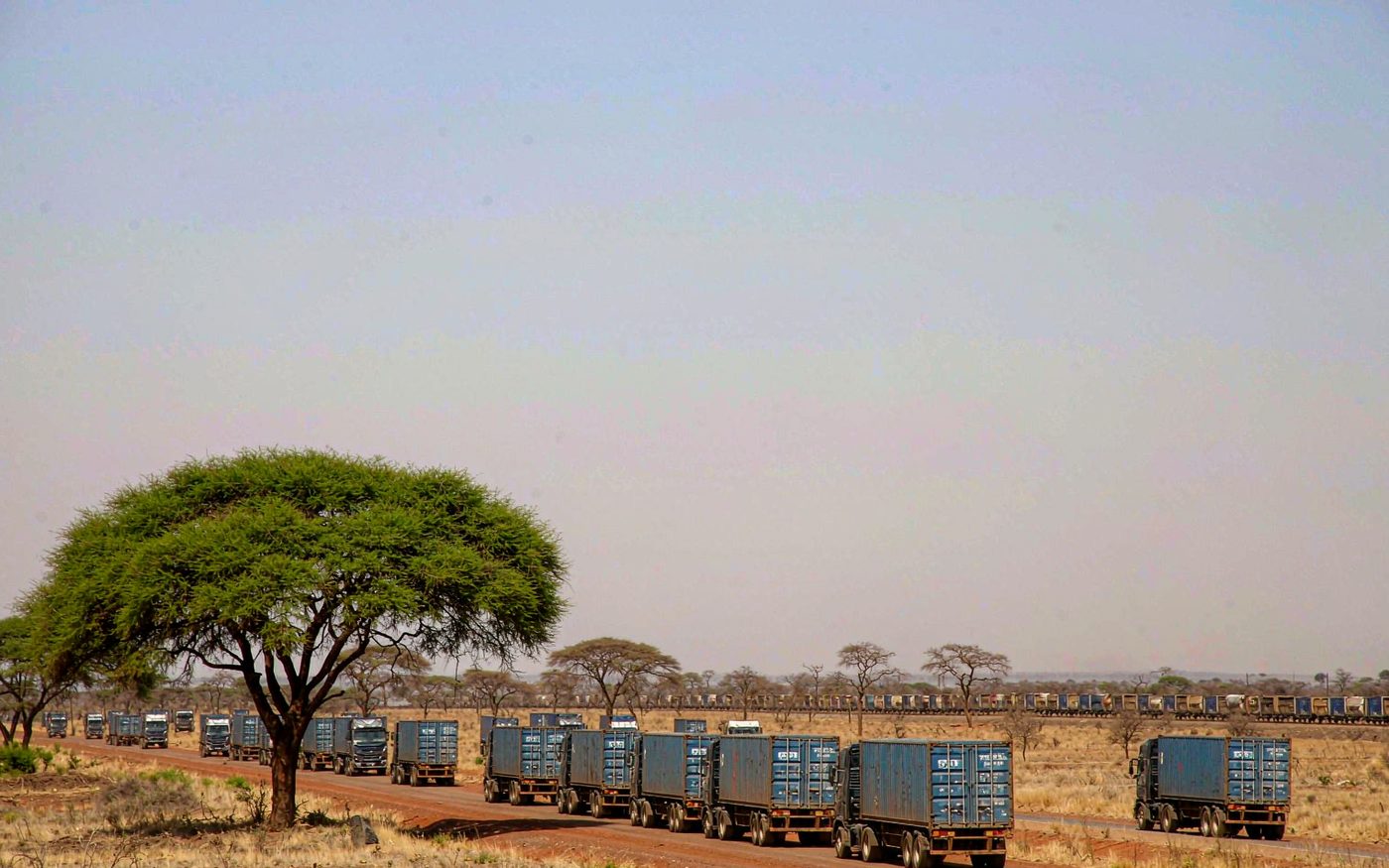
How to Ship from China to Burkina Faso
Burkina Faso has no coastline. Every sea shipment arrives in another country first — usually Abidjan in Côte d'Ivoire, sometimes Tema in Ghana or Lomé in Togo — and then travels a thousand kilometres or more overland to Ouagadougou, Bobo-Dioulasso or Koudougou.
That single fact shapes everything else. Your freight quote has to cover two countries' paperwork, your goods cross an international border under a transit regime, and your timeline contains a road or rail leg that no shipping line controls. This guide works through the choices in the order you will have to make them.
At a glance
No coastline. Main gateway: Abidjan (Côte d'Ivoire); alternatives Tema (Ghana) and Lomé (Togo). Inland leg Abidjan to Ouagadougou: roughly 1,200 km by road, 3 to 5 days, or 2 to 3 days by rail. Duty: WAEMU Common External Tariff bands of 0, 5, 10 and 20 per cent of CIF. VAT (TVA): 18 per cent. Also statistical royalty 1 per cent and community solidarity tax 1 per cent. Documentation in French. BESC tracking note mandatory; original bills of lading required.
How your cargo moves: China to Burkina Faso
Eight steps from your supplier's door to yours. The last four are the ones shaped by local rules.
- Pickup from your supplierWe collect the goods anywhere in China and bring them to our consolidation point.
- Export clearanceChina customs declaration filed and released before the goods move to the port.
- Loading and departureContainer loaded, sealed and handed to the carrier at the Chinese port.
- Main carriageOcean, air or rail movement booked on the route agreed for your cargo.
- Arrival at the gatewayDischarge at the port or airport of entry, recorded on the carrier's manifest.
- Import clearanceCustoms declaration filed locally, with duty and tax assessed on the declared value.
- Customs releaseGoods released into free circulation once duty and tax are settled.
- Final deliveryOnward movement to your delivery address, warehouse or nominated depot.
Duty rates, VAT rates and clearance times move, and the figure that applies to your goods is the one set for your commodity code on the day of clearance. We check the current position against your code before your goods sail and confirm it to you in writing — ask for that check when you request a quote.
First imports into a country with no coastline
The mental model to start with is that you are buying two journeys, not one. The first is a normal sea move from a Chinese port to a West African port. The second is an inland move across an international border, arranged by a different set of people, priced separately, and subject to its own delays.
Because of that, the quote you need is not simply ocean freight. It is ocean freight plus port handling and transit formalities at the coast plus the inland leg plus clearance in Burkina Faso. Any quote that covers only the first stage will look cheaper and will not be the number you end up paying.
Your consignee in Burkina Faso needs to be identifiable to the customs administration there, and commercial cargo is cleared by a licensed broker. If this is your first shipment, line up the Burkinabè side before the container leaves China rather than after it lands in Abidjan.
Three seaports feed Burkina Faso, and the choice changes the price
Abidjan is the most frequently used. It is the closest of the three to Ouagadougou, it has modern container terminals, and it has an established transit bond arrangement for cargo moving north. Most Burkina-bound consolidated cargo goes this way.
Tema in Ghana is the second option, with good road connections along the Trans-West African Highway and frequent sailings. Lomé in Togo has grown on the strength of a modern deep-water port and competitive rates, and is increasingly offered as an alternative.
Which one you use depends on the sailing schedule, the inland rate your forwarder can secure, and how the transit paperwork is handled on that corridor. There is no universal answer; ask for both options with the inland leg priced in, and compare the totals rather than the ocean legs.
Abidjan to Ouagadougou: the 1,200 km leg by road or by rail
From Abidjan to Ouagadougou is roughly 1,200 kilometres. By road that is commonly three to five days for a truck, depending on how the border crossing goes and the season. By rail the Sitarail line runs the same corridor, typically faster for scheduled wagon loads but less flexible for small volumes.
Road wins on flexibility and on door delivery; rail can be steadier and cheaper for regular, predictable volumes. For a first shipment most importers take road, because recovery is easier when something goes wrong and because the truck can deliver to a specific address at the end.
Budget the inland leg as a real line item. On a single vehicle or equipment move it has been quoted in the region of USD 1,500 to 3,000, and importers who budgeted only as far as CIF find that number unwelcome. Ask for it in writing.
Moving under a transit regime instead of paying at the coast
Goods destined for Burkina Faso are not imported into Côte d'Ivoire. They arrive at Abidjan, are declared as transit cargo, and move north under a bond or guarantee. Burkinabè duty and VAT are assessed and collected in Burkina Faso or at the border, not at the Ivorian port.
This only works if the transit declaration is correct and the guarantee is in place before the truck moves. The consequence of getting it wrong is that the goods are treated as an import where they stand, which means Ivorian duty, storage, and a slow administrative process to unwind.
Abidjan has a direct transit bond system for Burkina-bound cargo, which is one reason it is the default routing. Ask your forwarder which transit arrangement they are using and who carries the guarantee.
WAEMU bands, 18% on top, and two further levies
Burkina Faso is a member of the West African Economic and Monetary Union, so imports follow the WAEMU Common External Tariff with bands of 0, 5, 10 and 20 per cent of CIF value. Raw materials and basic equipment sit low; finished consumer goods sit high. Excise duties apply on top to a defined list that includes beverages, tobacco, perfumes and cosmetics, non-biodegradable plastic packaging, petroleum products, coffee, tea and passenger vehicles above a certain horsepower.
VAT, locally TVA, is 18 per cent on the standard rate, charged on the CIF value plus duty. Two smaller charges are usually quoted alongside: a statistical royalty at 1 per cent and a community solidarity tax at 1 per cent. As elsewhere in the region, the total tax burden on a finished consumer good is considerably more than the headline duty rate suggests.
The UEMOA levy that applies to household goods and vehicles — quoted at 1.5 per cent for household effects and 2.5 per cent for vehicles — is charged even on shipments that qualify for duty-free entry, which catches out relocating households and anyone importing a single vehicle.
French is not a preference here, it is the working language
All customs documentation in Burkina Faso has to be in French. That is not a matter of courtesy or of the officer's preference; invoices and declarations in English are not accepted as they stand. Build translation into your preparation time, and check that product descriptions survive translation accurately, because a mistranslated description can move goods into the wrong tariff band.
The same applies to the Burkinabè customs administration's own forms and to correspondence with your broker. If nobody on your side reads French, make sure your forwarder does, or appoint a broker who will correspond with you in English while filing in French.
Original bills of lading, and why express release is refused
For Burkina Faso cargo the original bill of lading is required. Express release — where the carrier releases the container on the strength of a scanned or telexed release rather than the paper original — is not accepted on this corridor, and the original documents have to be couriered in time for the transit declaration and the clearance at destination.
That has a scheduling consequence people underestimate: the paper has to arrive before the truck can move, and if the courier is slow the container sits at the port accruing storage. Send the originals early, by a tracked service, and confirm receipt rather than assuming it.
Buying as an individual versus trading under a Burkinabe company
Commercial importing requires a commercial operator certificate and, depending on the goods, an import licence; both are issued through the chambers of commerce. A registered business with a tax number is the normal importer of record for anything being resold.
Private individuals can import personal effects, and used household goods and personal items can qualify for duty-free treatment when the owner is relocating on a permanent or long-term basis. Only used items qualify — new items are taxed as commercial cargo at the applicable rates, and new items have to be declared separately with invoices.
Used clothing, shoes and similar goods are examined closely across West Africa, and several markets in the region apply specific restrictions or environmental charges on them. Confirm the current position for your goods with your broker before shipping.
The two people you need: one in China, one in Ouagadougou
In China your forwarder books the sailing, trucks the goods to the port, clears export customs, issues the bill of lading and applies for the BESC cargo tracking note, which is mandatory for cargo discharged at the West African ports serving this corridor.
At the destination end your broker handles the transit declaration at the port, arranges and monitors the inland leg, and clears the goods in Burkina Faso: lodging the declaration, answering queries, arranging inspection, and assessing and paying duty and VAT.
The failure mode is a gap between them. The most common version is that the China side ships correctly but nobody in Ouagadougou has been told what is coming, so no transit file exists when the container lands. Appoint the destination side first.
Loaded through Abidjan: three real consignments
Building materials, full container, for a contractor in Ouagadougou. Cement additives, hardware and fittings, one 40 foot container. Ships to Abidjan, declared in transit, moves north by road over four days or so, and clears in Ouagadougou where the duty is assessed. The inland leg is a meaningful share of the total cost.
Motorcycle spare parts, LCL, for a distributor. Consolidated in China with other cargo, deconsolidated at Abidjan, and then moved north as part of a grouped truck. This is the cheapest way to start but the slowest, because it waits for the consolidation and then for the truck to fill.
Medical equipment, air freight, for a clinic. Flown to Ouagadougou with transshipment through a European, Turkish or Gulf hub, since there is no direct service from China. Expensive per kilo, and it still needs import documentation, but it removes the overland leg entirely.
Where timelines slip, and a realistic door-to-door picture
Two stages absorb most of the delay on this route. The first is the port: transit formalities, the wait for the original bill of lading, and the availability of trucks for the northern run. The second is the border crossing, which depends on documents being complete on both sides and on ordinary congestion.
A realistic end-to-end plan for sea freight via Abidjan runs several weeks from the Chinese factory to the port, plus the inland leg, plus clearance at destination — commonly quoted in the region of 40 to 55 days door to door for a full container. Air freight to Ouagadougou takes days for the flight itself but requires transshipment and adds clearance time at the end.
Parts of Burkina Faso are covered by travel advisories issued by several governments, and carriers, insurers and destination agents price and route the inland leg accordingly. Ask your forwarder which routes they are currently running and what their insurance covers before you commit.
What first-time buyers into Ouagadougou ask us
Should I ship to Abidjan or Tema? Abidjan is the usual answer for Burkina-bound cargo because of the distance and the established transit arrangement; Tema and Lomé are worth pricing when the schedule or the inland rate favours them.
Do I pay duty in Côte d'Ivoire? No, if the goods are correctly declared in transit and the guarantee is in place. Yes, if they are presented as an Ivorian import.
Can I use a telex release? No. Original bills of lading are required. Send them early.
Who arranges the truck north? Your forwarder or their destination agent, ideally the same party who will clear the goods in Ouagadougou, so the transit and the import file are handled by one office.
Why importers use Goodhope on this lane
Six things that are different about working with us on China to Burkina Faso shipments.
Landlocked Burkina Faso: plan the corridor before the vessel
Tell us the goods, the volume and the delivery city. We will price the sea leg, the transit formalities at the coast and the overland run to Ouagadougou as one number, and confirm what the Burkinabe side needs from your consignee.
Get a quote Talk to usRelated pages
Frequently asked questions
Which port should I ship to for Burkina Faso?
Abidjan in Côte d'Ivoire is the most frequently used, because it is closest to Ouagadougou and has an established transit bond arrangement. Tema in Ghana and Lomé in Togo are used as alternatives depending on sailing schedules and inland rates.
How long does the inland leg take?
Abidjan to Ouagadougou is roughly 1,200 km. Allow about three to five days by road, or around two to three days by rail on the Sitarail line. Road is more flexible and more common for a first shipment.
Do I pay customs duty in Cote d'Ivoire?
Not if the cargo is correctly declared as transit and moves under a bond or guarantee. Burkinabè duty and VAT are assessed at destination. If the paperwork presents the goods as an Ivorian import, Ivorian duty applies instead and unwinding that is slow.
What are the duty rates in Burkina Faso?
The WAEMU Common External Tariff applies, with bands of 0, 5, 10 and 20 per cent of CIF value. Excise duties apply on top to a defined list including beverages, tobacco, cosmetics, some plastic packaging, petroleum products, coffee, tea and higher-powered passenger vehicles.
What is the VAT rate?
VAT, or TVA, is 18 per cent on the standard rate, charged on CIF plus duty. A statistical royalty of 1 per cent and a community solidarity tax of 1 per cent are usually also applied.
Can I use a telex or express release bill of lading?
No. Original bills of lading are required for this corridor. Send the originals early by a tracked courier, because the truck cannot move north and the transit declaration cannot be finalised without them.
Does all the paperwork have to be in French?
Yes. Customs documentation must be in French. Build translation into your preparation time and check that product descriptions translate accurately, since a mistranslation can shift goods into a different tariff band.
Is a BESC required?
Yes. The BESC cargo tracking note is mandatory for cargo discharged at the West African ports serving Burkina Faso, and it is obtained at the port of loading before departure, like the equivalent ECTN documents used across the region.
How long does the whole journey take?
Commonly quoted in the region of 40 to 55 days door to door for a full container routed via Abidjan, including the inland leg and clearance. Air freight to Ouagadougou takes days for the flight but needs transshipment and still requires import clearance.
Can I import personal effects duty free?
Used personal and household items can qualify for duty-free entry for someone relocating permanently or long term, with the right documentation. Only used items qualify; new items are taxed as commercial cargo. The UEMOA levy is still charged on duty-free shipments in some categories.