
Home / Shipping to Christmas Island / How to ship from China to Christmas Island
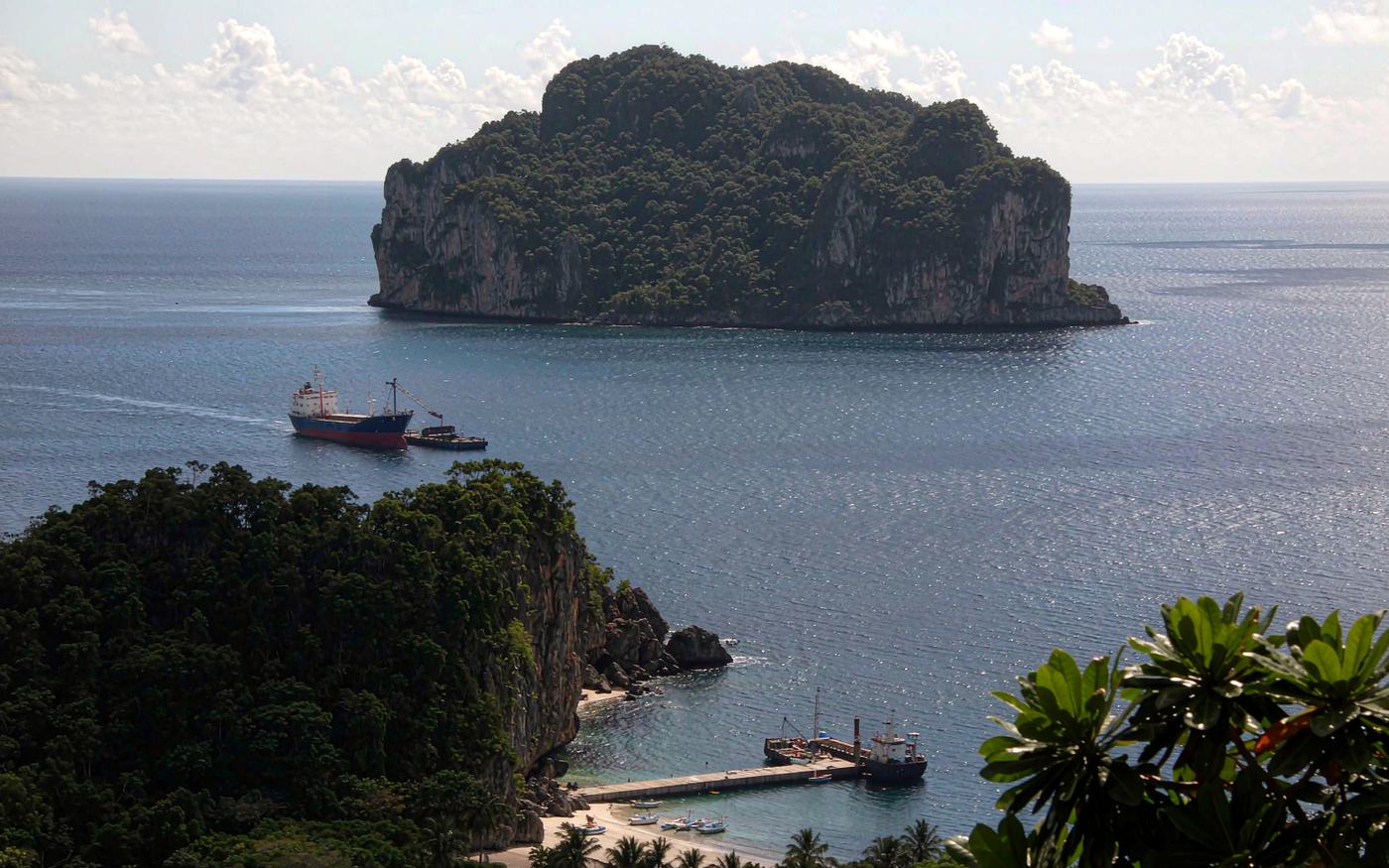
How to ship from China to Christmas Island
Christmas Island sits in the Indian Ocean about 2,600 kilometres north-west of Perth and roughly 350 kilometres south of Java. It is an Australian external territory with a population of fewer than two thousand people, and every box that arrives there arrives because somebody planned it months earlier.
This page is written for the buyer or the supplier facing that shipment for the first time. The two things that surprise people most are the tax position and the port. Customs duty applies, because Australian customs law reaches the external territories. GST does not, because the external territories sit outside Australia's indirect tax zone. And the port is a single anchorage worked by crane, not a container terminal.
Get those two facts right and the rest of the planning becomes straightforward.
At a glance
Status: Australian external territory, so Australian customs law applies and duty is assessed in the ordinary way; it is outside the GST net. Gateway: Flying Fish Cove, the only safe anchorage, worked by crane; Christmas Island Airport, XCH, with a 2,103 metre runway. Transshipment: Fremantle. Currency: Australian dollar. Population: fewer than 2,000.
How your cargo moves: China to Christmas Island
Eight steps from your supplier's door to yours. The last four are the ones shaped by local rules.
- Pickup from your supplierWe collect the goods anywhere in China and bring them to our consolidation point.
- Export clearanceChina customs declaration filed and released before the goods move to the port.
- Loading and departureContainer loaded, sealed and handed to the carrier at the Chinese port.
- Main carriageOcean, air or rail movement booked on the route agreed for your cargo.
- Arrival at the gatewayDischarge at the port or airport of entry, recorded on the carrier's manifest.
- Import clearanceCustoms declaration filed locally, with duty and tax assessed on the declared value.
- Customs releaseGoods released into free circulation once duty and tax are settled.
- Final deliveryOnward movement to your delivery address, warehouse or nominated depot.
Duty rates, VAT rates and clearance times move, and the figure that applies to your goods is the one set for your commodity code on the day of clearance. We check the current position against your code before your goods sail and confirm it to you in writing — ask for that check when you request a quote.
Customs duty applies on this island while GST stays off the invoice
This is the point that costs people money in both directions. Christmas Island is part of Australia for customs purposes, so imported goods are assessed for customs duty in the ordinary way and prohibited and restricted goods rules apply as they do on the mainland.
It is not part of Australia for GST. The external territories fall outside the indirect tax zone, so the 10 per cent GST that appears on a landed-cost calculation for Sydney or Fremantle does not apply to goods imported here.
You will find freight reference sites and duty calculators quoting a 10 per cent or even a 20 per cent consumption tax for Christmas Island, alongside a tax-free threshold. We read those as applying mainland Australia rather than the territory. Confirm the treatment with a broker who has filed on the island before you rely on either figure.
Practical rule: model the duty, drop the GST, and check the difference with your broker rather than with a duty calculator.
Flying Fish Cove: one anchorage, one crane, and cargo it will not take
Flying Fish Cove is the island's only safe anchorage and its main point of entry. Cargo is worked there by crane from the vessel onto the wharf, and from there by road into the settlement.
There is one anchorage and a limited number of crane lifts per call, so capacity per sailing is genuinely finite. Out-of-gauge pieces, very heavy lifts and anything that needs a spreader rather than a hook should be checked with the port before you book, not after.
Sources differ on exactly what the wharf can handle, including whether it works containers or only break-bulk and palletised freight. Confirm the current handling capability in writing for your specific unit.
Fremantle is the real gateway, and the island leg adds about a week
No deep-sea service from China calls at Christmas Island. Cargo sails from a Chinese port to Fremantle, and from there on a resupply or charter service to the island.
That island leg is the part that gets underestimated. It typically adds five to ten days on top of the ocean transit, and it is subject to weather and to the availability of the vessel.
Budget the whole move at roughly 30 to 50 days door to port from a Chinese factory. The number moves with the Fremantle connection, not with the China leg.
Air freight to XCH and the fortnightly freighter out of Perth
Christmas Island Airport, IATA code XCH, has a runway of about 2,103 metres and handles passenger services to Perth and charters to Kuala Lumpur and Singapore. Air freight capacity comes through those services and through a dedicated freighter running out of Perth roughly every two weeks.
A fortnightly freighter is a schedule you plan around, not one you push against. If your cargo misses it, the next opportunity is two weeks away.
Air freight typically lands at 5 to 10 days door to airport, but only if the uplift date and the freighter date line up. Confirm both before you give a delivery date.
Biosecurity here is as strict as on the Australian mainland
Australian biosecurity rules apply to Christmas Island, and the island's isolation makes enforcement rather than leniency the operating assumption. Food, plant material, seeds, animal products, untreated timber and anything carrying soil are all controlled, and some categories require a permit issued by the Australian department responsible for agriculture before the goods ship.
The island's ecology is unusual enough that the assessment is genuinely stricter than shippers expect. If your consignment contains anything biological, get the permit application in early and expect it to take longer than the freight does.
Wood packaging must meet ISPM 15, with the mark visible. This is the single most common cause of a consignment being held at an Australian border, and Christmas Island is no exception.
What the Indian Ocean Territories supply chain review changes for shippers
The Australian Government commissioned a supply chain review of the Indian Ocean territories, which reported in 2024 with fifteen recommendations covering freight pricing, port efficiency, airfreight arrangements and food security. Implementation has been under way since, including changes to airfreight arrangements and work on sea freight subsidy models.
Moorings at Flying Fish Cove and at Smith Point were replaced and upgraded during 2025, which improves the reliability of the anchorage for supply vessels.
For a shipper the practical takeaway is that the arrangements are being actively revised. Ask what the current freight handling arrangement is at the time you book, because it may not be what it was last year.
Planning for a market of fewer than two thousand people
With a population under two thousand, no consignee on Christmas Island is ordering container-load volumes on a weekly cycle. Most shipments are consolidated resupply: building materials, vehicles and spare parts, food, retail stock and government or mining-related equipment.
That has two consequences. First, consolidation in China is usually the right answer rather than a full container. Second, storage on the island is limited, so timing the arrival to the consignee's ability to receive matters more than shaving a few days off the transit.
There is no bonded warehouse to park goods in while paperwork is sorted. Everything has to be entered on arrival.
Packing for a crane lift over an open anchorage
Cargo is lifted off a vessel at anchor and landed on a wharf, then moved a short distance by road. Every piece is handled individually by crane, so pack to be slung: clear lifting points, sealed and weatherproofed cases, and pallets that will not flex when lifted by a hook.
The climate is tropical marine: hot, humid and salty. Use barrier packaging with desiccant for anything moisture-sensitive and specify corrosion protection on exposed steel.
Phosphate dust, rainforest and the goods that need a permit
Much of the island is national park, and the red crab migration, usually in the later months of the year, is significant enough that roads are closed to protect it. If your delivery window falls in that period, local distribution can be disrupted, so ask your consignee when the migration is running before you commit to a date.
Restricted and prohibited goods follow the Australian list: weapons, explosives and fireworks, illicit drugs, certain chemicals and unapproved therapeutic goods are prohibited or licensed. Alcohol and tobacco are dutiable and controlled.
Goods of the territory itself can qualify for preferential duty treatment under Commonwealth arrangements. It is a narrow category but worth checking if your cargo is local produce or locally manufactured.
Documents, and the identity check that comes with clearance
The document set is the Australian one: commercial invoice with HS codes, packing list, bill of lading or air waybill, and any permit or certificate your goods need. Government-issued identification is required from the person clearing the goods, which catches visitors and first-time importers by surprise.
Because there is no bonded storage, the documents have to be right before arrival, not fixed afterwards. Send the full set to your broker while the cargo is still at sea.
Insure the consignment. A crane lift over an open anchorage followed by a short island road leg carries more handling risk than a standard container move.
Why importers use Goodhope on this lane
Six things that are different about working with us on China to Christmas Island shipments.
Real moves on the China to Christmas Island lane
Five shipments bought in China and delivered into Christmas Island, told end to end — where the order came from, how it moved, where it nearly went wrong, and how it finished. Client names are withheld at their request; the situations and the handling are what we deal with on this lane.
No direct service · first shipment · Shenzhen to Christmas Island
The purchase. A buyer new to importing asked us to book a container straight from China to Christmas Island.
The move. Consolidated cargo to Fremantle, cleared on the mainland, then forwarded on the island service.
Where it nearly went wrong. There is no direct liner call. Everything routes through Fremantle, and the island leg adds roughly a week on top of the mainland transit. Quoting a China-to-island figure without the Fremantle leg in it is a quote that cannot be honoured.
How it finished. We restructured it as two legs with one through price. He now quotes his customer a realistic window.
Biosecurity · machinery · Shanghai to Christmas Island
The purchase. A first-time buyer shipped used equipment without cleaning the soil and plant material off it.
The move. Sea freight with the equipment cleaned and certified before it reached Fremantle.
Where it nearly went wrong. Biosecurity here is as strict as on the Australian mainland, and soil, seed and plant material on machinery is the most common cause of a hold. Cleaning at the island is not an option; it is done before, or the item is not released.
How it finished. We made cleaning a pre-shipment condition. His equipment has cleared without treatment since.
The crane limit · oversized · Foshan to Flying Fish Cove
The purchase. A buyer ordered a large fabricated item without checking whether the anchorage could lift it.
The move. Sea freight, with the piece weight and dimensions cleared against the crane capacity before booking.
Where it nearly went wrong. Cargo at Flying Fish Cove is worked by crane over an open anchorage, and there is a limit to what it will take. An item beyond that limit does not get lifted; it gets shipped back, at your cost.
How it finished. We checked the lift before he ordered. He split the piece into two and both landed.
Air versus the sailing · urgent spares · Guangzhou to XCH
The purchase. A buyer with a breakdown needed spares and assumed air freight to the island ran daily.
The move. Air cargo on the freighter out of Perth into Christmas Island Airport.
Where it nearly went wrong. The air service is a scheduled freighter, not a daily rotation, and the sea service is monthly-ish. Planning around a service that does not exist is the single most expensive mistake on this route.
How it finished. We gave him the actual schedule before he committed to his customer. He chose sea and ordered earlier.
Duty applies, GST does not · quoting · Ningbo to Christmas Island
The purchase. A buyer assumed that because the island sits outside the GST net, no import charges applied at all.
The move. Consolidated cargo, with the duty position worked out on the code and the GST treatment confirmed in writing.
Where it nearly went wrong. Australian customs law applies and duty is assessed in the ordinary way, while the ten per cent GST does not apply. Those are two different statements, and conflating them produces a landed cost that is wrong by the duty amount.
How it finished. We separated the two on his quote. His pricing has been right on every shipment since.
Why importers use Goodhope on this lane
Six things that are different about working with us on China to Christmas Island shipments.
Talk to us before you book the Fremantle leg
Send us the commodity, weights and dimensions and we will tell you what Flying Fish Cove can handle on the next call, when the Perth freighter runs, whether your goods need an Australian permit, and how the duty position looks without GST.
Get a quote Talk to usRelated pages
Frequently asked questions
Does GST apply to goods imported into Christmas Island?
No. The Australian external territories sit outside Australia's indirect tax zone, so GST does not apply here even though customs duty does. Many freight reference sites and duty calculators show a 10 per cent or 20 per cent figure; those reflect mainland Australia. Confirm with a broker.
Does customs duty apply?
Yes. Australian customs law applies to Christmas Island as an external territory, and imports are assessed for duty in the ordinary way. Excise on alcohol, tobacco and fuel applies through the same framework.
What is the main port?
Flying Fish Cove, the island's only safe anchorage. Cargo is worked by crane from the vessel onto the wharf. Check heavy or out-of-gauge lifts against the port's capability before booking.
Is there a direct sailing from China?
No. Cargo sails to Fremantle and transships onward to the island, which typically adds five to ten days. Budget roughly 30 to 50 days door to port in total.
How often does the air freighter run?
A dedicated freighter operates out of Perth roughly every two weeks. Air cargo also moves on the passenger services to Perth and on charter flights to Kuala Lumpur and Singapore. Missing the freighter means waiting about two weeks.
Is biosecurity strict?
Yes, as strict as on the Australian mainland and arguably more so given the island's ecology. Food, plants, seeds, animal products and untreated timber are controlled and some need an agriculture permit issued before the goods ship. Wood packaging must meet ISPM 15.
Is there bonded warehousing?
No. There is no bonded warehouse on the island, so goods must be entered on arrival. Have the full document set with your broker while the cargo is still at sea.
What identification is needed at clearance?
Government-issued identification is required from the person clearing the goods. Travellers arriving from the Australian mainland do not need a passport or visa but must produce ID.
What goods are prohibited or restricted?
The Australian prohibited list applies: weapons, explosives and fireworks, illicit drugs, certain chemicals and unapproved therapeutic goods, with alcohol and tobacco dutiable and controlled.
Does the red crab migration affect deliveries?
It can. Roads are closed at times during the migration, usually in the later months of the year, to protect the crabs. Ask your consignee when it is running before you commit to a delivery date.