
Chongqing, China · Guoyuan river port · Tuanjiecun rail terminal · FCL exports
Chongqing Container Drayage
GoodHope Freight arranges container drayage in Chongqing: the truck leg between your supplier's plant and the inland point where the box actually starts moving. That point is Guoyuan port on the Yangtze, the rail siding at Yuzui, or the Tuanjiecun container rail terminal. Chongqing has no ocean berth. A box cleared for export here still has to reach Shanghai, Ningbo, Qinzhou or a land border before it meets a vessel, so the trucking plan is built around a barge or train cut-off, not a vessel cut-off.
- 20ft / 40ft / 40HQ / 45HQ
- Heavy loads and dual 20s
- Open top and flat rack
- Reefer and dangerous goods
- Barge and rail handover
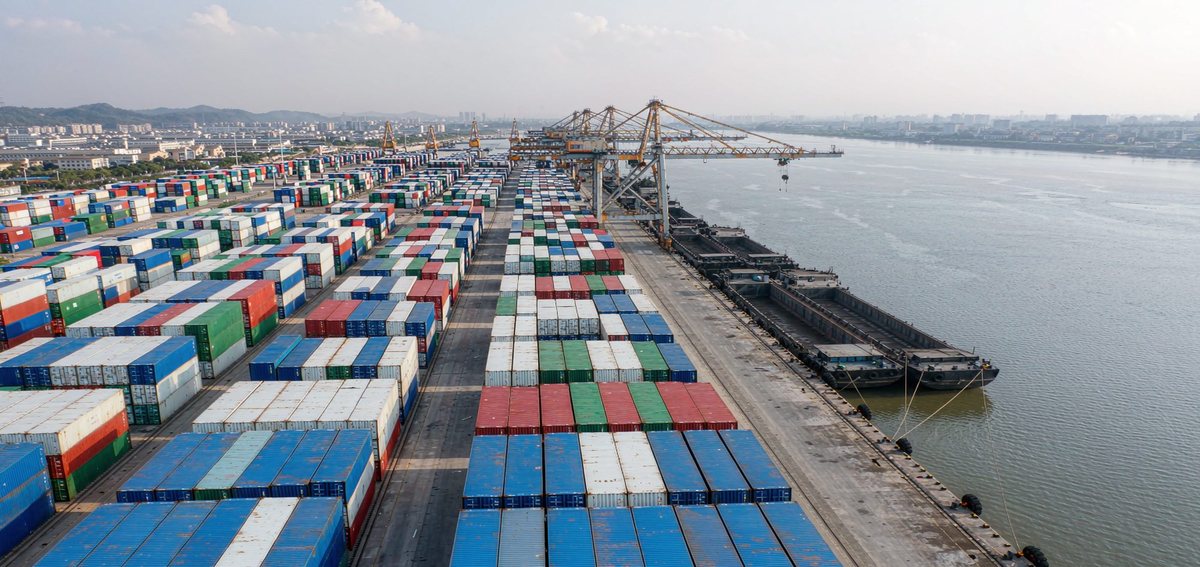
This leg decides whether an inland export sails at all. If you buy FOB or FCA from a Chongqing factory and nominate your own ocean carrier, the line releases the empty, usually at a depot in Chongqing and sometimes only in Shanghai. Someone still has to position the box, get it loaded, weigh it, seal it, clear the export declaration and hand it to the barge operator or the rail terminal before the cutoff.
GoodHope Freight is a Shenzhen-based freight forwarder. Our scope covers ocean FCL and LCL on a port-to-port basis, air freight to airport, road transport, rail and in-transit moves to Afghanistan. The work described on this page is the China-side trucking leg of an FCL shipment, plus the handover to the river or rail carrier. Dispatch sits on China time (GMT+8), the same clock your factory and the terminal work on.
What a Chongqing drayage move covers
The plant address decides the trucking plan and the hour the truck can load. The areas below are grouped by what they mean for scheduling.
| Factory area | Common districts | What it means for your booking |
|---|---|---|
| Liangjiang New Area and Guoyuan | Yuzui, Fusheng, Shuangfengqiao, Longxing, Yufengshan | Closest to the river berths and the rail siding. Empty pickup and gate-in can happen in one night shift. |
| Inner city districts | Jiangbei, Yubei, Jiulongpo, Shapingba, Nan'an, Dadukou, Banan | Inside the 7:00-22:00 truck ban. Loading moves to the evening and night; a driver may sit from early afternoon until the ban lifts. |
| Western districts | Jiangjin, Bishan, Yongchuan, Hechuan, Dazu, Rongchang | 60-120 km of hill roads. Check plant access for a 40ft rig and confirm axle load for dense cargo. |
| Along the Yangtze | Changshou, Fuling, Fengdu, Zhongxian, Wanzhou | 100-300 km downriver. For these plants it is often cheaper to load at the local berth than to truck a box back up to Guoyuan. |
| Eastern Sichuan | Luzhou, Yibin, Suining, Nanchong, Guang'an | Cross-province runs. Allow a full day each way and check whether the booking is issued from Chongqing or from Chengdu. |
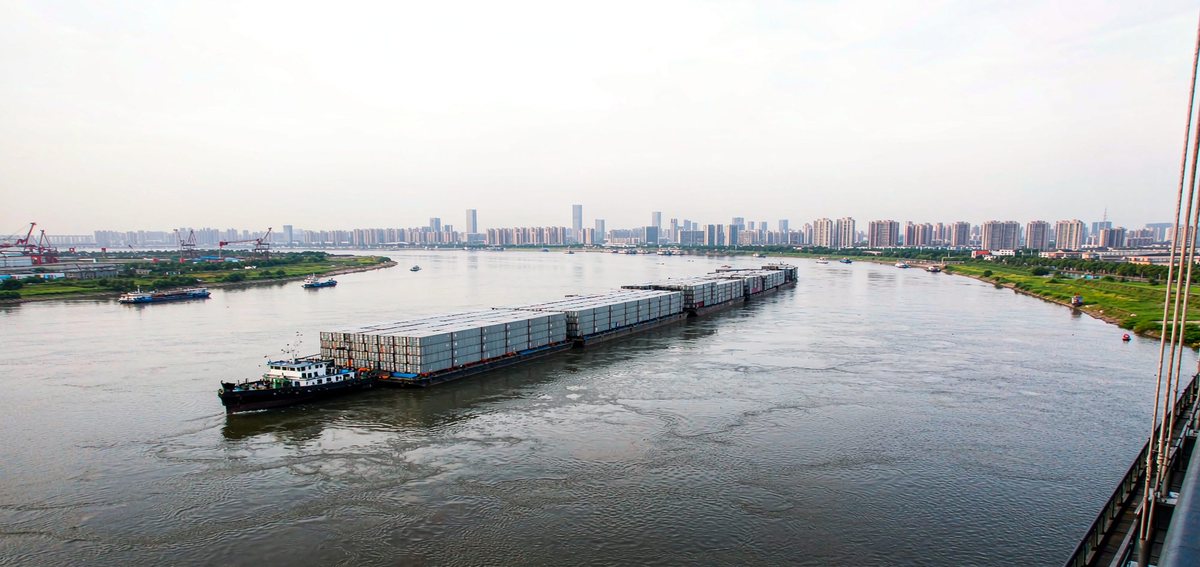
Chongqing's container trade moved out of Cuntan. Foreign trade containers were shifted to Guoyuan in 2021 and Cuntan is being rebuilt for passengers. If the booking still names Cuntan as the pickup point, the empty will not be there.
Container types and trucking setup
Standard dry boxes are dispatched by size. Plant access, road gradient and cargo weight decide the chassis.
| Container | Common shorthand | Typical cargo | Trucking note |
|---|---|---|---|
| 20ft standard dry | 20GP, one TEU | Auto parts, aluminium profiles, chemicals, motorcycle components | Short chassis, easier on tight plant gates. Dense cargo means axle weight is checked before dispatch. |
| 40ft standard dry | 40GP, one FEU | Machinery, furniture, building materials | Standard chassis. The plant needs a turning circle for a 40ft rig, not just a gate wide enough to pass. |
| 40ft high cube | 40HQ or 40HC | Electronics, appliances, textiles, e-commerce freight | Extra height matters here: check plant canopy clearance and the tunnel or gantry heights on the approach road. |
| 45ft high cube | 45HQ | High-volume light cargo, consolidated orders | Thin stock in Chongqing depots. Confirm empty availability first; the box may have to be repositioned from Shanghai. |
A trucking order for Chongqing should state the loading date, factory name and address, an on-site contact, the commodity, actual gross weight, container type and count, the Incoterm, and which corridor the box is booked on. That last item is the one most often missing: a box booked to Shanghai by barge and a box booked to Qinzhou by rail leave from different gates on different days.
Wood packaging bound for the US, Canada, Australia or the EU needs ISPM 15 treatment and the mark before loading starts. Chongqing plants are used to this, but the certificate still has to travel with the export documents.
Heavy containers and two 20s on one chassis
Overweight loads
Aluminium ingots, steel, machinery castings and mineral products are the usual heavy cargoes out of Chongqing. The weight question is settled at booking, not at the gate. We confirm the carrier's weight cap and the barge or rail operator's own limit, then declare the actual gross weight before the empty is released.
Guoyuan weighs every box at the gate on an electronic weighbridge, and the reading is what the terminal works from. If it exceeds the corridor limit, the load has to come out, be split, or be rebooked. Sending an overweight box to the gate in the hope it passes burns the appointment and can cost the sailing.
Two 20s on one chassis
Dual 20s puts two 20ft boxes behind one tractor. It works when both boxes are dense but the combined weight still fits road axle limits, and when the two plants sit on the same route or share an address. It is common on the Guoyuan and Yuzui lanes and rare on long western-district runs.
Three things get checked before dispatch: the combined gross weight against the axle limit, the bridge weight limit on the route across the Yangtze or the Jialing, and whether the barge or train accepts the pair as booked. Dual 20s also needs a longer chassis, and not every Chongqing depot keeps one.
Ramp gradients in the main city are steep enough that a heavy dual-20 combination is routed around the worst climbs rather than straight through them. The driver's route sheet names the bridge and the ramp for that reason.
Open-top and flat-rack containers
Both types carry cargo that will not pass through the doors of a dry box, and both are checked against the same road limits.
What the two types are for
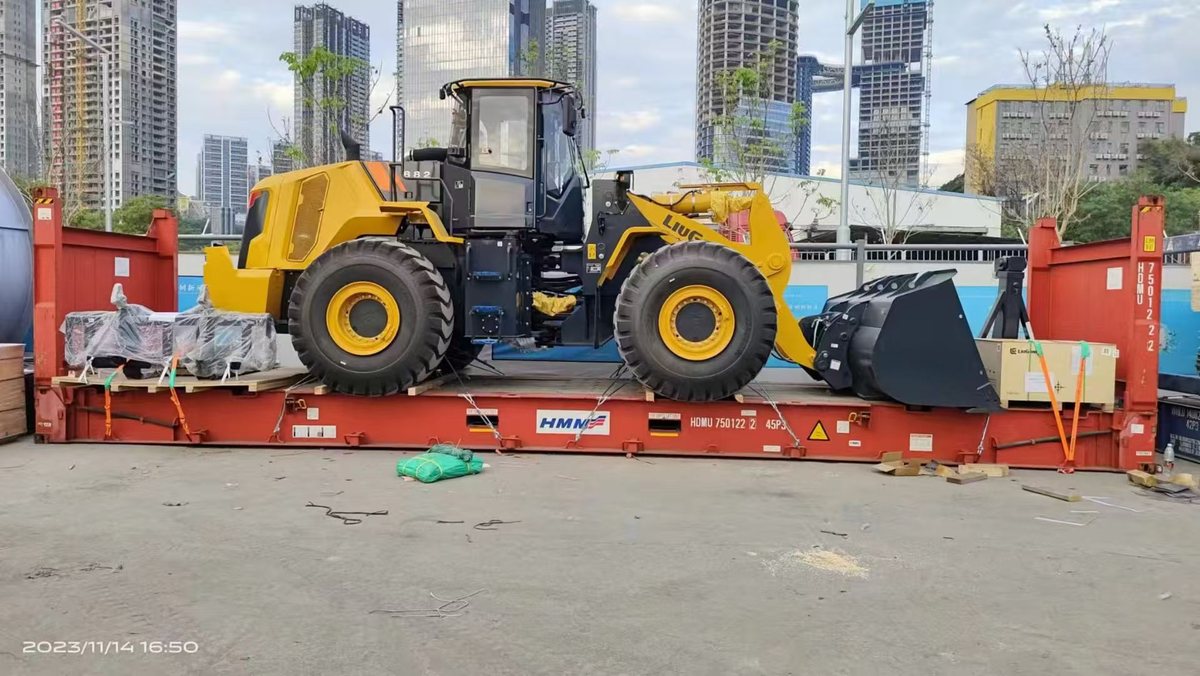
An open top has a removable roof so cargo can be craned in from above; a tarp and lashing straps close it afterwards. A flat rack has a floor and two end frames and nothing else, for wide or long cargo loaded from the side. Neither is a standard booking: the carrier needs a packing drawing, the terminal needs the dimensions, and the box is classified as out-of-gauge.
What the mountain roads add
Overheight and overwidth cargo runs into fixed limits on the approach to Guoyuan and on any route through the main city. Tunnel clearance, overhead gantries, toll booth widths and cross-river bridge weight limits are surveyed before the move is priced. A survey that finds one low gantry can turn a direct run into a night convoy on a longer road.
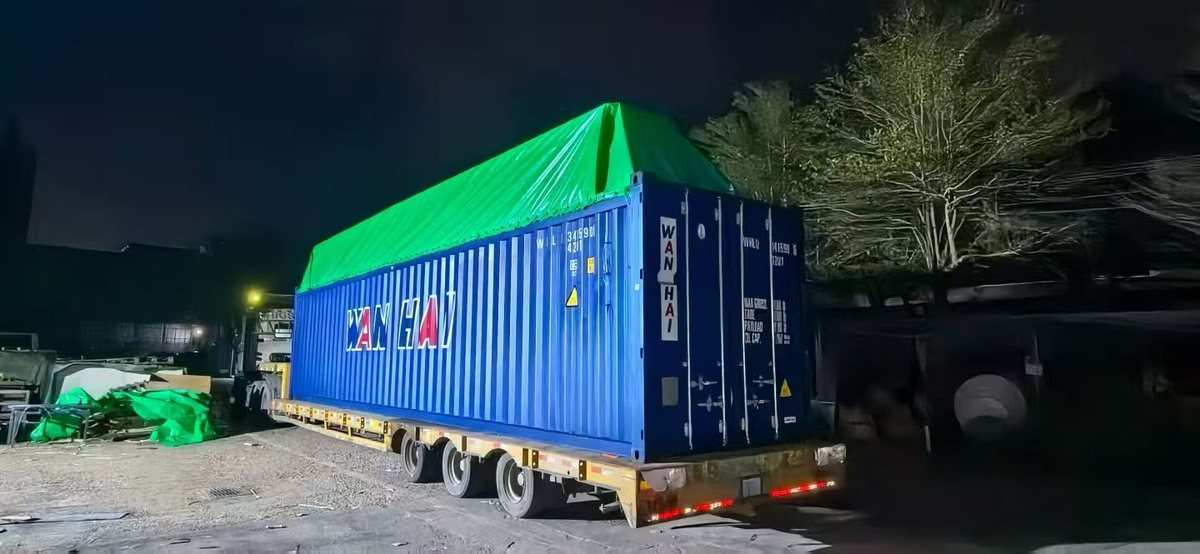
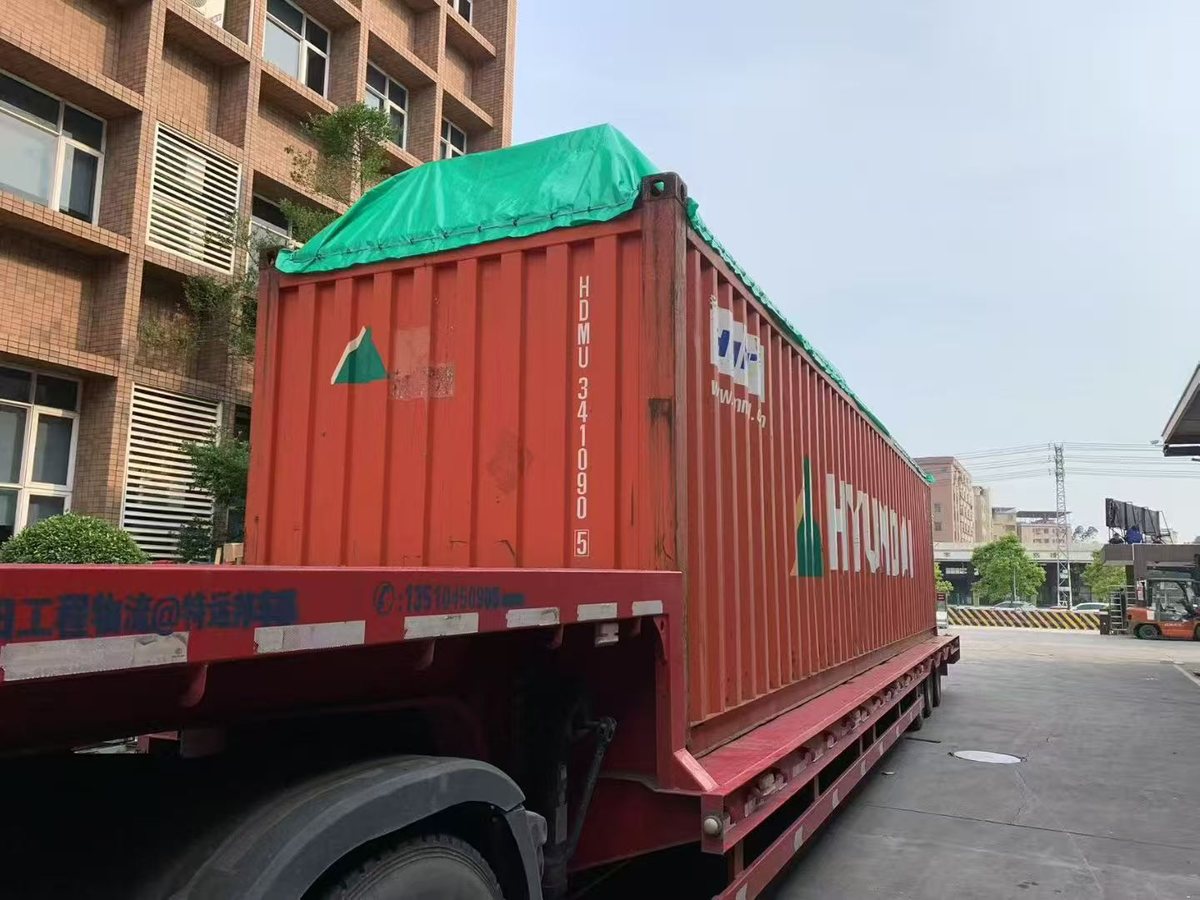
OOG moves in Chongqing are usually run at night, when the truck ban is off and traffic is thin enough for an escort. The permit and the survey are arranged days ahead, so tell us the cargo dimensions as soon as they are fixed.
Dangerous goods and ISO tanks
The Yangtze rule changes the routing
China's Yangtze River Protection Law bans waterborne transport of highly toxic chemicals and other substances prohibited on inland waterways. The inland banned list covers 228 substances banned outright and 85 banned in bulk. The practical effect on a Chongqing export is direct: a DG box cannot be assumed to travel by barge. The class and UN number are checked against the list first, then the box goes by rail or road if the river is closed to it.
For classes the river does accept, the barge operator still sets its own acceptance conditions, and the terminal sets separate receiving rules. Both are confirmed before an empty is released, not after the cargo is loaded.
ISO tanks
ISO tanks add a tank certificate, a filling record and a weight ticket to the file, plus a carrier acceptance for that product and voyage. Road movement needs a licensed tractor and a driver with DG training. In Chongqing the tank also has to clear the same bridge and tunnel limits as any other heavy unit.
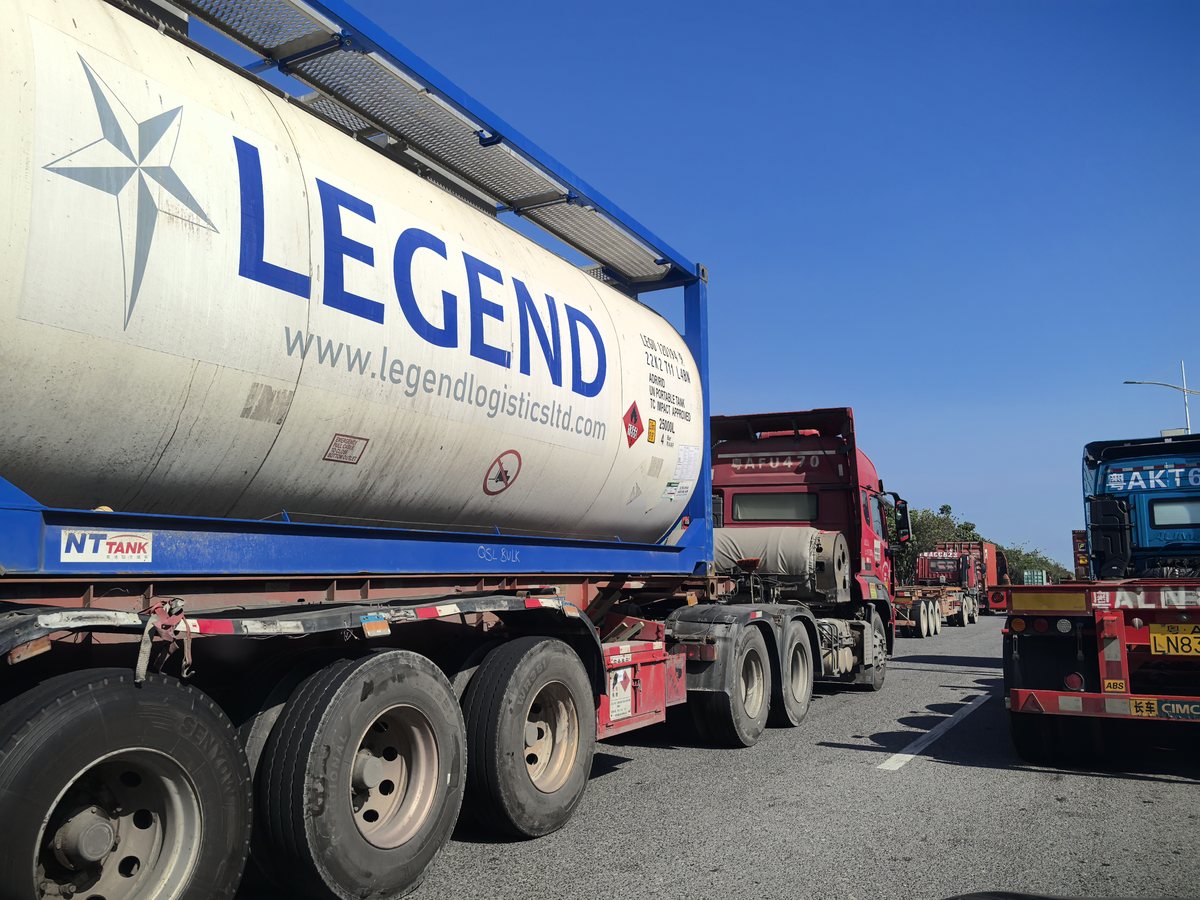
Chongqing is a chemicals city, and a large share of enquiries involve DG. The first answer we give is often about routing, not price: if the product is on the inland banned list, the barge option does not exist and the quote is built on rail or road.
Refrigerated container moves
Heat, humidity and pre-cooling
Summer in Chongqing runs above 40°C for days at a time. A reefer is pre-cooled and inspected before loading, not switched on at the plant gate. Set temperature, ventilation and humidity are confirmed in writing, and the box is checked for a clean floor, working fans and a sound door seal.
Power for the river leg
A reefer on a barge needs a clip-on genset or a generator chassis for the days it spends on the water, and the temperature has to be logged for the whole leg. Guoyuan has a limited number of reefer plugs, so the trucking plan follows the yard's power windows. Where the river leg cannot guarantee power, the box is routed by rail or trucked to Shanghai instead.
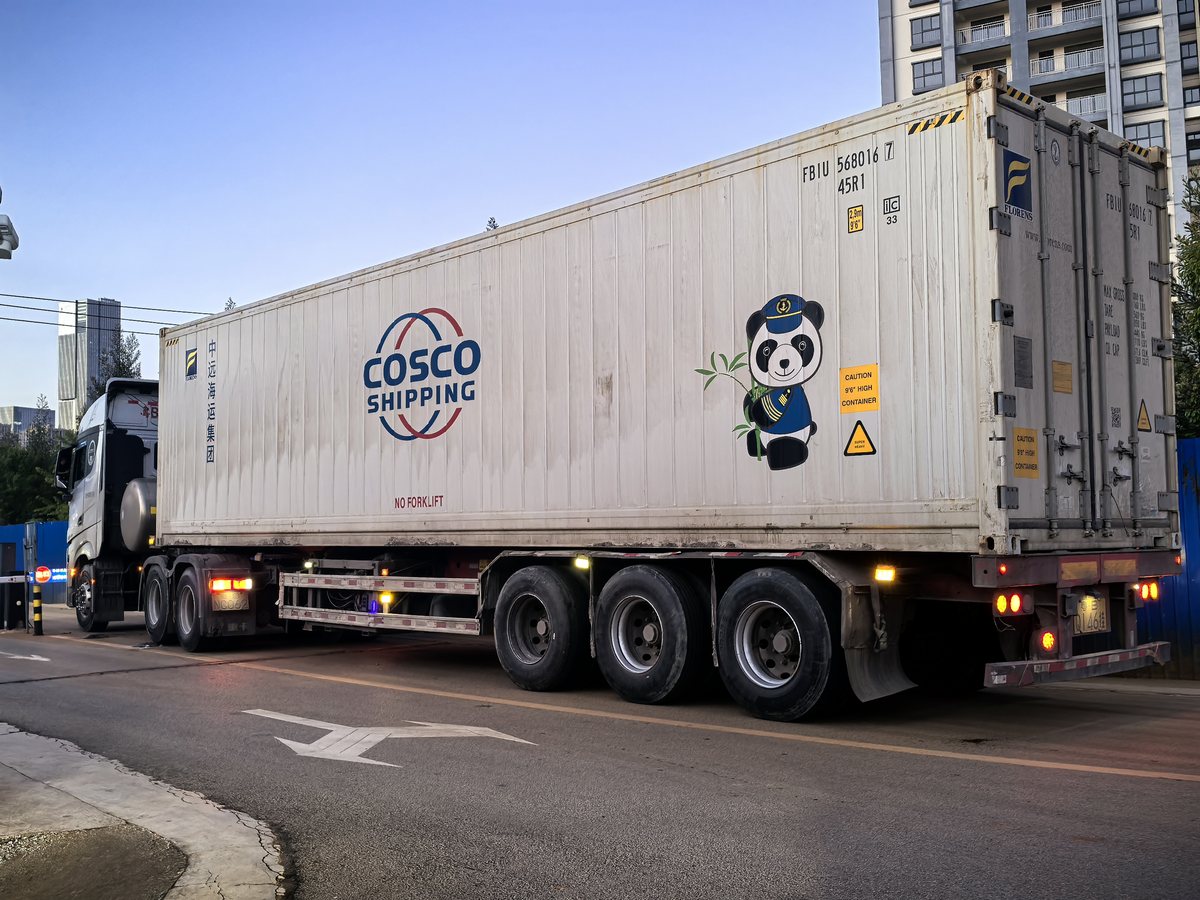
Frozen cargo and chilled cargo are not the same booking. Chilled produce tolerates a narrower temperature band and needs a pre-trip inspection record; frozen cargo needs the set point verified at loading and at handover.
Oversized and project cargo
When a flat rack is not enough
Machine tools, transformers, turbine parts and long steel arrive in Chongqing by flat rack, flatbed or low-bed. Anything outside container dimensions becomes a project move: route survey, provincial permits, police escort where required, and a night window.
Permits follow the road, not the port
An oversize permit issued for Chongqing does not cover the next province. On a run to Shanghai or to a border crossing, each province along the route issues its own permit, and the convoy is planned around the slowest one. We confirm the permit chain before we quote, because a single missing permit stops the truck at a provincial boundary.
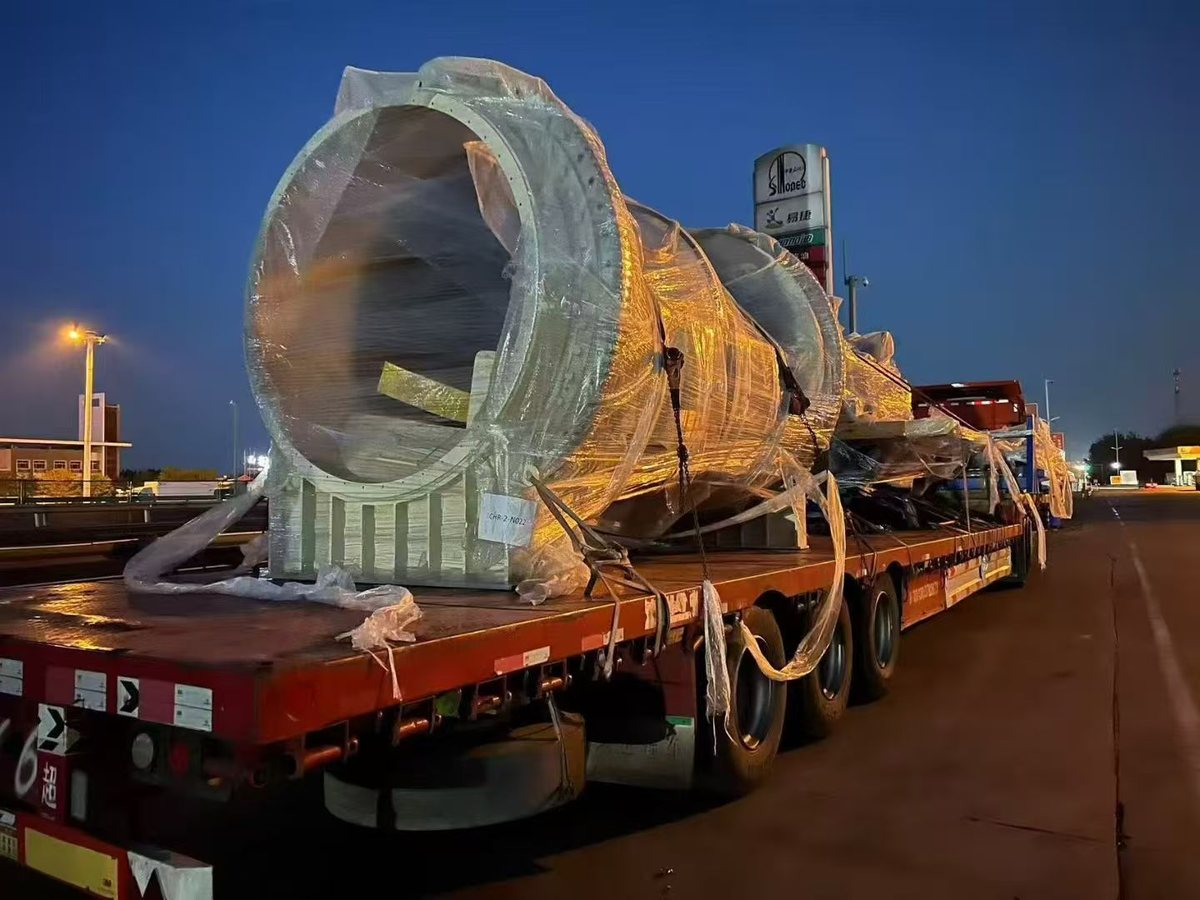
Heavy machinery is lashed diagonally and blocked against fore-and-aft movement. The lashing plan and the weight distribution drawing go to the carrier with the booking, not to the driver on the day.
Other drayage work we coordinate
An inland export usually involves more than one handover. These are the side jobs we arrange around the main truck move.
Barge booking and handover
Space on the Chongqing-Shanghai river service, the barge cut-off, the booking number the driver quotes at the gate, and the handover receipt for the box.
Rail ramp handover
Delivery to Tuanjiecun or the Yuzui siding, matching the truck arrival to the train's receiving window, and collecting the ramp receipt for the file.
Empty repositioning
When the line has no empty in Chongqing, we arrange a repositioned box from Shanghai or another depot and price the extra leg separately.
Pre-pull and storage
Early empty pickup with off-terminal storage for a set number of free days, used when the plant is not ready but the empty release is expiring.
Transloading
Cargo moved from a factory pallet or a domestic truck into the ocean container at a Chongqing warehouse, with photos of the loaded box.
Return and cancellation
A cancelled or rejected box returned to the nominated depot, with the empty return receipt and the condition record on file.
These are priced as separate lines. A handover at Tuanjiecun is not the same job as a gate-in at Guoyuan, and neither is included in a line-haul rate unless the quote says so.
Empty pickup, gate-in and the Guoyuan handover
The schedule runs backward from the operator's cut-off. Each step has an owner and a document.
- Booking and empty releaseThe line issues the shipping order and the release names the depot, container type and count, vessel or corridor, and the pickup expiry. In Chongqing the release may point to a depot in the main city or to Shanghai. We confirm which before a tractor is booked.
- Empty pickup and condition checkThe driver collects the box against the equipment interchange receipt, an electronic document at Guoyuan, and checks the container number, seal and body. Rust holes, a wet floor, a twisted frame or a bad door gasket are photographed and logged on the spot, and the depot is asked for a swap before the box leaves.
- Delivery and loadingThe empty arrives inside the window the plant can actually work. Inner city plants load at night because of the truck ban; Liangjiang plants can load in the day. Dunnage, lashing and void filling are the plant's job, and the loading photos are ours.
- Weighing, sealing and VGMThe loaded box is weighed for its verified gross mass, sealed and photographed. The seal number has to match the export declaration and the bill of lading instructions. Guoyuan weighs again at the gate, and the two readings should agree.
- Export declarationThe China export declaration is filed at Chongqing, and the release message has to reach the terminal before the box is allowed in. The declaration, the packing list and the booking data are checked against each other the same morning.
- Gate-in at GuoyuanThe smart gate reads the container number and the plate, weighs the truck and lifts the barrier, all in about 30 seconds when the paperwork is clear. A foreign trade laden box passes only when both the customs release and the port system agree, so an unreleased box is stopped at the gate, not at the quay.
- Barge loading or rail loadingThe box is stacked for the barge or lifted onto the train. The operator issues the handover receipt, and the barge or train departure is the moment the box leaves Chongqing.
- Transit to the ocean portThe river leg crosses the Three Gorges locks; the rail leg runs to Qinzhou or Ningbo. Transit time is the operator's, not the trucker's, and it is the part of the schedule with the least slack.
| Exception | Response |
|---|---|
| No empty in Chongqing, release valid in Shanghai only | Quote the repositioning leg or rebook the release to a local depot |
| Customs release not yet transmitted | Hold the truck; the gate will not pass a foreign trade laden box |
| Barge cut-off missed | Next sailing, or truck to Shanghai if the vessel date cannot move |
| Fog or low water at the locks | Recalculate the downstream vessel date before loading |
| Gross weight above the corridor limit | Offload or split before gate-in |
| Driver arrives before the ban lifts | Wait at a designated bay, or move the loading to after 22:00 |
Guoyuan runs five inbound and four outbound lanes and scans import and export boxes with a dual-view X-ray system that lets the driver stay in the cab. Throughput is high, but the gate still stops anything whose release is missing.
Three exit corridors decide where the truck ends
The same factory can ship through three different gateways. The corridor sets the terminal, the cut-off and the cost.
| Corridor | Where the box starts | Route | What it means for the trucking plan |
|---|---|---|---|
| East, by river | Guoyuan port | Barge down the Yangtze to Shanghai or Taicang, then an ocean vessel | Cheapest per box and the busiest lane. The cut-off is the barge's, days before the vessel's. Lock queues on the river are the variable. |
| South, by rail | Tuanjiecun or the Yuzui siding | Rail to Qinzhou, then ocean carriage to Southeast Asia or beyond | Faster than the river route on the New Western Land-Sea Corridor. The train's receiving window replaces the barge cut-off. |
| East, by rail | Tuanjiecun | Block train to Ningbo, then ocean carriage | Used when the vessel date is fixed and the river is too slow. Rail space is booked early in peak weeks. |
| West, by rail | Tuanjiecun | China-Europe train through Alashankou or Horgos | For European buyers. The truck delivers to the rail terminal only; the trucking leg is short and the cut-off is the train's. |
Tuanjiecun is one of the eighteen national rail container terminals and covers 3,800 mu, with capacity for 700,000 TEU a year. It is where the China-Europe service started, and 2,567 trains ran from Chongqing in 2025. Since the terminal went digital, a truck clears in and out in about 25 minutes on average, and an export box can go from the gate into a train in as little as seven hours.
Ask which port of loading will appear on the bill of lading. When the line sells Chongqing to Shanghai as one through service, the ocean bill often shows Shanghai as the port of loading and Chongqing as the place of receipt. That difference decides which cut-off you give the factory.
Truck curfew, permits and the dispatch window
Chongqing keeps loaded trucks out of the city centre during the working day. From 07:00 to 22:00, goods vehicles are barred from the Inner Ring Expressway and every city road inside it, plus named sections of the G93 ring and the districts of Shapingba, Jiulongpo, Yubei, Jiangbei, Nan'an and Banan. Entry for anything else runs on a permit system: red, yellow, green and temporary permits are issued by vehicle type and by what the truck carries.
Older diesels face a separate ban. National III and below have been barred from the whole central area around the clock since 1 November 2025, and National IV trucks lose the 07:00-22:00 window from 1 July 2026 while staying out of the inner ring at all hours. Pickups and new-energy light trucks are exempt. Rules are revised, so check the current notice from the Chongqing traffic police before you fix a loading date.
| Window | What can move | Planning note |
|---|---|---|
| 22:00-07:00 | Loaded containers, including overheight and oversize units | The main loading window for plants inside the inner ring. Night crews and lighting have to be confirmed with the plant. |
| 07:00-22:00, permitted | Trucks holding a valid permit for that route and cargo | Permit class and route are checked before dispatch; a permit for one district does not cover another. |
| 07:00-22:00, unpermitted | No loaded container movement inside the inner ring | Driver waits at a bay outside the zone, or the job is re-timed to the evening. |
| Any hour, National III or below | Barred from the central area entirely | Equipment is matched to the rule before the tractor is assigned. |
This is the single biggest difference from a coastal port page. A Shenzhen or Ningbo drayage plan starts from the vessel cut-off and the gate slot. A Chongqing plan starts from the hour the truck is legally allowed to move, and the gate slot is fitted around it.
What a Chongqing drayage quote includes
A drayage rate here is a line-haul plus the accessorials the move actually triggers. The night window is one of them.
| Line item | When it applies |
|---|---|
| Line-haul | Set by plant location, distance, container size and which gateway the box is booked to. 20ft and 40ft are rated separately. |
| Night or curfew-window charge | Loading or gate-in inside the 22:00-07:00 window, including driver waiting time before the ban lifts. |
| Overweight surcharge | Above the carrier, barge or rail weight limit. The limit differs by corridor, so the routing changes this line. |
| Driver detention | After the free waiting period stated in the quote, billed by the hour. |
| Overnight hold | Loading that runs past midnight with the truck and driver staying with the box. |
| Empty repositioning | An empty moved from Shanghai or another depot because no stock exists in Chongqing. |
| Pre-pull and storage | Early empty pickup with off-terminal storage and a set number of free days. |
| Gateway handover | Barge booking at Guoyuan or ramp handover at Tuanjiecun, including the documents the operator issues. |
| Pass-through items | Weighing, fumigation, permits, escorts and tolls, billed when you authorize them. |
These are the accessorials that appear on Chinese domestic trucking rate cards, arranged for an inland port. No amounts are published here; ask for a written quote for your lane and corridor. This section explains charge structure, not pricing.
Drayage and China export customs
The export declaration is filed in Chongqing, not at the coastal port the box is heading for. The declaration data, the container number, the seal number, the gross weight and the packing list all have to agree before the barge or the train accepts the box. A mismatch found at Guoyuan costs a night, and the barge does not wait.
Your US customs broker handles the import side, including ISF and the entry. The China export filing is a separate declaration with its own deadlines, and it has to be released before the box reaches the gate. Where one team coordinates the trucking and the filing, those numbers are checked against one list. See China export customs clearance and the export documents checklist.
Port-of-origin tax refund
Both Guoyuan and Tuanjiecun are approved points for the port-of-origin tax refund. Once the goods leave the port or are loaded on the train, customs generates the export declaration data that the exporter needs to claim the refund, which shortens the cycle by close to a month compared with waiting for the coastal port. The refund belongs to the exporter, and the paperwork is issued against the same declaration we file for the shipment.
Paperwork checked early
Release, packing list and declaration data are matched before the truck is dispatched, not after gate-in.
Corridor locked first
Barge or rail is chosen before the loading date. The cut-off comes from the operator, not from the vessel.
Weight and condition on file
Gross weight is declared at booking, condition is photographed at pickup, and seal and VGM are recorded after loading.
Milestones you can forward
Tractor and driver details, box and seal numbers, and loading, gate-in and handover times go to your inbox.
Field notes: nine problems that derail a Chongqing move
These situations repeat on inland export drayage. They are written as field notes rather than customer stories, with names, dates and outcomes left out. Each one shows the order in which we handle it.
The plant that can only load at night
What happens The factory sits inside the inner ring and finishes production at 16:00, but a loaded truck cannot move until 22:00. A driver who arrives at four in the afternoon sits for six hours, and the loading crew has gone home.
What we do The dispatch sheet is built around the ban, not the shift. We book the driver for a 22:00 arrival, confirm the night crew and the yard lighting with the plant, and put the waiting charge in the quote before the tractor is assigned.
The release that only works in Shanghai
What happens The booking is placed with a line that holds no empty in Chongqing. The release names a depot in Shanghai, and the factory is a thousand miles upriver.
What we do We read the release before booking a truck. The options are a repositioned empty from Shanghai, a swap to a line with local stock, or a booking that starts in Shanghai with the cargo moved downriver as domestic freight. Each one has a different cost and a different lead time, and we put all three in writing.
Barge cut-off mistaken for vessel cut-off
What happens The vessel sails on the 20th and the plant plans to finish on the 18th. The barge that would connect to that vessel closes on the 12th, so the box is a week late before loading has even started.
What we do We work from the barge or train cut-off and give the plant a loading deadline derived from it. If the production date cannot meet that deadline, the choice is an earlier corridor, a later vessel, or a truck to Shanghai, and we price the alternatives before the plant commits.
Dangerous goods that cannot take the river
What happens A chemical shipment is booked as ordinary DG on the assumption that everything goes by barge. The product is on the inland banned list, and the barge operator refuses the box at the gate.
What we do The UN number and class are checked against the same list at quoting stage. If the river is closed to the product, the quote is built on rail or road from the start, and the carrier's DG acceptance is obtained before an empty is released.
One gantry too low for an open top
What happens An open-top box is loaded with machinery that sits above the frame. The direct road to Guoyuan has a gantry the load cannot pass, and the driver finds out two kilometres from the plant.
What we do Overheight and overwidth cargo gets a route survey before the move is priced. The survey names the tunnels, gantries, toll booths and bridges on the chosen road, and the move runs at night with an escort where the permit requires one.
Low water at the locks
What happens The Three Gorges locks back up in the dry season or in fog, and a barge that should have left on Tuesday leaves on Friday. The ocean vessel booked against it is already loading.
What we do We track the barge schedule against the vessel date rather than assuming the river runs to plan. When the gap closes, the options are a later vessel, rail to Qinzhou, or a truck to Shanghai, and we raise it while there is still time to choose.
Rail space gone before the holiday
What happens Three weeks before Chinese New Year, every plant in the region pushes cargo out at once. The block trains to Qinzhou and Ningbo are full, and the barge is the only corridor left.
What we do Rail space is booked as soon as the order is confirmed, and the quote states which corridor it is built on. If the train is full, the barge alternative is priced and the vessel date is rechecked before the plant loads.
A plant on a slope with no turning circle
What happens The factory gate opens onto a narrow lane with a steep approach. A 40ft rig cannot turn inside the yard, and the driver blocks the lane while the plant tries to find a forklift.
What we do Access is checked when the booking is taken, and a photo of the gate is requested. Where the rig cannot enter, the box is loaded at a nearby yard or the cargo is shuttled out on a smaller truck, and that cost is quoted up front.
The refund data nobody filed for
What happens The shipment sails from Shanghai and the exporter later asks about the port-of-origin refund. The box never departed from Guoyuan or Tuanjiecun, so the refund data does not exist.
What we do We explain the condition at quoting stage: the refund follows the inland departure point. Where the corridor allows it, the declaration is arranged so the box leaves from Guoyuan or the rail terminal and the refund documents are generated as the goods depart.
Every note above ends with the same rule: find the constraint in the office, not at the gate. On an inland move the constraint is usually the clock, the corridor or the permit, and all three can be checked before a truck is booked.
Why importers use us for Chongqing drayage
Four questions come up on almost every enquiry: is the price clear, will the truck arrive, will the charge change later, and who fixes it when something breaks. These are the practices we set before dispatch.
Line-item quotes
Line-haul, night window, overweight, repositioning, pre-pull, handover and pass-through charges are listed one by one. What is included, what is not, the free waiting time and the invoice type are on the quote.
No Chinese New Year surcharge
A confirmed quote keeps its rate through the Spring Festival, the October holidays and the peak weeks before them. If you change the address or the date, or a real operator fee appears, we show the document before billing.
Rates built on the corridor
The quote follows the plant location, the gateway and the box size. A river booking and a rail booking are not the same job, and we price the one you actually booked.
Vetted carriers and safe loading
Carrier and driver credentials are checked, and DG, reefer and OOG moves get the right equipment and crew. Dense cargo sits on dunnage, machinery is lashed diagonally, and pickup condition and loading are photographed.
Milestones you can forward
After pickup you get the tractor number, driver contact, container and seal numbers, then the loading, gate-in and handover times. If something breaks, you get an option before you get an invoice.
One team for trucking and filing
Container and seal numbers, VGM, packing list and declaration data are checked on one list. You are not relaying corrections between a trucking company and a separate broker while the barge cut-off approaches.
Coverage beyond Chongqing
We coordinate trucking at the coastal ports the box connects to, at inland rail terminals and at border crossings. If the corridor changes, you keep the same contact and the same paperwork trail.
A fixed playbook for exceptions
The curfew window, a missing empty, an unreleased declaration, a rejected DG box and a missed barge each have a check we run before dispatch. Finding the problem in the office is cheaper than finding it at the gate.
A quote becomes firm only when issued in writing for your lane and corridor. Items set by carriers, river and rail operators, terminals and depots follow their own published rules, and we pass those through with the supporting document.
Frequently asked questions
Answers to the questions importers ask before booking a Chongqing drayage move.
Is Chongqing a seaport?
No. Chongqing is a river port about 2,400 km up the Yangtze from Shanghai, with a container rail terminal at Tuanjiecun. Export containers are cleared for export in Chongqing and then travel by barge or train to an ocean port. That is why the bill of lading often shows Shanghai, Ningbo or Qinzhou as the port of loading and Chongqing as the place of receipt.
How much does container drayage in Chongqing cost?
There is no flat per-container price. A quote combines the plant address, the container size, the gateway, the gross weight, and whether the move needs a night window, a pre-pull or a repositioned empty. Send the loading address, container count and size, gross weight, corridor and cut-off, and we will return a written line-item quote.
Where is the empty container picked up?
Usually at a depot in the main city, and the release names it. Some lines hold no stock in Chongqing and release the empty in Shanghai, which turns the job into a repositioning move with an extra cost and several days of lead time. Read the release before committing a loading date, and we will tell you which case applies.
How long does the river leg to Shanghai take?
Days, not hours. The barge crosses the Three Gorges locks, so transit time depends on water level, lock queues and whether the service runs on a fixed express schedule. The Chongqing-Shanghai express service runs two sailings a week in each direction with priority at the locks, and cuts the round trip by about 40% against the ordinary service. Treat the operator's schedule as the planning figure, not an average.
Can my container go by rail instead of barge?
Yes. Tuanjiecun and the Yuzui siding connect to the New Western Land-Sea Corridor to Qinzhou, to block trains to Ningbo, and to the China-Europe service through Alashankou and Horgos. Rail is usually faster than the river and costs more. The trucking leg ends at the rail terminal, and the cut-off becomes the train's receiving window.
Why can't my dangerous goods container go by barge?
Some cannot. The Yangtze River Protection Law bans waterborne transport of highly toxic chemicals and other listed substances, and the inland banned list covers 228 substances outright plus 85 banned in bulk. The UN number and class are checked against the published list before quoting. If the product is on it, the box goes by rail or road and the price reflects that.
What is the truck curfew in Chongqing?
Loaded goods vehicles are barred from the Inner Ring Expressway and the city roads inside it between 07:00 and 22:00, plus named sections of the ring expressway and several districts. Entry at other times runs on a permit. National III trucks and below have been banned from the central area around the clock since 1 November 2025, and National IV trucks lose the daytime window from 1 July 2026. Check the current notice before fixing a loading date.
Do I need a night loading window?
For a plant inside the inner ring, usually yes. Loading starts after 22:00 and the box is on its way to the gateway before 07:00. That means a night crew, yard lighting and an agreed arrival time. Plants in Liangjiang New Area near the port can often load in daylight, which is cheaper and simpler.
Which cut-off should I give my supplier: barge, rail or vessel?
The one that matches the corridor on the booking. A barge booking closes days before the vessel, and a rail booking closes at the train's receiving window. Giving the factory a vessel cut-off when the box is going by river is the most common scheduling error on this lane. We calculate the working deadline backward from the operator's cut-off and put it in writing.
How much time should I allow between empty pickup and gate-in?
Work backward from the cut-off, not forward from the factory finish date. Empty release, the drive, the loading window, weighing, sealing, the export release and the gate each take time, and the night curfew can add a whole day if the truck misses the window. Give the loading leg and the gateway leg separate buffers.
Can two 20ft containers move on one chassis?
Often yes, on the Guoyuan and Yuzui lanes. Dual 20s needs both boxes to fit the combined axle limit, the route to clear the bridge limits, and the operator to accept the pair as booked. Send both gross weights and the loading order and dispatch will confirm. Not every Chongqing depot keeps a dual-20 chassis.
Can I get a 45ft container in Chongqing?
Sometimes, but stock is thin. Fewer 45HQ boxes sit in inland depots than at a coastal port, so the empty may have to be repositioned from Shanghai, which adds cost and lead time. If the cargo fits a 40HQ, that box is easier to source and cheaper to move on these roads.
What documents does the Chongqing export declaration need?
The commercial invoice, packing list, contract or order, the booking or shipping order, the export licence where the commodity needs one, and the DG or commodity inspection certificates when they apply. The declaration data has to match the container number, seal number and gross weight recorded at loading. Wood packaging needs its ISPM 15 mark.
What is the port-of-origin tax refund at Guoyuan?
Guoyuan and Tuanjiecun are approved departure points for China's port-of-origin refund. Once the goods leave the port or are loaded on the train, customs issues the export declaration data the exporter needs to claim the VAT refund, which shortens the wait by close to a month compared with claiming after the coastal port departure. The refund belongs to the exporter, and the data is generated against the declaration filed for the shipment.
Get a drayage quote for Chongqing
Send the loading address, container size and count, gross weight, commodity, the corridor you are booked on, the operator's closing time and whether you need export customs clearance in China. DG, reefer, overweight and out-of-gauge cargo should include the certificate, tank record or packing drawing. Quotes come from our China desk on China business hours (GMT+8).
Email sales007@goodhopefreight.com or submit a quote request.
