
Home / Shipping to the Cook Islands / How to Ship from China to the Cook Islands: One Harbour, VAT and the Cyclone Season
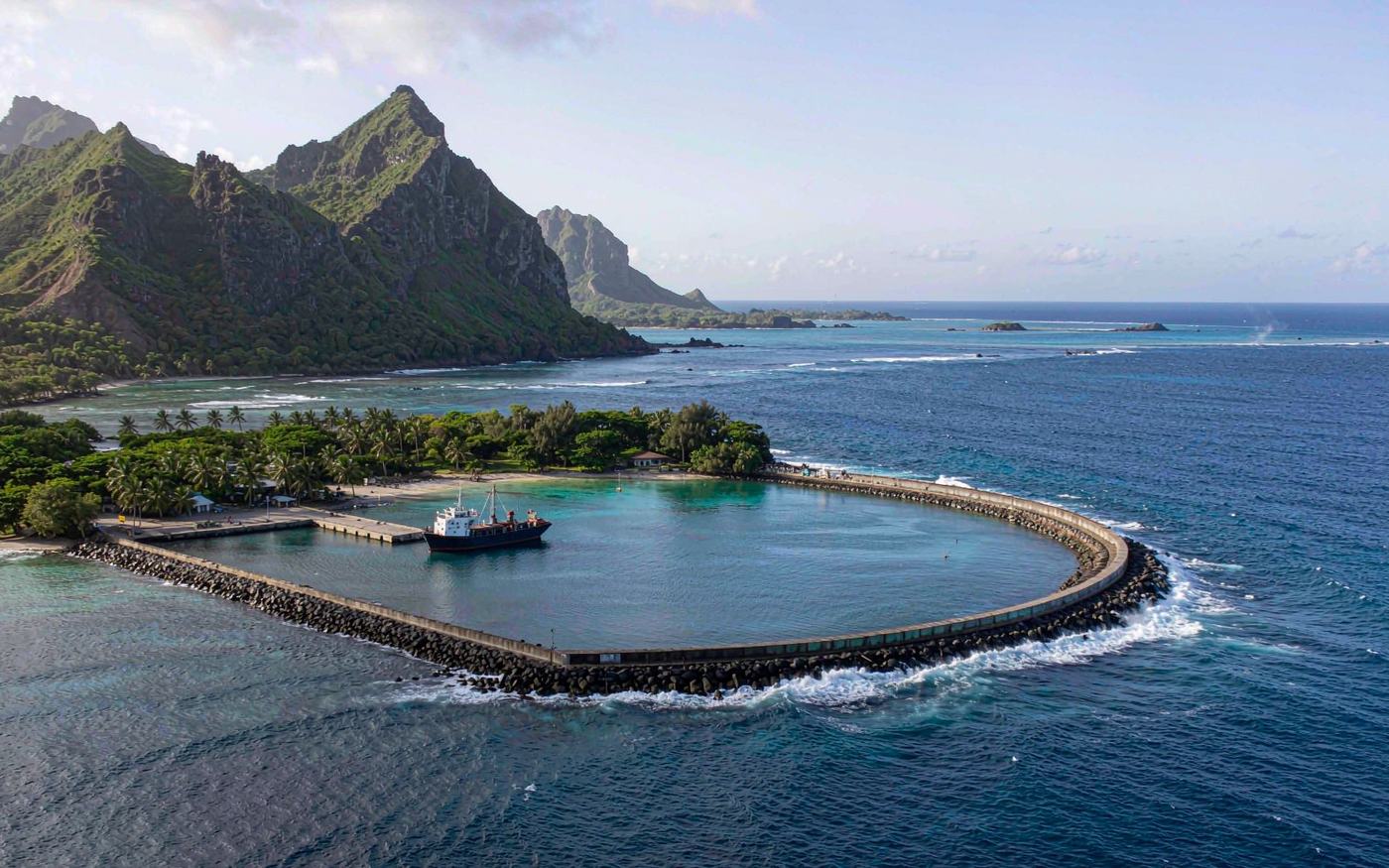
How to Ship from China to the Cook Islands: One Harbour, VAT & the Cyclone Season
The Cook Islands are fifteen islands spread across a very large piece of the South Pacific, and almost the entire country's supply chain runs through one harbour. Avatiu Harbour on Rarotonga handles around ninety per cent of imports and all of the fuel. After the 2013 expansion it can accommodate vessels up to about 200 metres in length — which is the single most useful number on this page, because it determines what can call and what cannot.
The country is self-governing in free association with New Zealand. It runs its own customs service, the Cook Islands Customs Service, which processes imports and exports through ASYCUDA World, with declarations submitted by licensed customs agents or declarants. The currency is the New Zealand dollar, alongside Cook Islands coins that circulate one-for-one with it.
The third thing to know before you quote is that the published tax figures for this country disagree with each other, and not by a little. Different sources put the VAT at fifteen or twenty percent, and the threshold below which nothing is charged at NZD 400 or NZD 750. We are going to show you both and tell you to confirm rather than pick one — because on a lane this thin, a confidently quoted wrong number is worse than an unanswered question.
At a glance
Status: self-governing in free association with New Zealand · Population: in the low tens of thousands, with more Cook Islanders living in New Zealand than at home · Customs: Cook Islands Customs Service, declarations filed in ASYCUDA World by licensed agents or declarants · Main port: Avatiu Harbour, Rarotonga — around 90% of imports and all fuel; vessels up to about 200 m · Secondary port: Arutanga, Aitutaki · Airport: Rarotonga International, RAR — the only international gateway · Currency: New Zealand dollar, NZD · VAT: published sources conflict — commonly 15% · Threshold: published sources conflict — commonly NZD 750 · Cyclone season: November to April
How your cargo moves: China to the Cook Islands
Eight steps from your supplier's door to yours. The last four are the ones shaped by local rules.
- Pickup from your supplierWe collect the goods anywhere in China and bring them to our consolidation point.
- Export clearanceChina customs declaration filed and released before the goods move to the port.
- Loading and departureContainer loaded, sealed and handed to the carrier at the Chinese port.
- Main carriageOcean, air or rail movement booked on the route agreed for your cargo.
- Arrival at the gatewayDischarge at the port or airport of entry, recorded on the carrier's manifest.
- Import clearanceCustoms declaration filed locally, with duty and tax assessed on the declared value.
- Customs releaseGoods released into free circulation once duty and tax are settled.
- Final deliveryOnward movement to your delivery address, warehouse or nominated depot.
Duty rates, VAT rates and clearance times move, and the figure that applies to your goods is the one set for your commodity code on the day of clearance. We check the current position against your code before your goods sail and confirm it to you in writing — ask for that check when you request a quote.
Ninety per cent of everything arrives through one harbour
Avatiu Harbour on Rarotonga is the country's commercial gateway. It handles the great majority of imports, the fuel, and the export cargo. The practical constraint is vessel size: after the 2013 expansion, the harbour takes vessels up to roughly 200 metres. Anything larger has to be worked another way, and that is a routing question to settle before you book rather than after.
Rarotonga
The main island, the seat of government at Avarua, Avatiu Harbour and the international airport. Almost everything arrives here first.
Aitutaki and the outer islands
Arutanga on Aitutaki is the secondary port. The northern and southern outer islands are served by inter-island shipping from Rarotonga, which is a separate leg with its own schedule and its own weather exposure.
Say which island. "Delivered to the Cook Islands" is not a delivery address. Rarotonga is a truck move from the wharf. Aitutaki is a port call. The outer islands are an inter-island voyage that can be weather-dependent, and they should be quoted as a separate project.
ASYCUDA World, licensed declarants, and who actually files
The Cook Islands Customs Service runs imports and exports through ASYCUDA World, the same UNCTAD platform used across much of the Caribbean and Pacific. Declarations are submitted by licensed customs agents or declarants rather than by the importer directly, which means the buyer needs a broker in place before the goods arrive.
The standard document set is the familiar one: a commercial invoice with a complete description, value and HS code; the bill of lading or air waybill; a packing list with contents, weights and dimensions; a certificate of origin where preference is claimed; and an import licence for regulated goods. Published guidance notes that import declarations are required for commercial shipments and are expected before the cargo arrives — so the paperwork has to move ahead of the ship, not with it.
VAT and the threshold below which nothing is charged
Published guidance describes a value added tax at fifteen percent, with import VAT and duty applying only above a threshold of NZD 750 — below which a consignment comes in free of both. Other published sources put the VAT at twenty percent and the threshold at NZD 400, and some describe the country as having no VAT at all.
Our position. We are not going to pick one. The sources conflict and we have no authoritative confirmation. Confirm the current rate and threshold with the Cook Islands Customs Service or with the buyer's broker before you price, and say in the quotation which figure you used. That is both honest and defensible.
What is not in dispute is the shape of the thing: duty by classification plus a consumption tax on the imported value, with a low-value threshold below which neither applies. For a first consignment that sits near the threshold, the threshold is worth more attention than the rate.
The published rates, and why sources disagree
Published category tables for the Cook Islands show consumer goods at or near twenty percent —mobiles, computers, cameras, fashion, appliances, toys and audio all appear at that level — with jewellery around six percent, pet accessories around twelve, dry food around fourteen and documents at zero. One source gives duty as a range of zero to twenty percent by product category.
Treat those as a signal of the shape of the tariff rather than as a quote. The pattern is the familiar small-island one: essentials cheap, consumer goods expensive. For a Chinese exporter the operational conclusion is the same as everywhere: fix the HS code before you quote, and write the invoice description so that the officer has something to classify.
RAR is the only international gateway
Rarotonga International Airport, RAR, is the country's only international air gateway, served by carriers connecting through New Zealand, Australia and French Polynesia rather than direct from China. There is no other international airport in the country.
For a market this size and this remote, air freight is a genuine option rather than a luxury: it suits spares, samples, documents, medical supplies and anything where waiting for the next ship costs more than the freight. Sea freight suits building material, vehicles, fuel and bulk consumables planned months out.
Cyclone season closes the window from November to April
The South Pacific cyclone season runs November to April, and it is the single biggest scheduling risk on this lane. Sailings are infrequent to begin with; a storm can cancel one outright, and because the next scheduled call may be weeks away, the delay is measured in weeks rather than days.
- Plan critical arrivals outside the window where the project allows.
- Build buffer stock into the order for anything the buyer cannot run out of.
- Remember the inter-island leg is more weather-sensitive than the ocean leg.
- Confirm the sailing before you promise a date, because the schedule is thinner than the brochure suggests.
Biosecurity is the strictest control you will meet on this lane
Small island ecosystems are fragile and the Cook Islands enforce accordingly. Published prohibited and restricted lists name alcohol, animals, chemicals, currency, drugs, explosives, firearms, fresh food, plants, seeds and tobacco. Medicines commonly require authorisation, and alcohol and tobacco above the allowance are dutiable.
Wood packaging should meet ISPM 15 and bear the mark. On a remote Pacific consignment, a packaging failure does not mean a quick trip back to the factory — it means a hold at the wharf with the next sailing weeks away.
From a Chinese factory to an Avarua warehouse
| Stage | What happens | What decides it |
|---|---|---|
| Code, rate and threshold | HS code fixed, duty and VAT confirmed with the broker | Confirming before quoting — the sources conflict |
| Broker appointed | Licensed declarant named, declaration prepared | Having it in place before the vessel arrives |
| Routing | Consolidated, usually via New Zealand or Australia, to Avatiu | Vessel size limits and the sailing frequency |
| Packing | Export packing, ISPM 15 timber, units sized for small wharf handling | Whether the spec was set at order time |
| China export clearance | Declaration filed, goods released | Documents complete before the truck is booked |
| Arrival and entry | Declaration in ASYCUDA World, duty and VAT assessed | Classification accuracy and complete permits |
| Inter-island leg | Onward movement where the delivery is not Rarotonga | A separate schedule, and weather |
Match the shipment to the harbour before you quote a Cook Islands buyer
- Which island? Rarotonga, Aitutaki and the outer islands are three different jobs.
- What VAT rate and threshold is your broker using? The published sources conflict.
- Is a licensed declarant appointed? Declarations are filed through ASYCUDA World by licensed agents.
- Can the vessel actually berth? Avatiu takes vessels up to about 200 m.
- Is the arrival inside cyclone season? November to April.
- Is the product on the restricted list? Food, plants, seeds, alcohol, tobacco.
- Is the wooden packaging ISPM 15 marked? Check before sealing.
- Has the buyer budgeted for storage? A hold on this lane is expensive because the next ship is far away.
Why importers use Goodhope on this lane
Six things that are different about working with us on China to the Cook Islands shipments.
Actual moves on the China to the Cook Islands lane
Five shipments bought in China and delivered into the Cook Islands, told end to end — where the order came from, how it moved, where it nearly went wrong, and how it finished. Client names are withheld at their request; the situations and the handling are what we deal with on this lane.
One harbour · first shipment · Shenzhen to Rarotonga
The purchase. A buyer new to importing asked us to route a container to the outer islands directly.
The move. Consolidated sea freight into Avatiu Harbour, with the onward island leg arranged from Rarotonga.
Where it nearly went wrong. Almost everything arrives through one harbour that also handles all the fuel, and vessels are limited to roughly two hundred metres. Routing to anywhere else means routing through Avatiu anyway, and the inter-island leg is a separate arrangement.
How it finished. We quoted the through move as two legs. His customer received the goods without a second booking.
Biosecurity · the strictest gate · Guangzhou to Rarotonga
The purchase. A first-time buyer shipped garden and building goods without cleaning the soil and seed material off them.
The move. Sea freight with the goods cleaned and declared accurately before departure.
Where it nearly went wrong. Biosecurity is the strictest control you meet on this lane, stricter than the customs entry itself. Soil, seed and plant material are the common causes of a hold, and treatment at the far end costs more than cleaning at origin.
How it finished. We made cleaning a condition of booking. Nothing of his has been held since.
Vessel size · carrier cannot call · Ningbo to Avatiu
The purchase. A buyer booked with a carrier whose vessel was too long for the harbour, and found out when the booking was rolled.
The move. Sea freight on a service whose vessel fits the harbour, confirmed before booking.
Where it nearly went wrong. Avatiu takes vessels up to about two hundred metres. A carrier whose ship exceeds that cannot complete the call, and the cargo comes back to the transhipment port at your cost.
How it finished. We check the vessel against the harbour before confirming. He has not had a rolled booking since.
Cyclone season · November to April · Shanghai to the Cook Islands
The purchase. A buyer scheduled a delivery for February and treated the weather as a minor risk.
The move. Sea freight scheduled to land outside the cyclone window, with the season marked on his planning calendar.
Where it nearly went wrong. The cyclone season runs November to April and it affects sailings, the harbour and the last mile. Planning a delivery into that window without contingency is planning a claim rather than a delivery.
How it finished. We moved the order to October. It landed on schedule and dry.
Published rates disagree · quoting · Cook Islands buyer
The purchase. A buyer quoted his customer a landed cost built on a VAT rate and threshold he had read on a forum.
The move. Consolidated cargo, with the current rate and threshold confirmed in writing before the quote went out.
Where it nearly went wrong. Published sources conflict on the VAT rate and the threshold here, and the figure that applies is the one in force on the day of entry. Quoting from a secondary source is quoting a number you may have to defend.
How it finished. We confirm both before every Cook Islands quote. His landed costs have been right on every shipment.
Why importers use Goodhope on this lane
Six things that are different about working with us on China to the Cook Islands shipments.
Size the shipment to the harbour, not to the invoice
Tell us what you are shipping, the packed dimensions and gross weight, the pickup city in China and the delivery island. We will confirm what Avatiu can actually accept, quote the sea leg and the air alternative through RAR separately, name the consolidation point, and tell you where the arrival sits against the cyclone season. Where the question belongs to the Cook Islands Customs Service or to the buyer's broker — the current VAT rate and threshold, the permit your product needs — we will say so plainly rather than guess.
Get a quote Talk to usRelated pages
Frequently asked questions
Is the Cook Islands part of New Zealand for customs purposes?
No. The country is self-governing in free association with New Zealand and runs its own customs service, the Cook Islands Customs Service, with its own tariff. It uses the New Zealand dollar as its currency, and Cook Islands coins circulate one-for-one with it, but goods arriving from New Zealand are imports like any other.
How are customs declarations filed?
Through ASYCUDA World, submitted by licensed customs agents or declarants rather than by the importer directly. Published guidance notes that import declarations are required for commercial shipments and are expected before the cargo arrives, so the paperwork has to be ready ahead of the vessel.
What VAT and import duty apply?
Published sources conflict. One describes a VAT of fifteen percent with duty and VAT applying only above an NZD 750 threshold; others give twenty percent, an NZD 400 threshold, or no VAT at all. Confirm the current position with the Cook Islands Customs Service or the buyer's broker before pricing.
Which port handles cargo from China?
Avatiu Harbour on Rarotonga, which handles around ninety per cent of imports and all of the fuel. After the 2013 expansion it can accommodate vessels up to about 200 metres. Arutanga on Aitutaki is the secondary port.
Is there air freight?
Yes, through Rarotonga International Airport, RAR, the country's only international gateway. Services connect through New Zealand, Australia and French Polynesia rather than direct from China. Air suits spares, samples, documents and medical supplies.
When is cyclone season?
November to April. Sailings are infrequent to begin with, so a storm cancellation can push an arrival back by weeks rather than days. Plan critical arrivals outside the window and build buffer stock into the order.
How strict is biosecurity?
Very. Published lists name alcohol, animals, chemicals, currency, drugs, explosives, firearms, fresh food, plants, seeds and tobacco among the controlled or prohibited categories, with medicines commonly requiring authorisation. All wood packaging should meet ISPM 15.
Can I deliver to the outer islands?
Yes, but as a separate project. Inter-island shipping runs from Rarotonga and is more weather-sensitive than the ocean leg. Quote it separately and name the island in the contract rather than writing 'the Cook Islands'.
What currency is used?
The New Zealand dollar, alongside Cook Islands coins that circulate one-for-one with it. Agree the settlement currency with the buyer in advance.
Should the first shipment be FCL or LCL?
LCL is usually right for a first consignment, because sailings are infrequent, the harbour has vessel size limits and a full container is a large commitment for a market this size. Move to FCL only when volume and timing are genuinely predictable.