
Home / Shipping to Côte d'Ivoire / How to Ship from China to Côte d'Ivoire
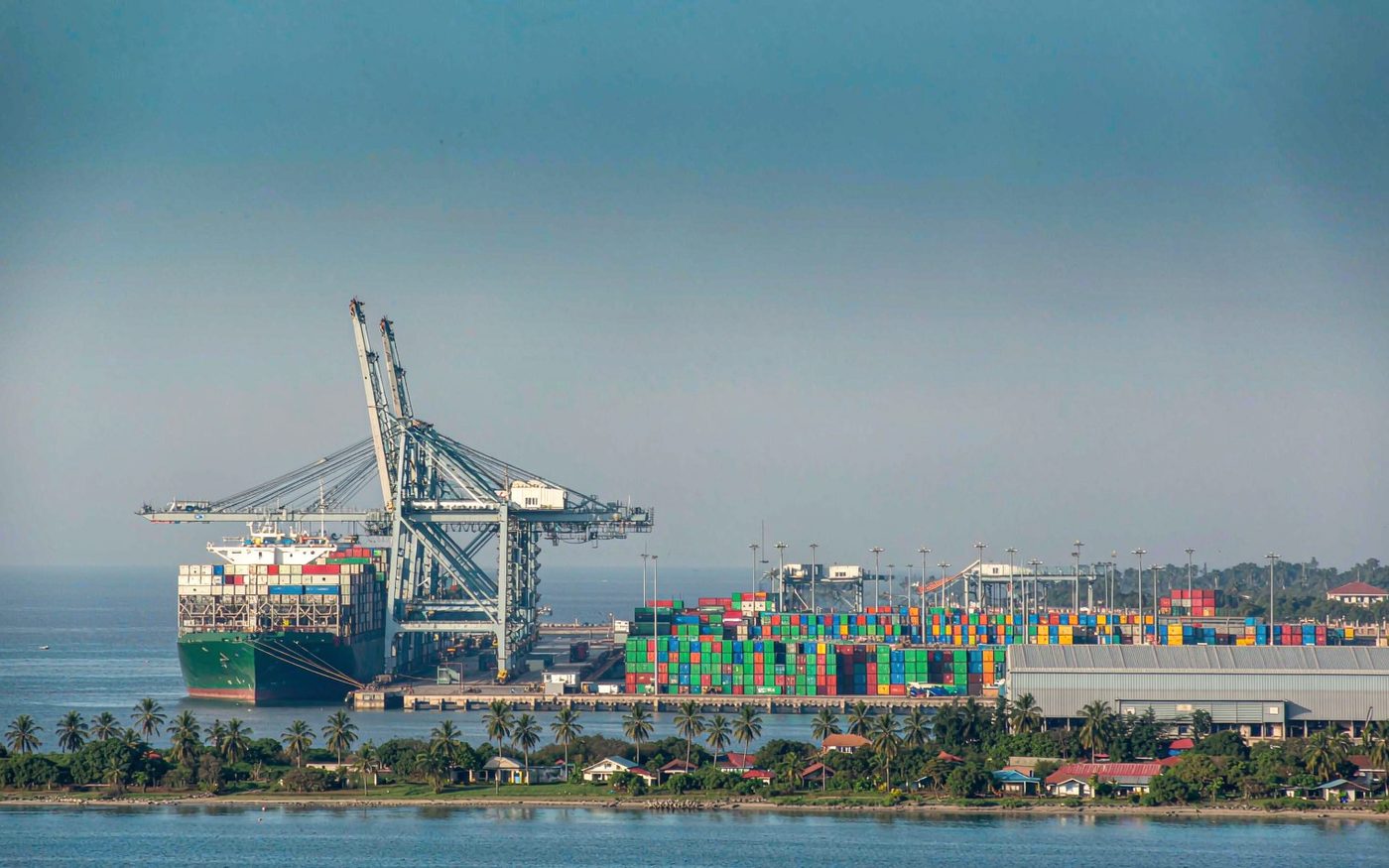
How to ship from China to Côte d'Ivoire
Côte d'Ivoire is the largest economy in francophone West Africa, and its port at Abidjan is not only the country's own gateway but a working gateway for landlocked Mali and Burkina Faso behind it. If you are buying from China for the first time, most of what you need to get right happens before the vessel sails, not after it berths.
Two features of importing here catch new buyers out. The first is language: customs works in French, and paperwork that passes without comment in an English-speaking port is routinely queried here, and a query costs days. The second is valuation: above a modest FOB value, customs does not simply take your invoice at face value, it issues its own classification and value report, and duty is calculated on that number.
This guide follows the whole route: how to choose a port and a mode, what has to be done in China before loading, how the GUCE single window fits together, how duty and VAT stack up, and what a licensed broker actually does once the container is on the quay.
At a glance
Customs is administered by the Direction Générale des Douanes, with the import declaration filed through GUCE, the single window for external trade. Duty follows the ECOWAS common external tariff at 0, 5, 10, 20 or 35 per cent of CIF value, and VAT is 18 per cent on CIF plus duty plus other charges. Smaller levies sit on top: a statistical fee, a community solidarity levy and a community preference levy. Above roughly XOF 1,000,000 FOB (about US$1,600) the shipment needs a final classification and value report (RFCV); below that a lighter verification attestation (AV) applies. Conformity assessment runs through CODINORM, and regulated goods must be verified before loading.
How your cargo moves: China to Côte d'Ivoire
Eight steps from your supplier's door to yours. The last four are the ones shaped by local rules.
- Pickup from your supplierWe collect the goods anywhere in China and bring them to our consolidation point.
- Export clearanceChina customs declaration filed and released before the goods move to the port.
- Loading and departureContainer loaded, sealed and handed to the carrier at the Chinese port.
- Main carriageOcean, air or rail movement booked on the route agreed for your cargo.
- Arrival at the gatewayDischarge at the port or airport of entry, recorded on the carrier's manifest.
- Import clearanceCustoms declaration filed locally, with duty and tax assessed on the declared value.
- Customs releaseGoods released into free circulation once duty and tax are settled.
- Final deliveryOnward movement to your delivery address, warehouse or nominated depot.
Duty rates, VAT rates and clearance times move, and the figure that applies to your goods is the one set for your commodity code on the day of clearance. We check the current position against your code before your goods sail and confirm it to you in writing — ask for that check when you request a quote.
What it means to import into a French-speaking West African port
French is the working language of the declaration. A commercial invoice written only in English is not automatically rejected, but product descriptions get queried, and a query at Abidjan means the container sits while somebody asks for a translation. Have the invoice, packing list and any product literature prepared in French, or at the very least with French product descriptions alongside the English.
The second feature is that Abidjan is a transit hub. A large share of the containers landed there continue overland to Mali, Burkina Faso and Niger. If your buyer is in one of those countries you are arranging two movements, not one: an Ivorian import or a transit regime, and then an inland leg on a corridor that has its own documentation.
The third is tempo. West African ports work, but the administrative sequence around them is slower than a European or North American importer expects, and the buffer you need is in the paperwork, not only in the sailing schedule. Plan for a clearance window measured in days from the moment the vessel is discharged.
Whole box, part box, hold or bag: four ways in
A full container (FCL) means you rent a whole 20ft or 40ft box and it is sealed at the factory or at a consolidation warehouse in China. It becomes the sensible option once your cargo passes roughly 15 to 18 cubic metres, and it is the cheapest per unit for heavy or bulky goods because you are not paying for shared handling.
A shared container (LCL) means your cartons travel with other people's, and you pay by the cubic metre subject to a minimum charge. It suits two to twelve cubic metres. The trade-off is time: consolidation in China and deconsolidation in Abidjan each add days, and your goods are handled more often.
Air freight into Félix-Houphouët-Boigny Airport (ABJ) is charged on chargeable weight, which is the greater of actual and volumetric weight. It is the right answer for high value-density goods, urgent spare parts and samples. Courier services make sense for documents and single-carton shipments, and they are still formally cleared even though the carrier handles it for you.
| Mode | Transit commonly quoted | What it suits |
|---|---|---|
| Sea FCL, China to Abidjan | 30 to 40 days port to port | Volume above about 15 cbm, heavy or bulky goods |
| Sea LCL | Add 5 to 10 days for consolidation and deconsolidation | Two to twelve cubic metres from several suppliers |
| Air freight to ABJ | 3 to 7 days airport to airport | Urgent, high-value, or light-but-critical cargo |
| Courier | 3 to 6 days door to door | Samples, documents, single cartons |
All of these figures are port to port or airport to airport. Add the clearance window on top, and add more if your documents are not ready before the vessel arrives, because that is the part that actually causes delay.
From a Chinese factory to an Ivorian warehouse, one step at a time
Confirm the order and the trade term
Your supplier quotation should state an Incoterm from Incoterms 2020. Write it into the contract. Everything downstream, including who pays what and who carries the risk, follows from this one line.
Check whether the goods need a certificate before loading
Regulated categories go through conformity assessment, and the certificate has to exist before the container is sealed. Confirm this at order stage, not at packing stage.
Book space and hit the cut-off
Your forwarder books with a carrier and gives you a cut-off: the time the container must be gated in at the Chinese port. Missing it means a week's wait for the next sailing.
Move the goods to the port or the consolidation warehouse
Either the factory stuffs the container, or the cartons go to a warehouse to be consolidated with other shippers' cargo. Ask for photos of the stuffing and the seal number.
China export customs declaration
The shipment is declared for export in China. Your forwarder handles this, but it needs an accurate invoice and packing list from your supplier.
The ocean leg to Abidjan
Typically routed directly or via a Mediterranean or transhipment hub depending on the carrier. Your forwarder sends the bill of lading draft for you to check the consignee details.
Arrival, manifest and the GUCE declaration
The shipping agent files the manifest, and your licensed broker files the import declaration through GUCE with the supporting documents attached.
Assessment, RFCV and payment
Customs classifies and values the goods. Where an RFCV applies, that report sets the dutiable value. Duty, VAT and the levies are then paid.
Port charges, delivery order and inland delivery
After release come the line's delivery order, the port charges, and the truck movement to your warehouse. Keep your broker on it; this is where containers get forgotten.
Abidjan or San Pedro: choosing where your container lands
Abidjan handles the overwhelming majority of container traffic and has what a first-time importer needs: carrier coverage, container depots, bonded yards and a trucking market that can actually move your box. Nearly every first shipment should go there.
San Pedro, on the south-western coast, is the country's second port and matters mainly for commodity and agricultural flows and for receivers in the western part of the country. Choose it only if your consignee is genuinely closer to it and your carrier actually calls there, because otherwise you pay for a call that does not exist.
If the goods are destined for Mali or Burkina Faso, settle one question early: is this an Ivorian import followed by an overland move, or is it a transit movement under bond? The documents and the cost structure differ, and discovering the difference at the port is expensive.
Product rules: conformity checks, food contact goods, and vehicles
Conformity assessment runs through CODINORM, the Ivorian standards organisation, and regulated product categories are subject to verification before shipment. Where it applies, the certificate is issued before loading. Treat it as a production milestone: the goods cannot leave the factory until the inspection is done.
Food, cosmetics and pharmaceuticals need approvals from the relevant health authority on top of the customs entry, and they expect composition and shelf-life information. Food contact articles, kitchenware and packaging need material declarations. Electrical goods are expected to carry French-language instructions, and the country runs on 220V at 50Hz with European-style plugs.
Used vehicles are the category where policy moves fastest. ECOWAS has been working towards tighter age limits, with a five-year ceiling and a Euro 4 emission floor discussed at regional level, and member states implement at different speeds. Confirm the rule in force at the time of shipment before you buy a used car in China for this market.
Alcohol carries a very heavy total tax burden once excise, VAT and the levies are combined, which is a frequent surprise for first-time importers. Wood packaging, including pallets and crates, must carry the ISPM-15 treatment mark, and a container has been known to be held for a missing stamp.
Duty, VAT and the smaller levies stacked on top
| Charge | Indicative rate | Base |
|---|---|---|
| Customs duty | 0, 5, 10, 20 or 35 per cent by HS code | CIF value |
| VAT | 18 per cent | CIF plus duty plus other charges |
| Statistical fee | Around 1 per cent | CIF value |
| Community solidarity levy | Around 0.8 per cent | CIF value |
| Community preference levy (PCS) | Around 1 per cent | CIF value |
| Excise | Varies by product | Alcohol, tobacco, vehicles and others |
Valuation follows the Brussels Definition of Value rather than a simple invoice check, which is why the RFCV exists. Certain product groups are subject to minimum import prices, including edible oils, sugar, tomato paste, second-hand clothing, broken rice and milk powder among those cited. If your goods fall into one of those groups, budget on the minimum price, not on your supplier's price.
Where the classification or the origin treatment is genuinely uncertain, an advance ruling can be requested before shipment. It costs something and takes time, but it converts an unknown into a number you can sell against.
Filing through GUCE, and the choice between RFCV and AV
GUCE, the Guichet Unique du Commerce Extérieur, is the single window through which foreign trade formalities are handled, and the customs declaration itself runs on the SYDONIA system. In practice your licensed broker does the filing, attaching the invoice, packing list, bill of lading or air waybill, certificate of origin and any permit.
Above roughly XOF 1,000,000 FOB, about US$1,600, the shipment goes down the RFCV route: customs issues a final classification and value report that fixes the HS code and the dutiable value. Below that threshold an attestation de vérification, or AV, is the lighter route. The thresholds trace back to a customs circular and a later decree, and they have been restated in guidance ever since.
The practical consequence for a buyer is simple: do not build your selling price on the invoice value alone. Where an RFCV applies, customs may set a higher value, and duty at up to 35 per cent plus VAT at 18 per cent follows that higher number. Ask your broker in advance which of your product lines are known valuation risks.
The declaration is filed by a licensed customs broker. An importer does not file it personally in any practical sense, and trying to save the brokerage fee is one of the more expensive false economies available on this lane.
The document set handed in for an Abidjan release
| Document | What it has to show |
|---|---|
| Commercial invoice | French product descriptions, Incoterm, unit and total values, supplier and consignee details |
| Packing list | Carton count, net and gross weights, dimensions, marks and numbers |
| Bill of lading or air waybill | Original or telex release; consignee details matching the importer of record |
| Certificate of origin | Issued by CCPIT or China customs; needed for any preference claim |
| Conformity or verification certificate | Where the product category is regulated, obtained before loading |
| Import declaration | Filed through GUCE by the licensed broker |
| Permits and licences | Food, pharmaceuticals, telecoms equipment, chemicals and other controlled lines |
| Insurance certificate | Where the sale is on CIF or CIP terms |
Two identifiers sit behind all of this. The importer needs a tax number, and goods in regulated categories need their certificate number to match the shipment exactly. A certificate issued for one consignment does not cover the next one.
Keep the document set consistent: the same value, the same description and the same weights on the invoice, the packing list and the bill of lading. Inconsistency between documents is the single most common trigger for a physical examination.
A private buyer or an Ivorian company: two different entries
Both are possible. An individual can import, and for genuinely personal, non-commercial goods the process is lighter. For anything you intend to resell, you need the registered route: a tax number and the relevant commercial registration, because the declaration is made in the name of a taxable person.
The real difference is what happens to the VAT. A registered business that accounts for VAT can recover the input tax on the import. An individual pays it and cannot. On a container with duty and VAT combined, that difference is frequently larger than the freight.
Get the tax number sorted before the vessel sails, not after. The declaration cannot be filed without it, and a container waiting for a registration number is accruing storage while you wait.
If you are not resident and have no local entity, you will be relying entirely on a licensed broker to act for you. Choose that person before the goods ship, and agree in writing who pays storage if clearance is delayed.
Sourcing on a marketplace or at a Canton Fair booth, and how each ships
The online pattern looks like this: several suppliers on a platform, each with a different ready date and different carton sizes. That points to a consolidation warehouse in China, where the cartons are gathered, checked and stuffed into one shared container. Give your forwarder the supplier list and the ready dates, and mark every carton clearly so the warehouse can identify it.
The trade fair pattern looks different: one or two suppliers, a larger single order, sometimes a factory you have visited. That usually justifies a full container loaded at or near the factory, with fewer handling points and a shorter origin sequence.
Samples need declaring at their real value. Labelling commercial goods as samples to avoid duty is a well-known shortcut and a well-known cause of seizure, because the paperwork tells the customs officer the truth even when the invoice does not.
Whichever route you use, the number of suppliers and the spread of ready dates determine whether consolidation is worth paying for. Two suppliers ready in the same week usually should be consolidated; five suppliers spread over a month usually should not, because the last one holds up the rest.
The forwarder you need at each end, and how to judge one
You need a freight forwarder, not a shipping line, not a trucking company and not a warehouse. A forwarder books the space, handles the export declaration in China, issues or arranges the bill of lading, and coordinates with a licensed broker at destination. The shipping line moves the box; it does not manage your shipment.
In China your forwarder collects, consolidates, declares export and chases the carrier when something slips. In Côte d'Ivoire a licensed customs broker files through GUCE, deals with the RFCV and handles the payment of duty and VAT. You need both, and neither replaces the other.
Judging one is not mysterious. Ask for the legal name of the company and how long it has traded under it. Ask for a written quotation split into origin charges, freight, and the destination charges you will owe separately. Ask what happens if the vessel is delayed and who pays storage. The answers tell you more than the price does.
Warning signs are consistent: a price with no destination charge line at all, pressure to declare a lower value, an address that is only a mobile number and an email, and a reluctance to put the consignee's tax obligations in writing. Any one of those is a reason to keep looking.
Three sample consignments into Côte d'Ivoire
The three examples below are illustrative, not client records. They are here to show how the routing decision follows from the cargo.
Twelve cubic metres of building hardware from two suppliers in Foshan. Neither supplier fills a container, so the cartons go to a consolidation warehouse in Shenzhen, travel as LCL, and are deconsolidated at Abidjan. The value sits above the RFCV threshold, so the dutiable value is set by customs rather than by the invoice. The lesson is that consolidation saves money on freight and costs days at both ends.
A 40ft high-cube of solar panels and lithium batteries from Ningbo. Full container, factory-stuffed. The batteries are dangerous goods, so the booking has to be made as a DG booking with the correct declaration, and the panels fall into a category where conformity assessment is expected. The lesson is that a DG booking cannot be added after the vessel is booked.
Three hundred kilograms of machine spare parts needed this month. Air freight to ABJ, cleared in a matter of days rather than weeks. The freight cost per kilo is far higher than sea, but against a production line stopped for want of a part it is not a close call. The lesson is to compare the freight against the cost of waiting, not against the sea rate.
Why importers use Goodhope on this lane
Six things that are different about working with us on China to Côte d'Ivoire shipments.
Get your Côte d'Ivoire shipment moving
Tell us the commodity, the volume and the ready date, and we will come back with a routing that flags the certificate and valuation requirements before you book, rather than after the vessel sails.
Get a quote Talk to usRelated pages
Frequently asked questions
Do I need a certificate of conformity before shipping to Côte d'Ivoire?
Regulated product categories go through conformity assessment under CODINORM, and where it applies the verification has to be completed before the goods are loaded. Confirm whether your HS code is on the regulated list at the time you place the order, because the inspection has to be fitted into the production schedule.
What is the difference between an RFCV and an AV?
Both are customs documents about classification and value. Above roughly XOF 1,000,000 FOB, about US$1,600, customs issues an RFCV, a final classification and value report that fixes the HS code and the dutiable value. Below that threshold the lighter attestation de verification, or AV, applies.
How much VAT applies on imports into Côte d'Ivoire?
VAT is 18 per cent, calculated on the CIF value plus duty plus certain other charges rather than on the invoice value alone. A registered business that accounts for VAT can normally recover it; an individual cannot.
Can my documents be in English?
They can be submitted, but French is the working language of the declaration and English-only descriptions are regularly queried, which costs days. Have the invoice and packing list prepared with French product descriptions.
Which port should I ship to?
Abidjan, in almost every case. It has the carrier coverage, the container depots and the trucking capacity. San Pedro is the second port and is relevant mainly for specific commodity flows and receivers in the west.
How long does sea freight take from China to Abidjan?
Commonly quoted at 30 to 40 days port to port for a full container, with an additional 5 to 10 days for LCL consolidation and deconsolidation. Add the clearance window on top, and more if documents are not ready before arrival.
Can an individual import from China into Côte d'Ivoire?
Yes, an individual can import, particularly for personal and non-commercial goods. For resale you need the registered route with a tax number and commercial registration, and that route is also the one that lets you recover the VAT.
Do I need an ECTN or cargo tracking note?
A cargo tracking note regime applies on this trade and the number has to be obtained before loading, with the reference shown on the manifest. Confirm the current requirement with your broker when you book, because the rule has changed more than once.
Are used vehicles still allowed in?
Used vehicle imports are subject to age and emissions rules that have been tightening at ECOWAS level, with a five-year ceiling and a Euro 4 floor discussed regionally. Confirm the rule in force at the time of shipment before committing to a purchase.
What does a Chinese forwarder do that a shipping line does not?
The line moves the container. Your forwarder books the space, arranges pickup and consolidation, handles the China export declaration, produces the bill of lading, coordinates with the licensed broker in Abidjan, and is the party who can actually chase a carrier when the schedule slips.