
Home / Shipping to Cuba / How to Ship from China to Cuba
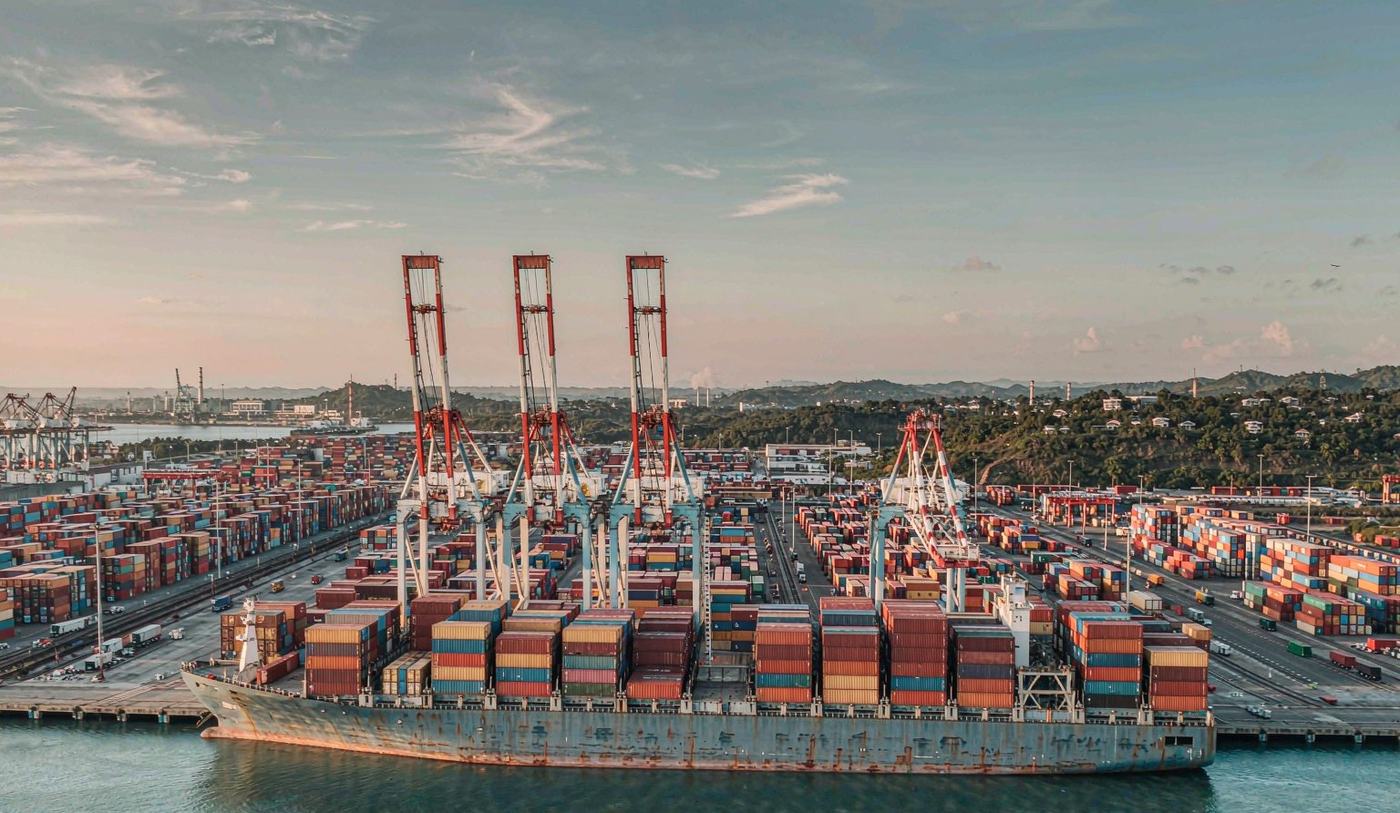
How to Ship from China to Cuba: Mariel, the ISV & Getting a Booking at All
On this lane the first question is not customs, and it is not price. It is whether a carrier will take the booking. Cuba is the largest island in the Caribbean, with around eleven million people, and China is its second-largest trading partner — bilateral trade was reported at about US$1.31 billion in 2025, up roughly 43 percent, with Chinese exports at around US$1.08 billion. The demand is real. But carrier service to Cuba is thin, and it changes.
The second thing is that importing commercially here is not like importing into the neighbouring islands. Commercial import activity is substantially state-managed, and private businesses generally work through authorised foreign trade entities. Before you think about freight, confirm that your Cuban counterparty is actually in a position to import and to pay. On most lanes that question never comes up. On this one it comes up first, and getting it wrong is expensive in a way that no freight quotation can fix.
The third thing is time measured in weeks rather than days. Clearance on this lane is commonly quoted at seven to thirty days, published references describe a very high inspection rate, and the permit processes behind regulated goods are reported in working days measured in months. Everything about this lane rewards starting early.
A note on scope: this page is operational and commercial information about moving cargo. It is not legal or compliance advice. Trade with Cuba is affected by restrictions that differ depending on who you are and where you operate, and those rules change. Confirm the position that applies to you and to your counterparty with qualified advisers before you commit to a shipment.
At a glance
Country: around 11 million people; the largest island in the Caribbean; capital Havana; a WTO member and a party to ALBA-TCP, the Cuba–CARICOM trade agreement and bilateral arrangements including with China. · Currency: the Cuban peso (CUP); the earlier dual-currency system was unified in the 2021 monetary reform; commercial payment is made in freely convertible currency through instruments authorised by the Central Bank of Cuba; cash above US$5,000 equivalent is declared on entry and exit. · Ports: Mariel Container Terminal — the largest and most modern, opened 2014, inside the Mariel Special Development Zone and operated by PSA International; Havana Port — about 270,000 TEU, 400+ vessels and roughly 2.2 million tonnes a year; Santiago de Cuba and Cienfuegos serve the east and south. · Airport: José Martí International (HAV), with a dedicated cargo terminal operated by Cubana Cargo and Cargosur; secondary airports at Varadero, Camagüey, Holguín and Santiago de Cuba. · Customs: the Aduana General de la República de Cuba (AGR), under the Ministry of Finance and Prices, with rules published in the Official Gazette. · Duty: ad valorem 0–30 percent, average around 10–15 percent; specific and compound duties also used. · Sales tax: ISV at 10 percent on the CIF value plus duty. · Special consumption tax: reported up to 100 percent on certain categories. · Clearance: commonly 7–30 days, with a high inspection rate reported. · Transit: FCL 35–50 days, LCL 40–60 days, air 5–10 business days, express 3–7 days. · Air link: a direct Beijing–Havana cargo route launched in June 2025.
How your cargo moves: China to Cuba
Eight steps from your supplier's door to yours. The last four are the ones shaped by local rules.
- Pickup from your supplierWe collect the goods anywhere in China and bring them to our consolidation point.
- Export clearanceChina customs declaration filed and released before the goods move to the port.
- Loading and departureContainer loaded, sealed and handed to the carrier at the Chinese port.
- Main carriageOcean, air or rail movement booked on the route agreed for your cargo.
- Arrival at the gatewayDischarge at the port or airport of entry, recorded on the carrier's manifest.
- Import clearanceCustoms declaration filed locally, with duty and tax assessed on the declared value.
- Customs releaseGoods released into free circulation once duty and tax are settled.
- Final deliveryOnward movement to your delivery address, warehouse or nominated depot.
Duty rates, VAT rates and clearance times move, and the figure that applies to your goods is the one set for your commodity code on the day of clearance. We check the current position against your code before your goods sail and confirm it to you in writing — ask for that check when you request a quote.
What this guide covers, and why the hard part is getting a booking
This is written for a buyer bringing goods out of China into Cuba for the first time. It follows the shipment in the order the problems arrive: whether there is a carrier at all, which port, whether your counterparty can import, how payment works, what the tax bill looks like, how long clearance takes, and how long the transit is.
It does not quote freight rates. Those move with the market and any figure printed here would be wrong within weeks — and on this lane they move with carrier availability, which is a bigger variable than the market. What this guide does instead is show where the time and the money go, so that a quotation can be read for what it leaves out as well as what it contains.
The commercial relationship is long-standing: 2025 marked sixty-five years of diplomatic relations between China and Cuba. What moves on the lane is largely essential goods — food including rice, machinery, electronics, vehicles and parts, construction materials, and increasingly solar equipment, where Chinese exports were reported at around US$117 million in 2025 against roughly US$3 million in 2023.
Carrier availability first: the question to ask before anything else
On every other lane in this region, the sequence is: get a quotation, compare it, book it. On this one there is a step before that, and skipping it is the most common way a Cuba shipment goes wrong.
Ask which carriers are currently accepting cargo for Cuba, and ask it at the beginning. Published reporting notes that in May 2026 a United States executive order led major carriers, including Hapag-Lloyd and CMA CGM, to suspend bookings to and from Cuba. Whether that is the position on the day you read this is exactly the point: it changes.
What to do with this: treat any transit time or routing we quote as conditional on a carrier actually taking the booking that week. Ask us to confirm space in writing at the time of booking, and ask what the fallback is if the sailing is withdrawn. This is operational information, not legal or compliance advice — confirm the rules that apply to you separately.
Practical consequences follow from that single fact. Routings via third countries are common, including Panama, Mexico and Canada for parcels and some air movements. Sailings, where they exist, are typically every one to two weeks. And the sensible planning posture is to have the cargo ready to move when space appears, rather than to have space waiting for cargo.
Mariel or Havana: what each port is built to handle
Mariel Container Terminal
Opened in 2014, Cuba's largest and most modern container terminal. It sits inside the Mariel Special Development Zone (ZEDM) and is operated by PSA International of Singapore. It is the primary gateway for containerised cargo and has been promoted as a regional logistics hub for the Caribbean. If you are shipping containers, this is normally where you want to be.
Havana Port
The working general port of the capital, handling roughly 270,000 TEU and more than 400 vessels a year, and moving about 2.2 million tonnes of container, bulk and general cargo annually. Its leading import categories are food, medicines, auto parts and construction materials. Some cargo is better placed here, particularly where the consignee is in Havana itself.
Santiago de Cuba serves the eastern end of the island and Cienfuegos the south coast; both appear in routings where the delivery address justifies them. Vessels from China typically transit the Panama Canal, and the Xiamen-to-Mariel routing is quoted at around 38 days.
Confirm the port against two things — the nature of the cargo and the delivery address — and confirm it at booking rather than assuming the one on a previous quote is still the right one.
Who can import: the authorised-entity question
This is the section that has no counterpart on the neighbouring lanes.
Importing into Cuba is substantially state-managed. State enterprises hold most commercial import positions, and the private businesses that have emerged in recent years generally operate through authorised foreign trade entities rather than importing directly. One published reference puts it bluntly: virtually all commercial imports require state authorisation.
What that means practically:
- Establish that your counterparty can import. Ask directly, early, and get it confirmed. A shipment that arrives for a consignee who cannot clear it is the worst outcome on any lane.
- Establish that they can pay. Commercial payment runs through Central Bank-authorised instruments in freely convertible currency, which is a banking question as much as a commercial one.
- Confirm the paperwork trail runs to a named entity that appears consistently on the invoice, the transport document and the declaration.
None of this is a freight problem, and all of it is what actually stops Cuba shipments.
Currency, and how commercial payment actually works
The currency is the Cuban peso (CUP). The earlier dual-currency system — the convertible peso alongside the national peso — was unified in the 2021 monetary reform, so there is one official currency now. That reform, and the exchange arrangements around it, are the reason pricing on this lane is usually discussed in US dollars or another freely convertible currency even though the local unit is the peso.
Three practical points:
- Commercial payment. Published rules for higher-value goods, including the 2026 vehicle regulations, state that payment is made in US dollars or other freely convertible currency using instruments authorised by the Central Bank of Cuba. Agree the currency and the instrument in the contract, and confirm with your bank that the channel exists before you ship.
- Cash declarations. Currency and equivalent bearer instruments above US$5,000 are declared on entry and exit. That is a travel rule, but it tells you something about how value is controlled at the border.
- Do not model the landed cost in pesos. Model it in the currency you will actually pay in, and treat the conversion as your counterparty's and your bank's problem to confirm.
Import duty, and where the rate usually lands
Duty is assessed on the CIF value under the Cuban tariff, with ad valorem rates published in a range of roughly 0 to 30 percent and an average around 10 to 15 percent. Specific duties (by weight or unit) and compound duties are also used, so the rate is not always a percentage of value.
| Category | Reported duty range | Note |
|---|---|---|
| Machinery | 5–15% | Industrial machinery around 5%; household appliances around 15% |
| Food products | 10–30% | Rice reported around 10%; processed food 15–30% |
| Electronics | 15–30% | Special contributions reported on top of the duty |
| Clothing and footwear | 15–30% | Special contributions reported on top |
| Cosmetics | 15–30% | Perfumes reported around 30% |
| Toys | 15–30% | — |
| Books | 0% | — |
Two things follow. First, the spread inside each category is wide, which makes the HS code the decisive input — and a classification error here is not just a miscalculation, it can be treated as a false declaration. Get the code confirmed in writing before you book. Second, Cuba is a WTO member and a party to several regional and bilateral arrangements; where a preference applies it usually has to be claimed, not assumed.
ISV at 10 percent, and the special consumption tax
ISV — the Impuesto sobre las Ventas, or sales tax — is charged at 10 percent, and the base is the CIF value plus the duty. One published reference gives 11 percent plus a 2 percent customs service charge, so before you finalise a costing.
Duty on CIF
Under the Cuban tariff, by HS code. Ad valorem, specific or compound depending on the line.
ISV on the duty-inclusive value
10 percent on CIF plus duty. Not on CIF alone — this is the step that makes a modest duty rate produce a larger bill than expected.
Special consumption tax on top
On defined categories, reported at rates that can reach 100 percent. Vehicles, alcohol and tobacco are the familiar examples; some electronics carry special contributions too.
A worked illustration with round numbers: goods with a CIF value of US$10,000 and duty at 15 percent. Duty is US$1,500. The ISV base is US$11,500, so ISV at 10 percent is US$1,150. That is US$2,650 before any special consumption tax, the broker, the port charges and the inland movement.
Duty-free allowances, and why three different numbers circulate
Search for Cuba's duty-free allowance and you will find several figures. They are not contradicting each other so much as describing different things, but the effect on a reader is the same: confusion.
- US$30 or 3 kg per shipment. One published reference gives this as the duty-free amount per shipment, with excess taxed at 30 percent.
- US$500 per shipment for non-commercial imports. Reported as raised from US$200 to US$500 in 2026.
- US$1,000 for arriving travellers. Personal goods up to US$1,000, of which US$500 is duty free and the next US$500 is taxed at a flat 100 percent, alongside allowances for alcohol and tobacco.
Separately, food, toiletries, medicines and medical supplies may be imported duty free for non-commercial purposes, which is a distinct category again.
None of these figures change the outcome on a commercial consignment of any real size. They matter for samples, parcels and personal effects, and that is where they should be used.
The declaration, the channels, and the inspection rate
The customs authority is the Aduana General de la República de Cuba (AGR), under the Ministry of Finance and Prices, with regulations published in the Official Gazette. The entry is the import declaration — Declaración de Importación — and one published reference states it must be filed within five working days of arrival.
Cargo is then graded by risk into channels, on the pattern used across the region:
- Green — released on the documents.
- Yellow — document review before release.
- Red — physical examination, sometimes with technical specialists involved for complex equipment.
Two numbers define the experience. The first is that published references describe a very high inspection rate, with packages reported as opened and inspected as a matter of course. The second is that clearance is commonly quoted at seven to thirty days, with the examination itself reported at three to seven working days and longer in peak periods.
Plan in weeks. On a lane where the box may sit for a fortnight, the cheapest thing you can buy is a file that is complete the first time, and the second cheapest is a consignee who can answer a question the same day.
Permits, CECMED and the MIC certification for telecom
Regulated goods need something from a regulator before they move, and on this lane the lead times are the story.
| Authority | What it covers |
|---|---|
| CECMED — Centre for State Control of Medicines, Equipment and Medical Devices | Pharmaceuticals, medical equipment and medical devices |
| Ministry of Agriculture (MINAG) | Sanitary and phytosanitary control for food and agricultural goods |
| Ministry of Public Health (MINSAP) | Health-related products and health registration |
| MIC — telecom and wireless equipment | Certification for telecoms and wireless devices; our Cuba hub records an MIC certification requirement under Resolutions 1/2026 and 2/2026, reported effective 2 June 2026 |
| Authorised inspection bodies | Pre-shipment inspection where it applies |
The timing point: permit processes on this lane are reported in working days measured in months — one published reference gives 45 to 60 working days with a permit validity of six months. Whatever the exact number, the practical conclusion is the same: start the permit application before the goods are manufactured, not after they have sailed.
Spanish-language labelling, and the inspection that precedes loading
Two requirements are worth flagging because both are easy to miss and both are cheap to comply with in advance.
Pre-shipment inspection. Published references describe a requirement for goods to be inspected before shipment by an authorised inspection body, with a clean report issued before the cargo leaves. — where it does, it inserts a step into the schedule that has to be planned rather than discovered.
Spanish labelling. Product labels must be in Spanish and carry the product name, composition, country of origin and shelf life where relevant. Goods that fail the labelling requirement can be held or required to be reworked, at the importer's cost. Electronics are also expected to meet the Cuban mandatory standards, and documentation in Spanish moves through the process more smoothly than English-only paperwork.
One more, small and consequential: containers should be sound and carry a valid seal. A broken seal on arrival is a problem that takes days to resolve, on a lane where days are already expensive.
Sea transit, and the canal routing behind it
Published transit ranges for this lane: full containers about 35 to 50 days, with Xiamen to Mariel quoted at roughly 38 days, and consolidated shipments about 40 to 60 days.
| Mode | Typical transit | Notes |
|---|---|---|
| Sea FCL | 35–50 days | Xiamen to Mariel about 38 days; typically via the Panama Canal |
| Sea LCL | 40–60 days | Consolidated at origin, relayed through a hub such as Kingston or Freeport |
| Air freight | 5–10 business days | To HAV; direct from Beijing since June 2025, otherwise via Madrid, Paris or Miami |
| Express courier | 3–7 days | Door to door, subject to carrier coverage |
The sea figures assume a sailing exists. Add the two seasonal factors — Chinese New Year, which empties sailings out of China for weeks, and the Atlantic hurricane season, which runs through the summer and autumn — and the sensible planning number is the upper end of the range.
Our sea service ends at Mariel or Havana. Import clearance and inland delivery are handled by the consignee. Ask for a DDP quotation if you want a through price, and confirm it against current carrier availability.
The Beijing-Havana cargo flight, and air freight options
José Martí International Airport (HAV) is Cuba's main gateway, with a dedicated cargo terminal operated by Cubana Cargo and Cargosur. Secondary airports with cargo capacity serve Varadero, Camagüey, Holguín and Santiago de Cuba.
What makes this lane unusual in the Caribbean is that there is a direct cargo link from China. A Beijing–Havana cargo route was launched in June 2025 by Air China, which gives air freight here a direct option that most of the region simply does not have. Other routings continue to run via Madrid, Paris and Miami. Air transit is about five to ten business days.
Air suits electronics, medical supplies and pharmaceuticals, machinery parts, high-value goods, documents and perishables — and on this lane it is often the right answer for anything where a thirty-day clearance window is unacceptable. For small urgent shipments, express courier at three to seven days is frequently competitive on both time and cost.
Consolidated or full container, and which survives a cancellation
The usual arithmetic applies: consolidated shipping works from around 1 CBM and suits smaller volumes; a full container suits anything above roughly 15 CBM and gives you one box, one entry and one gate movement.
On this lane there is a second question underneath the arithmetic: what happens if the sailing is withdrawn. A full container booked directly is easier to re-protect on the next available carrier. Consolidated cargo depends on a relay being built at a specific hub, so a cancellation can mean waiting for the next consolidation rather than the next ship. Neither is always better, but the question should be asked explicitly at booking, and the answer should include what the fallback is.
For shipments under about 5 CBM, express courier is often competitive with sea consolidation on both price and time — five days against forty is not a marginal difference.
Solar, rice and vehicles: what actually moves on this lane
Cuba's import demand from China is unusually concentrated in essentials, and that shapes what the lane handles:
- Food — rice above all, with 55,200 tonnes reported exported from China between January and April 2026.
- Machinery and electronics, including household appliances.
- Vehicles and auto parts.
- Solar equipment — the fastest-moving category, reported at around US$117 million in 2025 against roughly US$3 million in 2023.
- Construction materials.
Renewables deserve a note. Solar has gone from a rounding error to a major category in two years, and official policy around the energy matrix has produced preferential treatment in several places — including for vehicles imported alongside renewable charging equipment. If your cargo sits in that space, ask specifically what preferential treatment exists, because the general tariff will overstate what you pay.
Electric vehicles and the 2026 fixed tariff
Vehicle import rules were substantially rewritten in 2026, and the change is worth knowing if vehicles are part of your business.
A legislative package published in the Official Gazette in August 2026, centred on Decree 163/2026, repealed the previous vehicle regulations and introduced fixed customs tax quotas for electric vehicles based on declared value instead of a percentage:
| Declared value of the electric vehicle | Reported fixed tax |
|---|---|
| Up to US$10,000 | US$500 |
| Over US$10,000 and up to US$20,000 | US$1,000 |
| Over US$20,000 and up to US$30,000 | US$1,500 |
| Over US$30,000 | US$2,000 |
Alongside that, reported measures include exemption from the special sales tax that can reach high percentages for other vehicles, preferential treatment where a vehicle is imported together with renewable charging equipment such as solar panels, tax benefits for vehicles assembled in Cuba, authorisation for vehicle assembly from legally acquired parts, and a progressive tax from the third vehicle acquired by the same person or entity. Payment is in US dollars or another freely convertible currency through Central Bank-authorised instruments.
The point of including it is that the vehicle regime is a moving target on this lane, and a costing taken from a general tariff table will be wrong.
Packing for a long transit and a hot, humid port
A container on this lane can spend five to eight weeks at sea and then another two to four weeks waiting to clear, in tropical heat and humidity. Packing should be built for that total, not for the ocean leg alone.
- Moisture. Desiccant in the container, barrier or stretch wrap on pallets, and cartons that are dry when loaded. Long port stays in a humid climate are when moisture damage shows up.
- Carton strength. Cargo may be handled at a relay and again at destination, and it may be opened for inspection. Rate the packaging for more than one lift and for being opened.
- Wood packaging. Every pallet and crate must meet ISPM 15 — heat treated or fumigated, and stamped.
- Marking. Clear marking in Spanish where practical, so that an inspecting officer can reconcile a carton with a packing list quickly.
- Container condition. Ship in a sound container with a valid seal. A seal discrepancy at arrival costs days.
Insurance, and what to expect if something goes missing
Insurance is normally arranged at not less than 110 percent of the CIF value. On this lane there is one clause worth checking specifically: make sure cover extends through the port stay, not just the ocean leg. With clearance quoted at seven to thirty days and a high inspection rate, the period of greatest exposure is often after the ship has berthed.
If something does go missing or arrive short, the sequence that protects a claim is the same as anywhere: photograph before the cartons move, note the exception on the delivery document before signing clean, notify the carrier and the insurer within the stated period, and keep the packing material until a surveyor has seen it.
Be realistic about the small-parcel channel. Published references describe international parcels on this lane as taking weeks, being opened, and occasionally being partially lost. Use a tracked, insured service and do not send anything irreplaceable by post.
The dossier we close before the booking is confirmed
On most lanes the document file is closed before the vessel sails. On this one it should be closed before the booking is confirmed, because the two questions that stop Cuba shipments — can your counterparty import, and is there a carrier — both have to be answered before anything else is worth doing.
| Document | What it has to do |
|---|---|
| Commercial invoice | Complete description, value, HS code and Incoterm, with FOB, freight and insurance shown separately; Spanish preferred |
| Packing list | Line-by-line contents, weights, dimensions and carton count, matching the invoice |
| Bill of lading or air waybill | Consignee consistent with the importing entity named on the rest of the file |
| Certificate of origin | Issued in China; needed to establish origin and to claim any preference that applies |
| Import authorisation | Evidence that the consignee is an entity able to import — confirm before shipping |
| Sector permits | CECMED, MINAG, MINSAP, and MIC certification for telecom and wireless equipment, as applicable |
| Pre-shipment inspection report | Where the requirement applies, issued before the cargo leaves |
| Insurance certificate | Not less than 110 percent of CIF, with cover extending through the port stay |
| Spanish labelling evidence | Product name, composition, country of origin and shelf life on the label |
| ISPM 15 evidence | Stamp on every wooden pallet or crate |
Where preparation beats negotiation on this lane
The useful work on a Cuba shipment happens before the freight is priced. That means establishing which carrier is actually taking bookings this week, confirming the port against the cargo and the delivery address, checking that the consignee can import and pay, and telling you which permits apply and how long they take.
None of that appears as a line on a freight quotation. All of it costs more than the freight when it goes wrong.
Why importers use Goodhope on this lane
Six things that are different about working with us on China to Cuba shipments.
How it happens on the China to Cuba lane
Five shipments bought in China and delivered into Cuba, told end to end — where the order came from, how it moved, where it nearly went wrong, and how it finished. Client names are withheld at their request; the situations and the handling are what we deal with on this lane.
Carrier availability · first enquiry · China to Havana
The purchase. A buyer new to importing sent us a full cargo specification and asked for a rate on the same day.
The move. We checked carrier space before quoting, then booked once a carrier confirmed it would take the consignment.
Where it nearly went wrong. Getting a booking is the hard part on this lane, not the rate. Carriers decide on a case basis, and a price quoted before anyone has confirmed space is a number that can be withdrawn.
How it finished. He now sends the commodity first and we confirm space before we talk money. Two of his three enquiries since have shipped.
Authorised consignee · before booking · Shenzhen to Mariel
The purchase. A first-time buyer assumed his Cuban counterpart could receive the goods under his own company name.
The move. Full container, with the importing entity confirmed as authorised before the booking was made.
Where it nearly went wrong. Only authorised entities can import here. A consignee without that status cannot take the entry, and cargo consigned to one sits at the terminal while the paperwork is argued.
How it finished. We verified the consignee before booking. The container released on arrival.
Spanish labelling · inspection · Guangzhou to Cuba
The purchase. A buyer shipped goods labelled in English and Chinese, having been told the importer would re-label on arrival.
The move. Sea freight with Spanish-language labelling applied at the factory before pre-shipment inspection.
Where it nearly went wrong. Labelling in Spanish and the inspection that runs before loading are pre-shipment requirements, not arrival formalities. Re-labelling after discharge means the goods do not release while it happens.
How it finished. We made Spanish labelling a production-stage task. His goods have passed inspection first time since.
Port by cargo · solar equipment · Shanghai to Cuba
The purchase. A buyer shipping solar equipment was quoted into Havana without anyone asking what the port is built to handle.
The move. Full container into Mariel Container Terminal, matched to the cargo rather than to the shortest route.
Where it nearly went wrong. Mariel is the larger and more modern terminal and sits inside a special development zone, while Havana handles general traffic. Project cargo and containerised equipment move better through the terminal built for it.
How it finished. We routed through Mariel. The equipment discharged and cleared without transhipment.
Payment mechanics · first order · Ningbo to Cuba
The purchase. A buyer agreed payment terms with his counterpart that neither side could execute through an authorised channel.
The move. Sea freight with the payment instrument confirmed before the goods were loaded.
Where it nearly went wrong. Commercial payment is made in freely convertible currency through instruments authorised by the Central Bank, and cash above the declared threshold has to be declared on entry and exit. We ask every customer on this lane to run their own sanctions and export-control check as well; we do not advise on that part.
How it finished. He restructured the payment before loading. The goods moved and the payment cleared.
Why importers use Goodhope on this lane
Six things that are different about working with us on China to Cuba shipments.
Tell us the commodity and we will check carrier space first
Tell us what you are shipping, the HS codes if you have them, the packed dimensions and gross weight, the pickup city in China and the delivery address in Cuba. We will tell you which carriers are currently accepting cargo and what the fallback is if a sailing is withdrawn, whether Mariel or Havana fits your cargo better, which permits your product needs and how long they take, and set out the duty plus ISV so you can see the landed cost before you commit.
Get a quote Talk to usRelated pages
Frequently asked questions
Can you actually ship to Cuba at the moment?
It depends on the carrier, and that is the first question rather than the last. Service is thin and it changes: published reporting notes that in May 2026 a US executive order led major carriers including Hapag-Lloyd and CMA CGM to suspend bookings to and from Cuba. Ask us what is available at booking. This is operational information, not legal or compliance advice.
Which port should I ship to?
Mariel is the largest and most modern container terminal, opened in 2014 inside the Mariel Special Development Zone and operated by PSA International. Havana Port handles about 270,000 TEU and 400+ vessels a year. Santiago de Cuba and Cienfuegos serve the east and south. Most services from China transit the Panama Canal.
Who can import into Cuba?
Commercial importing is substantially state-managed; state enterprises hold most import positions and private businesses generally operate through authorised foreign trade entities. One reference states virtually all commercial imports require state authorisation. Confirm your counterparty can import and pay before you ship.
How long does shipping from China to Cuba take?
FCL typically 35–50 days, with Xiamen to Mariel about 38 days. LCL typically 40–60 days, relaying through a hub such as Kingston or Freeport. Air into HAV is 5–10 business days and express 3–7 days. Clearance itself is commonly quoted at 7–30 days — add it.
What taxes will I pay?
Duty on CIF, published at 0–30 percent with an average around 10–15 percent; then ISV at 10 percent on the CIF value plus duty; then a special consumption tax on certain categories reported as high as 100 percent. Confirm the rates for your own tariff line.
Is there a duty-free allowance?
Several figures circulate because they describe different things: about US$30 or 3 kg per shipment; a non-commercial limit reported at US$500 in 2026; and a traveller allowance of US$1,000 with US$500 duty free. Food, toiletries, medicines and medical supplies may be duty free for non-commercial purposes. None help a commercial import.
Do labels have to be in Spanish?
Yes. Labels must carry the product name, composition, country of origin and shelf life in Spanish. Non-compliant goods can be held or required to be reworked at the importer's cost. Documentation in Spanish also moves faster.
Can I ship telecom or wireless equipment?
It is a controlled category. Our Cuba hub records an MIC certification requirement under Resolutions 1/2026 and 2/2026, reported effective 2 June 2026. Confirm the current requirement before shipping, and build the lead time in — permit processes here are reported in months of working days.
Is there a direct cargo flight from China?
Yes. A Beijing–Havana cargo route launched in June 2025 with Air China, which is unusual for the Caribbean. Other routings run via Madrid, Paris and Miami. Air transit is about 5–10 business days; the cargo terminal at HAV is operated by Cubana Cargo and Cargosur.
Do you deliver door to door in Cuba?
Sea ends at Mariel or Havana and air ends at HAV, with clearance and inland delivery by the consignee. Express courier is the door-to-door option, subject to coverage. Ask for a DDP quote, and confirm it against current carrier availability.