
Home / Shipping to Cyprus / How to Ship from China to Cyprus
How to Ship from China to Cyprus: Limassol, 19% VAT & Clearance Rules
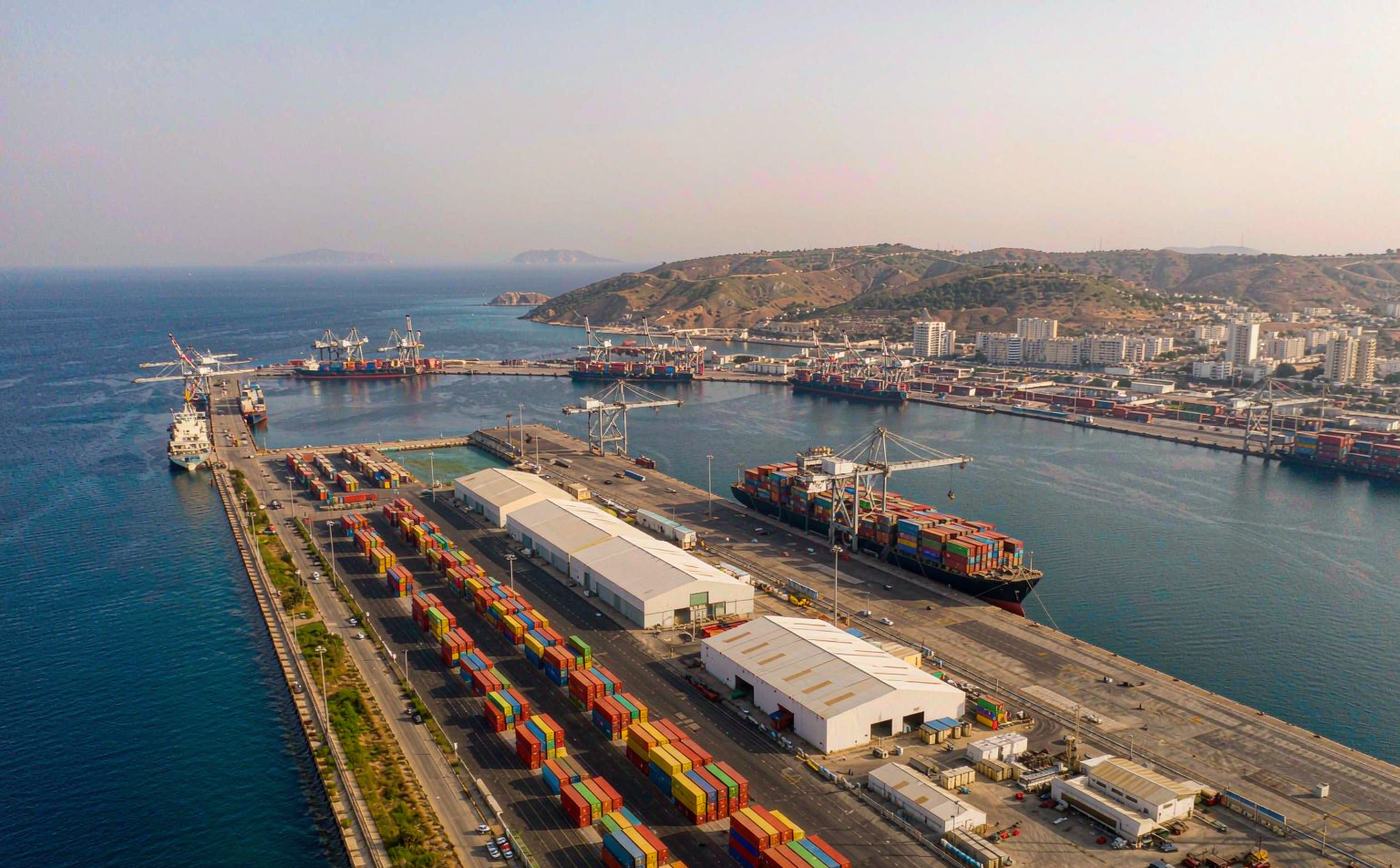
Cyprus is an island republic in the eastern Mediterranean with three features that change how a shipment is planned. The first is concentration: the port of Limassol handles around ninety percent of the country's foreign trade. There is no meaningful port-choice decision to make here, which removes a step most importers expect to agonise over.
The second is that Cyprus has no railway. Nothing moves inland by rail on this island, ever — the domestic leg is road, on the A1 between Nicosia and Limassol and the coastal motorways. There is no rail option to fall back on or to save money with.
The third is the one that surprises people most often. Cyprus is in the European Union and the eurozone, and it is one of only two EU states not yet in the Schengen area — the other is Ireland, which has a permanent opt-out, whereas Cyprus is treaty-bound to join and has completed its technical preparations. For goods this changes nothing, because Cyprus is in the EU customs union. For the people around your shipment, it changes the travel arrangements.
Then there is the tax position, which is straightforward but wider than most importers expect. VAT is 19%, and the taxable base includes not just the CIF value and the duty but the Cyprus-side costs up to the first destination — terminal handling, port fees and inland transport. And there is a mechanism worth signing up for: postponed VAT accounting, which lets a registered importer self-account for import VAT on the next return rather than paying it at the border.
This guide is written for buyers importing from China for the first time. It covers Limassol's dominance and what it removes, the absence of rail, the Green Line, the Schengen question, transit times and the transhipment connections behind them, trade terms, the documents and the CY number, the 19% rate and its base, postponed VAT accounting and the receipt you must keep, duty and anti-dumping declarations, the four clearance channels, product certificates, the absence of an e-invoicing mandate, and how to tell whether a forwarder genuinely books this lane.
Cyprus at a glance
- Limassol handles about 90% of foreign trade — Eurogate container terminal and a DP World multipurpose terminal; Larnaca is secondary.
- No railway on the island. Every inland move is by road.
- EU and eurozone since 2004 and 2008, in the EU customs union with EORI and TARIC, but not yet in Schengen.
- VAT 19% standard, with reduced rates of 9% and 5% and a zero rate.
- VAT number format: CY plus eight digits plus a letter, for example CY12345678X.
- Postponed VAT accounting exists — self-account on the return instead of paying at the border, once registered.
- The C2 customs receipt is the evidence for a reclaim — no C2, no reclaim.
- Clearance channels: green most of the time, yellow for document checks, red and orange for physical inspection.
- No B2B e-invoicing or e-reporting mandate is planned.
How your cargo moves: China to Cyprus
Eight steps from your supplier's door to yours. The last four are the ones shaped by local rules.
- Pickup from your supplierWe collect the goods anywhere in China and bring them to our consolidation point.
- Export clearanceChina customs declaration filed and released before the goods move to the port.
- Loading and departureContainer loaded, sealed and handed to the carrier at the Chinese port.
- Main carriageOcean, air or rail movement booked on the route agreed for your cargo.
- Arrival at the gatewayDischarge at the port or airport of entry, recorded on the carrier's manifest.
- Import clearanceCustoms declaration filed locally, with duty and tax assessed on the declared value.
- Customs releaseGoods released into free circulation once duty and tax are settled.
- Final deliveryOnward movement to your delivery address, warehouse or nominated depot.
Duty rates, VAT rates and clearance times move, and the figure that applies to your goods is the one set for your commodity code on the day of clearance. We check the current position against your code before your goods sail and confirm it to you in writing — ask for that check when you request a quote.
Limassol handles almost everything that reaches Cyprus
On most lanes the first question is which port. On this one, the answer is close to settled. The port of Limassol handles around ninety percent of Cyprus's foreign trade, through a container terminal operated by Eurogate and a multipurpose terminal operated by DP World. The port of Larnaca is the secondary sea option, and air cargo runs through Larnaca International Airport, with Paphos as a smaller alternative.
What that removes is the port-selection argument. What it does not remove is the service question, which is the one that actually affects your schedule: whether the service calls Limassol directly or reaches it through a transhipment connection. Many do involve a connection, and the connection is where the transit estimate gets made or lost.
It is also worth knowing what kind of port this is. Cyprus is a transhipment and transit point between Europe, the Middle East and North Africa, and the island hosts a large ship-management and ship-registry cluster. Your cargo is moving through a port whose business is connecting three regions, which is generally good news for the availability of sailings.
The trade profile is lopsided in a way that explains the schedules: imports are dominated by petroleum products, vehicles and machinery, while exports lean on pharmaceuticals, citrus fruit and cheese. The main partners are Greece, Italy, Germany and the United Kingdom.
No railway on the island, and what that means inland
Cyprus has no railway network at all. That is unusual in the EU and it has one practical consequence for your shipment: the inland leg is always a truck.
There is no rail to fall back on when road capacity is tight, no intermodal option to shave cost out of the inland move, and no alternative if the trucking market is busy. Domestic transport runs on the motorway network — the A1 between Nicosia and Limassol, the A3, and the A5 and A6 coastal axis.
The good news is distance. Cyprus is a small island, and Nicosia to Limassol is a short drive, so the inland leg is neither long nor expensive. What matters is that it is arranged. Confirm with your forwarder that the trucking from the terminal to the delivery address is included and booked, and check that the delivery address can actually take the vehicle — some town-centre and older-street addresses on the island cannot take a full-size truck without a smaller vehicle for the last stretch.
The Green Line, and why a delivery to the north is a different question
Cyprus is a divided island. The Republic of Cyprus exercises effective control in the south, and imports clear at the ports under its control — Limassol and Larnaca.
Trade and movement across the Green Line are governed separately by the EU Green Line Regulation. It is important to understand what that is and is not: the line is not an EU external border, but a special regime governing movement and trade across the buffer zone. Goods crossing under it are handled on their own terms, not on the terms of an ordinary import into the Republic.
The operational consequence for you is simple. If your buyer is in the north, this is not simply "delivery in Cyprus." It is a separate question with its own documentation, its own handling and its own timing. Raise it with your broker before you book — not as an afterthought when the container is already at Limassol.
Cyprus is in the EU but not yet in Schengen
Cyprus joined the European Union in 2004 and adopted the euro in 2008. It is therefore in the EU customs union and the single market, and the Union Customs Code applies with EORI and TARIC like anywhere else in the bloc.
It is not yet part of the Schengen area, which makes it one of only two EU states outside it. The other is Ireland, and the two cases are different: Ireland holds a permanent opt-out to preserve the Common Travel Area with the United Kingdom, while Cyprus is treaty-bound to join and has been working through the accession process for years.
Where that stands: Cyprus connected to the Schengen Information System in 2023 and was cleared as technically ready in mid-2026, with the technical work separated from the island's political division. The remaining step is political — a unanimous vote in the EU Council, followed by an implementation period of several months before borders actually change. [Timing depends on a Council decision — confirm the current position before relying on it.]
What it affects, and what it does not. Goods are unaffected: customs union membership means no customs control on goods moving between Cyprus and other member states. What is affected is people. Identity checks remain on arrival, a Cypriot residence permit is not a Schengen travel document, and non-EU staff travelling to inspect goods or meet a broker need to plan their visas separately. [Cyprus generally accepts holders of valid double or multiple-entry Schengen visas — confirm the current rule for your nationality.]
Getting cargo to Cyprus, and the connections behind it
| Mode | Typical transit | Arrives at | Fits when |
|---|---|---|---|
| Sea FCL | About 25–35 days port to port, plus clearance and inland delivery | Limassol (Eurogate or DP World terminal) | Anything that justifies a container; most repeat importers |
| Sea LCL | The sea leg plus roughly 5–10 days for consolidation and deconsolidation | Container freight station at destination | First orders and a few cubic metres |
| Air freight | About 5–9 days, usually through a European or Middle East hub | Larnaca International Airport (LCA), or Paphos | Urgent, high value, or a production stoppage |
| Express courier | About 3–7 days door to door | Any Cypriot address | Samples, documents, small parcels |
The thing to hold on to is the word connection. A headline transit time to Limassol is an estimate built on a routing, and on this lane the routing usually involves a transhipment. Before you release cargo, confirm the sailing date, the actual route, whether there is a transhipment, and the estimated arrival. Those four facts tell you more about when your goods will land than any range of days does.
Incoterms when Limassol handles the whole island
| Term | Who pays the main carriage | Who clears and pays duty and VAT | What it means here |
|---|---|---|---|
| EXW (Ex Works) | You, from the factory door | You | Most work; only sensible with an agent in China |
| FOB (Free On Board) | You | You, in Cyprus | Control of the routing, which matters when a connection is involved |
| CIF | Seller, to Limassol | You | Seller books the carrier; clearance, duty and VAT stay yours |
| DAP | Seller, to the named place | You | Delivery handled; check which destination charges are excluded |
| DDP | Seller | Seller or their agent | Least work — but ask who the importer of record is, because that decides whether the 19% comes back |
With one port doing almost all the work, the "named place" in a DAP or DDP contract is unambiguous, and there is no argument about which discharge port the price was built on. Where quotes genuinely diverge is what happens after arrival: clearance, possible inspection, storage and handling. Those are not always in the freight number, and they are the reason two similar quotes can differ materially.
And the scope question, as always separate from the term: port to port runs from load port to discharge port, airport to airport is the air equivalent, and door to door adds pickup and final delivery. Goodhope works port to port on ocean freight and airport to airport on air freight, and states which one you are buying.
The paperwork Cyprus Customs expects, and the CY number behind it
Customs is handled by the Department of Customs and Excise, the Union Customs Code applies, declarations are filed electronically, and an EORI number plus the TARIC commodity code are mandatory. Exports out of Cyprus run through the Automated Export System.
EORI
The EU customs identifier, needed by any business making a declaration and valid across all 27 member states once issued. It is separate from a VAT number, and clearance cannot begin without it.
CY VAT number
A Cypriot VAT number is CY followed by eight digits and a letter — for example CY12345678X. It appears on invoices and is checked in VIES before an intra-EU business supply is zero-rated.
The document set:
- Commercial invoice — trade term, currency, commodity code, a specific product description rather than a generic phrase, quantities and values, country of origin, and the VAT numbers of both parties on a business sale.
- Packing list — piece count, weights and dimensions. Make sure it agrees with the invoice; discrepancies are a common cause of inspection.
- Bill of lading or air waybill.
- Electronic customs declaration, filed with the commodity code and customs value.
- Certificate of origin where a preference is claimed — EUR.1, or a statement on origin from a registered exporter under the REX system.
- Product certificates for regulated goods, and anti-dumping declarations where they apply to Chinese-origin categories.
- Phytosanitary or veterinary certificates for plant and animal products — see the product section below.
Confirm all four before the vessel sails: the Cyprus importer, their EORI number, the HS or TARIC code, and any product-specific requirement. Those four are the difference between a smooth clearance and a container waiting at the terminal.
Nineteen percent VAT, and the reduced rates under it
Cypriot VAT has a standard rate of 19%, and for most commercial imports that is the only rate that matters.
| Rate | Applies to |
|---|---|
| 19% standard | The large majority of commercial imports — everything not covered by a lower rate |
| 9% | Restaurant and catering services; hotel accommodation; some passenger transport |
| 5% | Food and beverages excluding alcohol and soft drinks; pharmaceutical products; newspapers, books and magazines; hairdressing; cultural event entry; school catering |
| 0% | Exports; intra-community supplies; international passenger transport |
The calculation has one feature worth more attention than the rate itself. The VAT base is wider than the duty base. It is:
Customs value (CIF) + customs duty + Cyprus-side costs up to the first destination — which includes terminal handling, port fees and the inland transport to your warehouse or first commercial point. A shipment arriving duty-free still carries VAT on the CIF value plus those destination costs.
Take a shipment with a CIF value of €10,000 attracting 5% duty, with €400 of terminal handling, port fees and inland transport to the warehouse. Duty is €500, the VAT base is roughly €10,900, and VAT at 19% comes to about €2,070. Total tax around €2,570, or roughly a quarter of the CIF value, before any excise.
On thresholds: the €22 import VAT relief ended in 2021, so VAT applies from the first euro. And the relief that exempted consignments at or below €150 from customs duty was removed EU-wide on 1 July 2026, replaced by a temporary flat charge of €3 per product category until 1 July 2028.
Self-accounting for import VAT, and the C2 receipt
By default, import VAT is paid at clearance, before the goods are released. That is a real cash-flow hit: 19% of your landed value sitting with Cyprus Customs until your next VAT return.
Cyprus has an answer. Postponed VAT accounting lets a registered importer self-account for the import VAT on the next VAT return instead — claiming the output VAT and the input VAT in the same period, so the net cash impact is zero. To qualify you generally need:
- a valid Cyprus VAT number and EORI;
- to be filing VAT returns regularly and in good standing;
- to be registered for the deferred scheme with the Cyprus Tax Department.
The registration is one-off and the benefit on every subsequent shipment is permanent. It is worth doing before your first significant import.
The receipt that matters: if you pay import VAT at clearance, the C2 — the Cyprus customs payment receipt — is the legal evidence that you paid it. No C2, no reclaim. Keep it, make sure it is issued in your company's name rather than an individual's, match each one to a commercial purpose, and claim it in the same VAT period. Records are kept for six years.
Returns are quarterly for most businesses and must be filed electronically through the Taxisnet system, due before the tenth day of the second month after the period end. VIES listings are monthly, due by the fifteenth. And if you are not VAT-registered, there is no reclaim at all — for any business importing more than a modest annual value, the registration breakeven comes quickly.
How duty is set, and the extra declarations for Chinese goods
Duty comes from the commodity code in the TARIC database, charged on the customs value, and there is no EU–China free trade agreement, so goods of Chinese origin are assessed at MFN rates. Many industrial goods sit at low single-digit rates; some categories are considerably higher, and excise duty applies separately to alcohol, tobacco and energy products.
What catches importers on this lane is not the rate but the additional declaration. Certain Chinese-origin products require an anti-dumping declaration alongside the customs declaration — solar panels, certain steel products, ceramics and e-bikes among them. If yours is one of them and the declaration is missing, the entry stalls. [Measures change; check the current list for your code before shipping.]
The other common causes of delay, in the order they tend to occur:
- Tariff mismatch — customs reclassifies your goods to a different code, you owe more duty, and an amendment has to be filed.
- Missing origin proof — no EUR.1 means full third-country duty instead of the preferential rate you budgeted for.
- Discrepancies between documents — a weight out by more than five per cent, or a missing line item, is enough to trigger a check.
- Sanctions or dual-use review — goods that could plausibly be diverted to a restricted destination get an extra look.
- Phytosanitary or veterinary certificates — plant and animal products are held by the Department of Agriculture pending the certificate, and that hold is often longer than the customs process itself.
The four clearance channels, and what puts you in the slow one
Once the declaration is accepted, Cyprus Customs routes it into one of four channels.
| Channel | What happens | Typical share |
|---|---|---|
| Green | Automatic clearance, no human review | Around 70% |
| Yellow | Document check only | Around 20% |
| Red | Physical inspection — an officer opens cartons | Around 8%; adds 1–3 working days |
| Orange | Document check plus physical inspection | Around 2% |
You cannot directly choose your channel, but you can stay out of the slow ones:
- Import under your real company name and EORI, not an individual's. Importing under a personal name when the goods are for business use is a common and expensive mistake.
- Use a broker with a clean compliance record, and build your own track record — frequent importers with clean histories get green more often.
- Upload every certificate and origin proof at declaration time, not after.
- Avoid flagged categories where you can: counterfeit risk, dual-use items, dangerous goods, agricultural products.
What your product needs in place before it sails
| Product | What is needed | When |
|---|---|---|
| Electronics and electrical goods | CE marking with the EU declaration of conformity and technical file; EMC and low-voltage requirements; RoHS; WEEE registration in the market of sale | Before production finishes |
| Lithium batteries and battery goods | UN38.3 test summary, dangerous goods declaration, class 9 labelling and IMDG or IATA packaging; state-of-charge limits on air | Before booking — carriers need it to accept the cargo |
| Food, plant and animal products | Phytosanitary or veterinary certificates, issued and ready before arrival; held by the Department of Agriculture if missing | Before sailing — this hold is often longer than customs |
| Food contact materials | Declaration of compliance under the EU framework regulation, with migration testing where required | Before shipment |
| Toys, cosmetics, PPE, medical devices | Sector conformity assessment, notified body involvement where required, and a responsible person established in the EU | Well before shipment |
| Any goods on wood pallets | ISPM-15 heat treatment or fumigation with the stamp visible | Before loading |
No digital reporting yet: invoicing rules in Cyprus
If you are comparing several European markets, Cyprus is among the least demanding on invoicing. There is no business-to-business e-invoicing mandate and no e-reporting mandate planned — unlike Greece's myDATA, Croatia's Fiscalization 2.0 or Slovenia's monthly VAT ledgers.
What is digital is the filing, not the invoice. VAT returns must be registered and submitted electronically through the Taxisnet system, quarterly, due before the tenth day of the second month following the period, with the deadline moving to the next working day if it falls on a weekend or public holiday. Late submission carries a fixed penalty per return, and late payment a surcharge on the VAT due plus interest.
Alongside that: VIES listings are monthly, due by the fifteenth of the following month, and Intrastat declarations are monthly once the annual thresholds for arrivals or dispatches are exceeded.
For you as the shipper, the practical point is unchanged: send a complete commercial invoice with the shipment. It is the document customs values the goods on, the document your broker declares against, and the document your buyer accounts with — whether or not any system requires it to be structured.
A private buyer and a Cypriot company with a CY number
| Private individual | Registered Cypriot company | |
|---|---|---|
| Identifiers | None required for a genuine personal import | EORI, plus a VAT number of CY plus eight digits and a letter |
| Duty and VAT | Paid at clearance | Paid at clearance, or self-accounted under postponed VAT accounting |
| Recovery | None — 19% is a real cost | Reclaimed as input VAT on the quarterly return, against the C2 receipt |
| Registration threshold | Not applicable | €15,600 of taxable supplies in a rolling twelve months for established businesses; no threshold for non-established businesses |
| Fiscal representative | Not applicable | Required for non-EU businesses |
| Records | — | Six years, including C2 receipts, release authorisations and declarations |
Two traps are worth naming. The first is importing under a personal name when the goods are for business use — the C2 then records the wrong importer and the reclaim becomes difficult or impossible. The second is assuming the €15,600 threshold is the only test. Several obligations carry no threshold at all: receiving business services from abroad under the reverse charge, making intra-EU acquisitions, and being a non-resident making taxable supplies in Cyprus.
Choosing a supplier for a market this size
With a population under a million in the area under the Republic's control, order sizes are modest and the pattern follows: LCL first, FCL once volumes justify it. That makes consolidation windows the thing to watch, because a missed one costs a sailing.
Finding suppliers online through B2B marketplaces is how most first orders happen — fast and broad, with the usual risks of dealing with a trading company rather than a factory, specifications drifting between sample and production, and goods not being ready when promised. Meeting suppliers at trade fairs costs more and takes longer, but specifications are usually right first time and the relationship survives a dispute.
Either way, consolidation in China is what makes the economics work: several suppliers, one container, one declaration, one set of certificates — rather than several consignments each attracting their own minimum charges and their own chance of a document problem. See our pages on warehousing, consolidated shipments and buying through Alibaba and 1688.
Questions that separate a Limassol booker from a reseller
Any forwarder can quote Cyprus. These questions separate the ones who book Limassol from the ones working from a rate sheet, and none of them require industry knowledge to ask.
- Which service, and does it call Limassol directly or through a connection? Then ask for the sailing date, the route and the estimated arrival. Four facts, and they tell you more than a range of days.
- Which terminal? Limassol has a container terminal and a multipurpose terminal under different operators. Naming one shows they have booked here before.
- Are destination charges itemised? Clearance, inspection, storage and handling listed separately from the freight, not folded into one number.
- Who is the importer of record, and do they have an EORI and a CY VAT number? Confirm before departure, not on arrival.
- Do they know about anti-dumping declarations? If they have not asked what the goods are, they cannot know whether one applies.
- Will they hold and pass on the C2 receipt? Without it there is no reclaim.
- Do they ask about phytosanitary or veterinary certificates? For food, plant and animal products that question is the difference between a clearance and a hold.
- For air, what is the chargeable weight and which hub? Air is billed on the greater of actual and volumetric weight.
Warning signs are consistent: a quote with no service name, no route and no sailing date; silence on destination charges; no question about what the goods actually are; and urgency without a schedule behind it.
From the factory to a Cypriot address, in order
Fix the commodity code and check for extra declarations
The TARIC code sets the duty rate and tells you whether an anti-dumping declaration applies to Chinese origin in that category.
Confirm the importer of record, their EORI and their VAT number
Before departure. A CY number is eight digits plus a letter. Non-EU businesses need a fiscal representative.
Agree the trade term in writing
And decide whether postponed VAT accounting is being set up — do the registration before the first significant import, not after.
Book space and confirm the route
Sailing date, whether there is a transhipment connection, and the estimated arrival at Limassol.
Collect from the factory, or consolidate
One supplier or several, checked against the packing list, loaded in China.
China export clearance
Export declaration and release, with a final check that invoice and packing list agree.
Main carriage
Sea around 25–35 days port to port to Limassol, or air into Larnaca in about five to nine days.
Arrival and terminal handling
Discharge at Limassol. The container starts its free time, and terminal handling begins to accrue.
Declaration, channel and assessment
Filed electronically. Green, yellow, red or orange. Duty, then VAT at 19% on the wider base — paid, or self-accounted.
Release and road delivery
Electronic release authorisation, then truck to the address. There is no railway, so this leg is always road.
Records closed out
The C2 receipt, the release authorisation and the declaration with its reference number, kept for six years.
A first container into Limassol, and the certificate that held it
Three illustrative shipments, drawn from how this lane actually behaves. They are examples, not client records.
A 40ft container of solar equipment from Jiangsu. The freight was booked correctly and the container arrived on schedule. What held it was paperwork: the product category required an anti-dumping declaration alongside the customs declaration, and it had not been prepared. The entry stalled until the declaration was filed, and the container sat at the terminal in the meantime. The lesson is that on this lane the category check matters as much as the code.
An LCL shipment of food products from Shandong. Customs was not the problem. The goods needed a phytosanitary certificate, and while that was resolved the shipment was held by the Department of Agriculture — a hold that lasted longer than the customs process itself. The lesson is to have agricultural and food documentation ready before the vessel sails, not when it lands.
Replacement parts flown into Larnaca for a plant in Limassol. The air leg ran to schedule at about six days, and the goods were needed urgently enough that the cost was justified. What went wrong was administrative: the importer was not VAT-registered, so the 19% paid at clearance could not be reclaimed at all. The lesson is that registration, and preferably postponed VAT accounting, should be in place before the first import rather than discovered on the first invoice.
What Goodhope handles on the Cypriot half of a shipment
We are the China end of this lane, and being clear about where that ends is part of the service.
- Ocean freight port to port — FCL and LCL into Limassol, with the service named and whether it calls directly or through a connection stated in writing. See our LCL to Cyprus and shipping to Cyprus services pages.
- Air freight airport to airport — into Larnaca, with chargeable weight worked out before you book. See our air freight to Cyprus page.
- Consolidation in China — several suppliers, one container, one declaration, one set of certificates. See our dangerous goods to Cyprus, non-DG chemicals to Cyprus and reefer containers to Cyprus pages for the regulated and temperature-controlled categories.
- We ask what the goods are before we quote — because on this lane that determines whether an anti-dumping declaration or an agricultural certificate is going to be needed.
- Plain answers on what we do not do — Cypriot import clearance, VAT registration, postponed VAT accounting registration and the reclaim belong to the importer of record or their representatives. We coordinate with them and we do not pretend otherwise.
Why importers use Goodhope on this lane
Six things that are different about working with us on China to Cyprus shipments.
Price a shipment into Cyprus with the clearance side included
Send us the product and its commodity code if you have it, the carton count and total weight or volume, the supplier's city, and the delivery address in Cyprus. We will name the service and whether it calls Limassol directly, tell you the route and the connection, and flag the declarations and certificates that apply before the vessel sails — so duty and the 19% are numbers you have modelled rather than discovered.
Frequently asked questions
Which port does cargo from China arrive at in Cyprus?
Limassol. It handles around ninety percent of Cyprus's foreign trade through a container terminal operated by Eurogate and a multipurpose terminal operated by DP World. Larnaca is the secondary sea port. Air cargo runs through Larnaca International Airport, with Paphos a secondary option. Because Limassol dominates, the port question is largely settled for you; what varies is the service, whether it calls Limassol directly or requires a transhipment connection, and which terminal handles your cargo. Imports clear at the ports under the control of the Republic of Cyprus.
How long does shipping from China to Cyprus take?
Sea freight to Limassol is commonly quoted at around 25 to 35 days port to port, with additional days for clearance and local delivery. The important qualifier is that many services reach Limassol through a transhipment connection rather than a direct call, so confirm the sailing date, the actual route and the connection rather than relying on a headline transit figure. LCL adds roughly five to ten days for consolidation and deconsolidation. Air freight into Larnaca is about five to nine days, usually via a European or Middle East hub. Express courier is about three to seven days door to door.
Is Cyprus in the European Union and in Schengen?
Cyprus joined the European Union in 2004 and adopted the euro in 2008, so it is in the EU customs union and the single market. It is not yet part of the Schengen area, which makes it one of only two EU states outside it, alongside Ireland. Cyprus completed its technical preparations and was cleared as technically ready in mid-2026, but the final step is a unanimous vote in the EU Council followed by an implementation period. For goods this changes nothing, because customs union membership means goods moving between Cyprus and other member states are not subject to customs control. What it does affect is people: identity checks remain, and a Cypriot residence permit is not a travel document for the Schengen area, so plan travel for non-EU staff separately.
What VAT rate applies to imports into Cyprus?
The standard rate is 19%, and it covers the large majority of commercial imports. Reduced rates are 9%, which applies to restaurant and catering services, hotel accommodation and some passenger transport, and 5%, which applies to food and beverages excluding alcohol and soft drinks, pharmaceutical products, newspapers, books and magazines, hairdressing, cultural event entry and school catering. A zero rate covers exports, intra-community supplies and international passenger transport. The taxable base is wider than the duty base: it is the customs value, meaning CIF, plus customs duty, plus Cyprus-side costs up to the first destination, including terminal handling, port fees and inland transport to your warehouse.
Can I avoid paying Cypriot import VAT in cash at clearance?
Yes, if you are registered for it. Cyprus operates a postponed VAT accounting scheme for registered importers: instead of paying at the border, you self-account for the import VAT on your next VAT return, claiming the output and input VAT in the same period, so the net cash impact is zero. To qualify you generally need a valid Cyprus VAT number and EORI, to be filing returns regularly and in good standing, and to be registered for the deferred scheme with the Cyprus Tax Department. It is a one-off registration worth doing before your first significant import. Otherwise, import VAT is paid at clearance before the goods are released, and you reclaim it on your return against the C2 customs receipt.
What documents does Cyprus Customs require for import?
The Union Customs Code applies, so you need an EORI number and the commodity code from the TARIC database, with the declaration filed electronically. The document set is a commercial invoice showing the trade term, currency, commodity code, a specific product description rather than a generic phrase, country of origin and the VAT numbers of both parties, a packing list with weights and dimensions, the bill of lading or air waybill, a certificate of origin such as EUR.1 or a registered exporter origin statement where a preference is claimed, and product certificates for regulated goods. Wood packaging must meet ISPM-15. Confirm the importer, the EORI, the code and any product-specific requirement before the shipment leaves China.
Do I need an EORI number and a CY VAT number?
You need an EORI number for the customs declaration, and one issued by any member state is valid across the EU. Separately, a business registered for VAT in Cyprus has a number in the form CY followed by eight digits and a letter, for example CY12345678X, which appears on invoices and is checked in VIES. The registration threshold for a Cyprus-established business is 15,600 euro of taxable supplies in a rolling twelve months, but there is no threshold for a business that is not established in Cyprus, which must register from its first taxable supply, and non-EU businesses must appoint a fiscal representative. Several other tests also carry no threshold at all, including receiving business services from abroad under the reverse charge and making intra-EU acquisitions.
Is there a duty-free threshold for small parcels into Cyprus?
No. The EU relief that exempted consignments valued at 150 euro or less from customs duty was removed from 1 July 2026 and replaced with a temporary flat charge of three euro per product category on consignments at or below that value, running until 1 July 2028. Cypriot VAT at 19% has never depended on a threshold and is charged from the first euro. If you send samples or e-commerce parcels by courier, expect both to be assessed.
Can I deliver to the north of Cyprus on an ordinary import?
Not on the same basis as a delivery in the south. The island is divided, imports clear at the ports under the control of the Republic of Cyprus, and trade across the Green Line is governed separately by the EU Green Line Regulation. That regulation is not an external EU border but a special regime covering movement and trade across the buffer zone. If your buyer is in the north, the shipment is not simply a delivery in Cyprus: ask your broker how the crossing is handled, what documentation applies, and what the additional time and cost are, before you book rather than after the container lands.
What does a Chinese freight forwarder handle on a Cypriot shipment?
On the China side a forwarder collects goods from the factory or factories, consolidates them if needed, clears them for export, books space and issues the bill of lading or air waybill, and provides tracking. Goodhope works port to port on ocean freight and airport to airport on air freight, names the service and whether it calls Limassol directly or through a connection, and coordinates with your Cypriot broker. Cypriot import clearance, VAT registration and accounting, postponed VAT accounting registration and the reclaim belong to the importer of record. Where an anti-dumping declaration or a phytosanitary certificate is likely to be needed, we will raise it before the vessel sails.