
Home / Shipping to Dominica / How to Ship from China to Dominica
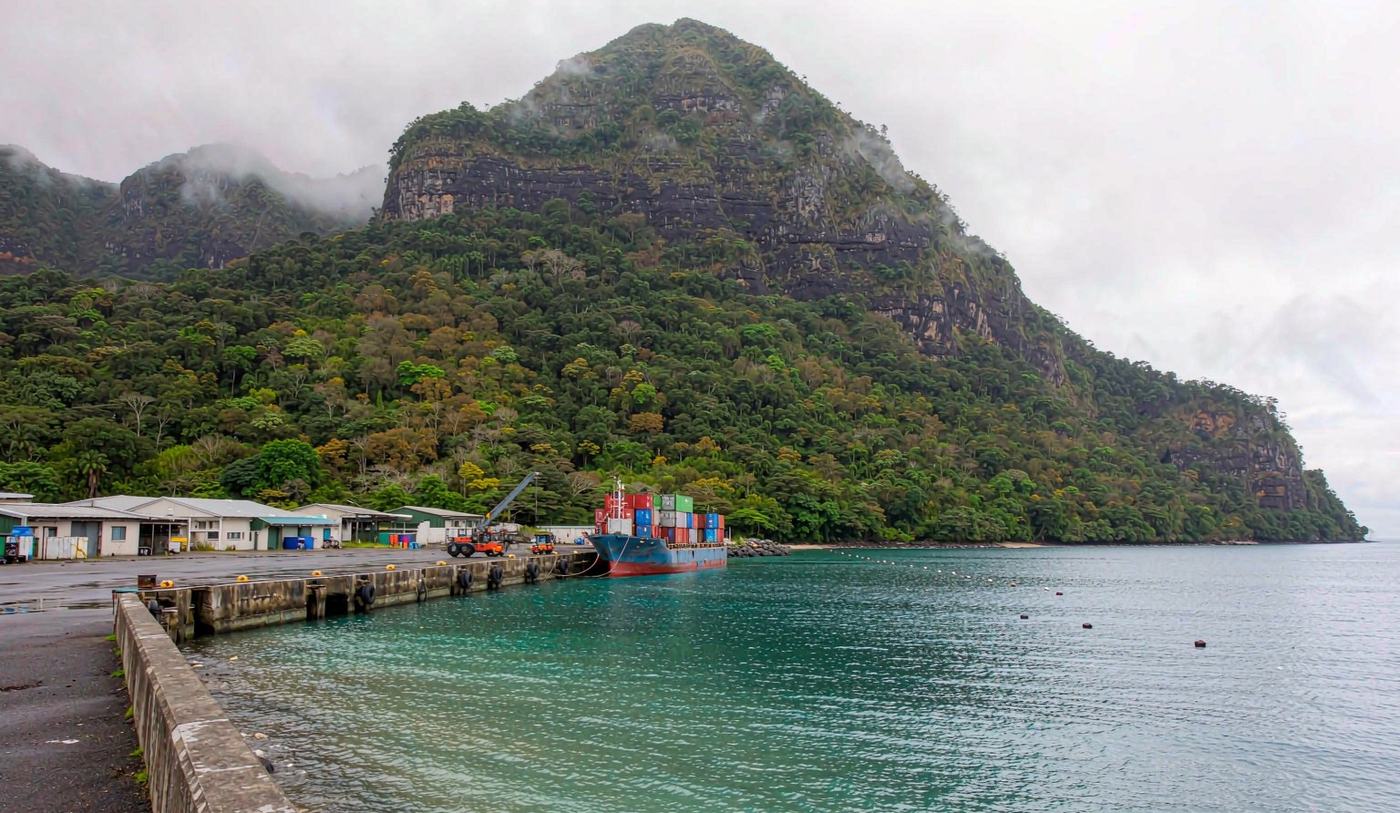
How to Ship from China to Dominica: Roseau, the Feeder Relay & Five Charges on One Entry
Dominica takes no mainline container call. That single fact shapes everything else on this lane. Cargo from China moves to a regional hub — Miami, Kingston, Bridgetown, Port of Spain among them — and then onto a feeder vessel for the last leg. The relay dwell that follows is commonly quoted at four to twelve days, and the feeder frequency here is described as the thinnest in the region. On a larger market that would be an inconvenience. On a volcanic island of roughly seventy-two thousand people, it is the thing that decides whether a project runs on time.
The second thing is that the port is not a deep-water terminal in the usual sense. Woodbridge Bay, just north of Roseau, is shallow. Larger vessels cannot come alongside, and cargo can end up worked by lightering — transferred to smaller craft to be brought in. That is extra handling, extra exposure to weather, and extra time, and it argues for packing and insurance decisions made deliberately rather than by default.
The third thing is the entry itself. Dominica does not apply one duty. The Customs and Excise Division lists five separate charges that can appear on a single import: import duty, a customs service charge, an environmental surcharge, excise tax where the product is on the list, and VAT at fifteen percent on top. A landed-cost model built on the tariff rate alone will be wrong here, and wrong by a margin that matters.
At a glance
Country: the Commonwealth of Dominica — about 72,000 people on 751 km², a volcanic island between Guadeloupe and Martinique. Not to be confused with the Dominican Republic. · Currency: the East Caribbean dollar, pegged to the US dollar at EC$2.70. · Ports: Woodbridge Bay (Fond Cole) just north of Roseau handles around 85 percent of imports, with a shallow berth and lightering; Portsmouth in the north serves that region. · Airport: Douglas–Charles (DOM), northeast of the island; small cargo terminal with limited capacity for oversized items. · Relay: Miami, Kingston, Bridgetown, Port of Spain; dwell commonly 4–12 days. · System: ASYCUDA World; IM4 entry filed by a licensed local broker; Customs and Excise Division under the Ministry of Finance. · Charges: import duty, customs service charge, environmental surcharge, excise tax, VAT. · Duty: CARICOM common external tariff on CIF, commonly 0–15 percent, with clothing, footwear and cosmetics often around 20 percent and vehicles 40 percent. · VAT: 15 percent on the customs value plus duty. · Deadline: declaration within 7 days of landing by air, 14 days by sea. · Free storage: about 7 days at the port. · Clearance: commonly 3–7 days; a broker is described as enabling same-day clearing. · Transit: sea 35–45 days, air 6–10 days. · Hurricane season: June to November.
How your cargo moves: China to Dominica
Eight steps from your supplier's door to yours. The last four are the ones shaped by local rules.
- Pickup from your supplierWe collect the goods anywhere in China and bring them to our consolidation point.
- Export clearanceChina customs declaration filed and released before the goods move to the port.
- Loading and departureContainer loaded, sealed and handed to the carrier at the Chinese port.
- Main carriageOcean, air or rail movement booked on the route agreed for your cargo.
- Arrival at the gatewayDischarge at the port or airport of entry, recorded on the carrier's manifest.
- Import clearanceCustoms declaration filed locally, with duty and tax assessed on the declared value.
- Customs releaseGoods released into free circulation once duty and tax are settled.
- Final deliveryOnward movement to your delivery address, warehouse or nominated depot.
Duty rates, VAT rates and clearance times move, and the figure that applies to your goods is the one set for your commodity code on the day of clearance. We check the current position against your code before your goods sail and confirm it to you in writing — ask for that check when you request a quote.
What this guide covers, and the constraint that is not a tariff
This is written for a buyer bringing goods out of China into Dominica for the first time. It follows the shipment in the order the problems arrive: which island gateway, what the relay does to the schedule, which port on a mountainous island, what actually lands on the tax bill, the deadlines that are written into law rather than into a quotation, and how long it all takes.
It does not quote freight rates. Those move with the market and any figure printed here would be wrong within weeks. What it does instead is show where the money and the time go, so that a quotation can be read for what it leaves out as well as what it contains.
Dominica is the "Nature Isle of the Caribbean": steep, volcanic, heavily forested, with a population of roughly seventy-two thousand and an economy built on eco-tourism, agriculture — bananas historically above all — and services. It imports nearly everything it consumes, from food and fuel to construction materials and machinery. The currency is the East Caribbean dollar, which has been pegged to the US dollar at EC$2.70 for decades, so you can think in dollars while settling in EC dollars without worrying about the rate moving.
The point of this guide: on most lanes the expensive mistakes are tariff mistakes. On this one the expensive mistake is planning to the optimistic end of a transit range. Everything below is arranged around that.
No mainline vessel calls: the relay that defines this lane
No deep-sea container service calls Dominica directly. Your cargo leaves a Chinese port, travels to a hub in the region or in the United States, is discharged there, waits for a feeder, and then makes the final leg. The hubs most often named are Miami, Kingston, Bridgetown and Port of Spain.
Three consequences follow, and all three belong in your planning rather than in a contingency note:
- Dwell is measured in days, sometimes many. Relay dwell on this lane is commonly quoted at four to twelve days, wider than on comparable island lanes.
- A missed sailing costs more than a week. With the thinnest feeder frequency in the region, the next departure is not tomorrow. Book before the cut-off, not at it.
- Planning numbers should be the upper end of the range. If a quotation says thirty-five to forty-five days, plan for forty-five and treat anything earlier as a bonus.
This is also why schedule reliability, not price per cubic metre, is the right basis for choosing between LCL and FCL here. More on that below.
Woodbridge Bay or Portsmouth, and the mountains between them
Dominica has two working entry points on the coast, and they are at opposite ends of the island.
Woodbridge Bay (Fond Cole), near Roseau
The principal cargo port on the south-west coast, just north of the capital. It handles around 85 percent of the island's imports — consumer goods, construction materials, tourism supplies. Roseau itself handles cruise traffic and smaller vessels. If in doubt, this is the port.
Portsmouth, in the north
Serves the northern part of the island and can be the better discharge point for a consignee up there. Given Dominica's terrain, landing northern cargo at Woodbridge Bay and trucking it up is a slower and dearer error than it looks on a map.
Dominica is genuinely mountainous, with a limited road network and steep grades. Inland movement costs more and takes longer than distance alone suggests, and for remote areas it is not unusual to need all-terrain vehicles or temperature-controlled transport. Confirm the port of discharge at booking, and match it to the delivery address rather than to habit.
Lightering, and what a shallow berth does to your container
The berth at Roseau is shallow. Large vessels cannot come alongside, and the published description of the operation is that cargo is transhipped through a larger hub and then offloaded by lightering — transferred to smaller craft for the run in.
Lightering is not exotic; it is how a great deal of Caribbean cargo moves. But it does change three things for you:
- Handling. Your container is lifted more times than on a direct call, by equipment that is working over water. Pack for it.
- Exposure. Salt spray and tropical rain are part of the process. Waterproofing and robust outer cartons are not optional extras.
- Time and capacity. Lightering is slower than a ship-to-shore crane, and very heavy or very large pieces may simply not fit the operation. Confirm piece weights and dimensions before you book, not after.
Container handling equipment on the island is limited. If you are shipping anything oversized — generators, structural steel, prefabricated sections — the feasibility question belongs at the quoting stage.
Guadeloupe and Martinique are not CARICOM origin
This one is worth its own section because the assumption is so natural. Dominica sits between Guadeloupe to the north and Martinique to the south, and it is easy to think of the three as one regional market.
They are not. Guadeloupe and Martinique are French territories, on separate customs and logistics networks. Goods sourced from them are not CARICOM origin and do not attract the regional preference — and equally importantly, routing your cargo through them does not make it CARICOM origin either. The intra-regional assumption fails in both directions.
What that means in practice: CARICOM duty-free entry applies to goods of CARICOM origin only. Chinese-origin cargo pays the full common external tariff rate, and no amount of island-hopping in the Eastern Caribbean changes that.
Import duty under the CARICOM common external tariff
Dominica assesses import duty on the CIF value at rates set by the CARICOM Common External Tariff, by HS code. Published ranges for the lane put most goods at 0–15 percent, with certain categories higher: clothing, footwear and cosmetics are commonly quoted around 20 percent, books at zero, and vehicles at 40 percent.
The range is wide, which makes classification the decisive step. Two things are worth doing before you book:
- Get the code confirmed in writing. Especially for construction and capital goods, where structural and capital items can attract materially lower rates than finished consumer products. On a rebuilding project, that difference is not small.
- Check whether an exemption applies. Renewable energy items are reported as automatically duty free under a published duty-free list. New businesses may obtain VAT and duty exemption, and manufacturers are exempted from import duty and VAT on packaging and labelling materials and on equipment and machinery used in production. Relief on essential goods — medical supplies, educational materials, renewable energy equipment — has been reported as extended into 2026.
Five charges on one entry, not one
The Customs and Excise Division is explicit that imports can be subject to five different duties, taxes and surcharges. Here is what each one is.
| Charge | What it is | How it is calculated |
|---|---|---|
| Import duty | The tariff line itself, under the CARICOM common external tariff | A percentage of the CIF value, set by HS code |
| Customs service charge | A service charge on imports, reported at roughly 3–6 percent and quoted at 4 percent on vehicles | A percentage of the CIF value |
| Environmental surcharge (levy) | An environmental charge; on vehicles it is banded by age | Varies by product; on vehicles, a flat EC$ amount by age band or a percentage of CIF |
| Excise tax | Applied to specified goods | On vehicles, reported at 25 percent of CIF for ten years old or less and 28 percent above that |
| VAT | Value added tax at 15 percent | On the customs value plus duty |
Why this matters: importers arriving from larger markets often budget for "the duty" and get a bill with five lines. The customs service charge in particular rarely appears in tariff comparison tables, and at three to six percent of CIF it is not a rounding error. Ask your broker for all five, in writing, before you commit.
VAT at 15 percent, and the value it is charged on
VAT in Dominica is 15 percent on imports, and — as elsewhere in the Caribbean — it is charged on the customs value plus the duty, not on the CIF value alone. There is a reduced rate of 10 percent for accommodation and diving, and zero-rating and exemptions for certain goods, but 15 percent is the rate that applies to an ordinary commercial import.
Duty first
Under the common external tariff, on the CIF value. This is the line the HS code sets.
Then VAT on duty-inclusive value
15 percent applied to the customs value plus the duty that has just been calculated. This is the step that turns a moderate tariff into a substantial tax bill.
Then the other three
Customs service charge, environmental surcharge and excise tax, calculated on their own bases and added alongside. Plus the broker's fee, port charges, and storage if the box waits.
A worked illustration with round numbers: goods with a CIF value of US$10,000 and duty at 15 percent. Duty is US$1,500. The VAT base is US$11,500, so VAT at 15 percent is US$1,725. A customs service charge at 4 percent of CIF adds US$400. That is US$3,625 before the broker, the port charges and the inland movement — over a third of the CIF value, on a tariff rate that looked like fifteen percent.
The environmental levy and the excise tax
These two are the ones most often overlooked, partly because they do not apply to every import and partly because their rates are not in the tariff schedule.
The environmental surcharge — also called the environmental levy — applies to certain goods. The clearest published example is vehicles, where it is banded by age: reported at EC$10,000 for vehicles over fifteen years old, EC$4,000 for ten to fifteen years, EC$3,000 for five to ten years, and 1 percent of CIF for vehicles under five years.
Excise tax applies to specified goods, again with vehicles as the clearest example — reported at 25 percent of CIF for vehicles ten years old or less, and 28 percent for older ones.
If you are importing anything that plausibly sits on an excise list — alcohol, tobacco, fuels, vehicles — get the exact figure for your HS line before you order. These charges move, and the published banding for vehicles is a good illustration of how specific they get.
Seven days by air, fourteen by sea: the declaration deadline
This is the part of the process that is written into law rather than into a quotation. Under the Customs (Control and Management) Act, an importer must present a declaration to the Customs and Excise Division within:
- Seven days after the goods have been landed, for goods transported by air.
- Fourteen days after the goods have been landed, for goods transported by sea.
All imports must be accompanied by an import declaration, with narrow exceptions — fresh fish taken by Dominican fishermen and imported in their own vessels, and baggage. Everything commercial is inside the rule.
The practical trap: the clock starts at landing, not at your convenience. On a lane where the final leg is a feeder that may itself be days late, "we will file when it arrives" is not a plan. The file has to be complete and with the broker before the vessel reaches Dominica.
Seven days of free storage at the port
Published guidance from Invest Dominica is that goods can be kept at the port for seven days without paying rental. After that, storage charges accrue.
Seven days is not a lot of slack on this lane. Read it alongside the relay dwell of four to twelve days and the statutory filing deadline, and the conclusion is straightforward: have the broker appointed, the file complete and the funds available before the feeder arrives. The three delays that eat those seven days — a missing permit, an unconfirmed HS code, a valuation question — are all solvable in advance and all expensive once the container is sitting on the quay.
Filing through ASYCUDA World with a local broker
Dominica's customs administration is the Customs and Excise Division, part of the Ministry of Finance. The entry is filed through ASYCUDA World, and commercial imports are filed as an IM4 declaration — in practice by a licensed local customs broker.
The Division's own advice is to appoint a customs broker, who will advise and handle the documentation, and it notes that doing so allows for same-day clearing of your items. Published expectations for clearance otherwise run three to seven days, with courier and express shipments clearing faster.
The importer will need local registration — — and the broker will need authority to act. Both are quick to arrange and both are easier to arrange before the vessel arrives.
Sea transit, and the buffer this lane needs
Published sea transit for China to Dominica is about 35 to 45 days. Planning figures published elsewhere for the lane run 37 to 52 days on a consolidated shipment and 33 to 47 days on a full container, with the advice to treat the upper end as the planning number rather than the exception.
| Mode | Typical transit | Notes |
|---|---|---|
| Sea FCL | 33–47 days; 35–45 commonly quoted | Rare on this lane, but right for large construction projects |
| Sea LCL | 37–52 days | Consolidation at origin, deconsolidation at destination, plus the relay |
| Air freight | 6–10 days | To DOM; routed via Miami or a regional hub |
| Express courier | Faster, but dearer | DHL available; FedEx limited; postal service is slow |
On top of the relay, add the two seasonal factors: Chinese New Year, which empties sailings out of China for weeks, and hurricane season from June to November, which can stop work at either end. During the wet season it is reasonable to add a further two to three weeks of buffer for anything critical.
Our sea service ends at the Dominican port. Import clearance and inland delivery are handled by the consignee with their broker. Ask for a DDP quotation if you want a through price.
Air freight into DOM, and the aircraft that fit
Douglas–Charles Airport (DOM) sits in the northeast of the island and is Dominica's main international gateway. Reported cargo carriers include Amerijet, DHL and Caribbean Airlines. Air transit from China runs about six to ten days.
Two limits are worth knowing before you choose air. The first is that there is no direct service from China — cargo routes through Miami or another regional hub. The second is that the cargo terminal is small, with limited capacity for oversized items. If your shipment includes anything long, heavy or awkward, confirm it can be handled at DOM before you book it onto a flight.
For urgent documents, samples and small high-value items, express courier is the practical choice: DHL is available though expensive, FedEx coverage is limited, and postal service is slow — published expectations run three to six weeks.
LCL or FCL on the thinnest feeder lane in the region
On most lanes this is a cost question. Here it is a reliability question.
Published guidance for the lane puts the crossover roughly like this: under about 8–12 CBM, consolidated shipping wins on cost; 12–18 CBM, price both ways, weighting the container side heavily for schedule reliability; above about 18 CBM, a full container usually wins.
The reason the container side deserves the weighting is the relay. A sealed container is not reworked at the hub. It is not deconsolidated, it does not wait for a consolidation to be built, and it presents a simpler entry at destination. On a lane with the thinnest feeder frequency in the region, that reliability is frequently worth more than the marginal cost difference — particularly for project cargo with a deadline attached.
Full container shipments to Dominica are uncommon, and they are most often construction material for a specific project. If that is your situation, say so at the outset; it changes how we quote and how we book.
What Dominica actually imports from China
Dominica's import demand is unusually legible, because a large part of it follows from a national rebuilding and climate-resilience programme after major hurricane damage. The recurring categories are:
- Construction and finishing materials — roofing, structural products, cement and hardware, interior finishes.
- Generators and electrical equipment, including solar and storage equipment.
- Water and sanitation infrastructure components.
- Agricultural equipment and inputs.
- Consumer electronics and appliances, and general retail goods.
Construction and resilience materials are the volume category, and they are also the category where classification pays best: structural and capital goods can attract materially lower common external tariff rates than finished consumer products. Getting that distinction right on a HS code is worth more than negotiating the freight.
One more thing about project cargo: on publicly funded or donor-timed work, the schedule risk described above is usually the binding constraint, not the cost. Quote both, but decide on reliability.
Hurricane season, and planning around it
Dominica's hurricane season runs June to November, with the rainy season broadly May to November. On a steep volcanic island with a limited road network, a storm is not an inconvenience that passes — it can close a road, stop a port, and idle a site for days.
Three practical responses:
- Add buffer in season. Two to three weeks for anything critical between June and November is not excessive.
- Check the insurance wording. Standard cargo cover and weather-related loss are not the same thing. Read the policy for named perils and for the period of cover at the port.
- Store above the ground, under cover, away from the coast where you can. A box on the quay in October is a box in the wrong place.
Packing for a lightered container and a mountain road
The two handling risks on this lane are specific, and both are addressed by packing rather than by paperwork.
| Risk | What to do about it |
|---|---|
| Lightering over water | Waterproof wrapping or a barrier under the stretch wrap, and cartons that tolerate being lifted by sling or net rather than by crane spreader |
| Salt spray and tropical humidity | Desiccant in the container, sealed inner packaging for anything corrosion-sensitive, and no bare metal without protection |
| Mountain road to the final address | Strap and brace properly; expect slow movement and steep grades; confirm vehicle access to the delivery point in advance |
| Wood packaging | Every pallet and crate must meet ISPM 15 — heat treated or fumigated, and stamped. Unstamped wood is a hold you cannot fix at the port |
| Multiple handling at the relay | Carton strength rated for more than one lift; mark clearly so the consignment can be sorted quickly at the destination end |
Insurance is normally arranged at not less than 110 percent of the CIF value. Given the lightering step, it is worth confirming that your policy responds to handling damage rather than only to a total loss.
The paperwork file we finish before the feeder sails
Nothing here is unusual. What is unusual is how little slack there is to fix an omission once the cargo has landed.
| Document | What it has to do |
|---|---|
| Commercial invoice | Complete description, value, HS code and Incoterm, with FOB, freight and insurance shown separately so the CIF value is visible |
| Packing list | Line-by-line contents, weights, dimensions and carton count, matching the invoice |
| Bill of lading or air waybill | Consignee and notify party consistent with the rest of the file |
| Certificate of origin | A standard certificate of origin from China; a CARICOM certificate only where the goods genuinely are of CARICOM origin |
| Import licence or permit | Required for firearms and ammunition, pharmaceuticals and medicines, certain agricultural products, plants and seeds, food and beverages, and some electronics |
| Insurance certificate | Not less than 110 percent of CIF |
| ISPM 15 evidence | Stamp on every wooden pallet or crate |
| Importer registration | Current local registration in place before the entry is filed |
| Broker authority | Appointment in place early enough for the IM4 to be filed inside the statutory deadline |
What we check before we quote this lane
On a lane this thin, the value a forwarder adds is mostly sequencing: booking before the cut-off rather than at it, matching the discharge port to the delivery address, confirming that oversized pieces can actually be lightered, and making sure the entry can be filed inside a statutory deadline that started before the vessel arrived.
None of that shows up as a line on a freight quotation. All of it costs more than the freight when it goes wrong.
Why importers use Goodhope on this lane
Six things that are different about working with us on China to Dominica shipments.
Honest cases on the China to Dominica lane
Five shipments bought in China and delivered into Dominica, told end to end — where the order came from, how it moved, where it nearly went wrong, and how it finished. Client names are withheld at their request; the situations and the handling are what we deal with on this lane.
No mainline call · first shipment · Shenzhen to Roseau
The purchase. A buyer new to importing asked for a direct sailing from China to Dominica.
The move. Sea freight relayed through a regional hub, with the dwell and the feeder leg both in the schedule.
Where it nearly went wrong. No mainline vessel calls at this island. Cargo relays through a hub and dwells there for days before the feeder sails, and that dwell is the part buyers leave out of their delivery promise.
How it finished. We quoted the relay with the dwell shown. His customer commitments have held ever since.
Five charges · one entry · Guangzhou to Woodbridge Bay
The purchase. A first-time buyer budgeted for import duty and assumed that was the whole assessment.
The move. Consolidated sea freight with all the charges on the entry identified before quoting.
Where it nearly went wrong. A single entry here carries several separate charges on top of the duty, including a customs service charge and an environmental surcharge. Budgeting the duty alone understates the entry by a margin that shows up on the first invoice.
How it finished. We listed every charge on his quote. His landed cost matched the assessment to within a few dollars.
Declaration deadline · seven or fourteen days · Ningbo to Dominica
The purchase. A buyer did not know the filing deadline differed between air and sea, and applied the sea figure to an air consignment.
The move. Air freight with the entry filed inside the shorter air deadline.
Where it nearly went wrong. The declaration window is seven days for air and fourteen for sea, and it runs from arrival. Using the wrong figure puts the entry outside the deadline and the goods outside their free storage.
How it finished. We put the correct deadline on his arrival notice. He files inside three days now.
Transhipment is not origin · via Guadeloupe · Shanghai to Dominica
The purchase. A buyer routing through Guadeloupe assumed the goods would be treated as regional origin.
The move. Sea freight relayed through Guadeloupe, declared on Chinese origin rather than regional.
Where it nearly went wrong. Guadeloupe and Martinique are not CARICOM origin for this purpose, and transhipping through them does not change where the goods came from. Origin follows manufacture, not the port the box passed through.
How it finished. We declared Chinese origin. His entry cleared without an origin query.
Lightering · shallow berth · Foshan to Dominica
The purchase. A buyer ordered a heavy unit without asking how a container gets off the ship at a shallow berth.
The move. Sea freight, with the piece weight and dimensions confirmed against lightering before booking.
Where it nearly went wrong. The berth at Woodbridge Bay is shallow and containers are lightered ashore. Heavy or oversized pieces are limited by the lightering method, and the limit is found at the anchorage where the options are fewest.
How it finished. We checked the lift during quoting. He split the unit and both halves came ashore.
Why importers use Goodhope on this lane
Six things that are different about working with us on China to Dominica shipments.
Give us the cargo details and we will build the schedule
Tell us what you are shipping, the HS codes if you have them, the packed dimensions and gross weight, the pickup city in China and the delivery address in Dominica. We will tell you which relay and which feeder we would use and what the realistic arrival window is, confirm the discharge port against your delivery address rather than against habit, flag any permit or exemption that might apply, set out all five charges so you can see the landed cost before you commit, and tell you what can and cannot be handled at this port.
Get a quote Talk to usRelated pages
Frequently asked questions
How long does shipping from China to Dominica take?
Sea transit is published at about 35–45 days, with planning figures elsewhere running 37–52 days consolidated and 33–47 days on a full container. Treat the upper end as the planning number: Dominica takes no mainline call and feeder dwell runs 4–12 days. Air into DOM is about 6–10 days.
Which port in Dominica should I ship to?
Woodbridge Bay, also called Fond Cole, just north of Roseau handles around 85 percent of imports. Portsmouth in the north serves that region and can be the better discharge point for a northern consignee, because the road down a mountainous island costs more than it looks. Confirm the discharge port at booking.
What taxes will I pay on an import?
Five possible charges: import duty under the CARICOM common external tariff, the customs service charge, the environmental surcharge, excise tax where it applies, and VAT at 15 percent on the customs value plus duty. A model built on the tariff rate alone will be materially wrong.
Is there a de minimis threshold?
Published references put the duty-free threshold at about US$50. Confirm the current figure and how it is applied with your broker, because the other charges on the entry are not always removed by the same threshold.
Do I need a customs broker?
It is strongly advisable. The Customs and Excise Division recommends appointing a broker, who handles the documentation and is described as enabling same-day clearing. Commercial entries are filed as an IM4 through ASYCUDA World, in practice by a licensed local broker.
How quickly must I file the import declaration?
Seven days after landing for air cargo and fourteen days for sea, under the Customs (Control and Management) Act. The clock starts at landing, so the file has to be complete before the vessel arrives rather than after.
Are goods from Guadeloupe or Martinique CARICOM origin?
No. They are French territories on separate customs networks, so goods from them are not CARICOM origin, and routing through them does not make cargo CARICOM origin. CARICOM duty-free entry applies to goods of CARICOM origin only; Chinese-origin cargo pays the full tariff rate.
Are there duty exemptions available?
Renewable energy items are reported as automatically duty free under a published list. New businesses may obtain VAT and duty exemption, and manufacturers are exempted on packaging and labelling materials and on production equipment. Relief on essential goods has been reported as extended — confirm the current position before relying on it.
Can you ship batteries or dangerous goods?
Goods with batteries installed can move with an MSDS and correct declaration; electronics with lithium batteries are among the restricted categories. Standalone lithium batteries are dangerous goods. DOM's cargo terminal has limited capacity for oversized items, so confirm piece weights and dimensions in advance.
Do you deliver door to door in Dominica?
Sea ends at the Dominican port and air ends at DOM, with clearance and inland delivery handled by the consignee through their broker. Express courier is the genuine door-to-door option. Ask for a DDP quote for a through price on sea or air.