
Home / Shipping to the DR Congo / How to Ship from China to the DR Congo
How to ship from China to the DR Congo
The Democratic Republic of the Congo is a country of continental size with two very different import problems. Goods for the west arrive at Matadi, on the Atlantic coast, and move 160 kilometres inland to Kinshasa. Goods for the mineral-rich east more often come the long way, through Dar es Salaam or Mombasa and overland to Lubumbashi. Which half you are serving decides the route before anything else does.
Two documents catch first-time importers out, and both must exist before the vessel sails. The first is the inspection certificate: commercial imports above a modest value are inspected at the Chinese port before loading. The second pair is the FERI and the ECTN, two separate cargo declarations that have to carry identical data. A mismatch between them is a documented cause of detention at Matadi.
This guide follows the whole route: choosing the entry point, the modes and the trade terms, the inspection and the two cargo documents, how duty and VAT stack up, what the OCC checks, and the sequence from a Chinese supplier to a Congolese address.
At a glance
Customs is administered by the Direction Générale des Douanes et Accises (DGDA), with pre-clearance handled through SEGUCE, the single window for foreign trade, and declarations running on ASYCUDA. All documentation must be in French. Commercial imports above about USD 2,500 require pre-shipment inspection by the appointed inspector at the port of export, and a certificate of inspection is required before clearance. Sea freight additionally requires a FERI and an ECTN, both filed before the vessel departs. Customs duty commonly runs 5 to 30 per cent of CIF value by HS code, with VAT at 16 per cent. Only a DRC-registered party can file through SEGUCE in practice.
How your cargo moves: China to the DR Congo
Eight steps from your supplier's door to yours. The last four are the ones shaped by local rules.
- Pickup from your supplierWe collect the goods anywhere in China and bring them to our consolidation point.
- Export clearanceChina customs declaration filed and released before the goods move to the port.
- Loading and departureContainer loaded, sealed and handed to the carrier at the Chinese port.
- Main carriageOcean, air or rail movement booked on the route agreed for your cargo.
- Arrival at the gatewayDischarge at the port or airport of entry, recorded on the carrier's manifest.
- Import clearanceCustoms declaration filed locally, with duty and tax assessed on the declared value.
- Customs releaseGoods released into free circulation once duty and tax are settled.
- Final deliveryOnward movement to your delivery address, warehouse or nominated depot.
Duty rates, VAT rates and clearance times move, and the figure that applies to your goods is the one set for your commodity code on the day of clearance. We check the current position against your code before your goods sail and confirm it to you in writing — ask for that check when you request a quote.
Two Congos, two customs systems: check which one you are shipping to
The first thing to settle is which Congo you mean. The Democratic Republic of the Congo, capital Kinshasa, and the Republic of the Congo, capital Brazzaville, sit on opposite banks of the same river and are entirely separate customs territories with different authorities, different certificates and different procedures. Documentation prepared for one cannot be used for the other.
If your supplier, your forwarder or your buyer says simply Congo, ask. Getting this wrong is not a small error: it means applying for the wrong cargo tracking note, preparing declarations for the wrong administration, and discovering the mistake at the port.
The rest of this page is about the Democratic Republic of the Congo. If your consignee is in Brazzaville or Pointe-Noire, you want the Republic of the Congo instead.
Matadi, or the long way through Mombasa
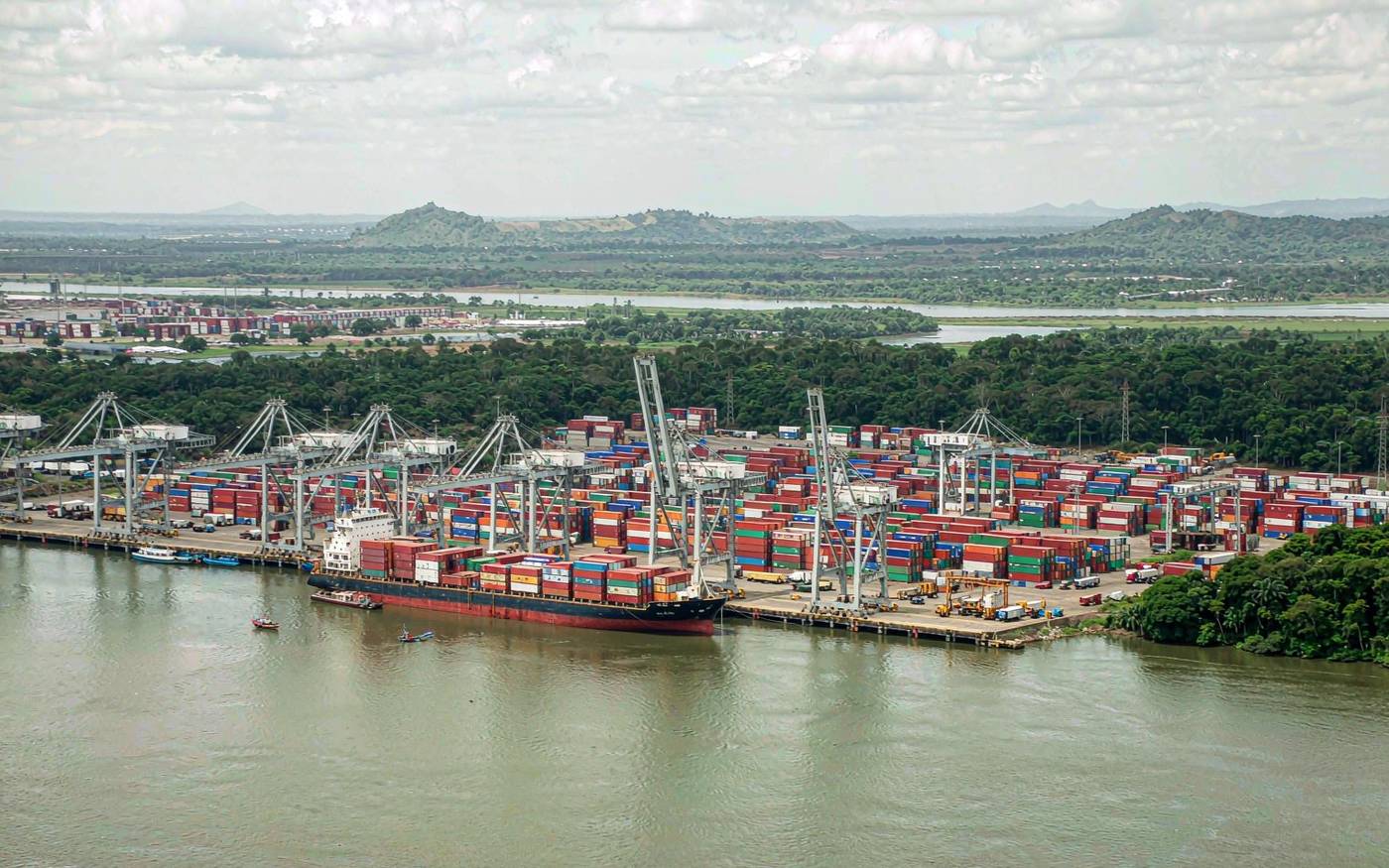
Matadi is the Atlantic port and the entry point for Kinshasa and the west of the country. It sits about 160 kilometres from the capital by road, and that last leg is a logistics operation in its own right rather than a formality.
For the east, the copper and cobalt belt around Lubumbashi, cargo more often comes through Dar es Salaam in Tanzania or Mombasa in Kenya and moves overland, a journey that adds weeks compared with the western route. Air freight lands at N'djili Airport in Kinshasa.
Decide the entry point from the final delivery address, and say it out loud when you book. A quotation to Matadi for goods destined for Lubumbashi is not a cheap quotation, it is half a route.
Security conditions in the eastern provinces have affected logistics in that region. If your consignee is in the east, ask about current conditions on the road leg before committing to a delivery date.
Four ways in: own box, groupage, aircraft, or parcel post
A full container is the standard for volume above roughly 15 cubic metres and is what you want for anything fragile or high-value, because the box is sealed at origin. Groupage, or LCL, shares container space with other shippers and is paid by the cubic metre with a minimum; it suits two to twelve cubic metres and adds consolidation and deconsolidation time at both ends.
Air freight to N'djili suits urgent spare parts, pharmaceuticals and samples, and is charged on chargeable weight. Courier services handle documents and single cartons under their own clearance arrangements, and on this lane they are often the most predictable option despite the cost per kilogram.
| Mode | Transit commonly quoted | What it suits |
|---|---|---|
| Sea FCL to Matadi | 35 to 50 days port to port | Volume above about 15 cbm |
| Sea LCL to Matadi | Add 7 to 14 days | Two to twelve cubic metres |
| Air to N'djili, Kinshasa | 4 to 9 days airport to airport | Urgent, high-value or light cargo |
| Courier | 5 to 9 days door to door | Samples, documents, single cartons |
Add the clearance window on top of all of these. Reported clearance times on this lane run from a week or so for a clean file to several weeks or longer when documents are contested, which is a wide spread and a reason to prepare the file early rather than at arrival.
Incoterms in plain language when the port is 160 km away
EXW leaves you owning the export formalities in China. On a lane with this much paperwork, it is the term to avoid.
FOB puts the supplier's responsibility at the point the goods are loaded in China and leaves you in control of the carriage. Most experienced buyers use it, because the freight, the inspection and the certificate work are all visible as separate numbers you can manage.
CIF and CIP cover carriage and insurance to Matadi, but the risk still passes in China. Note what CIF does not include on this lane: the haul from Matadi to Kinshasa, and the clearance.
DAP and DDP to a named place move the burden to the seller, and under DDP also the Congolese duty and VAT. It is legitimate and it is genuinely convenient here, because a foreign company cannot practically file through SEGUCE itself. Understand though that you are delegating the declared value and the tax payment to somebody else.
The order in which a DRC shipment actually happens
Fix the entry point and the trade term
Matadi for the west, an eastern corridor for Lubumbashi. Write an Incoterms 2020 term into the contract.
Confirm the importer of record
Only a DRC-registered party can file through SEGUCE in practice, so establish who that is before the goods ship.
Book the BIVAC inspection if the value triggers it
Above about USD 2,500, the goods are inspected at the port of export before loading and a certificate of inspection is issued.
File the FERI and obtain the ECTN
Both before the vessel departs, with identical cargo data. Start them in the week you book.
Pickup, consolidation and export declaration in China
Your forwarder collects or consolidates, declares the export, and gives you the seal number and loading photographs.
Ocean leg to Matadi
Usually with transhipment. Check the draft bill of lading carefully, because the FERI and ECTN data have to match it.
Declaration through SEGUCE, in French
The broker files with the certificate of inspection and the supporting documents attached.
OCC checks where the category is regulated
The Office Congolais de Contrôle handles quality inspection for regulated categories. This runs alongside the customs process, not after it.
Payment, release and the haul inland
Duty, VAT and the parafiscal charges are paid, the goods are released, and the container moves to Kinshasa or onward.
BIVAC inspects before you load, above USD 2,500
Commercial imports above roughly USD 2,500 in value are subject to pre-shipment inspection by the government-contracted inspector at the port of export, and the resulting certificate of inspection is required by the DGDA before clearance can proceed.
The inspection is a production milestone, not a shipping one. It happens after the goods are packed and before they are loaded, which means telling your supplier that the container cannot leave the factory until the inspection is complete. Arrange it at order stage, not at booking stage.
The inspection covers quality, quantity, classification and value. That last item matters to you as a buyer: if the inspector's view of the value differs from your invoice, the duty and VAT follow the assessed figure rather than yours.
Keep the descriptions on the invoice identical to what is inspected. A certificate that describes one thing and an invoice that describes another is a discrepancy, and discrepancies on this lane cost weeks.
FERI and ECTN: two numbers, both filed before departure
Sea freight to the DRC needs two separate documents. The FERI is an electronic cargo pre-declaration, and the ECTN is an electronic cargo tracking note. Both are filed before the vessel departs the origin port, and both must carry identical cargo data.
Any discrepancy between them is a documented cause of detention at Matadi. That is not a theoretical risk: it is the single most reported reason containers sit at this port.
The practical rule is the same as elsewhere on the continent. Apply in the week you book, not in the week the ship sails. And if the booking changes afterwards, vessel, consignee or quantity, tell your forwarder immediately, because both documents have to be amended to match.
Air freight does not use the FERI and ECTN regime in the same way, so confirm which documents apply to your mode before you assume.
Duty, VAT and the parafiscal charges that follow
| Charge | Indicative rate | Base |
|---|---|---|
| Customs duty | Commonly 5 to 30 per cent by HS code | CIF value |
| VAT | 16 per cent | CIF plus duty |
| Parafiscal charges | Several small levies | Customs value |
| Excise | Varies | Alcohol, tobacco, vehicles and others |
The pattern across product categories is that machinery and mining equipment sit at the low end, commonly around 5 to 10 per cent, while clothing, footwear and cosmetics sit at the top, in the 20 to 30 per cent range, with electronics somewhere in between at up to about 20 per cent. The HS code decides everything, so classification is worth more than any negotiation on freight.
Buyers should budget for the total tax burden rather than the duty line alone: published guidance puts the combined effect of duty, VAT and the parafiscal charges at a substantial share of CIF value. Ask your broker for a pre-shipment assessment against your actual codes.
Documents that reach a DGDA officer in French
| Document | What it has to show |
|---|---|
| Commercial invoice | French descriptions, Incoterm, unit and total values, supplier and consignee |
| Packing list | Carton count, weights, dimensions, marks and numbers |
| Bill of lading or air waybill | Data matching the FERI and ECTN exactly |
| FERI and ECTN | Filed before departure, identical cargo data |
| Certificate of inspection | Issued by the appointed inspector before loading |
| Certificate of origin | Issued by CCPIT or China customs |
| Import licence | Required from the ministry of commerce for some categories |
| Permits | Pharmaceuticals, food, plants, chemicals and other controlled lines |
French is not optional. Declarations, invoices, packing lists and supporting documents are all expected in French, and the DGDA, the OCC and SEGUCE all operate in French. Arrange translations in China before loading, where they cost less and take days rather than weeks.
The importer's tax identification number, the NIF, has to be valid; an expired registration is enough to have a file rejected, and a rejected file means storage charges.
Importing under a personal name or a Congolese company with a NIF
An individual can import personal and non-commercial goods, and small consignments below a modest value may be handled under a simplified regime. Commercial importing is done by a registered entity holding a tax number, and that route is also the one that allows VAT to be accounted for.
The practical obstacle for a foreign buyer is filing. Only a DRC-registered party can file through SEGUCE in practice, so if you have no local entity you are working through an importer of record or a licensed broker. Establish that relationship before the goods ship, and put the scope in writing.
Where a business is registered and accounts for VAT, the import VAT is recoverable. Where it is not, it is simply a cost. With VAT at 16 per cent on top of duty, the difference on a container is large.
What your Chinese forwarder does, and what a Kinshasa broker does
In China your forwarder collects or consolidates, books the space, handles the export declaration, arranges the pre-shipment inspection and files the FERI and obtains the ECTN. They are also the only party who can chase a carrier when a schedule slips.
At destination a licensed broker files the declaration through SEGUCE in French, deals with the OCC where the category is regulated, responds to queries and pays the duty and VAT. You need both, and one does not substitute for the other.
Judge them on specifics: the legal entity name, how long it has traded, a written quotation split into origin charges, freight and the destination charges you will owe separately, and a clear statement of who pays storage if clearance is delayed. Ask directly whether they handle FERI and ECTN, because that question separates brokers who work this lane from those who do not.
Warning signs are consistent: pressure to declare a lower value, no written breakdown, an address that is only a phone number, and vagueness about who carries the risk during the voyage.
Three typical shipments into the DRC
These three examples are illustrative, not client records. They show how the route follows from the destination.
A 40ft container of mining equipment spares for Lubumbashi. Routed through an eastern corridor rather than Matadi, because the final address is in the copper belt, with the BIVAC inspection carried out before loading. The lesson is that the entry point follows the delivery address and not the ocean rate.
Nine cubic metres of building materials for Kinshasa. Shipped as LCL to Matadi with the FERI and ECTN filed on identical data before departure. The lesson is that the two documents are the critical path, and a mismatch costs weeks of detention.
Two hundred kilograms of pharmaceutical supplies. Air freight to N'djili with the health authority permit arranged in parallel. The lesson is that for controlled goods the permit, not the aircraft, decides when the cargo moves.
Why importers use Goodhope on this lane
Six things that are different about working with us on China to the DR Congo shipments.
Start your DRC shipment on the right corridor
Tell us the commodity, the volume and the delivery city, and we will come back with a routing that puts the inspection, the FERI and the ECTN on the calendar before you book.
Get a quote Talk to usRelated pages
Frequently asked questions
Which Congo does this page cover?
The Democratic Republic of the Congo, capital Kinshasa. The Republic of the Congo, capital Brazzaville, is a separate country with a separate customs administration, a separate cargo tracking note and separate procedures. Documentation prepared for one cannot be used for the other.
What is BIVAC inspection and when is it needed?
Commercial imports above roughly USD 2,500 are inspected by the government-contracted inspector at the port of export before loading, and a certificate of inspection is required by the DGDA before clearance. Arrange it at order stage, because it has to happen after packing and before loading.
What are the FERI and the ECTN?
Two separate mandatory documents for sea freight to the DRC. The FERI is an electronic cargo pre-declaration and the ECTN is an electronic cargo tracking note. Both must be filed before the vessel departs, with identical cargo data.
What happens if FERI and ECTN data do not match?
Discrepancies between the two are a documented cause of detention at Matadi. Check the draft bill of lading against both documents before issue, and tell your forwarder immediately if the booking changes.
How much duty and VAT will I pay?
Customs duty commonly runs 5 to 30 per cent of CIF value by HS code, with machinery at the low end and clothing, footwear and cosmetics at the top. VAT is 16 per cent on CIF plus duty, and several parafiscal charges sit on top.
Do documents have to be in French?
Yes. Declarations, invoices, packing lists and supporting documents are expected in French, and the DGDA, the OCC and the SEGUCE platform all operate in French. Arrange translations in China before loading.
Can a foreign company clear its own goods?
Not in practice. Only a DRC-registered party can file through SEGUCE, so a foreign buyer works through an importer of record or a licensed broker. Establish that relationship before the goods ship.
Which port should I use?
Matadi for Kinshasa and the west; an eastern corridor through Dar es Salaam or Mombasa for Lubumbashi and the copper belt. Choose by the delivery address, because a Matadi quote for eastern cargo is only half a route.
How long does clearance take?
Reported times run from about a week for a clean file to several weeks or more when documents are contested. The spread is wide, which is the reason to prepare the file early.
Do I need both a forwarder in China and a broker in the DRC?
Yes. The forwarder handles origin consolidation, export declaration, the inspection and the FERI and ECTN. The broker files through SEGUCE, deals with the OCC and pays the duty and VAT.