
Home / Shipping to El Salvador / How to Ship from China to El Salvador
How to Ship from China to El Salvador: Acajutla, the SAC Tariff & the US Dollar
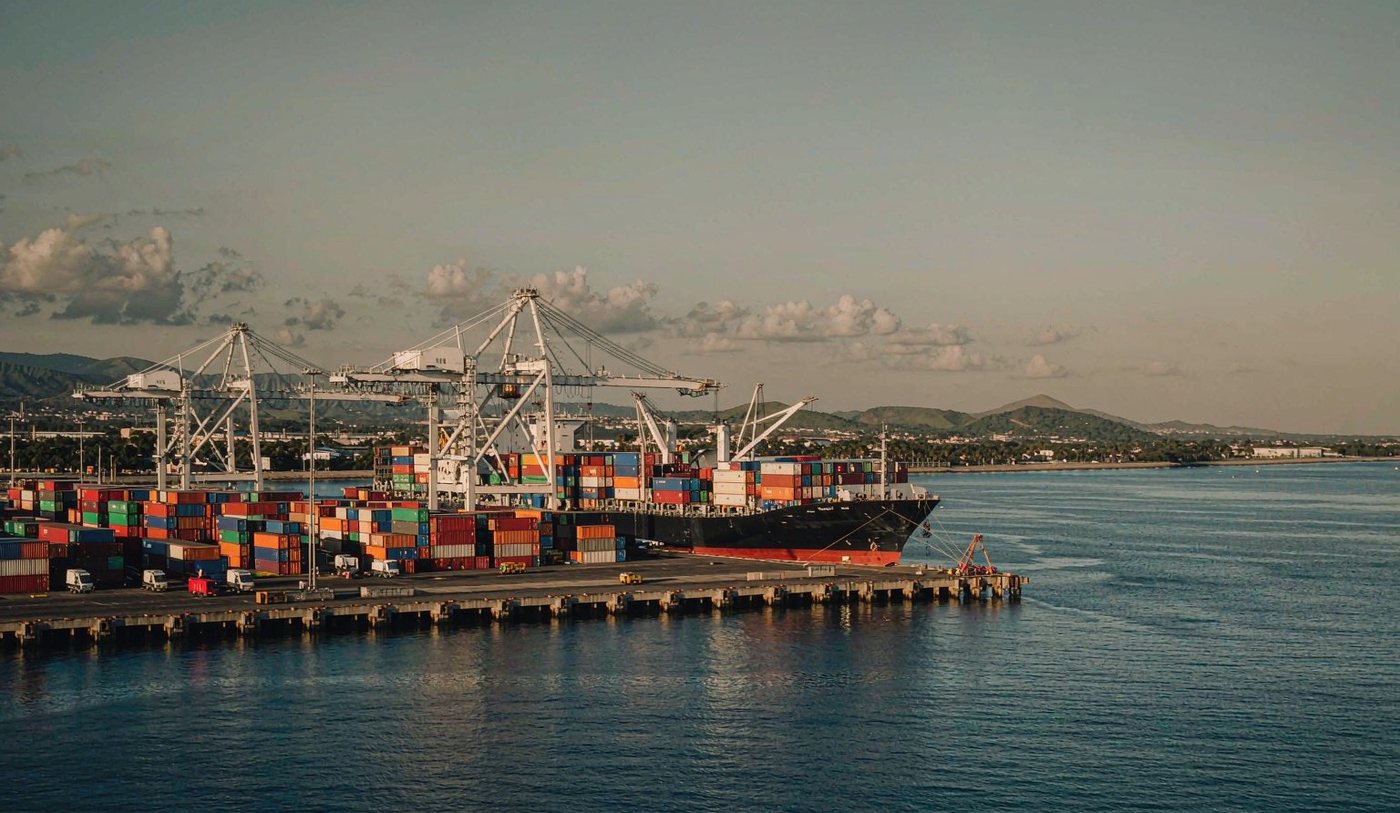
El Salvador is the easiest country in Central America to draw a map of. It is the smallest country on the Central American mainland, it has a Pacific coastline and no Caribbean one, and in practice it has one container port that matters — Acajutla — and one international airport that matters, San Salvador (SAL). There is no "which ocean" decision to make here, which removes one of the first questions an importer has to answer elsewhere in the region.
The second thing is money. The US dollar has been legal tender in El Salvador since 2001. Duty, IVA, port charges and the customs agent's fee are all assessed and paid in dollars. There is no exchange-rate gap between your supplier's invoice and the bill you settle at the port, and no translation layer between the two. For a first-time importer modelling landed cost, that is a genuine simplification, and it is the reason this lane is easier to budget than most of its neighbours.
The third thing is the tariff, and it is where the difficulty sits. There is no free trade agreement in force between China and El Salvador. Negotiations have been reported, but there is nothing to claim at the border. Chinese-origin goods are assessed under the Central American tariff schedule on the CIF value, which means your HS code is the whole story. On a lane with a preference to claim, a classification mistake costs you a discount. On this one, it costs you the difference between two rates, and it is the single biggest lever on what you pay.
At a glance
Currency: the US dollar is legal tender; the colón no longer circulates. · Port: Acajutla, Pacific coast — about 500,000 TEU across five berths, expanding to 1.6 million TEU under an investment reported at US$1.615 billion with a new 610 m quay. La Unión and La Libertad are minor. · Airport: Monseñor Óscar Arnulfo Romero International (SAL), near San Salvador; about 1–1.5 hours by highway from SAL to Acajutla. · Before you ship: a NIT registered as an importer with the Dirección General de Aduanas; a foreign company without Salvadoran tax registration cannot file the declaration. · Systems: declarations through SIDUNEA under CAUCA and RECAUCA; permits through the CIEX single window. · Tariff: Central American schedule on CIF — commonly quoted at 0–15 percent, with finished goods reported up to 30 percent. · IVA: 13 percent on customs value plus duty plus any selective consumption tax. · Watch: a reported 5 percent special contribution on telecommunications and IT hardware, whose status needs verifying. · De minimis: about US$50. · Clearance: commonly 2–5 days. · Transit: FCL 30–35 days from Shanghai on the fastest routing, 32–45 days from other origins; LCL 22–35 days plus buffer; air 5–7 days; express 3–7 days.
How your cargo moves: China to El Salvador
Eight steps from your supplier's door to yours. The last four are the ones shaped by local rules.
- Pickup from your supplierWe collect the goods anywhere in China and bring them to our consolidation point.
- Export clearanceChina customs declaration filed and released before the goods move to the port.
- Loading and departureContainer loaded, sealed and handed to the carrier at the Chinese port.
- Main carriageOcean, air or rail movement booked on the route agreed for your cargo.
- Arrival at the gatewayDischarge at the port or airport of entry, recorded on the carrier's manifest.
- Import clearanceCustoms declaration filed locally, with duty and tax assessed on the declared value.
- Customs releaseGoods released into free circulation once duty and tax are settled.
- Final deliveryOnward movement to your delivery address, warehouse or nominated depot.
Duty rates, VAT rates and clearance times move, and the figure that applies to your goods is the one set for your commodity code on the day of clearance. We check the current position against your code before your goods sail and confirm it to you in writing — ask for that check when you request a quote.
What this guide covers, and why there is only one port to choose
This is written for a buyer bringing goods out of China into El Salvador for the first time. It follows the shipment in the order the problems arrive: which gateway, what the dollar does for you, which tariff applies and why, the registrations that have to exist before anything ships, how the entry is filed, how the tax is calculated, and how long it takes.
It does not quote freight rates. Those move with the market and any figure printed here would be wrong within weeks. What it does instead is show where the money goes and which decisions change the total, so that a quotation can be read for what it leaves out as well as what it contains.
El Salvador has a population of a little over six million and an economy built on textiles and assembly manufacturing, agriculture — coffee and sugar above all — commerce, and services, with remittances from Salvadorans abroad a large part of household income. It is a small market in absolute terms but a dense one: almost everything is within a few hours of San Salvador, which makes inland distribution straightforward compared with larger countries in the region.
Trade with China has been growing quickly. Published figures for 2025 put bilateral trade at about US$2.36 billion, up roughly 20 percent, with Chinese exports at around US$2.08 billion. China is reported as El Salvador's third-largest trading partner, and negotiations toward a bilateral free trade agreement have been reported as underway. Nothing is in force, so nothing can be claimed. That is the starting assumption for every costing on this lane.
The US dollar is legal tender here, and what that removes
El Salvador adopted the US dollar as legal tender at the start of 2001 and withdrew its own currency. Every part of an import transaction — the customs value, the duty, the IVA, the port charges, the agent's fee, the inland haulage — is denominated and settled in dollars.
What that removes
No exchange-rate gap between the invoice and the customs assessment. No need to model a currency move between placing the order and clearing the goods. No translation of a tax bill out of a local currency. If you price your goods in dollars and sell them in dollars, the landed cost model has one currency in it from end to end.
What it does not remove
The valuation question still exists if your supplier invoices in renminbi. Customs will convert that value into dollars to establish the customs value, and the rate applied matters. Make sure the invoice states the transaction value clearly and consistently with the rest of the file, and that the same figure appears wherever a value is declared.
It is a small point but a real one: on dollarised lanes, importers tend to stop checking the arithmetic, and the arithmetic is usually where the surprises are. Keep doing it.
Acajutla, and the expansion that changes the congestion maths
Acajutla is the country's principal seaport and handles the great majority of its containerised imports. It currently works at around 500,000 TEU across five berths. A major expansion is underway under an investment reported at US$1.615 billion, led by a subsidiary of Yilport, including a new 610-metre quay with semi-automated cranes and a target capacity of about 1.6 million TEU — roughly triple where it stands today.
Carriers calling include Alianca, CMA CGM, Libra, Maersk and Sealand Maersk. Ocean Network Express resumed a weekly direct service from Los Angeles in 2026 after an absence of several years, which is one of the more direct options on this lane and worth asking about when space is tight.
Two cautions come with an expansion of this size. The first is that construction and yard works can constrain operations before they improve them — a bigger port is not automatically a faster one in the short run. The second is that storage and demurrage tariffs were increased in 2026, so days spent waiting at the port cost more than they used to. Both argue for a complete documentation file rather than a fast one.
Other ports exist — La Unión in the east near the Gulf of Fonseca, and La Libertad on the central coast — but for containerised imports from China, Acajutla is the answer, and the question of which port to use effectively answers itself.
No preferential pact with China: which tariff you get instead
Chinese-origin goods entering El Salvador are assessed under the Central American tariff schedule — the Arancel Centroamericano de Importación, also referred to as the SAC — calculated on the CIF value. Published ranges put most categories at 0–15 percent, with finished consumer goods reported up to 30 percent.
It is worth being clear about what is not available, because this is where comparisons go wrong:
- CAFTA-DR does not cover Chinese origin. El Salvador is a CAFTA-DR member and qualifying US-origin goods enter duty-free, but Chinese goods get nothing from it. If you are weighing a US quote against a Chinese one, the tariff treatment is not the same and the difference is not a freight question.
- There is no China–El Salvador preference to claim. Negotiations have been reported; nothing is in force. Do not let a supplier tell you otherwise.
- A non-preferential certificate of origin is still worth having. Issued in China by the China Council for the Promotion of International Trade or China Customs, it establishes origin for customs and statistics even when it does not reduce the rate. It is cheap and its absence is noticed.
What this means practically: on this lane the HS code is the duty rate. There is no agreement to soften a bad classification, so classification accuracy is worth more here than on a lane where a preference sits behind it. Agree the code with your customs agent in writing, with the product specification in front of both of you, before you book.
Duty follows how finished your product is
One useful way to read the Central American schedule: the rate tends to rise with how processed the goods are. Published breakdowns commonly give raw materials at 0–5 percent, intermediate goods at 5–10 percent, and finished goods up to 30 percent, with most categories somewhere in the 0–15 percent band.
That structure has a practical consequence that catches people out. The same product can sit in different places depending on how it is presented: a component shipped as a part, and the same article shipped assembled or retail-packed, are not necessarily in the same line. If your product can plausibly arrive in either state, ask your agent to price both before you decide how to pack it. The answer sometimes changes the packing, not just the paperwork.
There is also an exemption schedule covering a list of basic foodstuffs — rice, beans, maize, wheat flour, milk and similar — which is a domestic policy matter and rarely relevant to manufactured imports from China. Worth knowing it exists so that a broker quoting you a zero rate on a food line is not assumed to have made a mistake.
IVA at 13 percent, and the base it is charged on
El Salvador's value added tax — IVA — is 13 percent on imports, and the base is not the CIF value alone. It is the customs value plus the import duty plus any selective consumption tax. Three lines, stacked in that order.
Import duty
Under the Central American schedule, on the CIF value. Commonly 0–15 percent, with finished goods reported up to 30 percent. This is the line your HS code sets.
Selective consumption tax
Where the product is on the list — alcoholic beverages, tobacco, certain motor vehicles and fuel among them — at rates that vary by product. Where it applies, it joins the base for the next line.
IVA at 13 percent
Charged on the customs value plus duty plus that selective tax. This is the step that makes a modest duty rate produce a surprisingly large tax bill.
A worked illustration with round numbers, no freight figures: goods with a CIF value of US$10,000, duty at 10 percent. Duty is US$1,000. The IVA base is US$11,000, so IVA at 13 percent is US$1,430. Total tax before the agent's fee, port charges and inland haulage is US$2,430 — about 24 percent of the CIF value, on a duty rate that looked like ten percent.
Customs agent fees on this lane are commonly reported in the range of US$250 to US$850 per shipment, depending on value and complexity. Add port charges, and — if the box waits — storage and demurrage at the higher 2026 tariff.
The 5 percent security contribution on electronics, and whether it still applies
This one needs a flag rather than an answer.
El Salvador introduced a Special Contribution for Citizen's Security, reported at 5 percent, applying to imports of telecommunications devices, software and hardware on top of duty and IVA. It was established in November 2015 for a ten-year term, which nominally expired in November 2025. We have not located public confirmation either of a renewal or of a lapse.
If it is still in force it is five percent on top of everything else, which on a container of networking equipment or consumer electronics is real money. Do not treat it as settled in either direction — verify it, and get the answer in writing before you book.
This is a good illustration of why the "ask first" habit pays on this lane. The charge sits outside the tariff schedule, it does not appear in a freight quotation, and it is exactly the kind of item that turns a healthy margin into a thin one.
NIT, DGA registration and the CIEX window before anything ships
Before a customs declaration can be filed in El Salvador, someone has to be legally able to file it. That means a locally registered entity holding a NIT — the Número de Identificación Tributaria — and registered as an importer with the Dirección General de Aduanas.
Three consequences follow, and they are not negotiable:
- A foreign company without Salvadoran tax registration cannot file the declaration. If you have no local entity, you need an importer of record arrangement, arranged in advance.
- A freight forwarder acting without importer status cannot legally clear your goods. Being able to move a box is not the same as being able to enter it.
- A consignee not registered as an importer cannot take delivery of regulated goods. This is the one that turns into storage charges.
Alongside that sits CIEX — the Centro de Trámites de Importaciones y Exportaciones — El Salvador's foreign trade single window, run through the Central Reserve Bank. It links customs with the Ministry of Health, the Ministry of Agriculture, the Treasury, the environment and defence ministries, and the national medicines directorate. Food, pharmaceutical, medical and agricultural imports need to be registered through CIEX before the goods arrive. Applying after arrival tends to produce a hold, and a hold on this lane now costs more than it did, because of the 2026 storage tariff increase.
Filing the declaration through SIDUNEA
El Salvador's electronic customs system is SIDUNEA, and the entry itself is the declaración de mercancías. The legal framework underneath it is CAUCA and RECAUCA — the unified Central American customs code covering Guatemala, El Salvador, Honduras, Nicaragua and Costa Rica. That is why the paperwork feels familiar if you have imported anywhere else on the isthmus, and why a broker who works the region can usually work this lane.
Three things make the filing go faster:
- Lodge early. Getting the declaration data in before the vessel or aircraft arrives removes most of the dead time. Publication of the entry in advance is standard practice, not an upgrade.
- Make the file internally consistent. The same description, value, weight and HS code on the invoice, the packing list, the bill of lading and the entry. Discrepancies are what trigger questions.
- Expect physical examination as a real possibility. A meaningful share of entries are selected for inspection. It is not an accusation; it is the process, and it is why the file should be complete the first time.
Keep your records. Import documentation is required to be retained for years, and customs can audit past entries. A tidy archive is cheap; reconstructing one is not.
Which permits your product needs, and who issues them
Beyond the declaration itself, plenty of products need something from a regulator, and most of those are handled through CIEX.
| Authority | What it covers | When it is needed |
|---|---|---|
| DNM — Dirección Nacional de Medicamentos | Pharmaceuticals, medical equipment and devices, natural supplements, dental products, cosmetics, hygiene products | Product registration before commercial import |
| MINSAL — Ministry of Health | Sanitary clearance for food and health-related products | Certificate with the shipment; registration before arrival |
| MAG — Ministry of Agriculture | Agricultural and animal products; plant health | Sanitary or phytosanitary certificate, often from origin as well |
| SIGET | Radio-frequency and telecoms equipment connecting to public networks | Type approval or homologation of the specific model before import |
| Ministry of Environment | Environment-sensitive goods, chemicals, certain packaging | Permit where the product category requires it |
| Ministry of Economy | Importer registration, consumer labelling and metrology matters | Before the first shipment |
If you are unsure which of these touches your product, settle it before you place the order. A permit applied for after the container lands is a permit that arrives after the storage charges have started.
Spanish invoices and Spanish labels, not English-only paperwork
The commercial invoice should be in Spanish, carrying a complete description of the goods, the value, and the HS code. Consumer goods need Spanish labelling. Neither of these is a formality that can be cured after arrival — a shipment presented with English-only paperwork is a shipment that will be asked questions it cannot answer.
The invoice should also break out FOB value, freight and insurance separately, because duty is assessed on the CIF value and the officer needs to see how that number was built.
On valuation: customs applies reference prices and can revalue goods that appear under-declared. Declaring a lower value to save duty is the most common shortcut on any lane and one of the most consistently punished. Penalties and re-assessment routinely exceed the duty saved, and an importer who has been flagged once tends to be looked at again. Declare the real transaction value.
Insurance is normally expected to be in place at not less than 110 percent of the CIF value, and in US dollars. If your policy is issued by a Chinese insurer, expect to be asked for a Spanish translation — and arrange it in advance rather than at the counter.
Sea transit, and why almost everything tranships first
Published transit figures for this lane: full containers run 30–35 days from Shanghai on the fastest routing and 32–45 days from other origins. LCL typically runs 22–35 days, and the guidance that accompanies it is to add a further one to two weeks as a buffer for transhipment delay.
| Mode | Typical transit | Minimum we work with | Notes |
|---|---|---|---|
| Sea FCL | 30–35 days (Shanghai, fastest) / 32–45 days other origins | 1 container | To Acajutla; transhipment via Los Angeles, Colón or Manzanillo is normal |
| Sea LCL | 22–35 days, plus 1–2 weeks buffer | From 0.28 CBM / 36 kg | Consolidation at origin, deconsolidation at destination, plus the transhipment relay |
| Air freight | 5–7 business days door to door | 45 kg | To SAL; no direct cargo flight from China |
| Express courier | 3–7 days door to door | 1 kg | DHL, FedEx, UPS, EMS; the only genuinely door-to-door option |
The reason the ranges are wide is that almost everything tranships. Los Angeles, Colón in Panama, and Manzanillo in Mexico are the usual relays. Ocean Network Express's weekly direct service from Los Angeles, resumed in 2026, is one of the few options that shortens the chain, and it is worth asking for specifically when timing matters.
Our sea service ends at Acajutla. Import clearance and final delivery inside El Salvador are handled by the consignee with their customs agent. If you want a through price, ask for DDP and we will build the destination elements into it.
Air freight into SAL, and the routings that get there
Monseñor Óscar Arnulfo Romero International Airport (SAL) near San Salvador is the main gateway and handles the country's air cargo, with freighter and belly capacity from carriers including American Airlines, DHL and UPS. It sits about one to one and a half hours by highway from Acajutla, which makes air-and-road combinations practical when part of a shipment is urgent and part is not.
The routing point matters here: there are no direct cargo flights from China to El Salvador. Everything moves through a North American hub — Miami, Los Angeles and Houston being the common ones — and that is why the transit estimate is five to seven business days rather than two. When you are comparing quotes, compare routings as well as prices; the cheap one is sometimes cheap because it waits longer at the hub.
Air suits electronics, machinery spares, pharmaceuticals, medical supplies, perishables and documents. For anything urgent under about 100 kg, express courier is frequently competitive on both price and time, and it is the only service that genuinely delivers door to door.
LCL or FCL: where the crossover sits on this lane
The usual rule of thumb puts the crossover at around 15 CBM: below that, LCL is generally the economical choice; above it, a full container starts to make sense. It is a starting point rather than a rule — dense cargo crosses over earlier, bulky cargo later, and destination charges on LCL can move the line in either direction.
What is specific to this lane is that LCL carries two penalties instead of one. There is the consolidation and deconsolidation at either end, which every LCL shipment carries, and then there is the transhipment relay, which on this lane adds a week or two of uncertainty on top. That is why the published LCL guidance for El Salvador carries an explicit buffer and the FCL figures do not.
If you expect to ship monthly, ask us to price one 20-foot container against the same volume as LCL. The answer is often closer than people expect, and the time saved is usually worth more than the difference.
Zonas Francas under Decreto 405, and who it suits
El Salvador runs two preferential regimes that matter to importers.
Decreto 405 — Zonas Francas
The Ley de Zonas Francas Industriales y de Comercialización governs the free zone regime, historically significant for textile and apparel manufacturing serving the United States market. Companies admitted to it receive materially preferential customs, IVA and income tax treatment on qualifying activity.
Decreto 431 — Servicios Internacionales
The Ley de Servicios Internacionales covers cross-border service businesses — business process outsourcing, call centres, software development — under a separate regime with its own qualifying criteria and tax treatment.
If your company operates under either, tell us at the quoting stage. The entry is filed differently, the goods move under a different control regime, and the documentation set is not the same as a standard commercial import. Filing the wrong kind of entry and unpicking it afterwards is one of the more avoidable problems on this lane.
Setting up under either regime is a business decision with substantial costs attached, not a shipping one. If you are weighing it, talk to an accountant and the relevant authority before you talk to a forwarder.
What a customs agent charges, and what is inside the number
Customs agent fees on this lane are commonly reported in the US$250 to US$850 per shipment range, varying with value and complexity. The number itself matters less than what it contains, so ask four questions before you agree to it:
- Does it include classification work? Getting the HS code right is the most valuable thing an agent does on this lane, and some quotes treat it as an extra.
- Does it include the CIEX permit handling? For food, medical and agricultural goods this is the bulk of the work.
- Does it include representation at a physical inspection? If the entry is selected, someone has to be there.
- What happens if the goods are held? Storage is usually separate, and at the 2026 tariff it is not trivial.
Clearance is commonly quoted at 2–5 days with a complete file. That figure assumes the file is complete, which is the whole point.
Storage and demurrage, and why 2026 made them dearer
El Salvador increased its storage and demurrage tariffs in 2026 as operational costs rose. On most lanes that would be a footnote. On this one it is worth a section, because the two things that cause boxes to wait are both common here: transhipment delays, and a permit or registration that was applied for late.
The arithmetic is unglamorous but decisive. A container held for five extra days at the port can cost more than the difference between two freight quotations that took a week to negotiate. The cheapest thing you can buy on this lane is a complete document file.
Packing for the Pacific crossing and the last mile
A box leaving a Chinese port and opening on the Salvadoran Pacific coast has crossed an ocean and several climate zones. The usual rules apply, and they are worth restating because they are the ones that get skipped:
- Moisture. Desiccant in the container, stretch wrap or a barrier on pallets, and cartons that are dry when loaded. Container rain is condensation, not a leak, and it lands on the top layer first.
- Wood packaging. Pallets and crates must meet ISPM 15 — heat treated or fumigated, and stamped. Unstamped wood is a classic cause of a hold and cannot be fixed at the port.
- Load security. Cargo is handled at least twice on a transhipped routing, often three times. Strap and brace for that, not for a single lift.
- The last mile. Acajutla to San Salvador and onward is a short, busy road run. Make sure the cartons are marked well enough to be sorted quickly at the warehouse end.
The document set we close before the ship departs
Nothing on this list is unusual. The failures are almost always omissions rather than mistakes.
| Document | What it has to do |
|---|---|
| Commercial invoice, in Spanish | Complete description, value, HS code, Incoterm, with FOB, freight and insurance shown separately |
| Packing list | Line-by-line contents, weights, dimensions, carton count, matching the invoice |
| Bill of lading or air waybill | Original endorsed, or a telex release arranged in advance |
| Certificate of origin | Non-preferential CO issued in China to establish origin; CAFTA-DR documentation only where that origin genuinely applies |
| Insurance policy | Not less than 110 percent of CIF, in US dollars, with a Spanish translation if issued outside the region |
| Power of attorney | Authorising your customs agent to clear on your behalf |
| Permits and registrations | DNM, MINSAL, MAG, SIGET and environment as applicable, filed through CIEX before the goods arrive |
| Phytosanitary certificate | For anything of plant origin, issued at origin |
| Importer credentials | NIT and DGA importer registration in place and current |
| ISPM 15 evidence | Stamp on every wooden pallet or crate |
A forwarder who knows the lane, not just the vessel
On a lane with no preference to claim, a single working port, and a tariff that turns entirely on the HS code, the value a forwarder adds is mostly administrative: knowing which permits your product needs, making sure the file is complete before the vessel sails, and telling you what the tax bill will look like before you commit rather than after.
None of that appears in a freight quotation. All of it costs more than the freight when it goes wrong.
Why importers use Goodhope on this lane
Six things that are different about working with us on China to El Salvador shipments.
End to end for first-time El Salvador buyers
Five shipments bought in China and delivered into El Salvador, told end to end — where the order came from, how it moved, where it nearly went wrong, and how it finished. Client names are withheld at their request; the situations and the handling are what we deal with on this lane.
Only one port · first shipment · Shenzhen to El Salvador
The purchase. A buyer new to importing asked us to compare ports and quote each one.
The move. Full container into Acajutla, with the two alternatives explained rather than priced.
Where it nearly went wrong. There is effectively one container port on this coast. The remaining harbours are minor, and offering a choice between them is offering something the lane does not have. The real choice is how you ship to Acajutla, not which port you use.
How it finished. We priced the whole lane into Acajutla. He stopped looking for a second option.
No pact with China · quoting · Ningbo to El Salvador
The purchase. A first-time buyer asked what the preferential duty was on Chinese goods here.
The move. Full container declared on the Central American schedule, no preference claimed.
Where it nearly went wrong. There is no preferential pact covering Chinese goods on this lane, so the standard Central American tariff applies. Pricing on an assumed preference is pricing below cost.
How it finished. We gave him the standard schedule up front. He quoted correctly and won the order.
Who can file · registration · Guangzhou to Acajutla
The purchase. A buyer assumed his overseas company could file the declaration in its own name.
The move. Full container with a locally registered importer holding the NIT filing the entry.
Where it nearly went wrong. A foreign company without Salvadoran tax registration cannot file. This is settled before anything ships, because cargo consigned to a party that cannot file is cargo waiting at the terminal.
How it finished. We set up the registration before his first order was placed. The container cleared on arrival.
Components versus finished · duty follows processing · Yiwu to El Salvador
The purchase. A buyer sourcing components was quoted a duty figure he had taken from a finished-goods line.
The move. Consolidated sea freight with the correct line worked out on the level of processing.
Where it nearly went wrong. The tariff here follows how finished the product is, with raw materials and components at the low end and finished consumer goods reported at the top of the range. Copying a rate from a different stage of manufacture is the most common quoting error on this lane.
How it finished. We classified against what he was actually importing. His duty came in well under what he had budgeted.
Spanish paperwork · not English-only · Shanghai to Acajutla
The purchase. A buyer sent his commercial invoice in English only, as he does to most destinations.
The move. Full container with invoices issued and labels printed in Spanish before departure.
Where it nearly went wrong. Spanish is the working language of the documentation here, for invoices as well as labels. English-only paperwork slows the entry rather than being accepted as a courtesy.
How it finished. We made Spanish invoices a supplier condition. His entries have gone through without a document query since.
Why importers use Goodhope on this lane
Six things that are different about working with us on China to El Salvador shipments.
Describe the goods and we will price the whole lane
Tell us what you are shipping, the HS codes if you have them, the packed dimensions and gross weight, the pickup city in China and the delivery address in El Salvador. We will tell you which permits and registrations your product needs before it ships, quote Acajutla with the routing we would actually use including any direct option, set out the duty plus IVA so you can see the landed cost before you commit, and give you a transit time we would stand behind — including the buffer this lane needs.
Get a quote Talk to usRelated pages
Frequently asked questions
Is there a free trade agreement between China and El Salvador?
No agreement is in force. Negotiations have been reported, but there is nothing to claim at the border, so Chinese-origin goods are assessed under the Central American tariff schedule on the CIF value. That makes the HS code the single biggest lever on your duty bill here. A non-preferential certificate of origin from China is still useful to establish origin for customs and statistics.
Do I need to be registered to import into El Salvador?
Yes. Every commercial shipment needs a locally registered entity holding a NIT registered as an importer with the Dirección General de Aduanas. A foreign company without Salvadoran tax registration cannot file the declaration, and a forwarder without importer status cannot legally clear the goods. Sort this out before the first shipment.
Which port do you ship to?
Acajutla, on the Pacific coast, is El Salvador's principal seaport and handles the great majority of containerised imports. It works at about 500,000 TEU across five berths and is expanding to 1.6 million TEU under an investment reported at US$1.615 billion. La Unión and La Libertad exist but are minor for container traffic.
How long does shipping from China to El Salvador take?
Full containers run about 30–35 days from Shanghai on the fastest routing and 32–45 days from other origins. LCL is typically 22–35 days, plus a one to two week buffer because almost everything tranships through Los Angeles, Colón or Manzanillo. Air into SAL is about five to seven business days, and express courier three to seven.
What taxes will I pay on an import?
Import duty under the Central American schedule, then IVA at 13 percent charged on the customs value plus duty plus any selective consumption tax. Selective taxes apply to alcohol, tobacco, certain vehicles and fuel. Telecoms and IT hardware may attract a reported 5 percent special contribution whose status needs verifying. Agent fees are commonly US$250–850.
Is the currency a problem when importing?
No. The US dollar has been legal tender since 2001, so duty, IVA and port charges are all assessed and paid in dollars, with no exchange-rate gap between invoice and customs bill. If your supplier invoices in renminbi, the conversion rate used to set the customs value still matters, so state the value clearly.
Do my documents and labels have to be in Spanish?
Yes. The commercial invoice should be in Spanish with a complete description, the value and the HS code, and consumer goods need Spanish labelling. Customs applies reference prices and can revalue goods that look under-declared, so declare the real transaction value.
Can you ship batteries or dangerous goods?
Goods with batteries installed can normally move with an MSDS and correct declaration. Standalone lithium batteries are dangerous goods and must be declared and handled as such. Tell us at the booking stage so the routing and paperwork are arranged before the cargo moves.
Do you deliver door to door in El Salvador?
Sea freight ends at Acajutla and air freight ends at SAL, with import clearance and inland delivery handled by the consignee through their agent. Express courier is genuinely door to door. Ask for a DDP quote if you want a through price on sea or air.
What is CIEX, and when do I need it?
CIEX is El Salvador's foreign trade single window, run through the Central Reserve Bank, linking customs with the health, agriculture, treasury, environment and defence ministries and the national medicines directorate. Food, pharmaceutical, medical and agricultural imports must be registered through it before the goods arrive; applying after arrival tends to produce a hold.