
Home / Shipping to Ethiopia / How to ship from China to Ethiopia
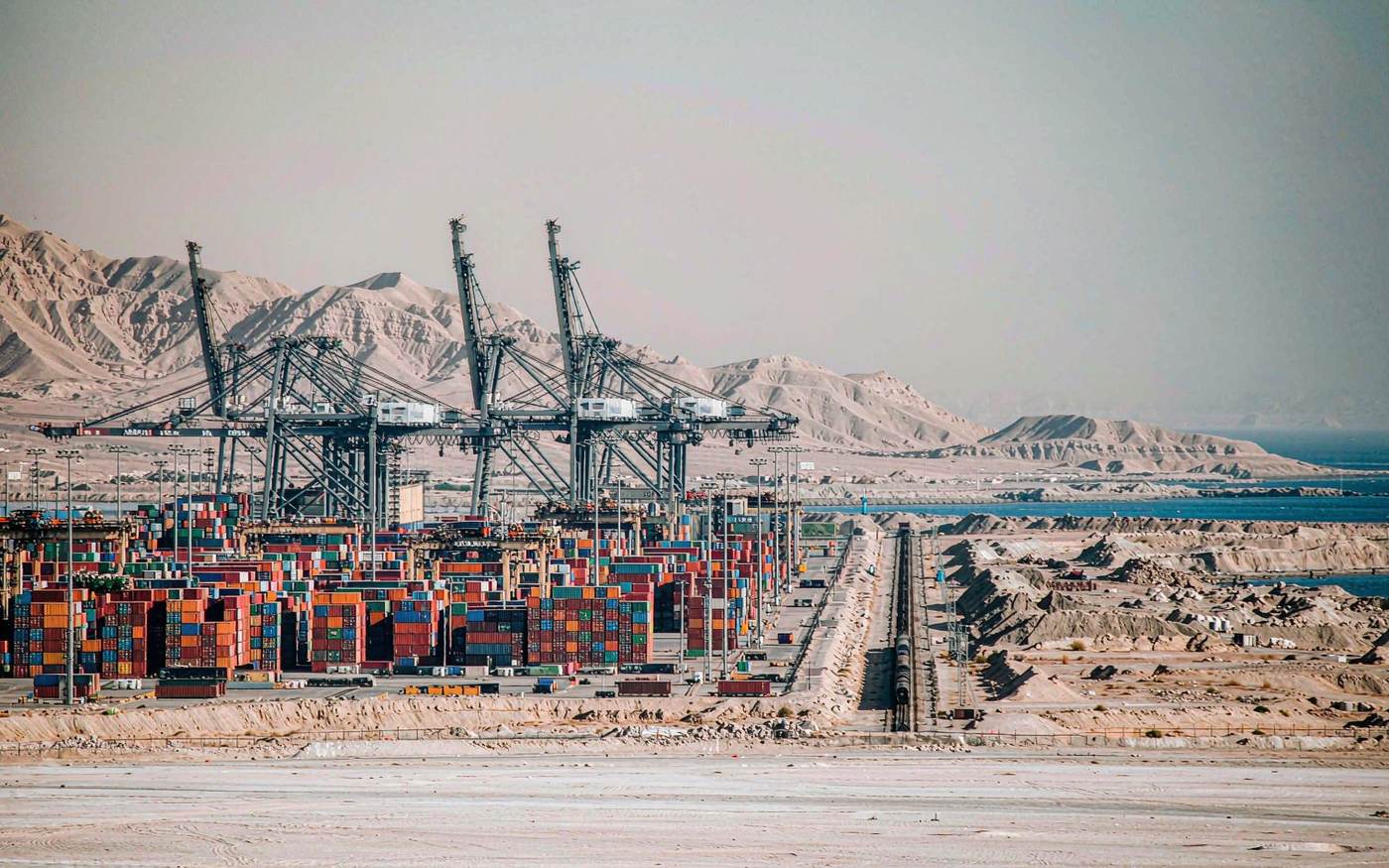
How to ship from China to Ethiopia
Ethiopia has no coastline. Every sea shipment therefore arrives at a port in another country, almost always Djibouti, and then travels roughly eight hundred to nine hundred kilometres inland by road or rail to the capital. Understanding that single fact explains most of what is distinctive about shipping here.
It also explains the two rules that matter most. The first is administrative: your buyer needs a bank permit from an Ethiopian bank before anything is loaded in China. The second is contractual: ask for a through bill of lading that names the inland destination, not one that stops at Djibouti. Get both right and the corridor works. Get either wrong and the container sits at the port.
At a glance
Landlocked, served almost entirely through Djibouti and then by road or the railway to the dry port at Modjo and on to Addis Ababa. A bank permit or approved letter of credit is required before shipment, and a through bill of lading naming the inland destination is strongly recommended. Duty runs 0 to 35 per cent by HS code, with a flat surtax of around 10 per cent, VAT at 15 per cent, withholding tax of about 3 per cent and excise on selected goods. Twenty-foot containers have a strict weight ceiling.
How your cargo moves: China to Ethiopia
Eight steps from your supplier's door to yours. The last four are the ones shaped by local rules.
- Pickup from your supplierWe collect the goods anywhere in China and bring them to our consolidation point.
- Export clearanceChina customs declaration filed and released before the goods move to the port.
- Loading and departureContainer loaded, sealed and handed to the carrier at the Chinese port.
- Main carriageOcean, air or rail movement booked on the route agreed for your cargo.
- Arrival at the gatewayDischarge at the port or airport of entry, recorded on the carrier's manifest.
- Import clearanceCustoms declaration filed locally, with duty and tax assessed on the declared value.
- Customs releaseGoods released into free circulation once duty and tax are settled.
- Final deliveryOnward movement to your delivery address, warehouse or nominated depot.
Duty rates, VAT rates and clearance times move, and the figure that applies to your goods is the one set for your commodity code on the day of clearance. We check the current position against your code before your goods sail and confirm it to you in writing — ask for that check when you request a quote.
A landlocked country with one working sea corridor
Ethiopia is one of the largest economies in East Africa and a substantial importer of Chinese machinery, construction materials, vehicles, electronics and textiles. All of it arrives through Djibouti, which handles the country's transit cargo as well as its own imports.
That dependence has a practical consequence for planning. Your shipment is not competing for space on a direct service to Ethiopia, because no such service exists. It is moving on a service to Djibouti, and then competing for trucks or rail slots on the corridor. Disruption at either end shows up as delay on the whole journey.
It also means the shipping line's responsibility matters enormously, which is the subject of the through bill of lading section below. On a landlocked route, the difference between a carrier that has contracted to the inland point and one that has contracted only to the port is the difference between one responsible party and several parties each blaming the others.
Djibouti to Addis: road, rail, and a dry port called Modjo
Cargo discharged at Djibouti moves inland by road or by the railway to the dry port at Modjo, and from there to Addis Ababa. Road transit is commonly quoted at several days, and rail is generally faster and more predictable for larger volumes. Both are subject to equipment availability, and pre-holiday peaks regularly produce truck shortages at Djibouti.
Modjo is where a great deal of the customs work actually happens. It is an inland dry port with customs facilities, and for many importers it is the practical point of clearance rather than the coast. Name Modjo on the shipping documents where that is where the cargo will be processed.
Total door-to-door timing is commonly quoted in the range of several weeks from the Chinese factory to a warehouse in Addis Ababa, with meaningful variance at the corridor end. Build a margin of one to two weeks into any supply chain plan that depends on it.
Get the bank permit before anything is loaded in China
Most imports into Ethiopia require an approved bank permit or letter of credit from an Ethiopian bank, obtained by the importer, before the goods are shipped. This sits alongside the country's foreign exchange controls and it is the single most common cause of cargo being stranded at Djibouti.
Do not load a container in China until you have seen a copy of the approved bank permit from your Ethiopian buyer. Cargo shipped without one can sit at the port for months, and daily storage charges accrue the whole time. This is a hard gate, not a formality.
Because the permit sits with the buyer, the timing of your production release has to be tied to it. Agree the sequence in the contract: permit approved, then production released, then booking made. A supplier who produces on schedule but ships before the permit exists has created the problem rather than avoided it.
Ask for a through bill of lading, not one that stops at Djibouti
A through bill of lading names the inland place of delivery, typically Modjo dry port or Addis Ababa, rather than stopping at Djibouti. It obliges the shipping line to take responsibility for the inland movement under a single contract.
Without it, you are left booking to Djibouti and then arranging the inland leg yourself, including the transit formalities. That is a genuinely harder job on this corridor, and it puts the risk of a handover failure on you rather than on the carrier.
Some cheaper quotations are cheap precisely because they stop at Djibouti. When you compare offers, check what the place of delivery actually says. A low price that ends at the port is not the same product as one that ends at the dry port.
The weight ceiling that catches 20-foot containers out
Ethiopia enforces axle load limits, and there is a practical weight ceiling on a twenty-foot container including the tare weight of the box itself. Published guidance puts it around twenty-eight tonnes. Exceed it and you face fines or the cost of transloading at the border.
This matters because a dense Chinese cargo can fill a twenty-foot container by weight long before it fills it by volume. Building materials, metals, ceramics and machinery are the usual offenders. Weigh the finished, packed cargo and check it against the limit before booking, not after loading.
If your cargo is dense, book a twenty-foot container at a reduced load, or move to a forty-foot box and accept the cost. Transloading at the border is far more expensive than getting the booking right.
Conformity assessment through the Ethiopian ECA
Ethiopia operates a conformity assessment regime through its national conformity enterprise, covering a range of goods including electronics and construction materials. Where it applies, a pre-shipment inspection or certificate of conformity is required before the goods are loaded.
Non-compliant goods can be confiscated or re-exported at the shipper's expense, which on this corridor is a serious outcome given how far the cargo has already travelled. Check whether your HS codes fall inside the scheme before production finishes.
Where the goods are food, cosmetics or agricultural products, additional sanitary certification applies. Obtain it in China, along with the chamber attestation on the commercial invoice, rather than expecting to resolve it inland.
Duty, surtax, withholding and VAT, all on the same base
Ethiopia's import tax burden is among the higher ones in the region, largely because several charges apply on top of each other rather than as a single rate.
| Charge | Indicative rate | Base |
|---|---|---|
| Customs duty | 0% to 35% by HS code | CIF value |
| Surtax | Around 10% flat on most imports | CIF value |
| VAT | 15% | CIF + duty + excise |
| Withholding tax | Around 3% | CIF value |
| Excise | Varies, often 10% to 100% | Luxury and selected goods |
The surtax is the item most first-time importers miss, because it is not a duty and it is not a VAT; it is a flat additional charge that stacks on most non-strategic imports. Finished consumer goods therefore land well above their headline duty rate, while strategic industrial inputs are treated more leniently.
Confirm the treatment of your specific codes with a licensed Ethiopian broker before you commit to a landed price. The number matters more here than on most routes.
Flying cargo in on Ethiopian Airlines
Addis Ababa has direct air links with Chinese cities, and air freight into the capital is a genuinely useful option rather than a theoretical one. It suits urgent spare parts, medical supplies, samples and high-value compact goods, and it avoids the corridor entirely.
The trade-off is cost per kilogram and capacity. Air freight does not suit bulk, and it does not suit anything heavy or awkward. It does still require the same customs entry, the same bank permit logic and the same conformity position as a sea shipment.
For time-critical cargo this is usually the right answer, and the reliability of the direct services is a real advantage. See air freight from China for how the leg is built.
Packing for a long inland haul on rough roads
Your container will travel a long distance over roads that are not gentle, after an ocean leg and a port handling. Packing standards should reflect the whole journey rather than just the sea part.
- Palletise fragile goods and strap them properly, because the inland leg shakes cargo more than the sea leg does.
- Use export-grade crating and avoid relying on the container walls for support.
- Seal against dust and rain; the corridor is dry and dusty in places and the port handling is outdoors.
- Keep individual pieces liftable at the destination, where equipment may be limited.
- Use ISPM 15 compliant wood, or provide a no-wood declaration.
The cost of better packing is small next to the cost of damage discovered in Addis Ababa, where returning or replacing goods is slow and expensive. Insurance should cover the inland leg, not just the ocean crossing. See cargo insurance.
Documents, and the chamber attestation on the invoice
The commercial invoice for Ethiopia is normally required to be attested by the chamber of commerce in China, and the packing list has to match it exactly. Even a small discrepancy in weight or piece count can trigger a hold at Modjo.
- Commercial invoice, chamber-attested, with HS codes, values, currency and Incoterm.
- Packing list matching the invoice exactly.
- Through bill of lading naming Modjo dry port or Addis Ababa as the place of delivery.
- Bank permit or letter of credit, approved before shipment.
- Certificate of conformity or pre-shipment inspection where the scheme applies.
- Certificate of origin.
- Sanitary or health certificates for food, cosmetics and agricultural goods.
Consistency across the set is the thing that determines whether clearance is quick. Our shipping documents page gives the format we ask suppliers to use.
When this corridor is the right choice
The Djibouti corridor is reliable enough to plan around, provided the administrative steps are handled in the right order.
- Buyers who hold a bank permit and import regularly
- Machinery, construction materials and industrial inputs
- Consolidated shipments where the inland leg is worth contracting through
- Urgent small cargo sent by air instead
- The buyer cannot produce an approved bank permit
- You are quoting to Djibouti only and hoping the rest resolves itself
- The cargo is dense enough to breach the weight ceiling
- You need a fixed delivery date inside a short window
The corridor rewards the shipper who sequences correctly: permit first, through bill of lading second, correct weight third. Do those three and the rest is routine.
Why importers use Goodhope on this lane
Six things that are different about working with us on China to Ethiopia shipments.
Real moves along the Djibouti corridor
Five shipments bought in China and delivered into Ethiopia, told end to end — where the order came from, how it moved, where it nearly went wrong, and how it finished. Client names are withheld at their request; the situations and the handling are what we deal with on this lane.
No banking documents · cannot ship · Shenzhen to Addis Ababa
The purchase. A buyer new to importing placed an order and arranged payment only once the goods were ready to load.
The move. Full container with the bank permit put in place during production, before loading.
Where it nearly went wrong. No shipment moves here without a bank permit or an approved letter of credit in place first. It is a precondition rather than a formality, and a container packed without one does not load.
How it finished. We made the permit step one. His first container loaded on the date it was booked for.
Through bill · not one that stops at the port · Ningbo to Ethiopia
The purchase. A first-time buyer was issued a bill of lading to Djibouti and assumed his Ethiopian consignee could collect from there.
The move. Sea freight on a through bill of lading naming the inland destination.
Where it nearly went wrong. A bill that stops at Djibouti leaves the consignee with a document that does not cover the corridor leg, and arranging that leg at the port is slower and dearer than having it on the original document.
How it finished. We issued a through bill. His consignee collected inland without a second arrangement.
The weight ceiling · twenty-foot boxes · Guangzhou to Ethiopia
The purchase. A buyer loading dense goods into a twenty-foot container specified a weight the corridor would not carry.
The move. Sea freight with the load planned against the twenty-foot weight ceiling before stuffing.
Where it nearly went wrong. There is a strict weight limit on twenty-foot containers on this corridor, and it bites on dense cargo that would be routine elsewhere. Exceeding it means restuffing at Djibouti rather than a waiver.
How it finished. We planned the load against the ceiling. Nothing has been restuffed at the port since.
Conformity · started too late · Yiwu to Ethiopia
The purchase. A buyer importing regulated goods treated conformity assessment as a document obtainable on arrival.
The move. Full container with conformity assessment started before departure.
Where it nearly went wrong. Conformity assessment here runs through the national body and takes its own time. Goods arriving without it do not release while it is obtained, and the corridor is not a cheap place to store anything.
How it finished. We started assessment at booking. His goods have cleared without waiting on conformity.
Five figures on one base · costing · Shanghai to Addis Ababa
The purchase. A buyer budgeted duty and VAT and was presented with an assessment several times his estimate.
The move. Full container with every element modelled before quoting: duty by code, the flat surtax, VAT, withholding tax and excise where it applies.
Where it nearly went wrong. The assessment stacks several separate charges on the same base rather than applying one rate. Budgeting two of five produces a landed cost that is wrong by more than the freight itself.
How it finished. We modelled all of them. His landed cost came within a small margin of the final assessment.
Why importers use Goodhope on this lane
Six things that are different about working with us on China to Ethiopia shipments.
Getting a quote for Ethiopia
Send us the commodity, HS codes if you have them, weight and dimensions, and whether the goods are going to Addis Ababa or elsewhere inland. We will quote through to the dry port, flag the weight ceiling, and tell you what your buyer needs to have approved first.
Get a quote Talk to usRelated pages
Frequently asked questions
How does sea freight reach a landlocked country?
Through Djibouti, then by road or rail roughly eight hundred to nine hundred kilometres inland to the dry port at Modjo and on to Addis Ababa. Ask for a through bill of lading naming the inland destination so the shipping line contracts for the whole movement.
What is the bank permit and when is it needed?
It is an approval from an Ethiopian bank, obtained by the importer, required for most imports before the goods are shipped. Do not load a container in China until you have seen a copy. Cargo shipped without one can sit at Djibouti for months accruing daily storage charges.
Should the bill of lading stop at Djibouti?
No. Ask for a through bill of lading naming Modjo dry port or Addis Ababa as the place of delivery. That obliges the carrier to handle the inland leg. A quotation that ends at Djibouti is not the same product as one that ends at the dry port.
Is there a weight limit on containers?
Yes. Axle load limits mean a twenty-foot container has a practical ceiling of around twenty-eight tonnes including the tare weight of the box. Dense cargoes such as metals, ceramics and machinery can breach it. Weigh the packed cargo before booking.
Do I need a certificate of conformity?
Where your goods fall inside the national conformity scheme, which includes electronics and construction materials, yes, and it is obtained before loading. Non-compliant goods risk confiscation or re-export at your expense.
What taxes apply on imports?
Duty of 0 to 35 per cent by HS code, a surtax of around 10 per cent on most imports, VAT at 15 per cent on CIF plus duty and excise, withholding tax of around 3 per cent, and excise on luxury goods. The surtax is the item most first-time importers overlook.
Does the commercial invoice need attesting?
Normally yes, by the chamber of commerce in China, and the packing list must match it exactly. A small discrepancy in weight or piece count can trigger a hold at Modjo.
How long does the whole journey take?
Commonly quoted in the range of several weeks from the Chinese factory to a warehouse in Addis Ababa, with most of the variance at the corridor end. Build a margin of one to two weeks into any plan that depends on it.
Is air freight a good option?
Yes for urgent, compact, high-value cargo. Addis Ababa has direct air links with Chinese cities, which avoids the corridor entirely. It does not suit bulk, and the customs and permit requirements are unchanged.
How should I pack for this route?
For the inland leg as much as the sea leg: palletise and strap fragile goods, use export-grade crating, seal against dust and rain, keep pieces liftable at the destination, and use ISPM 15 compliant wood. Insurance should cover the inland leg too.