
Home / Shipping to the Faroe Islands / How to ship from China to the Faroe Islands
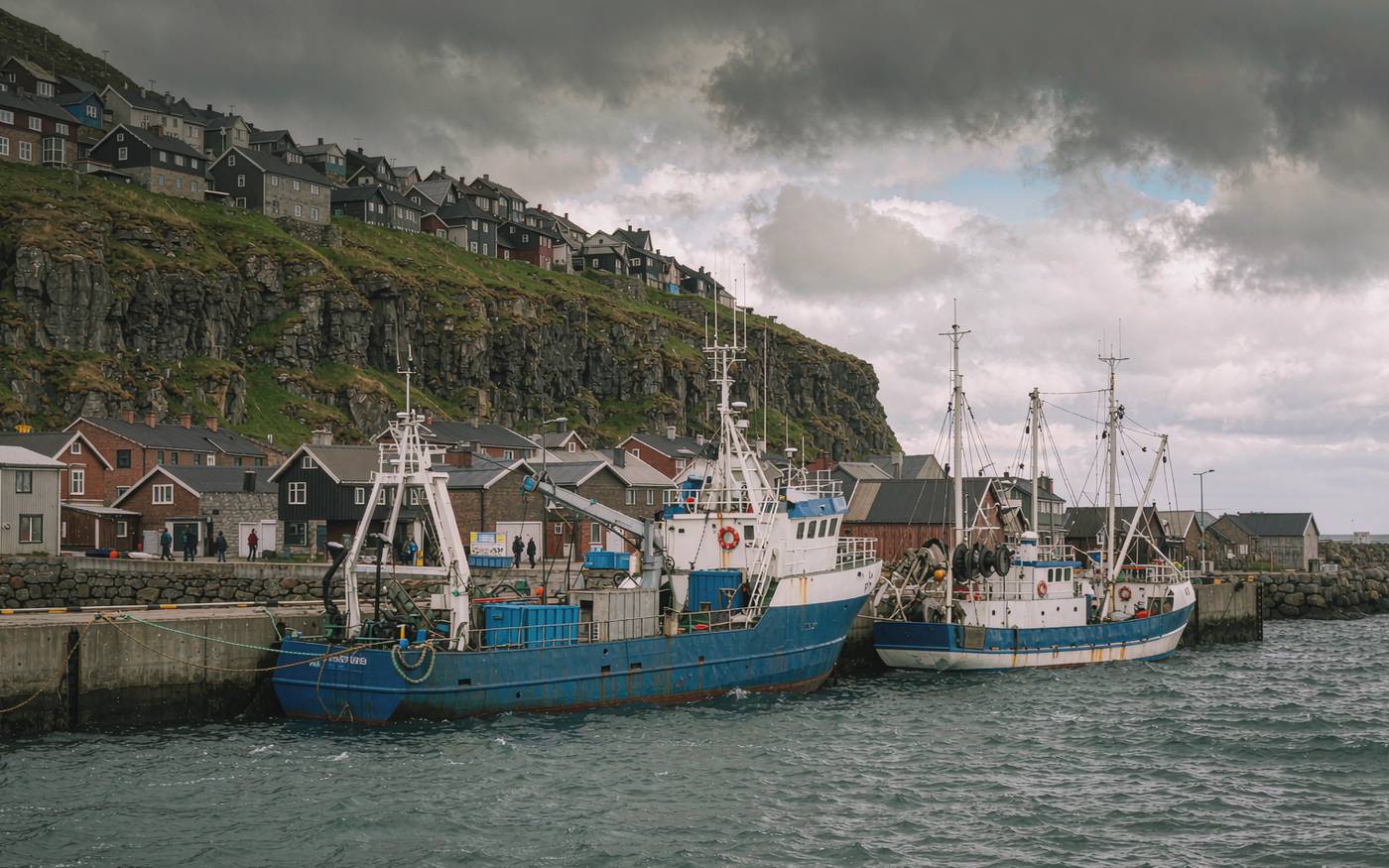
How to ship from China to the Faroe Islands
The Faroe Islands are an autonomous territory within the Kingdom of Denmark, sitting in the North Atlantic between Iceland, Norway and Scotland, with a population of around 54,000. They are not in the European Union and they form their own customs territory, separate from Denmark's.
One fact dominates every quotation to this destination. The Faroes have free trade agreements with the EU, Iceland, Norway, Switzerland, Turkey and the United Kingdom. They do not have one with China. Goods of Chinese origin therefore always pay customs duty, and the rate is set by the Faroese tariff rather than by any EU schedule.
The second fact is purely administrative and entirely avoidable: if the invoice does not state the country of origin, duty is charged anyway. This page covers both, plus the thresholds, the VAT and the routing.
At a glance
Status: autonomous territory within the Kingdom of Denmark, outside the EU and outside the Danish customs territory; separate customs administration, TAKS. Gateway: the port of Tórshavn; Vágar Airport, FAE, the only airport. Taxes: customs duty always charged on Chinese-origin goods; MVG at 25 per cent; excise on delicacies and fireworks. Threshold: DKK 300 including freight and insurance. Currency: Faroese króna, pegged to the Danish krone. Population: about 54,000.
How your cargo moves: China to the Faroe Islands
Eight steps from your supplier's door to yours. The last four are the ones shaped by local rules.
- Pickup from your supplierWe collect the goods anywhere in China and bring them to our consolidation point.
- Export clearanceChina customs declaration filed and released before the goods move to the port.
- Loading and departureContainer loaded, sealed and handed to the carrier at the Chinese port.
- Main carriageOcean, air or rail movement booked on the route agreed for your cargo.
- Arrival at the gatewayDischarge at the port or airport of entry, recorded on the carrier's manifest.
- Import clearanceCustoms declaration filed locally, with duty and tax assessed on the declared value.
- Customs releaseGoods released into free circulation once duty and tax are settled.
- Final deliveryOnward movement to your delivery address, warehouse or nominated depot.
Duty rates, VAT rates and clearance times move, and the figure that applies to your goods is the one set for your commodity code on the day of clearance. We check the current position against your code before your goods sail and confirm it to you in writing — ask for that check when you request a quote.
A separate customs territory with no EU membership and its own tariff
The Faroe Islands are not in the European Union and they are not part of the Danish customs territory either. They run their own customs administration, TAKS, and their own tariff schedule, published as the Toll- og Vøruskráin and available in Danish and English.
Importers register with TAKS and receive a company number, known locally as a V-tal. Your consignee needs one, and it needs to be on the entry.
Do not assume Danish or European procedure applies. If you have shipped to Copenhagen before, the paperwork will look familiar but the rates, the thresholds and the relief from duty will not.
No preferential tariff for Chinese goods, so duty is always charged
The Faroes have free trade agreements with the EU, Iceland, Norway, Switzerland, Turkey and the United Kingdom. Goods originating in those places are exempt from customs duty. Goods from countries without an agreement, and TAKS names China explicitly, always pay.
The rate varies by commodity and is set out in the tariff list. As a single published example, clothing carries 10 per cent. The list is the only reliable source for your specific code, so look it up rather than estimating.
For a Chinese exporter this means the duty line on a Faroese quote is never zero. Build it in from the start rather than discovering it at clearance, because your buyer will have assumed the same thing you did.
The origin line on the invoice, and what a missing one costs you
TAKS is explicit: for goods to be exempt from customs duty, the country of origin must be stated on the invoice. If it is not stated, duty is levied.
That rule is aimed at goods that would otherwise qualify, but it catches Chinese shipments indirectly and repeatedly. A Faroese broker dealing with a consignment where the origin is unclear will assess duty, and arguing about it afterwards costs more than writing it correctly in the first place.
Put the origin country on the commercial invoice as a standing field, on every shipment, without exception. It costs nothing and it removes the single most common cause of an unexpected duty bill here.
How low-value consignments are taxed: DKK 300 and the flat rate
There is a low-value relief. If the goods, including shipping and any insurance, come to less than DKK 300, no duty or VAT is charged. The relief does not apply to delicacies, baking products, dairy products or fireworks.
Above DKK 300 the shipment is taxed. Where the dutiable value is DKK 3,000 or less, clearance can be accelerated by paying a flat duty of 10 per cent instead of working through the tariff line by line. Above DKK 3,000 a full customs declaration is required.
Note that these are the published rules for private imports and small consignments. Commercial entries follow the full declaration route, so use the thresholds as an indicator rather than a planning assumption for a business shipment.
MVG at 25 per cent, the Faroese VAT that is not the Danish one
The Faroese value-added tax is called MVG, meirvirðisgjald, and it is charged at 25 per cent. It applies once the value exceeds the DKK 300 threshold, and it is calculated on the value including any customs duty and any excise already charged.
That stacking matters. Duty first, then excise on the duty-inclusive figure, then MVG on top of both. A landed-cost model that applies a single percentage to the invoice value will be wrong.
There are exemptions, including books and brochures falling under chapter 49 of the tariff list. Check your commodity against the list rather than assuming the standard rate.
Excise on delicacies and fireworks, and the rates that surprise
Excise applies to a narrow but expensive group of goods. TAKS publishes delicacies at 40 per cent plus DKK 16 per kilogram, and fireworks at 100 per cent. The rates sit in the Faroese fiscal legislation and are not always translated.
If your consignment includes food products, check whether they fall into the delicacies category before you ship. The difference between an ordinary food rate and a 40 per cent excise plus a per-kilogram charge is the difference between a viable order and a refused one.
Two further categories need permits regardless of value: weapons and fireworks require a police permit, and live animals require a permit from the Faroese Food and Veterinary Authority. Without them the goods are held.
Torshavn by sea, Vagar by air
Tórshavn is the main port, handling container and Ro-Ro traffic, and it is where commercial cargo is worked. Vágar Airport, code FAE, is the only airport and handles air cargo.
Sea capacity comes largely through services linking the islands with Denmark and the wider North Atlantic, including the Smyril Line cargo ferry. Air capacity runs through Atlantic Airways and connections via Denmark.
The fishing and aquaculture industry dominates the economy, which means port and airport capacity is shaped around seafood exports. If your shipment is time-critical, confirm what space exists on your dates rather than assuming a published schedule holds.
Fish, feed and the veterinary controls that come with them
Seafood dominates Faroese exports, and that shapes import controls. Veterinary and food controls on animal products, feed and foodstuffs are strict and are not bound by EU rules, so EU documentation is not automatically accepted.
Restricted categories include weapons, certain foods, animals and animal products, and prescription medicines. Confirm the position for your commodity before the goods sail.
Wood packaging must meet ISPM 15. It is a routine requirement and a routine cause of delay when it is missed.
Faroese krona, Danish banking and the company number
The Faroese króna is the local currency, pegged to the Danish krone and issued in Danish denominations. In practice prices, freight and duty are settled in Danish kroner, and your buyer's banking runs through Danish systems.
Your consignee needs a V-tal, the company number issued on registration with TAKS. Confirm they hold one and that it appears on the declaration, because a consignment without a registered importer does not get released.
Agree the currency of the sale separately. With a long transit and a small invoice, the exchange spread is proportionally larger than most exporters expect.
Transit times and the Danish transshipment leg
There is no direct service from China. Sea freight runs from a Chinese port to a northern European hub, then to Denmark, then onward to Tórshavn. Air freight runs to Copenhagen or another European gateway, then to Vágar.
The Danish leg is the one that adds time. Total sea transit commonly lands at 40 to 55 days and air freight at 8 to 15 days door to airport. Treat both as planning figures to confirm against a named service.
Weather in the North Atlantic is an operating condition, not an exception. Build a margin into any delivery promise and say what it is for.
Why importers use Goodhope on this lane
Six things that are different about working with us on China to the Faroe Islands shipments.
How it happens for first-time the Faroe Islands buyers
Five shipments bought in China and delivered into the Faroe Islands, told end to end — where the order came from, how it moved, where it nearly went wrong, and how it finished. Client names are withheld at their request; the situations and the handling are what we deal with on this lane.
Missing origin · invoice rejected · Shenzhen to Torshavn
The purchase. A buyer new to importing sent an invoice that gave the manufacturer, the port and the value, but not the origin country.
The move. Consolidated sea freight with the country of origin stated on every invoice line.
Where it nearly went wrong. The origin line is mandatory here, and an invoice without one is not a document customs can work from. It is the smallest omission that stops a whole consignment, and the easiest to prevent.
How it finished. We added it to his supplier instructions. No Faroe consignment of his has been queried since.
Not Denmark, not the EU · quoting · Ningbo to the Faroe Islands
The purchase. A first-time buyer assumed that shipping to a territory within the Danish kingdom meant Danish and European customs rules applied.
The move. Sea freight declared to the separate customs administration, duty assessed at the standard rate.
Where it nearly went wrong. These islands sit outside the European Union and outside the Danish customs territory, with their own administration and their own tariff. No preferential rate reaches goods of Chinese origin, so duty is always charged.
How it finished. We set out the duty position before he quoted. His landed cost has been right on every shipment.
Below the threshold · small parcels · Guangzhou to the Faroe Islands
The purchase. A buyer sending samples assumed any parcel below the de minimis was completely free of charges.
The move. Air parcels declared in full, with the threshold applied to the right figure.
Where it nearly went wrong. The threshold applies to the value including freight and insurance, not to the invoice value alone. A parcel comfortably below it on goods alone can sit above it once carriage is added.
How it finished. We declared freight and insurance with the goods. His parcels have cleared without an unexpected assessment.
MVG is not the Danish VAT · budgeting · Shanghai to Torshavn
The purchase. A buyer budgeted at the Danish rate having read that these islands are part of the Danish kingdom.
The move. Consolidated sea freight with the Faroese rate applied, alongside duty and any excise.
Where it nearly went wrong. The local consumption tax sits at twenty-five per cent and is charged alongside duty, which always applies to Chinese-origin goods. It is not the Danish tax and it does not replace duty.
How it finished. We separated duty from the local tax on his quote. Both have matched the assessment every time.
Excise · surprising rates · Yiwu to the Faroe Islands
The purchase. A buyer importing a mixed consignment of gift food and fireworks did not expect either category to be treated specially.
The move. Consolidated sea freight with excise identified on the affected lines before quoting.
Where it nearly went wrong. Excise applies to categories including delicacies and fireworks, and the rates are high enough to change whether the line is worth shipping at all. Finding out at entry rather than at quotation means finding out after the goods have sailed.
How it finished. We flagged the two lines during quoting. He dropped the fireworks and kept the rest.
Why importers use Goodhope on this lane
Six things that are different about working with us on China to the Faroe Islands shipments.
State the origin country on every invoice, without exception
Send us the HS code, the weights and the dimensions, and we will confirm the duty rate under the Faroese tariff, what MVG and any excise will add, and how the shipment moves from China through Denmark to Tórshavn or Vágar.
Get a quote Talk to usRelated pages
Frequently asked questions
Are the Faroe Islands in the European Union?
No. They are an autonomous territory within the Kingdom of Denmark, outside the EU and outside the Danish customs territory, with their own customs administration, TAKS, and their own tariff schedule.
Do Chinese goods pay customs duty here?
Yes, always. The Faroes have free trade agreements with the EU, Iceland, Norway, Switzerland, Turkey and the UK, but not with China. Goods of Chinese origin are always assessed, at rates set out in the Faroese tariff list.
Does the invoice have to state the country of origin?
Yes. TAKS is explicit that if the origin is not stated on the invoice, duty is levied. Make it a standing field on every commercial invoice to this destination.
What is the low-value threshold?
Goods including shipping and insurance below DKK 300 attract no duty or VAT. The relief does not apply to delicacies, baking products, dairy products or fireworks. Above DKK 3,000 a full customs declaration is required, and below that a flat 10 per cent duty can speed clearance.
What is the VAT rate?
MVG, the Faroese value-added tax, is charged at 25 per cent once the DKK 300 threshold is exceeded, calculated on the value including customs duty and excise. Books and brochures under chapter 49 of the tariff are exempt.
Which goods carry excise?
Delicacies at 40 per cent plus DKK 16 per kilogram and fireworks at 100 per cent are the published examples. Weapons and fireworks need a police permit, and live animals need a permit from the Faroese Food and Veterinary Authority.
Which port and airport serve the islands?
Tórshavn is the main port for container and Ro-Ro traffic; Vágar Airport, code FAE, is the only airport. Capacity is shaped around the seafood export industry, so confirm space on your dates.
What currency is used?
The Faroese króna, pegged to the Danish krone and issued in Danish denominations. Settlements run in Danish kroner through Danish banking, and importers need a V-tal company number from TAKS.
Are veterinary and food controls strict?
Yes, and they are not bound by EU rules, so EU documentation is not automatically accepted. Animals, animal products, feed and foodstuffs face controls, and wood packaging must meet ISPM 15.
How long does shipping take from China?
Sea freight via a northern European hub and Denmark is commonly 40 to 55 days; air freight via Copenhagen or another gateway is often 8 to 15 days door to airport. Confirm against a named service and allow for North Atlantic weather.