
Home / Shipping to Finland / How to Ship from China to Finland
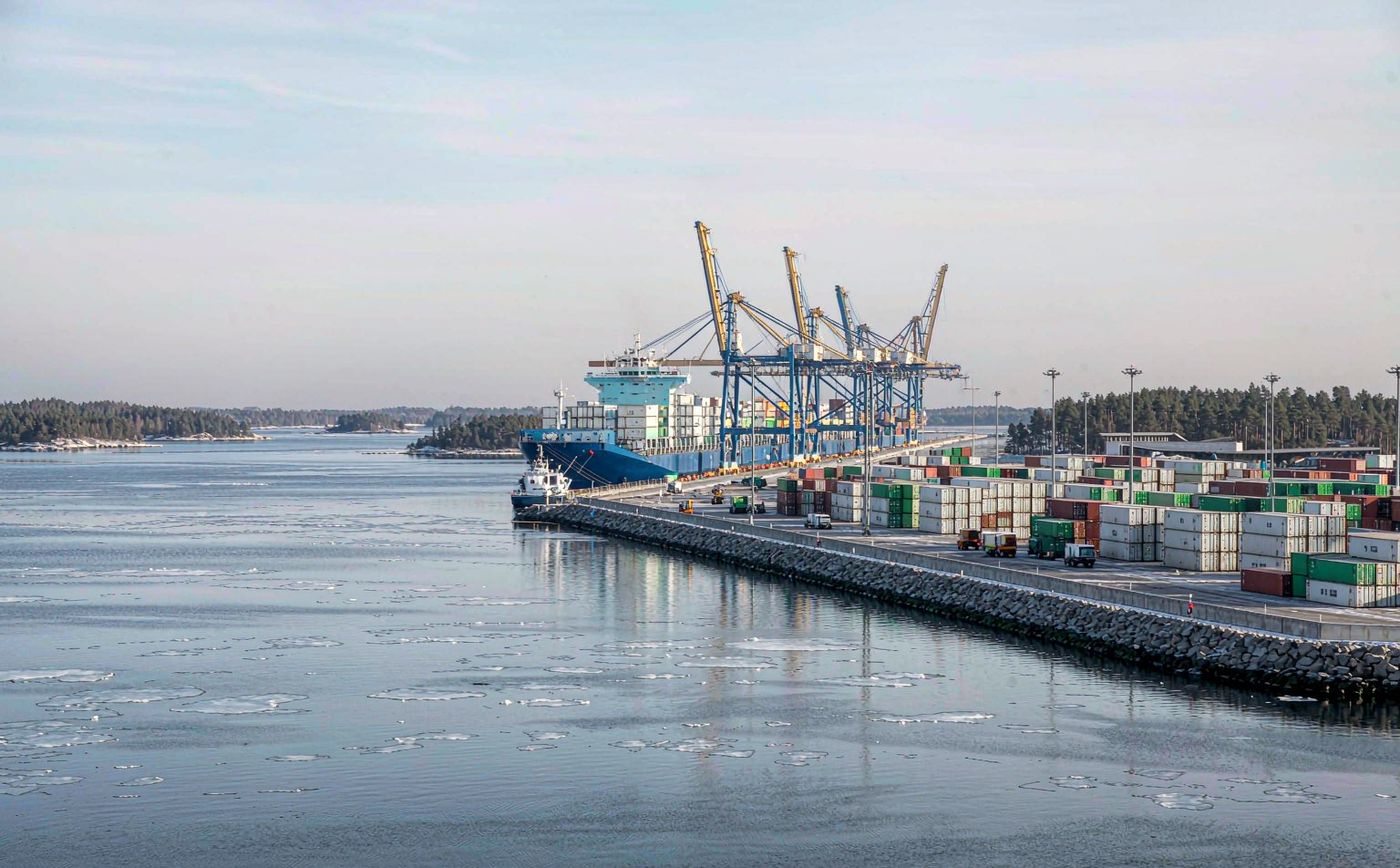
How to Ship from China to Finland: HaminaKotka, Broad Gauge & 25.5% ALV
Finland is the Nordic market where the fastest-looking route is usually the wrong one. A container train between China and Finland does exist — the service into Kouvola has been running since 2017 — and Finland's 1,524 mm broad gauge matches the CIS network, so a container from China needs only one gauge change rather than two. That advantage is real. The problem is that the route crosses Russia, and the sanctions since 2022 reshaped the very port that used to handle most Russian transit traffic. So the decision actually facing a Finnish importer is a much more ordinary one: HaminaKotka or Helsinki-Vuosaari, and how the last leg works.
The tax side is where Finland genuinely stands out. Finnish ALV is 25.5% — the highest standard rate in the Nordics and, unusually, expressed in half points, having been raised from 24% in September 2024. The reduced rate moved again on 1 January 2026, from 14% to 13.5%. None of that is avoidable, but almost all of it can be kept off your bank account if the importing business is registered before the goods ship rather than after the first container lands.
This is written for buyers importing from China for the first time. It covers the two ports that matter, what the gauge does to your rail options, realistic transit times, winter ice, how a Tulli declaration works, duty and ALV, the Åland tax border that surprises people, producer responsibility, and how to tell whether a forwarder actually knows this lane.
Finland at a glance
- HaminaKotka is Finland's largest universal port and the main container gateway — the Mussalo terminal handled 327,379 TEU in the first half of 2026, against capacity near 1.5 million TEU.
- Helsinki-Vuosaari serves the capital region and is weighted towards consumer goods and unitised cargo.
- Finland runs on 1,524 mm broad gauge against the 1,435 mm standard used in China and most of Europe. That is why rail here is not the simple answer it looks like.
- ALV 25.5% standard since September 2024, 13.5% reduced since 1 January 2026 (was 14%), 10% for newspapers and magazines only.
- Import ALV can go on your VAT return instead of being paid in cash at clearance, and a one-month credit account can be applied for.
- Tulli handles customs, Verohallinto handles tax. An EORI number is required for imports from outside the EU.
- Åland belongs to the EU customs territory but sits outside the EU VAT area — a tax border inside Finland.
- Producer responsibility is one register, Tuottajarekisteri, covering eight waste streams, supervised by the Finnish Supervisory Agency (LVV) since 1 January 2026.
How your cargo moves: China to Finland
Eight steps from your supplier's door to yours. The last four are the ones shaped by local rules.
- Pickup from your supplierWe collect the goods anywhere in China and bring them to our consolidation point.
- Export clearanceChina customs declaration filed and released before the goods move to the port.
- Loading and departureContainer loaded, sealed and handed to the carrier at the Chinese port.
- Main carriageOcean, air or rail movement booked on the route agreed for your cargo.
- Arrival at the gatewayDischarge at the port or airport of entry, recorded on the carrier's manifest.
- Import clearanceCustoms declaration filed locally, with duty and tax assessed on the declared value.
- Customs releaseGoods released into free circulation once duty and tax are settled.
- Final deliveryOnward movement to your delivery address, warehouse or nominated depot.
Duty rates, VAT rates and clearance times move, and the figure that applies to your goods is the one set for your commodity code on the day of clearance. We check the current position against your code before your goods sail and confirm it to you in writing — ask for that check when you request a quote.
HaminaKotka and Helsinki-Vuosaari: two ports, two kinds of cargo
Finland has a long coastline and a lot of ports, but containerised imports from China concentrate in two places, and they are not interchangeable.
| Port | What it is | What it is good for | How Chinese cargo reaches it |
|---|---|---|---|
| HaminaKotka | Finland's largest universal port, on the Gulf of Finland, with a channel depth of around 14 metres | Container traffic, forest products, project and breakbulk cargo, liquid and dry bulk. Roughly half of Finnish export tonnage is forest products, much of it containerised. | Direct calls where the service exists, otherwise a short-sea or feeder leg from a North European hub. Its Mussalo terminal was long Russia's principal transit port, a business reshaped by sanctions since 2022. |
| Helsinki-Vuosaari | The capital region's port, the closest to Finland's largest population centre and to Helsinki-Vantaa airport | Consumer goods and unitised cargo destined for Helsinki, Espoo, Vantaa and the surrounding region | Feeder or short-sea from Rotterdam, Hamburg, Antwerp, Bremerhaven or Tallinn |
| Rauma, Turku, Kokkola, Oulu, Raahe, Kemi | Regional and industry ports | Rauma for forest products, Turku for ro-ro and the Sweden link, the northern ports for bulk and regional industry | Usually via one of the two main ports or a dedicated short-sea call |
The practical rule is short: the delivery address picks the port, not the carrier. Containerised consumer goods going to the Helsinki region belong at Vuosaari. Industrial cargo, project cargo, and anything heading east or north along the E18 belongs at HaminaKotka. Because most of Finland's population and industry sit in the south, the two ports are only a couple of hundred kilometres apart for most consignees — which is why a forwarder who insists on one port without asking where the cargo is going has not thought about your shipment.
One more thing worth knowing about HaminaKotka: total tonnage there fell 11.4% year on year in the first half of 2026 while container throughput held roughly flat, down about 1%. The gap is bulk and transit cargo, not containers. Finnish container imports have been steadier than the headline numbers suggest.
Finland runs on broad gauge, and that decides what rail can do
Finland's railway network uses a nominal gauge of 1,524 mm, adopted when the first line opened in 1862 while Finland was an autonomous grand duchy of the Russian Empire. The standard gauge in China and in most of Europe is 1,435 mm. The difference is 89 millimetres, and it shapes everything about rail here.
The advantage: one gauge change, not two
Because Finland shares broad gauge with the CIS network, a container travelling from China by rail needs to be shifted between networks only once — at the China–Kazakhstan border — rather than twice. That is the whole pitch for the Finland rail route, and it is technically sound. The service into Kouvola has run since 2017, and Kouvola's Railgate Finland terminal is the only TEN-T core network terminal in the country.
The catch: where that route runs
That single-change route crosses Russia. Since 2022, European rail traffic via Russia has been reshaped by sanctions, and Finnish trade with Russia collapsed along with it — which is visible in the port numbers. So rail into Finland is not so much a timetable question as a compliance and availability one. [To be verified — ask whether a current service is running and on what terms before planning around it.]
And the rest of Europe is on the wrong gauge
Rail into Finland from Germany, Poland or the Baltic states needs a gauge change or a transhipment. The only standard-gauge link is the Tornio–Haparanda line on the Swedish border. Studies into converting the Finnish network to European gauge have concluded it is not feasible, so this is permanent rather than a temporary inconvenience.
What it means for you
Treat sea and air as the working options, and rail as a question to ask rather than an assumption to make. If a forwarder offers rail into Finland, ask which route, which borders, and what the fallback is if the service is suspended. If the answer is vague, it is not a service they have run.
How long Finnish cargo takes, and where the days go
| Mode | Typical door-to-door | What the clock actually includes |
|---|---|---|
| Sea FCL (20ft / 40ft / 40HQ) | 35–48 days | A mainline leg from China of roughly 28–38 days, plus a short-sea or feeder leg of two to seven days into HaminaKotka or Vuosaari, plus clearance and final delivery. |
| Sea LCL | 45–58 days | The same sea legs plus consolidation at a Chinese warehouse and deconsolidation at the destination, together commonly adding one to two weeks. |
| Rail from China | Ask before assuming | Where a service runs, figures in the range of 18–28 days are quoted, but availability depends on the route and the current situation. [To be verified] |
| Air freight | 5–9 days airport to airport | Into Helsinki-Vantaa, sometimes with a European stop. Add a day or two for collection, clearance and delivery. |
| Express courier | 3–6 days door to door | Samples and small parcels, with the carrier acting as broker. |
Most of the variance on this lane is created in the short-sea leg, not the ocean leg. Ask which hub the container discharges at and which operator carries it north — a container sitting at Rotterdam waiting for a Finland call is the most common reason a Finnish shipment misses its date.
Air into Helsinki-Vantaa, and when it beats waiting
Helsinki-Vantaa is Finland's main air cargo gateway and the only one with meaningful intercontinental capacity. It has long been positioned as an Asia–Europe transit point, which is useful in both directions: freighter and belly capacity into Helsinki is better than Finland's size would suggest, and connections onward within the Nordics and Baltics are short.
Air earns its cost when the value per kilogram is high, when a production line or a vessel is stopped waiting for a part, when a seasonal selling window would close, or when the shipment is a sample that has to be in a buyer's hands before an order is placed. It rarely earns it for furniture, building materials or anything with a thin margin and a generous deadline.
The comparison only works if it is like for like. Ask for air and sea priced to the same door with the destination charges itemised — terminal handling, delivery order, customs clearance, and inland delivery are the four most often left out of a sea quote. Our local charges page lists them.
Winter ice in the Gulf of Finland: a real schedule variable
The Gulf of Finland and the Bothnian Bay freeze in a normal winter. Finnish ports are not closed by this — the country keeps them open year round — but arrivals and departures are supported by icebreakers, and ice restrictions can slow ships down, particularly in the northern Bothnian ports such as Oulu, Kemi, Raahe and Kokkola. Southern ports are less exposed but not immune.
The response is boring and effective: add days to anything scheduled between January and March, and ask whether your service runs ice-class tonnage on the Finnish leg. If your delivery is to northern Finland, add more.
Finland also shuts down harder than most countries in summer. Midsummer (Juhannus) in late June effectively stops business for several days, and much of Finnish industry is on holiday through July. A container that lands in the last week of June may sit until the consignee's people come back.
The order a Finnish import actually happens in
Fix the commodity code, weights and who imports
Before production ends. The ten-digit TARIC code sets the duty and reveals anti-dumping exposure. The importer named on the Finnish declaration must be the VAT-registered company that will use the goods, so settle that before booking, not after.
Check producer responsibility while it is still cheap
If you will be first to place the goods or their packaging on the Finnish market, registration in Tuottajarekisteri belongs here. Packaging, electronics and batteries are the three streams importers hit most, and appointing a Finland-based representative takes time.
Choose the port and the service, and name the fallback
HaminaKotka or Vuosaari, direct or feeder, which hub, which short-sea operator, and what happens if the connection is missed.
Collect from the factory or consolidate
A full container loaded at the supplier, or cartons into a consolidation warehouse. See pick up and warehouse and consolidation.
Chinese export declaration
Filed through China's single window. Anything needing inspection, a licence or a certificate is cleared here, which is why those requirements must be identified when you book.
Mainline leg, then the leg north
China to the European hub, then short-sea or feeder into Finland. This is where most of your schedule risk sits.
Finnish import declaration with Tulli
Filed electronically through the Customs clearance service or by message exchange. Duty from the commodity code, ALV at 25.5% on the duty-inclusive value, and import ALV reported on your return rather than paid in cash if you are registered.
Release, then inland delivery
Once released for free circulation the goods move to your address with no further customs formality — unless the address is in Åland, which is a different matter entirely.
Customs clearance through Tulli and what the declaration must say
Tulli is Finnish Customs and administers the import declaration. Declarations are filed electronically, either through the Customs clearance service or by message exchange, and they can be lodged in advance — for certain procedures, up to 30 days ahead of arrival. A presentation notification is normally submitted by the transporter when the goods arrive, unless a declaration has already been lodged.
Finnish clearance is data-driven rather than paper-driven: the declaration is expected to be complete and correct when the goods arrive, and a consignment that does not match its documentation is held until it does. The data set is the usual EU one — importer and EORI, exporter, commodity code, customs value, origin, transport details, invoice and packing list — but the accuracy standard is high, and a wrong commodity code surfaces quickly.
Advance cargo information under the EU's Import Control System 2 is filed by the carrier before the goods reach the EU border. That is not your task, but it is why your booking data has to be right at origin: correcting it after departure costs days.
Customs duty in Finland: what the commodity code decides
Finland applies the EU Common Customs Tariff. The rate comes from the ten-digit TARIC code for your product. There is no free trade agreement between the EU and China, so Chinese-origin goods are assessed at the ordinary rate for their code with no preference.
Customs value is the transaction value plus the costs of getting the goods to the EU border — freight, insurance, commissions and brokerage — not simply the invoice figure. Anti-dumping and countervailing duties apply to a defined list of Chinese product lines and can be many times the ordinary duty, which is why the commodity code belongs in your contract.
Worked example, in euros and using a 5% duty rate purely for illustration:
| Element | Amount (EUR) | Note |
|---|---|---|
| Goods value | 10,000 | Commercial invoice |
| Freight to the EU border | 500 | Included in customs value |
| Insurance | 100 | Included in customs value |
| Customs value | 10,600 | The base duty and ALV are calculated on |
| Customs duty at 5% | 530 | A real cost — not recoverable |
| ALV at 25.5% | 2,838.15 | 25.5% of 11,130 (value plus duty) |
| Total duty and ALV | 3,368.15 | Of which the ALV is recoverable if you are registered |
New since 1 July 2026, and it catches everyone out. The EU removed the €150 customs duty exemption. Low-value business-to-consumer consignments now carry a flat €3 duty per customs declaration line, not per parcel — so a cotton T-shirt and a button-up shirt, which sit under different tariff headings, generate €6 in the same package. Low-value business-to-business imports stay on the normal duty rate for their code. From 1 November 2026 a product identifier also becomes mandatory. Finnish Customs has recorded more than 50 million low-value parcels arriving from outside the EU in a year, up 69%, most of them from China — so if you sell B2C into Finland, this is now a cost line in your model, not a footnote.
The 25.5% rate, 13.5% and 10%: Finnish ALV in 2026
Finland has moved its VAT rates more than once in a short period, and a great deal of material on the web is one change behind. This is the position as it stands in 2026.
| Rate | In force since | Applies to |
|---|---|---|
| 25.5% standard | 1 September 2024 (up from 24%) | Everything not listed below — electronics, clothing, furniture, machinery, alcohol, tobacco, confectionery and chocolate, construction, professional services. This is the rate almost every import lands on. |
| 13.5% reduced | 1 January 2026 (down from 14%) | Foodstuffs and animal feed, restaurant and catering services, accommodation, passenger transport, pharmaceuticals, books in print and electronic form, cultural and sporting admissions, gym services, performing artists' fees, public broadcasting. |
| 10% reduced | Unchanged | Newspapers and magazines, printed and electronic — the only category left in this band. |
| 0% | — | Exports outside the EU, intra-EU business-to-business supplies, international transport. Input ALV stays recoverable. |
For an importer the practical reading is simple: the reduced rates are a question about your domestic sales, not about your imports. Budget 25.5% on everything arriving from China, and treat the 13.5% band as something your accountant deals with after the goods are sold.
On registration: a business established in Finland registers for VAT once turnover exceeds €20,000 in a calendar year, a threshold raised from €15,000 on 1 January 2025. A business established outside Finland generally has to register from the first taxable sale. Finnish VAT returns are monthly as a rule, quarterly where annual turnover does not exceed €100,000, and annual below €30,000; non-resident businesses file monthly. Filing is electronic, through OMAVERO.
Keeping import ALV off your cash account
At 25.5%, paying import VAT in cash at the border is the single largest cash-flow event in a Finnish import. It is also avoidable.
Report it on the VAT return
A business registered for Finnish VAT declares the import on its own return rather than paying at clearance. The importer enters the taxable amount under imports of goods from outside the EU, enters the tax under tax on imports of goods from outside the EU, then deducts it under deductible VAT for the tax period to the extent the goods are used in deductible business activity. For a fully taxable business the two entries cancel and no cash changes hands.
A credit account for duty as well
A one-month credit account covering import VAT and customs duties can be applied for, so duty is also settled on account rather than per consignment. Finnish Customs can additionally grant a deferment of payment on written application for special reasons. Bonded and VAT warehouse arrangements exist for goods that will be re-exported or held.
There is one detail that decides whether any of this works. The payer of import VAT is the person or company in whose name the customs declaration is submitted. If the goods are imported for business, the declaration must be filed in the name of the VAT-registered company that will actually use them. Where an indirect representative files — acting in its own name but on behalf of the principal — the payer is still the principal, and the representative must enter the principal's Business ID on the declaration. If the wrong company is named by mistake, correcting it means applying to Customs for a revision of the customs decision, which is exactly the kind of avoidable delay this guide is written to prevent.
Register before the goods ship. Registration done before departure turns a 25.5% cash payment into two lines on a VAT return. Registration done later means paying it on the first container and reclaiming it in a later period — or, if the declaration is not in your name at all, having nothing to reclaim.
Who must be named on a Finnish import declaration
Four roles get collapsed into one on a Finnish shipment, and they are not the same party.
| Role | What it carries | What goes wrong |
|---|---|---|
| Importer of record | Liability for duty and import ALV | A seller promising DDP does not automatically become the importer. Ask who is named. |
| Declarant | Submits the customs declaration | Must generally be established in the EU. A non-EU company cannot simply file in its own name. |
| Direct or indirect representative | Files on your behalf — direct in your name, indirect in theirs | With indirect representation, the representative must enter your Business ID as principal, or the import ALV evidence lands on the wrong party. |
| Product-law importer or producer | Product compliance and producer responsibility | Clearing customs does not discharge CE marking, documentation, or Tuottajarekisteri registration. |
Åland sits outside the EU tax area: a border inside Finland
This is the Finnish detail that catches experienced importers. The Åland Islands belong to the EU and to the EU customs territory, but sit outside the EU fiscal territory for VAT and excise. In everyday language, Åland has a tax border with the rest of Finland and with the rest of the EU.
The consequences are concrete:
- Trade in goods across that border is treated as export and import, and customs formalities apply — even between mainland Finland and Åland.
- A company in mainland Finland delivering to Åland invoices without VAT; the Åland consignee submits an import declaration and pays the taxes. It works the same in reverse.
- An EORI number is required for companies sending or receiving goods across the tax border.
- A presentation notification is normally submitted by the transporter when goods cross; a one-stage tax border declaration can be lodged up to 30 days in advance, which removes the need for that notification.
- Åland runs its own producer responsibility register.
If any of your Finnish delivery addresses are in Mariehamn or elsewhere in Åland, say so at quotation stage. It is not a domestic delivery, and treating it as one produces a shipment stuck at a border nobody expected.
Producer responsibility: eight streams and a single register
Finland consolidates producer responsibility into one national register, Tuottajarekisteri, and it covers more ground than most European equivalents — eight waste streams in one place: packaging, electronics, batteries, vehicles, tyres, graphic paper, single-use plastics and fishing gear. Graphic paper in a producer register is unusual and catches people out.
Supervision moved to the new Finnish Supervisory Agency (Lupa- ja valvontavirasto, LVV) on 1 January 2026, taking over from the Pirkanmaa ELY Centre; older guides still name Tukes, the Finnish Safety and Chemicals Agency, so check which authority a compliance provider is actually filing with.
Two structural details matter. First, there is no separate EPR number — registration is keyed to your Finnish Business ID, the Y-tunnus, and your compliance status is visible in the public Jätehuoltokompassi lookup. Second, whether you are in scope at all tracks the VAT threshold: an operator below €20,000 turnover a year is not treated as acting professionally and carries no obligation. That is a materially different rule from Denmark, where packaging producer responsibility starts with the very first packaged item.
Packaging has been covered since 1997 and runs through RINKI, a clearing house that connects producers to the material producer organisations rather than making you sign four separate contracts. Beverage packaging sits separately in the Palpa deposit-return scheme. Reporting is annual — due 31 January for the previous year — or quarterly, by the end of the month following each quarter, depending on the arrangement you are on. Keep material and weight records for five years.
Packaging, electronics and batteries: the Finnish representative rule
For a foreign seller placing goods on the Finnish market, the question that matters most is whether you can register yourself or must appoint someone in Finland. The answer differs by stream.
| Stream | Can a distance seller register directly? | What to know |
|---|---|---|
| Electronics (WEEE) | No — a Finland-based authorised representative is mandatory | Registration covers both consumer and business equipment. A product with a battery built in makes you an electronics producer and a battery producer at once. |
| Batteries | No — mandatory representative since 17 August 2025 | Under the EU Batteries Regulation. Portable batteries go through a collective scheme such as Recser Oy. Upcoming obligations: user-removable and replaceable portable batteries and a digital battery passport for EV, light-transport and larger industrial batteries from 18 February 2027; portable collection targets of 63% by end 2027 and 73% by end 2030. |
| Single-use plastics and plastic fishing gear | No — representative mandatory | In force since January 2023; fishing-gear collection runs at around 10% of the gear placed on the market. |
| Packaging, tyres, vehicles, graphic paper | Yes — you can join a Finnish producer organisation instead | Packaging through RINKI; tyres mainly through Suomen Rengaskierrätys. |
Enforcement sits under the Waste Act, the supervisory agency can compel compliance, and a serious breach can carry a substantial fine. Marketplaces increasingly ask for proof of registration before they will keep listings live, which is why this belongs before your first sale rather than after it — appointing a representative and being entered in the register both take time.
Companies and private buyers on a Finnish entry
Importing as a private individual
An individual can be named as importer of record. The customs mechanics are the same — same declaration, same duty, same 25.5% ALV. What differs is recovery: without VAT registration you pay it and cannot reclaim it, and you report nothing on a return. Since 1 July 2026 there is a further limit — a private person can no longer self-declare consignments where VAT was already paid to an IOSS-registered seller, because that declaration now belongs to the seller or its representative.
Importing through a registered business
A registered company reports the import ALV on its return and deducts it, or never pays it in cash at all. It can hold a credit account, use bonded or VAT warehouse arrangements, and re-export without having sunk cash into tax it then has to chase back. A business established outside Finland generally registers from the first taxable sale and may need a Finnish fiscal representative.
The rule that saves the most money is unchanged from every other EU destination: if you are importing with a view to resale, register before the goods ship.
How Finnish companies find a factory in China
Finnish importers tend to arrive at China by a slightly different path than buyers in larger markets. Many start by buying through a European distributor or through the suppliers their own industry already knows — forest machinery, marine equipment, electronics, heating and sauna products — and only later go direct. That background matters, because it means the first direct shipment is usually undertaken without an established China-side process.
The two sourcing routes behave as they do everywhere else. A B2B platform is fast and searchable, but the listing describes what the factory can make rather than what it will make for you, and certifications and lead times are quoted loosely. Finnish buyers also source through 1688 and Alibaba, where prices are domestic-Chinese and export paperwork is usually not in the quote at all. A trade fair or a factory visit is slower, but you see the line, the packing and the QC process, and you can ask whether the factory has exported before.
One Finnish-specific compliance point: Finland is officially bilingual, and consumer goods are expected to carry information in Finnish and Swedish. First-time importers routinely discover this after the packaging is printed. Confirm the labelling requirement with your importer before production, not after.
Three documents should exist before you pay a deposit: a test report from an accredited laboratory where the product needs one, the commodity code in writing, and a written answer to who handles Chinese export clearance. Our page on shipping documents covers what the shipment itself will need.
The China half and the Finnish half of one shipment
| Stage | Handled by your Chinese forwarder | Handled on the Finnish side |
|---|---|---|
| Origin | Factory collection, consolidation, export declaration, booking, bill of lading or air waybill | — |
| Documents | Invoice, packing list, transport document, certificate of origin if applicable, certificates and test reports | Same pack plus EORI, Business ID, and the authority for representation |
| Pre-arrival | Accurate booking data for EU advance cargo information | Declaration lodged through Tulli's clearance service, ideally in advance |
| Assessment | — | Commodity code, customs value, origin, duty, import ALV, and whether it is reported on the return |
| Product side | Flags anything needing special handling before booking | Confirms the importer also holds the producer-responsibility roles, including an authorised representative where mandatory |
| Release | — | Release for free circulation, then inland delivery — and a tax border declaration instead if the address is in Åland |
We are a Chinese freight forwarder, not a Finnish customs broker. We make sure everything on the China side is correct before the container leaves, and we hand the Finnish side a complete pack — commodity codes, weights, invoice references and timing — so the declaration is not held up for something that could have been fixed in Shenzhen.
Questions to put to a forwarder before Finnish cargo is booked
HaminaKotka or Vuosaari, and why for my address?
A forwarder who names a port without asking where the cargo is going has not thought about your shipment.
Direct or feeder, which hub, which short-sea operator?
And what is the fallback if the connection is missed. The short-sea leg is where schedules slip.
Has the commodity code been checked for anti-dumping?
A code carrying an anti-dumping duty changes the economics of the whole order and must be known before you sign.
Is rail an option, and does it cross Russia?
If rail is offered, ask the route and the borders. If the answer is vague, it is not a service they have run.
Whose name goes on the declaration?
It must be the VAT-registered company that will use the goods. With indirect representation, your Business ID must appear as principal.
Is the import ALV going on my return, or am I paying cash?
If you are registered and the answer is cash, something is set up wrong.
Which destination charges are excluded?
Terminal handling, delivery order, demurrage and detention windows, storage, inland delivery. Compare only once all of them are in.
Who checks my Tuottajarekisteri position?
And whether an authorised representative is mandatory for my product. If nobody checks until the goods arrive, your first sale may already be non-compliant.
Three Finnish shipments and the reasoning behind each
The examples below are composites drawn from the decisions this lane forces. The figures are illustrative, not quotations.
Consumer electronics, 40HQ, Shenzhen to the Helsinki region
Routed to Vuosaari because the consignee was in the capital region and the cargo was unitised retail goods. The work that mattered happened before booking: the importer registered as an electronics producer with a Finland-based authorised representative and joined a battery scheme, because the products carried built-in cells. Cleared with import ALV on the VAT return, so no cash left the account.
Machine spare parts, LCL, Shanghai to eastern Finland
Routed to HaminaKotka because the delivery point was east along the E18 and the port handles industrial and project cargo better than the alternatives. LCL added roughly two weeks against FCL, which was acceptable because the parts were scheduled maintenance stock rather than an urgent need.
Marine equipment, 300 kg, vessel alongside
Air into Helsinki-Vantaa. At 300 kg the freight bill was a fraction of the cost of a vessel waiting, so air won on arithmetic rather than impatience. The parts were cleared and delivered within the week.
Where the pattern points
In each case the deciding factor was the delivery address, the product-compliance position, or the cost of downtime — never the freight rate alone. Finnish imports reward importers who work out which of the three applies before asking for a price.
Choosing the port for a first Finnish shipment
- Start with the address. Capital region and unitised consumer goods point to Vuosaari. Industrial, project and eastern or northern deliveries point to HaminaKotka. Åland is a separate declaration entirely.
- Register before you ship. VAT registration and EORI first, so the declaration can be in the right name and the ALV can go on your return.
- Check the eight streams. Packaging, electronics and batteries are the ones importers hit. Establish whether an authorised representative is mandatory for your product, and start it early.
- Pick the trade term deliberately. FOB with your own nominated forwarder gives you control of the main carriage and the routing. DAP works if you are a registered Finnish business that wants door delivery while remaining importer of record. Avoid EXW, which puts Chinese export clearance and inland pickup on you, and accept DDP only once you know who is named as importer and whether you will receive the declaration.
- Build in the season. Extra days from January to March for ice; nothing landing in the last week of June if your consignee will be away for Midsummer.
Frequently asked questions
Which Finnish port does cargo from China arrive at?
Usually one of two. HaminaKotka is Finland's largest universal port and the country's main container and project cargo gateway; its Mussalo terminal handled 327,379 TEU in the first half of 2026 against a capacity near 1.5 million TEU. Helsinki-Vuosaari serves the capital region and is weighted towards consumer goods and unitised cargo. Rauma is an alternative for forest products. Most Chinese container services reach Finland through a North European hub and a short-sea or feeder leg, so ask which hub and which operator.
Is there a rail service from China to Finland?
One has existed since 2017, running between Xi'an and Kouvola, and it has a genuine technical advantage: Finland uses 1524 mm broad gauge, the same family as the CIS network, so a container from China needs only one gauge change instead of two. The difficulty is not technical. The route crosses Russia, and European rail via Russia has been reshaped by sanctions since 2022, so availability depends on the current situation and on your own compliance position. Treat rail as a question to ask rather than an option to assume, and confirm current services before planning around one.
Does winter ice affect shipments into Finland?
Yes. The Gulf of Finland and the Bothnian Bay freeze in a normal winter. Finnish ports are kept open year round, but icebreaker assistance and ice restrictions can slow arrivals and departures, and the northern Bothnian ports are more exposed than the southern ones. Build extra days into any plan covering January to March, and ask whether the service uses ice-class tonnage.
What VAT rate applies to imports into Finland?
The standard ALV rate is 25.5%, raised from 24% in September 2024 and the highest standard rate in the Nordics. A reduced rate of 13.5%, cut from 14% on 1 January 2026, covers foodstuffs, restaurant and catering services, accommodation, passenger transport, pharmaceuticals, books and cultural and sporting admissions. A 10% rate now applies to newspapers and magazines only. Almost everything an importer brings in lands at 25.5%.
How do importers avoid paying Finnish import VAT in cash?
A business registered for Finnish VAT reports the import VAT on its own VAT return rather than paying it at clearance. The importer declares the taxable amount under imports of goods from outside the EU, declares the tax on imports, and then deducts it under deductible VAT for the period where the goods are used in deductible business activity. Effectively cash-flow neutral. A one-month credit account covering VAT and customs duties can also be applied for. The person liable is the one in whose name the customs declaration is submitted, so the declaration must name the VAT-registered company that will use the goods.
Do I need an EORI number to import into Finland?
Yes, for goods arriving from outside the EU, and also for goods moving across the tax border to and from the Åland Islands. Companies are identified by their Finnish Business ID, the Y-tunnus. If a representative files on your behalf under indirect representation, make sure your Business ID appears on the declaration as the principal, because the payer of import VAT is the importer, not the representative.
Do the Åland Islands follow the same import rules as mainland Finland?
No. The Åland Islands belong to the EU and to the EU customs territory, but sit outside the EU fiscal territory for VAT and excise. That creates a tax border inside Finland. Trade in goods across it is treated as export and import, and customs formalities apply: a mainland company delivers to Åland invoicing without VAT and the Åland consignee submits an import declaration and pays the taxes. Åland also runs its own producer responsibility register. Tell your forwarder at quotation stage if any delivery address is in Åland.
Do I have to register for producer responsibility in Finland?
If you are the first party to place an in-scope product on the Finnish market — as a producer, importer or distance seller — then yes, in the national producer register, Tuottajarekisteri. It covers eight waste streams: packaging, electronics, batteries, vehicles, tyres, graphic paper, single-use plastics and fishing gear. There is no separate EPR number; registration is keyed to your Business ID. Operators below the 20,000 euro VAT turnover threshold are not treated as professional and carry no obligation. For electronics, single-use plastics and fishing gear a Finland-based authorised representative is mandatory for distance sellers, and for batteries since August 2025.
Is there a free trade agreement between the EU and China?
No. Chinese-origin goods imported into Finland are assessed under the EU Common Customs Tariff at the rate set by their ten-digit TARIC commodity code, with no preferential rate. Anti-dumping and countervailing duties apply to a defined list of Chinese product lines and can far exceed the ordinary duty, so the commodity code belongs in your purchase contract rather than in a conversation after the goods arrive.
Can a private individual import from China into Finland?
Yes, an individual can be named as importer of record. The difference is recoverability: without VAT registration you pay duty and 25.5% ALV and cannot reclaim the ALV. Since 1 July 2026 a private individual also can no longer self-declare consignments where VAT was already paid to an IOSS-registered seller — the seller or its representative handles that declaration. Anyone importing with a view to resale should register before the goods ship.
The part Goodhope plays before Finnish cargo sails
The routing is named before you book
HaminaKotka or Vuosaari, direct or feeder, hub and short-sea operator, with the fallback sailing identified in writing. See our Finland freight rates and updates.
Compliance flagged while it is still cheap to fix
Batteries, chemicals, electronics commodity codes and certification identified at quotation stage. See dangerous goods to Finland and non-DG chemicals to Finland.
Since 2012, NVOCC licensed
NVOCC licence GD20230925153335. One named contact from factory collection in China through to Finnish delivery, with the destination charges itemised before you commit.
We coordinate with the Finnish side, we do not replace it
We are not a Finnish customs broker. We make sure the China side is correct before the cargo leaves and hand your declarant a complete pack — commodity codes, weights, Business ID references and timing — so the declaration is not held up for something we could have fixed at origin.
Goodhope Freight handles sea, air and express from China to Finland, including consolidation, export clearance and cargo insurance. Duty rates, ALV treatment, the January 2026 rate change, Åland procedures and producer-responsibility obligations should always be confirmed with Tulli, Verohallinto, the Finnish Supervisory Agency or your Finnish broker — we give you the shipping side accurately and tell you where to check the rest.
Why importers use Goodhope on this lane
Six things that are different about working with us on China to Finland shipments.
Pricing a Finnish import the right way
Send us the commodity, HS codes if you have them, gross and net weight, dimensions, the supplier's city and your delivery postcode — and tell us whether you already hold Finnish VAT registration and an EORI number, and whether any address is in Åland. We will price the modes side by side, name the port and the routing in writing, flag anything needing certification, and itemise the destination charges.