
Home / Shipping to French Polynesia / How to Ship from China to French Polynesia: Motu Uta, Three Tax Bands and 118 Islands
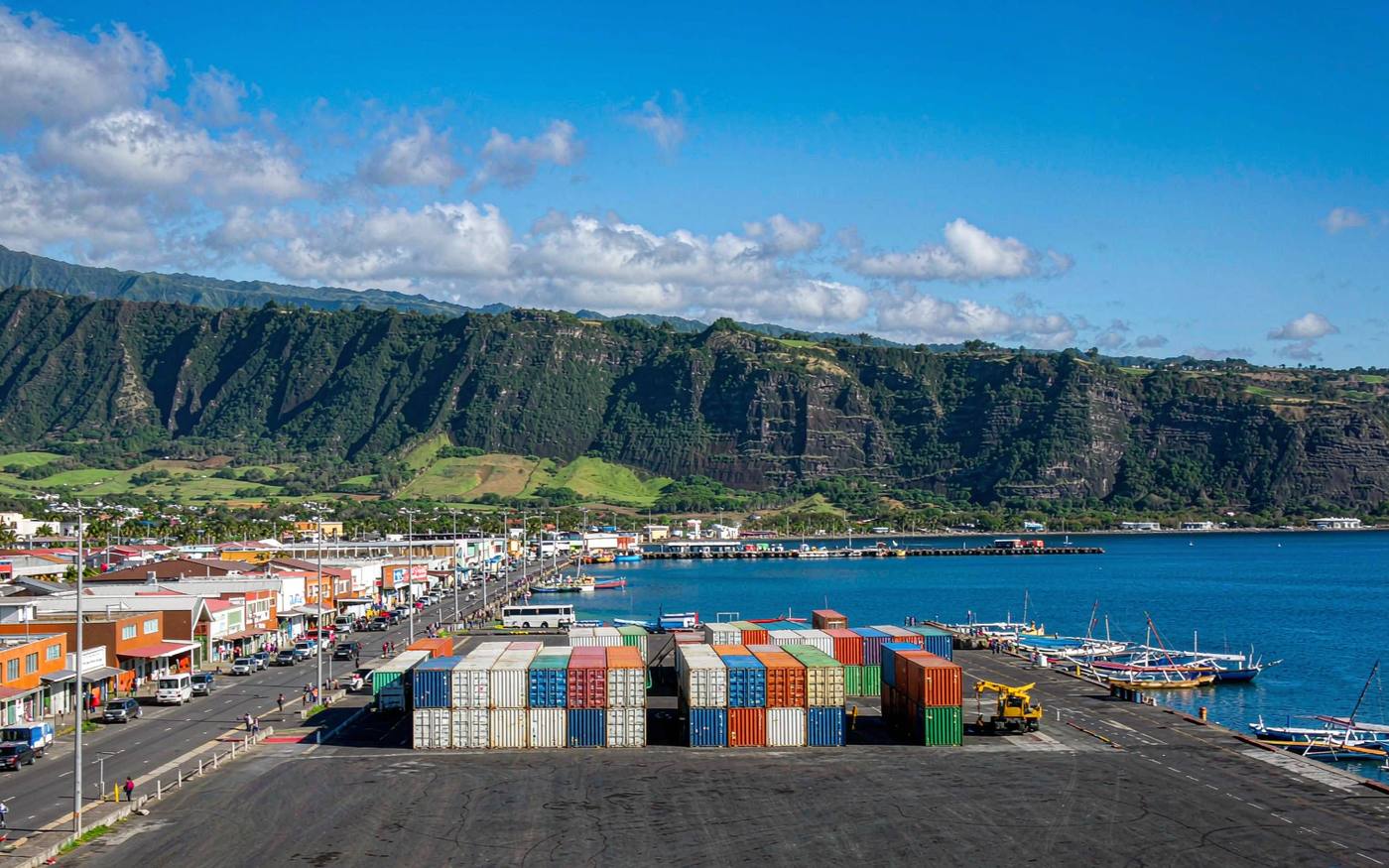
How to Ship from China to French Polynesia: Motu Uta, Three Tax Bands & 118 Islands
French Polynesia is 118 islands spread across around four million square kilometres of ocean, and essentially all of its cargo moves through one working port. That port is Papeete on Tahiti, where the customs administration is based at Motu Uta. Everything else — Bora Bora, Moorea, Raiatea, the Marquesas, the Tuamotus — is an inter-island leg that starts here.
Like New Caledonia, this is a French overseas collectivity with its own customs regime and its own tariff, outside the EU customs union. Duty runs by classification, and a levy exists specifically to protect local production — vanilla, black pearls, noni — which is why some consumer categories are deliberately expensive to import.
The third thing, and the one that most affects a small shipment, is the banding. Published guidance describes three bands: shipments up to 20,000 CFP francs come in free; between 20,000 and 50,000 a flat rate replaces the individual calculations; and above 50,000 a full declaration through a licensed broker is mandatory. The detail that catches people out is that freight and insurance count towards the figure — a cheap item with expensive freight can lose the allowance entirely.
At a glance
Status: French overseas collectivity; own customs regime, not in the EU customs union · Customs: Direction des Douanes de la Polynésie française, based at Motu Uta, Papeete · Islands: 118, across around 4 million km² of ocean · Main port: Papeete, Tahiti — handles virtually all cargo · Airport: Faa'a International, PPT · Duty: by classification, published ranges from 0% to 30% with protective rates · Other charges: TVA and the TDL, the levy protecting local production · Bands: free up to 20,000 XPF including freight and insurance; flat rate 20,000–50,000; mandatory DAUP declaration above 50,000 · Currency: CFP franc, XPF, pegged to the euro at 119.33 · Biosecurity: Direction de la Biosécurité
How your cargo moves: China to French Polynesia
Eight steps from your supplier's door to yours. The last four are the ones shaped by local rules.
- Pickup from your supplierWe collect the goods anywhere in China and bring them to our consolidation point.
- Export clearanceChina customs declaration filed and released before the goods move to the port.
- Loading and departureContainer loaded, sealed and handed to the carrier at the Chinese port.
- Main carriageOcean, air or rail movement booked on the route agreed for your cargo.
- Arrival at the gatewayDischarge at the port or airport of entry, recorded on the carrier's manifest.
- Import clearanceCustoms declaration filed locally, with duty and tax assessed on the declared value.
- Customs releaseGoods released into free circulation once duty and tax are settled.
- Final deliveryOnward movement to your delivery address, warehouse or nominated depot.
Duty rates, VAT rates and clearance times move, and the figure that applies to your goods is the one set for your commodity code on the day of clearance. We check the current position against your code before your goods sail and confirm it to you in writing — ask for that check when you request a quote.
One working port for a territory spread over four million square kilometres
Papeete handles virtually all of French Polynesia's cargo. That concentration has a practical consequence for anyone quoting a shipment: the port is efficient relative to the territory's size, and it is also a single point of failure. Anything that delays a vessel at Papeete delays the outer islands too, because distribution radiates from here.
Quote the inter-island leg separately. A delivery address on Bora Bora or in the Marquesas is not a delivery in Papeete. The onward movement runs on its own schedule, by its own vessels, and it can add days to weeks depending on the archipelago. Name the island, quote the leg, and say who carries it.
Three bands: below the allowance, the flat rate, and the full declaration
The banding is the most useful thing on this page for a smaller shipment, because it decides how much paperwork and how much tax applies. Published guidance describes it like this:
| Band | What applies | The catch |
|---|---|---|
| Up to 20,000 XPF | Comes in free | The figure includes freight and insurance. A cheap item with expensive freight can lose the allowance entirely. |
| 20,000 to 50,000 XPF | A flat rate replaces the individual calculations | Published guidance puts the flat rate lower for EU-origin goods than for goods from elsewhere |
| Above 50,000 XPF | A mandatory DAUP declaration, filed through a licensed customs broker | Full treatment applies: duty, plus TVA, plus the TDL |
What to do with this. Weigh the freight into the figure before you decide which band a shipment falls into, and confirm the current thresholds with the customs administration or the buyer's broker. These are published figures, not statutory ones.
Duty by classification, plus the levy that protects local production
French Polynesia runs its own tariff, with duty assessed by classification. Published ranges run from zero up to around thirty percent, and the shape is protective: machinery at the bottom, consumer goods at the top, and goods that compete with local production — vanilla, pearls, noni — deliberately dearer.
On top of duty sits the TDL, the levy that protects local production, along with the consumption tax. For a Chinese exporter the practical conclusion is the same as it is in New Caledonia: the code matters, and the category matters more than usual. Get both right before you quote.
What the TVA rate actually is, and why sources disagree
This is the figure we will not settle for you. Trade sources describe the Polynesian TVA as having been reduced from sixteen percent to five percent in a 2024 reform. Other published sources still give sixteen percent, and some describe a combination of TVA plus consumption taxes in a band from seven to twenty-five percent.
Our position. The sources conflict and a reform of this kind is exactly the sort of change that takes a while to propagate through secondary sources. Confirm the current rate with the Direction des Douanes or with a licensed Polynesian broker before you price, and state in the quotation which figure you used.
Above the threshold, a mandatory DAUP declaration through a broker
Once a shipment is above the upper threshold, the informal route closes. A DAUP declaration has to be filed, and it has to be filed through a licensed customs broker. That is not a formality — it is the point at which duty, TVA and the TDL are all assessed together, and where a misclassification becomes expensive.
The standard document set is the familiar one — commercial invoice, packing list, bill of lading or air waybill, certificate of origin, and the declaration — with permits required for firearms, pharmaceuticals, certain foods and animals, and agricultural imports routed through the Direction de la Biosécurité.
Papeete, Faaa and the inter-island leg
Sea — Papeete
The commercial port at Motu Uta handles containerised cargo and the inter-island feeders. Major regional and intercontinental carriers call, and the port is the distribution hub for every archipelago in the territory.
Air — Faa'a, PPT
Tahiti's international airport, handling cargo services connecting to France, the United States, New Zealand and Japan. Express couriers serve Papeete. Air is the answer for spares, samples and urgent consignments, and for the outer islands it is sometimes the only realistic option.
Biosecurity is not a formality here
The Direction de la Biosécurité controls agricultural imports, and postal and commercial parcels are inspected systematically. Published guidance lists alcohol, animals, chemicals, currency, drugs, explosives, firearms, fresh food, plants, seeds and tobacco among the controlled or prohibited categories, with alcohol and tobacco excluded from allowances and taxed from the first unit.
Medicines need to travel with the prescription, and controlled medicines need health authorisation. As on every small island lane, wood packaging should meet ISPM 15 — and here, a hold is expensive because the next vessel may be weeks away.
How cargo from China reaches Papeete
Containerised cargo from China is consolidated and moved on services calling at Papeete, frequently transhipped through a regional hub rather than direct. Air freight moves through PPT. In both cases the routing, not the distance, decides the arrival — and the inter-island leg adds its own time on top.
There is no direct service that we would describe as routine on this lane. We will quote the actual service and the transhipment point rather than a generic range.
From a Chinese factory to a Papeete warehouse
| Stage | What happens | What decides it |
|---|---|---|
| Value and band | CIF value including freight worked out, band identified | Whether freight pushes the shipment over a threshold |
| Code and rate | HS code fixed, duty rate and TDL identified, TVA confirmed | Confirming the TVA, because sources conflict |
| Broker appointed | Licensed broker named where a DAUP declaration is required | Whether the shipment is above the upper threshold |
| Permits | Biosécurité and health clearances arranged where needed | Doing it before packing, not after arrival |
| Routing | Consolidated and transhipped to Papeete | The service and the connection |
| Arrival and entry | Declaration filed at Motu Uta, charges assessed | Classification accuracy and complete paperwork |
| Inter-island leg | Onward movement to the delivery island | A separate schedule, quoted separately |
Add the freight into the allowance before you quote a French Polynesia buyer
- Which band does the shipment fall into? Remember freight and insurance count.
- Is a DAUP declaration required, and is a broker appointed? Above the upper threshold, yes.
- What is the current TVA rate? Sources conflict — confirm.
- What is the HS code, and does the TDL apply? Protective levies hit particular categories.
- Which island is the delivery address? Not just "French Polynesia".
- Does the product need Biosécurité clearance? Food, plants, animals, seeds.
- Is the wooden packaging ISPM 15 marked? Check before sealing.
Why importers use Goodhope on this lane
Six things that are different about working with us on China to French Polynesia shipments.
Weigh the freight into the allowance before you declare
Tell us what you are shipping, the packed dimensions and gross weight, the pickup city in China and the delivery island. We will quote the sea leg into Papeete and the air alternative through PPT, name the transhipment point, quote any inter-island leg separately, and check the wood packaging requirement with you. Where the question belongs to the Direction des Douanes, to the Direction de la Biosécurité or to a licensed Polynesian broker — the current TVA rate, the band your shipment falls into, whether a DAUP declaration is needed — we will say so plainly rather than guess.
Get a quote Talk to usRelated pages
Frequently asked questions
Is French Polynesia in the EU customs union?
No. It is a French overseas collectivity with its own customs administration, the Direction des Douanes de la Polynésie française, based at Motu Uta in Papeete, and its own tariff. EU customs union treatment does not extend to it.
Which port handles cargo from China?
Papeete, on Tahiti. It handles virtually all of the territory's cargo and is the distribution hub for every archipelago. Deliveries to Bora Bora, Moorea, the Marquesas or the Tuamotus run as a separate inter-island leg from Papeete.
How do the tax bands work?
Published guidance describes three: free up to 20,000 CFP francs; a flat rate between 20,000 and 50,000; and a mandatory DAUP declaration through a licensed broker above 50,000. Critically, freight and insurance count towards the figure, so an inexpensive item with expensive freight can lose the lower band.
What is the TVA rate?
Sources conflict. Trade sources describe a reduction from sixteen percent to five percent in a 2024 reform, while others still give sixteen percent or a combination of charges. Confirm the current rate with the customs administration or a licensed broker before pricing.
What is the TDL?
A levy that protects local production — vanilla, black pearls, noni and other local industries. It sits alongside duty and the consumption tax, and it is one more reason why the product category matters as much as the HS code on this lane.
How strict is biosecurity?
Very. The Direction de la Biosécurité controls agricultural imports and inspects parcels systematically. Controlled and prohibited categories include alcohol, animals, chemicals, currency, drugs, explosives, firearms, fresh food, plants, seeds and tobacco, with medicines needing a prescription and controlled medicines needing health authorisation.
Is there air freight?
Yes, through Faa'a International Airport, PPT, with cargo services connecting to France, the United States, New Zealand and Japan, and express couriers serving Papeete. For the outer islands air is sometimes the only realistic option.
What currency is used?
The CFP franc, XPF, pegged to the euro at 119.33 XPF. Agree the settlement currency with the buyer in advance.
Do I need a broker?
Above the upper threshold, yes — a DAUP declaration is mandatory and is filed through a licensed customs broker. Below it, the treatment is simpler, but confirming which band applies is worth doing before you ship rather than after.
Should the first shipment be FCL or LCL?
LCL is usually right for a first consignment, because services are transhipped rather than direct and the inter-island leg adds uncertainty. Move to FCL once volume, timing and the tax treatment are all confirmed.