
Home / Shipping to Gabon / How to Ship from China to Gabon
How to ship from China to Gabon
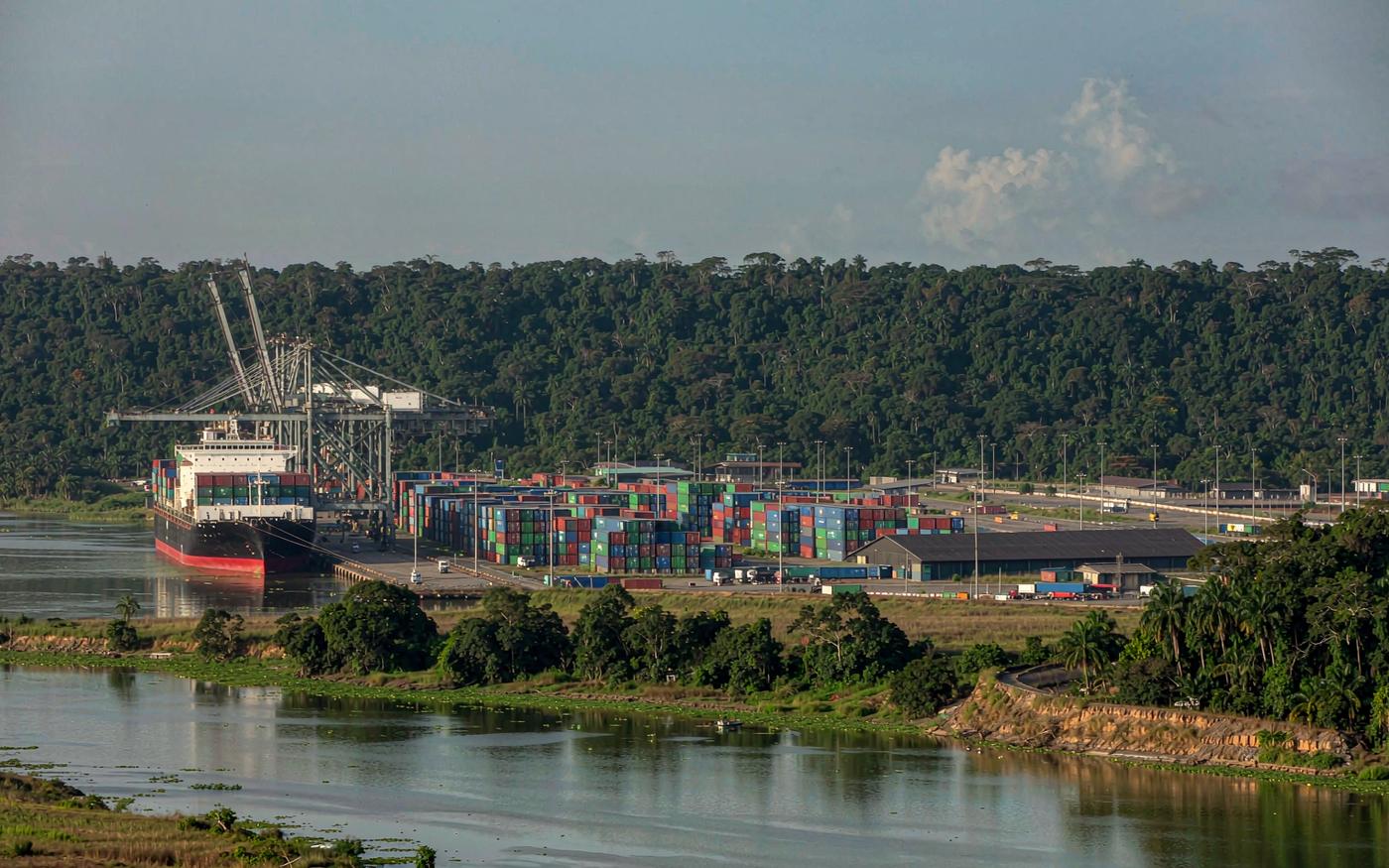
Gabon is a small, oil-rich Central African market with a comparatively high income per head and an import profile to match: machinery, vehicles, food and construction materials all arrive by sea. Its two ports, Owendo near Libreville and Port-Gentil further south, are the entry points, and which one your carrier calls at decides where your goods land.
One document comes before everything else. Gabon requires a BIETC, an electronic cargo tracking note, and it is obtained online before the goods ship. Alongside it sits a familiar Central African pattern: French documentation, the CEMAC tariff, VAT, and a scattering of small community contributions on top.
This guide covers the ports, the modes and trade terms, the tracking note, how duty and VAT stack up, the inspection threshold and permit lines, what changed for essential goods in 2026, and the sequence from a Chinese supplier to a Libreville address.
At a glance
Customs is administered by the Direction Générale des Douanes et Droits Indirects, with declarations running on ASYCUDA and French documentation expected throughout. Owendo, serving Libreville, is the principal container port, with Port-Gentil the second. A BIETC, an electronic cargo tracking note, is mandatory for cargo to Gabon and is obtained online before shipment. Duty follows the CEMAC tariff, commonly quoted at 5 to 30 per cent of CIF value by band, with VAT at 18 per cent and reduced rates for some goods. Pre-shipment inspection applies above a value threshold reported at around XAF 3 million. Only a locally registered entity can act as importer of record.
How your cargo moves: China to Gabon
Eight steps from your supplier's door to yours. The last four are the ones shaped by local rules.
- Pickup from your supplierWe collect the goods anywhere in China and bring them to our consolidation point.
- Export clearanceChina customs declaration filed and released before the goods move to the port.
- Loading and departureContainer loaded, sealed and handed to the carrier at the Chinese port.
- Main carriageOcean, air or rail movement booked on the route agreed for your cargo.
- Arrival at the gatewayDischarge at the port or airport of entry, recorded on the carrier's manifest.
- Import clearanceCustoms declaration filed locally, with duty and tax assessed on the declared value.
- Customs releaseGoods released into free circulation once duty and tax are settled.
- Final deliveryOnward movement to your delivery address, warehouse or nominated depot.
Duty rates, VAT rates and clearance times move, and the figure that applies to your goods is the one set for your commodity code on the day of clearance. We check the current position against your code before your goods sail and confirm it to you in writing — ask for that check when you request a quote.
Owendo or Port-Gentil, and which one your carrier calls at
Owendo, on the estuary near Libreville, is the principal container port and the one most importers will use. Port-Gentil, further down the coast, serves the oil industry and the south, and is relevant if your consignee or your project is closer to it.
The practical test is the carrier's rotation rather than the map. Ask which of the two your carrier actually calls at, because a service that does not call at Port-Gentil will discharge at Owendo and leave you with an inland leg you did not budget for.
Clearance is described as standardised but accuracy-critical, and reported clearance times run from about a week for a clean file to considerably longer when documents are contested. Sending documents early for a pre-check is the cheapest way to influence which of those you get.
Picking how it travels: container ship or aircraft to Libreville
A full container suits volume above roughly 15 cubic metres and is the standard for stock orders. Groupage, or LCL, suits smaller volumes and orders assembled from several suppliers, and adds consolidation and deconsolidation days at both ends.
Air freight into Libreville suits urgent, high-value or perishable cargo and is charged on chargeable weight. Courier services operate in Libreville and Port-Gentil and handle documents and small parcels under their own procedures.
| Mode | Transit commonly quoted | What it suits |
|---|---|---|
| Sea FCL to Owendo | 30 to 45 days port to port | Volume above about 15 cbm |
| Sea LCL | Add 5 to 10 days | Two to twelve cubic metres |
| Air freight to Libreville | 3 to 8 days airport to airport | Urgent or high-value cargo |
| Courier | 4 to 7 days door to door | Samples and documents |
Inland transport from the port to the final address is worth quoting separately. Road infrastructure is concentrated between the main cities, and one of the large carriers began offering integrated inland container transport in early 2026, which is a useful option where it covers your destination.
Trade terms in a market where the importer must be local
EXW leaves you with the Chinese export formalities and no control over the loading. On a lane with a mandatory pre-shipment tracking note, that is the wrong place to start.
FOB is what most experienced buyers use: the supplier loads in China, risk passes there, and you control the carriage and the certificate timing. It also keeps freight and destination charges visible as separate numbers.
CIF and CIP cover carriage and insurance to the port while the risk still passes in China. CIF to Owendo does not include the inland leg, and buyers regularly discover this after the fact.
DDP is worth particular thought here, because the importer of record has to be a locally registered entity. If you have no Gabonese entity, someone has to act in that capacity, and DDP is one way of buying that. Understand that you are also delegating the declared value and the tax payment.
From a Chinese port to a Libreville warehouse, in stages
Order confirmed and trade term agreed
Use an Incoterms 2020 term and write it into the contract.
Establish who is the importer of record
Only a locally registered entity can clear goods, so if you have no Gabonese entity you need an agent acting for you. Sort this out first.
Obtain the BIETC online before shipment
The electronic tracking note is mandatory for all cargo to Gabon and is applied for before the goods ship.
Book the inspection if the value triggers it
Above the reported threshold, pre-shipment inspection applies. Schedule it at the factory.
Pickup, consolidation and export declaration in China
Your forwarder collects or consolidates, declares the export and provides the seal number and loading photographs.
Ocean leg to Owendo or Port-Gentil
Usually with transhipment. Check the draft bill of lading carefully.
Declaration through ASYCUDA, in French
The broker files the import declaration with the supporting documents attached.
Assessment and payment
Duty under the CEMAC bands, VAT, and the smaller contributions.
Release and inland delivery
Port charges, delivery order, then road transport to the final address.
BIETC: the electronic tracking note you obtain first
The BIETC, the Bordereau d'Identification Électronique de Traçabilité des Cargaisons, is an electronic cargo tracking note. It is mandatory for cargo to Gabon, it is obtained online before shipment, and it exists to track goods and prevent fraud.
Because it is applied for before the goods ship, it belongs on the booking-week checklist rather than the arrival-week one. As with every tracking note regime on this coast, the shipping details it needs only exist once you have a booking, so apply as soon as the booking is confirmed.
If the booking changes afterwards, vessel, consignee or quantity, tell your forwarder immediately. The note has to match the final documents, and a mismatch is the kind of problem that only surfaces when the container is already on the quay.
Duty under the CEMAC tariff, VAT, and the smaller contributions
| Charge | Indicative rate | Base |
|---|---|---|
| Customs duty | Commonly 5 to 30 per cent by CEMAC band | CIF value |
| VAT | 18 per cent standard, with reduced rates | CIF plus duty |
| Community integration tax | Small percentage | CIF value |
| OHADA contribution | Small percentage | CIF value |
| Excise | Product-specific | Alcohol, tobacco, vehicles and others |
The CEMAC tariff is a banded structure, and published figures for Gabon vary slightly on the exact bands, with some sources quoting four bands from 5 to 30 per cent and others including a zero band. Treat the published range as a planning figure and confirm your own HS code against the current tariff before you price a shipment.
Machinery tends to sit at the low end of the range and clothing, footwear and cosmetics at the top. The band your product falls into is worth more than any negotiation on the freight.
Inspection above XAF 3 million, and the goods that need permits
Pre-shipment inspection applies above a value threshold reported at around XAF 3 million. Below it, goods are not subject to that verification step; above it, arrange the inspection in China before loading.
Food and agricultural products need sanitary or phytosanitary certificates, and electronics may require technical approval. Pharmaceuticals need health ministry approval, and used vehicle imports are restricted with age limits.
Prohibitions cover narcotics, explosives and flammable materials, weapons and ammunition, counterfeit goods and counterfeit currency. Restricted lines requiring permits include medicines, food and beverages, plants and seeds, electronics with lithium batteries, and perfumes and cosmetics subject to volume limits.
Wood packaging must carry the ISPM-15 treatment mark. Where a category looks unusual, check it before booking rather than after arrival.
What the 2026 relief on essential goods changed
Gabon suspended import duties, VAT and scanning fees on certain essential goods, reported as covering food staples and construction materials, for a six-month period from early 2026. If your cargo falls into one of those categories, this changes the arithmetic materially, but a suspension is a measure with an end date. Confirm both the scope and the current status before you rely on it.
The wider lesson is that Gabon has been active on trade measures recently, so a rate you used six months ago may not be the rate today. Ask your broker to confirm the current treatment of your HS code rather than assuming continuity.
Documents for a Gabonese customs entry
| Document | What it has to show |
|---|---|
| Commercial invoice | French descriptions, Incoterm, unit and total values, HS codes where known |
| Packing list | Carton count, weights, dimensions, marks and numbers |
| Bill of lading or air waybill | Consignee matching the importer of record |
| BIETC | Electronic tracking note obtained before shipment |
| Certificate of origin | Issued by CCPIT or China customs |
| Import declaration | Filed through the customs system by the broker |
| Verified gross mass | Confirmed before loading |
| Permits and certificates | Food, pharmaceuticals, plants, vehicles and electronics |
French documentation reduces disputes and speeds processing. A French invoice description and a French packing list are worth arranging in China before loading.
Consistency across the invoice, packing list and bill of lading keeps a file moving; mismatches are the main cause of holds and storage charges.
Importing as an individual or as a Gabonese registered company
An individual can import personal effects, but commercial importing is done by a registered entity. The importer of record must be a locally registered entity, and a non-resident needs a Gabonese agent to act in that capacity.
The VAT difference is the practical one. A registered business accounting for VAT can recover the import VAT; an individual pays it and cannot. At 18 per cent on the duty-inclusive value, that is a serious difference on a container.
Establish the importer of record arrangement before the goods ship, agree the scope in writing, and agree who pays storage if the file stalls.
Yours in China, theirs in Libreville: who does what
In China your forwarder collects or consolidates, books the space, handles the export declaration, arranges any pre-shipment inspection and obtains the bill of lading. They should also be applying for the BIETC on your behalf, and arranging the French versions of the invoice and packing list.
At destination a licensed broker files the import declaration through the customs system, responds to queries, arranges examination if one is ordered and pays the duty and VAT. You need both, and one does not substitute for the other.
Judge them on specifics: the legal entity name, how long it has traded, a written quotation split into origin charges, freight and the destination charges you will owe separately, and a clear answer on who pays storage if clearance is delayed. Ask whether they handle the BIETC and the importer of record question, because those two separate brokers who work this lane from those who do not.
Warning signs are consistent: pressure to declare a lower value, no written breakdown, an address that is only a phone number, and vagueness about who carries the risk during the voyage.
Sample consignments Libreville actually sees
These three examples are illustrative, not client records. They show how the routing follows from the cargo.
A 40ft container of construction materials for Libreville. Full container to Owendo with the BIETC obtained before shipment and French invoice descriptions prepared in China. The lesson is that the tracking note and the translation both belong in the origin schedule.
Eight cubic metres of workwear and safety equipment. Consolidated and shipped as LCL, with the CEMAC band checked before pricing, because clothing sits at the top of the duty range. The lesson is that the band dominates the landed cost on this category.
A consignment of equipment for a project inside a special economic zone. Routed through the single-window clearance available in the zone near Libreville. The lesson is that the zone route can be faster, but only if it is arranged in advance rather than discovered on arrival.
Why importers use Goodhope on this lane
Six things that are different about working with us on China to Gabon shipments.
Get your Gabon shipment moving
Send us the commodity, the volume and the delivery address, and we will come back with a routing that puts the BIETC and any inspection on the calendar before you book.
Get a quote Talk to usRelated pages
Frequently asked questions
Which port should I ship to in Gabon?
Owendo, serving Libreville, is the principal container port and the usual choice. Port-Gentil serves the south and the oil industry. The practical test is which of the two your carrier actually calls at.
What is the BIETC and when do I get it?
The BIETC is Gabon's electronic cargo tracking note. It is mandatory for cargo to Gabon and is obtained online before shipment. Apply as soon as the booking is confirmed, and tell your forwarder immediately if the booking changes.
How much duty and VAT will I pay?
Duty follows the CEMAC tariff, commonly quoted at 5 to 30 per cent of CIF value by band, with machinery at the low end and clothing, footwear and cosmetics at the top. VAT is 18 per cent standard, with reduced rates for some goods.
Are there extra taxes on top?
Yes, several small contributions including a community integration tax and an OHADA contribution. Individually small, together they are worth budgeting for.
When does pre-shipment inspection apply?
Above a value threshold reported at around XAF 3 million. Arrange it in China before loading, not at the port.
Do documents have to be in French?
French is strongly preferred and reduces disputes and speeds processing. Arrange a French invoice description and packing list in China before loading.
Can a foreign company be the importer of record?
No. The importer of record must be a locally registered entity, so a non-resident needs a Gabonese agent acting in that capacity. Establish that arrangement before the goods ship.
What changed in 2026?
Gabon suspended import duties, VAT and scanning fees on certain essential goods, reported as covering food staples and construction materials, for six months from early 2026. Confirm the current scope and status before relying on it.
How long does sea freight take from China?
Commonly quoted at 30 to 45 days port to port for a full container, with air freight around 3 to 8 days airport to airport. Add the clearance window on top.
Do I need both a forwarder and a broker?
Yes. The forwarder handles origin consolidation, export declaration, the BIETC and any inspection. The licensed broker files the declaration through the customs system and pays the duty and VAT.