
Home / Shipping to Germany / How to Ship from China to Germany
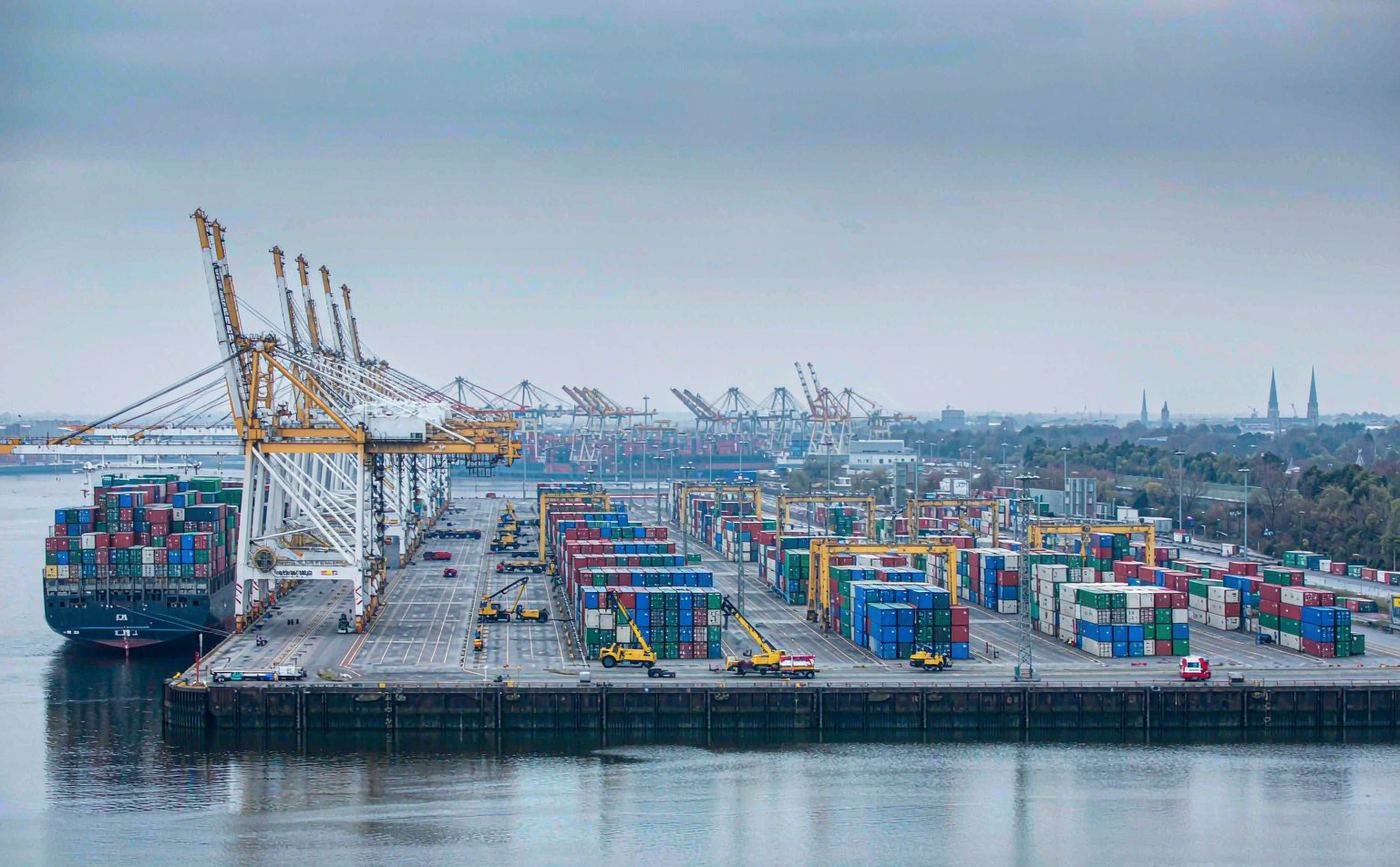
How to Ship from China to Germany: Sea, Rail, Air and Customs
Germany buys more from China than any other country in Europe, and for a first-time importer it is a good market to learn on — provided you know two things up front. First, Germany is the one major lane where rail is a genuine option, not a curiosity. Second, Germany has a few compliance rules of its own that sit on top of EU requirements, and one of them — packaging registration — can stop your goods at the border if you have not done it.
This guide is written for buyers who are new to importing from China. It walks through how to choose between sea, rail and air, what the trade terms actually mean for your wallet, how a shipment moves step by step, which products need which paperwork, how much duty and VAT you will pay, and how to pick a freight forwarder you can actually trust. No prior logistics knowledge assumed.
If you only remember three things. Choose FOB with your Chinese supplier and let your own forwarder control the shipment; use rail to Duisburg when five weeks is too long but air is too expensive; and register for LUCID packaging before your first container, because German customs can hold cargo without it.
How your cargo moves: China to Germany
Eight steps from your supplier's door to yours. The last four are the ones shaped by local rules.
- Pickup from your supplierWe collect the goods anywhere in China and bring them to our consolidation point.
- Export clearanceChina customs declaration filed and released before the goods move to the port.
- Loading and departureContainer loaded, sealed and handed to the carrier at the Chinese port.
- Main carriageOcean, air or rail movement booked on the route agreed for your cargo.
- Arrival at the gatewayDischarge at the port or airport of entry, recorded on the carrier's manifest.
- Import clearanceCustoms declaration filed locally, with duty and tax assessed on the declared value.
- Customs releaseGoods released into free circulation once duty and tax are settled.
- Final deliveryOnward movement to your delivery address, warehouse or nominated depot.
Duty rates, VAT rates and clearance times move, and the figure that applies to your goods is the one set for your commodity code on the day of clearance. We check the current position against your code before your goods sail and confirm it to you in writing — ask for that check when you request a quote.
Germany is the one lane where rail really competes
On most China routes the decision is ocean or air, and the gap between them is enormous. Germany is different. The China–Europe rail corridor terminates at Duisburg, and from there trucking reaches most of Germany and the Benelux in a day. That puts rail squarely in the middle: roughly half the sea transit at a fraction of the air rate.
| Mode | Typical transit | Best for | What to watch |
|---|---|---|---|
| Sea FCL (20ft / 40ft / 40HQ) | 28–38 days port to port into Hamburg or Bremerhaven | Planned volume; lowest cost per unit. The default once you are importing regularly. | Asia–Europe sailings have been lengthened since 2024 by Red Sea diversions, so plan on the longer end of the range. |
| Sea LCL | Sea transit plus roughly 5–8 days for consolidation | Small volumes or several suppliers combined into one shipment. | Deconsolidation at the German end; LCL is charged on volume or weight, whichever is greater. |
| Rail | 18–22 days terminal to terminal to Duisburg | Volume that cannot wait five weeks but cannot justify air freight. | Rail is unaffected by the sea diversions, which is part of why it has become mainstream. Book ahead — capacity is finite. |
| Air freight | 3–7 days door to door via Frankfurt or Munich | Launch stock, urgent replenishment, high-value electronics, samples. | Priced on chargeable weight, so bulky light cargo costs far more than you expect. Frankfurt handles dangerous goods; not every airport does. |
| Express courier | 1–4 days | Documents, small spares, single parcels. | The EUR 150 duty-free threshold ended on 1 July 2026 — see the tax section. |
Our pages on sea freight FCL to Germany, LCL to Germany, rail freight and air freight to Germany cover each mode in detail, and the volumetric weight calculator will tell you whether an air quote is realistic for your carton dimensions.
Which German gateway: Hamburg, Bremerhaven or Wilhelmshaven
All three are North Sea ports, and for most importers the choice is between the first two.
- Hamburg — Germany's largest container port and a major rail hub in its own right, with strong connections into central and eastern Europe. The default landing point.
- Bremerhaven — a high-capacity alternative that is often the better answer when Elbe congestion or vessel draft is a factor.
- Wilhelmshaven — Germany's only deep-water port, able to take the largest container vessels.
- Duisburg — not a port but the main European end of the China–Europe rail corridor, with onward trucking across Germany and the Benelux.
A practical note for buyers whose customers are spread across Europe: goods cleared in Hamburg are in free circulation across all 27 EU member states, so you can clear once in Germany and deliver onward to France, Poland or the Netherlands without clearing again. Our container terminals directory lists the ports we serve.
Picking a trade term that protects you, not just a price
Your supplier will quote you a price with a three-letter term attached, and that term decides who pays for what — and who carries the risk if something goes wrong. This is the single most common source of nasty surprises for new importers.
| Term | Who pays the freight | Who clears customs | When risk transfers to you | Good for |
|---|---|---|---|---|
| EXW (Ex Works) | You, from the factory door | You, in China and Germany | At the supplier's premises | Rarely a good idea. You take on Chinese export formalities you cannot easily handle. |
| FOB (Free On Board) | You arrange and pay the main freight | Supplier handles Chinese export; you handle German import | When goods are loaded on the vessel | The default recommendation. You control the shipment and the costs are transparent. |
| CIF (Cost, Insurance, Freight) | Supplier pays to the German port | Supplier handles export; you handle import | When goods are loaded on the vessel | Looks convenient, but the supplier chooses the carrier and you often face high destination charges. |
| DAP (Delivered At Place) | Seller delivers to your address | You still clear and pay duty and VAT | On arrival at your address | Only if you already have German import arrangements in place. "Delivered" does not mean "cleared". |
| DDU (Delivered Duty Unpaid) | Seller delivers | You pay duty and VAT | On arrival | Similar to DAP; the term is older and now largely superseded. |
| DDP (Delivered Duty Paid) | Seller pays everything | Seller's side handles clearance | On arrival | Simplest for a first shipment — but see the warning below. |
| Port to port | You pay the ocean leg only | You handle both ends | Port to port | When you have your own arrangements at both ends and want the freight cost isolated. |
| Airport to airport | You pay the air leg only | You handle both ends | Airport to airport | The air equivalent; you arrange collection and delivery yourself. |
The DDP trap. DDP sounds like the easy answer, and for a one-off it often is. But someone has to be the legal importer of record in Germany, and a poorly structured DDP deal can leave you unable to reclaim the 19% import VAT. On a meaningful shipment that VAT is usually worth more than anything you saved on freight. If you are VAT-registered and importing regularly, import under your own EORI instead. Read our DDU and DDP page before you agree to either.
How a shipment actually moves, step by step
You agree terms and settle the commodity code
Before anything moves, agree FOB with your supplier and confirm the TARIC commodity code for every line. The code sets your duty rate, and getting it wrong is the leading cause of German customs delays.
Collection and consolidation in China
Your forwarder collects from your supplier — or from several suppliers — and brings the goods to a consolidation warehouse. If you are buying from multiple factories, consolidating here turns three shipments into one customs entry.
Documents prepared and export declaration filed
Commercial invoice, packing list and export declaration, prepared and filed before the cargo leaves China. Regulated goods may need inspection or an export licence.
Advance security data filed
EU Import Control System 2 (ICS2) requires pre-arrival cargo data — buyer, seller and a precise description — submitted before the goods reach the EU. Your carrier handles this filing, which is why booking with an organised forwarder matters.
International leg
Vessel to Hamburg or Bremerhaven, block train to Duisburg, or flight to Frankfurt or Munich. On rail there is additionally a gauge change at the border, which is a normal part of the transit, not a delay.
German customs clearance through ATLAS
The import declaration is filed through ATLAS, Germany's electronic customs system, using your EORI number. Duty and the 19% import VAT are assessed and paid or deferred, and customs either releases the cargo or selects it for examination.
Release, delivery and onward distribution
Once released, trucking from the port or terminal to your receiving window — or onward to other EU destinations, since the goods are now in free circulation.
Different products, different paperwork
Two shipments of the same weight and value can have completely different documentation requirements. What follows is the short version by category; the critical point is that most of these certificates have to be arranged in China, before the goods ship.
| Product type | What German and EU rules expect | When to arrange it |
|---|---|---|
| Electronics and electrical goods | CE marking, WEEE registration for take-back and recycling, and battery compliance where applicable. | In China, before production finishes. |
| Toys | CE marking to the Toy Safety Directive, with EN 71 test reports. | In China, well before shipment. |
| Food contact articles | Compliance with the EU framework regulation on food contact materials. | At supplier selection. |
| Cosmetics | EU cosmetics regulation compliance, including labelling and responsible person. | Before shipment. |
| Anything with wooden packaging | ISPM-15 heat treatment or fumigation, with the stamp visible on the packaging. | At packing, in China. |
| Lithium batteries and dangerous goods | A full dangerous goods declaration with supporting documentation, submitted before booking — not at the gate. | At quotation stage. |
| All consumer products | Under the EU General Product Safety Regulation, in force since December 2024, most consumer products need an EU-based responsible person. | Before you list the product for sale. |
The documents that every commercial shipment needs, whatever the product:
- Commercial invoice — with accurate value in EUR or USD, and a description specific enough that customs can classify it. "Goods" or "parts" is not a description.
- Packing list — itemising contents, country of origin and HS codes.
- Bill of lading or air waybill — the transport document.
- An active EORI number — mandatory for customs clearance, unless you ship DDP and the seller's side acts as importer of record.
- Arrival notice — issued when the cargo lands.
Our import clearance documents page lists the full set, and Documents covers what we collect on the Chinese side.
Duty, import VAT and what changed on 1 July 2026
Germany applies the EU common customs tariff, so the duty rate is set by your TARIC code and is the same whether the goods enter through Hamburg, Rotterdam or anywhere else in the EU.
| Category | Indicative EU duty | Import VAT |
|---|---|---|
| Electronics | 0–3.5% | 19% |
| Clothing and textiles | 6–12% | 19% |
| Footwear | 8–17% | 19% |
| Furniture | 0–5.5% | 19% |
| Household appliances | 0–2.7% | 19% |
| Plastics | 3–6.5% | 19% |
| Toys | 0–4.7% | 19% |
| Books and certain foods | Varies | 7% reduced rate |
Indicative only. Verify your exact TARIC code, or have your broker confirm it in writing before you commit to a landed price.
Is there any tariff preference for Chinese goods? No. There is no EU–China free trade agreement, and China no longer benefits from the EU's generalised scheme of preferences. Chinese-origin goods pay the standard MFN rate. Origin also matters the other way: falsely claiming another origin to obtain a lower rate is a serious offence, not a loophole.
Import VAT is charged at 19% on the customs value plus duty. It is normally paid or deferred at import rather than postponed to a return, which is a real cash consideration if you are importing containers regularly — so ask your broker about deferment arrangements.
Worked example — a shipment with a CIF value of EUR 20,000 and a duty rate of 6%:
| Component | Basis | Amount (EUR) |
|---|---|---|
| Customs value (CIF) | — | 20,000 |
| Customs duty at 6% | on CIF | 1,200 |
| Import VAT at 19% | on CIF + duty | 4,028 |
| Total duty and VAT | 5,228 | |
| Landed, before inland delivery | 25,228 |
Illustrative. The definitive calculation appears on the ATLAS declaration prepared by your broker. If you are VAT-registered, the 19% is recoverable as input tax — which is why importing under your own EORI usually beats a DDP arrangement.
What changed on 1 July 2026. The previous EUR 150 duty-free threshold ended. Consignments up to EUR 150 are now subject to a flat duty of about EUR 3 per item, an arrangement expected to run until the EU Customs Data Hub comes into service. If you are an e-commerce seller or dropshipper sending many small parcels, model this into your per-unit economics — it is a different calculation from containerised freight.
LUCID: the German rule that catches new importers out
Alongside EU requirements, Germany has its own Packaging Act (VerpackG). Any business placing packaged goods on the German market — importers included — must register in the LUCID packaging register and pay recycling fees.
Three things make this one worth acting on early:
- It applies to the packaging, not just the product. Even simple goods are not exempt.
- German customs can hold a shipment that has no valid LUCID registration number.
- Amazon.de requires sellers to provide their LUCID number before listing products.
Register before your first shipment arrives, not after. It is inexpensive and quick compared with a container sitting at Hamburg.
Buying for yourself or buying to resell in Germany
As a private individual
You can receive personal goods, and low-value personal items have historically attracted relief. But commercial quantities imported as personal parcels to avoid duty are treated as misdeclaration, and the consequences are back taxes and penalties. If you are buying to resell, do not route through personal parcels.
As a company
You need an EORI number for customs and a VAT registration for the import VAT. An EU EORI obtained in any member state is valid across all 27, and a German EORI covers declarations anywhere in the EU. If your business is not registered in Germany, you will normally need a fiscal representative to hold an EORI and reclaim VAT on your behalf.
Met your supplier on a platform or at a show?
The two routes lead to different shipping patterns, and the difference matters more than most buyers expect.
Sourcing online (Alibaba, 1688, Made-in-China)
You start with samples, then a trial order, then a repeat order. Samples go by express. Trial orders are usually too small to fill a container, so they move as LCL or by air. The real opportunity comes later: once you are ordering from several online suppliers, consolidating them into one container in China turns multiple shipments into a single customs entry and a single entry fee.
Sourcing at a trade fair (Canton Fair and similar)
You have met the factory, seen the product and often negotiated on the spot — but you still need samples shipped home for evaluation, and the first production order is frequently larger than an online trial. Expect to move samples by courier immediately after the fair, then follow with a consolidated sea or rail shipment once production is finished. Ask the supplier for FOB terms at the fair itself, before the price is locked in.
Why you need a forwarder in China and one in Germany
This is the part new importers most often get wrong, so it is worth being blunt: the company you need is a freight forwarder, not a shipping line, not a trucking company, and not a warehouse.
A shipping line sells space on a vessel from one port to another. It will not collect your goods from three factories in different cities, consolidate them, handle Chinese export formalities, or arrange German customs clearance and delivery to your door. A trucking company moves a container you have already cleared. A warehouse stores goods you have already imported. Each does one piece.
A freight forwarder coordinates the whole chain, and you need one at each end:
Your forwarder in China
Collects from your suppliers, consolidates, warehouses if needed, prepares documentation, handles Chinese export clearance, books vessel, train or flight space, and reports to you in one thread. This is where problems are cheapest to fix — a wrong commodity code caught in Shenzhen costs nothing; the same error found in Hamburg costs demurrage.
Your forwarder or broker in Germany
Files the ATLAS import declaration, arranges duty and VAT payment or deferment, handles any customs examination, and organises delivery from the port or terminal — or onward distribution to other EU countries once the goods are in free circulation.
How to choose a Chinese freight forwarder you can trust
You are handing your cargo, your money and your delivery dates to a company on the other side of the world. Here is what to look for, and what should worry you.
Green flags
- They ask about your commodity before quoting. A forwarder who quotes without asking what you are shipping is guessing, and you will pay for the guess later.
- They quote the whole route — origin charges, freight, and the destination charges you will actually face — rather than a low headline rate that reappears as a surprise.
- They explain the trade-offs, including when a slower or cheaper option is better for you.
- They are licensed and will say so. Ask for the NVOCC licence number.
- You get a named contact who answers outside a form submission.
- They flag compliance issues — batteries, wood packaging, certification — at quotation stage rather than after booking.
Red flags
- A price far below every other quote. It is usually missing destination charges, and you will meet them at the port.
- Reluctance to put the full cost breakdown in writing.
- No questions about the cargo, its value or its commodity code.
- Pressure to declare a lower value "to save you duty". That is fraud, and as the importer you carry the liability.
- No verifiable company licence, and no physical presence in China.
Three shipments, three different answers
A retailer restocking furniture
Sea FCL into Hamburg, planned two months ahead. Duty on furniture is modest, so the cost drivers are the ocean leg and the inland truck. The one German-specific trap is LUCID: the goods arrive wrapped and packed, so register before the container sails.
An online seller whose launch date is fixed
Rail to Duisburg. At 18–22 days it lands roughly half way between a five-week sailing and an air freight bill, which is exactly the position a launch stock order is usually in. Combine several suppliers into one consolidated shipment so there is a single customs entry.
Samples and a first trial order from a trade fair
Samples by express courier the week you get home — and note that since 1 July 2026 even small consignments carry the flat duty. The first production order follows as LCL if it does not fill a container, moving to FCL or rail once volumes justify it.
Frequently asked questions
Is rail freight from China to Germany worth it?
On most lanes the choice is ocean or air. Germany is the exception. The China–Europe rail service into Duisburg runs roughly 18 to 22 days terminal to terminal, which is about half the sea transit at a fraction of the air rate. If your volume cannot wait five weeks but does not justify air freight, rail is usually the answer. It is also unaffected by the Red Sea diversions that have lengthened Asia–Europe sailings since 2024.
How long does shipping from China to Germany take?
Sea freight into Hamburg or Bremerhaven typically runs 28 to 38 days port to port, though Asia–Europe sailings have been lengthened since 2024 by the Red Sea diversions. Rail to Duisburg is about 18 to 22 days. Air freight is 3 to 7 days door to door, and express courier around 1 to 4 days. Add collection, customs clearance and onward trucking to any of these for the door-to-door figure.
What taxes will I pay importing from China into Germany?
Customs duty under the EU common tariff, set by your TARIC commodity code and typically 0 to 17% for consumer goods, plus German import VAT at 19% calculated on the customs value plus duty. A reduced VAT rate of 7% applies to some goods such as books and certain foods. There is no EU–China free trade agreement, so Chinese-origin goods receive no preferential rate.
What changed for low-value shipments into Germany in July 2026?
From 1 July 2026 the previous EUR 150 duty-free threshold no longer applies. Consignments up to EUR 150 are instead subject to a flat duty of about EUR 3 per item, a change that matters most to e-commerce sellers and dropshippers sending many small parcels. The arrangement is expected to run until the EU Customs Data Hub comes into service.
What is LUCID and do I need it?
LUCID is the German packaging register established under the Packaging Act (VerpackG). Any business placing packaged goods on the German market — including importers — must register and pay recycling fees. It applies to the packaging, not just the product. German customs can hold a shipment that has no valid LUCID registration, and Amazon.de requires sellers to provide their LUCID number before listing. Register before your first shipment, not after.
Can an individual import from China into Germany?
Private individuals can receive goods, but commercial import volumes need an EORI number and, in practice, a business with a VAT registration. Sending commercial quantities as personal parcels to avoid duty is treated as misdeclaration, and the consequences are back taxes and penalties. If you are buying regularly to resell, set up as a business rather than routing through personal parcels.
Should I use DDP shipping to Germany?
DDP can be the simplest option for a first shipment, because the seller's side handles German clearance and pays the duty and VAT. The catch is that someone has to be the importer of record, and a poorly structured DDP arrangement can cost you the right to reclaim the 19% import VAT — which is often worth more than any saving on the freight rate. If you are VAT-registered and importing regularly, importing under your own EORI is usually better.
Do I need a freight forwarder, or can I book with a shipping line directly?
Use a freight forwarder. A shipping line sells space on a vessel from port to port and will not collect your goods from three different factories, consolidate them, handle Chinese export clearance, or arrange German customs and delivery. The practical structure is one forwarder in China to handle the origin side and one in your own country to handle clearance and delivery. A forwarder is not the same thing as a trucking company, a warehouse or a shipping line.
What you get when Goodhope runs your Germany lane
We quote sea, rail and air side by side
Germany is the lane where that comparison genuinely changes the answer. We price all three on your actual volume and date rather than pushing the one we prefer.
Multiple suppliers, one shipment
We collect from several factories across China, consolidate at our warehouse, check for damage, and move everything as one shipment with one customs entry.
Compliance flagged before you book
Batteries, wooden packaging, certification and dangerous goods are identified at quotation stage — while they are still cheap to fix. See our dangerous goods and non-DG chemicals to Germany pages.
Since 2012, NVOCC licensed
NVOCC licence GD20230925153335. One named contact from factory collection in China through to German delivery.
Goodhope Freight handles sea, rail, air and express from China to Germany, including consolidation, export clearance and cargo insurance. We are not a German customs broker; we coordinate with yours and make sure everything on the China side is correct before the cargo leaves.
Why importers use Goodhope on this lane
Six things that are different about working with us on China to Germany shipments.
Weighing up sea, rail and air into Germany
Send us the commodity, HS codes if you have them, dimensions and weight, origin city and German delivery postcode. We will price sea, rail and air side by side, flag any compliance exposure, and quote the full route.