
Home / Shipping to Greece / How to Ship from China to Greece
How to Ship from China to Greece: Piraeus, 24% ΦΠΑ & Island Delivery
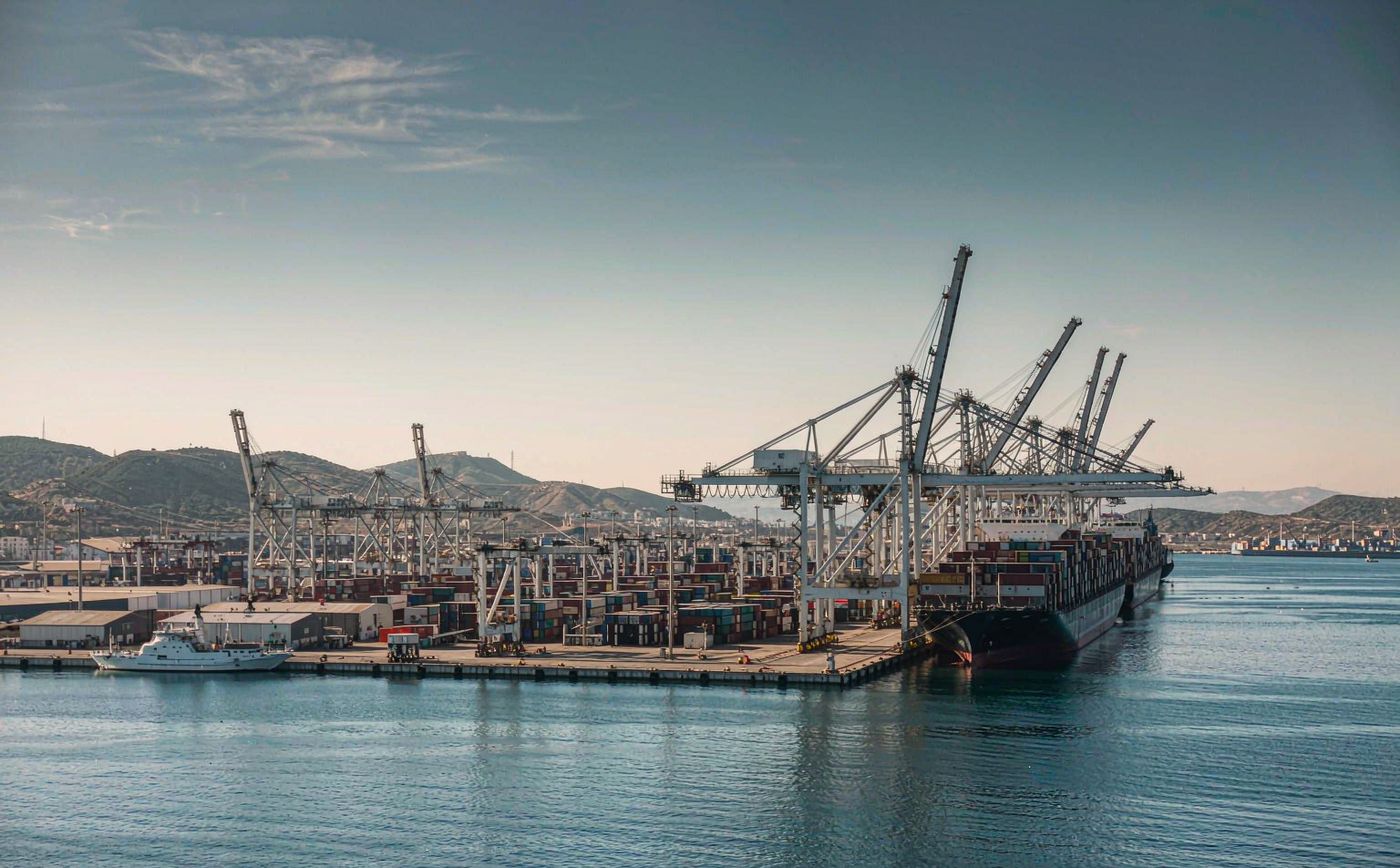
Greece has three features that a first-time importer will not infer from a freight quotation, and each of them is worth knowing before you book. The first is that Piraeus is the most Chinese of European ports: COSCO Shipping holds a 67% stake in the Piraeus Port Authority, which makes it the largest Chinese investment in an EU seaport and a flagship of the Belt and Road Initiative. In practice that means direct mainline calls from Asia rather than a feeder from another Mediterranean hub.
The second is that Greece charges 24% VAT, tied for the second highest rate in the European Union behind Hungary. The third is purely geographic and catches more people than either of the others: Greece has inhabited islands, and an island delivery address changes the price and the schedule. A quotation that covers delivery to Athens may not cover delivery to Mykonos, and the difference is a ferry leg, local handling and several days.
Everything else is standard EU. Greece has been in the customs union and single market since 1981, duty comes from the TARIC code, there is no EU–China free trade agreement, and the customs and tax administration is a single independent authority, AADE. The complications on this lane are the three above, plus one administrative system that arrives as soon as you start selling.
This guide is written for buyers importing from China for the first time. It covers why Piraeus is different, choosing between Piraeus and Thessaloniki, the island question, transit times by sea, rail and air, trade terms, the documents AADE asks for, the 24% rate and the reduced island rates, import VAT and deferment, product compliance and the myDATA reporting system, and how to tell whether a forwarder genuinely books this lane.
Greece at a glance
- Piraeus takes direct Asia mainline calls. COSCO Shipping holds 67% of the Piraeus Port Authority; the port is one of Europe's largest container ports.
- Thessaloniki is the Balkans gateway — Bulgaria, Romania, Serbia, North Macedonia and Albania.
- Other ports: Volos (central/eastern), Igoumenitsa (north-west), Alexandroupolis (north-east), Heraklion (Crete).
- Islands add a leg. Crete, Rhodes, Mykonos, Santorini and smaller islands involve ferry or coastal shipping, local handling and extra days. Confirm it is in the quote.
- ΦΠΑ 24% standard — tied second highest in the EU. Reduced 13% and 6%.
- Five Aegean islands pay less: Lesbos, Chios, Samos, Kos and Leros at 17%, 9% and 4%, currently scheduled to run to the end of 2026.
- AADE — the Independent Authority for Public Revenue — runs tax and customs; declarations are filed electronically through the Greek customs system.
- Greek VAT numbers use EL, not GR. A systems detail that breaks validation more often than it should.
How your cargo moves: China to Greece
Eight steps from your supplier's door to yours. The last four are the ones shaped by local rules.
- Pickup from your supplierWe collect the goods anywhere in China and bring them to our consolidation point.
- Export clearanceChina customs declaration filed and released before the goods move to the port.
- Loading and departureContainer loaded, sealed and handed to the carrier at the Chinese port.
- Main carriageOcean, air or rail movement booked on the route agreed for your cargo.
- Arrival at the gatewayDischarge at the port or airport of entry, recorded on the carrier's manifest.
- Import clearanceCustoms declaration filed locally, with duty and tax assessed on the declared value.
- Customs releaseGoods released into free circulation once duty and tax are settled.
- Final deliveryOnward movement to your delivery address, warehouse or nominated depot.
Duty rates, VAT rates and clearance times move, and the figure that applies to your goods is the one set for your commodity code on the day of clearance. We check the current position against your code before your goods sail and confirm it to you in writing — ask for that check when you request a quote.
Why Piraeus is the most Chinese of European ports
The ownership structure is unusual and it has a practical effect on your routing. COSCO Shipping holds a 67% stake in the Piraeus Port Authority, which is the largest Chinese investment in a European Union seaport, and the port has been developed as the maritime flagship of the Belt and Road Initiative into Europe. Under that investment Piraeus has grown into one of Europe's largest container ports, and the terminal is operated to handle the biggest vessels on the Asia–Europe trades.
What that means for an importer is more mundane than the headlines suggest, and more useful:
- Direct mainline calls rather than feeder. Many Mediterranean ports receive Asian cargo on a feeder from a larger hub. Piraeus takes mainline vessels directly, which removes a transhipment and the connecting-vessel risk that comes with it.
- Fewer handlings and shorter dwell. A container that is not transhipped is handled less, and less handling means less damage risk and usually a faster release.
- A genuine distribution base for south-east Europe. Because of the volume and the onward road and rail corridors, Piraeus is used as a base for supplying the Balkans and the eastern Mediterranean, not only Greece.
One thing ownership does not change: Piraeus is an EU port in the EU customs union. Greek customs applies the Union Customs Code in full, the same duty rates apply as anywhere else in the EU, and no paperwork is simplified because the terminal has Chinese shareholders. Anyone who suggests otherwise is selling something.
Piraeus or Thessaloniki: the port depends on where cargo goes next
Greece has several working ports and they are not interchangeable. The right choice is decided by what happens to the goods after they are discharged.
| Port | Where it serves | Choose it when |
|---|---|---|
| Piraeus | Athens and Attica, southern Greece, and onward distribution into south-east Europe and the eastern Mediterranean | The default for most imports. Largest container capacity, direct Asia services, densest onward connections. |
| Thessaloniki | Northern Greece and the Balkans | The goods are going to Bulgaria, Romania, Serbia, North Macedonia or Albania, or to a northern Greek address. This is the Balkans gateway and the road corridors start here. |
| Volos | Central and eastern Greece | Delivery addresses in Thessaly and the surrounding regions, where the inland run from Piraeus is long. |
| Igoumenitsa | North-west Greece | Western addresses and the ferry corridor towards Italy. |
| Alexandroupolis | North-east Greece | Addresses close to the Turkish and Bulgarian borders. |
| Heraklion | Crete | Crete deliveries, which otherwise involve a ferry leg from Piraeus. |
The mistake to avoid is defaulting to Piraeus because it is the big one, then paying for a long road haul that Thessaloniki would have avoided. Give your forwarder the delivery postcode, not the country, and ask which port the inland cost actually favours.
Rail out of Piraeus, and the corridor north to Central Europe
There is a rail option here that works differently from the northern corridor through Poland. The Piraeus route is a land–sea corridor: cargo sails into Piraeus and continues north by rail through Thessaloniki towards Central Europe, on the corridor that runs up through the Balkans towards Belgrade and Budapest. Services combining the sea leg with the rail leg are commonly quoted at 18 to 25 days door to door into Greek destinations, which is faster than pure ocean routing into northern Europe and considerably cheaper than air.
Whether it suits you depends on the delivery address and on the cargo. It works best for regular flows into northern Greece and for onward movement into the Balkans and Central Europe. It does not suit southern or island addresses, where the road leg from Piraeus is short enough that rail adds handling without saving time.
The corridor restrictions are the usual ones and they are enforced: dangerous goods of any class are not carried, loose lithium batteries and most battery-powered products are excluded, and chemicals need a non-hazardous safety appraisal before booking. If your cargo falls into one of those groups, the rail leg disappears. See our dangerous goods to Greece and non-DG chemicals to Greece pages.
Islands, ferry legs and the surcharge nobody quotes
This is the Greek particular that costs importers the most money relative to how often it is discussed. A container discharged at Piraeus is on the mainland. Getting it to an island adds a ferry or coastal shipping leg, handling at the island port, and usually a wait for the sailing schedule — and a quotation that says "delivery to Greece" may or may not include any of it.
Ask three questions in writing before you accept an island price: is the island leg included in this quote; which carrier actually performs it; and how many days does it add. On smaller islands there may be an onward local ferry connection that not every carrier offers, and discovering that at the port is expensive.
Crete is the largest island market and has its own port at Heraklion, which is worth pricing directly rather than as a ferry from Piraeus. Rhodes, Mykonos, Santorini and the other inhabited islands generally work as a ferry leg from the mainland. There is also a seasonal element: summer tourism puts pressure on ferry and local delivery capacity across the islands, so a late-spring arrival is easier to move than an August one.
There is a tax side to islands as well, which the VAT section covers: five Aegean islands apply preferential VAT rates, and how that is determined in practice is by the consignee's address.
Three ways into Greece, and how long each one actually takes
| Mode | Typical transit | What it suits | What to watch |
|---|---|---|---|
| Ocean FCL to Piraeus | About 30 to 45 days port to port; commonly 29 to 39 days door to door | Full containers of furniture, building products, machinery, seasonal stock | Direct Asia services are the reason to use Piraeus. Ask whether your service calls directly or tranships. |
| Ocean LCL | Add roughly 5 to 10 days to the FCL times | 1–15 CBM where a full container makes no sense | De-consolidation happens at bonded facilities in Piraeus and follows their schedule, not yours. |
| Sea plus rail north | About 18 to 25 days door to door | Northern Greece and onward movement into the Balkans and Central Europe | Not for DG or lithium cargo. Adds a handling at the rail terminal. |
| Air freight to Athens (ATH) | About 4 to 7 days airport to airport | High-value or urgent cargo, samples, production stoppages | Chargeable weight rules. Thessaloniki (SKG) and Heraklion (HER) are also served. |
| Express courier | About 3 to 7 days door to door | Samples, documents, small urgent parcels | Couriers clear for you, which is convenient but leaves classification in their hands. |
Two seasonal notes. Greek summer puts pressure on island and local delivery capacity, and the pre-Chinese-New-Year rush tightens vessel space out of China. If your delivery date matters, build the buffer into the plan rather than hoping for it.
Trade terms on a Greek order when the buyer is on an island
The trade term decides who pays for which leg, and the leg that gets missed on Greek orders is the last one.
| Term | Supplier handles | You handle | Note for Greece |
|---|---|---|---|
| EXW | Goods at the factory door. | Everything from pickup onward. | Only workable with your own agent in China. |
| FOB | Goods on board at the Chinese port, export clearance done. | Main carriage, insurance, Greek clearance, duty, ΦΠΑ, inland and island legs. | The usual recommendation — you choose the service and can see what the island leg costs. |
| CIF | Carriage and insurance to Piraeus. | Clearance, duty, ΦΠΑ, inland delivery, island leg, destination charges. | "CIF Piraeus" is a valid term. It stops at the port: the island leg is yours unless you agreed otherwise. |
| DAP | Delivery to your Greek address. | Unloading, clearance, duty and ΦΠΑ. | If the address is on an island, confirm the term actually covers the ferry leg. |
| DDP | Everything including duty and taxes. | Unloading. | Simple to receive. Ask where they clear and who is importer of record, because that person controls your classification. |
Our DDU and DDP and local charges pages cover what lands at the destination end.
The documents AADE will ask for, and the system they arrive through
Greek customs and tax sit under AADE, the Independent Authority for Public Revenue (Ανεξάρτητη Αρχή Δημοσίων Εσόδων). Like Poland's KAS and Hungary's NAV, it is a single authority for both, which means the body that releases your goods is also the body that audits your VAT.
Declarations are filed electronically through the Greek integrated customs system, and the entry summary declaration is submitted by EDI before the goods arrive. The system runs automated risk assessment, and where an inspection is triggered you are notified before the cargo lands.
The document set is the standard EU one, with a couple of Greek emphases:
- Commercial invoice showing the trade term, the currency, and full details of both parties. Greek customs pays close attention to this document.
- Packing list with carton counts, weights and dimensions.
- Transport document — bill of lading, air waybill or rail consignment note.
- EORI number of the importer of record, with the EL prefix for Greek-issued numbers.
- Certificate of origin where origin verification or a preference is involved.
- Conformity documents — the CE declaration of conformity for regulated products, plus sector certificates for food, medical devices and chemicals.
Valuation is the sensitive point in Greece. Declared values are compared against reference pricing data, and where a value looks inconsistent customs can ask for proof of payment and the supply contract. Under-declaring to save duty delays the release and can be reassessed with penalties. Insuring at not less than 110% of invoice value is also standard practice.
More detail on our import clearance documents page.
Greek VAT at 24 percent, and the five islands that pay less
The standard Greek VAT rate, ΦΠΑ, is 24% — tied with Croatia for the second highest in the European Union, behind Hungary's 27%. Import ΦΠΑ is charged on the customs value plus duty plus the costs of getting the goods to their first destination in the EU, not on the invoice value alone.
| Rate | What it covers |
|---|---|
| 24% standard | Everything not reduced or exempt. |
| 13% reduced | Certain foodstuffs, some non-alcoholic drinks and water supplies, some pharmaceutical products, certain medical equipment for disabled persons, some agricultural supplies, hotel accommodation, restaurant and catering services outside entertainment venues, and some social services. |
| 6% super-reduced | Medicines, medical equipment, and certain cultural items. |
| 17% / 9% / 4% | The preferential island rates replacing 24% / 13% / 6% on Lesbos, Chios, Samos, Kos and Leros. In practice the rate follows the consignee's permanent address, and postcode matching is how it is applied. The regime has been extended repeatedly and is currently scheduled to run to the end of 2026. |
| 0% | Intra-EU and international air and sea transport, and exports. |
Two practical points from that table. If your customers are on one of the five islands, the preferential rate is real money and it is worth checking the postcode before you build a price list. And Greek VAT numbers use the EL prefix in VIES, not GR — if your invoicing or validation system prepends the ISO country code, validation will fail and your B2B paperwork will not reconcile.
Paying import VAT at Piraeus, and the deferment routes
The ordinary route is the same as elsewhere in the EU: pay import ΦΠΑ at clearance, then reclaim it as input tax on the periodic VAT return. At 24%, that is a meaningful float on every container, and it is worth understanding what alternatives exist before you accept it as unavoidable.
Deferring to the VAT return
Greece allows businesses to account for import VAT through the next VAT return rather than paying it at the border, instead of at clearance. This is subject to licensing and conditions rather than being automatic, so it needs an application and a conversation with AADE or your Greek accountant. Residents can also apply to defer VAT and customs payments until the 16th of the month following the period.
Onward supply within about 30 days
Where goods are imported and then immediately supplied onward to a customer in another member state, an exemption can apply — commonly framed as a supply within about 30 days of import. The condition is that the importer holds the customer's valid VAT number registered in VIES. This suits distribution and triangular arrangements rather than domestic importers.
Warehousing
Greece operates licensed VAT warehouses and bonded warehouses. Duty and import VAT stay suspended while goods sit in an approved facility and only fall due when they are released for free circulation. This suits anyone re-exporting, distributing onward, or not needing all the stock immediately.
Honest budgeting rule: plan on paying import ΦΠΑ at clearance and reclaiming it, and treat any deferment approval as upside. Published descriptions of the Greek deferment conditions vary, including on how large an importer needs to be, so confirm your own position with AADE or a Greek tax adviser rather than assuming.
How the commodity code sets your duty, and where low values get caught
Duty in Greece is EU duty. The rate comes from TARIC along with any trade-remedy or restriction measures on the code, and there is no EU–China free trade agreement, so budget on the standard rate for your code rather than a preference.
| Common import | What the code typically produces | What follows from it |
|---|---|---|
| Consumer electronics | Often zero or very low duty | CE marking with EMC and safety documentation, WEEE registration, and usually a battery inside the device, which changes how it can travel. |
| Apparel and textiles | Around 12% on many lines | EU textile labelling rules and, for some lines, origin verification. The duty is high enough that valuation gets scrutinised. |
| Footwear | Among the highest consumer rates, around 17% on some lines | Material of the upper and sole drives the code, so get it confirmed before shipping. |
| Furniture | Low single digits on many lines | Material and construction drive the code; treatment declarations can apply to wood. |
| Machinery | Low single digits on many lines | CE marking under the Machinery Regulation, declaration of conformity, technical file and Greek-language instructions. |
| Food, cosmetics, medical devices | Widely varying | Health certificates from an EU-approved establishment, product registration, and REACH or sector documentation — usually a bigger hurdle than the duty. |
The Greek emphasis is on valuation rather than classification. Declared values are checked against reference data, and a value that looks out of line with comparable shipments can trigger a request for payment proof, the supply contract or additional explanation. The consequence is a delayed release and, if the value cannot be supported, a reassessment and penalties.
On small consignments: the EU relief for goods valued at €150 or less was removed from 1 July 2026 and replaced with a flat charge of €3 per item for parcels below that value. Import ΦΠΑ never depended on a threshold and is charged regardless of value.
CE marking and myDATA before a Greek retailer lists you
Customs release is not permission to sell. Greek retailers and market surveillance ask for documentation, and they ask early.
- CE marking with a declaration of conformity and technical file behind it, for machinery, electrical equipment, toys, PPE, medical devices and construction products.
- GPSR, the General Product Safety Regulation — most consumer products need an identifiable responsible person established in the EU, and if you import, that may be you.
- Sector rules: food needs EU health certification from an approved establishment; medical devices need MDR conformity plus registration; chemicals need REACH compliance and safety data sheets.
- EPR obligations for packaging, electrical equipment and batteries placed on the Greek market, usually handled through a collective compliance scheme.
- Greek-language documentation — instructions, safety information and consumer labelling generally need to be in Greek. Customs will not check this; your customer will.
Then there is myDATA. Greece operates a mandatory electronic reporting system through AADE: invoices, receipts and accounting records are transmitted electronically, generally in real time or near real time for B2B invoices, with retail receipts following the next day and accounting summaries monthly. Businesses registered for Greek VAT must use it. A foreign seller without Greek VAT registration is not bound directly, but Greek business customers report the invoices on their side, and discrepancies between your paperwork and theirs get flagged automatically. Penalties for failing to transmit run to roughly €500 per invoice for smaller businesses and more for large ones, so if you are setting up in Greece, budget for the integration.
A private buyer and a Greek company with an EL number
As a private individual
You can import personal goods and pay duty plus 24% ΦΠΑ, and customs will ask for the same documents as for a commercial shipment. You cannot reclaim the ΦΠΑ and the deferment routes are not available to you. For a one-off personal purchase this is acceptable; for anything you intend to sell, it is an expensive way to operate.
As a registered business
A Greek company — commonly an IKE, EPE or AE — needs a ΦΠΑ number, which carries the EL prefix, and an EORI number, with both handled through AADE. In exchange, import ΦΠΑ becomes recoverable, deferment becomes discussable, and you can invoice Greek customers properly. Non-EU businesses appoint a Greek tax representative, a resident accountant or tax firm who files on their behalf and carries joint liability; expect the setup to take several weeks.
The deciding question is whether you will resell. If yes, register before the goods arrive, because retrofitting VAT registration onto a container already in the country is slow and expensive.
Finding a supplier when your lead time runs past a month
With a sea transit of roughly 30 to 45 days, and longer on an island delivery, a quality problem discovered on arrival has already cost you most of a quarter. That is the Greek reason to be more careful about supplier selection than you would be on a short lane.
The sequence that works: order samples from three shortlisted suppliers, insist on a pre-shipment inspection before the balance is paid, and ask for the CE declaration of conformity and test report for the exact model. Then visit the supplier who survives all three.
There is also a pattern in this market: many Greek buyers source through Italian or German distributors before importing directly. Going direct to China changes your margin and moves classification, product compliance, ΦΠΑ and reporting obligations onto you — a good trade once you have volume, a poor one for a single experimental line.
On consolidation: several small suppliers into one container at a Chinese warehouse is usually faster and cheaper per cubic metre than several LCL shipments, and gives you one set of documents and one clearance. See our warehouse and consolidation and consolidated shipment pages.
Ways to test a forwarder on the Piraeus lane
Each item below is one question you can ask before paying anything.
- Does the service call Piraeus directly, or does it tranship? Direct is the reason to use this port, and a generic quote will not tell you.
- Do they ask whether your delivery address is on an island? If they do not, the island leg will turn up as an extra later.
- Do they quote 24% ΦΠΑ and know the island preferential rates? Anyone working from a generic European figure is guessing.
- Do they know Greek VAT numbers use EL, not GR? Small detail, strong signal.
- Do they mention Thessaloniki when your address is in the north or the Balkans? A lane specialist will.
- Do they quote all-in, in writing, with a validity period? An all-in figure naming terminal handling, documentation and delivery beats a low headline plus "plus local charges".
- Do they hold a Chinese NVOCC registration and run their own consolidation warehouse? Both are checkable.
- Do they offer cargo insurance and explain the exclusions? See our cargo insurance page — carrier liability limits sit far below cargo value.
- Do they say what they do not do? Greek import clearance, ΦΠΑ accounting and myDATA reporting belong to the importer of record.
From the factory to a Greek address, in order
Classify the product and fix the paperwork
Settle the commodity code, check whether sector certificates apply, and get the CE declaration of conformity and test reports from the factory before anything is booked.
Choose the port by the delivery address
Piraeus for Athens and the south, Thessaloniki for the north and the Balkans, Heraklion for Crete. Confirm whether the service calls directly.
Confirm the island question in writing
If the final address is on an island, get the ferry leg, the performing carrier and the added days confirmed before you accept the price.
Agree the trade term
FOB for most first imports. If CIF Piraeus is offered, confirm in writing who pays for the inland and island legs.
Register on the Greek side
EORI first, ΦΠΑ registration before the goods arrive if you intend to reclaim VAT, and a Greek tax representative if your business is outside the EU.
Collection, consolidation and export clearance in China
Goods are collected from one or several factories, consolidated if needed, inspected if you arranged it, and cleared for export.
Main carriage and arrival at the Greek port
Track the vessel. The entry summary declaration is filed by EDI before arrival, and the automated risk system decides whether an inspection is triggered.
Clearance, ΦΠΑ and final delivery
The declaration is filed with AADE, duty is paid, and import ΦΠΑ is paid at clearance or handled through a deferment route if one is in place. Then inland delivery — plus the ferry leg if the address is on an island.
A first container into Piraeus, and the island that cost extra
An Athens hospitality supplier came to us with a first consolidated order from a furniture factory in Foshan and a lighting supplier in Zhongshan, around 24 CBM, with part of the delivery going to a hotel on Mykonos. The buyer had been quoted a single door-to-door price to "Greece".
The first surprise was the island. The quote covered delivery to Athens. The Mykonos portion needed a ferry leg, handling at the island port and a wait for the sailing schedule, and none of it was in the price. Once it was quoted properly the buyer split the shipment: the bulk went to the Athens warehouse and the hotel consignment went as a separate, priced movement. The cost was not enormous, but it was unbudgeted, and it added days to a delivery that had a fixed opening date behind it.
The second surprise was the VAT float. At 24% on customs value plus duty plus freight, the import ΦΠΑ on this container was a five-figure sum, and the buyer had assumed that being VAT-registered meant not paying it. It does not — it means being able to reclaim it. We said so at quotation stage, the buyer arranged the cash, and the reclaim came through the next return. Deferment was discussed and, on the published conditions, was not something to plan a first import around.
The third item was familiar: one lighting SKU had no CE declaration of conformity, and the factory could not produce one. Those cartons stayed in the bonded area while the rest was delivered. What decided it: the island leg and the VAT both were visible three weeks before the vessel sailed, and one question each would have surfaced them.
What Goodhope does on the Greek end of a shipment from China
Goodhope Freight has been moving cargo out of China since 2012, operating as a licensed NVOCC (registration GD20230925153335) from Shenzhen. On a Greek shipment our value sits in what happens before the vessel leaves and in telling you the things that are easy to omit from a quote.
- Ocean freight port to port — FCL and LCL into Piraeus or Thessaloniki, with whether the service calls directly stated in writing. See our LCL to Greece, Greece freight rates 2026 and Greece LCL rates 2026 pages.
- We ask about the island — before quoting, not after. If your delivery address is on an island, we price the leg and tell you how many days it adds.
- Air freight to Athens — airport to airport, with chargeable weight worked out before you book. See our air freight to Greece page.
- Rail via the Piraeus corridor where it fits — and an honest answer on what the corridor will not carry. See our reefer containers to Greece and shipping to Greece services pages.
- Consolidation in China — several suppliers, one container, one set of documents, one clearance.
- Documents checked before sailing — commodity codes, descriptions and conformity paperwork, because that is where Greek clearance problems start.
- Plain answers on what we do not do — Greek import clearance, ΦΠΑ accounting and myDATA reporting belong to the importer of record or their Greek representative. We coordinate with them and we do not pretend otherwise.
Why importers use Goodhope on this lane
Six things that are different about working with us on China to Greece shipments.
Cost a Greece shipment with the island leg included
Send us the product and its commodity code if you have it, the carton count and total weight or volume, the supplier's city and your delivery address in Greece — including the island if it is one. We will name the port and the service, tell you whether it calls Piraeus directly, price the island leg if there is one, and itemise the destination charges so the ΦΠΑ line is not a surprise.
Frequently asked questions
Which port should I use for shipping from China to Greece?
Piraeus handles the large majority of Greek container imports and is the answer for Athens and southern Greece. Thessaloniki is the better choice if the goods are going to northern Greece or onward into the Balkans, because it sits on the road corridors into Bulgaria, Romania, Serbia, North Macedonia and Albania. Volos serves central and eastern Greece, Igoumenitsa the north-west, Alexandroupolis the north-east, and Heraklion serves Crete. Choose by the final delivery address, not by habit.
How long does shipping from China to Greece take?
Sea freight into Piraeus is typically about 30 to 45 days port to port, with door-to-door commonly quoted around 29 to 39 days. LCL adds roughly five to ten days for consolidation and deconsolidation. Services combining a sea leg into Piraeus with rail north run about 18 to 25 days door to door to Greek destinations. Air freight into Athens is about four to seven days airport to airport, and express courier about three to seven days door to door. Add time if the delivery address is on an island.
Why is Piraeus so closely connected with China?
COSCO Shipping holds a 67% stake in the Piraeus Port Authority, which makes it the largest Chinese investment in a European Union seaport and a flagship of the Belt and Road Initiative. Under that investment Piraeus has grown into one of Europe's largest container ports, taking direct mainline calls from Asia rather than depending on feeder services from other Mediterranean hubs. For an importer that usually means fewer handlings and shorter dwell than a transhipped routing. It does not change the customs position: Piraeus is an EU port and EU customs rules apply in full.
Does it cost more to deliver to a Greek island?
Usually yes. An island delivery adds a ferry or coastal shipping leg, local handling at the island port and often a wait for the sailing schedule, and many quotations quietly exclude it. Before you accept a price for a delivery to Crete, Rhodes, Mykonos, Santorini or a smaller island, ask in writing whether the island leg is included, which carrier handles it, and how many days it adds. Some smaller islands require onward local ferry connections that not every carrier offers.
What VAT rate applies to imports into Greece?
The standard Greek VAT rate, FPA, is 24%, which is tied for the second highest in the European Union behind Hungary. Reduced rates of 13% and 6% apply to defined categories including certain foods, water, pharmaceutical products, hotel accommodation and restaurant services at 13%, and medicines and medical equipment at 6%. Five Aegean islands, Lesbos, Chios, Samos, Kos and Leros, apply preferential rates of 17%, 9% and 4%, currently scheduled to run to the end of 2026. Greek VAT numbers use the EL prefix in VIES, not GR.
Do I need an EORI number to import into Greece?
Yes. Any business importing into the European Union needs an EORI number, and one issued by any member state is valid throughout the EU. Businesses established in Greece apply through the Greek customs authority, which sits under AADE, and the number carries the EL prefix. It is a customs authority identifier, separate from a VAT number, and clearance cannot begin without it.
Can I avoid paying Greek import VAT in cash at the border?
The normal route is to pay import FPA at clearance and reclaim it on the periodic VAT return. Greece also has deferment routes: businesses may be able to account for import VAT through the next VAT return instead of paying at the border, subject to licensing and conditions, and residents can apply to defer VAT and customs payments until the 16th of the month following the period. There is also an exemption where goods are imported and then supplied onward to another member state within about 30 days, provided the customer holds a valid VAT number registered in VIES. Confirm your own position with AADE or a Greek tax adviser before budgeting around any of these.
What documents does AADE require for import?
A commercial invoice showing the trade term, currency and full details of both parties, a packing list with weights and dimensions, the bill of lading or air waybill, the importer's EORI number, a certificate of origin where a preference or origin verification is needed, and conformity documents such as the CE declaration of conformity for regulated products. Declarations are submitted electronically through the Greek customs system, with the entry summary declaration lodged by EDI before arrival. Greek customs also compares declared values against reference data, so be ready to produce payment proof and the supply contract if a value is queried.
Is there a duty-free threshold for goods from China into Greece?
The EU relief that exempted consignments valued at 150 euro or less from customs duty was removed from 1 July 2026 and replaced with a flat charge of three euro per item for parcels below that value. Import FPA has never depended on a threshold and is charged regardless of value, at 24% or the reduced rate where the goods qualify.
What does a Chinese freight forwarder handle on a Greek shipment?
On the China side a forwarder collects goods from the factory or factories, consolidates them if needed, clears them for export, books space and issues the bill of lading, air waybill or rail consignment note, and provides tracking. Goodhope works port to port on ocean freight and airport to airport on air freight, names the service and whether it calls Piraeus directly, and coordinates with your Greek broker. Greek import clearance, FPA accounting and the island delivery leg belong to the importer of record or their Greek representative.