
Home / Shipping to Greenland / How to ship from China to Greenland
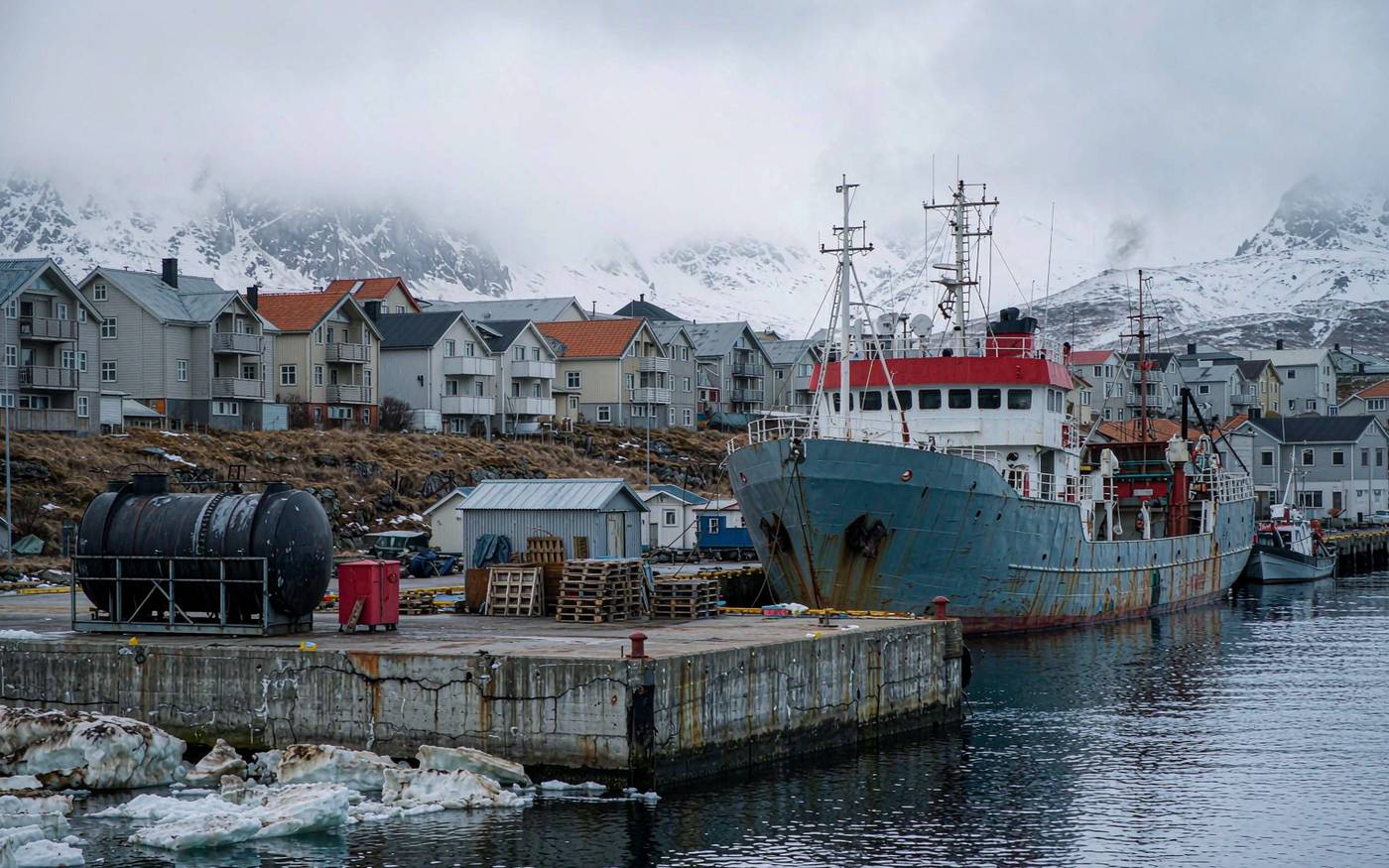
How to ship from China to Greenland
Greenland is an autonomous territory within the Kingdom of Denmark with roughly 57,000 people spread across an island that is larger than Western Europe. It left the European Union in 1985, runs its own customs and tax administration, and levies no VAT.
The first thing to understand is that customs is not the hard part. Reported duty rates here are low and the paperwork is unremarkable. The hard part is geography: there are no roads between settlements, so whatever arrives by sea has to be carried onward by a coastal service, and that service stops when the ice comes back.
This page covers the routing, the coastal leg, the excise position, the ice window and the questions to settle with a buyer before you book.
At a glance
Status: autonomous territory within the Kingdom of Denmark, not in the EU and not in any VAT system. Gateway: the port of Nuuk, with Sisimiut, Ilulissat and Qaqortoq served by coastal service; Nuuk Airport, GOH, and Kangerlussuaq, SFJ, for air. Routing: via Aarhus, Copenhagen or Reykjavik, then Royal Arctic Line. Currency: Danish krone. Population: about 57,000.
How your cargo moves: China to Greenland
Eight steps from your supplier's door to yours. The last four are the ones shaped by local rules.
- Pickup from your supplierWe collect the goods anywhere in China and bring them to our consolidation point.
- Export clearanceChina customs declaration filed and released before the goods move to the port.
- Loading and departureContainer loaded, sealed and handed to the carrier at the Chinese port.
- Main carriageOcean, air or rail movement booked on the route agreed for your cargo.
- Arrival at the gatewayDischarge at the port or airport of entry, recorded on the carrier's manifest.
- Import clearanceCustoms declaration filed locally, with duty and tax assessed on the declared value.
- Customs releaseGoods released into free circulation once duty and tax are settled.
- Final deliveryOnward movement to your delivery address, warehouse or nominated depot.
Duty rates, VAT rates and clearance times move, and the figure that applies to your goods is the one set for your commodity code on the day of clearance. We check the current position against your code before your goods sail and confirm it to you in writing — ask for that check when you request a quote.
Not in the European Union, and not in any VAT system
Greenland left the European Union in 1985 and is not part of the EU customs territory. It runs its own customs tariff and its own tax administration, and it has no value-added tax of any kind.
That combination simplifies one part of the quotation and complicates another. There is no VAT line to model and none to recover. But there is also no EU tariff to look up, so the rate for your commodity has to be checked against the Greenlandic tariff rather than TARIC.
Reported duty rates are generally low, with some sources describing averages in the region of 5 to 6 per cent for non-food goods and zero rating on several categories including books and some machinery. Other sources give category bands running up to about 10 per cent. Confirm the rate for your HS code before quoting.
No roads between towns, so the coastal leg is the shipment
This is the fact that reshapes the whole plan. Settlements in Greenland are not connected by road. Once your container is discharged, moving it anywhere other than the port town means another sea leg or a flight.
So the coastal service is not a last-mile detail, it is a leg with its own schedule, its own cost and its own weather exposure. If your buyer is in a settlement other than Nuuk, price that leg explicitly and confirm the sailing.
It is also why delivery promises go wrong. A container can arrive in Greenland on time and still reach the consignee three weeks later, because the coastal vessel sails when it sails.
Royal Arctic Line and the Aarhus to Nuuk routing
Royal Arctic Line is the main cargo carrier serving Greenland. Its Atlantic service runs northbound from Aarhus via Reykjavik to Nuuk, and southbound from Nuuk via Reykjavik, Tórshavn, Bremerhaven and Helsingborg back to Aarhus. Some routings also relay through Bremerhaven.
For cargo from China the practical routing is a Chinese port to a northern European hub, then Aarhus or Copenhagen, then the Atlantic service to Nuuk. An alternative is via Reykjavik, which can be quicker for cargo already consolidated in Iceland, but the China to Reykjavik leg itself needs a European relay.
Nuuk is the main container and distribution port. Sisimiut, Ilulissat and Qaqortoq are served from it, and smaller settlements depend on local onward carriage.
Flying cargo into Greenland via Copenhagen or Keflavik
Air cargo reaches Greenland through Copenhagen or Keflavik, then onward with Air Greenland to Nuuk Airport, code GOH, or to Kangerlussuaq, code SFJ, from where smaller aircraft serve other settlements.
Air freight suits urgent, high-value or low-volume cargo: spare parts, medical supplies, electronics and samples. It does not suit heavy cargo, because the cost per kilogram is high and the aircraft that serve the settlements are small.
Be careful about door delivery claims. International courier services reach Nuuk reliably and most other towns barely at all, and postal services into the settlements can take several weeks. Confirm the last leg before you promise anything.
Excise on alcohol, tobacco, vehicles and fireworks
While customs duty is low, excise is not. Alcohol, tobacco, cosmetics, vehicles and fireworks are all subject to high excise, levied on a specific, ad valorem or mixed basis depending on the product.
On these categories the excise can dwarf the customs duty and, for a part-container of spirits or tobacco, exceed the value of the goods. If you are shipping anything in this group, get a written calculation before the goods sail.
Declare precisely with volumes, weights and unit counts. A generic description on a shipment of alcohol into Greenland is an invitation to an assessment you will not enjoy.
Nuuk clears most of it, and that is where the entry is filed
Most commercial imports are cleared at Nuuk, and that is where the entry is filed. Reported processing times for a complete declaration are short, commonly a few working days, with express and courier consignments clearing faster.
There is a pre-clearance option worth discussing with your buyer. Formalities can be completed in Denmark, at Aarhus or Copenhagen, before the cargo sails on to Greenland, which can remove a delay at the far end.
Reported de minimis figures conflict, with some sources describing no threshold at all and others quoting a low value below which duty is waived. Treat any threshold as unconfirmed and declare in full.
The ice window, and why July to October matters
Sea access to much of Greenland is seasonal. For remote settlements the practical resupply window runs roughly from July to mid-October, when the sea ice has retreated enough for vessels to operate safely.
Plan the calendar around it. If your consignee is in a northern settlement and your cargo misses the window, the next opportunity may be the following summer, not the following month.
For Nuuk and the main west-coast ports the constraint is far milder, but weather delays still occur through the winter. Build a buffer into any delivery promise and tell your buyer what it is for.
Danish krone, Danish paperwork and the pre-clearance option
The Danish krone is the currency. Goods, duty and local charges are settled in kroner, while your Chinese supplier will quote in US dollars or renminbi, so agree who carries the exchange movement across a two-month transit.
Because Greenland sits within the Danish realm, Danish procedures and Danish documentation appear throughout the chain even though the customs entry is Greenlandic. Expect Danish-language forms in places, and use a forwarder who has handled the route.
The document set is the standard one: commercial invoice with HS codes and a precise description, packing list, bill of lading or air waybill, and any certificate or permit your goods require. Biosecurity on animal and plant products is strict.
Packing for Arctic handling and a long dwell time
Cargo is worked in cold, wet and often windy conditions, and it may wait on an exposed quay for the coastal vessel. Pack for weather and for time, not just for the voyage.
Use sealed, weatherproofed cases, protect anything that fails below freezing, and avoid adhesives and plastics that become brittle in the cold. Strap and block anything that can shift during a crane lift in wind.
Insure it. A long ocean leg, a European relay, an Arctic passage and a coastal transfer is more handling than a standard container movement.
De minimis, documents and the declarations that get checked
The declarations that get examined are almost always the ones with a thin description. Write the commodity out properly, with HS codes, model numbers where relevant and an end-use statement for industrial equipment.
Import licences are required for firearms, explosives and certain controlled substances, and biosecurity clearance applies to animal and plant products. Lithium batteries installed in equipment travel far more easily than standalone ones.
Wood packaging must meet ISPM 15. It is the cheapest thing to get right and one of the most expensive to get wrong on a route where the return journey is measured in months.
Why importers use Goodhope on this lane
Six things that are different about working with us on China to Greenland shipments.
End to end across Greenland
Five shipments bought in China and delivered into Greenland, told end to end — where the order came from, how it moved, where it nearly went wrong, and how it finished. Client names are withheld at their request; the situations and the handling are what we deal with on this lane.
Not in any VAT system · quoting · Shenzhen to Nuuk
The purchase. A buyer new to importing asked which VAT rate applied and budgeted the Danish one.
The move. Consolidated sea freight with duty and excise identified and no VAT applied.
Where it nearly went wrong. Greenland sits outside the European Union and outside any VAT system. Duty and excise are what you cost, and adding a VAT line produces a landed cost that is wrong in a direction customers notice.
How it finished. We stripped the VAT out of his calculation. Every quote since has been right.
No roads · the coastal leg · Ningbo to Sisimiut
The purchase. A first-time buyer booked to Sisimiut and assumed a truck would meet the container.
The move. Sea freight into Nuuk then onward on the coastal service, with the leg documented as part of the through move.
Where it nearly went wrong. There are no roads between towns here. Once cargo clears, moving it onward means the coastal service, and that leg has its own schedule which is not yours to set.
How it finished. We quoted the coastal leg with the freight. His consignee stopped planning collections that could not happen.
The ice window · July to October · Shanghai to Greenland
The purchase. A buyer scheduled a delivery for March because that suited his production calendar.
The move. Sea freight booked to land inside the open-water window.
Where it nearly went wrong. The operating window matters here in a way it does not in temperate lanes. Planning a delivery outside it is planning a delay rather than planning a delivery.
How it finished. We moved his shipment to August. It landed on the date he had promised.
Pre-clearance · Danish paperwork · Guangzhou to Greenland
The purchase. A buyer assumed Greenlander autonomy in most matters meant Danish documentation rules did not reach here.
The move. Sea freight with Danish-language documentation prepared and pre-clearance arranged where it applied.
Where it nearly went wrong. The paperwork runs in Danish and the currency is the Danish krone. Preparing English-only documentation because the territory is self-governing causes the same delays it would anywhere else.
How it finished. We prepared Danish paperwork with pre-clearance. His entries have gone through without a document query.
Arctic handling · long dwell · Yiwu to Ilulissat
The purchase. A buyer packed for a standard European delivery into a shipment with several handlings and a long dwell.
The move. Sea freight packed for multiple handlings and an extended dwell before collection.
Where it nearly went wrong. Arctic handling and a long dwell time are rougher on packaging than a single European delivery. Claims on damage of this kind are refused more often than importers expect, because the cause is held to be packing rather than carriage.
How it finished. We specified the packing at booking. Nothing has arrived damaged since.
Why importers use Goodhope on this lane
Six things that are different about working with us on China to Greenland shipments.
Questions to settle with a Greenland buyer before the booking
Ask your buyer which settlement receives the goods, whether the coastal service is running to it on your dates, who clears at Nuuk or pre-clears in Denmark, and what the excise position is. Send us the answers with the cargo details and we will price the China leg and the Arctic connection as one package.
Get a quote Talk to usRelated pages
Frequently asked questions
Is Greenland in the European Union?
No. It left the EU in 1985, runs its own customs administration and tariff, and has no value-added tax. Duty rates are generally low but excise on some categories is high.
Is there VAT on imports into Greenland?
No. Greenland has no VAT system. Some sources describe a value threshold below which imports are relieved of tax; treat any such figure as unconfirmed and declare in full.
How does cargo reach Greenland?
By sea from a Chinese port to a northern European hub, then Aarhus or Copenhagen, then Royal Arctic Line's Atlantic service to Nuuk. Reykjavik is an alternative gateway. By air, via Copenhagen or Keflavik to Nuuk or Kangerlussuaq.
Why does the coastal leg matter so much?
Because there are no roads between settlements. Once cargo is discharged, moving it elsewhere means another sea leg or a flight, so the coastal service is a leg with its own schedule, cost and weather exposure.
When is the shipping season?
For remote settlements the practical resupply window is roughly July to mid-October, when sea ice has retreated. Missing it can mean waiting until the following summer. Nuuk and the main west-coast ports are far less constrained.
Which goods carry high excise?
Alcohol, tobacco, cosmetics, vehicles and fireworks. On these categories the excise can exceed the customs duty by a wide margin, so get a written calculation before the goods sail.
Where is the entry filed?
Most commercial imports clear at Nuuk. Formalities can also be completed in Denmark, at Aarhus or Copenhagen, before the cargo sails on, which can remove a delay at the far end.
Can I get door delivery?
Reliably to Nuuk, much less so elsewhere. International couriers serve Nuuk and most other towns barely at all, and postal services into settlements can take several weeks. Confirm the last leg before promising anything.
What currency is used?
The Danish krone. Your Chinese supplier will quote in US dollars or renminbi, so agree who carries the exchange movement across a long transit.
How long does shipping take from China?
Sea freight including the European relay and the Arctic passage is commonly 40 to 60 days; air freight is often 10 to 18 days door to airport. Both are planning figures to confirm against a named service.