
Home / Shipping to Grenada / How to Ship from China to Grenada
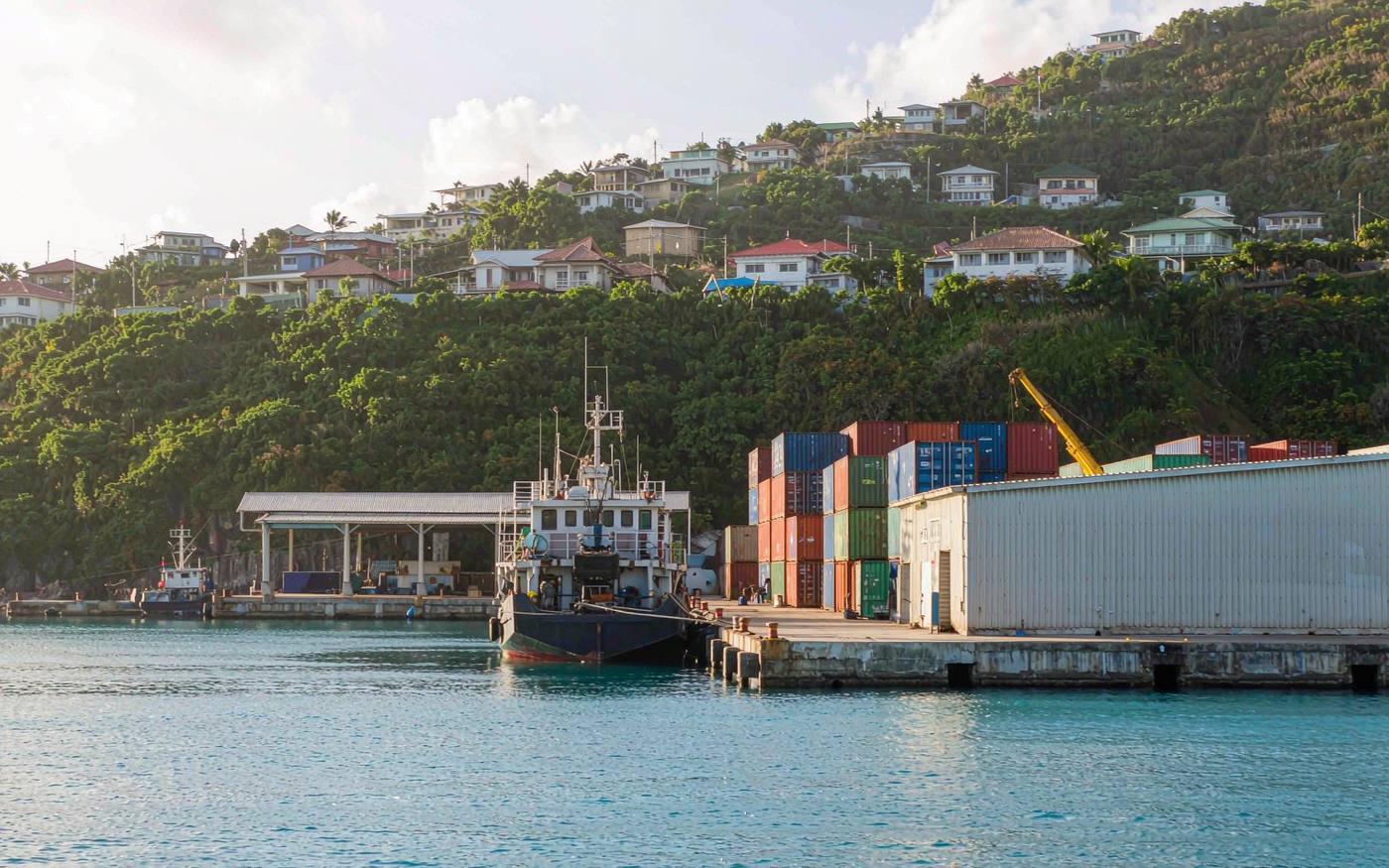
Shipping from China to Grenada, step by step
Goodhope Freight is a licensed NVOCC based in Shenzhen, registered as GD20230925153335, and has been moving cargo out of China since 2012. To Grenada we run full containers and shared containers port-to-port into Port St. George's, air freight airport-to-airport into Maurice Bishop International, and express parcels dispatched from our depot. Every service stops at the port, the airport or the depot. Your consignee arranges import clearance and collection.
Grenada is a three-island state with a single main container port. Port St. George's handles the sea freight, Maurice Bishop International on the south of the island handles the air freight, and there are secondary landing points at Grenville on the east coast and at Hillsborough on Carriacou. If your consignee is not on the main island, the onward leg is a separate booking with its own schedule.
Two things decide how smoothly a Grenadian shipment goes, and neither of them is the freight rate. The first is which regional hub your cargo relays through, because that determines where the paperwork is generated. The second is biosecurity, because Grenada is strict about agricultural and plant material in a way that catches out importers who are used to looser regimes.
At a glance
Main port: Port St. George's, operated by the Grenada Ports Authority · Main airport: Maurice Bishop International (GND) · Secondary landing points: Grenville and Hillsborough on Carriacou · Currency: Eastern Caribbean dollar, pegged to the US dollar · Duty: CARICOM Common External Tariff, commonly 0 to 20 per cent of CIF · Value-added tax at 15 per cent · Customs service charge and environmental levy also apply · Entries filed on ASYCUDA World
How your cargo moves: China to Grenada
Eight steps from your supplier's door to yours. The last four are the ones shaped by local rules.
- Pickup from your supplierWe collect the goods anywhere in China and bring them to our consolidation point.
- Export clearanceChina customs declaration filed and released before the goods move to the port.
- Loading and departureContainer loaded, sealed and handed to the carrier at the Chinese port.
- Relay through Trinidad, Barbados or MiamiRegional feeder services connect Grenada to the wider Caribbean, so the hub rather than the ocean leg sets the arrival window.
- Discharge at Port St. George'sContainers are worked at the main container terminal; air cargo is worked at the GND cargo terminal.
- Entry filed on ASYCUDA WorldYour broker lodges the declaration electronically, classified under the CARICOM tariff, with the customs value taken from your invoice.
- Assessment and any biosecurity checkDuty, service charge, environmental levy and VAT are assessed and settled. Agricultural and plant material is inspected separately.
- Release and onward movementGoods are released to your consignee. A Carriacou or Petite Martinique address adds an inter-island leg arranged separately.
Duty rates, VAT rates and clearance times move, and the figure that applies to your goods is the one set for your commodity code on the day of clearance. We check the current position against your code before your goods sail and confirm it to you in writing — ask for that check when you request a quote.
St. George's first, and a second leg for Carriacou
Port St. George's is the main container and cargo port, operated by the Grenada Ports Authority, and it is where essentially all sea freight is worked. Maurice Bishop International sits on the south of the island for air freight, and Lauriston Airport on Carriacou handles light inter-island traffic. Grenville on the east coast serves as a secondary port.
Carriacou and Petite Martinique are supplied through the main island. If your consignee is there, the goods arrive at St. George's, clear there, and then move onward by inter-island vessel on a schedule that has nothing to do with your vessel's arrival. Tell us the final island at quotation stage so that leg is quoted rather than discovered.
Picking a mode: shared container, full container, air or courier
Below roughly 15 cubic metres a shared container is the sensible answer, rated by volume with a weight conversion and a one cubic metre minimum. Between about 15 and 28 cubic metres the comparison between a 20GP and a per-cubic-metre rating is worth running both ways, and above that a 40GP or 40HC normally wins for bulky light cargo.
Air freight into Maurice Bishop works from about 45 kg and suits electronics, medical supplies, urgent spares and perishables. There is no direct service from China, so consignments route through Miami, Port of Spain or a European hub, and the connection sets the transit time. Express courier handles documents, samples and single cartons, and ends at the depot.
The tariff, and the tax charged after it
Grenada applies the CARICOM Common External Tariff to goods arriving from outside the region, which for most general cargo runs between nil and 20 per cent of the CIF value. As elsewhere in the Caribbean, some lines sit deliberately above that band.
Value-added tax is charged at 15 per cent and is paid to the customs authority together with the duty. Reduced and higher rates exist for specific sectors, and a defined basket of basic goods is zero-rated. Because the basket and the rates are adjusted from time to time, have your broker confirm the treatment for your commodity code rather than relying on a figure you were given previously.
The charges that sit alongside duty and VAT
A Grenadian entry usually carries more than duty and VAT. A customs service charge applies to the entry, an environmental levy is charged on particular categories, and excise duty applies to alcohol, tobacco and fuel. Each is assessed on the same CIF base or on the duty-inclusive value, depending on the charge.
None of these are large individually, and together they are the difference between a landed cost that matches your estimate and one that does not. The discipline that avoids the gap is the same one that applies everywhere: get the commodity code right and check the treatment before the goods sail.
Biosecurity is the real gate, not the tariff
Grenada is strict about the import of plant material, seeds, food and animal products, and the inspection is substantive rather than a formality. Phytosanitary certificates are required for plant products, health certificates for food and animal products, and an import permit is needed for a defined list of goods. Agricultural inputs and untreated wood packaging attract particular attention.
This is where shipments to Grenada are held. Goods that would clear on tariff grounds alone are stopped for inspection, and an inspection that finds untreated wood packaging or an undisclosed plant product will cost you time and possibly the goods. Declare anything borderline at booking, and use packaging that complies with the international standard for wood packaging.
Why the relay port decides your paperwork
Most cargo from China into Grenada tranships through Trinidad, Barbados or a Florida hub on regional feeder services. Where the relay happens is not a detail. It determines which set of documents is generated, which agent handles the transfer, and how quickly your consignee gets the information they need to prepare the entry.
We name the relay on the quotation and send a pre-alert with the documents attached as soon as the goods are on the feeder. That lets your broker prepare the entry while the cargo is still moving, which on a lane with this many handovers is worth several days.
When a postal item stops being a personal parcel
The published duty-free allowance for low-value imports is low, and it applies to personal imports arriving by post rather than to commercial cargo. A commercial consignment is assessed in full regardless of value, and the purpose recorded on the entry is what decides which treatment applies.
Sample shipments are the usual casualty. A carton invoiced to a company against a commercial invoice is a commercial import, and it will be assessed. If the goods are genuinely samples, they need to be declared and valued that way at dispatch, with the paperwork to support it.
Packing for relays, humidity and storms
Cargo from China into the eastern Caribbean is discharged and reloaded at least once, and goods for Carriacou are handled a third time. Palletise or strap wherever the commodity allows, box heavy items rather than bagging them, and build fragile cargo to be stacked under other goods.
The Atlantic hurricane season runs from June to November, and the 2024 season showed how exposed the northern islands are. Port and airport closures are possible at short notice, and goods standing outdoors at the port take the weather. Use internal moisture protection for textiles, paper and electronics, and assume tropical conditions throughout.
The paperwork your broker will need from you
- Commercial invoice with specific descriptions, quantities, values, currency and country of origin.
- Packing list matching the invoice, with weights and dimensions.
- Bill of lading for sea freight or air waybill for air freight.
- Certificate of origin where a preferential or regional rate is claimed.
- Import licence for firearms and ammunition, pharmaceuticals and certain food and agricultural products.
- Phytosanitary certificate for plant products, and a health certificate for food and animal products.
Entries are filed electronically through ASYCUDA World, and the customs and excise division sits within the ministry responsible for finance. A specific description and an accurate commodity code are what keep an entry moving.
Timing: the feeder service, hurricane season and local festivals
Sea freight from the main Chinese ports into Port St. George's typically runs 35 to 55 days depending on the origin and how the regional feeder connects. Air freight runs roughly 7 to 12 days terminal to terminal, with the connection rather than the distance setting the time.
Book earlier for any delivery inside the June to November window, and earlier still if the final destination is Carriacou, where the onward vessel schedule adds its own constraint. Local festivals and the peak tourism period tighten domestic transport in a way that is easy to overlook from China.
Our side of the file, and your consignee's
We handle collection from your supplier, consolidation, export declaration, loading, and the main carriage to Port St. George's or to GND. We issue the transport document, send a pre-alert with the documents attached, and check the commodity code and duty exposure on the Grenadian side while your goods are still in China.
Your consignee, usually through a licensed broker, files the entry, pays duty, charges and VAT, and collects. We do not sell door-to-door delivery to Grenada, and we would rather say so at quotation stage than at the port.
What to line up before your first consignment sails
Send us the commodity, the volume and weight, the pickup address in China, and the island the goods are ultimately going to. We will come back with the mode that suits the volume, the relay we intend to use, the onward leg if one is needed, and every charge broken out as a separate line.
If this is your first import, ask us to confirm the duty and VAT position against your commodity code before the goods sail, and ask whether your commodity needs a permit or a phytosanitary certificate. On this lane that question is worth more than any freight saving.
Real examples unpacked: Grenada
Five shipments bought in China and delivered into Grenada, told end to end — where the order came from, how it moved, where it nearly went wrong, and how it finished. Client names are withheld at their request; the situations and the handling are what we deal with on this lane.
Post-storm hotel refurbishment, 40HC out of Shenzhen
The purchase. A hotel was rebuilding after storm damage and had ordered case goods, roofing sheets, windows, doors and electrical fittings from suppliers across Guangdong and Zhejiang.
The move. We collected from all four suppliers, consolidated into one 40HC, and shipped port-to-port to Port St. George's with the relay named on the booking.
Where it nearly went wrong. The buyer needed everything in one shipment because the site could not store partial deliveries, and roofing sheets and glazing do not tolerate being handled twice on a relay routing.
How it finished. We confirmed the packed volume before booking, crated the glazing rather than pallet-wrapping it, and sent the broker a clean commodity breakdown with the pre-alert. The container cleared in the normal window and the rebuild stayed on programme.
Food processing equipment, 20GP from Ningbo
The purchase. A small producer was importing processing and packaging equipment for a spice and cocoa line.
The move. One 20GP loaded at Ningbo, shipped port-to-port to St. George's, with the consignee's broker filing on arrival.
Where it nearly went wrong. The equipment was straightforward. The problem was the wooden crating from one supplier, which had not been treated to the international standard for wood packaging, and Grenada inspects that.
How it finished. We checked the packaging treatment before loading and had the supplier re-crate to the required standard. The container was not held on inspection, which on this lane is where a food-sector shipment most often loses a week.
Agricultural inputs held at biosecurity
The purchase. A grower was importing irrigation equipment, tools and growing media from several suppliers in China.
The move. A shared container out of Guangzhou, relayed through a regional hub and deconsolidated for collection at St. George's.
Where it nearly went wrong. Growing media and anything containing plant material require a phytosanitary certificate and, depending on the product, an import permit. None of that had been arranged when the order was placed.
How it finished. We identified the restricted lines at booking, told the buyer what certificates were needed before the goods sailed, and had the paperwork issued in China rather than argued about on the quay. The shipment cleared without being held.
Building supplies for a Carriacou project
The purchase. A contractor was building on Carriacou and had ordered cement, tiles, timber fixings and sanitaryware from Foshan.
The move. One 40GP shipped to Port St. George's, cleared there, then moved onward to Carriacou by an inter-island vessel arranged separately.
Where it nearly went wrong. The buyer had assumed a single freight quote covered the whole journey. The inter-island leg ran to its own schedule, charged its own freight, and handled the cargo a third time, and tiles do not survive that by accident.
How it finished. We flagged the onward leg at quotation stage, quoted it separately, and had the tiles crated for the crossing. The materials arrived intact and the buyer rebuilt the budget around the real structure.
Urgent spares by air into Maurice Bishop
The purchase. A hotel had a failed plant component and needed a replacement before the weekend to avoid closing rooms.
The move. Air freight from China, connected through a hub, airport-to-airport into Maurice Bishop International, collected by the consignee from the cargo terminal.
Where it nearly went wrong. The part was dense and small, so air freight was reasonable, but the buyer had assumed the airline would deliver it to the hotel and had not arranged a broker for an airport entry.
How it finished. We confirmed the connection and the terminal handling at booking, told the buyer in writing that a broker was needed for the airport entry, and sent the documents ahead of the flight. The part was cleared shortly after arrival.
Why importers use Goodhope on this lane
Six things that are different about working with us on China to Grenada shipments.
Get a quote for Grenada
Tell us the commodity, the volume, the pickup address in China and the island the goods are going to. We will confirm the relay, flag any permit or phytosanitary requirement, and quote every charge as a separate line.
Get a quote Talk to usRelated pages
Frequently asked questions
How many weeks should I allow for sea freight to Grenada?
Plan on roughly 35 to 55 days from the main Chinese ports to Port St. George's, depending on the origin and how the regional feeder connects. Air freight runs roughly 7 to 12 days terminal to terminal, with the connection rather than the distance setting the time.
Which port and airport handle cargo in Grenada?
Port St. George's is the main container and cargo port, operated by the Grenada Ports Authority. Air freight goes through Maurice Bishop International (GND) in the south of the island. Grenville is a secondary port, and Carriacou is served by an onward inter-island leg from the main island.
What will Grenadian customs assess on my shipment?
Grenada applies the CARICOM Common External Tariff, commonly between nil and 20 per cent of the CIF value for general cargo, with value-added tax at 15 per cent paid together with the duty. A customs service charge, an environmental levy on particular categories, and excise on alcohol, tobacco and fuel can also apply.
Do I need a permit or a phytosanitary certificate?
For plant products, seeds, food and animal products, usually yes. Phytosanitary certificates are required for plant material, health certificates for food and animal products, and an import permit is needed for a defined list of goods. Identify these before the goods sail, because this is where Grenadian shipments are most often held.
Do low-value postal imports get relief in Grenada?
The published allowance is low and applies to personal imports arriving by post rather than to commercial cargo. A commercial consignment is assessed regardless of value, and the purpose recorded on the entry decides which treatment applies.
Does the price include delivery in Grenada?
No. Sea freight and air freight are port-to-port and airport-to-airport, and express courier dispatch ends at the local depot. Your consignee arranges import clearance and collection, and any onward movement to Carriacou or Petite Martinique is arranged separately.
What documents does Grenada customs expect?
A commercial invoice with specific descriptions and values, a packing list that matches it, the bill of lading or air waybill, a certificate of origin where a preferential rate is claimed, and any import licence, phytosanitary or health certificate the commodity requires. Entries are filed on ASYCUDA World.
Can dangerous cargo be booked to Grenada?
Built-in and packed-with lithium batteries can be carried subject to proper documentation and packaging. Standalone lithium batteries and other dangerous goods classes are assessed case by case and must be declared at quotation stage.
When is the worst time of year to ship to Grenada?
Yes. The Atlantic season runs from June to November and can close ports and airports at short notice, with the northern islands particularly exposed. Book earlier for any delivery inside that window, and earlier still if the final destination is Carriacou.
What do you need to quote a Grenada shipment?
The commodity and its code if you have it, the volume and weight, the pickup address in China, and the island the goods are ultimately going to. We will come back with the mode, the relay, any onward leg, and every charge broken out separately.