
Home / Shipping to Guam / How to Ship from China to Guam
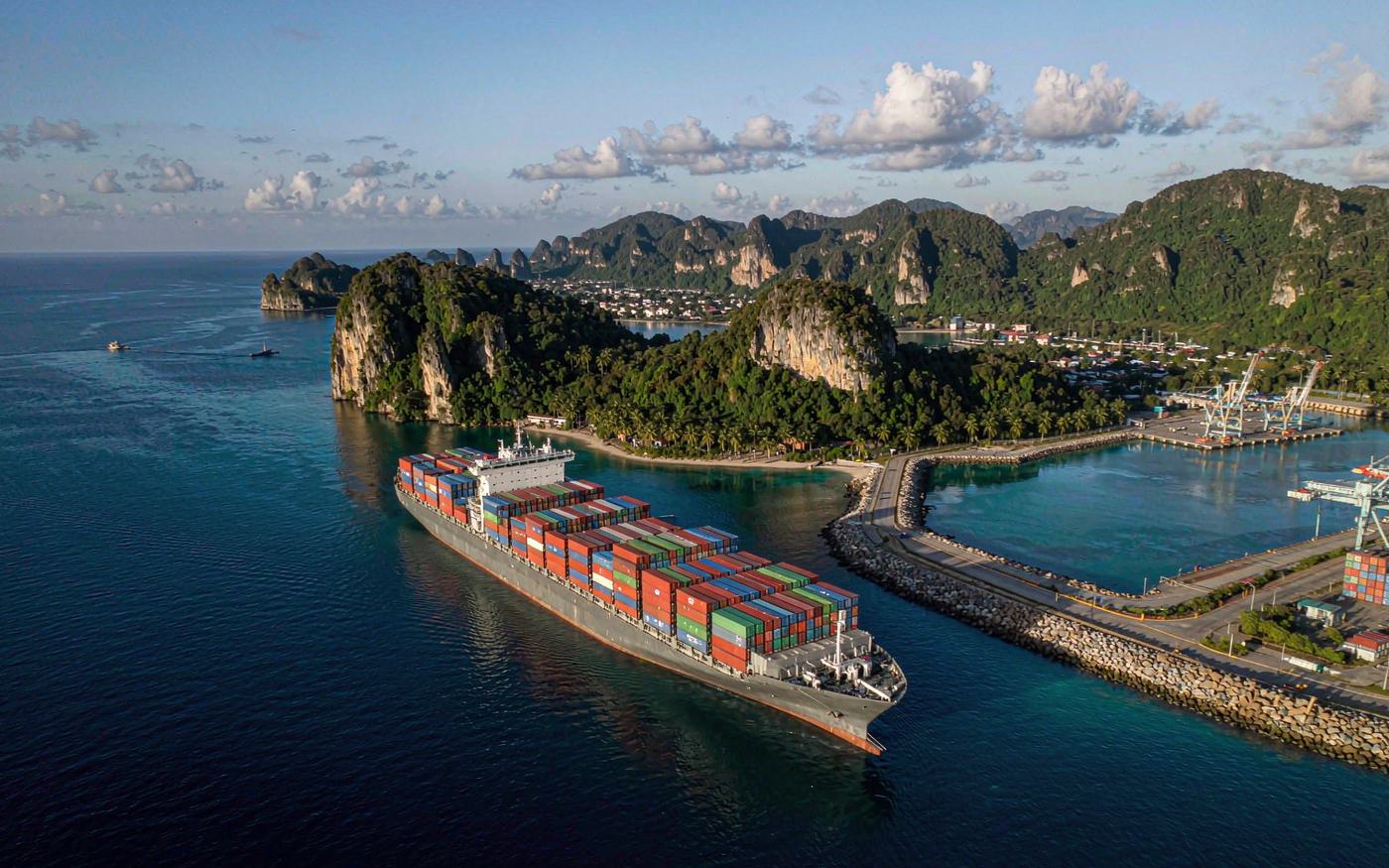
How to Ship from China to Guam: Apra Harbor, the $5 Fee & the 4% Use Tax
Guam is American, and that is exactly where new importers make their first mistake. The instinct is to treat a shipment to Guam as a domestic American movement and to file it the same way as a shipment to Los Angeles. It is not. Under 19 CFR 7.2, the insular possessions of the United States other than Puerto Rico — Guam among them, alongside American Samoa, Wake Island, Midway Islands, Johnston Atoll and the Northern Mariana Islands — are American territory but sit outside the customs territory of the United States. Importations into Guam are not governed by the Tariff Act of 1930, and the customs administration of Guam is under the Government of Guam rather than under US Customs and Border Protection.
The second thing to understand is what takes the place of duty. US trade guidance describes Guam as having no duty or quota requirements on shipments into the territory, but it also lists what does apply: a five dollar processing fee on all shipments of cargo entering the territory, a four percent use tax on items imported for personal or business use, and a four percent gross receipts tax on merchandise sold in Guam. The word "no duty" is true and misleading at the same time. Nothing is free; the money is simply collected under a territorial tax rather than a tariff schedule.
The third is that the island is small and a very long way from China. Apra Harbor is an excellent deep-water port, but Guam is not a major import market in volume terms, and cargo from China normally reaches it through a transhipment hub rather than on a direct sailing. That makes the connecting service — not the ocean leg — the thing that decides when your goods arrive.
At a glance
Territory: unincorporated organised territory of the United States, in the western Pacific, roughly 540 square kilometres with a population in the region of 150,000 · Status: outside the US customs territory; customs administered by the Government of Guam · Main port: Apra Harbor · Main airport: Antonio B. Won Pat International Airport · Duty: no duty or quota on shipments into the territory · Instead: $5.00 processing fee per cargo shipment, 4% use tax on imports, 4% gross receipts tax on goods sold · Currency: US dollar · Language of the entry: English
How your cargo moves: China to Guam
Eight steps from your supplier's door to yours. The last four are the ones shaped by local rules.
- Pickup from your supplierWe collect the goods anywhere in China and bring them to our consolidation point.
- Export clearanceChina customs declaration filed and released before the goods move to the port.
- Loading and departureContainer loaded, sealed and handed to the carrier at the Chinese port.
- Main carriageOcean, air or rail movement booked on the route agreed for your cargo.
- Arrival at the gatewayDischarge at the port or airport of entry, recorded on the carrier's manifest.
- Import clearanceCustoms declaration filed locally, with duty and tax assessed on the declared value.
- Customs releaseGoods released into free circulation once duty and tax are settled.
- Final deliveryOnward movement to your delivery address, warehouse or nominated depot.
Duty rates, VAT rates and clearance times move, and the figure that applies to your goods is the one set for your commodity code on the day of clearance. We check the current position against your code before your goods sail and confirm it to you in writing — ask for that check when you request a quote.
Guam sits outside the US customs territory, and what that follows from
The legal position is worth stating plainly, because everything else on this lane follows from it. The US customs regulations at 19 CFR 7.2 say two things that matter to an importer. First, the insular possessions other than Puerto Rico are American territory, but because they are outside the customs territory, goods imported from them into the mainland are subject to the column 1 rates of the Harmonized Tariff Schedule unless they qualify for an exemption. Second, and this is the direction that matters for you, importations into Guam are not governed by the Tariff Act of 1930, and the customs administration of Guam is under the Government of Guam.
What that means in practice is that your Guam buyer does not file a US customs entry with CBP in the way a buyer in California would. They file with the territorial authority. Federal regulatory agencies — the FDA, USDA and others — still have their own requirements, and those do not switch off simply because the tariff schedule does. But the tariff-collecting machinery is local, and the local machinery has its own forms, its own fees and its own timetable.
The practical consequence. Do not send a Guam shipment out under the assumption that it is an American domestic move that will clear itself. Ask the consignee two questions before you book: who files the entry, and does that party already hold a Guam business licence. If the answer to the second is no, the cargo will sit while the paperwork catches up.
Apra Harbor and the transshipment it takes to reach it from China
Apra Harbor, on the western side of the island, is the commercial port and the gateway for virtually everything that arrives by sea. It is a deep, well-sheltered natural harbour with the berths and yard space an island of this size needs, and it is also a US naval facility, which is part of why the infrastructure is better than the market size alone would justify. Air freight arrives at Antonio B. Won Pat International Airport, which handles both belly-hold cargo from passenger services and dedicated freighter capacity.
The complication is the route. Guam is a small destination at the end of a very long Pacific line, and cargo from China is routinely routed through a transhipment hub rather than shipped direct. The hub the carrier uses — and the connecting sailing out of it — usually determines the arrival date more than the initial leg does. This has two consequences for a new importer.
- Plan in weeks, not days. A China–Guam movement with one transhipment is a multi-week proposition in the ordinary course, and it is the connection that moves.
- Ask which hub is being used. Two quotations that look identical on price can differ by a week or more on arrival because the routings differ. Compare the routing, not just the number.
There is a further seasonal point. The western Pacific typhoon season runs roughly from July into November, and tropical systems in that window can disrupt both sailings and air schedules. If you are shipping to a fixed opening date or a project milestone, build slack into the plan rather than booking to the earliest possible arrival.
The charges that stand in for duty on a Guam entry
This is the part buyers most often misread. "No duty" is real, but it is not the same as "no cost". The territorial charges that take the place of a tariff are levied on different bases and by different authorities, and they need to be in the landed-cost model from the first quotation.
| Charge | What US trade guidance describes | What it means for your costing |
|---|---|---|
| Processing fee | A five dollar fee on all shipments of cargo entering the territory | Small in absolute terms, but it applies per shipment. On an LCL consignment it is a fixed cost on a small base, which is one reason LCL economics differ from FCL here. |
| Use tax | Four percent on all items imported for personal or business use | This is the line most buyers forget. It is charged on the imported value and it applies to goods brought in for the importer's own business use, not only to goods resold. |
| Gross receipts tax | Four percent on all merchandise sold in Guam | Levied on the sale rather than the import, so it lands on the buyer's side of the ledger rather than at the port. It still belongs in the landed-cost calculation if the goods are being resold. |
| Business licence | Required prior to engaging in any business in the territory, issued by the Department of Revenue and Taxation | A precondition. Without it there is no proper entry and no way to account for the taxes above. |
One further trap. Because these are territorial taxes rather than tariff lines, they are administered by the Department of Revenue and Taxation, not by the customs officer at the gate. In practice that means the timing of the payment and the timing of the release are not always the same conversation, and a buyer who has dealt with a conventional customs entry may not expect a separate tax registration to be involved at all.
A Guam business licence is a prerequisite, not a formality
US trade guidance is explicit: a business licence issued by the Guam Department of Revenue and Taxation is required prior to engaging in any business in the territory. Read that as a gate, not as paperwork. A consignee who is not licensed cannot properly account for use tax, and an unlicensed importer arriving at the gate with a commercial consignment has created a problem that no amount of freight forwarding can solve from the China end.
For a Chinese exporter, the implication is simple and worth acting on. Before you accept a first order from a Guam buyer, ask whether the licence exists and is current. It is a fair question, it is a normal question in that market, and asking it early costs nothing — whereas discovering the answer after the container has sailed costs storage, and possibly a return voyage.
Federal agencies still follow the goods into Guam
The absence of a US tariff does not mean the absence of US regulation. Federal rules attach to the product category, not to the customs territory, and they apply on this lane as they do anywhere else in the American system.
Food, drink and anything the FDA touches
Food imports into the United States require prior notice to the FDA, and food contact articles, cosmetics, dietary supplements and medical devices each carry their own registration, labelling and entry requirements. A consignment of kitchenware or food-contact plastics arriving in Guam with no prior notice filed is a problem even though no duty is assessed.
Plants, animals and anything agricultural
Plant and animal products, and anything containing plant material, fall under USDA and APHIS rules. This includes the packaging: wooden pallets, crates and dunnage must comply with ISPM 15 and carry the mark. Non-compliant wood packaging is one of the fastest ways to turn a clean shipment into a re-export.
Electronics bring their own layer. Devices that emit radio frequencies are subject to FCC equipment authorisation, and anything with a lithium battery brings dangerous-goods documentation regardless of the destination. The pattern to internalise is this: Guam removes the tariff, not the regulatory file. Assemble the same product-compliance documentation you would assemble for any American-bound shipment.
Biosecurity is the strictest inspection the territory runs
If there is one inspection on this lane that a newcomer will not be expecting, it is the biosecurity one. Guam's experience with the brown tree snake — an invasive species widely understood to have arrived in cargo, and which caused catastrophic damage to the island's native birdlife — has left the territory with an unusually rigorous approach to what comes off a ship or off a plane.
Practically, this shows up in three places. Wood packaging is scrutinised, and ISPM 15 compliance is not optional. Plant material, seeds, soil and untreated timber attract permits or refusal. And cargo that has been stored outdoors or in agricultural areas before stuffing is more likely to attract inspection, because contamination is a real pathway. If you are shipping anything that touches the ground literally or figuratively — gardening equipment, agricultural inputs, used machinery, wooden furniture — expect questions and prepare the documentation before the goods sail, not after they land.
A cheap precaution that pays for itself. Stuff containers in a clean, covered facility; use only marked, compliant pallets; and have the container swept and photographed before loading. On a lane where the inspection risk is biosecurity rather than valuation, the condition of the box matters as much as the paperwork.
What the Guam customs entry is actually assembled from
The document set is familiar if you have shipped to the United States before, and unfamiliar in its detail if you have not. Build it early, because the transhipment leg gives you a natural place to lose time while a missing certificate is chased.
The commercial invoice, with a real description
Value, currency, quantity, complete product description and HS classification. "Machine parts" and "electronic products" are the two descriptions that generate the most queries on any entry. Name the product, the model and the material.
The packing list, matched to the invoice
Piece count, net and gross weights, dimensions, and the marks and numbers that appear on the packages. The figures must reconcile with the invoice line by line, because an entry is checked as a set, not one document at a time.
The transport document
Bill of lading for sea, airway bill for air. Check that the consignee, notify party and the description of goods match the invoice before the document is issued — amending a bill of lading after sailing is slow, and on a transhipped route it can miss the connection.
The entry itself, filed by a licensed party
Filed with the Guam customs authority by the importer or their broker. Confirm in advance who files and on what system, because the mechanics differ from a mainland CBP entry and the ACE familiarity a US broker has does not automatically transfer.
Product permits and certificates
USDA or APHIS permits for plant and animal products, FDA prior notice for food, FCC documentation for radio-emitting devices, and dangerous-goods declarations and UN 38.3 test summaries for anything with lithium batteries. These are the items that hold cargo, far more often than the invoice does.
Proof of the territorial registrations
The Guam business licence, and whatever tax registration the Department of Revenue and Taxation requires for use tax accounting. Have the numbers on file with the broker before arrival rather than producing them on request.
Packing for a long Pacific leg and a tropical unloading
The physical handling on this route deserves more thought than it usually gets. A container going from a Chinese factory to Guam may sit in a transhipment yard in the open, then be discharged in a tropical climate where humidity and salt air are constants. Cartons that were adequate for a short domestic move are often not adequate for this one.
- Assume at least one extra handling. Transhipment means your container is lifted and set down more than once. Pack for two handlings even when the routing nominally shows one.
- Specify moisture protection. Desiccants, a polythene liner and a sealed container go a long way on a humid Pacific leg. Condensation damage is one of the most common claims on island routes.
- Mark every package. If the consignment is LCL, packages are separated and rehandled by hand. Clear marks and numbers prevent pieces being left behind at the deconsolidation point.
- Photograph the stuffing. Digital evidence of how the cargo was loaded resolves damage disputes far faster than written descriptions, and it costs almost nothing.
Following one consignment into Apra Harbor
The sequence below is the one we plan against. The point is not the number of days — those depend on the routing and the season — but the order of operations, because each step has a dependency on the one before it.
| Stage | What happens | What decides how long it takes |
|---|---|---|
| Production and packing | Goods made, packed, palletised on compliant timber, photographed | Your own production slot, and whether export packing was specified at the time of order |
| China export clearance | Export declaration filed, goods released | Whether the documents were complete before the truck was booked |
| Origin handling and loading | Container gated in, stuffed, loaded to the first vessel | Cut-off times at the Chinese port and the carrier's booking window |
| Transhipment | Container discharged and re-loaded at a hub | The hub's connecting sailing — usually the single biggest variable on this lane |
| Arrival at Apra Harbor | Discharge, yard placement, entry filed | Whether the entry and permits were already prepared |
| Examination and release | Documentary check, possible biosecurity inspection, tax accounted for | The product category and the condition of the packaging |
| Local delivery | Drayage from the port to the consignee on island | Distance is short on Guam; this leg is usually the least of your problems |
Notice where the risk concentrates. It is not the ocean leg and it is not the island delivery — Guam is small enough that the final drayage is trivial. It is the transhipment connection and the entry file. Those are the two places worth spending attention, and both are largely controllable from China before the goods sail.
Questions a first-time Guam buyer usually raises
These come up almost every time, and they are worth settling in writing before the order is placed rather than after it ships.
- Do I need a Guam business licence? Yes, before trading. Get it first.
- Who files the entry? Name the broker, and confirm they work the Guam system rather than assuming CBP mechanics.
- Is there duty? No duty or quota is applied to shipments into the territory, but the processing fee, use tax and gross receipts tax all apply.
- Which hub does the cargo route through? Ask, and compare routings between quotations.
- Is my wooden packaging compliant? It must be marked to ISPM 15. Verify before the container is sealed.
- Does my product need a federal permit? If it is food, plant-derived, animal-derived, or emits radio frequencies, assume yes and check.
- Should the first order be LCL? Usually. Move to FCL once the volume is regular.
- Who insures the inland leg? On Guam it is short, but insure the through movement rather than chopping it.
Why importers use Goodhope on this lane
Six things that are different about working with us on China to Guam shipments.
True stories across Guam
Five shipments bought in China and delivered into Guam, told end to end — where the order came from, how it moved, where it nearly went wrong, and how it finished. Client names are withheld at their request; the situations and the handling are what we deal with on this lane.
Outside the US customs territory · first shipment · Shenzhen to Guam
The purchase. A buyer new to importing assumed that because Guam is a United States territory, the mainland customs rules applied outright.
The move. Full container into Apra Harbor with the entry filed with the territorial customs administration.
Where it nearly went wrong. Guam sits outside the US customs territory and administers its own entry. There is no duty or quota, but there are charges in place of duty, and preparing for a mainland entry prepares you for the wrong procedure.
How it finished. We filed the territorial entry. The container released on first submission.
The charges that stand in for duty · costing · Ningbo to Guam
The purchase. A first-time buyer read that there is no duty and budgeted the customs side of his invoice as nothing.
The move. Consolidated sea freight with the flat processing fee and the use tax worked into the landed cost.
Where it nearly went wrong. No duty does not mean no charges. There is a flat processing fee per shipment and a use tax on imports, and together they are what you cost rather than a tariff line.
How it finished. We listed both on his quote. His landed cost has matched every assessment since.
Licence · before booking · Guangzhou to Guam
The purchase. A buyer agreed a sale to a Guam customer and only looked at licensing once the goods were ready.
The move. Sea freight with the Guam business licence confirmed before the booking was made.
Where it nearly went wrong. A local business licence is a prerequisite of trading here, not paperwork that follows the goods. A shipment whose consignee cannot evidence one is a shipment with nowhere to go.
How it finished. We made the licence a booking condition. His first container cleared on arrival.
Biosecurity · the strictest inspection · Yiwu to Guam
The purchase. A buyer shipped goods with wooden packaging and plant material without declaring either.
The move. Sea freight with compliant packaging and an accurate declaration prepared before loading.
Where it nearly went wrong. Biosecurity is the strictest inspection the territory runs, and undeclared organic material is what attracts it. Treatment at the far end costs far more than compliance at the origin.
How it finished. We made compliant packaging a supplier condition. Nothing of his has been treated since.
Federal agencies · following the goods in · Shanghai to Guam
The purchase. A buyer importing regulated goods assumed leaving the mainland meant leaving mainland agencies behind.
The move. Consolidated sea freight with the federal agency requirements checked before booking.
Where it nearly went wrong. Federal agencies still follow the goods into Guam for the categories they regulate. Assuming territorial status removes that reach is the assumption that produces a held consignment.
How it finished. We checked the agencies before quoting. His goods have cleared without federal hold.
Why importers use Goodhope on this lane
Six things that are different about working with us on China to Guam shipments.
Confirm the routing and the licence before the container is booked
Tell us what you are shipping, the HS codes if you have them, the packed dimensions and gross weight, the pickup city in China and the delivery address on Guam. We will confirm the current routing to Apra Harbor and which transhipment hub it uses, tell you plainly which permits the product needs before it sails — FDA prior notice, USDA or APHIS, FCC, dangerous-goods — check the wooden packaging requirements with you, and quote the sea leg and the air alternative separately so you can see what the extra speed costs. We will also ask your consignee the licence question early, because it is cheaper to ask before the vessel sails than after it arrives.
Get a quote Talk to usRelated pages
Frequently asked questions
Is Guam inside the customs territory of the United States?
No. Guam, American Samoa, Wake Island, Midway Islands, Johnston Atoll and the Northern Mariana Islands are American territory but lie outside the US customs territory. Importations into Guam are not governed by the Tariff Act of 1930, and customs is administered by the Government of Guam.
Does cargo from China pay US import duty when it lands in Guam?
No duty or quota is applied to shipments into the territory. Instead there is a five dollar processing fee on cargo shipments, a four percent use tax on imports for personal or business use, and a four percent gross receipts tax on merchandise sold in Guam. Confirm current rates with the Department of Revenue and Taxation before pricing.
Which port does cargo from China arrive at in Guam?
Apra Harbor is the commercial sea port; air freight arrives at Antonio B. Won Pat International Airport. Most cargo from China transships rather than sailing direct, and the connecting service usually decides the arrival date.
Do I need a business licence before importing into Guam?
Yes. A business licence from the Guam Department of Revenue and Taxation is required prior to engaging in any business in the territory. It is a precondition, not a formality — confirm it exists before the vessel is booked.
Do US federal regulations still apply to goods shipped into Guam?
Yes. FDA rules including prior notice for food, USDA and APHIS rules for plant and animal products, and federal licensing for alcohol, tobacco and firearms all follow the goods. Guam removes the tariff, not the regulatory file.
Why is biosecurity such a big issue for freight into Guam?
The brown tree snake, understood to have arrived in cargo, devastated the island's native bird population. The consequence is unusually strict inspection of incoming freight, particularly wooden packaging, dunnage, plant material and soil. Use ISPM 15 marked timber and ship clean.
What documents does a Guam customs entry need?
Commercial invoice with a full description and HS classification, packing list with weights and piece counts, the bill of lading or airway bill, the customs entry filed with the Guam authority, and any product permit — USDA or APHIS, FDA prior notice, FCC, or dangerous-goods documentation for lithium batteries.
How long does shipping from China to Guam take?
With transhipment, the movement is measured in weeks rather than days, and the connection is the variable. Air freight through a regional hub is materially faster. Ask for the current rotation rather than relying on a published figure, and allow slack in typhoon season.
Should I ship FCL or LCL to Guam?
LCL is usually right for a first order, because it avoids committing to a full container on a lane with limited sailings. Move to FCL once volume is regular and predictable. Quote the consolidation and deconsolidation charges explicitly rather than assuming a break-even.
Does the US Section 321 de minimis rule apply in Guam?
An eight hundred dollar threshold is the figure normally quoted for the territory. For a commercial import of any real size it is not meaningful, because the goods will be entered, valued and assessed. Confirm current low-value treatment with the broker before relying on it.