
Home / Shipping to Guatemala / How to Ship from China to Guatemala
How to Ship from China to Guatemala: Quetzal, Santo Tomás & IVA
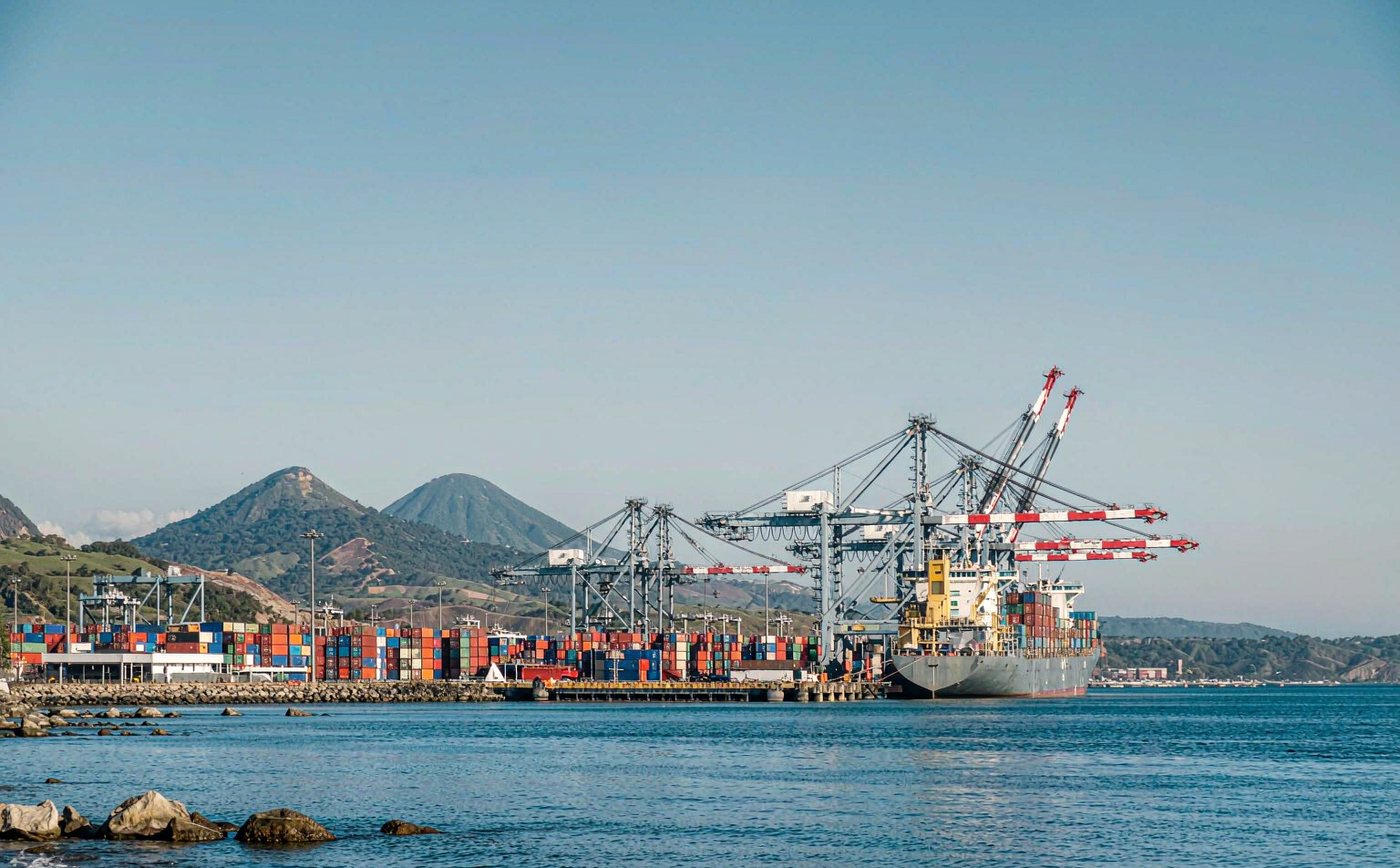
Guatemala is the largest economy in Central America, and it has two coasts. Puerto Quetzal on the Pacific handles roughly sixty to seventy percent of the country's containerised imports and sits about ninety-eight kilometres from Guatemala City. Santo Tomás de Castilla on the Caribbean is three times further from the capital and its voyage is longer, but it is reported to clear faster and to congest less. The counter-intuitive part, and the reason this belongs at the top of the plan: the port with the shorter ocean leg is not always the one that gets goods to the warehouse sooner. Ask for both routings.
The second thing is procedural and new. Since 2026, commercial sea freight into Guatemala has to be pre-declared electronically in the tax authority's system before the vessel arrives. Missing it is reported as the single biggest cause of customs delay at Puerto Quetzal. It is a timing failure rather than a paperwork failure, and it costs storage while it is fixed — which means the broker has to be briefed days before the ship, not on the day of it.
The third thing is that the duty is moderate and the enforcement is in the small print. The Central American tariff runs from zero to fifteen percent and IVA is twelve percent, which is unremarkable for the region. What actually holds containers at Quetzal is wood packaging: ISPM 15 is enforced strictly, and one untreated pallet can hold the whole container rather than just the pallet.
At a glance
Ports: Puerto Quetzal (Pacific, 60–70% of containerised imports, 98 km to Guatemala City) and Santo Tomás de Castilla with Puerto Barrios (Caribbean, ~297 km, longer voyage, faster clearance). · New in 2026: electronic pre-declaration in SAT's system before the vessel arrives. · Duty: DAI under the Central American common tariff, 0–15% by HS code. · IVA: 12% on customs value plus DAI plus any specific tax. · Specific taxes: alcohol, tobacco, cement, certain vehicles; IPRIMA on first registration of vehicles. · Entry: a NIT with SAT and a licensed agente aduanero filing the DUCA; broker fees reported US$250–900. · Clearance: 2–5 days on green, 5–10 on red, which is reported for 5–10% of shipments. · Transit: about 25–35 days port to port on a full container, 3–7 days by air. · Supply: 120 V at 60 Hz.
How your cargo moves: China to Guatemala
Eight steps from your supplier's door to yours. The last four are the ones shaped by local rules.
- Pickup from your supplierWe collect the goods anywhere in China and bring them to our consolidation point.
- Export clearanceChina customs declaration filed and released before the goods move to the port.
- Loading and departureContainer loaded, sealed and handed to the carrier at the Chinese port.
- Main carriageOcean, air or rail movement booked on the route agreed for your cargo.
- Arrival at the gatewayDischarge at the port or airport of entry, recorded on the carrier's manifest.
- Import clearanceCustoms declaration filed locally, with duty and tax assessed on the declared value.
- Customs releaseGoods released into free circulation once duty and tax are settled.
- Final deliveryOnward movement to your delivery address, warehouse or nominated depot.
Duty rates, VAT rates and clearance times move, and the figure that applies to your goods is the one set for your commodity code on the day of clearance. We check the current position against your code before your goods sail and confirm it to you in writing — ask for that check when you request a quote.
What this guide covers, and the port question underneath it
This is written for a buyer bringing goods out of China for the first time and landing them in Guatemala. It follows the shipment in the order the problems arrive: which coast, what has to be declared and when, what the charges are, who can sign, how long the voyage takes, and what the inland road does in the wet months.
It does not quote freight rates. Those move with the market. What it does instead is show where the money goes and which decisions change the total, so that a quotation can be read for what it leaves out as well as what it contains.
Guatemala is worth the effort of getting this right. It is Central America's largest economy, with around eighteen million people, a substantial manufacturing and assembly base, and a trading relationship with China big enough that Chinese goods are everywhere in its import mix. China is reported as its second-largest trading partner. The lane is well served, and it is not difficult — but it does have two ports, a new pre-declaration rule, and a strict line on pallets.
Two coasts again: Quetzal and Santo Tomás
| Terminal | Coast | Position | What it suits |
|---|---|---|---|
| Puerto Quetzal | Pacific | About 98 km from Guatemala City, an hour and a half to two hours on the CA-9. Takes direct transpacific calls from Shenzhen, Nansha and Shanghai. | The capital, the western highlands, and the majority of consumer goods. The default. |
| Santo Tomás de Castilla | Caribbean | About 297 km from the capital. Ocean leg roughly four to six days longer, but reported to clear faster with less congestion. | Eastern and northern Guatemala, heavy machinery and industrial raw materials, and Atlantic-side distribution. |
| Puerto Barrios | Caribbean | Alongside Santo Tomás on the same bay. | Serves the same eastern catchment; sometimes used for bulk and project cargo. |
Read that table again, because the second row contains the point most first-time importers miss. A container routed to Santo Tomás spends four to six more days at sea and then has a longer road ahead of it, and it can still arrive sooner than one routed to Quetzal, because Quetzal's congestion is the variable that nobody quotes. Ask your forwarder to price and time both routings against your actual delivery address, and take the one with the better door-to-door number rather than the shorter voyage.
There is a regional dimension too. If the goods are really bound for neighbouring Honduras or El Salvador, the Caribbean coast may put them closer to the border they need to cross — though each country has its own customs, its own broker requirement and its own duty, so a regional plan needs a broker in each, not one broker in Guatemala.
The pre-declaration, and why 2026 changed the timing
Customs is run by the Superintendencia de Administración Tributaria, usually shortened to SAT, through its customs division. Guatemala files the Central American single customs declaration, the DUCA, shared with the rest of the Central American customs union.
From 2026, all commercial sea freight has to be pre-declared electronically in SAT's system before the vessel arrives. Missing it is reported as the single biggest cause of customs delay at Puerto Quetzal. It is not a document problem, it is a clock problem: everything has to be ready days before the ship, because nothing can be filed once it has berthed.
The practical consequence is that three things have to exist earlier than they used to. The importer's NIT has to be valid and on file. The agente aduanero has to be appointed and briefed. And the document set — invoice, packing list, bill of lading, certificate of origin, verified gross mass, and any permits — has to be complete, because a pre-declaration built on a partial file is a pre-declaration that will be corrected later, at the terminal's rates.
After that, the red-light and green-light system decides how the container is treated. Green is a documentary release, in about two to five days. Red is a physical inspection, reported for roughly five to ten percent of shipments, which adds five to ten days and handling charges. Nothing you do at the terminal changes which one you get; the documents did that days earlier.
What you pay: the CACM tariff, twelve percent, and the special taxes
| Charge | Basis and rate |
|---|---|
| DAI — import duty | The Central American common tariff by HS code, 0–15%. Electronics and machinery often 0–5%; furniture 5–15%; textiles and apparel 10–15%; clothing and footwear around 15%; food 0–15% with basic grains possibly at zero; cosmetics 5–15%; toys 5–15%; books 0%. |
| IVA | 12% on the customs value plus DAI plus any specific tax. |
| Impuesto Específico | Alcohol, tobacco, cement and certain vehicles. Charged before IVA, so it sits in the IVA base as well. |
| IPRIMA | First-registration tax on vehicles, reported at roughly 5–20% of the depreciated value assessed by SAT from its own tables rather than from the purchase price. |
| Broker and handling | Agente aduanero fees commonly reported between US$250 and US$900 per shipment, plus storage and handling. |
No agreement with China is in force. Guatemala belongs to the Central American Common Market and to CAFTA-DR with the United States and the Dominican Republic, and has an association agreement with the European Union — and all of those preferences apply to their own members. That is worth stating plainly because of a specific trap: the zero duty rates often quoted for smartphones and laptops are CAFTA-DR rates for United States origin, and a Chinese supplier's goods pay the standard line.
Under-declaring by more than fifteen percent triggers penalties. SAT applies standard valuation rules and, for vehicles, values from its own published tables. The discount that looked like a saving on the invoice becomes a fine and a delay.
One structural note. Duties are assessed on the CIF value and settled in quetzales, so there is an exchange-rate line between placing the order and clearing it. And no de minimis relief is reported, which means even a small shipment is assessed rather than waved through.
Who can import: the NIT and the agente aduanero
Two things have to be in place. The first is the NIT, the tax identification number issued by SAT, required for commercial imports. The second is a licensed agente aduanero, who files the DUCA. There is no sensible self-filing route, and the fees — reported between two hundred and fifty and nine hundred US dollars a shipment — are worth paying for the pre-declaration alone.
Payment of duty and tax is made at one of SAT's authorised banks, and the deposit slip is what gets the cargo released. Keep it: it is the proof of release if anything downstream is queried.
Choose the broker before you choose the sailing. On this lane the broker is the person who files the pre-declaration, and the pre-declaration is what determines whether the container moves on day two or day nine.
Maquila and the free zones
Guatemala operates two preferential regimes worth knowing about if your goods are being processed rather than sold. The maquila regime, and the free zone regime, both offer specific customs, IVA and income-tax treatment for qualifying activity, historically concentrated in assembly for export. There are zones near Guatemala City and one adjacent to Puerto Quetzal, offering duty exemptions and faster clearance.
Two cautions. The framework was revised substantially after 2015, so [current applicability has to be verified rather than assumed from older commentary], and setup is a serious undertaking with substantial initial and annual costs, suited to a real operation rather than to a first container. If you are importing to sell domestically, none of this applies.
ISPM 15, and the pallet that holds a container
This is the section that stops more Guatemalan shipments than the duty does.
Guatemala enforces the ISPM 15 standard on solid wood packaging strictly, at Puerto Quetzal in particular. A pallet without the treatment stamp is not a pallet problem: it can hold the entire container while the matter is resolved, with published examples of several days of storage plus a penalty in the low hundreds of US dollars.
The fix is trivial and has to happen at the factory. Either use pallets that carry the stamp and keep the treatment certificate with the documents, or use plywood, OSB and other processed wood, which falls outside the rule altogether. Confirm which one your supplier is using before the container is loaded, because after that it is a terminal problem at terminal rates.
Health registration, and the weeks it takes
| Authority | Covers |
|---|---|
| MSPAS — Ministry of Public Health | Sanitary registration for food, cosmetics and hygiene products, and pharmaceutical authorisations. |
| Agriculture authority | Plants, seeds, animal products and phytosanitary clearance. |
| Telecommunications regulator | Type approval for radio and telecommunications equipment. |
Regulated goods need permits before they can be cleared, and those permits are reported to take fifteen to thirty business days. That is longer than most of the decisions in this guide, and it is why the permits belong at the start of the production run rather than at the end of it. Used vehicles carry age restrictions as well, and are valued from official tables rather than from what you paid.
Following a box from Huangpu to a warehouse in Guatemala City
Here is the Pacific corridor end to end, which is the one most first shipments take.
Port chosen against the delivery address
The warehouse is in Guatemala City, so Quetzal is the default — but Santo Tomás is priced and timed alongside it, because congestion at Quetzal is the variable nobody quotes.
Booking, and the transshipment question
Book two to three weeks ahead, longer before Chinese New Year. Ask which transshipment hub the service uses, because it changes the ETA by days.
Loading in China, with the pallets settled
Collection, loading at Huangpu, export declaration. Verified gross mass goes in before the cut-off — a discrepancy of a couple of hundred kilograms can trigger a re-weighing fee and a missed sailing. Pallet compliance is confirmed here, at the factory.
Ocean leg, roughly twenty-five to thirty-one days
Direct transpacific services run from the South China ports; others transship. The fastest reported services bring Shanghai to Quetzal in twenty-two days.
Pre-declaration filed before arrival
The agente aduanero files in SAT's system, with the NIT valid and the document set complete. This is the step that decides whether the container moves on day two.
Discharge, and green or red
Documentary release in two to five days, or a physical inspection in five to ten. About five to ten percent of shipments are flagged.
Payment and release
DAI, IVA and any specific tax paid at an authorised bank, deposit slip in hand, and the container is trucked the ninety-eight kilometres to Guatemala City in an hour and a half to two hours.
Transit times, and the hub that adds a week
| Origin | To Puerto Quetzal | To Santo Tomás |
|---|---|---|
| Shenzhen / Yantian | 28–31 days | 32–37 days |
| Shanghai | 28–32 days | 32–36 days |
| Ningbo | 29–32 days | 33–38 days |
| Guangzhou / Nansha | 30–34 days | 34–39 days |
| Qingdao | 30–35 days | 35–40 days |
Consolidated shipments add seven to ten days for consolidation and deconsolidation. Published door-to-door cycles for a delivered shipment run thirty-five to forty-nine days. Air freight into La Aurora airport in Guatemala City runs about three to seven days, with express courier door to door in a similar band.
The variable that most often moves the number is the transshipment hub. A service relaying through Kingston is reported to add three to five days against one relaying through Manzanillo in Mexico, because of longer dwell at the hub. That is a week of difference produced entirely by a routing decision the carrier made, which is why it is worth asking which hub is in the quotation.
The rainy season, and the road inland
Guatemala's rainy season runs from roughly June to November, and on a mountainous road network it has a real effect on the inland leg. Landslides on the mountain roads are reported to delay trucking by a day or two, and the highlands routes are the ones that carry goods onward from the capital.
The Quetzal to Guatemala City run itself is short and good. It is everything past the capital — up into Quetzaltenango, out to the eastern departments — where the season shows up. Build a day or two of buffer into inventory planning for the wet months rather than treating the inland leg as fixed.
The humidity matters for packaging too. A container that crossed the Pacific and sat at a tropical port needs cartons and wrapping specified for it, with desiccants and a moisture barrier under the pallets.
Consolidating into a market of eighteen million
The familiar break-even holds in outline — below roughly twelve to fifteen cubic metres a consolidated shipment usually wins, above twenty a full container usually does — and Guatemala shifts it slightly towards the full container for two reasons. Consolidation adds seven to ten days, and the broker's fee is charged per shipment rather than per cubic metre, so two small shipments pay the overhead twice.
If you are serving Central America as a whole rather than Guatemala alone, consolidation in China into one container is usually the right first move, with the regional split handled at destination. Remember that each country in the region has its own customs administration, its own broker requirement and its own tariff, so a regional plan is several imports rather than one.
Labels, Spanish and 120 volts
Retail goods are labelled in Spanish, with the product name, country of origin, expiry or manufacturing dates, and ingredients for consumables. As on the other lanes in this series, that is a production decision rather than a customs one: customs will release unlabelled goods and the problem appears later, at the shelf.
The mains supply is 120 volts at 60 hertz. Equipment built for a 220 volt market will not run without a transformer, and this varies across the region, so specify the voltage for Guatemala rather than for Central America.
Commercial stock, and the parcel trade
Commercial stock follows the ordinary path: NIT, broker, pre-declaration, DAI, IVA, payment, release. No de minimis relief is reported, so the small first order is assessed like a large one.
For parcels, use a courier. DHL and FedEx clear in two to three days in Guatemala, while the postal service is reported to take three to six weeks and to lose packages; for anything that matters, post is not a cheap option, it is a gamble. Courier consignments are still assessed, and repeated identical parcels to the same recipient get reclassified as commercial imports.
Samples should carry their real value. A "no commercial value" marking on goods that have one is the standard trigger for an audit, and the fine costs more than the tax did.
The calendar: holidays, rain and the New Year rush
Three periods move this lane.
Chinese New Year empties capacity two to three weeks before it arrives, and last-minute bookings face roll-overs or rates reported at forty percent or more above baseline. For first-quarter deliveries into Guatemala, space should be locked by early December.
The rainy season, June to November, slows the inland legs and, at its worst, closes mountain roads for a day or two.
Guatemalan holidays close customs and businesses, and Holy Week is the big one — a shutdown that runs for most of a week rather than a single day. Add the New Year, Labour Day in May, the Army Day at the end of June, Independence on the fifteenth of September, the Revolution in October, All Saints at the start of November, and the Christmas and New Year period, and the practical rule is not to schedule an arrival into Holy Week or into the last fortnight of December.
The paperwork, and the pre-declaration that comes first
| Document | What it has to do |
|---|---|
| Commercial invoice | True transaction value, full description, HS code, origin. Spanish or English. Under-declaration beyond fifteen percent triggers penalties. |
| Packing list | Carton count, dimensions and weights, matching the invoice and the verified gross mass. |
| Bill of lading or air waybill | Consignee matching the holder of the NIT. Amendments after issue cost money and days. |
| Certificate of origin | Documents origin. It does not reduce the duty, because CAFTA-DR and CACM preferences apply to their own members, not to Chinese goods. |
| Verified gross mass | Filed before the carrier's cut-off. A discrepancy of a couple of hundred kilograms can mean a re-weighing fee and a missed sailing. |
| ISPM 15 fumigation certificate | Any shipment with solid wood packaging. Strictly enforced here. |
| Permits and registrations | MSPAS for food and cosmetics, agricultural authority for plants and animal products, telecoms type approval for radio equipment. Reported at fifteen to thirty business days. |
| DUCA declaration | Filed by the licensed agente aduanero, and pre-declared before the vessel arrives. |
| Proof of payment | The bank deposit slip, which is the evidence of release. |
Two checks worth running over the file yourself, and both are free. One HS code, used identically, on the invoice, the packing list, the certificate and the declaration. And one document set, complete, in the broker's hands days before arrival — because on this lane the pre-declaration is the gate, and everything else happens after it.
Why importers use Goodhope on this lane
Six things that are different about working with us on China to Guatemala shipments.
Field notes across Guatemala
Five shipments bought in China and delivered into Guatemala, told end to end — where the order came from, how it moved, where it nearly went wrong, and how it finished. Client names are withheld at their request; the situations and the handling are what we deal with on this lane.
Two coasts · first container · Huangpu to Guatemala City
The purchase. A buyer new to importing picked the Caribbean port because the ocean rate quoted lower.
The move. Full container into Puerto Quetzal, chosen on the total door cost rather than the freight alone.
Where it nearly went wrong. The Pacific port sits about ninety-eight kilometres from the capital and carries most of the containerised imports. The Caribbean one involves roughly three hundred kilometres inland, and saving on the sea leg to spend it on trucking is not a saving.
How it finished. We quoted both door to door. The Pacific won on cost and two days, and the clearance difference did not close the gap.
The pre-declaration · timing · Shenzhen to Guatemala
The purchase. A first-time buyer assumed the pre-declaration could be filed once the container had been discharged.
The move. Sea freight with the electronic pre-declaration lodged in the revenue system before arrival.
Where it nearly went wrong. Pre-declaration is required before the vessel arrives, and filing late does not just slow the entry; it moves your shipment out of the fast track. Clearance runs a few days on the green channel and considerably longer on red.
How it finished. We built it into the pre-arrival checklist. His entries have gone green every time since.
Who files · before the goods ship · Ningbo to Guatemala
The purchase. A buyer assumed his company could file the declaration itself once the goods landed.
The move. Full container with the tax number obtained and a licensed customs agent appointed during production.
Where it nearly went wrong. Filing here runs through a licensed customs agent acting against your tax registration. Neither exists on arrival for an importer who has not set them up, and cargo waiting on them accrues charges from day one.
How it finished. We set both up before the first order was placed. Nothing has waited since.
Red channel · realistic scheduling · Yiwu to Guatemala
The purchase. A buyer quoted his customer a delivery date based on the best-case clearance time.
The move. Consolidated sea freight scheduled against the realistic span rather than the fast end.
Where it nearly went wrong. A share of shipments is selected for the red channel each year, and there is no way to know in advance which ones. Promising the fast end of the range is promising something you do not control.
How it finished. We gave him the realistic band. His customer commitments have held on every shipment since.
The pallet · ISPM 15 · Guangzhou to Guatemala
The purchase. A buyer whose factory shipped on untreated wooden pallets learned about the requirement from a held container.
The move. Full container re-palletised to ISPM-15 standard before loading.
Where it nearly went wrong. Wood packaging has to carry the treatment mark, and one unmarked pallet can hold the whole container rather than just itself. Re-packing at the port costs several times what it costs at the factory.
How it finished. We made the stamp a booking condition. No shipment of his has been held on packaging since.
Why importers use Goodhope on this lane
Six things that are different about working with us on China to Guatemala shipments.
Request a quote on your Guatemala shipment
Tell us the delivery address in Guatemala, the commodity and its description, and the volume in cubic metres or the container type. We will price and time both coasts against your address rather than assuming the shorter voyage wins.
Get a quote Talk to usRelated pages
Frequently asked questions
Should my cargo arrive at Puerto Quetzal or at Santo Tomás?
Quetzal handles 60–70% of containerised imports and is 98 km from Guatemala City — the default for the capital and west. Santo Tomás is 297 km away with a voyage four to six days longer, but clears faster with less congestion, which can make it quicker door to door for the east and north. Ask for both.
How long does shipping from China to Guatemala take?
Full containers 25–35 days port to port, with the fastest direct services reported at 22 days. LCL adds 7–10 days, the Caribbean coast 4–6 more on the water. Air into La Aurora runs 3–7 days.
What taxes will I pay importing into Guatemala?
DAI at 0–15% under the Central American tariff, IVA at 12% on value plus DAI plus specific taxes, Impuesto Específico on alcohol, tobacco, cement and some vehicles, and IPRIMA on vehicle registration. Broker fees commonly US$250–900.
Is there a free trade agreement between China and Guatemala?
No. CACM, CAFTA-DR and the EU association agreement apply to their own members — the zero rates quoted for electronics are United States origin rates, not Chinese ones.
Do I need a customs broker?
Yes. A NIT with SAT and a licensed agente aduanero filing the DUCA, briefed days before arrival because the pre-declaration has to be in before the vessel is.
What changed for Guatemala customs in 2026?
Commercial sea freight must be pre-declared electronically in SAT's system before the vessel arrives. Missing it is reported as the single biggest cause of delay at Puerto Quetzal.
How long does clearance take?
Green light 2–5 days; red light, reported for 5–10% of shipments, adds 5–10 days plus handling. The documents decide which one you get, days before arrival.
Why was my container held?
Most often wood packaging. ISPM 15 is enforced strictly and one unstamped pallet can hold the whole container, with published examples of several days of storage plus a penalty in the low hundreds of US dollars.
Can I import under a free zone or maquila regime?
Yes for qualifying processing and re-export activity, with zones near Guatemala City and beside Puerto Quetzal. The framework was revised after 2015, so verify current applicability.
What labelling and voltage rules apply?
Spanish retail labelling with origin, dates and ingredients, and a mains supply of 120 volts at 60 hertz. For small shipments use a courier; postal services are reported to take 3–6 weeks and to lose packages.