
Home / Shipping to Guernsey / How to Ship from China to Guernsey: St Peter Port, the Customs Union & the Line That Turns on Origin, Not Value
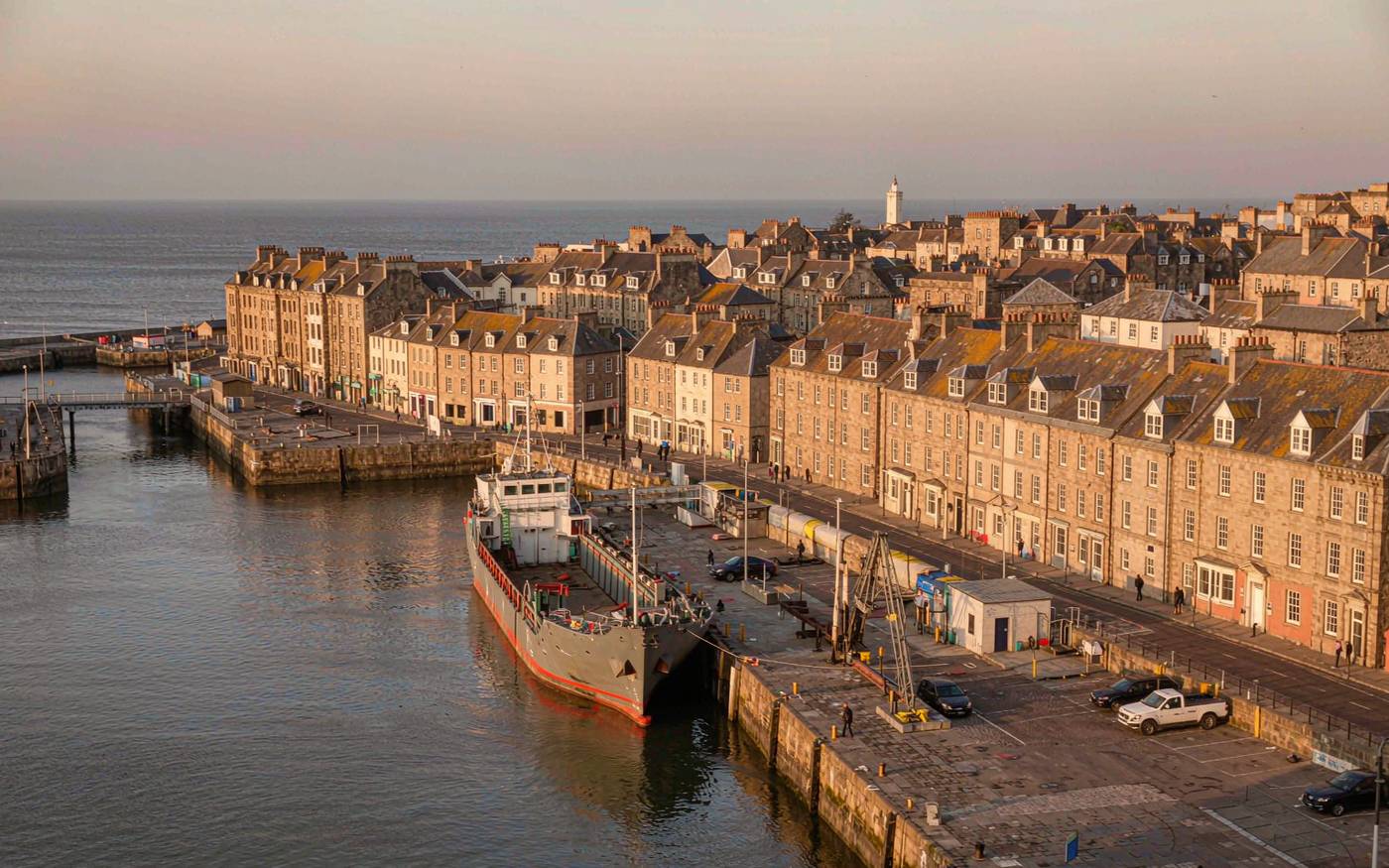
How to Ship from China to Guernsey: St Peter Port, the Customs Union & the Line That Turns on Origin, Not Value
Guernsey is where a lot of assumptions about European imports quietly break. It is a Crown Dependency rather than part of the United Kingdom, it sits outside the United Kingdom's fiscal territory, and it has no value-added tax and no goods and services tax of its own. A buyer who has shipped into the UK or into the EU before will arrive with a set of expectations about thresholds and tax lines, and almost every one of them is wrong here.
This guide is written for buyers importing from China for the first time. It covers where the line between a postal parcel and a commercial entry actually falls, why that line is drawn by origin rather than by value, what the customs union with the United Kingdom, Jersey and the Isle of Man does and does not achieve, the port and airport you will actually use, the excise that applies even to goods coming from the UK, and the documents the entry asks for.
Two things decide most of what happens on this lane. The first is whether your goods were already in free circulation inside the customs union before they reached the island. The second is that the absence of a consumption tax here does not mean the absence of a customs entry.
At a glance
Status: Crown Dependency; outside the United Kingdom's fiscal territory · Consumption tax: none — no VAT and no GST is collected on import · Customs: in a customs union with the United Kingdom, Jersey and the Isle of Man since January 2021, with a common customs tariff applied to goods from everywhere else · Excise: alcohol, tobacco and certain fuels are charged even when they come from the United Kingdom · Duty: assessed under the United Kingdom tariff by commodity code · Main port: St Peter Port · Airport: Guernsey, GCI · Routing: sea freight discharges at a United Kingdom port and crosses the Channel; air freight connects through a United Kingdom hub · Currency: pound sterling
How your cargo moves: China to Guernsey
Eight steps from your supplier's door to yours. The last four are the ones shaped by local rules.
- Pickup from your supplierWe collect the goods anywhere in China and bring them to our consolidation point.
- Export clearanceChina customs declaration filed and released before the goods move to the port.
- Loading and departureContainer loaded, sealed and handed to the carrier at the Chinese port.
- Main carriageOcean or air movement booked on the route agreed for your cargo.
- Discharge at a United Kingdom portAlmost every container crosses the Channel from a port such as Southampton or Portsmouth, and that leg is booked with the ocean freight rather than after it.
- Entry at St Peter PortA customs declaration is filed with the Guernsey Border Agency for goods arriving from outside the customs union, classified under the United Kingdom tariff.
- Duty assessed, no consumption taxDuty is assessed by commodity code. There is no value-added tax or goods and services tax to collect, and excise is charged on the goods that carry it.
- Release and island deliveryOnce released, the goods move a short distance to the consignee. On an island of this size the road network sets the limits rather than the port.
Duty rates, VAT rates and clearance times move, and the figure that applies to your goods is the one set for your commodity code on the day of clearance. We check the current position against your code before your goods sail and confirm it to you in writing — ask for that check when you request a quote.
Where the line is drawn: origin, not value
On most lanes, the question a first-time importer asks is how much a consignment can be worth before it starts attracting duty and tax. In Guernsey that is the wrong question, because there is no consumption tax here to attract. The Bailiwick levies no value-added tax and no goods and services tax on imports at all.
What actually decides whether your goods need a customs entry is where they came from. The Bailiwick is in a customs union with the United Kingdom, Jersey and the Isle of Man. Goods that are in free circulation anywhere inside that union — meaning they were wholly obtained there, or every duty liability on their import into the union has already been discharged — arrive without import duty. Goods from anywhere else, which includes the European Union and every third country including China, require a full electronic customs declaration.
So the line between a postal parcel and a commercial consignment here is not a figure. It is a question of origin and of whether duty has already been settled somewhere inside the union. A small parcel from China and a full container from China sit on the same side of that line, and both need the declaration.
This is the single most useful thing to understand about the lane. Buyers who expect a value threshold spend their time looking for a number that does not apply, and discover the real requirement at the quay instead.
What the customs union does and does not do
The customs arrangement between the Bailiwick, the United Kingdom, Jersey and the Isle of Man took effect at the start of 2021. It allows tariff-free movement of goods between the four territories, and it commits them to a common customs tariff in trade with everywhere else.
What it does not do is make the Bailiwick part of the United Kingdom for tax purposes. The Bailiwick remains outside the United Kingdom's fiscal territory, which is why excise duty on alcohol, tobacco and certain fuels is charged on arrival even when the goods have come from the United Kingdom. A buyer who assumes that a customs union implies a tax union will be caught by precisely this.
St Peter Port takes the sea freight, and almost all of it has already crossed the Channel
The port of St Peter Port is the commercial gateway. Full container loads and consolidated cargo both land there, and the LCL deconsolidation point is at the port.
Almost nothing arrives direct from China. Services discharge at a United Kingdom port such as Southampton or Portsmouth and the container crosses on a feeder or ferry service. That crossing is a leg in its own right, with its own schedule, and it belongs in the plan from the beginning rather than being discovered as an add-on after the ocean carriage is booked.
The practical consequence is that the transit figure you are given has more in it than an ocean leg. It contains the sailing from China, the discharge, the crossing, and the entry. Quoting only the first of those to your customer is quoting a fraction of the journey.
Guernsey Airport takes the air cargo, and the connection sets the transit
Guernsey Airport handles air cargo, and most shipments connect through a United Kingdom hub rather than arriving on a long-haul service. That connection decides the transit far more than the flight time does.
Air freight suits samples, spare parts, urgent retail lines and anything where the value per kilogram justifies it. It ends at the airport cargo terminal; the consignee arranges the entry and collects.
No VAT and no GST: what that does to a landed cost calculation
Because no value-added tax or goods and services tax is collected on import, that line comes off your landed cost entirely. Buyers moving from a European lane often carry the habit of adding a consumption tax at twenty per cent or more, and it inflates their quote badly enough to lose them the order.
Removing the tax does not remove the duty. Duty is still assessed by commodity code under the United Kingdom tariff, and it is still payable. The saving is real, but it is a saving on the tax line only.
Excise is the charge that follows goods from anywhere
Alcohol, tobacco and certain fuels carry excise duty on importation into the Bailiwick, and this applies regardless of where the goods were shipped from. Goods arriving from the United Kingdom, Jersey or the Isle of Man are not exempt.
For a first-time importer this is usually the least expected charge on the lane, because it is the one case where the customs union stops helping you. If your consignment includes any of these categories, cost it before you quote rather than after.
Classification under the United Kingdom tariff, and the codes you need
Goods arriving from outside the customs union are classified in the United Kingdom tariff to establish what duty and what measures apply. That classification is your responsibility to get right, and it is settled before the goods sail rather than at the quay.
Businesses importing need an economic operator registration and identification number. Obtaining one is a pre-shipment task; it is not something that can be arranged while a container waits.
Filing the entry, and who signs it
The declaration is filed electronically with the Guernsey Border Agency. It carries the classification, the customs value, the origin and the consignee, and it is supported by the commercial invoice and the transport document.
Whether you file it yourself or appoint a local agent depends on what you are importing and how often. For a first shipment, appointing an agent who already works with the Border Agency is usually the cheaper choice, because the cost of a rejected declaration is measured in days of storage.
Packing for a second leg: a United Kingdom discharge, a crossing and a small quay
Cargo to Guernsey is handled more times than cargo to a mainland port. It is discharged, moved to a feeder, discharged again, and then moved a short distance on island roads. Packing for a single delivery is packing for fewer handlings than will actually happen.
Island delivery also has physical limits. Vehicle size, lift capacity at the quay and the road network all matter more here than they do on a mainland lane, and they are checked before booking rather than on arrival.
Choosing an incoterm when the consignee clears
Our services to Guernsey are port-to-port, airport-to-airport or depot-to-depot. The consignee handles the entry, the duty and the onward movement. That makes the choice of incoterm a real decision rather than a formality, because it decides who is the importer of record on an entry that has to be filed locally.
For a first-time buyer, the clearest arrangement is usually the one where the responsibility for the island-side entry sits with the party who can actually file it. Agreeing that before the goods ship is what keeps a container from waiting on a question of who signs.
Confirming the position before you book
Duty rates and the treatment of particular commodity codes move, and the figure that applies to your goods is the one set for your code on the day of clearance. We check the current position against your code while the goods are still in China and confirm it to you in writing.
Ask for that check when you request a quote. It is the difference between a landed cost you can stand behind and one you have to explain.
Real moves to Guernsey
Five shipments bought in China and delivered into Guernsey, told end to end — where the order came from, how it moved, where it nearly went wrong, and how it finished. Client names are withheld at their request; the situations and the handling are what we deal with on this lane.
No VAT line · first quote · Shenzhen to St Peter Port
The purchase. A buyer new to importing carried his European habit of adding a consumption tax at around twenty per cent to every quote.
The move. Full container quoted with no value-added tax and no goods and services tax, because the Bailiwick collects neither on import.
Where it nearly went wrong. There is no consumption tax here at all. Adding one inflates the quote by roughly a fifth and loses the order before anyone looks at the freight cost.
How it finished. We cost it without that line. His quote became competitive immediately.
Free circulation · the question that decides duty · Ningbo to Guernsey
The purchase. A buyer routed his container through a United Kingdom port and assumed that alone made the goods duty-free on arrival.
The move. Full container with the origin and the duty position established on the declaration before it was filed.
Where it nearly went wrong. Goods are only free of import duty here if they were already in free circulation inside the customs union. Transhipping through a United Kingdom port does not by itself put them there, and the declaration asks the question directly.
How it finished. We establish origin before filing. His duty position has been right every time since.
Excise · even from the United Kingdom · Guangzhou to Guernsey
The purchase. A buyer shipping drinks and tobacco products assumed that coming from the United Kingdom meant no charges at all.
The move. Consolidated cargo with excise duty identified and costed before the order was confirmed.
Where it nearly went wrong. Excise on alcohol, tobacco and certain fuels is charged on import into the Bailiwick from anywhere, including from inside the customs union. It is the one place where the union stops helping you.
How it finished. He budgets excise up front now. No consignment of his has been short at clearance since.
The declaration · not a value threshold · Yiwu to St Peter Port
The purchase. A first-time buyer sent a small commercial parcel and expected it to pass without an entry because it was low in value.
The move. Consolidated cargo with a full electronic declaration filed, classified under the United Kingdom tariff.
Where it nearly went wrong. The requirement to declare is tied to where the goods came from rather than to what they are worth. Looking for a value threshold on this lane is looking for a rule that does not exist here.
How it finished. We declare every commercial consignment. Nothing of his has been held for lack of an entry since.
The crossing · part of the journey · Shanghai to Guernsey
The purchase. A buyer quoted his customer the ocean transit and treated the Channel crossing as a detail.
The move. Full container with the feeder crossing booked together with the ocean leg and both counted in the quoted transit.
Where it nearly went wrong. The crossing is a scheduled leg with its own timetable, and on an island lane a missed connection costs more than a missed slot on the mainland. Quoting the ocean leg alone is quoting part of the journey.
How it finished. He books both together now. His delivery dates have held ever since.
Why importers use Goodhope on this lane
Six things that are different about working with us on China to Guernsey shipments.
Get a Guernsey quote with the entry mapped out
Tell us what you are shipping, where in China it comes from and where on the island it needs to go. We will confirm the duty position against your commodity code, set out the routing including the crossing, and quote every charge as a separate line.
Get a quote Talk to usRelated pages
Frequently asked questions
Does Guernsey charge VAT or GST on imports?
No. The Bailiwick is outside the United Kingdom's fiscal territory and levies neither value-added tax nor goods and services tax on imports, so that line does not appear on your landed cost.
Is Guernsey in a customs union with the United Kingdom?
Yes. Since January 2021 the Bailiwick has been in a customs union with the United Kingdom, Jersey and the Isle of Man, with tariff-free movement between the four and a common customs tariff applied to goods from everywhere else.
Do I need a customs declaration for goods arriving from China?
Yes. Goods imported from outside the customs union require a full electronic customs declaration, classified under the United Kingdom tariff and supported by a commercial invoice and transport document.
Is there a value threshold below which nothing is charged?
The declaration requirement is tied to the origin of the goods rather than to their value. Ask us to confirm the current treatment for your commodity code and your consignment before you ship.
Which port does sea freight to Guernsey use?
The port of St Peter Port. Most services discharge at a United Kingdom port such as Southampton or Portsmouth and the container crosses on a feeder or ferry service.
Can air freight be booked to Guernsey?
Yes, to Guernsey Airport. Most shipments connect through a United Kingdom hub rather than arriving on a long-haul service, and that connection sets the transit.
Is excise duty charged on goods coming from the United Kingdom?
Yes, on alcohol, tobacco and certain fuels. Excise is charged on importation into the Bailiwick from anywhere, including from inside the customs union.
Do I need an EORI number?
Businesses importing into the Bailiwick need an economic operator registration and identification number. Arrange it before the goods sail rather than at the port.
Do you deliver door to door in Guernsey?
No. Services are port-to-port, airport-to-airport or depot-to-depot. The consignee handles the customs entry, duty and onward collection.
How do I know what duty my goods will attract?
Duty is assessed by commodity code under the United Kingdom tariff. We check the current position against your code while the goods are still in China and confirm it in writing before you commit.