
Home / Shipping to Guinea / How to Ship from China to Guinea
How to Ship from China to Guinea
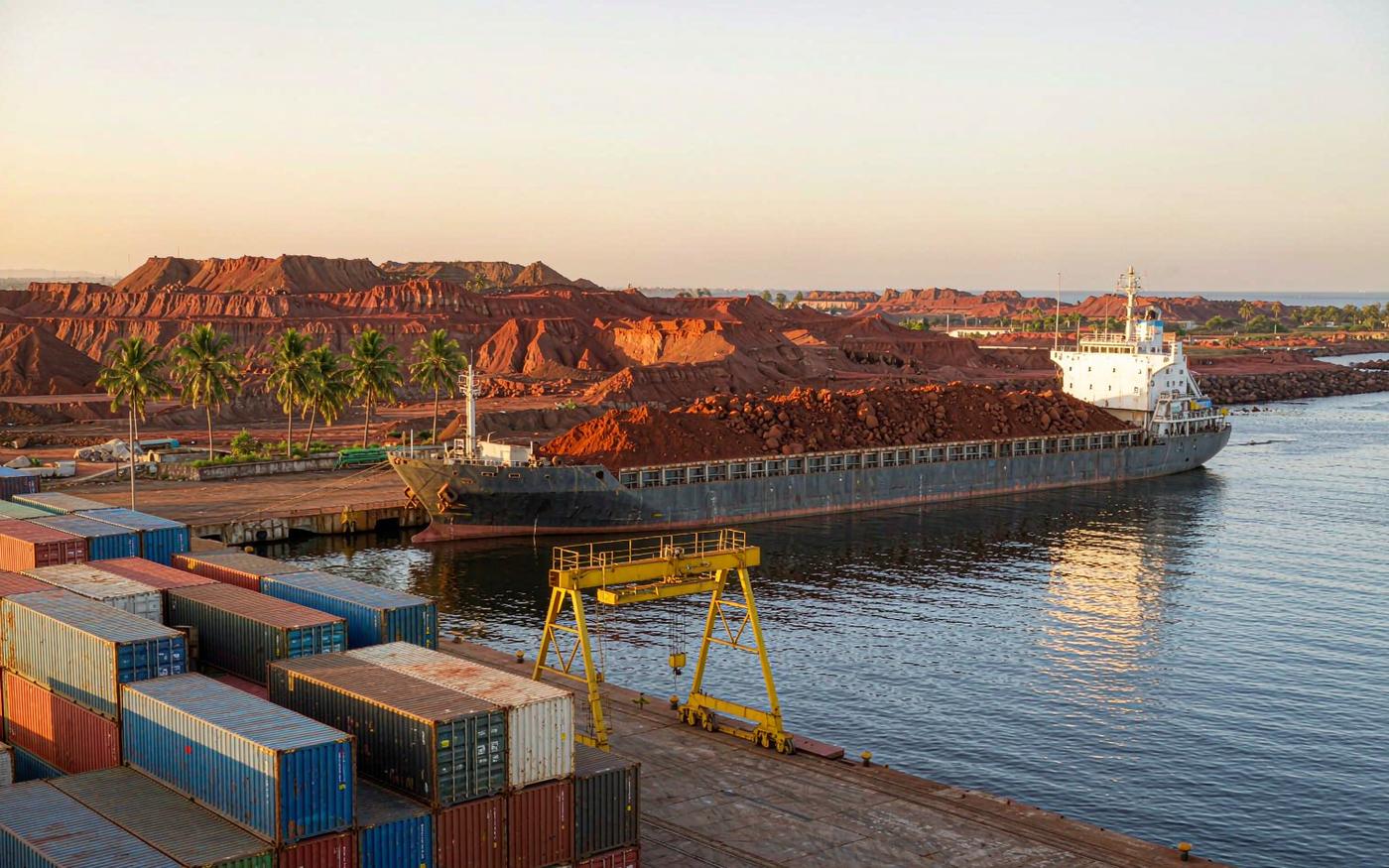
Guinea is a West Atlantic market whose port traffic splits in two. General cargo goes through Conakry, the capital's container port. Mining cargo — bauxite equipment, plant and consumables — is often routed to Kamsar or Boké instead, which changes the routing and the inland plan.
Whichever port you use, one document has to be in place before the vessel arrives, and it is obtained in China rather than in Guinea. The BESC cargo tracking note has been compulsory for every bill of lading into Guinea since 2018, and it is the item that most often catches out first-time importers on this route.
At a glance
Main port: Conakry, with Kamsar and Boké used for mining and project cargo. Certificate required: BESC (also called ECTN), compulsory since October 2018, one per bill of lading, validated before the vessel arrives at Kamsar or Conakry and obtained by the shipper or forwarder at origin. Import duty: commonly quoted 0 to 35 per cent of CIF value by HS code. VAT: 18 per cent on CIF plus duty. Statistical tax around 1 per cent. Full container loads require a verified gross mass (VGM) before documentation cut-off. Documentation in French.
How your cargo moves: China to Guinea
Eight steps from your supplier's door to yours. The last four are the ones shaped by local rules.
- Pickup from your supplierWe collect the goods anywhere in China and bring them to our consolidation point.
- Export clearanceChina customs declaration filed and released before the goods move to the port.
- Loading and departureContainer loaded, sealed and handed to the carrier at the Chinese port.
- Main carriageOcean, air or rail movement booked on the route agreed for your cargo.
- Arrival at the gatewayDischarge at the port or airport of entry, recorded on the carrier's manifest.
- Import clearanceCustoms declaration filed locally, with duty and tax assessed on the declared value.
- Customs releaseGoods released into free circulation once duty and tax are settled.
- Final deliveryOnward movement to your delivery address, warehouse or nominated depot.
Duty rates, VAT rates and clearance times move, and the figure that applies to your goods is the one set for your commodity code on the day of clearance. We check the current position against your code before your goods sail and confirm it to you in writing — ask for that check when you request a quote.
First imports through Conakry, and the mining ports alongside it
Guinea's import traffic is dominated by two very different flows. Commercial goods — building materials, consumer products, vehicles, machinery — come through the container port at Conakry. Mining-related cargo, which is a large share of what the country buys, often goes to Kamsar or Boké further along the coast, because that is where the alumina and bauxite operations sit.
Decide which flow you are in early, because it determines the discharge port named on the bill of lading, and therefore the BESC you apply for and the inland route your truck takes. Getting the port wrong on the booking is a slow and expensive thing to unwind.
Whichever it is, commercial cargo is cleared by a licensed broker and the consignee needs to be registrable with the customs administration. Line the Guinean side up before the goods leave China.
Conakry, Kamsar and Boke: which port your cargo is routed to
Conakry is the general cargo port and the one most services call at. It handles containers, has a single window for declarations, and is the natural discharge point if your consignee is in the capital or the surrounding region.
Kamsar and Boké exist largely to serve the bauxite industry. If your cargo is plant, spare parts or consumables for a mining operation, the buyer will usually tell you which one to use, and they will often have their own handling arrangements at the site end.
Sea transit from Chinese ports to Guinea is commonly quoted at several weeks depending on the service and any transshipment. Air freight to Conakry is the alternative for urgent or high-value goods, and express courier covers parcels and documents.
BESC for Guinea: filed at origin, validated before the ship berths
Guinea has required a Bordereau Électronique de Suivi des Cargaisons — the BESC, also called an ECTN or CTN — on every sea shipment since an executive order in October 2018. One bill of lading needs one certificate, and it has to be validated before the vessel arrives at Conakry or Kamsar.
The obligation sits with the shipper, the exporter or the forwarder acting for them, at the country of origin. The documents are the bill of lading, the commercial invoice, the freight invoice if the invoice is FOB or EXW, and the export customs declaration. A draft bill of lading is enough to open the file, and the agent issues a draft certificate for you to check before it is validated.
Some shipping lines require the ECTN number to appear on the bill of lading itself, so ask your line at booking. Corrections to the draft before validation cost nothing; amendments afterwards do, and a validated certificate belongs to one bill of lading, one vessel, one voyage and one consignee — it does not carry over to your next shipment.
Without a valid BESC the cargo is generally not released. What follows is storage and demurrage accruing daily at the port plus fines until a certificate is produced, and on this route the demurrage is usually the larger of the two numbers.
Picking a full container, a shared container, an aircraft or a courier
A full container suits anything large enough to fill one and is the simplest to clear, because the seal stays intact from the factory. A shared container is the usual answer for smaller orders: you pay for the space you use, the goods are consolidated in China and deconsolidated at a container freight station in Conakry, and you should allow extra days for that split.
Air freight into Conakry costs materially more per kilo and removes weeks from the plan. Express courier is the only mode with genuine door-to-door delivery and the only one where the carrier handles the customs interface as part of the service.
Whatever you choose, a full container booking needs a verified gross mass submitted before the documentation cut-off. It is a small administrative step that stops containers at origin if it is missed.
Duty bands, VAT at eighteen, and the statistical tax
Import duty in Guinea is assessed on the CIF value by HS code, with rates commonly quoted across a range of roughly 0 to 35 per cent. As in the rest of the region, raw materials and capital equipment sit low and finished consumer goods sit high.
VAT is 18 per cent, charged on the CIF value plus duty, and a statistical tax of around 1 per cent is applied alongside. On a general cargo shipment with a CIF value of USD 50,000 in a 10 per cent duty band, duty is USD 5,000, the VAT base becomes USD 55,000, VAT at 18 per cent is USD 9,900 and the statistical tax adds roughly USD 500 — about USD 15,400 in total, before port and handling charges.
That arithmetic is worth doing before you quote your customer. The headline duty rate is a small part of what the goods actually cost to land.
The single window and what your broker files through it
Guinean customs processes declarations electronically, and the broker files through the national single window on behalf of the importer. The declaration carries the commercial invoice, the packing list, the bill of lading with the tracking note reference, and any licence the goods require.
The system cross-checks the declared values against what the BESC recorded at origin, which is one more reason to make sure the two agree. A mismatch between the certificate and the clearance documents is a common trigger for a physical inspection.
Once the assessment is issued the consignee pays duty and tax, customs issues a release order, and the container can be collected. Free time at the terminal is short, so the payment needs to be ready rather than arranged after assessment.
Licences for medicines, food, cosmetics and wood products
A long list of categories needs additional paperwork or a special import licence in Guinea: medicines and medical devices, human and veterinary drugs, food, cosmetics, tobacco, alcohol, electronics, chemicals, products made of wood, plants, fireworks, and vehicles and trailers. Firearms, weapons and military equipment are in the same group.
These are obtained in Guinea by the importer, and they take time. Start them when the order is placed rather than when the goods are ready, because the vessel will not wait for a licence.
Prohibited items include counterfeit goods and counterfeit currency, pornography, and tear gas and similar substances. Shipments to a military base may need an exclusive truck or bonded delivery, which adds cost.
Clearing as a person or as a Guinean company
Commercial imports are made by a registered business, cleared by a licensed broker. The importer of record has to be identifiable to the administration, and the consignee named on the bill of lading should be the entity clearing the goods.
Private individuals can import personal effects, and the tracking note requirement applies to them too — personal effects and humanitarian cargo may attract reduced fees but they are not exempt from the document. Where a shipment is declared as personal but is plainly commercial in volume, expect it to be treated as commercial.
Invoices should carry the currency, unit values and the number of units, and stating the HS code on the invoice helps the broker classify the goods correctly the first time.
What your Chinese forwarder handles and what Conakry expects
In China your forwarder books space, arranges collection and export customs clearance, issues the bill of lading, submits the VGM for full container loads, and applies for the BESC. They also prepare or correct the commercial invoice and packing list so the description, values and weights will stand up at destination.
In Guinea the broker lodges the declaration through the single window, answers queries, arranges inspection if the container is selected, calculates duty and tax and obtains the release. The importer arranges collection and inland delivery.
The clean handover is the same as everywhere in West Africa: one document set, agreed before loading, with the consignee name and values identical on every sheet of it.
Three shipments into Guinea, from factory to site
Building materials, full container, for a Conakry developer. Cement additives, tiles and fittings, one 40 foot container, BESC applied for at origin, cleared through the single window and delivered within the capital. Duty and VAT assessed on the CIF value.
Mining consumables for a bauxite operation. Routed to Kamsar or Boké rather than Conakry, with the buyer's site handling arranged in advance. The port on the bill of lading and the port on the BESC have to be the same one.
Electronics, LCL or air, for a distributor. Small, valuable, and often urgent. If it goes by sea as a shared container, allow extra days for deconsolidation. If it goes by air, the licence question still applies — electronics are on the controlled list.
Where shipments sit, and the charges that follow
Guinean shipments sit at three points: waiting for a BESC that was applied for late, waiting for an inspection once the declaration is lodged, and waiting for payment after assessment. All three are administrative rather than physical, and all three are avoidable.
They are not free. Free time for demurrage and detention is commonly quoted at five to seven days, after which daily charges accrue per container, and port congestion makes the terminal slower to work with than a large hub. Building a buffer of a week or more into your planning is normal practice here.
Cargo insurance is worth having, and it is cheap relative to the exposure on a route with this much handling.
A working timeline for a first Guinea order
Start with the HS code and the duty rate, because everything downstream depends on them. Then book space, and open the BESC file as soon as you have a bill of lading number rather than waiting for the final document.
While the goods are on the water, send the full document set to the Guinean broker and confirm that any licence is in hand. On arrival, clearance is a matter of days when the file is clean and longer when the container is examined.
Add a week of slack for the port. That is the difference between a shipment that behaves predictably and one that surprises you.
Why importers use Goodhope on this lane
Six things that are different about working with us on China to Guinea shipments.
Lining up Conakry before the vessel is booked
Tell us the goods and whether they are for Conakry or a mining site. We will confirm the port, arrange the BESC at origin before the vessel sails, and quote the destination charges in one number.
Get a quote Talk to usRelated pages
Frequently asked questions
Is a BESC or ECTN required for Guinea?
Yes. Guinea has required a Bordereau Électronique de Suivi des Cargaisons, also called an ECTN or CTN, on every sea shipment since an executive order in October 2018. One bill of lading needs one certificate, validated before the vessel arrives at Conakry or Kamsar.
Who is responsible for obtaining it?
The shipper, exporter or freight forwarder acting for them, at the country of origin. The consignee usually cannot fix a missing certificate from the destination side once the vessel has sailed. A draft bill of lading is enough to open the file.
Which documents are needed for the BESC?
Bill of lading, commercial invoice, freight invoice where the commercial invoice is FOB or EXW, and the export customs declaration. Some shipping lines also want the ECTN number shown on the bill of lading.
Which ports serve Guinea?
Conakry handles most general cargo and containers. Kamsar and Boké are used largely for mining and project cargo, particularly for the bauxite operations. Make sure the port on the booking matches the one on your BESC.
What are the duty and tax rates?
Import duty is assessed on the CIF value by HS code and is commonly quoted across a range of roughly 0 to 35 per cent. VAT is 18 per cent, charged on CIF plus duty, and a statistical tax of about 1 per cent also applies.
Do I need a VGM for a full container?
Yes. A verified gross mass form has to be completed before the documentation cut-off date for full container load bookings. Missing it holds the container at origin rather than at destination.
Which goods need licences or extra paperwork?
Medicines and medical devices, human and veterinary drugs, food, cosmetics, tobacco, alcohol, electronics, chemicals, wood products, plants, fireworks, and vehicles and trailers. These are obtained in Guinea by the importer and take time, so start early.
Can I import as a private individual?
Personal effects yes, and the tracking note requirement still applies — reduced fees are possible but the document is not waived. Anything commercial in volume should be declared as commercial from the start.
How long does sea freight take?
Commonly quoted at several weeks from Chinese ports depending on the service and transshipment, plus clearance of a few days when the file is clean. Build in a week of slack at the port.
What happens if the BESC is late?
The cargo is generally not released. Expect storage and demurrage accruing daily — free time is commonly five to seven days — plus fines until a valid certificate is produced. The demurrage is usually the larger number.