
Home / Shipping to Honduras / How to Ship from China to Honduras
How to Ship from China to Honduras: Puerto Cortés, ISV & the Early Harvest List
Honduras is the one country in Central America where a trade preference actually reaches goods made in China. The two countries established diplomatic relations in March 2023 and signed an early harvest arrangement in February 2024, which took effect on 1 September 2024. That makes Honduras materially different from its neighbours: the zero rates advertised under CAFTA-DR are United States origin rates and do nothing for Chinese cargo, and in Guatemala or the Dominican Republic that is the end of the story. Here it is not — but the preference is a list, not a blanket, and the only question that matters is whether your HS code is on it.
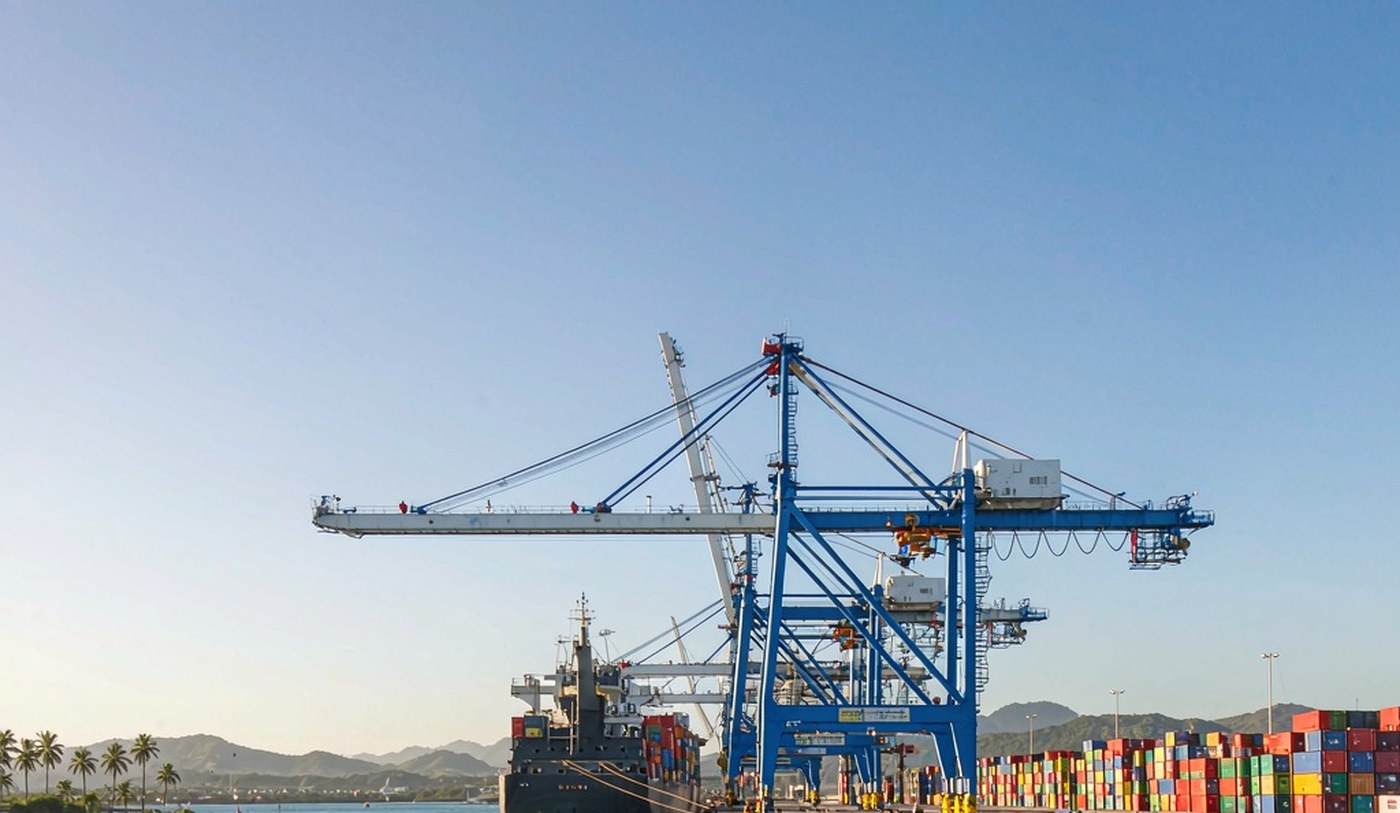
The second thing to understand is concentration. Puerto Cortés handles more than eighty percent of Honduras's imports and over a million TEU a year, making it the largest port in Central America. There is a Pacific alternative at San Lorenzo, and a secondary Caribbean port at Puerto Castilla, but for general container traffic there is really one door. That is efficient when it works and it means every disruption — weather, congestion, a labour dispute — is a national event rather than a routing problem you can work around.
The third thing is that the tax starts at the first dollar. Published customs summaries list Honduras's duty-free threshold as zero. There is no low-value floor to plan around, which is the opposite of what many buyers expect from experience elsewhere in the region, and it changes the arithmetic on small and sample shipments.
At a glance
Main port: Puerto Cortés (Caribbean) — over 80% of imports, 1m+ TEU a year, 1.5 h by truck to San Pedro Sula, 30 min to Choloma, 4–5 h to Tegucigalpa. · Others: San Lorenzo (Pacific, niche), Puerto Castilla (secondary Caribbean). · Routing: transhipped via Colón, Kingston or Miami. · Transit: sea commonly reported 30–45 days; air into San Pedro Sula (SAP) 5–8 days; courier 2–5 days. · Preference: China–Honduras early harvest arrangement in force since 1 September 2024 — a defined product list, not the whole tariff. · Duty: DAI 0–15% for most goods, up to 40% for some agricultural lines. · ISV: 15% standard, 18% on beer, spirits and tobacco, on CIF + duty + customs fees. · Excise: specific rates per litre on drinks, per thousand units on cigarettes; vehicles and some luxury items. · De minimis: none — duty assessed from the first dollar. · Registration: RTN with SAR before the goods ship. · System: SARAH, filed by a licensed broker; clearance commonly 2–4 days. · Supply: 120 V at 60 Hz.
How your cargo moves: China to Honduras
Eight steps from your supplier's door to yours. The last four are the ones shaped by local rules.
- Pickup from your supplierWe collect the goods anywhere in China and bring them to our consolidation point.
- Export clearanceChina customs declaration filed and released before the goods move to the port.
- Loading and departureContainer loaded, sealed and handed to the carrier at the Chinese port.
- Main carriageOcean, air or rail movement booked on the route agreed for your cargo.
- Arrival at the gatewayDischarge at the port or airport of entry, recorded on the carrier's manifest.
- Import clearanceCustoms declaration filed locally, with duty and tax assessed on the declared value.
- Customs releaseGoods released into free circulation once duty and tax are settled.
- Final deliveryOnward movement to your delivery address, warehouse or nominated depot.
Duty rates, VAT rates and clearance times move, and the figure that applies to your goods is the one set for your commodity code on the day of clearance. We check the current position against your code before your goods sail and confirm it to you in writing — ask for that check when you request a quote.
What this guide covers, and the single port underneath it
This is written for a buyer bringing goods out of China for the first time and landing them in Honduras. It follows the shipment in the order the problems arrive: which port, what route the vessel actually takes, whether a preference applies, what the tax office will charge, who can sign, how long it takes, and what happens on the road to Tegucigalpa.
It does not quote freight rates. Those move with the market and any figure printed here would be wrong within weeks. What it does instead is show where the money goes and which decisions change the total, so that a quotation can be read for what it leaves out as well as what it contains.
Honduras is a small market with a serious port. Around ten and a half million people, an economy built on apparel manufacturing, agriculture and remittances, and a trading relationship with China that has grown fast since diplomatic relations were established in 2023 — bilateral trade is reported at roughly two and a half billion US dollars. The lane is well served through Panama and Miami. It is not a hard country to import into, but it is concentrated, and concentration is a planning problem rather than a shipping one.
Puerto Cortés, and the weight one port carries
| Port | Coast | Position | What it suits |
|---|---|---|---|
| Puerto Cortés | Caribbean (north) | On the north coast. Over 80% of Honduran imports, more than 1 million TEU a year, with expansion plans reported toward 1.9 million TEU. About 1.5 hours by truck to San Pedro Sula, 30 minutes to Choloma, 4–5 hours to Tegucigalpa. Participates in the United States Container Security Initiative. | Everything an importer routinely needs: container services, adequate berth depth, bonded facilities and a short road to the industrial north. The default, and almost always the right answer. |
| San Lorenzo | Pacific (south) | On the Gulf of Fonseca in the south. | Niche cargo. Useful in principle for southern Honduras and for shippers already routing through the Pacific, but it does not offer the range of container services Puerto Cortés does. |
| Puerto Castilla | Caribbean (north-east) | On the north-east coast near Trujillo. | Secondary and specialised, with a history tied to agricultural and bulk cargoes rather than general container traffic. |
The practical consequence of that concentration is worth stating plainly. In a country with several working ports, a congestion event at one is an inconvenience: you reroute. In Honduras, a congestion event at Puerto Cortés is a national supply-chain event, and the only lever you have is timing rather than routing. Terminal tariffs and storage charges at Honduran terminals have also been reported as rising with operating costs, which makes dwell time more expensive than it used to be.
Plan buffer, not alternatives. On this lane the realistic response to port risk is to ship earlier rather than to ship differently. Build two weeks of slack into anything with a hard date attached, and do not assume that a quote which lands at San Lorenzo is a genuine alternative — ask the forwarder which carrier strings actually call there before you take it.
The Pacific option, and why it rarely helps
Buyers who have shipped to Guatemala, El Salvador or Nicaragua sometimes arrive with the assumption that Honduras works the same way: two coasts, pick the nearer one. It does not really. The overwhelming majority of Honduran container trade, and virtually all of its import container services, run through the Caribbean side.
There are three reasons. The population and industry are concentrated in the north and centre — San Pedro Sula and the Choloma industrial corridor are the manufacturing heart of the country and they sit close to Puerto Cortés. The road network is built around that corridor. And the carrier networks are built around it too: the transhipment hubs that feed Honduras, Colón and Miami and Kingston, are all Atlantic-side, so a Pacific discharge would often mean more handling rather than less.
Ask about San Lorenzo if your consignee is genuinely in the south, near Choluteca or the Gulf of Fonseca, or if you are moving a cargo type the port is set up for. Do not ask for it on the theory that a Pacific routing is shorter from China — for Honduras the ocean leg is rarely the part that decides it.
Getting to Honduras: the hubs, and the two routes in
There is no scheduled direct container service from China to Honduras. Cargo is transhipped, and there are two broad patterns.
Via Panama
The most common path. A mainline vessel runs China to Colón or Balboa, and a feeder brings the container down to Puerto Cortés. Well established, frequent, and generally the cheapest of the two patterns.
Via the United States
A transpacific service to a United States port, then a southbound service through Miami or another Florida or Gulf hub into Puerto Cortés. Often faster on the ocean leg, usually more expensive, and it adds a United States touch with the documentation that implies.
Kingston in Jamaica is also used as a hub for Honduran cargo. Which one your forwarder chooses depends on the carrier, the service, and the week — and the choice changes your transit time by more than the ocean leg does.
Which brings us back to the point that governs this whole region. The feeder is not daily. A container that misses its connection at the hub waits for the next sailing, and on Caribbean feeder networks that wait is measured in days and sometimes a week. When you set a delivery promise to your own customer, the number to give them is the one that includes a missed connection, not the one that assumes everything lands perfectly.
Transhipment via Colón, Kingston or Miami
Total sea transit from the main Chinese ports to Puerto Cortés is commonly reported at thirty to forty-five days. That is a wide band, and the width is almost entirely explained by three things:
- The hub and the dwell there. A container sitting three days at Colón and one sitting nine days produce very different arrival dates from the same mainline service.
- The origin port in China. South China loadings generally have the widest choice of services; a northern or inland origin adds feeder and barge time before the main leg even starts.
- Whether the routing goes through the United States. It can shave days off the water leg and add cost, and it can add documentation requirements that a Panama routing does not have.
Ask the forwarder two specific questions rather than one: which hub, and what is the published feeder frequency from that hub to Puerto Cortés. A quote that says "thirty-two days" without naming the hub is a quote you cannot plan against.
Season matters too. Hurricane season runs from June to November, and Honduras is exposed: the country has been hit hard by Atlantic storms in the past, and a storm anywhere on the route delays cargo whether or not it comes near the port. December to February brings the second pressure, because Chinese New Year shuts factories exactly when restocking demand peaks.
The early harvest arrangement, and what it actually covers
This is the most valuable thing on this page for a buyer sourcing from China.
China and Honduras established diplomatic relations in March 2023. The two governments signed an early harvest arrangement in February 2024, and it took effect on 1 September 2024. Negotiations toward a full free trade agreement have continued through multiple rounds since.
The word that matters is "early harvest". It is not a comprehensive agreement. It covers a defined list of products with a defined schedule of tariff treatment, and everything outside that list continues to be assessed at the standard Central American tariff rate.
The question to ask is not "is there an agreement?" — the answer is yes. The question is "is my HS code on the list, and at what rate, and does my certificate of origin satisfy it?" That is a question for your broker with the actual code in front of them, before you price the order. On some product lines the difference between the preferential rate and the standard rate is the whole of your margin.
Three practical cautions:
- Confirm coverage for your code specifically. Do not assume a product category is covered because a neighbouring one is.
- Origin documentation is required. A preference is claimed with documents, not asserted. The certificate of origin has to satisfy the arrangement's rules of origin, and it has to match the rest of the file.
- The wider negotiation is not concluded. Talks toward a full agreement continue, and the scope has been the subject of public discussion since the change of government in 2025. Treat the arrangement as something to verify rather than something to assume permanent.
If the answer comes back that your code is not covered, nothing is lost — you are simply in the same position as an importer into Guatemala or the Dominican Republic, paying the standard rate, and you planned for it.
China and Honduras: the preference that exists here and nowhere else nearby
Worth stating in comparison, because it is the reason Honduras is worth a separate plan.
Honduras is a member of the Central American Common Market and a party to CAFTA-DR, the agreement with the United States and Central America. Under CAFTA-DR, roughly eighty percent of United States goods are reported to enter Honduras duty free, and that figure is quoted constantly in trade material about the country.
Those preferences are United States and Central American origin. They do nothing for goods made in China. So a buyer comparing sourcing options faces this:
- In Guatemala and the Dominican Republic, Chinese origin pays the standard tariff, full stop.
- In Honduras, Chinese origin pays the standard tariff unless the product falls under the early harvest arrangement.
That "unless" is worth fifteen minutes with a broker. It is also worth understanding that the trade relationship is young and growing: bilateral trade has been reported rising strongly year on year since 2023. Young relationships produce changing rules, so the preference position should be re-checked periodically rather than treated as settled.
DAI, and the Central American tariff that sets it
Honduras applies the Central American import tariff through the Common Market. The duty line is the DAI (Derecho Arancelario a la Importación), assessed on the CIF value.
| Product group | Commonly reported duty | Comment |
|---|---|---|
| Industrial machinery | 0–5% | The bottom of the schedule. Capital equipment and tools are generally treated lightly. |
| Electronics | 0–15% | Wide spread — published examples range from zero on some computing equipment to fifteen percent on televisions. Confirm the exact heading. |
| Clothing and footwear | Around 15% | Flat at the top of the common band. Significant, given how much apparel capacity Honduras has. |
| Food products | 0–15% | Basic grains may be at zero while rice, meat and dairy are reported around fifteen. Some agricultural lines reach as high as forty percent. |
| Cosmetics | 5–15% | Sanitary registration applies as well, and it takes time. |
| Toys | 5–15% | Basic toys at the lower end, electronic toys at the upper. |
| Books | 0% | Zero across the common schedule. |
| Vehicles and luxury items | High, plus excise | Excise on top, reported in a band from ten to over fifty percent depending on the item. |
These bands are indicative, drawn from published summaries of the Central American tariff and Honduran practice. Ad valorem duty is reported to reach twenty percent in certain cases. The rate that applies is the one attached to your HS code on the date of import, as modified by any preference you can document.
ISV at fifteen, and the eighteen that applies to drink and tobacco
ISV — Impuesto Sobre Ventas, the sales tax — is charged on imports at fifteen percent standard, and at eighteen percent on beer, alcoholic beverages, cigarettes and other tobacco products.
The base is the part that surprises people. ISV is calculated on the aggregate of the CIF value, the customs duty, and the customs fees. So it is not fifteen percent of the goods; it is fifteen percent of the goods plus the freight plus the duty plus the fees. A tax on a tax, in the same pattern as elsewhere in Central America.
Two things follow. Freight is inside the tax base, so a cheap small shipment with high freight relative to value is taxed on the freight — one more argument for consolidating properly instead of sending three small lots. And an under-declared value does not just reduce the duty line; it reduces every line stacked on top of it, which is exactly why customs looks closely at declared values.
Excise by the litre rather than by the value
Honduras's excise on drink and tobacco is a specific tax, charged by volume or unit rather than as a percentage. That is a genuinely different mechanic from the ad valorem taxes elsewhere on the import bill, and it means the tax does not fall when the declared value falls.
| Product | Commonly reported rate |
|---|---|
| Soft drinks and other prepared drinks | About HNL 1.09 per litre |
| Beer | About HNL 7.72 per litre |
| Wine | About HNL 9.68 per litre |
| Rum, at 40° | About HNL 31.83 per litre |
| Whisky, brandy, gin, vodka, tequila and similar | About HNL 52.28 per litre |
| Cigarettes, including e-cigarettes and vaping devices | About HNL 655.40 per thousand units |
Rates shown are those published for 2026 and are stated in Honduran lempiras. They are amended periodically.
Excise also applies to vehicles and some luxury items, where it is reported in a band from ten to over fifty percent. Importing a vehicle into Honduras is a specialist exercise with its own tax treatment and should not be treated as general cargo.
No threshold: why even a small parcel is assessed
Published customs summaries list the duty-free threshold for Honduras as zero. There is no general de minimis floor: duty and ISV are assessed from the first dollar of value.
This is worth internalising because it is the opposite of what many buyers have experienced elsewhere. Neighbouring markets operate low-value thresholds of a hundred or two hundred US dollars, and a buyer who has been shipping small parcels untaxed into one of them will assume the same applies here. It does not.
What that means practically:
- Samples and spares are not free entries. A replacement part worth sixty dollars is a dutiable import. Either budget for it, or send it by courier and accept that the courier will bill duty and tax on it — which is usually cheaper in admin than a formal entry.
- Splitting orders does not help. Dividing one order into five parcels to stay under a threshold that does not exist simply produces five sets of paperwork and five sets of charges.
- Declare accurately anyway. With no threshold to argue about, the valuation question is cleaner, but customs still compares declared value against market price, and a challenge is a hold.
The RTN, and registering with the tax authority first
Customs and tax in Honduras are administered by SAR, the Servicio de Administración de Rentas, through its customs directorate. Importers need an RTN — Registro Tributario Nacional — the national taxpayer registration.
Without one there is no import in your name. Obtain it before the goods ship, not while they are on the water, and note that documentation filed with Honduran customs is expected in Spanish: a commercial invoice in English alone is a document someone has to translate, and translation is delay.
Get the Spanish description right at the source. Ask the Chinese supplier to put the Spanish product description on the invoice and packing list alongside the English, or have your broker provide the wording. It costs nothing at the factory and saves days at the port.
Filing in SARAH: the declaration and the documents behind it
The entry is filed electronically in SARAH, SAR's customs system, by a licensed customs broker. The broker is the party that deals with classification, valuation and any inspection, and it is not normally something an importer does directly.
The file is the standard one:
- Commercial invoice — in the importer's name, with a real description in Spanish, quantities, unit prices, total, and the terms of sale stated.
- Packing list — matching the invoice, with weights and dimensions.
- Bill of lading or airway bill, with the consignee matching the RTN holder.
- Certificate of origin — needed to claim any preference, including under the early harvest arrangement. Without it there is no preference, whatever the product is.
- Verified gross mass for sea containers, as required under the SOLAS rule.
- Import licences and registrations for regulated goods — obtained before arrival.
Routine clearance for a compliant shipment is commonly reported at two to four days; other published summaries put the typical band at three to seven. Both are achievable with a clean file and neither is achievable without one. Postal and informal channels are reported to take three to six weeks, which is a reason to use a courier for anything small rather than the post.
Sanitary registration, and the products that need it
Food, cosmetics, pharmaceuticals and sanitary products need registration with ARSA, the health regulator. This is the single most commonly reported reason a first food or cosmetics shipment from China sits at Puerto Cortés: the container is fine, the invoice is fine, and the product registration does not exist.
The registration is applied for by the importer in Honduras and it takes time. Register first, ship second. If you are importing food or cosmetics, the registration is on the critical path and it is longer than the vessel.
Electrical appliances may additionally require certification of conformity, and the mains supply is 120 volts at 60 hertz with United States pattern plugs — so equipment built for a 230 volt market will not run without a transformer. Import licences are reported for firearms, pharmaceuticals, agrochemicals and explosives, and for certain food products.
ZIP, ZOLI and ZADE: three regimes, three purposes
Honduras runs three preferential regimes for export-oriented activity, and it is worth knowing which is which because they explain a lot about the country's manufacturing geography.
| Regime | Stands for | What it governs |
|---|---|---|
| ZIP | Zonas Industriales de Procesamiento | The maquila regime. This is the framework behind the San Pedro Sula and Choloma apparel and textile corridor that supplies United States markets, historically under CAFTA-DR yarn-forward rules. Qualifying operators receive preferential customs and tax treatment on inputs and on zone-derived income. |
| ZOLI | Zonas Libres | The broader free zone regime, for activity wider than apparel manufacturing. |
| ZADE | Zonas Agrícolas de Exportación | Agricultural export zones. |
Most importers reading this will not operate under any of them. They still matter for one reason: they explain why a competitor's landed cost differs from yours. A business importing raw materials into a zone is not paying the duty and ISV you are paying on the equivalent goods. That is not an argument to match their price; it is an argument not to be surprised by it.
The temporary importation regime, and the window it opens
Honduras has extended its temporary importation regime for the fiscal years 2026 to 2030, reinforcing the tax incentives available for export-oriented activity. Under a temporary importation, goods brought in for processing and re-export are admitted without paying the duty and taxes that would apply to a definitive import, subject to the conditions of the regime and to re-export within the permitted period.
For a buyer importing to sell domestically, this is mostly context. For a buyer importing components to assemble and ship out again — the classic maquila pattern — it is the whole point, and it is worth asking whether the structure applies before assuming that every import pays full duty.
Tegucigalpa is inland, and the road that gets there
Honduras's geography is the part of this that catches people. The capital, Tegucigalpa, is inland and mountainous. The industrial capital, San Pedro Sula, and the manufacturing city of Choloma are in the north, close to the port.
| From Puerto Cortés to | Reported road time | What it means |
|---|---|---|
| Choloma | About 30 minutes | The industrial and maquila corridor. Effectively port-adjacent. |
| San Pedro Sula | About 1.5 hours | The commercial and industrial centre, and the main air cargo gateway. |
| Tegucigalpa | About 4–5 hours | The capital. A full working day on the road, over mountain terrain. Plan delivery windows accordingly. |
Practical points. Book the truck when you book the shipment, not when the arrival notice lands — a cleared container with no truck is still accruing storage, and terminal storage charges in Honduras have been reported as rising. Check the delivery address properly; street addressing is inconsistent in Honduran cities, so give a landmark, a contact name and a phone number that answers. And allow for the wet season: heavy rain between May and November affects inland transit on the mountain roads.
A railway between Puerto Cortés and San Pedro Sula has been discussed as a long-term project. It is not something to plan around today.
Air freight into San Pedro Sula, and when Toncontín is the wrong choice
Honduras has two working international cargo gateways that matter, and one of them is genuinely constrained.
- Ramón Villeda Morales International Airport (SAP), serving San Pedro Sula, is the busiest cargo and passenger terminal in the country, with an intermodal cargo terminal handling import and export air freight including perishables. For commercial cargo this is usually the right answer — it sits in the industrial north, near the consignees.
- Toncontín International Airport (TGU) serves the capital, handling commercial cargo for the Tegucigalpa region. It is a constrained city airport with a short runway, which limits the aircraft types that can operate. For heavy or outsized cargo, or for a freighter rather than a belly-hold movement, confirm what can actually operate there before booking.
- Golosón International Airport at La Ceiba has limited cargo capacity.
Air freight is commonly reported at five to eight days including connections, with charter capacity sometimes faster; express courier runs about two to five days door to door. Against thirty to forty-five days by sea, that is a month saved, and on some cargo it is worth far more than the difference in cost.
The decision is the usual arithmetic. Fly when value per kilogram is high, when a stock-out costs more than the freight, when the goods are seasonal and the window is closing, or when it is a first order you need to validate before committing to a container. Ship when the value per kilogram is low or the volume justifies a box. Courier when it is genuinely small — but remember there is no low-value threshold, so the courier will bill the taxes on.
Following a box from Chiwan to a warehouse in Choloma
Concretely, a full container out of South China to the industrial north, with the numbers reported for this lane.
Day 0 — booking and cut-off
Book against the factory's actual packed dimensions and gross weight. The cut-off at the terminal is a hard cut-off, and on a transhipped service missing it can move the whole plan by a week.
Days 1–5 — export
Chinese export clearance, container loading, verified gross mass submitted. Your measurement here is the one that gets billed on a consolidated shipment.
Days 6–34 — the main leg
Chiwan or Yantian or Nansha to the hub. Panama is the common path; a United States routing is the faster and dearer alternative.
Days 34–44 — dwell and feeder
Waiting at the hub for the onward sailing, then the feeder run to Puerto Cortés. This is the least predictable block in the whole transit and the one worth asking about specifically.
Days 44–48 — discharge and clearance
Discharge at Puerto Cortés, entry filed in SARAH by your broker against your RTN, duty and ISV assessed. Commonly two to four days with a clean file.
Day 48–49 — the inland run
Puerto Cortés to a warehouse in Choloma is about thirty minutes, and to San Pedro Sula about ninety. Book the truck in advance and the container is on the floor the same day it clears.
Total: roughly seven weeks door to door, with a week of slack either side. If your customer expects five, either change the expectation or ship by air.
Moisture, mildew and the damage claims insurers refuse
Honduras is hot and humid on the Caribbean coast, and a container crossing from China passes through several climate zones before it gets there. Condensation inside the box — "container rain" — is the most common cause of preventable damage on this lane, and it is also the most common cause of a rejected claim, because inadequate packing is a standard exclusion.
What prevents it, and what prevents the rejection:
- Desiccant and a barrier. Desiccant bags in the container, and cartons not stacked directly against the container walls where condensation forms and wicks.
- Dry goods at loading. Cartons loaded in a humid Chinese warehouse in the wet season start damp. This is a specification to put in the purchase order.
- Wrapped pallets and dunnage. Blocked and braced, shrink-wrapped, so nothing moves in the yard or on the feeder.
- Cartons rated for the stack. A carton rated for one tier fails under three.
- Photographs at both ends. At stuffing and at stripping. Without both, a claim becomes an argument about when the damage happened.
- Dangerous goods declared. Built-in batteries are routinely accepted with documentation; pure lithium batteries and some chemicals need dangerous-goods handling. Declaring costs a surcharge. Not declaring puts the whole container at risk.
Specify packing in the purchase order, not in a message. "Export cartons, double-wall, palletised, shrink-wrapped, with desiccant" is enforceable. "Please pack well" is not.
What a customs broker does here, and what the fee buys
In practice you need one. The entry is filed in SARAH by a licensed broker, and the broker handles classification, valuation and any inspection.
Broker fees in Honduras are commonly reported between US$250 and US$900 per shipment. What you are buying is not form-filling: a good broker confirms your HS codes before the goods ship rather than after, tells you which registrations apply, checks whether the early harvest arrangement covers your product line — which is the single highest-value thing a broker can do for a Chinese-origin importer here — and answers the valuation question when customs asks it.
What a broker cannot do is obtain an RTN retroactively, or produce an ARSA registration that was never applied for. Both are on you, and both are on the critical path.
Courier parcels and the small orders that still get taxed
Because there is no de minimis threshold, the small-shipment question in Honduras is different from the one in neighbouring markets. Every parcel is assessable, so the choice is between channels rather than between taxed and untaxed.
- Express courier — DHL, FedEx and UPS serve the major cities, with delivery commonly reported at two to five days. The courier clears the parcel and bills the duty and ISV on. For samples, spares and documents this is almost always the right answer despite there being no threshold, because the admin cost of a formal entry exceeds the tax on a small parcel.
- Postal — reported at three to six weeks and slow through customs. Do not use it for anything with a date attached.
- Consolidated sea freight — the answer once a shipment is big enough that the per-unit tax and freight matter more than the admin. Roughly, once you are past a cubic metre or two, sea consolidation beats courier on cost per unit by a wide margin.
The sensible shape for a first-time importer is: courier a sample, learn what sells, then consolidate. There is no threshold to exploit, so there is nothing to be gained by trying to stay under one.
Why importers use Goodhope on this lane
Six things that are different about working with us on China to Honduras shipments.
How it happens across Honduras
Five shipments bought in China and delivered into Honduras, told end to end — where the order came from, how it moved, where it nearly went wrong, and how it finished. Client names are withheld at their request; the situations and the handling are what we deal with on this lane.
The arrangement · list, not blanket · Chiwan to Puerto Cortes
The purchase. A buyer new to importing read that his country had a trade arrangement with China and costed the order at zero duty.
The move. Full container with each line checked against the defined product list before he quoted.
Where it nearly went wrong. The arrangement in force here covers a specific list rather than the whole tariff, and it is the only preference of its kind in the region. Costing broad zero duty on lines that are not listed is the mistake that loses the margin.
How it finished. We checked line by line. Two lines qualified and the rest did not, and he priced accordingly.
One port · routing · Shenzhen to Honduras
The purchase. A first-time buyer asked whether shipping to the Pacific would be cheaper, having seen San Lorenzo on a map.
The move. Full container into Puerto Cortes, with the two routine hubs compared for the relay.
Where it nearly went wrong. One Caribbean port handles more than eighty per cent of everything that comes in, and it sits an hour and a half from San Pedro Sula. The Pacific alternative rarely helps, and picking it for a small saving puts you on a thinner service.
How it finished. We routed through the main port. His transit has been predictable on every shipment since.
No threshold · small parcels · Yiwu to Honduras
The purchase. A buyer sending samples by courier assumed low-value parcels passed through unassessed.
The move. Courier parcels declared in full and assessed.
Where it nearly went wrong. There is no value threshold below which nothing is charged. Even a small parcel is assessed, and courier shipments are no exception. Telling a customer otherwise creates a bill nobody budgeted for.
How it finished. We told him before he quoted. He consolidated four sample parcels into one assessed entry.
Two rates · drink and tobacco · Ningbo to Honduras
The purchase. A buyer importing beverages applied the standard rate to everything on the invoice.
The move. Consolidated sea freight with the higher rate on the affected lines and excise calculated per litre rather than by value.
Where it nearly went wrong. Drink and tobacco carry a higher rate than the standard one, and excise on those categories is charged by volume rather than as a percentage. Applying one rate across a mixed invoice understates the assessment materially.
How it finished. We modelled each line separately. His landed cost came within a small margin of the assessment.
Inland distances · Choloma versus the capital · Shanghai to Honduras
The purchase. A buyer quoted one delivery price whether the goods went to Choloma or further inland.
The move. Consolidated sea freight with the inland leg priced by destination.
Where it nearly went wrong. Choloma is half an hour from the port and the capital is four to five hours by road. Those are different hauls and different costs, and pricing them the same means losing money on every inland delivery.
How it finished. He now prices the inland leg by destination. Nothing has gone out at a loss since.
Why importers use Goodhope on this lane
Six things that are different about working with us on China to Honduras shipments.
Send us the commodity, and we will confirm whether it qualifies
Give us the product, the HS codes if you have them, the packed dimensions and gross weight, the pickup city in China and the delivery address in Honduras. We will check whether your line falls under the China–Honduras early harvest arrangement and what rate applies, quote Puerto Cortés and tell you which hub and feeder we would use, and give you a transit time we would actually commit to — including the week it takes when a connection is missed.
Get a quote Talk to usRelated pages
Frequently asked questions
Which port should I ship to in Honduras?
Puerto Cortés, almost always — over 80% of imports and 1m+ TEU a year, 1.5 hours to San Pedro Sula and 30 minutes to Choloma. San Lorenzo on the Pacific is niche; Puerto Castilla is secondary. Treat Puerto Cortés as the default.
How long does shipping from China to Honduras take?
Sea 30–45 days, transhipped via Colón, Kingston or Miami. Air into San Pedro Sula 5–8 days. Courier 2–5 days door to door. The variable part is the hub wait, not the ocean leg.
What taxes will I pay?
DAI at 0–15% for most goods (up to 40% on some agricultural lines), ISV at 15% — 18% on beer, spirits and tobacco — on CIF plus duty plus customs fees, and excise on drinks, cigarettes, vehicles and some luxury items.
Is there a China–Honduras free trade agreement?
An early harvest arrangement, signed February 2024 and in force since 1 September 2024, with talks toward a full agreement continuing. It covers a defined product list — check whether your HS code is on it before pricing.
Does CAFTA-DR reduce my duty?
No. CAFTA-DR preferences are United States and Central American origin; roughly 80% of US goods enter duty free. Chinese origin pays the standard tariff unless the early harvest arrangement covers it.
Is there a de minimis threshold?
No. Published summaries list it as zero, so duty and ISV are assessed from the first dollar. Samples and spares are dutiable — use a courier and let them bill it, rather than filing a formal entry.
What is an RTN, and do I need one?
The Registro Tributario Nacional from SAR. Without it there is no import in your name. Get it before the goods ship, and put Spanish product descriptions on the invoice and packing list.
Do I need a customs broker?
Yes in practice. The entry is filed in SARAH by a licensed broker; fees commonly US$250–900. Clearance is commonly 2–4 days with a clean file. Postal channels are reported at 3–6 weeks.
What permits apply to food, cosmetics and electrical goods?
ARSA registration for food, cosmetics, pharmaceuticals and sanitary products — apply before you ship, it is the most common cause of a stalled first shipment. Electrical goods may need conformity certification, and the supply is 120 V at 60 Hz.
What are ZIP, ZOLI and ZADE?
Three export-oriented regimes: ZIP governs maquila manufacturing behind the San Pedro Sula apparel corridor, ZOLI broader free zone activity, ZADE agricultural export zones. They explain why a competitor's landed cost may be structured differently from yours.