
Home / Shipping to Indonesia / How to Ship from China to Indonesia
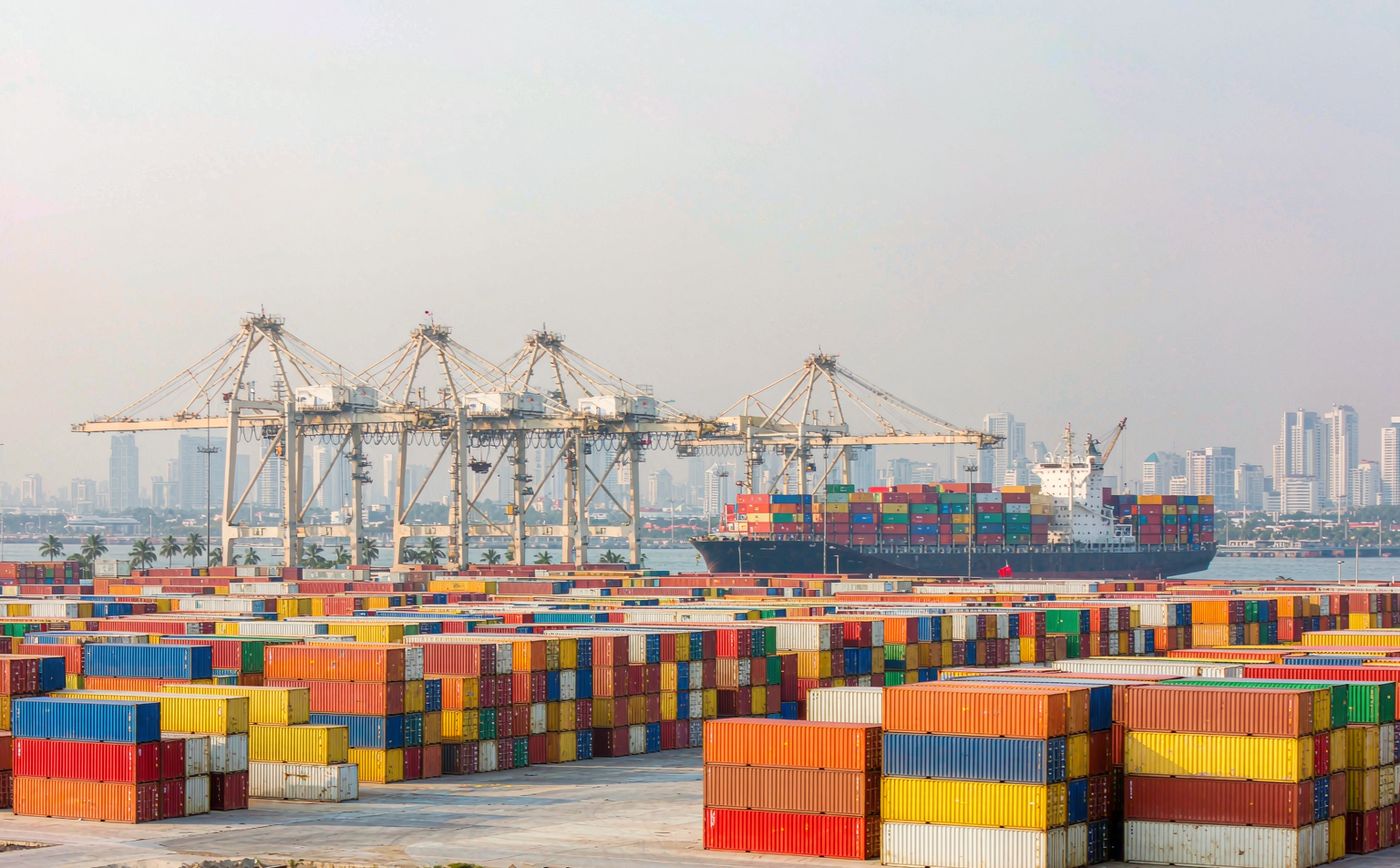
How to Ship from China to Indonesia: Tanjung Priok, VAT & PPh 22
Indonesia charges four separate levies on one shipment, and each one has its own base. There is import duty on the CIF value. There is VAT, known locally as PPN, charged on CIF plus duty. There is an import income tax called PPh Pasal 22, collected at the border and creditable against your annual corporate tax. And where the goods are listed, there is a luxury tax called PPnBM that can run from ten to two hundred percent. A first time importer who models "duty plus VAT" is missing roughly a quarter of the cash that leaves the account.
The second thing is procedural and catches everyone once: Indonesia takes the money before it reads the file. Duty, PPN and PPh 22 have to be paid through a designated receiving bank against a billing code, and until that payment is confirmed in the system the import declaration stays in draft and is not processed. In most of Europe the bill arrives after clearance. Here it arrives first, which means the funds have to be arranged before the goods do.
The third thing is that being allowed to import is a licensing question, not a paperwork question. The Indonesian party needs a business identification number with the right import licence classification in it, and that classification has to describe what the company genuinely does with the goods. Getting this wrong does not slow a clearance down so much as stop it.
How your cargo moves: China to Indonesia
Eight steps from your supplier's door to yours. The last four are the ones shaped by local rules.
- Pickup from your supplierWe collect the goods anywhere in China and bring them to our consolidation point.
- Export clearanceChina customs declaration filed and released before the goods move to the port.
- Loading and departureContainer loaded, sealed and handed to the carrier at the Chinese port.
- Main carriageOcean, air or rail movement booked on the route agreed for your cargo.
- Arrival at the gatewayDischarge at the port or airport of entry, recorded on the carrier's manifest.
- Import clearanceCustoms declaration filed locally, with duty and tax assessed on the declared value.
- Customs releaseGoods released into free circulation once duty and tax are settled.
- Final deliveryOnward movement to your delivery address, warehouse or nominated depot.
Duty rates, VAT rates and clearance times move, and the figure that applies to your goods is the one set for your commodity code on the day of clearance. We check the current position against your code before your goods sail and confirm it to you in writing — ask for that check when you request a quote.
Four taxes, stacked on the same shipment
| Charge | Typical base | Rate | Notes |
|---|---|---|---|
| Import duty (Bea Masuk) | CIF value | Commonly zero to around 40% by code; the general average sits in the region of 8% | A preferential certificate moves you from the general rate to the agreed one, which is zero on most lines. |
| VAT (PPN) | CIF plus duty, plus luxury tax where it applies | Headline 12%; most non-luxury imports come out at roughly 11% under the current taxable base mechanism | Recoverable as input tax by an Indonesian taxpayer registered for VAT. |
| Import income tax (PPh Pasal 22) | Import value | 2.5% with the appropriate licence, 7.5% without one, and the rate is doubled where there is no tax number | A prepayment of corporate income tax, creditable against the annual return — but refunds are slow, so treat it as a real cost. |
| Luxury tax (PPnBM) | By listed category | 10% to 200% | Applies to listed luxury goods and vehicles; some categories including electric vehicles are treated differently. |
Worked once, on a shipment of general goods at USD 100,000 CIF with a 5% duty rate and no luxury tax: duty of USD 5,000, PPh 22 at 2.5% of USD 2,500, and PPN at roughly 11% of USD 105,000 — around USD 11,550. Total at clearance is close to USD 19,000 on a hundred thousand dollar shipment, before any storage, broker or inland charges.
Model all four, and model the cash. Two of the four are recoverable eventually — the PPN through input credit, the PPh through the annual return. Neither comes back quickly. A landed cost model that treats them as refundable overstates your margin in the quarter you pay them.
Tanjung Priok, Tanjung Perak, Belawan and Semarang
| Gateway | Region served | Notes |
|---|---|---|
| Tanjung Priok | Jakarta and the greater capital region | The principal container port and the entry point for roughly two thirds of Indonesia's imports. Congestion is common, so build slack into delivery promises. |
| Tanjung Perak | Surabaya and East Java | The second port, serving Indonesia's eastern manufacturing belt. Fewer direct services than Jakarta. |
| Belawan | Medan and Sumatra | Serves northern Sumatra and is frequently reached by transhipment, which adds time. |
| Semarang | Central Java | Serves the central Java corridor, often with additional inland cost. |
| Soekarno-Hatta (CGK) and Juanda (SUB) | Air freight, Jakarta and Surabaya | The main air cargo gateways. |
Indonesian customs operates through regional offices that work somewhat independently, so inspection queues, overtime for examination staff and verification timelines differ between Jakarta and Surabaya. It is one of the reasons a single national transit figure is less useful here than a figure for the port you are actually using.
How long into Indonesia by vessel and aircraft
| Mode | Typical transit | When it fits |
|---|---|---|
| Ocean FCL | Around 7–10 days port to port from Shenzhen into Jakarta, 8–11 from Guangzhou, 9–12 from Shanghai or Ningbo; Surabaya is commonly 10–15 days | Volume above roughly 15 cubic metres and the default for regular trade. |
| Ocean LCL | Vessel time plus consolidation and deconsolidation at both ends, commonly adding several days to a week | Trial orders and part loads. Indonesian deconsolidation charges are worth asking about up front. |
| Secondary ports | Transhipment adds substantially; Sumatra and Kalimantan destinations often need onward feeder or river legs | Plan these separately from Jakarta and quote to the actual destination. |
| Air freight | One to three days airport to airport into Jakarta | Urgent, high value density, samples. |
| Express courier | A few days door to door | Documents and small parcels, subject to the cross-border rules below. |
Customs clearance on a complete file is commonly one to three days, stretching to three to seven where the declaration is examined. We do not publish freight rates here. Ask for base freight, origin charges in China, destination charges in Indonesia, the four taxes, and inland delivery as separate lines so you can see what moved when the price changes. See our local charges page.
Paying before customs will read the file
This is the part that differs most from what importers expect, so it is worth walking through in order.
The carrier files the inward manifest
Before the goods physically arrive, the shipping line or airline lodges an inward manifest with customs covering the transport document number, the total number of packages and the gross weight. If your documents disagree with it, the system rejects the filing before a human being looks at it.
The import declaration is prepared
The PIB, the Indonesian import declaration, is prepared by a licensed customs broker. The commercial invoice must show the trade term, the packing list must agree with it, and the classification is given at ten digits. Errors in the code at this stage are widely reported as the single biggest cause of a physical examination.
Taxes are paid first
Duty, PPN and PPh 22 are settled through a designated receiving bank against a billing code. Until that payment is confirmed, the declaration is a draft and nothing moves. Arrange funds before arrival rather than after.
The channel is assigned
The declaration goes through the CEISA system and is risk scored into green, yellow or red. Green releases on the documents. Yellow requires the original paperwork to be produced. Red means physical examination and counting, and it also verifies that any sector permits have been transmitted electronically. New importers are examined more often than established ones.
The release note is issued
Once customs is satisfied it issues the electronic release authorisation, and only that document lets the terminal release your container. Without it the goods sit in temporary storage accruing demurrage and storage every day.
Records are not optional. Indonesian customs can run a post clearance audit for months after the entry, and it will ask for your accounting books and evidence that the goods were used as declared. Import records are commonly expected to be kept for many years. Build the filing habit before you need it.
Incoterms, and the party whose licence actually imports
The trade term divides cost and risk. It does not create an import licence, and it does not change who is liable to Indonesian customs.
- EXW — you collect at the supplier's door and carry everything including Chinese export formalities. Rarely sensible for a first import.
- FOB — the supplier loads and clears Chinese export; you take over at the Chinese port. The term most experienced buyers use.
- CIF — the supplier pays freight and insurance to the Indonesian port, risk passes in China, and you still clear. Not delivered.
- DAP — delivered to a named place in Indonesia, with you handling clearance, taxes and permits.
- DDP — the seller carries everything, which means the seller must have an Indonesian party holding the right licence and must appoint a licensed customs broker. Ask who that party is and whether their licence covers your goods.
One mechanical point that causes avoidable delay: name the actual importer on the transport documents. Practitioners report that consignee-to-order bills create problems at Indonesian customs because the importer cannot be identified from the paperwork.
The NIB, the API, and matching one to the other
Three things sit underneath a lawful Indonesian import, and they belong to the Indonesian party.
Business identity and tax identity
The importing entity holds a business identification number, the NIB, obtained through the online licensing system, plus a tax number and a customs identity registered on the DJBC portal. Registration also includes the product and activity information the system will later check the declarations against.
The import licence classification
The NIB carries the importer's classification. API-U is the general importer, importing to resell or distribute. API-P is the producer, importing raw materials, components and capital goods for its own manufacturing, with resale prohibited. A company holds one at a time. Moving from API-U to API-P is possible; the reverse is not.
Matching the classification to the activity is where most problems start. A general importer bringing in production inputs, or a manufacturer importing goods it intends to sell on, is inviting a hold. For standard goods registration is largely digital and relatively quick; where the goods need additional approvals the timeline gets much longer, because those join the queue in the relevant commodity cluster.
A foreign business with no Indonesian entity has three honest routes: incorporate locally, sell onward to an Indonesian distributor that imports under its own licence, or appoint a properly licensed importer of record. Each should be documented clearly, because responsibilities for permits, taxes and distribution have to be allocated rather than assumed.
Following one container from Nansha into Bekasi
Bekasi and the industrial estates east of Jakarta absorb a great deal of Chinese manufacturing input. This is what one routine shipment looks like.
Check the restricted list before booking
Classify the goods first, then check whether the code appears on the restricted list. If it does, the additional approval is a prerequisite, not a formality, and it has its own lead time.
Confirm who is importing and under which licence
The Indonesian party's classification has to cover what happens to the goods. Where the cargo needs SNI, type approval, BPOM registration or a halal certificate, confirm the certificate exists and who holds it.
Arrange Form E before departure
The certificate of origin is applied for in China before the goods sail. It is the difference between the general duty rate and the preferential one, and on many lines that difference is the whole duty.
Load, sail and prepare the manifest
The carrier files the inward manifest before arrival. Your invoice — which must state the trade term — the packing list, the bill of lading naming the importer, and the certificate are prepared as one consistent set.
Fund the taxes, file, and clear
The broker files the PIB on CEISA once payment has been confirmed. Channel assigned, examination if required, then the release note and the haul to Bekasi. Door to door this is commonly around three weeks from collection.
Duty, VAT, PPh 22 and PPnBM, calculated in that order
The order matters because each base includes what came before it.
| Step | Calculation | On USD 100,000 CIF at 5% duty |
|---|---|---|
| Import duty | Duty rate × CIF | USD 5,000 |
| VAT base | CIF + duty + luxury tax if any | USD 105,000 |
| VAT (PPN) | About 11% effective for most non-luxury goods | About USD 11,550 |
| PPh Pasal 22 | 2.5% where the licence is held, 7.5% where it is not | About USD 2,500–2,625 |
| Total at clearance | Duty + VAT + PPh, before storage, broker and inland | About USD 19,000 |
Two corrections worth carrying. First, the VAT figure is not 12% of your goods: the statutory rate is 12% but the way the taxable base is set means most non-luxury imports land at around 11%. Confirm the effective rate for your line rather than applying either number blindly. Second, the PPh 22 is not a consumption tax — it is a prepayment of corporate income tax, creditable against the annual return. Refunds, where available, take a long time, so plan it as cost.
Lartas: the restricted list that decides whether you can import
Indonesia distinguishes carefully between three statuses, and the answer comes from the code rather than from the sales description.
- Free. No additional requirement beyond the ordinary declaration.
- Restricted, known as lartas. Importable once the extra conditions are met. Those can include a trade ministry import approval, a surveyor report issued before shipment, or a technical consideration from a sector agency. Some goods need more than one.
- Prohibited. Set out in its own regulation and generally not importable at all.
The practical instruction is one sentence: classify, then check the restricted list, and do it before you book. Discovering that your product needs an approval once the container is already at Tanjung Priok is the expensive version of this exercise, because every day of waiting is a day of storage.
SNI, DJID, BPOM and halal: four certificates with four owners
SNI and DJID
SNI is the Indonesian national standard and it is mandatory across a substantial product list covering many electrical goods and building materials, among others. Conformity is assessed by accredited bodies, usually including a factory audit, and the product then carries the mark.
Anything transmitting radio needs type approval from the digital infrastructure regulator, formerly handled as postal and telecommunications certification. Handled before arrival, this is a formality. Discovered at the port, it is a storage bill.
BPOM and halal
BPOM, the food and drug authority, registers food, drink, cosmetics and pharmaceutical products and issues a distribution licence number. A foreign principal appoints a local agent, because the registration is held in Indonesia.
Halal certification has been phased in under Indonesian law and further waves of product categories take effect across 2026, administered through the halal product assurance agency. If your product falls in a covered category, this is a lead time item. Indonesian language labelling is required in parallel.
The recurring pattern: none of these four can be held by the Chinese factory in its own name. Each is held by an Indonesian entity, each takes time to obtain, and each has to exist before the goods ship rather than while they are on the water.
Form E, and the ninety two percent of lines it takes to zero
Indonesia sits inside the ASEAN–China Free Trade Area, and the great majority of tariff lines under that agreement — around ninety two percent on commonly cited figures — reach a zero rate. A valid Form E is what moves your entry from the general rate onto that preferential schedule, and on this lane it is usually the single largest cost lever there is, larger than any freight negotiation.
The correction that saves disappointment: the certificate grants the preferential rate for your code, it does not make goods duty free by itself. That rate may be zero, may be five, or may be something else, and it is set by the classification. So the sequence is unchanged — get the ten digit Indonesian code, look up the preferential rate for it, and then apply for the certificate.
Indonesia is also in RCEP, so where the RCEP rate for your code is lower than the ASEAN one, the alternative certificate is available. Whichever you use, the classification on the certificate has to be consistent with the one on the declaration, and the certificate is applied for before departure.
The hundred dollar floor on cross-border parcels
Indonesia has taken a different route from most countries on small parcels: rather than taxing them, it has largely closed the channel for them. Imported finished goods sold directly to Indonesian consumers through cross-border e-commerce are required to meet a minimum value of one hundred United States dollars freight on board per unit, and the platforms are required to operate a filter that rejects listings below it.
The consequence for a business is concrete. Shipping low value consumer items one parcel at a time from China to Indonesian buyers is not a viable model. Either the goods come in as a conventional commercial import under an Indonesian licence, with duty and the four taxes paid at clearance, or they move through an established local distributor. The regulations in this area are revised frequently, so check the current position rather than relying on a channel that worked last year.
Buying on a marketplace, and buying through a factory
Through a marketplace
Cross-border platform sales carry the minimum unit value rule, and the platform is required to police it. There are also licensing, labelling and language obligations attached to selling into Indonesia, plus the requirement for meaningful foreign platforms to appoint a local representative.
It suits testing demand. It does not build a supply chain, and it will not give you a compliant import programme for anything above parcel scale.
Through a factory
You control the classification, own the certificate, choose the certificate of origin, and build a document set Indonesian customs can machinery-check against the manifest. You also carry the licence question and the product approvals.
For anything recurring, this is the route. Most importantly it lets you obtain Form E, which on this lane is worth more than any rate you will negotiate out of a carrier.
Reselling the goods, and using them to make other goods
This distinction has legal weight in Indonesia, not merely commercial relevance, because it determines which licence classification the importer holds.
- Imported to resell or distribute — the general importer classification, and the goods are expected to move onward largely as imported.
- Imported as production input — a raw material, a component or a capital item used in the importer's own manufacturing, which must not simply be resold. Some production inputs attract different treatment, which is worth checking before you commit.
Getting this wrong is a common cause of a shipment being held, because the classification on paper and the commercial reality on the ground do not describe the same activity. Decide what the goods are for before deciding who imports them.
The China forwarder and the Indonesian licence holder
What happens in China
Collecting from the factory or from several factories, consolidating where the volumes justify it, Chinese export clearance, the verified gross mass, booking the service, issuing the bill of lading or air waybill, and tracking. We also check the invoice, packing list and certificate agree with each other before the documents leave, because Indonesian customs machinery-checks them against the inward manifest.
What happens in Indonesia
A licensed customs broker files the PIB through CEISA on behalf of the licence holder, arranges payment of the four taxes, answers examination queries and obtains the release note. The NIB, the licence classification, sector approvals, SNI, type approval, BPOM and halal registration belong to the importer of record and their advisers.
Goodhope works port to port on ocean freight and airport to airport on air freight, naming the terminal rather than quoting a generic estimate. We do not provide Indonesian import clearance, and we do not pretend to.
Checking a forwarder on an Indonesia booking
- Have they asked who holds the licence, and which one? Without that answer nothing else can be planned.
- Is the product on the restricted list? If they cannot say, they have not checked your code.
- Is a certificate needed, and will it be applied for before departure? Not after arrival.
- Have they quoted all four taxes, or only duty and VAT? The difference is the PPh 22 line, and it is real cash.
- Which port, and is it Jakarta or Surabaya? The two districts behave differently.
- Have they flagged the payment-before-filing step? It is the most Indonesian thing about this lane.
Red flags: a rate quoted before you have said what the goods are; a DDP offer with no Indonesian party named; a promise that permits can be arranged after arrival; "tax included" with no breakdown; and any suggestion of declaring a lower value to reduce the assessment.
Three shipments into Indonesia, and the reason for each
The examples below are illustrative. They describe typical decisions on this lane, not specific customer shipments.
Building materials that were an approval problem, not a freight problem
A container of ceramic products into Tanjung Priok for a Jakarta distributor. The goods appeared on the restricted list, which meant a sector approval was a prerequisite. Because it was discovered on arrival rather than at booking, the container moved from the vessel into storage and stayed there. The freight was never the issue; the permit calendar was.
Consumer electronics where four taxes met one invoice
A mixed consignment of small appliances. Duty was assessed, PPN applied on top of it, PPh 22 collected at clearance, and the importer discovered afterwards that the PPh was creditable but not quickly refundable. The shipment cleared on time. The cash planning had not anticipated the fourth line, and working capital took the hit.
Packaged food that needed three Indonesian documents at once
Food products air freighted into Soekarno-Hatta. One product, three requirements: registration with the food and drug authority and a distribution licence number, Indonesian language labelling produced before the print run, and halal coverage relevant to the category. The freight was booked once all three existed, and clearance took two days.
Lebaran, ramadan and the customs red light period
- Ramadan shortens working days and slows agency processing for around a month.
- Lebaran, the holiday at the end of it, pauses Indonesia for a week or more, with enormous travel volumes that affect ports, trucking, warehouses and banks alike.
- Congestion builds either side of it, and customs runs intensified examination periods around holiday seasons, so red channel assignments become more likely just when capacity is tightest.
- Chinese New Year stops production on the Chinese end, and the year end retail peak tightens space.
Plan approvals to be finished before Ramadan rather than across it. Check our holidays page when you are fixing a production date.
What Goodhope handles on the Indonesia lane
- We raise the licence question before you book — who holds the NIB, and whether their classification covers what your goods will be used for.
- We ask for the ten digit code before we quote — because it drives duty, whether the goods are restricted, and which certificates apply.
- Ocean freight port to port and air freight airport to airport — into Tanjung Priok, Tanjung Perak, Belawan or Semarang by sea and Jakarta or Surabaya by air, with the terminal named rather than a generic estimate.
- We chase the certificate before departure — Form E is usually the largest single saving on this lane, and it has a hard deadline.
- We flag the four taxes, not two — duty, PPN, PPh 22 and PPnBM where it applies, so your cash planning is right the first time.
- We say the payment-before-filing step out loud — so funds are arranged before arrival rather than after.
- Consolidation across suppliers — several factories, one container, one consistent document set. See our consolidated shipment and warehouse and consolidation pages.
- Regulated cargo handled properly — see our dangerous goods, reefer containers to Indonesia and quarantine inspection pages.
- Plain answers on what we do not do — Indonesian licensing, restricted list approvals, SNI, type approval, BPOM and halal registration, and the taxes themselves belong to the importer of record and their advisers. We coordinate with them and we do not pretend otherwise.
- NVOCC licensed, since 2012 — see our why partner with Goodhope page.
Why importers use Goodhope on this lane
Six things that are different about working with us on China to Indonesia shipments.
Ask for an Indonesia quote with all four taxes shown
Send us the product and its classification if you have it, the carton count and total weight or volume, the supplier's city, and the delivery address in Indonesia. We will name the terminal and the service, tell you whether the goods are likely to be restricted, and show duty, VAT, PPh 22 and any luxury tax as separate lines rather than one round number.
Frequently asked questions
How much tax will I pay importing into Indonesia?
Indonesia stacks four levies on one shipment. Import duty is charged on the CIF value at the rate for your ten digit code, with applied rates commonly running from zero to around 40 percent and an average in the region of 8 percent. VAT, known as PPN, has a headline rate of 12 percent but most non-luxury imports are effectively charged at about 11 percent under the current taxable base mechanism, on CIF plus duty. PPh Pasal 22 is an import income tax collected at clearance, commonly 2.5 percent where the importer holds the appropriate licence and 7.5 percent where it does not. PPnBM luxury tax applies to listed categories at rates that can run from 10 to 200 percent. The PPN is recoverable by a registered taxpayer and the PPh is creditable against annual income tax, but the cash leaves your account at clearance.
Do I have to pay Indonesian duty and tax before customs clears the goods?
Yes. Indonesia works on a prepayment model rather than a post clearance billing model. Duty, PPN and PPh 22 have to be paid through a designated receiving bank against a billing code, and until the payment is confirmed in the system the import declaration stays in draft and is not processed. Only after payment is confirmed does the declaration move into the risk assessment that assigns it to the green, yellow or red channel. Practically, that means funds have to be arranged before the goods arrive rather than after.
How long does shipping from China to Indonesia take?
Ocean freight into Tanjung Priok is commonly quoted at around seven to ten days port to port from Shenzhen, eight to eleven days from Guangzhou and nine to twelve days from Shanghai or Ningbo. Surabaya adds time, typically ten to fifteen days, and secondary ports such as Semarang and Belawan are often served by transhipment, which adds more. LCL adds consolidation and deconsolidation. Air freight into Soekarno-Hatta is one to three days airport to airport. Customs clearance on a complete file is commonly one to three days, and three to seven where there is an examination.
Do I need an Indonesian company to import?
Importing commercially into Indonesia is done by an Indonesian legal entity holding a business identification number, the NIB, with the correct import licence classification embedded in it, together with a tax number and a customs identity. A foreign business with no Indonesian entity cannot import in its own name. The usual routes are to incorporate locally, to sell onward to an Indonesian distributor that imports under its own licence, or to appoint a properly licensed importer of record. The licence classification also has to match what the company actually does with the goods.
What is the difference between API-U and API-P?
API-U is the general importer classification for a company bringing goods in to resell or distribute. API-P is for a manufacturer importing raw materials, components or capital goods for use in its own production, and goods imported under it must not be resold. A company may hold only one at a time. A holder can move from API-U to API-P through the licensing system, but not in the other direction. Importing goods that do not fit your classification is a common cause of goods being held, so the two decisions belong together.
What is lartas and how do I know if my product is on it?
Lartas is the Indonesian term for restricted goods. Goods on the restricted list can be imported only when the additional requirements are met, which may include a Ministry of Trade import approval, a surveyor report or a technical consideration from the responsible agency. Prohibited goods sit on a separate list and generally cannot enter at all. Whether a product is restricted is answered by its classification rather than by a general description, so the check runs from the code and should happen before the goods are booked, not after they arrive.
What does Form E actually save in Indonesia?
Indonesia is part of the ASEAN–China Free Trade Area, and the great majority of tariff lines within that agreement reach a zero rate. In practice a valid Form E is what moves a line from the general rate to the preferential one, and it is usually the single largest saving available. The important correction is that the certificate does not make goods duty free by itself: it gives you the agreed preferential rate for that code, which may be zero, may be five, or may be something else. The code decides, and the certificate unlocks it.
Does my product need SNI, DJID or BPOM approval?
It depends entirely on the category. SNI, the Indonesian national standard, is mandatory for a substantial list of products including many electrical items and building materials, assessed by accredited conformity bodies with factory audit and a mark on the product. Anything transmitting radio needs type approval from the digital infrastructure regulator. Food, drink, cosmetics and pharmaceutical products need registration with the food and drug authority and a distribution licence number. The certificate holder in each case has to be an Indonesian entity, so a Chinese factory cannot simply hold them itself.
Can I send small parcels to Indonesia by cross-border e-commerce?
Not cheaply. Cross-border e-commerce into Indonesia carries a minimum value requirement of 100 United States dollars freight on board per unit for finished goods sold directly to consumers, and platforms are required to filter out listings below it. The effect is to close the low value parcel route for small consumer items. The realistic alternatives are a conventional commercial import under an Indonesian licence, or selling through an established local distributor. Rules in this area are revised often, so confirm the current position before relying on a particular channel.
Are there seasonal risks on the China to Indonesia lane?
The dominant one is Lebaran, the end of Ramadan, when Indonesia effectively pauses for a week or more and enormous numbers of people travel. Warehouses, trucking, agencies and banks are all affected, and congestion builds before it and after it. Customs also runs intensified examination periods around holiday seasons, which is one reason red channel assignments rise. On the Chinese side, Chinese New Year stops production, and the year end peak tightens space. Delays of several days to a couple of weeks either side of Lebaran should be planned for rather than hoped against.