
Home / Shipping to Iraq / How to Ship from China to Iraq
How to Ship from China to Iraq: Umm Qasr, Pre-Declaration & the Consular Chain
The rule that changed most recently on this lane is the one to learn first. From 1 January 2026, Iraq's General Customs Authority requires all goods to go through an advance clearance declaration: the trader or importer declares the goods through the pre-declaration system before completing the funds transfer, and customs reviews and matches that information when the goods reach the border. In other words, the declaration now sits ahead of the money rather than after the ship.
The second thing to know is where things land. Umm Qasr, south of Basra, is Iraq's main seaport and handles the great majority of containers arriving from China, in both full container load and consolidated form. Almost everything else is a variation: Abu Flus also serves the south, air cargo goes to Baghdad and Erbil, and overland cargo from Turkey and Iran crosses at land borders including Ibrahim Khalil, Zurbatiyah and Shalamcheh.
The third is the document chain. Iraq requires a certificate of origin that has been stamped by a chamber of commerce and legalised through the Iraqi commercial attaché, documents in Arabic or bilingual form, and — this one surprises people — a hand-signed commercial invoice, because digital signatures are not yet recognised. Declarations are filed electronically through ASYCUDA World, and paper declarations are no longer accepted at the main ports and airports.
At a glance
Country: in the Middle East at the head of the Gulf, bordered by Turkey, Iran, Kuwait, Saudi Arabia, Syria and Jordan; capital Baghdad. · Currency: the Iraqi dinar. · Main port: Umm Qasr, south of Basra; Abu Flus also serves the south. · Airports: Baghdad and Erbil, both on ASYCUDA World. · Land borders: Ibrahim Khalil, Zurbatiyah, Shalamcheh. · New for 2026: advance clearance declaration before the funds transfer is completed. · Duty: on CIF-style customs value by HS code, plus a reconstruction levy and service fees; published guidance also describes 15 percent VAT on some categories. · Indicative duty ranges: 0 to 5 percent basic foodstuffs and industrial machinery; 5 to 15 percent consumer electronics and construction materials; 15 to 30 percent clothing, furniture and cosmetics. · Origin: chamber-stamped, then legalised through the Iraqi commercial attaché. · Language: Arabic or bilingual documents; hand-signed invoices, digital signatures not recognised. · Transit: TIR mandatory for road transit since April 2025. · Seals: ISO 17712 high-security seals with the number on the bill of lading and manifest. · Free storage: commonly around seven days. · Confirm rates and current requirements with your broker before you book.
How your cargo moves: China to Iraq
Eight steps from your supplier's door to yours. The last four are the ones shaped by local rules.
- Pickup from your supplierWe collect the goods anywhere in China and bring them to our consolidation point.
- Export clearanceChina customs declaration filed and released before the goods move to the port.
- Loading and departureContainer loaded, sealed and handed to the carrier at the Chinese port.
- Main carriageOcean, air or rail movement booked on the route agreed for your cargo.
- Arrival at the gatewayDischarge at the port or airport of entry, recorded on the carrier's manifest.
- Import clearanceCustoms declaration filed locally, with duty and tax assessed on the declared value.
- Customs releaseGoods released into free circulation once duty and tax are settled.
- Final deliveryOnward movement to your delivery address, warehouse or nominated depot.
Duty rates, VAT rates and clearance times move, and the figure that applies to your goods is the one set for your commodity code on the day of clearance. We check the current position against your code before your goods sail and confirm it to you in writing — ask for that check when you request a quote.
Umm Qasr, and the land borders that also carry China cargo
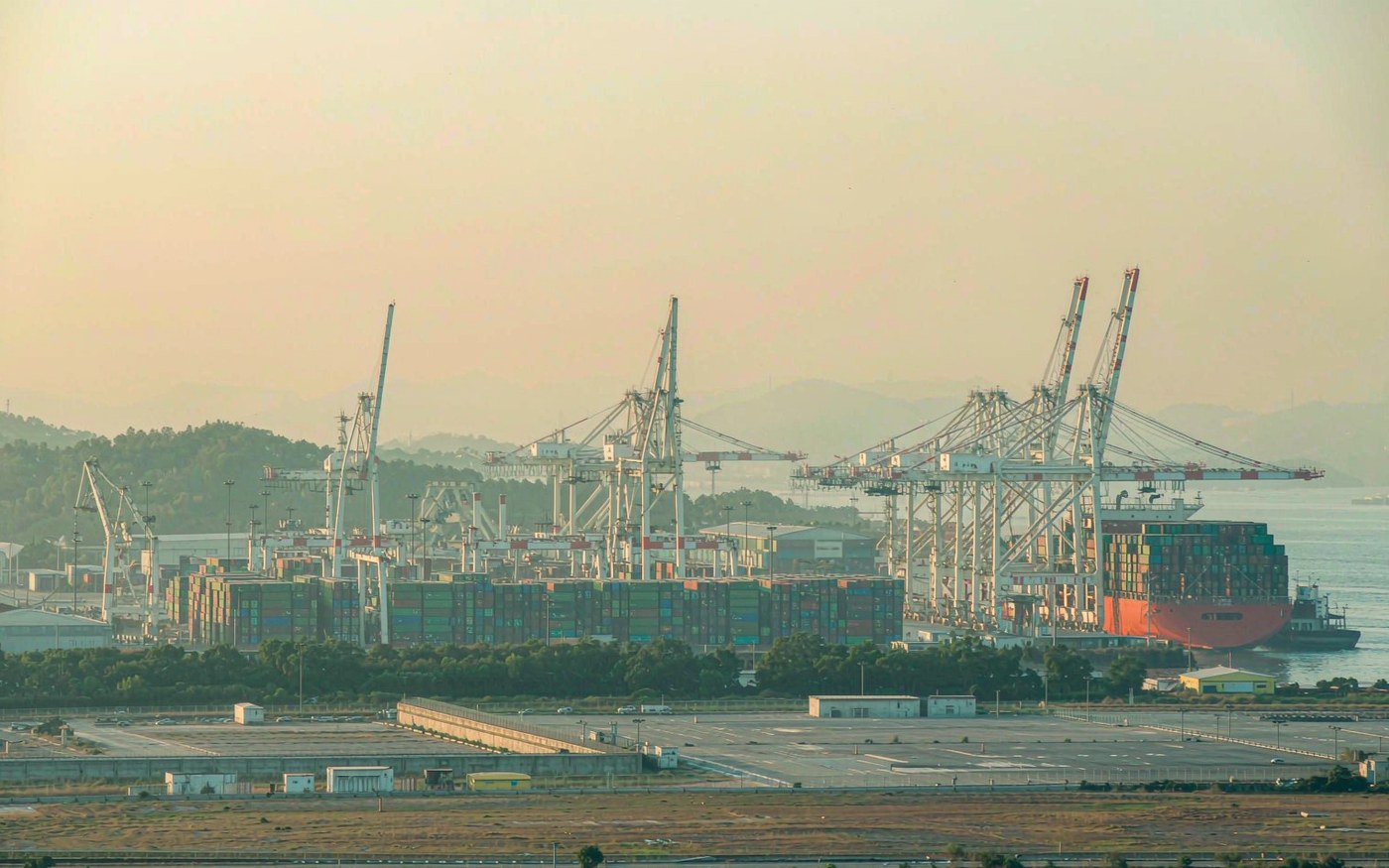
Umm Qasr is where you should picture a container going. It sits south of Basra in the far south of the country and handles both full container loads and consolidated shipments. Published guidance from operators who clear there describes it as handling the majority of containers arriving from China, Europe, the UAE and South-East Asia. Within the port, the north terminal handles containers while the south terminal works more general and bulk cargo.
The choice of entry point is not a minor detail — it sets the transit time, the character of the procedures, and in practice the final cost. Three alternatives come up:
| Entry point | What it carries | When it is the answer |
|---|---|---|
| Umm Qasr | Sea freight from China, FCL and LCL | The default for anything containerised and bulky |
| Baghdad and Erbil airports | Air freight | Urgent, high value per kilo, or northern destinations |
| Ibrahim Khalil, Zurbatiyah, Shalamcheh | Overland from Turkey and Iran | Regional sourcing, or TIR transit across Iraq to a Gulf destination |
| Abu Flus | Additional southern capacity | Occasionally named as an alternative southern port |
For northern destinations — Erbil and the Kurdistan region — it is worth asking whether an Erbil airport routing or a land border crossing beats a Umm Qasr arrival plus a long road leg north. The answer depends on the cargo and the season, and it is a question worth putting to your broker before you book rather than after.
The pre-declaration rule that started in 2026
This is the change that most affects how a 2026 shipment is planned, so it gets its own section.
Iraq's General Customs Authority announced that from 1 January 2026, all goods and merchandise are subject to an advance clearance declaration system. The trader or importer must declare the goods through the pre-declaration system before completing the funds transfer. When the goods arrive at the border, customs reviews and compares the pre-declaration information against what is presented.
What this changes practically: the declaration, the documents behind it, and the payment are now one sequence rather than three parallel tasks. Your certificate of origin, your Arabic documentation and your HS classification need to be finished early enough to declare before the money moves. If they are not, the funds transfer waits — and so does everything downstream of it.
Alongside the declaration change, published reporting on the same announcement describes two related changes: the end of a fixed per-container rate model, with duty now calculated by the type and value of the goods, and taxes deducted automatically through ASYCUDA and passed to the taxpayer's account for later reconciliation. Specific measures mentioned include duty on hybrid vehicles and a 5 percent duty on gold by value, with other vehicles, machinery, basic goods and food unaffected.
Two of the qualities people notice about this lane are worth stating plainly. Declarations at Umm Qasr, Baghdad airport and Erbil airport are electronic through ASYCUDA World, with paper no longer accepted. And published guidance on compliance consistently names the same rejection causes: data formatting errors, incorrect HS codes, missing certificates, and inconsistencies between the invoice and the declaration. Those are all preventable before departure.
What Iraq charges, and how the value is set
Duty is assessed on the customs value — goods value plus freight plus insurance — multiplied by the tariff rate for the HS code, with a reconstruction levy and service fees added. Published guidance also describes VAT at 15 percent applying to some categories, alongside port and handling fees.
| Category | Indicative duty range |
|---|---|
| Basic foodstuffs — grains, oils | 0 to 5 percent |
| Industrial machinery and equipment | 0 to 5 percent |
| Consumer electronics | 5 to 15 percent |
| Construction materials | 5 to 15 percent |
| Large home appliances | 10 to 20 percent |
| Clothing and fabrics | 15 to 30 percent |
| Home furniture | 15 to 25 percent |
| Cosmetics and personal care | 20 to 30 percent |
These are indicative ranges published by operators on the ground, and the actual rate depends on the specific HS code and is determined by Iraqi customs. Treat them as a budgeting starting point, not a quote.
On valuation: if customs considers the declared value to be below market, it may re-assess using comparable data, and published guidance names this as one of the most common causes of dispute and of the gap between an importer's estimate and the final bill. The commercial invoice should be the genuine transaction document, supported by payment records, for the same reason it should be everywhere — and on this lane the re-assessment risk is real enough to plan for.
Certificates of origin and the consular chain
The certificate of origin is the document most likely to cost you time on this lane, because it has to travel through several hands before it is valid.
Published guidance on Iraqi requirements describes the chain as running through the local chamber of commerce, then the relevant state or national authorities, and finally the Iraqi commercial attaché. Other guidance describes the certificate as needing to be stamped by the chamber of commerce in the country of origin and authenticated by an Iraqi consulate. The two descriptions are the same shape: chamber first, consular legalisation last, and no shortcuts.
Why it matters more than usual: published guidance states that where certificates of origin are missing, shipments may be detained and importers required to post substantial deposits, which can be forfeited if the documents are not produced in time. That is a materially worse outcome than a delay, and it is entirely avoidable by starting the legalisation when the order is placed rather than when the goods are ready.
Two details in the same guidance are worth noting because they are specific. The country of origin declared has to match the markings on the product itself. And the consignee details must include a tax identification or national identification number. Both are checked, and both belong in the file before departure.
Arabic, signatures and the formats customs rejects
Three format requirements account for a large share of avoidable rejections, and none of them is about the goods.
- Language. Documents must be prepared in Arabic, or as bilingual documentation, as the customs authorities require. Where a translation is used it has to agree with the original on description, quantity and value.
- Signatures. Published guidance states that commercial invoices require actual signatures and that digital signatures are not yet recognised. If your supplier issues invoices electronically, ask for a signed original before the documents are couriered.
- Consistency. Any discrepancy in description, value or weight between the invoice, the packing list, the bill of lading and the declaration raises a flag and delays release. This is the single most quoted cause of delay on the lane.
Also worth planning around: document validity. Published guidance for the trade describes Iraqi practice as treating documents as valid for a limited period after issue — commonly described in the region as about 90 days — after which they need to be re-issued. If your shipment is likely to sit, or if legalisation takes longer than expected, ask your broker to confirm the current position rather than discovering it at the counter.
TIR, and why it matters for overland transit
Iraq made the TIR system mandatory for all goods transiting Iraqi territory by road from April 2025. TIR is the UN-mandated international road transit system: goods are sealed at the point of origin and reopened only at the destination, which removes the need for extensive inspection at each crossing.
The practical effect has been significant on the routes where it applies. Published accounts describe a full road journey from Central Europe to the Gulf via Iraq taking around ten days, against roughly 24 days for traditional sea-based multimodal routings, and similar reductions on regional corridors. TIR compliance is now non-negotiable for land-based operations — it is not an optional efficiency.
For most China-to-Iraq importers this matters in two ways. If you are moving goods overland to a Gulf destination through Iraq, TIR is a requirement, not a preference. And if you are comparing a sea routing into Umm Qasr against an overland option, the transit time comparison may look very different from what it did a few years ago.
Seals, insurance and war-risk cover
Three operational requirements belong together on this lane, and all three are cheap compared with the failure they prevent.
Seals. Containers destined for Iraq are required to use high-security seals meeting ISO 17712, with the seal number recorded on both the bill of lading and the manifest. A seal that does not meet the standard, or a number that does not match between documents, is the kind of discrepancy that gets a container held.
Insurance. Published guidance for this trade describes war risk and strikes risk cover as required on imports to Iraq, with demurrage insurance worth considering because port operating efficiency varies. Confirm the current requirement with your insurer rather than assuming — this is a market where the insurance question is genuinely part of the plan, not a formality.
Free time. Free storage at Iraqi ports is commonly described as around seven days, after which demurrage accrues daily. Published guidance from operators also notes that port throughput drops materially around religious holidays, which is worth knowing when you plan a shipping date.
Three shipments into Iraq, three timelines
These are illustrative composite examples, not specific client shipments.
The container that waited on a certificate
A full container of consumer goods arrived at Umm Qasr with a certificate of origin that had been chamber-stamped but not legalised through the Iraqi commercial attaché. The shipment was detained and a deposit required. The goods were three weeks late and the deposit was at risk for most of that time — for a piece of paper that should have been started at the point of order.
The file that cleared in about a week
An importer whose broker had the declared value, HS codes, Arabic translations, signed original invoice and legalised certificate of origin ready before the vessel sailed. Declaration filed on arrival, valuation accepted without re-assessment, inspection waived, duty paid, released inside the week. Published guidance for the lane describes this reduction — from a typical 21 days to roughly 7 — as achievable with exactly this preparation.
The one that should have flown
A consignment of electronics worth far more than its freight cost was shipped by sea to save on freight, held for a valuation query, and arrived after the date it was needed. At that value per kilo, air to Baghdad or Erbil would have been cheaper in total. The lesson is about matching the mode to the value, not about the port.
Choosing a broker at Umm Qasr and a forwarder in China
Two parties, clean division. The Chinese forwarder consolidates, handles export declaration, books the sailing, records the ISO 17712 seal numbers on the documents, and — most importantly — starts the certificate of origin through the chamber and the consular chain while the goods are being made. The Iraqi broker holds the ASYCUDA filing access, lodges the pre-declaration, handles valuation and inspection, and works the release. What you want in each case is a freight forwarder: the party that coordinates carriers, terminals and authorities and owns the timeline. Not a shipping line, not a trucking company, not a warehouse.
What to ask:
- Have you started the certificate of origin legalisation, and how far along is it? The answer should name the chamber and the attaché, and give you a date.
- Is the invoice hand-signed, and are the documents Arabic or bilingual? Digital signatures are not recognised; ask before the documents are couriered.
- What is the duty rate, the reconstruction levy and the service fee on my HS code, quoted separately? Three lines, not one number.
- Is my declared value defensible if customs re-assesses it? A good broker will tell you before the vessel sails if it is not.
- Are the seal numbers on the bill of lading and the manifest, and do the seals meet ISO 17712?
- How many days of free storage, and is a religious holiday inside the window? Throughput drops around holidays, and that is worth knowing in advance.
- Will you file the pre-declaration before the funds transfer? That is the 2026 sequence, and a broker who has not adjusted to it will cost you time.
Why importers use Goodhope on this lane
Six things that are different about working with us on China to Iraq shipments.
Start the consular chain when you place the order
Tell us what you are shipping, the HS codes if you have them, the packed dimensions and gross weight, the pickup city in China and the delivery address in Iraq. We will start the certificate of origin through the chamber of commerce and the Iraqi commercial attaché while your goods are in production, make sure the invoice is hand-signed and the documents are in Arabic or bilingual form, record the ISO 17712 seal numbers on the transport documents, and set out duty, reconstruction levy and service fees separately so you can see the landed cost before you commit.
Get a quote Talk to usRelated pages
Frequently asked questions
What is the 2026 pre-declaration rule?
From 1 January 2026, goods must be declared through the pre-declaration system before the funds transfer is completed, and customs matches that information at the border.
Which port does cargo arrive at?
Umm Qasr, south of Basra, handles most containers from China. Abu Flus also serves the south. Air goes to Baghdad and Erbil, and land borders include Ibrahim Khalil, Zurbatiyah and Shalamcheh.
What taxes and fees apply?
Duty on the customs value by HS code, plus a reconstruction levy and service fees. Published guidance also describes 15 percent VAT on some categories. Indicative duty ranges run 0 to 30 percent by category.
How is the certificate of origin legalised?
Through the chamber of commerce, then the relevant state or national authorities, then the Iraqi commercial attaché. Missing certificates can mean detention and a forfeitable deposit.
Are digital signatures accepted?
Published guidance says no — commercial invoices require actual signatures, and documents must be in Arabic or bilingual form.
Why is TIR required?
TIR became mandatory for goods transiting Iraq by road from April 2025. Goods are sealed at origin and reopened at destination, removing inspection at each crossing.
What seals and insurance are needed?
ISO 17712 high-security seals with the number on the bill of lading and manifest, and published guidance describes war risk and strikes cover as required. Free storage is commonly about seven days.
How long does clearance take?
Operators describe a typical 21 days reducible to about 7 with complete advance documentation and an experienced broker: roughly a day to file, one to three for valuation, one to four for inspection, one to two for payment and release.
What documents are required?
Commercial invoice at true value, packing list, original bill of lading or airway bill, chamber-stamped and legalised certificate of origin, quality or analysis certificates for regulated goods, import licence for restricted categories, ministry of health approval where applicable, and the freight invoice.
Do I need an Iraqi importer of record?
Yes. A licensed broker files using the importer's identification number, consignee tax or national ID is required, and the declared origin must match the markings on the product.