
Home / Shipping to Ireland / How to Ship from China to Ireland
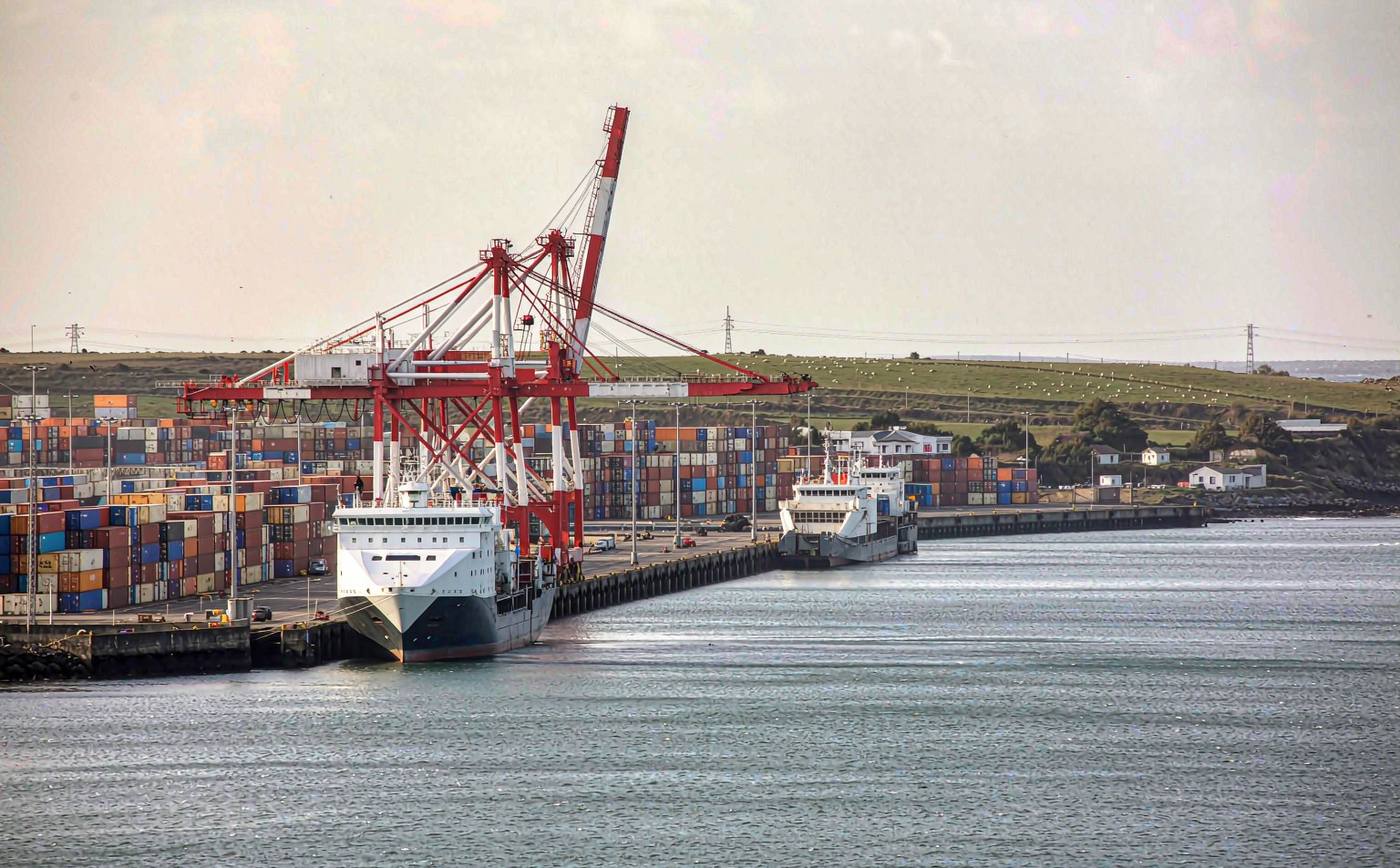
How to Ship from China to Ireland: Ports, 23% VAT & Postponed Accounting
Ireland is an island of about five million people sitting at the far edge of Europe, and those two facts shape every shipment that comes here from China. No major carrier runs a dedicated direct container service from China to an Irish port. Your container will travel on a big vessel to a European hub, change ship, and arrive on a feeder. That adds days, adds handling, and adds one more party who can misplace your booking.
Once you accept that, two decisions matter far more than the freight rate itself. The first is which Irish port you clear at, because Dublin, Rosslare and Cork suit different cargo and different delivery points. The second is whether you have to hand Revenue 23% of your cargo value at the quay — because if you are a VAT-registered Irish business and you set up postponed accounting properly, you should not.
This guide is written for buyers who are importing from China for the first time. It covers the routing reality, port choice, the UK landbridge trap, realistic timings, trade terms, the step-by-step process, duty and VAT, product paperwork, and how to tell whether a forwarder actually understands the Irish lane. No prior logistics knowledge assumed.
Ireland at a glance
- No direct service from China — every container transships at Rotterdam, Antwerp, Southampton or Le Havre before the Irish leg.
- Sea FCL 30–40 days port to port; LCL 35–45 days; air 4–8 days to Dublin or Shannon; courier 3–6 days door to door.
- EU member — EU customs union and EU single market. Duty comes from the TARIC code, commonly 0–12% on consumer goods. There is no EU–China free trade agreement.
- VAT 23% standard, with 13.5%, 9%, 4.8% and 0% reduced rates. Ireland does not require a fiscal representative for non-EU businesses.
- Postponed accounting can move import VAT off the quay and onto your VAT3 return.
- AIS is the electronic customs declaration system; clean paperwork clears in hours.
- Local obligations to know early: Repak for packaging, WEEE registration for electronics and batteries, FSAI and DAFM for food and plant or animal products.
How your cargo moves: China to Ireland
Eight steps from your supplier's door to yours. The last four are the ones shaped by local rules.
- Pickup from your supplierWe collect the goods anywhere in China and bring them to our consolidation point.
- Export clearanceChina customs declaration filed and released before the goods move to the port.
- Loading and departureContainer loaded, sealed and handed to the carrier at the Chinese port.
- Main carriageOcean, air or rail movement booked on the route agreed for your cargo.
- Arrival at the gatewayDischarge at the port or airport of entry, recorded on the carrier's manifest.
- Import clearanceCustoms declaration filed locally, with duty and tax assessed on the declared value.
- Customs releaseGoods released into free circulation once duty and tax are settled.
- Final deliveryOnward movement to your delivery address, warehouse or nominated depot.
Duty rates, VAT rates and clearance times move, and the figure that applies to your goods is the one set for your commodity code on the day of clearance. We check the current position against your code before your goods sail and confirm it to you in writing — ask for that check when you request a quote.
Why almost nothing sails directly from China to Ireland
A container ship makes money by calling at ports where it can fill and empty thousands of boxes in one stop. Dublin handles a little over a million TEU a year; Shanghai and Ningbo each handle tens of millions. It is simply not economic for a carrier to send a large vessel from China to Ireland on its own, so the cargo moves in two stages: a mainline vessel from China to a deep-water European hub, then a short-sea feeder ship to Ireland.
For you as an importer, that has three practical consequences.
First, your schedule is two schedules. The mainline leg from South China to Rotterdam or Antwerp is roughly 25 to 30 days, and the feeder leg adds a few more days. If the container misses the feeder connection at the hub — which happens when the mainline vessel arrives late, or when the feeder is full — you wait for the next sailing, and that can be a week.
Second, the container is handled more times. Every extra lift is another chance of damage, and another terminal that can apply a charge. Pack accordingly, and insure accordingly.
Third, you should ask which hub and which feeder. A forwarder who genuinely has the lane booked can tell you the hub port, the feeder operator, and the expected connection. A forwarder who says "about 30 days, don't worry" usually has not booked anything yet. Ask the question before you pay, not after.
Dublin, Rosslare or Cork: which Irish port actually suits your cargo
Ireland has four working commercial ports and a handful of smaller ones, but for importers from China the realistic choice is between three.
| Port | Best suited to | What to know |
|---|---|---|
| Dublin Port | Containerised consumer goods, retail and e-commerce stock, anything delivered to the east coast or the Greater Dublin area | Ireland's largest port, handling over 1.2 million TEU and well over a third of the country's trade by volume. The fullest range of container line and feeder options, and the most customs broker capacity. Can congests in peak season. |
| Rosslare Europort | Ro-ro and trailer freight from the Continent, agri-food and live animal or plant products, importers who want to stay inside the EU customs territory end to end | Operated by Iarnród Éireann. Around 36 direct services a week to the Continent — Cherbourg, Dunkirk, Roscoff and St Malo in France, Bilbao in Spain, and a Zeebrugge freight service running since July 2022 — up from roughly three a week before Brexit. It holds Ireland's only Border Inspection Post outside Dublin, on a single site about 2 km from the port. |
| Port of Cork | Bulk, chemicals and energy cargo, project and out-of-gauge freight, and deliveries into Munster | A deep-water Atlantic gateway and Ireland's second-largest port. Fewer container line calls than Dublin, but far less congestion, and it can be the faster practical choice when your delivery point is in the south-west. |
| Waterford, Shannon Foynes, Drogheda, Greenore | Specialist bulk, breakbulk and project cargo | Worth considering only when the commodity or the delivery point genuinely calls for them. Most first-time importers will not need them. |
For a first container of general consumer goods, Dublin is usually right simply because it has the most capacity to fix problems. Move to Rosslare when your cargo is arriving on a trailer from a continental port and you want to avoid Great Britain entirely, and look at Cork when the delivery address is in Munster or the cargo is oversized.
The UK landbridge and the extra customs border it adds
This is the single most expensive misunderstanding on the China–Ireland lane, and it catches new importers out because it sounds like a routing detail rather than a customs problem.
Before Brexit, the cheapest and fastest way to move freight between Ireland and mainland Europe was often to drive through Great Britain: ferry from Dublin to Holyhead or Liverpool, a drive across England, then a Channel crossing. After Brexit, Great Britain left the EU customs territory. So goods moving that way now enter a non-EU customs territory and leave it again — which means United Kingdom import or transit declarations, a GB EORI number, entry summary declarations, pre-boarding notifications, separate IT systems, and the possibility of sanitary and phytosanitary checks. All of that applies even though the goods are never sold in the UK and never leave the trailer.
Ask one question before you book: does this routing touch Great Britain? If the answer is yes, ask what transit procedure covers that leg and who files it. If your forwarder cannot answer, they have not thought about it — and it is your cargo that will sit at a British port while somebody works it out.
The clean alternative is to keep the whole journey inside the EU customs territory. That means clearing or transiting through a continental port and taking a direct service into Rosslare — Zeebrugge, Dunkirk or Cherbourg — or using a feeder that goes straight to Dublin. Industry reporting since 2021 has been consistent on why: hauliers using the direct routes avoid the paperwork, the inspections and the need to operate several separate customs IT systems, and drivers can take their rest periods during the crossing instead of after landing.
There is nothing wrong with the landbridge when it is genuinely faster or cheaper and the paperwork is done properly. The problem is discovering it was on your routing after the vessel has sailed.
How many days a China-Ireland shipment actually takes
These are planning numbers, not guarantees. Treat them as the basis for your stock planning and add a buffer for your first shipment.
| Mode | Typical transit | What the clock includes |
|---|---|---|
| Sea FCL (20ft / 40ft / 40HQ) | 30–40 days port to port | Mainline China to hub plus the feeder leg to Dublin, Rosslare or Cork. South China origins are at the faster end; North China ports such as Tianjin and Qingdao add several days. |
| Sea LCL | 35–45 days | The same sea legs plus consolidation at the China warehouse and deconsolidation at the destination warehouse. The consolidation window alone is often 5–8 days. |
| Air freight | 4–8 days airport to airport | Direct or one-stop via a European hub into Dublin (DUB) or Shannon (SNN), plus origin handling. Shannon has strong cargo handling and suits west-of-Ireland delivery. |
| Express courier | 3–6 days door to door | Samples and small parcels. The carrier acts as broker and bills duty and VAT to the receiver. |
Where the extra days actually go: a missed feeder connection at the hub, congestion at Dublin adding a day or two, a customs hold for missing paperwork, and — most avoidable of all — a document error that means the declaration has to be amended after arrival. Two of those four are within your supplier's and your forwarder's control.
Rail from China to Ireland: why the train stops at the water
China–Europe rail works well and we use it, but every mainline rail service from China terminates somewhere on the continent — Duisburg, Łódź, Madrid, Milan, Malaszewicze. None of those places is on an island. To get containers from a rail terminal to Ireland they still have to cross the Irish Sea or the Channel by ship or ferry, which reintroduces exactly the handling and scheduling problem rail was supposed to remove.
So "rail from China to Ireland" in practice means rail to a European hub plus a short-sea leg. It is worth quoting when your supplier is deep inland — Chongqing, Chengdu, Xi'an — because the rail leg out of inland China can be considerably faster than trucking to a coastal port and waiting for a vessel, and the sea leg from the continent to Ireland is only a few days. It is rarely worth it for a supplier already in Guangdong or Zhejiang.
If you want it, ask for it to be priced side by side with all-sea on the same shipment. Do not accept a single number that does not tell you which route it assumes. See our rail freight page for how the service works.
Choosing your trade term: EXW through DDP on the Dublin lane
The trade term decides three things: who pays for what, who does the import clearance, and the exact moment the risk of loss or damage passes from seller to you. Most disputes between a new importer and a Chinese supplier are really disputes about which term was agreed and what it did not cover.
| Term | Who arranges and pays main carriage | Who clears Irish import | Risk transfers | Practical read for a new importer |
|---|---|---|---|---|
| EXW (Ex Works) | You | You | At the factory door | Avoid on a first shipment. You become responsible for Chinese export clearance, inland pickup and loading — things you cannot manage from Dublin. |
| FOB (Free On Board) | You | You | When goods pass the ship's rail at the Chinese port | The safe default. The supplier handles export clearance and loading; you control the vessel, the routing and the insurance from the port onwards. |
| CIF (Cost, Insurance, Freight) | Seller, to the named port | You | On board at origin | Looks convenient but the seller chooses the carrier and service, and you still clear and pay everything at the Irish end. Often slower than the FOB booking you could have made yourself. |
| DAP (Delivered At Place) | Seller, to your address | You | On arrival at your premises, before unloading | Door delivery, but you are still the importer of record and still handle duty and VAT. Clear and usually fair. |
| DDU (Delivered Duty Unpaid) | Seller, to your address | You | On arrival | Effectively DAP under the older wording. Duty and VAT are yours. |
| DDP (Delivered Duty Paid) | Seller | Seller's agent | On arrival | Simplest to receive and the easiest to get wrong. See the warning below. |
The DDP question nobody asks. On a DDP shipment into Ireland, the importer of record is usually the seller's agent, not you. That means the customs declaration is not in your name — and without a declaration in your name you have no evidence of import VAT paid and no basis to reclaim it. If you are VAT-registered and intend to recover the VAT, or if you want postponed accounting applied, DDP will usually defeat both. Ask in writing who will be named as importer and whether you will receive a copy of the declaration.
Also note the difference between port-to-port, airport-to-airport and door-to-door. A cheap port-to-port quote excludes collection from the factory, Chinese export clearance, Irish terminal handling, customs clearance and delivery to your door. When you compare two forwarders, compare the same scope — our local charges page lists the destination items that most often get left out.
From a Chinese factory to an Irish address, step by step
Agree the specification, the HS code and the trade term
Before production finishes, not after. The TARIC commodity code determines your duty rate and whether any anti-dumping duty applies; the trade term determines who books the vessel. Getting either wrong here is expensive to undo later.
Book the mode and confirm the routing in writing
Which Chinese port, which European hub, which feeder, which Irish port, and whether the route touches Great Britain. Get it in the quotation so it is enforceable.
Collect from the factory or consolidate
For a full container, the truck arrives at the factory and loads. For LCL, your cartons go to a consolidation warehouse — with other suppliers' cargo if you are combining several orders. See warehouse and consolidation.
Chinese export declaration
Your forwarder files the export declaration through China's single window. Goods that need inspection, licences or certification are cleared at this point — which is why they must be identified when you book, not when the truck arrives.
Mainline leg to the European hub, then transshipment
The container is discharged at Rotterdam, Antwerp, Southampton or Le Havre and waits for the feeder. This is where a missed connection costs you a week.
The Irish leg
Feeder ship to Dublin, or a direct ro-ro service into Rosslare from Zeebrugge, Dunkirk or Cherbourg, or Cork for southern delivery.
Irish import declaration in AIS
Your broker files through Revenue's Automated Import System. Duty and VAT are assessed. If you hold postponed accounting approval, your broker declares additional information code 1A05 and the VAT is not collected at clearance — it moves to your VAT3 return instead.
Release and delivery
Once Revenue releases the consignment, the container is de-hired or devanned and the goods go to your premises. Storage charges start accruing from the moment the container lands, so clearance speed is money. See import clearance documents.
Customs duty, 23% VAT and the cash you should not pay at the quay
Ireland applies the EU Common Customs Tariff, so the duty rate is set by your commodity's TARIC code rather than by anything Irish. Most general consumer goods from China fall somewhere between 0% and 12%. There is no free trade agreement between the EU and China, so Chinese-origin goods receive no preferential rate.
The number that surprises people is not the duty. It is the VAT, and specifically the fact that without prior arrangement you pay it before the goods are released.
Worked example. An Irish retailer imports wooden furniture with a customs value of €20,000, with €2,400 of freight and insurance, giving a CIF value of €22,400. Duty at 4% is €896. VAT at 23% applies to €23,296, which is €5,358.
- If you are a VAT-registered business recovering VAT in full: your real cost is the €896 duty. The €5,358 is a timing item — unless you have to pay it at the port, in which case it is your cash sitting with Revenue until the next VAT3 period.
- If you are not VAT-registered: you pay €6,254 in total and cannot recover any of it. That is roughly a 28% uplift on your goods cost.
That gap is why the registration question comes before the shipping question.
Irish VAT rates
The standard rate is 23%, which is among the higher standard rates in the EU. A reduced rate of 13.5% covers construction services, certain labour-intensive services, fuel and some hospitality supplies. A second reduced rate of 9% applies to hospitality, catering, hairdressing and energy with certain exceptions. A super-reduced 4.8% covers livestock and certain agricultural supplies. A 0% rate covers exports, most food, children's clothing and footwear, oral medicines and books. Most goods imported from China land at 23%. Confirm the rate for your commodity with your broker before you price the order.
Small consignments
The old €22 VAT relief for low-value imports was removed across the EU in July 2021, so small parcels have been liable to VAT for some time. The EU has since agreed to remove the €150 duty relief as well, with a simplified flat duty applying to low-value consignments during the transition (roughly €3 per tariff line in most member states — confirm the figure currently being charged with your carrier or broker). Business parcels above €150 are treated as normal imports: duty plus 23% VAT, with the carrier usually billing a clearance fee on top.
Registration and representation
Two Irish specifics are worth knowing before you place the first order. First, the VAT registration thresholds are €80,000 for goods and €40,000 for services for Irish-established businesses — but a non-established business has no threshold and generally registers from its first taxable supply. Second, and unusually, Ireland does not require non-EU businesses to appoint a fiscal representative, which is a meaningful difference from several other EU member states. VAT registration is made through Revenue Online Service and typically takes around 10 to 15 working days, and VAT returns are filed every two months by the 19th of the following month, extended to the 23rd when filed electronically through ROS.
Postponed accounting and Revenue's deferred payment account
Postponed accounting is the difference between financing €5,358 of VAT for six weeks and financing nothing at all. It is worth understanding properly, because it is the clearest financial win available to an Irish importer and it costs nothing to arrange.
The mechanism is simple. Instead of paying import VAT to Revenue at the point of importation, an approved trader declares it on the VAT3 return for the period in which the import happened. The import VAT is declared as VAT on imports on one side of the return and recovered as deductible VAT on the other. If your business is entitled to recover VAT in full, the two amounts cancel and the net cash effect is zero. The customs value plus any duty is reported in the PA1 field, and Revenue can withdraw the facility from traders who do not meet the conditions, so it has to be kept clean.
To use it you need to be registered for VAT and for Customs and Excise in Ireland and hold a valid Irish EORI number, and you need to be able to show compliance if Revenue asks. On the operational side, your broker declares additional information code 1A05 in the AIS declaration, Revenue applies it automatically, and the cargo is released without the VAT being collected.
Postponed accounting
No VAT paid at clearance. The amount appears on your VAT3 for that period. Net cash cost zero if you recover in full. Requires Irish VAT registration, Customs and Excise registration and a valid EORI.
Deferred payment account
Most traders have one as a matter of course. Duty and VAT are debited from your TAN account on the 15th of the month following importation rather than at the moment of clearance. It softens the timing but you still pay.
Two practical points. Tell your broker on day one that you want postponed accounting applied — do not assume it will be. And keep the customs declaration or the AIS monthly statement for every import: if you omit the PA1 figure, Revenue can assess the VAT back with interest, and the penalty structure around VAT returns is unforgiving, including a fixed penalty for a return that is late even when nothing is owed.
CE marks, GPSR, EPR and food checks: Irish product paperwork
This is where most first shipments actually go wrong, and nearly all of it has to be arranged while the goods are still in China.
| Product | What is needed | When to arrange it |
|---|---|---|
| Electronics and electrical goods | CE marking with the applicable directives (EMC, low voltage, radio equipment, ecodesign), an EU declaration of conformity and a technical file; a responsible person in the EU under the General Product Safety Regulation; WEEE registration for electrical and electronic equipment | Before production finishes. Ask the factory for test reports, not just a CE logo on the artwork. |
| Anything with a battery | UN38.3 test summary, safety data sheet, correct labelling and packaging; separate WEEE battery registration in Ireland | Before booking. Lithium batteries change which carriers will accept the cargo and how it must be packed. |
| Toys | EN 71 testing, CE marking, GPSR responsible person, age warnings and traceability labelling | Before production. |
| Machinery and equipment | CE marking under the Machinery Regulation or its predecessor with a declaration of conformity and technical file in English | Before shipment. If the factory self-declares without third-party testing, the Irish importer still carries the legal responsibility for the declaration being accurate. |
| Food contact articles — kitchenware, packaging, utensils | Declaration of compliance under the EU framework regulation; for food itself, FSAI registration and, for products of animal origin or plant products, a DAFM border inspection with the right health or phytosanitary certificate | Before shipment, and choose a port with a Border Inspection Post — Dublin or Rosslare. |
| Wooden packaging — pallets, crates, dunnage | ISPM-15 heat treatment or fumigation with a visible stamp | Tell your supplier in writing before packing. Untreated wood can be refused, treated at your cost, or re-exported. |
| Textiles | Fibre composition labelling, REACH restricted substance compliance, and country-of-origin marking | Before packing. |
| Chemicals and non-dangerous goods liquids | English safety data sheet, REACH status, correct classification and labelling | Before booking. See non-DG chemicals to Ireland. |
| Dangerous goods — aerosols, flammables, lithium above limits | Dangerous goods declaration, UN specification packaging, carrier acceptance | Before booking, always. See dangerous goods to Ireland. |
Two Irish obligations sit alongside the EU product rules. Repak is the packaging waste compliance scheme — if you place packaging on the Irish market you need to be a member or have someone cover your obligation. WEEE registration applies to electrical and electronic equipment and to batteries, through the approved Irish schemes. Market surveillance is carried out by Irish authorities including the Competition and Consumer Protection Commission, and non-compliant goods can be seized, recalled and carry fines. English labelling is sufficient in practice for almost all consumer goods.
Importing as a private individual versus an Irish company
You can be the importer of record either way — Irish customs does not require you to be a company. But the cash consequences are very different, and this matters more in Ireland than in most EU countries because of postponed accounting.
As an individual
You can obtain an EORI number and import in your own name. You pay duty and 23% VAT at import and cannot reclaim the VAT, and postponed accounting is not available to you. For genuine personal effects and household removal there are separate reliefs with their own conditions — worth checking with Revenue or your broker before you rely on them. If you are importing to resell, this route is wrong from the first euro.
As an Irish company
Register with the Companies Registration Office, then with Revenue for VAT and for Customs and Excise, then obtain your EORI. Once registered you can reclaim import VAT and apply postponed accounting, which removes the VAT cash-flow hit entirely. Registration takes weeks, so do it before the container sails, not after it lands. Filing is bi-monthly through ROS.
The common mistake is ordering first and registering later. If your first container arrives before your VAT registration is in place, you pay 23% at the quay and then wait for a registration that did not exist when you needed it. Budget three to four weeks for the paperwork and place the order around it.
Sourcing on a screen compared to sourcing in a show hall
How you found the supplier changes how the first shipment should move, and getting this wrong is the reason some first orders cost more in freight than in goods.
Buying online — through a marketplace or a sourcing platform — usually means a small first order, sometimes from two or three suppliers at once, and a sample before that. The right pattern is to air the samples so you can check quality in days rather than weeks, then consolidate the first real order into a single LCL shipment from one Chinese port rather than three separate parcels. Insist on the commodity code and photographs of the finished goods before you release the balance payment. Be careful of suppliers who offer to ship "free" by post with a declared value well below what you paid: that declaration becomes your customs record, and under-declaring is your liability, not theirs.
Meeting suppliers at a fair — Canton Fair, the Hong Kong shows, or a market visit to Yiwu — usually means you have handled the product, minimum order quantities are higher, and the first shipment is more likely to fill a container. The differences that matter: fair orders are big enough that FCL is worth pricing against LCL; a factory you met once still deserves a third-party inspection before the first container; and orders placed across several factories you met at the same show often need consolidating into one container from one port to make sense. Samples you carry home in your luggage still need to be declared if they are commercial in nature.
In both cases, a written packing specification to the supplier — export cartons, ISPM-15 pallets, labelling — prevents most of the problems that surface later at an Irish terminal.
Two partners you need: a Chinese forwarder and an Irish broker
New importers often ask whether they should deal with a shipping line directly. Almost never, and here is the concrete reason: the line sells space from port A to port B. It will not collect from your supplier's factory, will not consolidate three suppliers into one container, will not file the Chinese export declaration, will not chase your supplier for a packing list, and will not tell you that your battery shipment needs different documentation before it is booked. Those are the jobs that decide whether your shipment works.
What your Chinese forwarder does
Factory collection and consolidation, export declaration, carrier booking and routing design, cargo insurance, document preparation, and the check that catches a compliance problem in China while it is still cheap to fix. They are also the party who can verify that the supplier actually has the goods ready.
What your Irish broker does
Files the AIS declaration, applies postponed accounting, arranges your deferred payment account, handles Revenue queries and audits, and knows the local terminal, the Border Inspection Post procedures and how Dublin, Rosslare and Cork each operate in practice.
The two are not interchangeable, and skipping either one fails in a specific way. If the Chinese side mis-declares the goods, no Irish broker can fix it after arrival — the declaration has to be amended and the cargo is already sitting there accruing storage. If you have no Irish broker, you are filing AIS yourself on ROS with no support the first time Revenue asks a question you cannot answer.
Questions that expose a China forwarder who is bluffing
Ask these before you pay anything. A forwarder who genuinely works the Irish lane will answer all of them in one email.
- Which hub will my container transship at, and which feeder takes it to Ireland? If they cannot name both, they have not booked it.
- Does the routing touch Great Britain? If yes, what transit procedure covers that leg and who files it?
- Can you show me your NVOCC licence and business registration? Ours is NVOCC licence GD20230925153335, and we have operated since 2012.
- Will you itemise the destination charges in writing? Terminal handling, customs clearance, delivery, and any congestion or storage exposure. A single "all-in" number with no breakdown is where surprises live. See local charges.
- What happens if Chinese customs holds the goods? The answer should describe a process, not a shrug.
- Do you check batteries, liquids and magnets before booking? If they discover them after booking, the booking is already wrong.
- On a DDP quote, who is the importer of record and will I get the declaration? Without it you have no VAT evidence.
- Will I get one named contact and one number per container or per CBM? You should never have to explain your shipment twice.
Red flags. A price far below the market that is "everything included"; refusing to name the carrier or the routing; asking for payment to a personal account rather than a company account; no verifiable office or licence; and a rate that changes after you have booked. Any one of those is a reason to stop.
Three Irish shipments and how each one was routed
These are illustrative composites drawn from the kind of work we do, with names and figures changed. They are here to show how the routing decision is actually made.
A Dublin hospitality fit-out: 40HQ of furniture and light fittings
Sourced from Foshan, cleared for export in Shenzhen, mainline to Rotterdam and feeder to Dublin. Duty landed at 2.7% on the furniture lines. The importer registered for VAT and set up postponed accounting before the container sailed, so the 23% VAT never left their account — they declared it and recovered it on the same VAT3. Inland delivery direct to the Dublin site. What actually saved money: not the freight rate. It was having VAT registration in place three weeks before arrival.
A Galway electronics startup: 4 CBM of smart-home devices
Samples went by air to Shannon in five days so the buyer could test before committing. The first real order — 4 CBM from Shenzhen — was too small for a container, so it went LCL via Rotterdam to Dublin. The company was not yet VAT registered, paid 23% at import, and waited a full VAT period to recover it once registration came through. The lesson: the registration lag cost more than choosing air over sea would have.
A Cork food-service equipment importer: stainless kit and timber crates
The shipment nearly failed on packaging — the supplier had used untreated timber crating. It was re-crated in Shenzhen before loading, which cost a few days and was far cheaper than being refused at the Irish end. Cork was chosen over Dublin because the delivery point was in Munster and Dublin would have added a day of haulage. The lesson: crating instructions and port choice decided the schedule, not the vessel.
Frequently asked questions
Is there a direct shipping service from China to Ireland?
In practice, no. Ireland's market is too small and sits too far off the main Asia–Europe trunk for carriers to run a dedicated direct container service, so your container travels on a mainline vessel to a European hub such as Rotterdam, Antwerp, Southampton or Le Havre, then transfers to a short-sea feeder to Dublin, Rosslare or Cork. Plan the schedule around both legs.
How long does shipping from China to Ireland take?
Sea freight runs about 30 to 40 days port to port for a full container including the feeder leg, with LCL taking roughly 35 to 45 days because of consolidation at origin and deconsolidation at destination. Air freight to Dublin or Shannon is about 4 to 8 days airport to airport, and express courier is about 3 to 6 days door to door. Dublin congestion can add a day or two.
What VAT rate applies to imports into Ireland?
The standard rate is 23%, one of the higher standard rates in the EU. Reduced rates of 13.5% and 9% apply to categories such as construction services, hospitality and energy, a super-reduced 4.8% applies to livestock and certain agricultural supplies, and a zero rate covers most food, children's clothing and footwear, oral medicines and books. Most imported consumer goods from China fall at 23%.
What is postponed accounting and should I use it?
Postponed accounting is a Revenue facility that lets VAT-registered importers declare import VAT on their VAT3 return instead of paying it at the port. If you are entitled to recover the VAT in full, the amount appears on both sides of the return and the net cash effect is zero. You need to be registered for VAT and for Customs and Excise in Ireland and hold a valid Irish EORI number. Arrange it before your first significant shipment arrives.
Do I need an EORI number to import into Ireland?
Yes. An EORI number is required for customs declarations in the EU and Revenue issues the Irish one. You will also need Revenue registration for Customs and Excise, and if you are a business you will normally want VAT registration as well, because without it you cannot reclaim import VAT and cannot use postponed accounting.
Should I clear customs in Ireland or at the European hub?
Most importers clear in Ireland, because the importer of record and the VAT position belong there. Clearing at the hub and moving the goods on in free circulation is possible and sometimes useful for distribution, but it changes who accounts for the import VAT and requires the onward movement to be documented. Decide before booking, and avoid any routing that transits Great Britain unless you understand the extra declarations involved.
Can I import into Ireland as a private individual?
Yes, an individual can be the importer of record and can obtain an EORI number. The practical difference is cash and recoverability: without VAT registration you pay duty and 23% VAT at import and cannot reclaim the VAT, and you cannot use postponed accounting. Anyone importing regularly for resale should register as a business before the goods ship.
What documents do I need to clear customs in Ireland?
A commercial invoice showing the transaction value and a precise description, a packing list, the bill of lading or air waybill, the correct TARIC commodity code, and your EORI number. Depending on the product you may also need a certificate of origin, CE documentation and an EU declaration of conformity, UN38.3 test summaries and safety data sheets for batteries or chemicals, phytosanitary or veterinary certificates for plant and animal products, and evidence of ISPM-15 treatment for wood packaging.
Do I need a fiscal representative to import into Ireland?
Ireland does not require non-EU businesses to appoint a fiscal representative for VAT, which differs from several other EU member states. However, a non-established business making taxable supplies in Ireland generally has no registration threshold and must register from the first taxable supply. You will still need a customs broker to lodge the AIS declaration for you.
How do I avoid the UK landbridge on a China to Ireland shipment?
Ask your forwarder to confirm the routing in writing and check whether it touches Great Britain. Direct continental services into Rosslare Europort from Zeebrugge, Dunkirk and Cherbourg, or a direct feeder into Dublin, keep the goods inside the EU customs territory for the whole journey and avoid the UK transit declarations, entry summary declarations and pre-boarding notifications that a landbridge routing requires.
What Goodhope handles before your cargo leaves China
The route is designed before you book
Hub, feeder and Irish port chosen for your commodity and your delivery postcode — with the Great Britain question answered in writing before anyone quotes. See our FCL and LCL services to Ireland.
Compliance flagged while it is still cheap to fix
Batteries, chemicals, wood packaging and certification identified at quotation stage, not at the terminal. See dangerous goods and non-DG chemicals to Ireland.
Since 2012, NVOCC licensed
NVOCC licence GD20230925153335. One named contact from factory collection in China through to Irish delivery, with the destination charges itemised before you commit.
We work with your Irish broker, we do not replace them
We are not an Irish customs broker. We make sure everything on the China side is correct before the cargo leaves, and coordinate with your broker on documents, timing and postponed accounting.
Goodhope Freight handles sea, air, rail-to-Europe and express from China to Ireland, including consolidation, export clearance and cargo insurance. Duty rates, VAT treatment and registration obligations should always be confirmed with Revenue or your Irish broker — we give you the shipping side accurately and tell you where to check the rest.
Why importers use Goodhope on this lane
Six things that are different about working with us on China to Ireland shipments.
Planning a first container into Dublin, Cork or Rosslare?
Send us the commodity, HS codes if you have them, dimensions and weight, the supplier's city and your delivery postcode — and tell us whether you are VAT-registered in Ireland yet. We will price the modes side by side, name the hub and feeder in writing, flag any compliance exposure, and itemise the destination charges.