
Home / Shipping to Jamaica / How to Ship from China to Jamaica
How to Ship from China to Jamaica: Kingston, GCT & the TCC You Need First
In Jamaica the paperwork starts at the tax office, not the port. Every importer submitting an import entry needs a Tax Compliance Certificate — a TCC — issued by Tax Administration Jamaica as proof that returns and payments are up to date. It is listed by Jamaica Customs alongside the Taxpayer Registration Number and the GCT certificate as a document required to import commercial goods. It is not a customs form you fill in at the quay. If your tax affairs are not current, the certificate does not exist, and neither does your clearance.
The second thing is that Jamaica is the best-connected island in this part of the Caribbean, and for a specific reason: Kingston is a transhipment hub in its own right. Where the Dominican Republic waits on weekly feeders out of Panama and Colombia, Jamaica has more services and, in some cases, calls from Chinese ports. That does not make the lane short, but it makes it less fragile — and it changes how you should read a transit quote.
The third thing is the tax stack, which is longer here than anywhere else in this region. Customs duty is only the first line. On top of it sit Additional Stamp Duty, which can add as much again as the duty, the Standard Compliance Fee, an environmental levy, and Special Consumption Tax where it applies — and then GCT at fifteen percent on the aggregate of all of them. A budget built only on the CARICOM tariff rate will be wrong, sometimes by a wide margin.
At a glance
Before you ship: a Taxpayer Registration Number (TRN), a Tax Compliance Certificate (TCC) from Tax Administration Jamaica, and a copy of the GCT certificate. · Broker: compulsory at a CIF value of US$5,000 or more, and for all motor vehicles; optional below that. Form C73, valid one year, when an agent is used. · Port: Kingston Container Terminal — a major Caribbean transhipment hub. · Airports: Norman Manley (KIN, Kingston) and Sangster (MBJ, Montego Bay). · System: eSAD on ASYCUDA; declaration IM4 above US$5,000. · Tariff: CARICOM common external tariff, 0–40%; clothing and footwear commonly 20%; industrial machinery commonly 0–10%; books 0%. · Plus: Additional Stamp Duty 0–20%; Standard Compliance Fee ~0.3% of CIF; environmental levy ~0.5%; SCT on alcohol, tobacco, fuels, vehicles. · GCT: 15% on the aggregate. · Low value: about US$100 FOB per Jamaica Customs. · Clearance: commonly 2–7 days. · Supply: 110 V at 50 Hz.
How your cargo moves: China to Jamaica
Eight steps from your supplier's door to yours. The last four are the ones shaped by local rules.
- Pickup from your supplierWe collect the goods anywhere in China and bring them to our consolidation point.
- Export clearanceChina customs declaration filed and released before the goods move to the port.
- Loading and departureContainer loaded, sealed and handed to the carrier at the Chinese port.
- Main carriageOcean, air or rail movement booked on the route agreed for your cargo.
- Arrival at the gatewayDischarge at the port or airport of entry, recorded on the carrier's manifest.
- Import clearanceCustoms declaration filed locally, with duty and tax assessed on the declared value.
- Customs releaseGoods released into free circulation once duty and tax are settled.
- Final deliveryOnward movement to your delivery address, warehouse or nominated depot.
Duty rates, VAT rates and clearance times move, and the figure that applies to your goods is the one set for your commodity code on the day of clearance. We check the current position against your code before your goods sail and confirm it to you in writing — ask for that check when you request a quote.
What this guide covers, and the certificate that gates the entry
This is written for a buyer bringing goods out of China for the first time and landing them in Jamaica. It follows the shipment in the order the problems arrive: the tax-office documents that come first, whether you need a broker, which port and airport, what the vessel actually does, what the six lines on the tax bill are, the standards gate that catches consumer goods, and how long it all takes.
It does not quote freight rates. Those move with the market and any figure printed here would be wrong within weeks. What it does instead is show where the money goes and which decisions change the total, so that a quotation can be read for what it leaves out as well as what it contains.
Jamaica is a small market — around 2.8 million people — with an economy built on tourism, agriculture, mining, and increasingly logistics and manufacturing. It is the largest English-speaking island in the Caribbean, which is a practical advantage for a first-time importer: the customs administration, the trade portal and the regulations are all published in English, and there is no translation layer between you and the process. Chinese goods are already everywhere in the retail mix, in machinery, electronics, textiles, vehicles and consumer goods.
The Tax Compliance Certificate, and why it is not a customs document
This is the single most important thing on this page, and it is the thing most first-time importers get wrong.
A TCC is issued by Tax Administration Jamaica. It certifies that your tax returns and payments, including wage-related statutory deductions, are up to date. Jamaica Customs lists it as a required document for the import of commercial goods, alongside the TRN and the GCT certificate.
Why it is different from everything else in the file:
- It depends on your tax history, not on your shipment. You cannot produce it at the port by filling in a form. If returns are outstanding or payments are in arrears, it will not be issued until that is resolved.
- It applies to importers submitting an import entry. It is not limited to large shipments or particular commodities.
- It has an application process with other agencies in it. A first-time applicant needs clearance letters from the National Housing Trust, the National Insurance Scheme and HEART, alongside the completed application and identification. Repeat applicants need fresh clearances from the same three bodies. That is three separate agencies to chase, which is why this belongs at the start of the plan rather than the end.
Do this first, before you place the order. A container that arrives without a TCC in place does not get a faster TCC. It gets storage. On a lane where the next sailing is not tomorrow, the TCC is the cheapest insurance you will ever buy.
The broker threshold, and why most shipments cross it
Jamaica has an unusually clear rule on brokers, and it is worth knowing the number: goods with a CIF value of US$5,000 or more must be cleared by a licensed customs broker. Below that, using one is optional and the importer can clear at the port of entry on presentation of the documents. All motor vehicles must be cleared by a broker regardless of value.
In practice almost every commercial shipment from China crosses US$5,000 CIF, so the optional category is largely theoretical for what you are doing. Two operational details follow:
- Form C73. Where a broker or local agent is used, the importer completes this form and pays the processing fee to Jamaica Customs. It is valid for one year, so it is a one-off each year rather than per shipment.
- Use only licensed brokers. Jamaica Customs requires brokers to be registered with the agency and to hold a valid practising licence. Ask to see it.
One more thing worth knowing if you are a company employee clearing on behalf of the business: you will need a letter of authorisation from the company and valid company identification.
Kingston, and the advantage of being a hub yourself
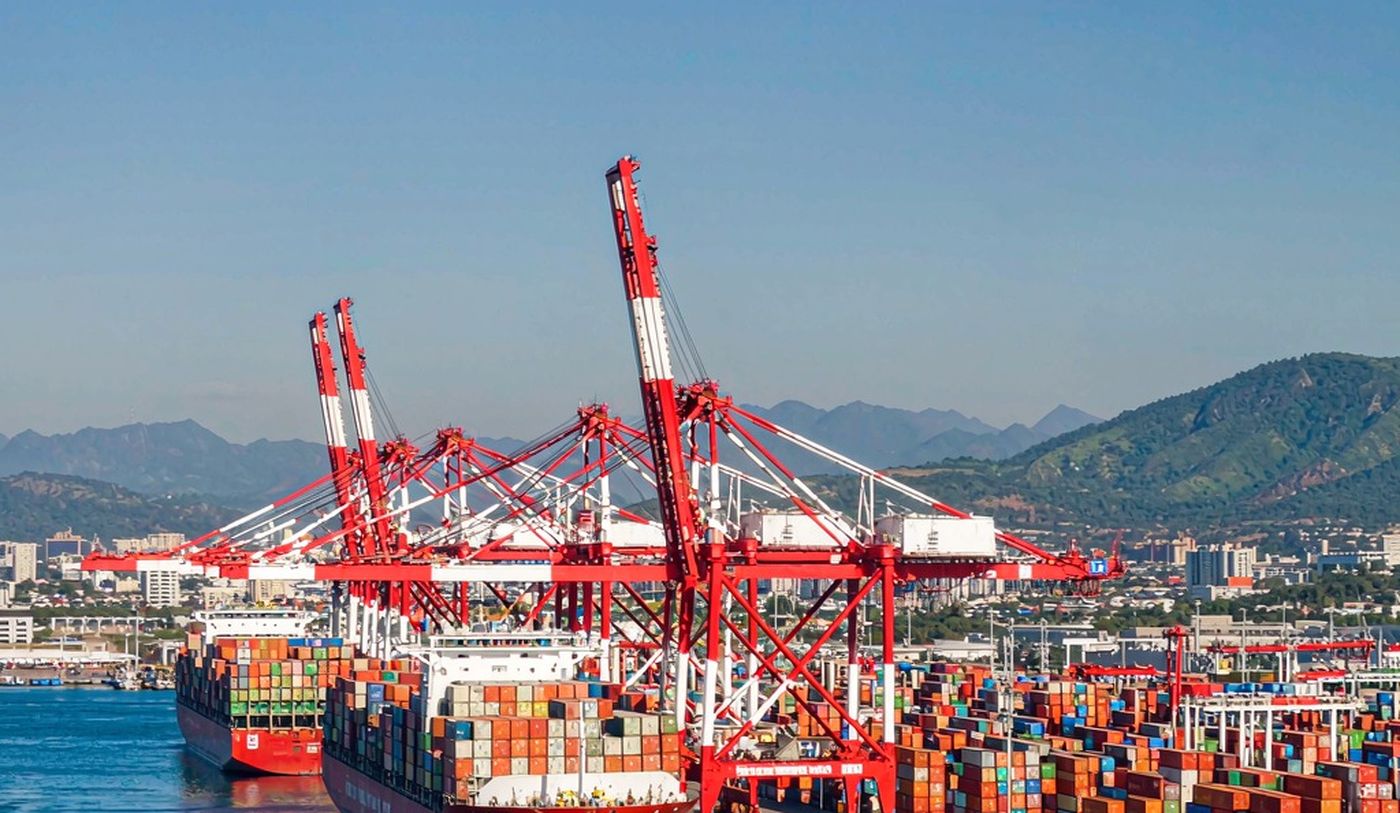
Kingston Container Terminal is the main cargo port and one of the busiest container terminals in the Caribbean. That status matters to an importer for a reason that is easy to miss.
Most Caribbean islands are served by feeders out of a hub in another country. Jamaica is one of the hubs. Carriers call at Kingston on their own main services, and cargo is transhipped out of it to the rest of the region. The consequences:
- More services, more often. More sailings means a missed connection costs less here than on a lane fed by a single weekly feeder.
- Some services run from Chinese ports. Our own routing into Kingston includes transhipment via Miami, New York or Houston, and some direct-ish services from Chinese ports. Ask which one you are being quoted.
- The terminal is built for volume. Deep-water berths and ship-to-shore gantries sized for large vessels, which is not true of every island terminal in the region.
The contrast worth holding. Into the Dominican Republic, a missed connection is routinely a week, because the feeder is weekly and the island is a destination rather than a hub. Into Jamaica, connectivity is better and the penalty is usually smaller. That is a real difference in how much buffer you need to hold — but it is not a reason to hold none.
Montego Bay and the north coast, and the airports that serve them
Jamaica's population and industry concentrate around Kingston in the south-east and Montego Bay on the north-west coast. Sea cargo effectively arrives at Kingston; the north coast is served by air and by road from Kingston.
| Gateway | Code | Serves | Comment |
|---|---|---|---|
| Kingston Container Terminal | Kingston | The whole island by sea. | The container gateway. Also the country's transhipment hub. |
| Norman Manley International Airport | KIN | Kingston and the south-east. | The main air cargo gateway for the capital. |
| Sangster International Airport | MBJ | Montego Bay and the north coast. | Serves the tourism corridor. The right answer for north-coast delivery and for hotel and resort supply. |
| Montego Bay seaport | Montego Bay | North coast, limited. | Handles some cargo and cruise traffic. Not a substitute for Kingston for general container imports. |
The inland leg is a real consideration. Jamaica's road network is reasonable along the coast and connecting the main towns, but the interior is mountainous and that affects journey times. Kingston to Montego Bay is a cross-island haul, so if the consignee is on the north coast, compare air into Sangster against sea into Kingston plus the road.
CARICOM rather than CAFTA: which tariff you are actually assessed under
Jamaica is a member of CARICOM, not of CAFTA-DR. That single sentence explains most of the difference between importing here and importing into Central America.
Jamaica applies the CARICOM Common External Tariff, with rates running from zero to forty percent by product. Its preferences run through CARICOM itself, the CARIFORUM–EU economic partnership agreement, and the Caribbean Basin Initiative. None of those cover Chinese origin. There is no China–Jamaica free trade agreement, so Chinese goods are assessed at the standard common external tariff rate.
| Product group | Commonly reported duty | Comment |
|---|---|---|
| Industrial machinery | 0–10% | Capital goods sit at the bottom of the schedule. Household appliances are reported higher, around 10%. |
| Electronics | 0–20% | Handsets and laptops are reported around 5%, televisions nearer 20%. Check the heading. |
| Clothing and footwear | Around 20% | Consumer goods sit at the upper end of the schedule. This is the standard rate for the category. |
| Food products | 5–40% | The widest band on the schedule. Some meat and dairy lines are reported at the top of it. |
| Cosmetics and personal care | 5–20% | Skincare at the lower end, fragrances at the upper. |
| Toys | 5–20% | Basic toys lower, electronic toys higher. |
| Books | 0% | Zero across the schedule. |
| Vehicles | Around 30%, plus more | Plus Additional Stamp Duty and the other charges. A specialist job, not general cargo. |
Indicative bands drawn from published summaries of the CARICOM common external tariff as applied in Jamaica. The rate that applies is the one attached to your HS code on the date of import.
Six lines on the bill, and the one that can double the duty
Here is where Jamaica differs most from its neighbours. The duty is line one of as many as six.
| Line | Reported rate | Notes |
|---|---|---|
| Customs duty CARICOM CET | 0–40% by product | The headline rate, and the only one most buyers budget for. |
| Additional Stamp Duty (ASD) | 0–20% | The one that surprises people. On affected items it can add roughly as much again as the duty itself. |
| Standard Compliance Fee (SCF) | About 0.3% of CIF | Small, but it applies to the whole value and it enters the GCT base. |
| Environmental levy | About 0.5% | Reported on most imports, with some goods carrying more. |
| Special Consumption Tax (SCT) | By product | Alcohol, tobacco, fuels and vehicles. |
| General Consumption Tax (GCT) | 15% | Charged on the aggregate of the value, the duty and the charges above. |
Read the last row carefully. GCT is charged on the aggregate — the customs value plus the duty plus the compliance fee plus the environmental levy plus any SCT. Every extra line is not just an extra cost; it is also a slightly larger base for the fifteen percent on top.
Additional Stamp Duty, and the items it lands on
ASD deserves its own section because it is the line that breaks budgets.
It is a Jamaican charge applied on top of customs duty at rates reported between zero and twenty percent. It is not a percentage of the duty; it is a separate charge with its own schedule, applied by product. That matters because it means:
- You cannot estimate it from the duty rate. Two products with the same customs duty can carry very different ASD.
- It is looked up alongside the duty, not derived from it. Ask your broker for both numbers for your code.
- On affected items it effectively doubles the duty line. A product at twenty percent duty plus twenty percent ASD is not a twenty percent product.
The question to ask. Not "what is the duty on this?" but "what is the duty, plus the ASD, plus the SCF and the environmental levy, on this?" Make your broker give you all four before you price a single unit. It is the difference between a margin and a loss on consumer goods where the rates sit at the top of the schedule.
The small fees: compliance, environment and the rest
The Standard Compliance Fee at roughly 0.3 percent of CIF and the environmental levy at roughly 0.5 percent are individually small. They matter for two reasons: they apply to the whole declared value rather than to a subcategory, and they sit inside the GCT base.
Taken together with ASD, they are the reason the Jamaican tax stack is longer than the three-line stack in Central America. None of them is large enough to change a sourcing decision on its own. All of them together are large enough to change a pricing decision.
GCT at fifteen, and the value it is charged on
General Consumption Tax is charged at fifteen percent on imports. [Some published customs summaries still cite a rate of 16.5 percent — confirm the current rate with your broker.] Some basic food items are zero-rated.
As set out above, the base is the aggregate: customs value, plus customs duty, plus ASD, plus SCF, plus environmental levy, plus any SCT. Two consequences follow that are worth stating plainly.
First, freight is taxed. The customs value is CIF, so insurance and freight are inside the number that GCT is charged on. On a consolidated shipment where freight is a large share of value, that is material — and it is one more argument for consolidating properly rather than sending several small lots.
Second, under-declaring compounds. A lower declared value reduces the duty, the ASD, the SCF, the levy and the GCT all at once, which is exactly why customs scrutinises declared values. Customs can reassess value where it believes the declaration is too low, and a reassessment is a hold plus a penalty.
Bureau of Standards, and the shipments it holds up
The Bureau of Standards Jamaica administers mandatory technical regulations and conformity assessment for many consumer goods, and non-compliance is reported as one of the common causes of delay on this lane.
This is a different kind of gate from a permit. A permit is a document you apply for. Standards compliance is a property of the product: it either conforms to the applicable Jamaican technical regulation or it does not, and finding out at the port is expensive.
What to do about it:
- Establish the standards position for your product category before you order. Electrical goods, appliances and a wide range of consumer products are the usual candidates.
- Check the voltage. Jamaica's mains supply is 110 volts at 50 hertz, which differs from the 120 volt 60 hertz standard across most of Central America and the Dominican Republic. It is close enough that equipment is sometimes assumed to be compatible, and it is not.
- Hold the conformity documentation in the file. Certificates and test reports that support conformance, ready to produce.
TRN, TCC and the GCT certificate: three documents before one shipment
Three documents, all from the tax side, and all before the goods move:
Taxpayer Registration Number
The TRN is your taxpayer identity. Everything else is keyed to it: the TCC is issued on your main TRN, and the GCT certificate sits alongside it. No TRN means no TCC.
Tax Compliance Certificate
Proof your returns and payments are current, with clearance letters from NHT, NIS and HEART in the application. Applied for online through the tax authority's portal or at tax offices island-wide. Arrange it before you order.
Alongside these, the GCT certificate is listed as a required document for commercial imports. And an original certificate of origin is required where goods are imported from a country with which Jamaica has a trade agreement and preferential duty treatment is being claimed — which, for Chinese origin, is generally not the case, but the invoice and file should still state origin clearly.
Import permits: Trade Board, MICAF and the rest
Not every commodity needs a licence, but the ones that do need to be in hand before arrival, and the applications run longer than the vessel.
- Firearms, pharmaceuticals, motor vehicles and certain agricultural products are among the categories requiring import licences.
- The Trade Board issues permits for controlled items.
- MICAF — the Ministry of Industry, Commerce, Agriculture and Fisheries — covers agricultural products.
- Other agencies appear for specific goods: health authorities for food and medicines, and others for particular commodities.
The practical rule is the one that applies across the whole region: identify the permit requirement while the order is still a plan, not when the arrival notice lands. Permit applications are the longest item on the critical path and they are the reason an otherwise perfect file sits at the terminal.
Filing in ASYCUDA: the eSAD, the IM4 and the C73
All commercial goods are cleared using the Electronic Single Administrative Document, the eSAD, on the ASYCUDA system. The mechanics:
The broker prepares the declaration
An IM4 declaration for values above US$5,000. All supporting documents — invoices, permits, licences, bills of lading or airway bills — are uploaded to the system.
The entry is assessed
Customs processes the declaration and the duty and taxes are assessed. Classification and valuation are what get queried, which is why accurate HS codes matter before the goods ship.
Payment
Options reported by Jamaica Customs include cash up to a stated ceiling, online payment after registering with the agency, debit or credit card, manager's cheque, direct bank transfer by RTGS, and an advanced deposit account.
Delivery
The broker or importer takes the original validated bill of lading or airway bill, with the customs declaration reference number, to the port to effect clearance.
Clearance is commonly reported at two to seven days for a compliant shipment; other published summaries put the typical band at two to five. Jamaica Customs has added compliance features to the ASYCUDA implementation, which makes accurate classification and documentation more important than it used to be rather than less.
Following a box from Nansha to a warehouse in Kingston
A consolidated or full container out of South China, with the numbers as they are reported on this lane.
Step 0 — before anything moves
TRN in hand, TCC applied for and issued, GCT certificate on file, permits identified, HS codes confirmed, and the duty plus ASD plus SCF plus levy looked up. If any of these is outstanding, this is the moment to stop.
Days 1–7 — consolidation and export
Receiving, measuring and loading at the Chinese warehouse, and export clearance. Your measured weight or volume here is what you are billed on.
Days 8–36 — the main leg
Nansha or Yantian or Shekou outward, via a hub. Miami, New York and Houston are all used, and some services run more directly. The hub and the service determine the transit far more than the distance does.
Days 36–44 — connection and arrival
The onward leg into Kingston. Better connected than most islands, so the wait is usually shorter — but it is a wait, and it is the part of the schedule you do not control.
Days 44–48 — clearance
Discharge and the eSAD filed on ASYCUDA by your broker, with the TCC and TRN in the file. Commonly two to seven days with everything in order.
Day 48–49 — the inland leg
Kingston to a warehouse in the city is short. To Montego Bay or the north coast, book the road leg in advance — the interior is mountainous and journey times are longer than the map suggests.
Hurricane season, and what it does to the island calendar
Jamaica sits in the Atlantic hurricane belt, and the season runs from June to November, with the peak typically from August to October. Three practical effects:
- Port and airport closures. A named storm approaching suspends operations. Cargo is not damaged; it waits, and then it joins the queue behind everything else that waited.
- Disruption anywhere on the route. A storm affecting the United States hubs that much Jamaican cargo transits through produces the same delay without ever coming near the island.
- Seasonal demand runs into it. The tourism high season builds from December, so hotel, restaurant and retail restocking peaks in the quarter before Christmas — at the same time as Chinese New Year shuts factories.
Practical calendar: for stock needed in country by December, ship to arrive by early November. For anything crossing Chinese New Year, ship before the shutdown or accept two to three weeks of nothing. And treat a fixed arrival date inside hurricane season as an estimate.
Air freight into Kingston or Montego Bay
Air cargo arrives at Norman Manley International (KIN) for Kingston and Sangster International (MBJ) for Montego Bay. Which one you use depends on where the consignee is, and on this island that choice is worth making deliberately: a north-coast consignee is better served through MBJ than through KIN plus a cross-island road leg.
Air freight is commonly reported at roughly four to nine days depending on routing, and express courier at about two to five days door to door. Against several weeks by sea, that is a large saving in time, and on the right cargo it is worth more than the freight difference.
Fly when value per kilogram is high, when a stock-out costs more than the freight, when the goods are seasonal and the window is closing, or when it is a first order you need to validate before committing to a container. Ship when value per kilogram is low or the volume fills a box. Courier when it is genuinely small — the low-value threshold here is small enough that it helps with samples but not with a buying programme.
Packing for heat and humidity on a long transit
A container from China to Jamaica crosses several climate zones and arrives in a hot, humid island with a pronounced wet season. Condensation inside the box, plus cartons loaded damp, is the most common cause of preventable damage, and it is the most common cause of a rejected claim because inadequate packing is a standard exclusion.
- Desiccant and a barrier. Cartons not stacked hard against the container walls where condensation forms and wicks.
- Dry at loading. Cartons loaded in a humid warehouse in the Chinese wet season start damp. Put it in the purchase order.
- Blocked, braced and wrapped, so nothing shifts in the yard or on the connecting leg.
- Cartons rated for the stack. Consolidated cargo gets stacked; a carton rated for one tier fails under three.
- Photographs at both ends. At stuffing and at stripping. Without both, a claim becomes an argument about timing.
- Dangerous goods declared in advance. Built-in batteries are routinely accepted with documentation; pure lithium batteries need dangerous-goods handling.
Specify packing in the purchase order, not in a message. "Export cartons, double-wall, palletised, shrink-wrapped, with desiccant" is enforceable. "Please pack well" is not.
Special economic zones, and the logistics hub
Jamaica operates a special economic zone regime under its SEZ legislation, administered by the national SEZ authority, covering export-oriented manufacturing, logistics and transhipment, business process outsourcing and IT services, and some commercial activity. Qualifying operators are reported to receive reduced corporate income tax, GCT zero-rating on qualifying inputs, customs duty exemption on qualifying machinery, and expedited processing.
Most importers will not operate in one. The regime matters to them for the same reason the free zone regimes matter in Central America and the Dominican Republic: it explains a competitor's cost structure. A business importing inputs into a zone is not paying the duty and GCT you are paying.
The wider point is Jamaica's positioning as a regional logistics hub. If you are serving several Caribbean markets rather than only Jamaica, a Kingston-based distribution model is worth evaluating against shipping to each island separately — the hub exists precisely because that arithmetic works for someone.
Why importers use Goodhope on this lane
Six things that are different about working with us on China to Jamaica shipments.
Getting a quote for a shipment to Jamaica
Send us the commodity, the HS codes if you have them, the packed dimensions and gross weight, the pickup city in China and the delivery address in Jamaica. We will check whether your shipment needs a licensed broker, quote Kingston and the routing we would actually use, tell you the duty plus ASD plus SCF plus environmental levy before we quote the freight, and give you a transit time we would commit to — including the days it takes when a connection is missed.
Get a quote Talk to usRelated pages
Frequently asked questions
What is a Tax Compliance Certificate, and do I need one?
A TCC from Tax Administration Jamaica proving your tax returns and payments are current. Jamaica Customs requires it, with a TRN and GCT certificate, to import commercial goods. It cannot be produced at the port — arrange it before you order.
Do I have to use a customs broker?
At a CIF value of US$5,000 or more, yes — compulsory. All motor vehicles regardless of value. Below US$5,000 it is optional. Form C73 is completed by the importer when an agent is used, valid for a year.
How long does shipping from China to Jamaica take?
Kingston is a transhipment hub itself, so connectivity is better than most islands — cargo commonly moves via Miami, New York or Houston, with some more direct services. Air into KIN or MBJ runs about 4–9 days; courier 2–5.
What taxes will I pay?
Customs duty 0–40% under the CARICOM tariff, Additional Stamp Duty 0–20%, SCF around 0.3% of CIF, environmental levy around 0.5%, SCT on alcohol, tobacco, fuels and vehicles — then GCT at 15% on the aggregate of all of it.
What is Additional Stamp Duty?
A separate Jamaican charge on top of the duty, reported at 0–20% by product. It is not a percentage of the duty — it has its own schedule. On affected items it roughly doubles the duty line. Look up both numbers.
Is there a China–Jamaica free trade agreement?
No. Preferences run through CARICOM, the CARIFORUM–EU EPA and the Caribbean Basin Initiative, none of which cover Chinese origin. Chinese goods are assessed at the standard common external tariff rate.
What is the Bureau of Standards requirement?
Mandatory technical regulations and conformity assessment for many consumer goods, reported as a common cause of delay. Establish the position before you order — and note the supply is 110 V at 50 Hz, not the 120 V / 60 Hz used across Central America.
What permits apply before I ship?
Import licences for firearms, pharmaceuticals, motor vehicles and certain agricultural products; Trade Board permits for controlled items; MICAF for agricultural goods. Identify them while the order is still a plan.
How does clearance work?
Commercial goods clear via the electronic Single Administrative Document (eSAD) on ASYCUDA, with an IM4 declaration above US$5,000 and all documents uploaded. Commonly 2–7 days. Take the validated bill of lading and the declaration reference to the port.
Is there a low-value exemption?
Jamaica Customs states packages at US$100 FOB or less do not attract customs duties; some summaries cite around US$50. Either way it is small — good for samples, useless for structuring regular buying.