
Home / Shipping to Japan / How to Ship from China to Japan
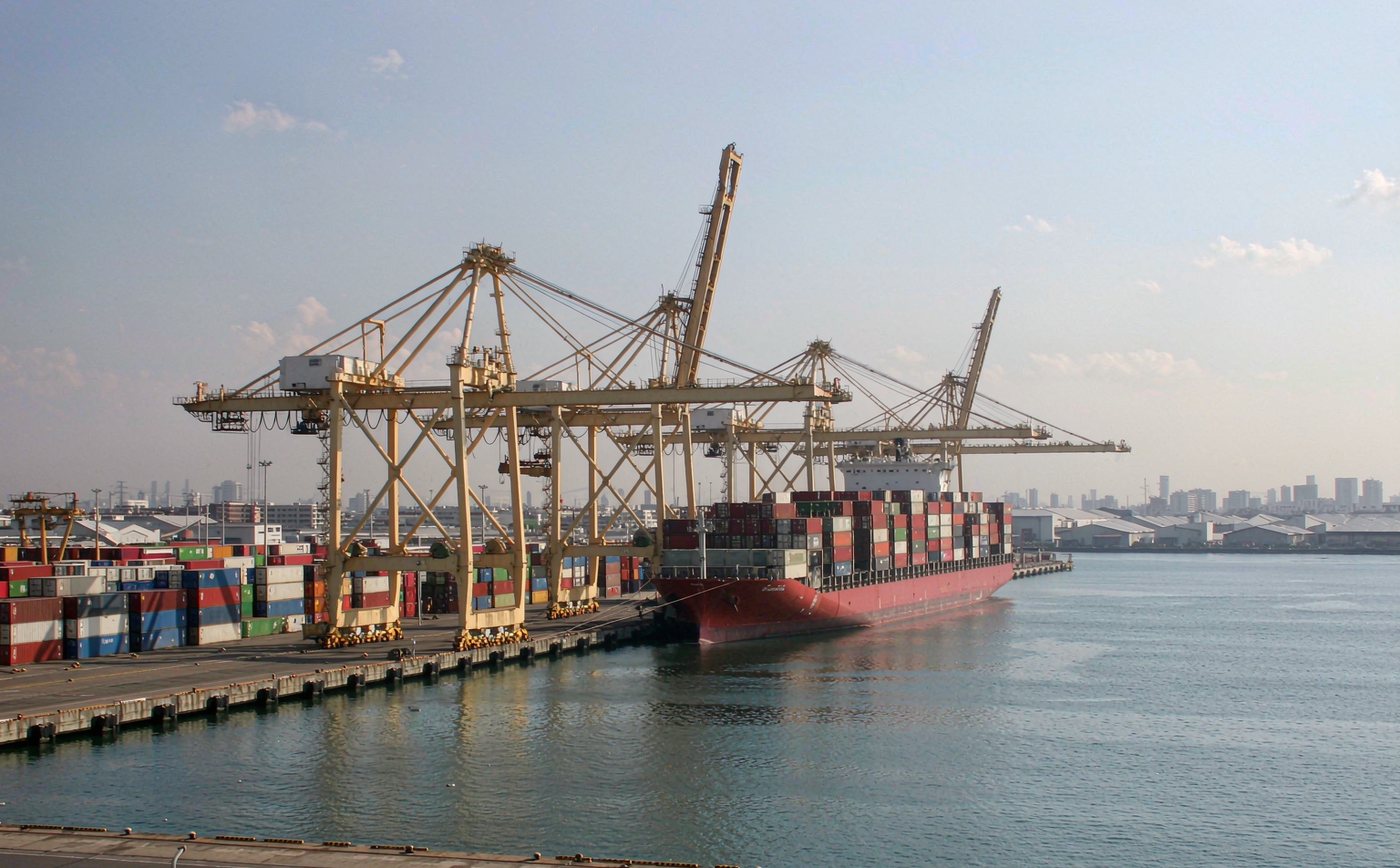
How to Ship from China to Japan: NACCS, PSE & 10% JCT
Japan is the shortest deep sea lane we run. A container out of Shanghai or Ningbo reaches Tokyo or Yokohama in roughly three to five days port to port, and Osaka or Kobe in about four to six. Sailings are frequent, schedules are tight, and compared with a five week run to northern Europe the freight itself is barely a variable.
That is exactly why first time importers get caught out. On a lane this short, the schedule does not slip in transit — it slips in paperwork. Japan Customs clears through NACCS, an electronic system that cross checks your invoice, packing list and bill of lading against each other. Where the numbers disagree, the entry is flagged and moved to manual review, and that costs days the shipping never cost you.
Three rules shape everything else on this lane. Someone with a Japanese address has to hold the import. If you have no office or residence in Japan and want to import in your own name, you appoint an Attorney for Customs Procedures — an ACP — and notify Customs before the first entry. Electrical and radio products need Japanese conformity marks before they can be released, not after: PSE for safety and TELEC for anything with a transmitter. And consumption tax is charged on the CIF value plus the duty, at 10% standard or 8% for food.
The tax side is more forgiving than most markets. A large share of industrial goods, electronics and machinery enter at zero duty, and goods with a customs value of 10,000 yen or less have historically been relieved of duty and consumption tax together — though that relief is now being unwound, and the reported timing differs between sources.
This guide is written for buyers importing from China for the first time. It covers why the short crossing is not the hard part, the ports on each side of the country, transit times by mode, trade terms and who may act as importer, the ACP appointment, NACCS and the filings that happen before the vessel sails, duty and consumption tax, PSE and TELEC, food and plant quarantine, and how to tell whether a forwarder genuinely works this lane.
How your cargo moves: China to Japan
Eight steps from your supplier's door to yours. The last four are the ones shaped by local rules.
- Pickup from your supplierWe collect the goods anywhere in China and bring them to our consolidation point.
- Export clearanceChina customs declaration filed and released before the goods move to the port.
- Loading and departureContainer loaded, sealed and handed to the carrier at the Chinese port.
- Main carriageOcean, air or rail movement booked on the route agreed for your cargo.
- Arrival at the gatewayDischarge at the port or airport of entry, recorded on the carrier's manifest.
- Import clearanceCustoms declaration filed locally, with duty and tax assessed on the declared value.
- Customs releaseGoods released into free circulation once duty and tax are settled.
- Final deliveryOnward movement to your delivery address, warehouse or nominated depot.
Duty rates, VAT rates and clearance times move, and the figure that applies to your goods is the one set for your commodity code on the day of clearance. We check the current position against your code before your goods sail and confirm it to you in writing — ask for that check when you request a quote.
The crossing is short, and the paperwork is what takes time
On a long haul lane, an extra two days of documentation is absorbed by three weeks at sea. On this lane there is no slack to absorb it. A shipment that is not ready to be declared when it lands sits at the terminal, and Japanese terminals are not generous with free time.
- Descriptions must be specific. "Electronic parts" or "accessories" invites reclassification. Use the technical term, the model and the material.
- Invoice, packing list and bill of lading must agree on quantity, weight and value. NACCS checks them against each other. A mismatch is the single most common cause of delay.
- The nine digit code matters. Japan runs its own national tariff, with three digits beyond the international six. The code that worked in Europe may not resolve here.
- Value has to be defensible. An unusually low declared price, or a related party transaction, draws a request for bank records and the purchase contract.
The practical rule: treat document preparation as part of the production schedule, not part of the shipping schedule. Have the invoice, packing list and any conformity evidence complete before the vessel sails, and ask your broker to pre file the entry while the cargo is still on the water.
Tokyo and Yokohama, Kobe and Osaka, and Nagoya
| Gateway | Region served | Notes |
|---|---|---|
| Tokyo and Yokohama (Keihin) | Kanto, greater Tokyo | The busiest pair of gateways for containerised imports, with the densest sailing choice from China. |
| Osaka and Kobe (Hanshin) | Kansai | The western gateway. Sailings from Ningbo and Shanghai are short; useful when your consignee is in Osaka, Kyoto or the Kansai industrial belt. |
| Nagoya | Chubu | The natural entry for automotive and industrial cargo into central Japan. |
| Fukuoka and Hakata | Kyushu | Regional gateway, often served by feeder rather than a direct call. |
| Narita (NRT), Haneda (HND), Kansai (KIX) | Air freight | The three main air gateways. Kansai serves Osaka, Chubu serves Nagoya. |
Choosing the wrong gateway costs more than the freight difference. A container landed at Yokohama for a consignee in Osaka adds a long inland leg and a second handling; landed at Kobe it is a short haul. Ask which terminal the sailing actually calls, because on a three day crossing the inland move can take longer than the sea leg.
Japan transit times: ocean, air freight and courier
| Mode | Typical transit | When it fits |
|---|---|---|
| Ocean FCL | About three to five days Shanghai or Ningbo to Tokyo or Yokohama; four to six days to Osaka or Kobe; five to eight days from southern China | Volume above roughly 13 to 15 cubic metres, or any cargo where a few days either way does not matter. |
| Ocean LCL | Vessel time plus consolidation and deconsolidation, commonly five to nine days in total | Trial orders and part loads. Note that consolidation often adds more time than the crossing itself. |
| Air freight | One to three days airport to airport | High value density, production deadlines, spare parts, fashion drops. |
| Express courier | A few days door to door | Samples, documents and small parcels. |
Because the ocean alternative arrives inside a week, air loses its usual advantage here. A part load that would justify air on a transpacific run frequently does not justify it across the East China Sea. See our air freight and LCL pages for how the modes compare.
We do not publish freight rates here. On this lane the number matters less than the structure: base freight, origin charges in China, destination charges in Japan, duty, consumption tax and inland delivery. Ask for those separately so you can see what moved when the price changes. See our local charges page.
Trade terms on a Japan booking, and who is the importer
The trade term sets who pays and where risk transfers. It does not change who holds the import: the party named on the declaration must be identifiable and answerable in Japan, which is why the ACP question comes up before the Incoterm question on a first shipment.
- EXW — you collect at the supplier's door and carry everything including Chinese export formalities. Rarely sensible for a first import.
- FOB — the supplier loads and clears Chinese export; you take over at the Chinese port. The term most experienced buyers use.
- CIF — the supplier pays freight and insurance to the Japanese port, risk passes in China, and you still clear. Not delivered.
- DAP or DDU — delivered to a named point, with duty and consumption tax for you.
- DDP — duty and tax paid. Note that DDP does not solve PSE or TELEC: for regulated categories the conformity work still has to exist before the goods ship, whoever arranges the freight.
Port to port, airport to airport. Goodhope's ocean service runs port to port and our air service runs airport to airport. We handle the international leg and the export side in China; Japan import clearance, the ACP appointment, product conformity, the consumption tax and the duty belong to the importer of record and their Japanese broker. We coordinate with that broker directly and we say so.
NACCS, and the filings that happen before departure
NACCS — the Nippon Automated Cargo and Port Consolidated System — is how Japan processes import and export declarations, and how the terminal releases a container. Two things about it matter to a first time importer.
First, the declaration can be filed before the vessel arrives, and should be. Your broker needs the bill of lading number, the nine digit code, the CIF value and any conformity evidence. Filing early turns clearance into a formality; filing on arrival turns it into a wait.
Second, ocean cargo is subject to an advance filing requirement: manifest data has to be lodged with Japanese Customs before the vessel departs the Chinese port. If you are shipping anything that needs a permit — food, plants, cosmetics, medical devices, certain chemicals — the permit has to be in hand before that filing, not discovered afterwards.
Once the entry is accepted, Customs either releases the cargo or selects it for examination. Risk based selection is tighter for food, plant and animal products, for first time importers, and for anything where the declared value looks unusual. Clearing cargo into a bonded area is also an option where you want to defer duty and tax until the goods are actually withdrawn for sale.
A container from Shenzhen to a warehouse in Kobe
The product is classified in nine digits
Japan's tariff runs three digits beyond the international six. Confirm the code before production: it drives the duty rate, whether a permit applies and whether a preferential rate is available.
Conformity is settled, not assumed
Establish whether the product needs PSE, TELEC or another sector approval. This is the step that takes months, and it has to start before tooling rather than after production.
The importer and the ACP are named
Decide who is importing. If it is you and you have no Japanese address, appoint an Attorney for Customs Procedures and notify Customs. If it is a distributor or a third party importer of record, name them on the documents from the start.
Collection and consolidation in China
We collect from one factory or several and consolidate where the volumes justify it — several suppliers, one container, one declaration, one certificate set. See our consolidated shipment page.
Export clearance, VGM, advance filing and the sailing
Chinese export customs and the verified gross mass are completed, the advance cargo data is lodged, and the vessel sails. The crossing is short, so the documents have to be finished at this point.
Pre filed entry, arrival and examination
The broker files through NACCS before arrival. Customs either releases the container or selects it for examination; a physical check adds time at the terminal.
Duty, consumption tax, release and inland delivery
Duty on the CIF value and consumption tax on CIF plus duty are assessed and paid, the container leaves the terminal, and the inland leg to Kobe, Osaka or further inland is short.
The representative a non-resident importer has to appoint
Under Article 95 of the Customs Act, a person or company with neither an address nor an office in Japan that wants to import in its own name must appoint an Attorney for Customs Procedures — the ACP, or zeikan jimu kanrinin — and notify Customs of the appointment in advance.
The ACP is your point of contact at Customs. They receive and submit documents, receive notices, handle the payment of duty and consumption tax, receive refunds, and answer when Customs asks a question. They are not a substitute for a licensed customs broker: if your ACP does not hold a customs broker licence, the actual declaration is still filed by a licensed broker.
Why it matters commercially
If you import under a third party's name instead of appointing an ACP, you lose the ability to claim the import consumption tax you paid. That is not a small number: consumption tax is 10% of CIF plus duty, and on a regular import programme it is worth real money every quarter.
Where it does not reach
Food is the exception. The import notification under Article 27 of the Food Sanitation Act is filed with the quarantine station, not with Customs, and neither a non-resident nor its ACP can file it. A food shipment needs a party resident in Japan as importer of record before anything moves.
Because of that, most first time importers without a Japanese entity take one of three routes: import through a Japanese distributor who already has the registrations, appoint a third party importer of record, or set up a Japanese subsidiary once volume justifies the cost. Choose before you book, because the answer changes what goes on the invoice and the label.
Duty, consumption tax, and the ten thousand yen line
| Charge | Rate | Basis |
|---|---|---|
| Customs duty | By nine digit code. Zero for most industrial goods, electronics and machinery; high single to low double digits for apparel; much higher for leather footwear and some agricultural lines | CIF value |
| Consumption tax, standard | 10% in total — 7.8% national plus 2.2% local, the local being 22/78 of the national | CIF value plus duty |
| Consumption tax, reduced | 8% in total — 6.24% national plus 1.76% local | Food and drink, excluding alcohol and dining out |
| Low value relief | Duty and consumption tax relieved where the customs value is 10,000 yen or less | Subject to an exclusion list; being reformed |
| Excise | Liquor tax, tobacco tax and others | Applies regardless of the low value line |
The cascade worth understanding is that consumption tax is charged on a base that already includes the duty. A shipment at 5% duty and a CIF value of one million yen pays 50,000 yen of duty, then consumption tax on 1,050,000 yen — 105,000 yen. The tax on tax effect is small at Japanese duty rates, but it is real, and it is why the nine digit code matters even when the duty rate looks like a rounding error.
Preferential rates are available. RCEP covers both China and Japan, and a valid certificate of origin issued by an authorised Chinese body can bring the applied rate below the general rate — for many lines the saving runs to several percentage points of CIF value. Japan has tightened origin verification and the evidence expected behind a claim, so keep raw material invoices and production records for several years and expect to produce them.
On the 10,000 yen line: relief does not apply to a named exclusion list that includes leather handbags, gloves, knitted apparel, ski boots and leather soled leather shoes, and it is assessed per declaration — several parcels from the same sender to the same recipient at the same time are added together. Japan has legislated to end the consumption tax relief on low value imports; sources differ on whether that took effect in 2026 or is scheduled for April 2028, so confirm the current position with your broker before you price around it.
PSE and TELEC, the two marks that gate electronics
Electrical goods are where Japanese imports most often stall, because the requirement is Japanese and it has to be satisfied before release. It is not enough to hold a CE declaration or an FCC report.
| Requirement | What it covers | What it costs you in time |
|---|---|---|
| PSE, diamond mark | Specified electrical products — power adapters, chargers, plugs and sockets, wiring, transformers, some heating appliances | Testing by a registered body plus a factory inspection. The longer path. |
| PSE, circular mark | Non specified products — most small appliances, LED luminaires, audio, power banks | Testing and a declaration of conformity, no factory inspection. |
| METI import business notification | Any PSE product being imported for sale | Filed by a party in Japan. The business name and mark go on the product or packaging. |
| TELEC / MIC approval | Anything with a radio transmitter — Wi-Fi, Bluetooth, cellular, RF remote control, wireless modules | A separate approval under the Radio Act, on top of PSE. Using an already approved module can shorten it. |
| JATE | Equipment connected to the public telecoms network | Required in addition for terminals with cellular connectivity. |
| PSC mark | Specified consumer products such as lighters, helmets, pressure cookers and climbing ropes | Required for circulation. |
Two practical points. A product that is both mains powered and wireless needs both PSE and TELEC, and they run in parallel rather than one covering the other. And the work belongs to the production phase: testing, factory inspection and the METI notification cannot be compressed into the last week before the vessel sails. Budget months, and start before tooling so that labelling and manuals can be printed with the right marks on them.
Batteries travel as regulated cargo whichever mode you choose. See our dangerous goods page.
Food, plants and the quarantine that runs alongside customs
Quarantine is a separate track from customs, and it can hold a shipment that customs has already cleared.
- Food and drink, and food contact materials. An import notification under Article 27 of the Food Sanitation Act goes to the quarantine station covering the port of clearance, per shipment. It must be filed by a party resident in Japan. Food contact ware is tested against the Ministry of Health, Labour and Welfare standard for the material.
- Plants and plant products. Plant quarantine under the Ministry of Agriculture, Forestry and Fisheries, with a phytosanitary certificate from China.
- Wood packaging. ISPM-15 treated and marked, or the pallets are a problem at the terminal rather than at the factory.
- Animal products. Animal quarantine applies to meat, dairy and hides, and the restrictions are strict.
- Medicines, quasi drugs, cosmetics and medical devices. Regulated by the PMDA and the Ministry of Health, Labour and Welfare, with a Japanese marketing authorisation holder in the structure.
Prohibitions are enforced hard: narcotics, explosives and weapons, counterfeit goods and counterfeit currency are seized, and Japan has zero tolerance for intellectual property infringement. See our quarantine inspection page for the inspection side.
Sourcing from a screen, and sourcing from a handshake
Where you found the supplier changes what you need to check before booking.
Buying online
Product photos and a listed specification are not conformity evidence. Ask for the actual model number, the electrical rating and the test reports, because PSE and TELEC are assessed per model. Small trial parcels are cheap to send and expensive to import if the marking is wrong.
Meeting at a fair or at the factory
You can inspect the production line, the labelling and the packaging, and you can raise conformity while tooling is still open. It costs a trip. For anything regulated it usually pays for itself the first time.
Either way, our Alibaba and 1688 sourcing page covers what to verify before you place the order, and our China inspection service page covers checking goods before they leave.
Importing as a company, and importing as an individual
- Company imports. You need a party in Japan to hold the import — your own entity, a distributor, or a third party importer of record — plus the ACP appointment if you have no Japanese address. Consumption tax paid at import is recoverable through the Japanese consumption tax return where the importing entity is registered, which is the reason to import in your own name rather than under someone else's.
- Individual and personal use imports. A separate, simpler track applies to goods for personal use, with a different valuation basis. It is not a route for commercial stock: goods bought for resale are commercial imports, and declaring them as personal is treated as an under declaration.
- Samples and small parcels. Mark them accurately with a real description and a real value. "Gift" and "sample" with a nominal value is a common cause of a held parcel.
The China forwarder and the Japanese broker
- The China side forwarder collects from the factory or factories, consolidates, clears export, files the verified gross mass and the advance cargo data, books the service, issues the bill of lading, and hands over documents early enough for the entry to be pre filed.
- The Japanese broker holds the customs broker licence, files the NACCS entry, handles permits and quarantine coordination, arranges examination if the shipment is selected, accounts for duty and consumption tax, and arranges release and delivery.
The gap between them is where delays live: a bill of lading issued before the code was confirmed, a set of documents that reaches the broker the day the vessel berths, or a conformity mark nobody checked. Goodhope works the China end, sends documents ahead of the vessel, and coordinates directly with your broker.
Checking a forwarder on a Japan booking
A forwarder who works this lane will ask more questions than you expect, and that is a good sign.
- What is the nine digit code? Without it, duty rate and permit routing are unknown.
- Does the product need PSE, and diamond or circular? If they have never heard of PSE, they have not cleared electrical goods into Japan.
- Does it transmit? Then TELEC as well.
- Who is the importer of record, and is an ACP appointed?
- Which terminal does the service call? Yokohama for an Osaka consignee is an inland move you did not budget for.
- Is the entry being pre filed before arrival?
- Telex release or original bill of lading? On a three day crossing, waiting for a paper original to arrive by courier can defeat the point of the short lane.
- What is the free time at the terminal, and who pays demurrage?
- Is a preferential rate being claimed, and is the certificate in the right form?
Red flags: a rate quoted before you have said what the goods are; "everything included" with no broker named; a six digit code offered as if it were Japanese; any suggestion that conformity can be sorted after arrival; and any pressure to declare a lower value.
Three shipments into Japan, and the reason for each
The examples below are illustrative. They describe typical decisions on this lane, not specific customer shipments.
Appliances that had to be built for Japan
A container of small household appliances. The deciding detail was not freight: the units had to carry the PSE circular mark, the Japanese importer's business name from the METI notification, and Japanese language manuals. Those were production decisions made before tooling, and the testing ran in parallel with manufacture. The goods cleared in a day because the entry had been pre filed with the certificate in hand. A shipment built to another market's specification would have been compliant everywhere except Japan.
A food consignment that needed a Japanese importer
Shelf stable retail food. The importer discovered late that the Article 27 notification cannot be filed by a non resident or by its ACP, and had to bring in a Japan resident importer of record before the first shipment could move — the same entity then appeared in the importer field on the retail label. The freight was three days. The compliance work was six weeks, and it was entirely avoidable with one question asked at quotation stage.
A part load that waited on consolidation
A first time importer shipped six cubic metres of consumer goods LCL. The vessel crossing was four days; the consolidation and deconsolidation added another four. The container then sat an extra day because the invoice and packing list disagreed on carton count and NACCS flagged the entry. Total door to door was more than twice the crossing time, and none of the extra days were at sea.
Typhoon season, Golden Week and the production calendar
- Chinese New Year. Production stops in China and the weeks either side are congested. Fix production dates around it.
- Golden Week, late April to early May, Obon in mid August, and the year end and New Year holiday shorten working days in Japan and slow processing at terminals and agencies.
- Typhoon season runs through summer and autumn and can close a terminal for a day or two. Because the crossing is short, a closed terminal is a missed cutoff rather than a minor delay.
- Peak seasons before the year end and around Japanese retail events tighten space. Book earlier than feels necessary.
Check our holidays page when you are fixing a production date.
What Goodhope does on the China end for Japan
- We treat documentation as part of production — invoice, packing list and conformity evidence complete before the vessel sails, not after it berths.
- Ocean freight port to port and air freight airport to airport — into Tokyo, Yokohama, Osaka, Kobe, Nagoya or Fukuoka by sea, and Narita, Haneda or Kansai by air, with the terminal and the service named rather than a generic estimate.
- We ask for the nine digit code before we quote — because the code drives the duty rate, the permit routing and whether a preferential rate is worth claiming.
- Consolidation across suppliers — several factories, one container, one declaration, one certificate set. See our consolidated shipment and pick up pages.
- Telex release by default where the lane justifies it — on a three day crossing, waiting for paper defeats the point.
- Documents prepared for the NACCS entry — in the form your broker needs, handed over early so the entry can be pre filed.
- Regulated cargo handled properly — see our dangerous goods, non-DG chemicals to Japan and quarantine inspection pages.
- Plain answers on what we do not do — Japan import clearance, the ACP appointment, PSE and TELEC, food notifications and the consumption tax belong to the importer of record and their broker. We coordinate with them and we do not pretend otherwise.
- NVOCC licensed, since 2012 — see our why partner with Goodhope page.
Why importers use Goodhope on this lane
Six things that are different about working with us on China to Japan shipments.
Ask for a Japan quote with the classification settled
Send us the product and its nine digit code if you have it, the carton count and total weight or volume, the supplier's city, and the delivery address in Japan. We will name the terminal and the service, tell you whether a conformity mark is required before anything is loaded, and hand your broker documents early enough to pre file the entry — so the three day crossing is the slowest part of your shipment, not the fastest.
Frequently asked questions
How long does shipping from China to Japan take?
Ocean freight from Shanghai or Ningbo to Tokyo or Yokohama commonly runs about three to five days port to port, and to Osaka or Kobe roughly four to six days, with southern Chinese ports taking a little longer. LCL adds consolidation and deconsolidation at both ends, typically five to nine days in total. Air freight from a Chinese gateway to Narita, Haneda or Kansai is one to three days airport to airport, and express courier is faster again door to door. The crossing is the shortest deep sea lane we run, so the freight time is rarely where the schedule slips.
How much duty and consumption tax will I pay importing into Japan?
Customs duty is charged on the CIF value at the rate for your nine digit tariff code. A large share of industrial goods, electronics and machinery enter at zero, apparel is commonly in the high single to low double digits, and leather footwear and some agricultural lines are far higher. Consumption tax is then charged on the CIF value plus the duty: 10% at the standard rate, made up of 7.8% national and 2.2% local, or 8% at the reduced rate that applies to food. Goods with a customs value of 10,000 yen or less have historically been relieved of both duty and consumption tax, subject to an exclusion list and to reforms now in progress.
Do I need a Japanese company to import into Japan?
If you have neither an address nor a registered office in Japan and you want to import in your own name, you must appoint an Attorney for Customs Procedures, known in Japanese as a zeikan jimu kanrinin, and notify Japan Customs in advance. The ACP is your point of contact for filings, notices, payments and refunds. Many first time importers instead have a Japanese distributor or a third party importer of record act as the importer. For food the position is stricter: the import notification under Article 27 of the Food Sanitation Act must be filed by a party resident in Japan, and an ACP cannot file it.
What is PSE and do I need it before shipping to Japan?
PSE is the conformity mark required under the Electrical Appliance and Material Safety Law for electrical products sold or imported into Japan. Specified products carry the diamond mark and need testing by a registered body plus a factory inspection; non specified products carry the circular mark and can be handled by a declaration of conformity. Import also requires the METI import business notification, filed by a party in Japan, and the mark and business name go on the product or its packaging. Wireless products need TELEC approval under the Radio Act on top of PSE. Plan for months rather than weeks and start before tooling.
What does the ten thousand yen threshold mean for my shipment?
Imports with a customs value of 10,000 yen or less have historically been relieved of both customs duty and consumption tax. The relief does not apply to a named exclusion list that includes leather handbags, gloves, knitted apparel, ski boots and leather soled leather shoes, and liquor and tobacco excises still apply. The threshold is tested per declaration, so consignments sent from the same sender to the same recipient at the same time are added together. Japan has legislated to end the consumption tax relief on low value imports; the reported start date differs between sources, so confirm the current position with your broker before pricing around it.
Which port does cargo from China arrive at in Japan?
The Keihin ports of Tokyo and Yokohama serve the Kanto region, the Hanshin ports of Osaka and Kobe serve Kansai, and Nagoya is the main gateway for the Chubu region and for automotive and industrial cargo. Fukuoka serves Kyushu. Air freight lands at Narita and Haneda for Tokyo and Kansai for Osaka, with Chubu serving Nagoya. Your forwarder should name the terminal on the booking rather than quote a country level figure.
Can I use RCEP to reduce duty on Chinese goods entering Japan?
China and Japan are both RCEP members, so qualifying goods can be entered at a preferential rate instead of the general rate, and for many lines the saving is several percentage points of CIF value. The certificate has to be issued by an authorised body in China, the origin criterion has to be met, and the product name, code and value must match the invoice and the bill of lading exactly. Japan has tightened its origin verification and the documentation expected behind a claim, so keep raw material invoices and production records for several years. Where a claim looks weak, the prudent assumption is that the general rate will be applied.
What documents does Japan Customs require?
A commercial invoice with itemised descriptions, quantities, unit prices, total CIF value and country of origin, a packing list that agrees with it line by line on quantity and weight, the bill of lading or air waybill, and a certificate of origin if a preferential rate is being claimed. Regulated goods add the sector documents: PSE or TELEC evidence, the METI import business notification, a food import notification, plant quarantine certificates, and safety data sheets for chemicals. Vague descriptions are the most common cause of reclassification and delay.
What does a Chinese freight forwarder handle on a Japan shipment?
On the China side we collect from the factory or from several factories, consolidate where the volumes justify it, handle export customs clearance and the verified gross mass, lodge the advance filing data, book the service and issue the bill of lading or air waybill, and provide tracking. Goodhope works port to port on ocean freight and airport to airport on air freight, and we name the terminal and the service. Japan import clearance, the ACP appointment, product conformity work, the consumption tax and the duty belong to the importer of record and their Japanese broker; we coordinate with them and hand documents over early.
Are there seasonal risks on the China to Japan lane?
Yes, and they are predictable. Chinese New Year stops production in China for a week or more and empties the weeks either side of it. Golden Week in late April and early May, Obon in mid August and the year end and New Year holiday shorten working days in Japan and slow processing. Typhoon season runs through summer and autumn and can close terminals for a day or two. Because the crossing itself is short, a single missed cutoff can move your arrival more than the sailing time does.