
Home / Shipping to Kenya / How to Ship from China to Kenya
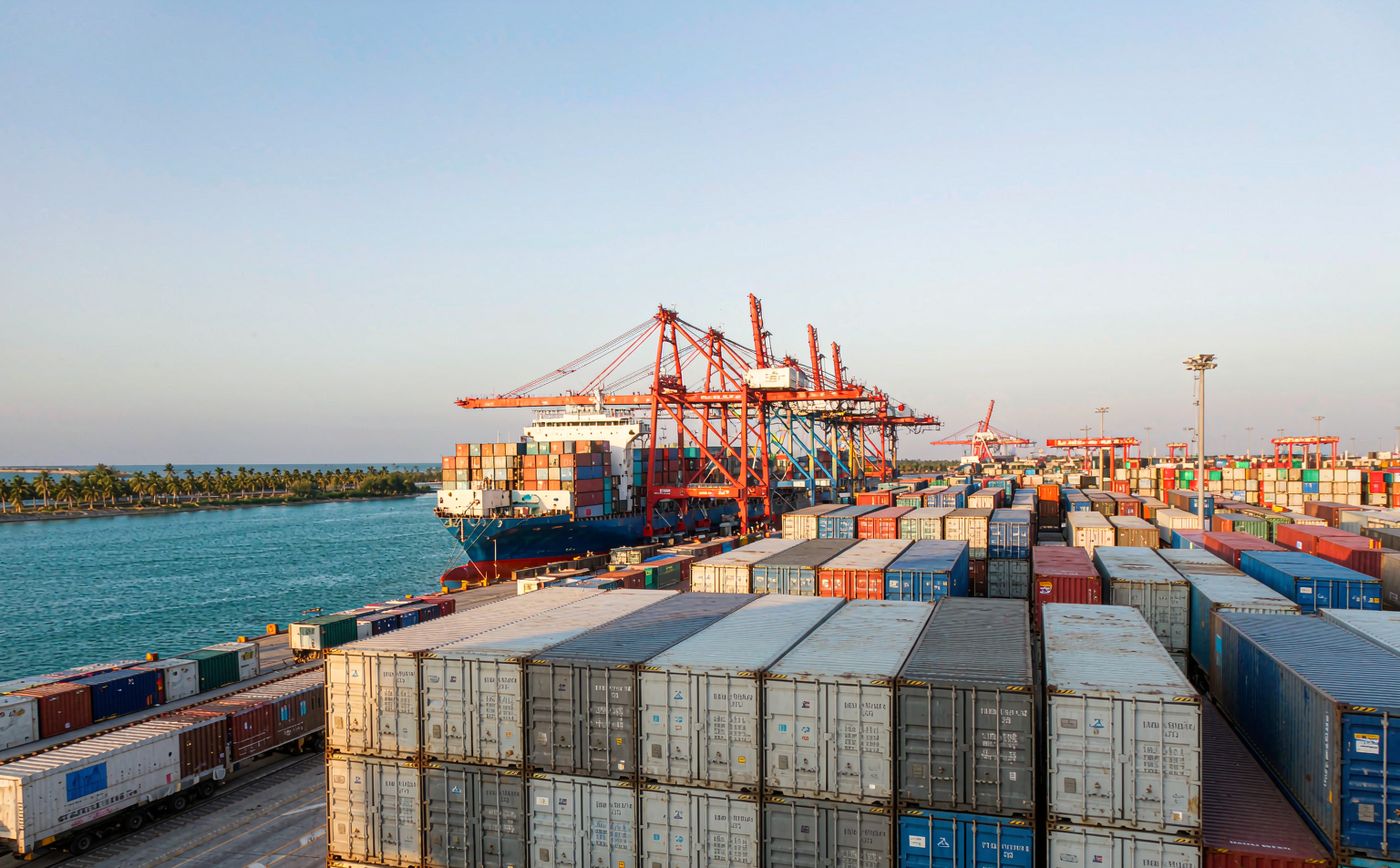
How to Ship from China to Kenya: Mombasa, PVoC & VAT
The inspection happens in China, before the goods ship. Kenya's Pre-Export Verification of Conformity programme is run by the Kenya Bureau of Standards through appointed agents in the country of export, which means the physical inspection and any testing happen at the Chinese end while the container is still being stuffed. Ship without the Certificate of Conformity and the consignment is not automatically refused — it is pulled into a destination inspection, which costs a fee calculated on the customs value, adds days at Mombasa, and can end with the goods being required out of the country again.
The second thing is that a certificate of origin is now mandatory on every consignment. From late 2025 Kenya requires one, issued by a competent authority in the exporting country, and the requirement is enforced rather than nominal. This is a small document that is easy to obtain in China and easy to forget, and the consequence of forgetting is not a fine — it is seizure.
The third thing is that Mombasa is a gateway, not a destination. Kenya's container traffic lands at the coast and then moves inland on the standard gauge railway or by road to the inland container depot at Nairobi and beyond. The inland leg is a real cost line and a real schedule item, and where you choose to clear — at the port or at the depot — changes both the paperwork and the timing.
If you read one section: get the PVoC inspection booked before the container is sealed; get the certificate of origin from a Chinese chamber of commerce before the goods sail; file the Import Declaration Form before shipment rather than after; and insure with a Kenyan-licensed insurer, because a foreign policy does not discharge the requirement.
How your cargo moves: China to Kenya
Eight steps from your supplier's door to yours. The last four are the ones shaped by local rules.
- Pickup from your supplierWe collect the goods anywhere in China and bring them to our consolidation point.
- Export clearanceChina customs declaration filed and released before the goods move to the port.
- Loading and departureContainer loaded, sealed and handed to the carrier at the Chinese port.
- Main carriageOcean, air or rail movement booked on the route agreed for your cargo.
- Arrival at the gatewayDischarge at the port or airport of entry, recorded on the carrier's manifest.
- Import clearanceCustoms declaration filed locally, with duty and tax assessed on the declared value.
- Customs releaseGoods released into free circulation once duty and tax are settled.
- Final deliveryOnward movement to your delivery address, warehouse or nominated depot.
Duty rates, VAT rates and clearance times move, and the figure that applies to your goods is the one set for your commodity code on the day of clearance. We check the current position against your code before your goods sail and confirm it to you in writing — ask for that check when you request a quote.
Register the business, then register on the single window
Kenya's registrations are ordinary business formalities, but they are layered: the business, the tax identity, the trade code, and then access to the trade platform. Each has to exist before the next is useful.
| What you need | Who issues it | What to watch |
|---|---|---|
| Business registration | eCitizen, as a sole proprietor, partnership or company | The legal entity that imports. A registered business, not an individual, is what customs deals with. |
| Tax PIN | Kenya Revenue Authority | The identity used across every trade and tax system. Nothing in the import process works without it. |
| VAT registration | Kenya Revenue Authority | Practical rather than optional for a commercial importer: without it the sixteen percent import VAT is a cost instead of a recoverable input. |
| Import and export code | Kenya Revenue Authority | Required to clear goods, separate from the PIN. |
| Single window registration | Kenya TradeNet, the National Electronic Single Window System | This is the platform the trade documentation runs through. Registration is what gives the agent the access to file. |
| A licensed customs clearing agent | Licensed and registered with the revenue authority | The entry is lodged electronically through the integrated customs system. For a first import an agent is how it happens. |
| County single business permit | The county of operation | A local trading licence, easy to overlook and easy to be asked for. |
A foreign business with no Kenyan entity cannot be the importer of record. The realistic routes are to sell to a Kenyan company that holds its own registrations, or to appoint a Kenyan importer. Settle it before the pro forma invoice, because the importer named on the declaration is the party the revenue authority holds.
The Import Declaration Form, and the fee that goes with it
The IDF is the declaration of what you intend to import, and it has to be filed before the goods ship — not on arrival. It is normally filed by your clearing agent through the revenue authority's system, and it carries the description, the value, the quantity and the HS code.
There is a fee attached, and it is worth understanding that it is a fee rather than a tax: the Import Declaration Fee is calculated as a percentage of the customs value, with a minimum in shillings, and it is charged whether or not any duty is payable. Published figures differ — commonly quoted in the range of two to around two and three-quarter percent, with a floor of around five thousand shillings — so treat the exact number as something to confirm with your agent rather than something to take from a guide.
Why the IDF comes first. The IDF is the basis on which the customs entry is later lodged, and the entry is what the duty assessment hangs off. Filing it before shipment means the classification and the value are settled while there is still time to argue about them. Filing it after arrival means the argument happens while the container is accruing storage.
The IDF is separate from the Railway Development Levy, which is a different charge at a similar order of magnitude and is easy to confuse with it. Both are levied on the customs value, and both appear on the assessment alongside the duty and the VAT.
PVoC: the inspection that happens in China, not in Mombasa
The Pre-Export Verification of Conformity programme is the one Kenyan requirement that importers outside the country consistently underestimate, because the name does not make clear where it happens.
Check whether the product is regulated
Most manufactured goods are inside the scope. If your product is, the inspection applies to every consignment — this is not a one-off product approval that lasts a year, unlike the Nigerian model. A regular importer still gets inspected every time.
Apply to an appointed agent in China
The Kenya Bureau of Standards works through appointed inspection firms operating in the country of export. The application is made before shipment, with the commercial invoice, packing list and any test reports the product needs.
Physical inspection, and testing where required
An inspector attends while the consignment is available, checks quantities, markings and packaging, and takes samples where the standard requires laboratory testing. This is why the inspection has to be scheduled into the loading plan rather than fitted around it.
The Certificate of Conformity is issued
Once the consignment passes, the CoC is issued for that shipment. It travels with the documents and it is what the customs entry references. Without it the goods do not clear on the normal path.
If you have the certificate
The consignment follows the normal path: entry lodged, assessment raised, duty and taxes paid, release. The inspection has already happened, in China, at a scheduled time that suited the loading.
If you do not
The goods are pulled into a destination inspection at the port, which carries a fee calculated on the customs value and adds days while it is arranged. Published figures for that fee vary widely between sources, so confirm the current one with your agent, but the delay is the larger cost either way. Goods that fail can be required to be re-exported.
The practical instruction is simple and worth repeating to your supplier: book the inspection before the container is sealed. A container that is already closed, already on a truck and already at the terminal cannot be inspected, and the certificate cannot be issued retroactively.
The certificate of origin, and the rule that changed in 2025
This is the most recent change on the lane and the one most likely to catch an importer who last shipped to Kenya a couple of years ago.
From late 2025, every consignment entering Kenya must carry a valid certificate of origin issued by a competent authority in the exporting country. The requirement is enforced, and the reported consequence of not having one is seizure or forfeiture of the goods rather than a late-filing penalty. For Chinese exports this normally means a certificate issued by a Chinese chamber of commerce.
The document is cheap and quick to obtain in China, and the failure mode is procedural rather than financial: nobody thinks to ask for it until the goods are on the water. Put it on the document checklist at the same point as the commercial invoice, not at the same point as the bill of lading.
Note that this is about origin, not preference. There is no free trade agreement between China and Kenya, so a certificate of origin does not reduce the rate here — it establishes where the goods came from, and since late 2025 it is required regardless.
Mombasa, the SGR and the Nairobi inland depot
Kenya has one main seaport and a long inland haul behind it. Understanding that shape explains most of the cost and timing questions a first-time importer asks.
| Point | What it is | Notes |
|---|---|---|
| Port of Mombasa | The gateway for Kenya and for much of the landlocked hinterland | Handles the great majority of Kenyan container traffic and serves Uganda, Rwanda, South Sudan and eastern Congo as well. Volume brings services, and it also brings congestion in bursts. |
| Standard Gauge Railway | Rail link from Mombasa inland | The primary way containers move from the coast to Nairobi. Faster and more predictable than road for full containers, and it is the reason the Railway Development Levy exists on the assessment. |
| Nairobi Inland Container Depot | Inland clearance point | Containers can be cleared here rather than at the coast. For a Nairobi-based importer this is often the obvious choice, but it has to be decided in advance because it affects the entry and the inland booking. |
| Road haulage | Alternative inland leg | More flexible for part loads and for destinations off the rail corridor, and more exposed to road conditions and delays. |
| Jomo Kenyatta International Airport | Air gateway at Nairobi | Where air freight lands. Air cargo is often cleared faster than sea, and for high-value goods the difference in clearance time can matter more than the difference in freight cost. |
The decision to make early is where you want to clear. Clearing at Mombasa means the container is available at the coast and you arrange the inland leg yourself; clearing at the Nairobi depot means the container moves under customs control and you collect it inland. Both work, and the right one depends on where your warehouse is and how your agent prefers to operate.
How long into Kenya by vessel and aircraft
These are port to port for full containers and airport to airport for air cargo, and they exclude clearance and the inland leg.
| Origin | Destination | Mode | Transit |
|---|---|---|---|
| Shenzhen / Guangzhou | Mombasa | FCL sea | 25–32 days |
| Shanghai / Ningbo | Mombasa | FCL sea | 28–35 days |
| Northern Chinese ports | Mombasa | FCL sea | 32–40 days |
| Any major port | Mombasa | LCL sea | Add consolidation and deconsolidation; plan 5–7 weeks |
| China | Nairobi (NBO) | Air freight | 5–10 days |
| China | Kenya | Express courier | 3–6 days door to door |
Then add the inland leg to Nairobi and the clearance. Door to door from a Chinese factory to a Nairobi warehouse, a realistic planning figure is six to eight weeks by sea and a week to a fortnight by air.
Duty, the declaration fee, the railway levy and VAT
Kenya's stack has four moving parts, and two of them are levies with confusingly similar names.
| Element | How it is worked out | Illustrative figure (USD) |
|---|---|---|
| Invoice value of the goods | What you paid the supplier, FOB | 18,000 |
| International freight and insurance | Added to reach the CIF value | 2,000 |
| Customs value (CIF) | Invoice plus freight and insurance | 20,000 |
| Import duty at 25% | On the CIF value, at the HS code rate — 25% is the finished-goods band | 5,000 |
| Import Declaration Fee at 2% | On the customs value, with a minimum in shillings | 400 |
| Railway Development Levy at 2% | On the customs value | 400 |
| VAT base | CIF plus duty plus applicable excise and levies | 25,800 |
| VAT at 16% | On the VAT base | 4,128 |
| Total duty, fees, levy and VAT | The cash out at clearance | 9,928 |
Two observations. The VAT rate is the highest in this series at sixteen percent, and it is charged on a base that includes the duty and the levies — so the effective tax on a finished consumer good is close to half the CIF value. And the landed cost typically runs somewhere between a quarter and more than half above the CIF price depending on the product, which is why the HS code matters more than the freight quote.
VAT is recoverable, duty is not. A VAT-registered Kenyan business claims the import VAT back against output VAT on the next return, evidenced by the entry and the payment receipt. The duty, the declaration fee and the railway levy are cost. Cash-flow them separately in your model, and make sure the VAT registration is in place before the first shipment rather than after.
Incoterms on a Kenya booking, and who files the IDF
The IDF is filed by the importer, through the agent, on the Kenyan side. Incoterms do not change that. What they change is who controls the inspection and the documents on the Chinese end, which is where the PVoC risk sits.
| Term | What you control | What to watch |
|---|---|---|
| EXW / FOB | Everything on the China side, including the PVoC inspection booking | Full control of the schedule and full responsibility for it. Best option if you have a forwarder who has done Kenyan PVoC before. |
| CIF / CFR | The IDF, the clearance and the insurance | The supplier books the carriage, but the marine insurance still has to be placed with a Kenyan-licensed insurer, so the supplier's CIF insurance does not discharge your obligation. Same trap as Nigeria. |
| DAP / DDP | Little | Sold as easy, and sometimes genuinely easier. Find out whose import code the declaration is filed under, because the importer of record is the party the revenue authority holds, and a seller using a borrowed code is a risk that lands on you. |
Whichever you choose, write three dates into the order: when the PVoC inspection is booked, when the IDF is filed, and when the certificate of origin is in hand. Those three are the critical path.
Kenya TradeNet, and what it files for you
The National Electronic Single Window System, operated by the Kenya Trade Network Agency, is where trade documentation is submitted, and the revenue authority's integrated customs management system is where the entry is processed and the assessment raised.
- Import Declaration Form, filed before shipment, declaring description, value, quantity and HS code.
- Certificate of Conformity from the PVoC agent, where the product is regulated.
- Certificate of origin, issued by a competent authority in China, mandatory on every consignment.
- Commercial invoice showing the true transaction value. The declared customs value is tested against it, and against the authority's own valuation data.
- Packing list with weights, dimensions and package counts.
- Bill of lading or air waybill.
- Marine insurance certificate from a Kenyan-licensed insurer.
- The customs entry, lodged electronically by the licensed agent, which is what produces the assessment.
- Sector permits where the product needs them.
The recurring problem is not a missing document. It is inconsistency: an invoice value that does not match the declared customs value, an HS code the authority disagrees with, a description too vague to support the classification. Kenya's valuation work is systematic, and a mismatch produces a query that costs days.
Following a shipment from Yiwu to a warehouse in Nairobi
A worked example, because the sequence is what matters. A Nairobi importer buys general merchandise from suppliers around Yiwu.
Registration, and the decision about where to clear
The importer holds a tax PIN, an import and export code, VAT registration and single window access, and has appointed a licensed clearing agent. Together they decide to clear at the Nairobi inland depot rather than at Mombasa, which determines how the entry will be written and how the inland leg is booked.
The pro forma, the IDF and the insurance
The supplier issues a pro forma invoice. The agent files the IDF, declaring the goods, the value and the HS code. The importer places marine cover with a Kenyan-licensed insurer. All three happen before the goods are consolidated.
Consolidation, and the certificate of origin
The forwarder consolidates the cargo from several Yiwu suppliers into a container. The importer obtains the certificate of origin from the chamber of commerce — required on every consignment, and much easier to get now than in a fortnight.
The PVoC inspection, before sealing
The appointed agent inspects the consolidated consignment while it is being stuffed, takes samples where the standard requires testing, and issues the Certificate of Conformity for the shipment. The container is sealed after the inspection, not before.
The voyage
The container sails from Ningbo to Mombasa, roughly four weeks. Because the IDF and the CoC already exist, the entry can be prepared while the vessel is at sea.
Arrival, the inland leg, and release
The container is discharged at Mombasa and moves on the railway to the Nairobi inland depot. Duty, the declaration fee, the railway levy and VAT are assessed and paid. Any inspection is completed, release is granted, and the container is collected and trucked to the warehouse.
The step that decides whether this works is the fourth one. If the container had been sealed before the inspection, the CoC would not exist, and the consignment would have been pulled into a destination inspection with the delay and the fee that follow.
The EAC tariff, and the levies added to it
Kenya applies the East African Community Common External Tariff, and the band your product falls in is close to the whole story.
| Band | Typical rate | What sits in it |
|---|---|---|
| Raw materials and capital goods | 0% | Inputs and machinery. Duty-free, though the fees and the VAT still apply. |
| Intermediate goods | Around 10% | Part-finished inputs. |
| Finished goods | Around 25% | Most consumer products arriving from China fall here. |
| Sensitive items | Above the standard bands | Certain agricultural and manufactured categories carry much higher rates, quoted up to 60% and above on products such as sugar, rice and dairy. |
| Other charge | Charged on | Notes |
|---|---|---|
| Import Declaration Fee | Customs value | A fee for the declaration, with a minimum in shillings. Charged whether or not duty is payable. |
| Railway Development Levy | Customs value | Funds the railway. Separate from the IDF and easy to confuse with it. |
| Excise duty | Specific categories | Alcohol, tobacco, vehicles, cosmetics and some others. Feeds into the VAT base. |
| VAT | CIF plus duty plus excise and levies | 16%. Recoverable by a VAT-registered business. |
| Anti-dumping and safeguard measures | By HS code | Where a measure exists it is found by looking up the heading, and unlike VAT it is pure cost. |
KEBS beyond PVoC: the standardisation mark and sector permits
The Certificate of Conformity gets a consignment into the country. Other approvals govern whether the product can be sold once it is there, and some products need approvals from more than one body.
Import Standardisation Mark
Issued by the Kenya Bureau of Standards for imported products sold in Kenya, confirming they meet the relevant Kenyan standard. Applied for through the bureau's portal once the goods have passed testing. It belongs to the product line rather than to a single consignment, and it is separate from PVoC.
Sector regulators
Telecommunications and radio equipment needs type approval from the Communications Authority. Pharmaceuticals need the Pharmacy and Poisons Board. Plants, seeds and agricultural products need KEPHIS phytosanitary certification. Food products carry their own KEBS food safety requirements. A product can need two or more.
The practical advice is the same as everywhere in this series: identify the sector regulators at the point of choosing the product, because these approvals belong to the product and cannot be obtained once the goods are on the water.
Paying the supplier, and the insurance that has to be Kenyan
Two Kenyan requirements surprise importers, and both are cheap to comply with and expensive to discover late.
Marine insurance from a Kenyan-licensed insurer
Imports procured by Kenyan-based importers are required to be insured with insurers licensed in Kenya. A supplier's CIF insurance, or a policy placed through a foreign broker, does not satisfy this. Place the cover locally and keep the certificate with the entry documents.
The customs value is tested, not accepted
The declared value is checked against the commercial invoice and against the authority's own valuation data. Under-declaration is treated seriously, and a valuation query is one of the most common causes of a container sitting at Mombasa. Declare the true transaction value, and make sure the invoice supports it.
Payment itself is not restricted in the way it is on some other lanes in this series — there is no equivalent of Egypt's letter of credit requirement or Nigeria's bank-processed Form M. The IDF is a declaration and a fee, not a foreign exchange instrument. That makes the payment side of a Kenyan import simpler than the compliance side.
The invoice, and the customs value behind it
The commercial invoice is the document the customs value is built from, and Kenyan valuation work is systematic enough that it is worth getting right.
- The value must be the true transaction value, and it must reconcile to the pro forma and to the IDF.
- The description must support the HS code. "General merchandise" is not a description that survives an assessment.
- The freight and insurance should be shown separately, because the customs value is CIF and the assessment needs to see how it was built.
- The invoice must match the packing list and the bill of lading in quantity, weight and package count.
- Where several suppliers are consolidated into one container, each invoice has to be present and each has to tie to the manifest.
Consolidated shipments from markets like Yiwu are where this usually breaks: eight suppliers, eight invoices, one manifest, and a value that does not obviously add up. Send the document requirements to every supplier before consolidation, not after.
Buying online, and clearing under your own registration
Buying on a marketplace does not exempt a consignment from any of the above. The certificate of origin is still required, the PVoC inspection still applies to regulated products, and the IDF still has to be filed — and a marketplace seller in China will not produce a certificate of origin on your behalf.
For a business, the workable routes are to import under your own registrations and have the supplier issue documents in your name, or to use a marketplace or consolidator that offers a Kenyan importing entity, in which case find out whose import code the declaration goes under. What does not work is treating a marketplace checkout as though it were a domestic purchase.
Small parcels are handled by the carriers on the express channel and are not a practical route for stock. If you are importing to resell, plan on the full process.
Imports for resale, and personal shipments into Kenya
| Situation | What applies | What to expect |
|---|---|---|
| Business stock bought from a Chinese supplier | IDF, PVoC where regulated, certificate of origin, full assessment | The complete process in this guide. This is the normal path. |
| Household removals and personal effects | A separate treatment for used household goods, assessed differently | Still a declaration, still an inventory, and still capable of sitting in storage if the paperwork is wrong. |
| Samples and documents | Express channel | Small and fast. Keep them genuinely small. |
| Used vehicles | Age limits and pre-shipment inspection | Kenya restricts the age of imported vehicles and requires inspection before shipment. Check the build year before you buy. |
| Restricted goods | Permits from the relevant agency | Plants, seeds, pharmaceuticals, chemicals and some others. The permit belongs to the product and it must exist before the goods ship. |
The China forwarder and the Kenyan clearing agent
The split on this lane is unusually clean: the PVoC inspection is a China-side event and the entry is a Kenya-side event, and the two have to be sequenced rather than merely coordinated.
The forwarder in China
Consolidates and collects the goods, handles export clearance, and — critically — schedules the PVoC inspection so it happens while the container is available and before it is sealed. A forwarder who has never booked a Kenyan PVoC inspection will lose you a week.
The clearing agent in Kenya
Files the IDF, fixes the HS code, lodges the entry, handles the valuation query if there is one, arranges payment and release, and books the inland leg to the depot. The agent is also who tells you whether your product needs a CoC before you have paid for it.
The question to settle between them: what does the inspection need, and when. If the container is sealed first, nothing downstream works.
Checking a forwarder on a Kenya booking
- Have you booked a PVoC inspection, and when does it happen relative to loading? The right answer involves the stuffing, not the sailing.
- Do you ask for the certificate of origin at the same time as the invoice? Since late 2025 it is mandatory on every consignment.
- Can you consolidate from several suppliers and keep the documents consistent? Multi-supplier containers are where Kenyan valuations get queried.
- Do you know the IDF has to be filed before shipment? A forwarder who thinks it is an arrival document has the sequence wrong.
- Which inland route do you assume — rail to the depot, or road? It should be in the quote.
- Have you handled destination inspection before? If they have, they will be emphatic about the CoC.
- Who pays the inspection fee and the certificate? It should be a line, not a surprise.
Three shipments into Kenya, and the reason for each
A container of mixed consumer goods, Ningbo to Mombasa
FCL, clearing at the Nairobi inland depot, because the warehouse is in Nairobi and the rail leg is more predictable than the road. PVoC inspection happens during stuffing, and the certificate of origin is obtained before consolidation finishes.
Electronics for a launch, Shenzhen to Nairobi
Air freight, five to ten days, because the goods have a date attached. Regulated products still need the CoC, and the inspection still has to happen before the cargo is handed to the airline — which on air freight means before the cut-off, not before the loading.
A first trial order from a new supplier, Yiwu to Mombasa
LCL, because the volume does not justify a container and the buyer is testing the supplier. Consolidation and deconsolidation add time at both ends, so plan five to seven weeks. The buyer confirms the product's PVoC status before paying the deposit.
What Goodhope handles on the Kenya lane
We work the China end, and on this lane the China end is where the PVoC inspection happens.
- PVoC inspection scheduling. We book the appointed agent's inspection to coincide with stuffing, so the Certificate of Conformity is issued before the container is sealed.
- Certificate of origin coordination. Obtained from the chamber of commerce before consolidation finishes, because since late 2025 it is mandatory on every consignment.
- Documents that reconcile. Commercial invoices from multiple suppliers checked against each other and against the packing list and the manifest, so the customs value is supported.
- Factory collection and consolidation across China, with loading photographs before sealing.
- FCL and LCL from Shenzhen, Guangzhou, Ningbo, Shanghai, Qingdao and Tianjin to Mombasa, plus air freight to Nairobi.
- Cargo insurance, inspection and dangerous goods handling where the shipment needs them.
We do not file your IDF, place your Kenyan marine insurance, or act as importer of record — those belong to you and your agent. What we do is make sure the consignment leaves China inspected, certificated and internally consistent, which is what keeps it out of destination inspection.
Why importers use Goodhope on this lane
Six things that are different about working with us on China to Kenya shipments.
Ask for a Kenya quote with the PVoC step named
Send us the product, the HS code if you have it, the supplier's city, the weight and volume, and whether you want to clear at Mombasa or at the Nairobi depot. We will come back with the mode, the transit range, and a written note on when the inspection has to happen.
Get a Quote Contact UsFrequently asked questions
What is PVoC and when does the inspection happen?
PVoC stands for Pre-Export Verification of Conformity, run by the Kenya Bureau of Standards through appointed inspection agents in the country of export. Regulated products are inspected and, where required, tested in China before they ship, and a Certificate of Conformity is issued for that consignment. It is not a one-off product approval: it is done per shipment. Goods that arrive without one are not automatically refused, but they are pulled into a destination inspection, which costs a fee calculated on the customs value and adds days at the port, and goods that fail can be required to be re-exported.
What is the Import Declaration Form?
The IDF is the declaration of what you intend to import, filed electronically before the goods are shipped, normally by your licensed clearing agent through the revenue authority's system. It declares the nature of the goods, the value, the quantity and the HS code, and it is the basis on which the entry is later lodged. An Import Declaration Fee is payable on the customs value, commonly quoted as a low single-digit percentage with a minimum amount in shillings. Confirm the current rate with your agent, because published figures differ.
Do I need a certificate of origin for goods from China?
Yes, and this is one of the more recent changes. From late 2025 Kenya requires a valid certificate of origin issued by a competent authority in the exporting country to accompany every inbound consignment, and the requirement is enforced rather than nominal. Failure to provide one can lead to seizure or forfeiture of the goods. For Chinese exports this normally means a certificate issued by a Chinese chamber of commerce, obtained before shipment rather than after.
Do I need a Kenyan insurance policy?
Imports procured by Kenyan-based importers are required to be insured with insurers licensed in Kenya. This catches importers who have agreed CIF or CIP terms with a Chinese supplier and assumed the supplier's policy covers the cargo: for Kenyan import purposes it does not. Arrange the marine cover with a Kenyan-licensed insurer before the goods ship, and keep the certificate with the rest of the entry documents.
How is duty calculated in Kenya, and what is added on top?
Import duty is assessed on the CIF value under the East African Community Common External Tariff, with rates broadly zero percent for raw materials and capital goods, around ten percent for intermediate goods and around twenty-five percent for finished goods, and higher bands on sensitive items. On top of the duty there is VAT at sixteen percent charged on the CIF value plus duty plus excise, an Import Declaration Fee and a Railway Development Levy, each calculated as a percentage of the customs value, and excise duty on specific categories. The total landed cost typically runs a quarter to more than half above the CIF price depending on the product.
How do goods get from Mombasa to Nairobi?
Most containerised imports land at the Port of Mombasa and then move inland, either on the standard gauge railway to the inland container depot at Nairobi or by road. The inland leg is a genuine cost line and a genuine schedule item, not an afterthought: it is booked, it is charged, and it can be the difference between clearing at the port and clearing at the depot. Decide whether you want to clear at Mombasa or at the Nairobi depot before the vessel sails, because it affects both the documents and the inland booking.
How long does shipping from China to Kenya take?
Sea freight from the main Chinese ports to Mombasa typically runs around twenty-five to thirty-five days port to port for full containers, with less than container load adding consolidation and deconsolidation time at both ends. Air freight to Nairobi runs roughly five to ten days depending on the routing and whether it is consolidated. Add clearance and the inland leg to Nairobi on top. Treat these as ranges rather than promises, and confirm at the time of booking.
Do I need to register before importing into Kenya?
Yes. A commercial importer registers the business, obtains a tax PIN from the revenue authority, registers for VAT, and holds an import and export code. Registration on the national electronic single window is what gives access to the trade documentation platform, and a licensed customs clearing agent is required to lodge the entry. A foreign business with no Kenyan entity cannot import as importer of record and will need a Kenyan importer or a local partner.
What is the Import Standardisation Mark?
The ISM is a mark issued by the Kenya Bureau of Standards for imported products that are sold in Kenya, confirming the goods meet the relevant Kenyan standard. It is applied for through the bureau's portal once the goods have passed testing, and it is separate from the PVoC certificate: PVoC gets the consignment into the country, the ISM has to do with selling the product in the market. A product can need both, plus sector approvals from bodies such as the Communications Authority, the Pharmacy and Poisons Board or KEPHIS.
What documents does Kenyan customs require?
The Import Declaration Form, a commercial invoice, a packing list, a bill of lading or air waybill, a certificate of origin issued by a competent authority in the exporting country, a Certificate of Conformity where the product is regulated, a Kenyan marine insurance certificate, and the customs entry lodged electronically by a licensed agent. Sector permits apply by product. The most common cause of delay is not a missing document but an inconsistency between documents, particularly between the invoice value and the declared customs value.