
Home / Shipping to Kuwait / How to Ship from China to Kuwait
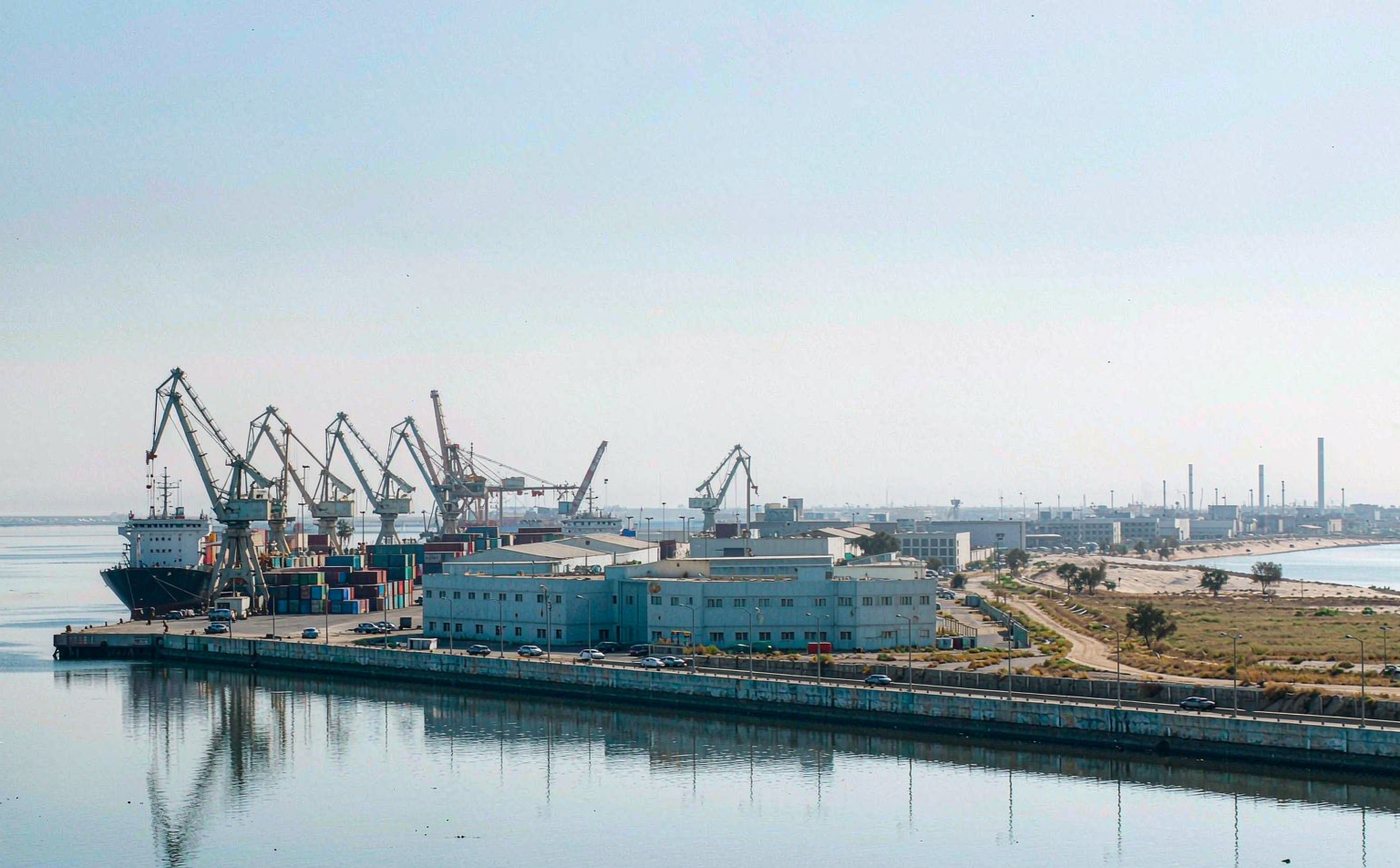
How to Ship from China to Kuwait: Shuwaikh, KUCAS & 5% Duty
Kuwait has the simplest tax story in the Gulf and the most demanding paperwork. Duty is 5% of the CIF value under the GCC common external tariff, excise applies to a short list of categories, and there is no VAT as of 2026. If you have imported into Saudi Arabia, where 15% VAT sits on top of the duty, the difference is stark.
So the difficulty is not the tax. It is that the documents which decide whether your container is released have to be produced in China, by the factory, before the vessel sails. The Kuwait Conformity Assurance Scheme — KUCAS — requires a technical evaluation report for the product and a technical inspection report for each shipment, issued through an inspection body approved by the Public Authority for Industry. A container that arrives without the shipment report is not given a grace period; it is inspected and tested locally, which can add weeks.
Three more details catch first-time importers. Commodity codes moved to twelve digits at the start of 2025, and eight-digit codes are rejected outright. Every individual unit must carry a permanent "Made in China" mark — stickers are frequently rejected, which makes it a production decision rather than a packing one. And only a licensed Kuwaiti customs broker may file the declaration; importers cannot self-file.
Finally, from February 2026 every container entering Kuwait passes through radiation monitoring gates, and one that triggers an alert is detained until the relevant authority authorises release in writing. It applies regardless of cargo type, and false alerts happen with some electronics and mineral-based goods.
This guide is written for buyers importing from China for the first time. It covers why paperwork is the bottleneck, Shuwaikh and Shuaiba and the Jebel Ali connection, transit times and routing, trade terms and who may file, KUCAS and how it is obtained, the separate health track, twelve-digit codes and origin marking, document legalisation, duty and excise, radiation screening and the calendar, and how to tell whether a forwarder genuinely works this lane.
How your cargo moves: China to Kuwait
Eight steps from your supplier's door to yours. The last four are the ones shaped by local rules.
- Pickup from your supplierWe collect the goods anywhere in China and bring them to our consolidation point.
- Export clearanceChina customs declaration filed and released before the goods move to the port.
- Loading and departureContainer loaded, sealed and handed to the carrier at the Chinese port.
- Main carriageOcean, air or rail movement booked on the route agreed for your cargo.
- Arrival at the gatewayDischarge at the port or airport of entry, recorded on the carrier's manifest.
- Import clearanceCustoms declaration filed locally, with duty and tax assessed on the declared value.
- Customs releaseGoods released into free circulation once duty and tax are settled.
- Final deliveryOnward movement to your delivery address, warehouse or nominated depot.
Duty rates, VAT rates and clearance times move, and the figure that applies to your goods is the one set for your commodity code on the day of clearance. We check the current position against your code before your goods sail and confirm it to you in writing — ask for that check when you request a quote.
The Gulf market where paperwork is the bottleneck
Compare the three Gulf markets covered on this site and the difference is instructive. In Saudi Arabia the gate is SABER, administered in the destination country. In the UAE it is ECAS and free-zone status. In Kuwait the gate is a set of documents that originate with the manufacturer, in China, weeks before the vessel sails.
- Technical reports — issued by an approved inspection body, arranged by the factory.
- Health certificates and free-sale evidence — from the country of origin, for consumables.
- Origin certificates — issued and legalised in China.
- Origin marking — applied at the production line, not at the packing bench.
The timing rule on this lane: treat conformity as a booking step, not a clearance step. Anything that has to be chased back to a factory in another time zone is a problem that accrues storage and demurrage daily while you wait — and in a Kuwaiti summer, heat adds its own risk for anything temperature-sensitive.
Shuwaikh, Shuaiba, and the Jebel Ali connection
| Gateway | Role | Notes |
|---|---|---|
| Shuwaikh Port | The main commercial port, in Kuwait City | Handles the majority of general commercial and consumer cargo, and is where most containerised imports land. |
| Shuaiba Port | Industrial and bulk, about 40 km south | The usual entry point for industrial goods, heavy machinery and bulk materials. |
| Kuwait International Airport | Air cargo | The air gateway for freight and express. |
| Kuwait Free Trade Zone | Duty-suspended operations | Suits re-export, distribution and logistics operations. |
The more consequential choice is not the port but the routing. Direct China to Kuwait services exist but sailings are limited and schedule flexibility is lower, so for most importers the practical route is a connection at Jebel Ali in the UAE. That adds days, but it buys frequency and reliability. Ask which one you are being quoted for, because the answer moves your arrival date more than any other single fact on this lane.
Ways into Kuwait, and what the routing does to the date
| Mode | Typical transit | When it fits |
|---|---|---|
| Sea freight FCL, direct service | The shorter end of the range, with fewer sailings to choose from | Volume above roughly 15 to 20 cubic metres where the sailing schedule lines up. |
| Sea freight FCL, via Jebel Ali | Longer, but with more frequent departures | The default for most B2B importers on this lane. |
| Sea freight LCL | Vessel time plus consolidation and deconsolidation at both ends | Trial orders and smaller volumes. |
| Air freight | A matter of days rather than weeks into Kuwait International | High value density, deadlines, spare parts. |
| Express courier | A few days door to door | Samples, documents and small parcels. |
We do not publish freight rates here, and on this lane the number matters less than the structure: base freight, origin charges in China, destination charges in Kuwait, duty, and inland delivery. Ask for those separately so you can see what moved when the price changes. See our local charges page.
Trade terms on a Kuwaiti shipment, and who files the declaration
The trade term sets who pays and where risk transfers. It does not change two hard rules: the importer of record must be a Kuwaiti national or a Kuwait-registered entity, and the declaration must be filed by a licensed Kuwaiti customs broker — self-filing is not permitted.
- EXW — you collect at the supplier's door and carry everything including Chinese export formalities. Rarely sensible for a first import.
- FOB — the supplier loads and clears Chinese export; you take over at the Chinese port. The term most experienced buyers use.
- CIF — the supplier pays freight and insurance to the Kuwaiti port, risk passes in China, and you still clear. Not delivered.
- DAP or DDU — delivered to a named point, duty for you.
- DDP — duty paid. Note that DDP does not solve KUCAS: for regulated categories the technical reports are still needed before shipment, whoever arranges the freight.
Port to port, airport to airport. Goodhope's ocean service runs port to port and our air service runs airport to airport. We handle the international leg and the export side in China; Kuwait import clearance, the KUCAS reports, ministry approvals and the duty payment belong to the importer of record and their broker. We coordinate with that broker directly and we say so.
From a Ningbo factory to a warehouse in Kuwait City
The product is classified in twelve digits
Kuwait implemented the integrated GCC tariff from the start of 2025, moving from eight-digit to twelve-digit codes and expanding the number of tariff lines substantially. Legacy codes are rejected outright, so confirm the classification before production — it drives duty, KUCAS applicability and permit routing.
KUCAS exposure is determined, and the factory starts the reports
Establish whether the product is in a regulated group. If it is, the factory engages an approved inspection body for the product-level evaluation report and, later, the shipment-level inspection report. This is the step that takes weeks.
Origin marking is specified on the production line
Every unit must carry a permanent country-of-origin mark. Specify it before the goods are made, because adhesive stickers are frequently rejected and relabelling at the port is slow.
Collection and consolidation in China
We collect from one factory or several and consolidate where the volumes justify it — several suppliers, one container, one declaration, one set of certificates. See our consolidated shipment page.
Export clearance, VGM and the sailing
Chinese export customs and the verified gross mass are completed and the vessel sails. Confirm at this point whether the service calls Kuwait directly or tranships through Jebel Ali.
Arrival, screening and the broker's filing
Every container passes the radiation monitoring gates. The broker files the declaration electronically with the invoice, packing list, bill of lading, legalised origin certificate and the KUCAS shipment report.
Duty, excise, release
Duty at 5% and any excise are assessed and paid, and the container is released for the short inland move to Kuwait City or the industrial areas.
What duty and excise add up to, and why VAT is absent
| Charge | Rate | Applies to |
|---|---|---|
| Customs duty | 5% of CIF | Most commercial goods under the GCC common external tariff, including electronics, furniture, auto parts, appliances and general consumer goods |
| Tobacco | Very high rate | Tobacco products |
| Excise | 100% on electronic smoking devices and energy drinks, 50% on carbonated sugary drinks | A short list of health-sensitive categories |
| VAT | None | No VAT in force as of 2026 |
The practical value of no VAT is that landed-cost maths is simple: goods, freight and insurance, then 5%, plus excise if your product is on the list, plus port and clearance charges. There is no second layer calculated on a base that includes the first.
But do not treat it as permanent. A GCC-wide VAT has been postponed repeatedly, with Kuwait among the slower implementers and no firm date announced. Confirm the current position with your broker before you commit to pricing for a year ahead.
KUCAS: one technical report per product, and one per shipment
KUCAS, the Kuwait Conformity Assurance Scheme, is administered by the Public Authority for Industry. It applies to defined groups of regulated products and it requires two documents.
Technical Evaluation Report (TER)
Covers the product against the applicable standard. Issued once, based on full testing where required, and valid for a couple of years — longer where a recognised certification scheme report can be used. With a valid TER in place, later shipments need only a documentary check rather than fresh testing.
Technical Inspection Report (TIR)
Issued for each shipment, confirming the consignment matches the certified product. It is the document linked to the customs entry, and certificates have been issued in digital form since late 2024.
Both are obtained through an inspection body approved by the authority — the recognised names in this space include the large international testing and inspection groups. The factory initiates the work; the importer cannot conjure it at the port.
Regulated groups include electrical and electronic products and household appliances, IT and communications equipment, automotive products such as tyres and batteries, chemical products including paints and lubricants, water conservation products and fittings, and building materials such as ceramic tiles, cement, steel bars and pipes. The list has been extended over time, so check the current scope for your twelve-digit code rather than assuming.
What happens without it: goods arriving without a valid shipment report face mandatory inspection and local laboratory testing, which can extend clearance by several weeks. The certificate that costs a modest amount to arrange at origin becomes a four-figure problem at destination, purely because it was treated as a clearance step instead of a booking step.
Two product-specific rules are worth knowing because they catch importers out. Major household appliances must run at 240V/50Hz without a transformer, and instruction manuals for durable goods must be translated into Arabic — both are adopted standards. A product built for another market can be compliant everywhere except Kuwait. And toys must carry the regional conformity seal, which is a packaging decision to plan rather than a sticker to apply at the quay.
The health track: food, cosmetics and medicines
KUCAS covers industrial goods. Consumables run through a separate door, and the documents originate with the manufacturer.
- Ministry of Health — pharmaceuticals, medical devices, food supplements, health products and cosmetics need registration before importation. New registrations can take months, and consignments of registered products must reference the registration number on the declaration.
- Origin health documentation — cosmetics and health products commonly need a health certificate from the country of origin, evidence that the manufacturer is licensed, proof of good manufacturing practice, and a certificate of free sale showing the product is sold freely in its home market.
- Food — the producer certifies composition requirements to the ministry, and dairy requires a declaration that it is free of harmful pathogens. Halal certification applies as it does across the Gulf.
- Used clothing — for resale, requires a disinfection certificate.
None of these can be produced by a broker in Kuwait once the container has landed. They start at the factory, before shipping.
Codes in twelve digits, and origin marks that cannot peel off
Two technical requirements deserve their own section because they are cheap to get right and expensive to get wrong.
Twelve-digit codes
Kuwait implemented the integrated GCC customs tariff from the start of 2025, moving from eight-digit to twelve-digit classification and expanding the tariff lines substantially. Legacy eight-digit codes are rejected outright. That means a code that cleared a shipment last year may not resolve now, and the classification drives duty rate, KUCAS applicability and which ministry permits apply. Audit your product list against the current structure before you order.
Permanent origin marking
Every individual product unit must carry a permanent "Made in China" marking — embossed, printed or engraved on the product or its primary packaging. Adhesive stickers are frequently rejected. This applies at the unit level, not just the outer carton. Specify it to the factory before production is finalised; the alternative is relabelling under time pressure or, at worst, re-export.
Arabic documentation is required for durable goods as well, and content restrictions apply to printed and media materials, so check anything with packaging copy or manuals before it goes to print.
The documents Kuwait Customs expects, and the legalisation behind them
- Commercial invoice — supplier and buyer details, itemised commodity codes, unit prices, total CIF value and country of origin. Vague invoices trigger queries.
- Packing list — itemised by carton, with gross and net weights and dimensions.
- Bill of lading or airway bill — original or telex release, with a consignee name matching the import licence holder.
- Certificate of origin — issued by the China Council for the Promotion of International Trade or the local chamber, and legalised as required. Many shipments clear with a legalised council certificate, but some high-value or sensitive categories need embassy authentication. Confirm which level applies before you ship rather than paying for legalisation you do not need, or discovering you needed it.
- KUCAS reports — the product-level and shipment-level technical reports, in digital form.
- Sector documents — ministry of health approvals, Halal certification, safety data sheets for chemicals, and CITRA type approval for radio equipment.
Wood packaging must meet ISPM-15 and carry the stamp. Our import clearance documents page lists what we ask for and why.
A Kuwaiti importer, a licensed broker, and what nobody may self-file
Three rules are not negotiable on this lane:
- The importer of record must be a Kuwaiti national or a Kuwait-registered entity. There is no route for a foreign company to import in its own name without a local structure.
- A licensed Kuwaiti customs broker files the declaration. Importers may not self-file. Declarations also typically require a certified letter of representation from the importer's local agent, with an additional end-user letter for government and project cargo.
- Records are retained for years under Kuwaiti commercial law, so the party that imports carries a long tail of responsibility.
For a foreign business testing the market, the usual routes are a local distributor that imports on its own registration, an importer of record arrangement, or a presence in the Kuwait Free Trade Zone if the plan is re-export or regional distribution. Ask who the registered party is before you agree a delivered duty paid term, because that party is the one customs holds.
Buying from one factory or five, and how that changes the booking
- One supplier, small order — LCL, air or courier. Unit costs improve at the second order, but a regulated product is regulated at any volume, so conformity work still applies. See our Alibaba and 1688 sourcing page.
- Several suppliers at once — consolidate in China into one container so you have one declaration and one certificate set. See our warehouse page.
- Samples — sent by courier and assessed like any import. Kuwait does not offer a general duty-free allowance for postal parcels, so warn the recipient rather than letting them discover it.
The China forwarder and the Kuwaiti broker
- The China-side forwarder collects from the factory or factories, consolidates, clears export and files the VGM, books the service, issues the bill of lading, prepares the documents the Kuwaiti declaration depends on, and tells you early when a technical report or an origin mark is going to be a problem.
- The Kuwaiti broker holds the licence, files the declaration electronically, handles the KUCAS linkage and ministry permits, deals with inspection and screening, pays the duty and arranges delivery.
The gap between them is where delays live: a bill of lading issued before the twelve-digit code was confirmed, an origin certificate without the legalisation, a mark applied as a sticker. Goodhope works the China end, hands documents over early, and coordinates directly with your broker.
What a forwarder should ask you before quoting Kuwait
A forwarder who works this lane will ask more questions than you expect, and that is a good sign.
- What is the twelve-digit code? Without it, duty rate and KUCAS applicability are unknown.
- Is the product KUCAS-regulated? If they have never heard of KUCAS, they have not cleared regulated goods into Kuwait.
- Do you have a technical evaluation report, or does one need to be arranged? That decides how much lead time you need.
- Is the origin mark permanent on every unit?
- Direct service or via Jebel Ali? It moves the arrival date more than anything else.
- Who is the Kuwaiti importer of record, and which broker is filing?
- What is the free time at the port, and who pays demurrage?
Red flags: a rate quoted before you have said what the goods are; "everything included" with no broker named; an eight-digit code offered without comment; a suggestion that conformity can be handled after arrival; and any pressure to declare a lower value.
Product groups that need a technical report before loading
| Group | What is in it |
|---|---|
| Electrical and electronic | Household appliances, lighting, power tools, air conditioning, network equipment. Appliances must run at 240V/50Hz without a transformer, and manuals in Arabic. |
| IT and communications | Computers, printers, telephony and consumer electronics. Radio equipment additionally needs type approval from the telecoms regulator. |
| Automotive | Tyres, batteries and accessories. |
| Chemical products | Paints, lubricants and cleaning products, with safety data sheets and a correct DG or non-DG classification. See our dangerous goods page. |
| Water conservation products and fittings | A group added more recently, covering water-saving fixtures. |
| Building materials | Ceramic tiles, cement, steel bars, pipes and electrical conduits. |
| Toys | Safety conformity plus the regional conformity seal on the packaging. |
| Food, cosmetics and medicines | Not KUCAS — the health track, with ministry registration and origin documentation. |
Prohibited and restricted categories are enforced strictly: alcohol is prohibited outright, pork products are restricted, and narcotics, gambling equipment and material deemed offensive are barred. Confirm anything near those lines before you ship.
Three shipments into Kuwait, and what decided each one
The examples below are illustrative. They describe typical routing decisions on this lane, not specific customer shipments.
Appliances that had to be built for Kuwait
A container of major household appliances. The deciding detail was not freight at all: the units had to be specified at 240V/50Hz without a transformer, with Arabic manuals and a permanent origin mark on every unit. Those were production decisions made before tooling, and the KUCAS reports were arranged in parallel. A shipment built to another market's specification would have been compliant everywhere except Kuwait.
An industrial machine through Shuaiba
Heavy machinery routed to Shuaiba rather than Shuwaikh, because that port is the usual entry for industrial and heavy cargo. The vessel transhipped through Jebel Ali, which added days but offered a sailing that fitted the project schedule — the alternative direct service existed but did not line up. Duty at 5% was straightforward; the work was in the documentation and in planning the discharge.
A small consumer order that waited
A first-time importer shipped a small consignment of consumer electronics without checking whether the products were regulated. The goods arrived without a shipment technical report, were held for inspection and local testing, and accrued storage for weeks. The reports themselves would have been inexpensive at origin. This is the most common failure mode on the lane, and it is entirely avoidable with one question asked at quotation stage.
Radiation gates, Ramadan and the summer
- Radiation monitoring. From February 2026 the customs authority requires continuous monitoring gates at the commercial ports, and every container and vehicle passes through them. An alert means detention pending written authorisation. False alerts can occur with certain electronics, medical imaging components and some mineral-based goods — carry material safety documentation and warn your forwarder in advance.
- Ramadan. Working hours shorten and processing slows across government and business. Build margin around it.
- Summer heat. Kuwait's summer is severe. Temperature-sensitive goods need planning, and a container detained for paperwork in high heat is a worse problem than the paperwork itself.
- Peak seasons. Chinese New Year stops production in China; Gulf demand rises before Eid and into the year end. Book earlier than feels necessary.
Check our holidays page when you are fixing a production date.
Our side of a China to Kuwait shipment
- We treat conformity as a booking step — we ask whether the product is KUCAS-regulated at quotation, not at clearance.
- Ocean freight port to port and air freight airport to airport — into Shuwaikh or Shuaiba by sea and Kuwait International by air, with the service and whether it tranships named rather than a generic estimate.
- We ask for the twelve-digit code before we quote — because legacy eight-digit codes are rejected and the classification drives everything downstream.
- Consolidation across suppliers — several factories, one container, one declaration, one certificate set. See our consolidated shipment and pick up pages.
- Documents prepared for the Kuwaiti entry — invoice, packing list and origin documents in the form your broker needs, with legalisation confirmed in advance rather than discovered.
- Regulated cargo handled properly — see our dangerous goods and quarantine inspection pages.
- Plain answers on what we do not do — Kuwait import clearance, the KUCAS reports, ministry approvals and the duty payment belong to the importer of record and their broker. We coordinate with them and we do not pretend otherwise.
- NVOCC licensed, since 2012 — see our why partner with Goodhope page.
Why importers use Goodhope on this lane
Six things that are different about working with us on China to Kuwait shipments.
Ask for a Kuwait quote with the conformity question answered
Send us the product and its twelve-digit code if you have it, the carton count and total weight or volume, the supplier's city, and the delivery address in Kuwait. We will name the service and whether it calls directly or tranships, and tell you whether a technical report is required before anything is loaded — so the 5% is the only tax you are surprised by, and nothing waits at Shuwaikh.
Frequently asked questions
What is KUCAS and do I need it before shipping to Kuwait?
KUCAS is the Kuwait Conformity Assurance Scheme run by the Public Authority for Industry. Regulated products need two documents: a Technical Evaluation Report covering the product against the applicable standard, valid for a couple of years, and a Technical Inspection Report issued for each shipment. Both are obtained through an inspection body approved by the authority. Arriving without a valid shipment report means mandatory inspection and local laboratory testing, which can extend clearance by several weeks. The work has to be started by the factory in China before the goods ship.
How much duty and tax will I pay importing into Kuwait?
Standard customs duty is 5% of the CIF value under the GCC common external tariff, with tobacco at a much higher rate. Excise applies to a short list: electronic smoking devices and energy drinks at 100%, and carbonated sugary drinks at 50%. There is no VAT in Kuwait as of 2026, so unlike the UAE or Saudi Arabia there is no second tax layer calculated on top of the duty. Introduction has been discussed at GCC level for years without a firm date, so confirm the position with your broker before committing to long-term pricing.
Which port does cargo from China arrive at in Kuwait?
Shuwaikh Port, in Kuwait City, handles the majority of general commercial and consumer cargo. Shuaiba Port, about forty kilometres to the south, is the usual entry point for industrial goods, heavy machinery and bulk materials. Air cargo arrives at Kuwait International Airport. Many ocean services reach Kuwait through a connection at Jebel Ali in the UAE rather than calling directly, because direct China to Kuwait sailings are fewer, so the routing matters more than the published schedule.
How long does shipping from China to Kuwait take?
Sea freight is commonly quoted in a range of roughly twenty to thirty days port to port, depending on whether the service calls Kuwait directly or tranships through Jebel Ali, with LCL adding time for consolidation and deconsolidation. Air freight into Kuwait International is a matter of days rather than weeks, and express courier is faster again door to door. Because routing varies so much on this lane, ask your forwarder for the actual service and connection rather than relying on a headline figure.
Can I file the customs declaration myself in Kuwait?
No. Commercial declarations must be filed electronically by a licensed Kuwaiti customs broker; self-filing by the importer is not permitted. The importer of record must be a Kuwaiti national or a Kuwait-registered entity, and declarations typically require a certified letter of representation from the importer's local agent. Customs records must be kept for years under Kuwaiti commercial law, so whoever imports carries a long tail of responsibility.
What changed about commodity codes in Kuwait?
Kuwait implemented the integrated GCC customs tariff from the start of 2025, moving from eight-digit to twelve-digit classification and expanding the number of tariff lines substantially. Legacy eight-digit codes are rejected outright, so a code that cleared a shipment last year may not resolve now. Confirm the twelve-digit code for each product before production, because it drives the duty rate, whether KUCAS applies and which ministry permits are needed.
Does every unit need a Made in China mark?
Yes, and it has to be permanent. Kuwait requires country of origin marking on the individual product unit, embossed, printed or engraved on the product or its primary packaging. Adhesive stickers are frequently rejected. That is a production decision, not a packing decision: specify it to the factory before the goods are made, because the alternative is relabelling or, in the worst case, re-export.
What documents does Kuwait Customs require?
A commercial invoice with itemised commodity codes, unit prices, total CIF value and country of origin, a packing list itemised by carton with weights and dimensions, the bill of lading or airway bill with a consignee matching the import licence holder, a certificate of origin issued by the China Council for the Promotion of International Trade and legalised as required, and sector documents such as the KUCAS reports, ministry of health approvals, Halal certification and safety data sheets. Confirm the legalisation level your broker needs before the goods ship.
Are there new screening requirements at Kuwaiti ports?
From February 2026 the General Administration of Customs requires continuous radiation monitoring gates at the commercial ports, and every container and vehicle passes through them. A shipment that triggers an alert is detained and cannot be released without written authorisation from the relevant authority. False alerts can occur with certain electronics, medical imaging components and some mineral-based goods, so importers in those categories should carry material safety documentation and warn their forwarder in advance.
What does a Chinese freight forwarder handle on a Kuwaiti shipment?
On the China side we collect from the factory or from several factories, consolidate where that makes sense, handle export customs clearance and the verified gross mass, book the service and issue the bill of lading or air waybill, and provide tracking. Goodhope works port to port on ocean freight and airport to airport on air freight, names the service and whether it calls Kuwait directly or through Jebel Ali, and coordinates with your Kuwaiti broker. Kuwait import clearance, the KUCAS reports, ministry approvals and the duty payment belong to the importer of record, with the conformity work started at the factory in China.