
Home / Shipping to Libya / How to Ship from China to Libya
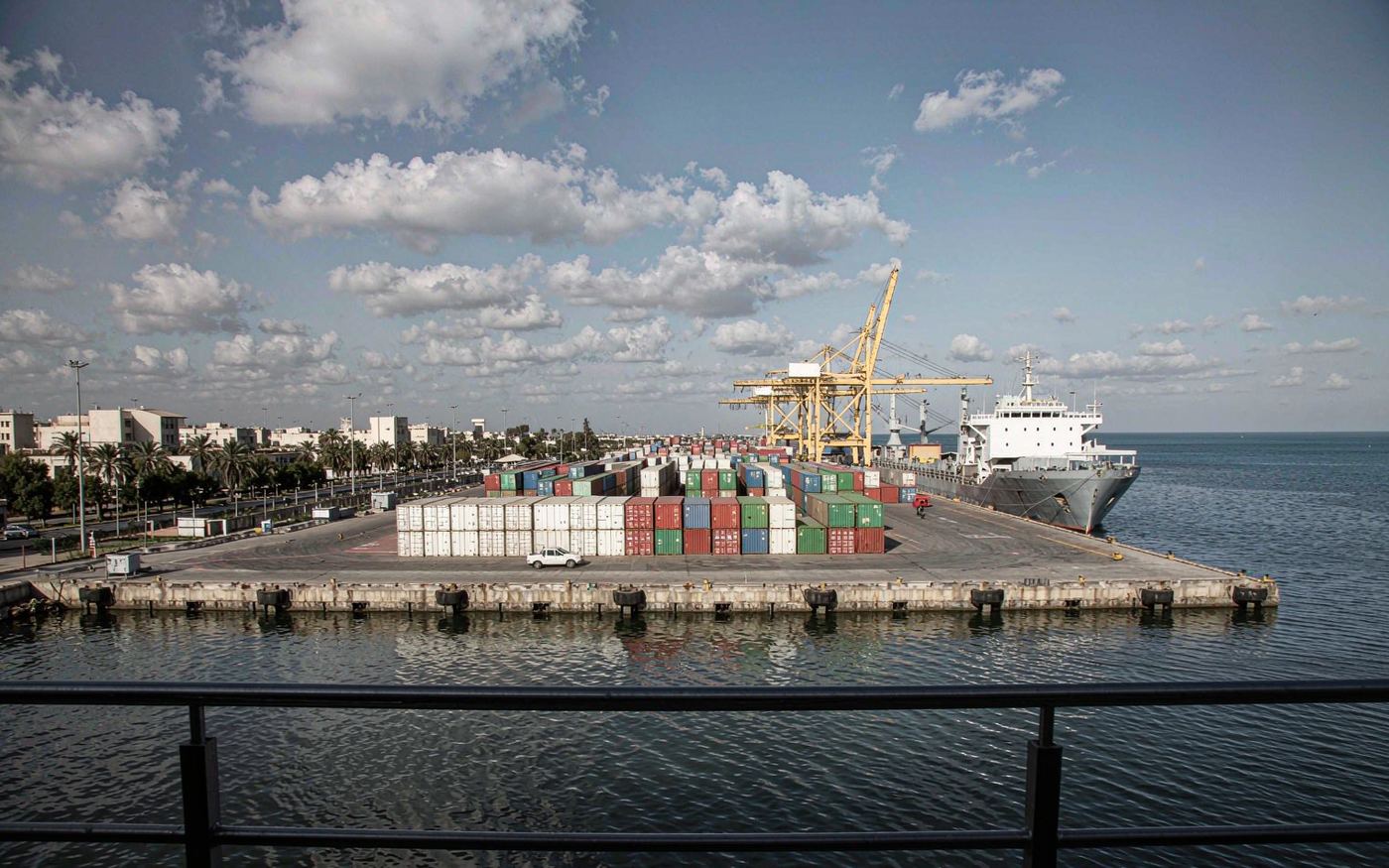
How to Ship from China to Libya
Libya is a Mediterranean market where the paperwork before loading matters more than the sailing itself. Since late 2024 every containerised shipment has needed an advance cargo declaration number registered before the vessel loads, commercial documents have to be in or translated into Arabic, and certificates of origin have to be legalised before the goods leave China.
One further point of planning: customs administration and procedure in Libya are handled through different regional authorities, and what is accepted at a western port is not automatically what is accepted at an eastern one. This guide describes the operational steps and takes no position on the country's internal arrangements. Confirm with your broker which port and which authority your file will be lodged with before you book.
At a glance
Western ports: Tripoli, Misurata and Al Khoms. Eastern ports: Benghazi and Tobruk. ACI (Advanced Cargo Information) number required for all containerised cargo except personal effects, registered before loading at the port of origin, commonly at least 48 hours ahead, and shown on the bill of lading. Payment: commercial imports must go through Central Bank of Libya approved banking channels, normally a letter of credit or formal bank transfer. Certificate of origin: issued by the chamber of commerce in China and legalised before shipment. Documents in Arabic, or translated into it. Duty assessed on a CIF basis by HS code, with valuation moving to a per-unit basis from 2024.
How your cargo moves: China to Libya
Eight steps from your supplier's door to yours. The last four are the ones shaped by local rules.
- Pickup from your supplierWe collect the goods anywhere in China and bring them to our consolidation point.
- Export clearanceChina customs declaration filed and released before the goods move to the port.
- Loading and departureContainer loaded, sealed and handed to the carrier at the Chinese port.
- Main carriageOcean, air or rail movement booked on the route agreed for your cargo.
- Arrival at the gatewayDischarge at the port or airport of entry, recorded on the carrier's manifest.
- Import clearanceCustoms declaration filed locally, with duty and tax assessed on the declared value.
- Customs releaseGoods released into free circulation once duty and tax are settled.
- Final deliveryOnward movement to your delivery address, warehouse or nominated depot.
Duty rates, VAT rates and clearance times move, and the figure that applies to your goods is the one set for your commodity code on the day of clearance. We check the current position against your code before your goods sail and confirm it to you in writing — ask for that check when you request a quote.
What a first shipment to Libya asks you to settle first
Three things have to be settled before you think about the sailing. The importer has to hold a valid import licence or registration covering the goods. The payment route has to be established, because commercial imports are paid through approved banking channels rather than informally. And the advance cargo declaration has to be registered, or the container will not load in the first place.
None of these are fast. Licence and registration questions are for the Libyan side to resolve; the banking route needs your buyer's bank; the declaration needs both exporter and importer to be registered with the system. Start all three when the order is placed.
What you get in return is a route that works: modern ports, a straightforward tariff and a customs administration that processes the same documents every day.
Western ports or eastern ports: choosing the entry point
Libya's ports divide geographically. Tripoli, Misurata and Al Khoms serve the west; Benghazi and Tobruk serve the east. Trucking a container from one region to the other is inefficient and exposed to checkpoints and road conditions, so the rule is simple: choose the port closest to the final delivery address.
That has a second consequence. Customs procedures, document acceptance and enforcement differ between the two regions, and a shipment that clears routinely in the west may be handled differently in the east. Confirm the port of entry and the authority that will process it before freight is booked, not after.
Sea transit from China is commonly quoted at several weeks port to port, with transshipment through a Mediterranean hub. Air freight to the main airports takes days, and missing a feeder connection at the hub is the usual source of a week's delay.
ACI: the advance cargo number you register before loading
The Advanced Cargo Information system is Libya's pre-registration regime for containerised imports. Full enforcement began on 1 November 2024. All containerised cargo, excluding personal effects, must have a valid ACI number before the vessel loads at the port of origin, and the number has to appear on the bill of lading.
Both the exporter and the importer register with the ACI platform to generate and validate the number. Misdeclaring the shipment details when the number is created is the importer's full liability, which is worth stating plainly to your buyer before they fill it in.
Major carriers enforce a strict no-ACI-number, no-load rule. A container at the Chinese port without a number does not sail, and the roll and storage cost lands with you. Register early.
ACI replaced the earlier ECTN system, which was paused after 2021, though some agents and older guidance still refer to ECTN. Confirm which your line and your broker actually require before booking.
Getting the number two days ahead of loading at the first port
The commonly quoted deadline is at least 48 hours before cargo loading at the first load port. In practice that means the number has to be in hand while the goods are still being consolidated, not when they are already at the terminal.
Registration is straightforward once both parties are set up on the platform, but the set-up is the slow part. Do it once, at the start of the relationship, rather than per shipment.
Coverage was initially applied at Misurata, Al Khoms and Tripoli, and coverage at eastern ports should be confirmed per shipment. If your port is not on the list, ask your broker what applies there instead.
Paying through the banking system, and matching the documents to it
Commercial imports into Libya are paid through Central Bank approved banking channels, normally a letter of credit issued by a recognised Libyan bank or a formal bank transfer. Informal or cash payment is not available for commercial imports.
That has a hard documentary consequence. The details on the commercial invoice and the bill of lading have to match the letter of credit exactly — consignee name, description, values, everything. A discrepancy gives the bank grounds to refuse to release funds, and it gives customs grounds to hold the cargo.
Your Chinese supplier and your forwarder need to be working from the same draft documents, checked against the credit, before anything is issued. Approval can be slow, so build the lead time into your plan rather than discovering it at the end.
Certificates of origin legalised before the goods leave China
Libya requires a valid, correctly legalised certificate of origin on all imports. It is issued by the chamber of commerce in China and then legalised at the Libyan embassy or consulate before the shipment departs. This is a pre-dispatch requirement, not something that can be sorted out at the port of arrival.
Because it sits in the critical path before departure, it is worth starting as soon as the commercial documents are final. A shipment that sails without a legalised certificate has a problem that cannot be fixed locally.
The same principle applies to the rest of the document set: commercial invoice, packing list and certificate of origin, all consistent with each other and with the letter of credit, plus any inspection certificate the goods require.
How Libya values duty now: by unit rather than by value
Libya uses the Harmonised System for classification and assesses customs charges on a CIF basis. Published planning figures vary by category, with building materials and machinery commonly quoted at around 5 to 10 per cent, electronics and electrical goods at 10 to 20 per cent, automotive parts at 10 to 15 per cent, and textiles and furniture at 15 to 20 per cent. Food ranges widely and medical goods are often at or near zero. Treat these as planning benchmarks and confirm the current line for your HS code.
One change matters for costing. From 2024 the customs authority moved duty valuation from a per-container or estimated basis to a per-unit basis, which raises the duty on shipments made up of many individual units. If your goods are sold by the piece, factor that in before you commit to a landed price.
There is no general import licence requirement for most goods, but regulated categories still need approvals — medical devices and medicines, for example, need approval before the banking side will process payment for them.
Arabic translations and the documents customs will read
All commercial invoices and documents used inside Libya have to be written in Arabic or translated into it. That is a hard requirement, and a missing Arabic translation is a listed cause of shipments being held.
It is worth treating the translation as part of document preparation rather than an afterthought, because the description in Arabic is what the officer classifying the goods will read. Have someone who understands both the goods and the terminology do it.
The other document-level failure modes are familiar: an HS code that does not match the goods, a vague invoice description, or a per-unit count that disagrees with the packing list. All three are avoidable with a single careful pass before the documents are issued.
Personal effects and commercial entries into Libya
Commercial imports are made by a Libyan importer holding valid registration covering the goods, with payment through approved banking channels. The consignee named on the bill of lading has to match the details on their import documentation exactly.
Private individuals can import personal effects, which are excluded from the advance cargo declaration requirement. Anything commercial in nature should go through the commercial route, because the payment and licensing requirements do not have a personal equivalent.
Regulated goods need sector approval first. Medical devices and medicines need approval before the banking side will process the payment; food products need health inspection; electrical goods may need conformity assessment.
Three shipments into Tripoli, Misurata and Benghazi
Building materials, full container, for a Tripoli contractor. Tiles, cement and steel, discharged at Tripoli and delivered in the west. ACI registered before loading, certificate of origin legalised in China, invoice in Arabic, payment through an approved bank channel.
Machinery for an eastern buyer. Routed directly to Benghazi rather than trucked from Tripoli. The port of entry and the authority that processes the file have to be confirmed before booking, because procedure differs between regions.
Medical equipment, air freight. Sector approval obtained first, because without it neither the payment nor the clearance will proceed. Air removes weeks of transit but not a single day of the approval process.
Where clearance stops, and the mismatches behind it
- No ACI number, or one created with wrong details. The container does not load, or the file is liable from the start.
- Documents that do not match the letter of credit. Grounds for the bank to refuse release and for customs to hold the cargo.
- Missing or unlegalised certificate of origin. A pre-dispatch requirement that cannot be fixed at destination.
- No Arabic translation. A listed cause of held shipments.
- HS code mismatch or a vague description. Re-classification and, with per-unit valuation, a higher assessment.
- Sector approval missing. Particularly medical devices and medicines, which blocks both clearance and payment.
A realistic plan from order to delivery in Libya
Sequence matters more than speed here. Confirm the importer's registration and the sector approvals first. Establish the banking route and agree the letter of credit terms second, and check every commercial document against them. Register the ACI number once the shipment is defined, at least 48 hours before loading. Legalise the certificate of origin and prepare the Arabic documents before departure.
Then allow the sea transit with transshipment, or days for air, plus clearance at the chosen port. Published planning figures put port-to-port sea transit at several weeks and air at under a week, with door-to-door adding pickup, export clearance and inland delivery.
Do the pre-loading steps in that order and the rest of the route behaves predictably. Skip one and nothing downstream moves.
Why importers use Goodhope on this lane
Six things that are different about working with us on China to Libya shipments.
Tripoli or Benghazi: answer that before you quote Libya
Tell us the goods and which region they are delivering to. We will confirm the port, register the ACI number before loading, and check your documents against the payment terms before anything is issued.
Get a quote Talk to usRelated pages
Frequently asked questions
What is the ACI number and when is it needed?
The Advanced Cargo Information number is Libya's pre-registration requirement for containerised imports, fully enforced since 1 November 2024. All containerised cargo except personal effects needs a valid ACI number before the vessel loads at the port of origin, commonly at least 48 hours ahead, and it must appear on the bill of lading.
What replaced the ECTN for Libya?
ACI replaced the earlier ECTN system, which was paused after 2021. Some agents and older guidance still refer to ECTN, so confirm which your shipping line and broker require before booking.
Which ports should I use?
Tripoli, Misurata and Al Khoms serve western Libya; Benghazi and Tobruk serve the east. Choose the port closest to the final delivery address, because trucking between regions is inefficient, and confirm which authority will process your file.
How do I pay for goods imported into Libya?
Commercial imports must go through Central Bank approved banking channels, normally a letter of credit issued by a recognised Libyan bank or a formal bank transfer. The commercial invoice and bill of lading have to match the credit exactly.
Does the certificate of origin need legalisation?
Yes. It is issued by the chamber of commerce in China and must be legalised at the Libyan embassy or consulate before the shipment departs. This is a pre-dispatch requirement and cannot be fixed at the port of arrival.
Do documents need to be in Arabic?
Yes. Commercial invoices and documents used inside Libya must be written in Arabic or translated into it. A missing Arabic translation is a listed cause of shipments being held.
How is duty calculated?
On a CIF basis by HS code. Planning figures vary by category, with building materials and machinery around 5 to 10 per cent and electronics around 10 to 20 per cent. From 2024 valuation moved to a per-unit basis, which raises duty on shipments made up of many individual units. Confirm your specific line.
Do I need an import licence?
There is no general import licence requirement for most goods, but the importer needs valid registration covering the goods, and regulated categories need sector approval. Medical devices and medicines need approval before the banking side will process payment.
Can I import personal effects?
Yes. Personal effects are excluded from the ACI requirement, but anything commercial in nature should go through the commercial route, since the payment and registration requirements have no personal equivalent.
How long does shipping take?
Published planning figures put port-to-port sea transit at several weeks with transshipment through a Mediterranean hub, and air freight at under a week airport to airport, with door-to-door adding pickup, export clearance and inland delivery.