
Home / Shipping to Lithuania / How to Ship from China to Lithuania
How to Ship from China to Lithuania
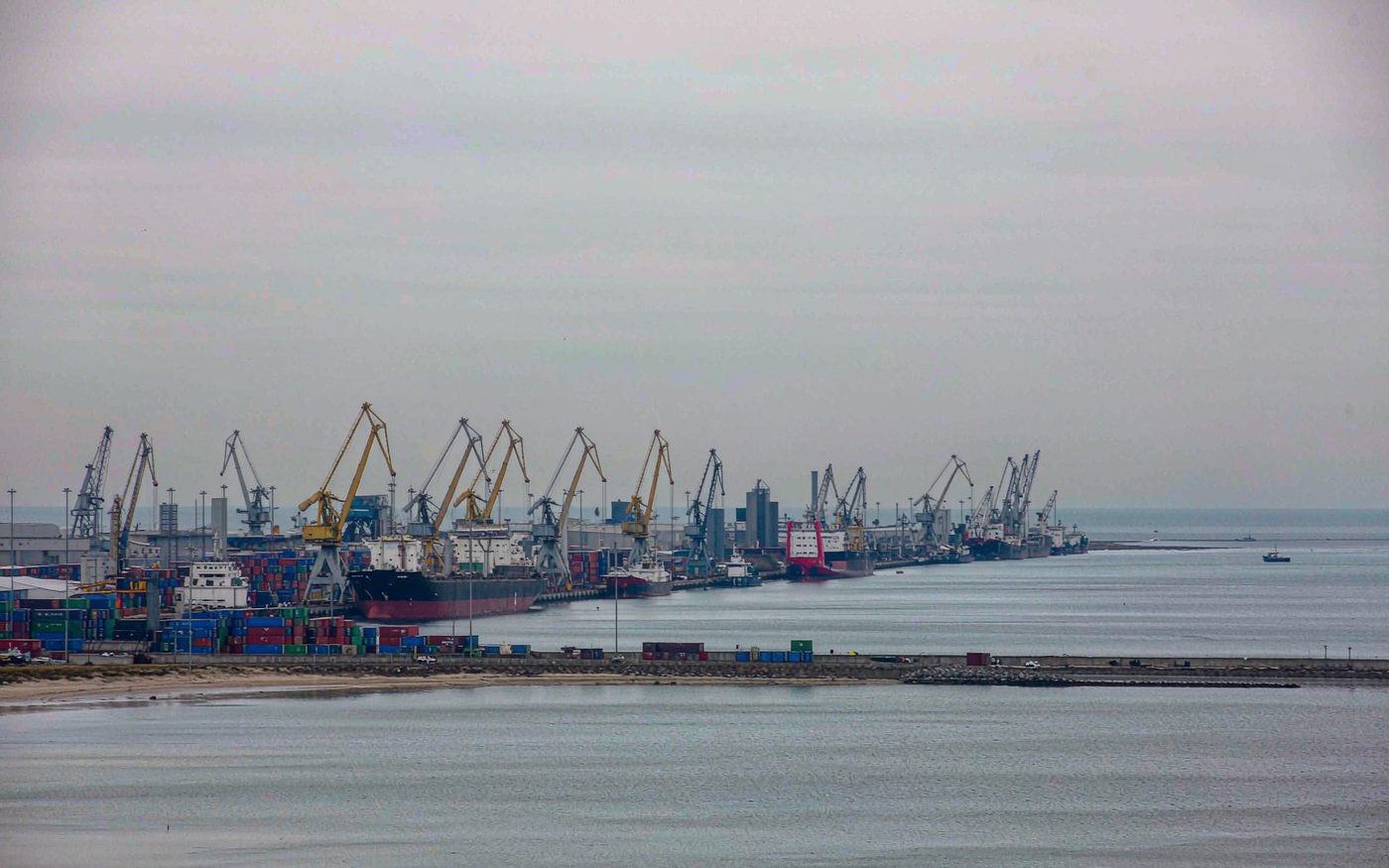
Lithuania has one seaport, and it is a good one. Klaipeda is ice-free, sits at the head of a rail corridor that reaches deep into the country, and handles the overwhelming majority of everything Lithuania imports by sea. For a first-time importer the route is simpler than in most European markets because there is really only one place the container lands.
The customs framework is the EU framework: EORI, an entry summary declaration before arrival, an electronic import declaration, the common customs tariff. Two things are distinctive. Lithuania applies VAT from the first euro with no low-value relief at all, and it operates free economic zones that are worth understanding if you plan to hold or re-distribute stock.
Like its Baltic neighbours, Lithuania is an EU external border adjoining Belarus and the Russian exclave of Kaliningrad. Screening of dual-use and sanctioned goods is strict. Ordinary Chinese goods are unaffected, but paperwork is read carefully.
At a glance
Main seaport: Klaipeda, Lithuania's only commercial seaport and ice-free. Airports: Vilnius (VNO) and Kaunas (KUN), with Kaunas the busier cargo airport. Customs authority: the Customs Department, with declarations filed in the national IT system. Standard VAT: 21 per cent; reduced rates apply. Duty: the EU common customs tariff. No low-value relief - VAT applies from the first euro.
How your cargo moves: China to Lithuania
Eight steps from your supplier's door to yours. The last four are the ones shaped by local rules.
- Pickup from your supplierWe collect the goods anywhere in China and bring them to our consolidation point.
- Export clearanceChina customs declaration filed and released before the goods move to the port.
- Loading and departureContainer loaded, sealed and handed to the carrier at the Chinese port.
- Main carriageOcean, air or rail movement booked on the route agreed for your cargo.
- Arrival at the gatewayDischarge at the port or airport of entry, recorded on the carrier's manifest.
- Import clearanceCustoms declaration filed locally, with duty and tax assessed on the declared value.
- Customs releaseGoods released into free circulation once duty and tax are settled.
- Final deliveryOnward movement to your delivery address, warehouse or nominated depot.
Duty rates, VAT rates and clearance times move, and the figure that applies to your goods is the one set for your commodity code on the day of clearance. We check the current position against your code before your goods sail and confirm it to you in writing — ask for that check when you request a quote.
Klaipeda and the air options behind it
Klaipeda is where your container will be discharged. It is the country's only commercial seaport, it works year round, and it has the container handling, rail and warehousing capacity that an importer needs. There is no meaningful alternative inside Lithuania, which removes one whole category of decision from your first shipment.
Services from China typically run mainline to a North European or Polish hub and then feeder into Klaipeda, or discharge at Gdansk or Rotterdam and continue overland. Which is faster depends on the sailing schedule at the time, so ask for both options when you request pricing rather than assuming one pattern.
For air, Lithuania is better served than its size suggests. Vilnius (VNO) handles passenger-belly freight; Kaunas (KUN) is a dedicated cargo airport with round-the-clock operation and is where most consolidated air freight actually moves. Kaunas is also a free economic zone, which is a useful combination if you are flying in goods you intend to hold or re-distribute.
Making the declaration through the Lithuanian customs system
An EORI number is required before any declaration is accepted. It is issued once and works across the EU, and applying while the goods are still in production is the sensible timing.
The entry summary declaration is filed before the goods reach the customs territory of the Union. The carrier or forwarder usually lodges it, but the data behind it — consignee, HS codes, container and seal numbers — is yours. Errors here are slow and sometimes expensive to unwind once the vessel has sailed.
The import declaration is lodged electronically through the national customs IT system. The declarant must be established in the EU, so a buyer outside Europe needs either its own EU entity or a broker acting as representative. Where a broker acts as indirect representative it takes on joint liability for the duty; where it acts as direct representative it does not, and the importer carries the exposure alone.
Transit and warehouse regimes available in Lithuania
A T1 transit document is what carries non-Union goods from a discharge port elsewhere in the EU to Lithuania for clearance there. If your box lands at Rotterdam or Gdansk, insist on T1 to Klaipeda-bound clearance if your business is Lithuanian — it keeps the declaration, the duty payment and the VAT recovery all in one jurisdiction.
Customs warehousing lets you defer duty and VAT until goods are released for free circulation. Lithuania also runs free economic zones, at Kaunas, Klaipeda and elsewhere, which combine customs facilities with tax incentives for companies operating inside them. Whether that is relevant to you depends on scale: for a single container it is usually not, for a business intending to hold and re-distribute stock across the region it can be decisive.
Inward processing is available for goods that will be worked and re-exported, and there is a re-export route for goods that were never intended for the Lithuanian market at all.
Lithuanian tariff rates and where they bite
Duty is set by the EU common customs tariff through the ten-digit TARIC code. There is no China–EU free trade agreement, so you receive the standard rates. Many industrial goods sit at low single digits or zero; apparel is materially higher, commonly around twelve per cent for clothing; footwear runs higher still, with bands varying by type.
The customs value includes freight and insurance to the EU frontier, so work from the CIF figure rather than the ex-works price when estimating landed cost.
Check two things before committing. Anti-dumping and countervailing measures on particular Chinese lines — steel, aluminium, ceramics, bicycles and e-bikes among them — sit on top of the ordinary rate. And the classification itself is worth independent verification; a supplier's HS code is often chosen for its convenience rather than its accuracy.
VAT on goods arriving in Lithuania
The standard rate is 21 per cent, with reduced rates for a defined list of goods. Import VAT is calculated on the customs value plus duty plus transport to the first destination in the EU, and it is payable at import.
The point that catches people out is that Lithuania applies VAT from the first euro. There is no low-value threshold for VAT on ordinary commercial imports, so a small parcel attracts VAT just as a container does. Duty relief currently exists below EUR 150, but that relief does not extend to VAT, and the EU has agreed to remove it.
Recovery follows the usual rule: if the importing entity is Lithuanian-VAT-registered and the goods are used for taxable supplies, the import VAT is deductible. If you import through another party's registration, plan on not recovering it.
Approvals for regulated product lines
Goods inside an EU directive or regulation need CE marking backed by a declaration of conformity and a technical file. Where the manufacturer is outside the EU, an authorised representative inside the Union is required for most categories, and their contact details belong on the product or packaging.
Consumer products need a responsible person established in the Union under the general product safety regime, with instructions and safety information in a language the end user understands — Lithuanian, for this market.
Producer responsibility for packaging, electrical and electronic equipment and batteries attaches to the importer and carries registration and reporting obligations from the first consignment. These are recurring, not one-off.
Food, feed, animal-origin products and plants are controlled by the State Food and Veterinary Service and need prior notification and health certification. And because Lithuania borders Belarus and Kaliningrad, dual-use and sanctioned goods are screened strictly; resolve any doubt about a product's classification before it is booked, not at the border.
What must appear on the label and the box
Lithuanian is the state language and consumer information — instructions, warnings, warranty terms — should be provided in it. Multilingual packaging is fine so long as Lithuanian is included; English-only documentation is the most common first-shipment failure.
Overlay the category-specific rules: fibre composition for textiles, material composition for footwear, energy labelling for appliances, origin and allergen declarations for food.
Wooden packaging must meet ISPM-15 and carry the treatment stamp. This is enforced and untreated wood puts the whole consignment at risk. Specify it to the factory at packing time.
Papers to assemble before loading begins
Commercial invoice with seller and buyer, description, HS codes, unit and total prices, currency, Incoterm and origin. Packing list matching it. Bill of lading or air waybill. Certificate of origin. Insurance certificate. Conformity documentation where required. Power of attorney to the broker. EORI number.
Declare the real transaction value. Customs sees freight and insurance data independently and an implausible invoice value leads to a valuation review and a guarantee request, which costs more in delay than the duty it was meant to avoid. And remember that a certificate of origin establishes origin without unlocking a preference — China no longer benefits from EU generalised preference.
How a clearance is examined and released
The sequence runs from the entry summary declaration through arrival and discharge, the import declaration, risk assessment, then either release or a request for documents or an examination, then assessment, payment and release.
Clearance for a clean consignment is commonly one to three working days. Risk assessment decides what gets examined, and a first-time importer or an unfamiliar HS code raises the probability. An examination means the container is opened, which adds both cost and days.
Where a clearance stalls it is almost always classification, valuation or a missing certificate. All three are preventable before sailing.
Inland legs from the port to Vilnius and Kaunas
Klaipeda to Vilnius is roughly 310 km; to Kaunas about 210 km; to Siauliai around 160 km. These are comfortable half-day or shorter truck moves, and road is the default for containerised imports.
Rail connects Klaipeda to the interior, and Lithuania has both the legacy 1,520 mm broad gauge and a growing standard-gauge Rail Baltica link. Intermodal is workable for regular volume, though most first-time importers will use road simply because it is simpler to arrange.
Klaipeda is ice-free, which removes the worst of the winter risk, but December to March still brings slower schedules and weather-related delays. Confirm free time, demurrage and detention before you book, because a container held by a missing permit can cost more than the ocean leg.
Charges that add up beyond the freight bill
Import VAT is the largest single addition and the one most often forgotten. Decide who imports before the goods move, because the answer determines whether it is recoverable.
Then terminal handling, security and documentation charges at destination. Demurrage and detention if the container waits. Storage if you use a customs warehouse or a free economic zone.
On compliance: producer responsibility registration and annual fees, translation into Lithuanian, conformity testing where required. And anti-dumping duty on the specific lines where it applies, which can be large enough to decide whether the import makes sense.
Why importers use Goodhope on this lane
Six things that are different about working with us on China to Lithuania shipments.
Real moves shipping into Lithuania
Five shipments bought in China and delivered into Lithuania, told end to end — where the order came from, how it moved, where it nearly went wrong, and how it finished. Client names are withheld at their request; the situations and the handling are what we deal with on this lane.
No threshold · first order · Shenzhen to Lithuania
The purchase. A buyer new to importing sent low-value parcels assuming there was a relief below a certain figure.
The move. Consolidated sea freight with VAT assessed from the first euro and no relief assumed.
Where it nearly went wrong. There is no low-value relief here. VAT applies from the first euro, which is unusual enough in Europe that importers arriving from other lanes assume it cannot be right.
How it finished. He now prices accordingly. None of his Lithuanian customers has had an unexpected bill.
Which airport · booking too · Guangzhou to Lithuania
The purchase. A first-time buyer booked air freight into the capital because it was the airport he had heard of.
The move. Air freight into Kaunas, with onward trucking to Vilnius arranged with the booking.
Where it nearly went wrong. Kaunas is the busier cargo airport, while the capital takes more passengers. Booking into the wrong one adds a road leg nobody priced and sometimes a wait nobody scheduled.
How it finished. He books Kaunas now and trucks onward. Two days saved on the repeated lanes.
Warehouse regime · cash flow · Ningbo to Klaipeda
The purchase. A buyer budgeted duty and VAT as cash payments at the port on every container.
The move. Full container moved under a transit or warehouse regime, assessed as it was withdrawn.
Where it nearly went wrong. Transit and warehouse regimes are available here and they defer the assessment rather than waiving it. For an importer with stock that sells over months, the difference is working capital rather than paperwork.
How it finished. He uses a warehouse regime for repeat lines now. The cash went back into the business.
Inland leg · Klaipeda to Vilnius · Yiwu to Lithuania
The purchase. A buyer quoted one delivery price for anywhere inland, having looked only at the port.
The move. Full container with the inland leg priced by destination.
Where it nearly went wrong. The port is on the coast and the main destinations are not. Pricing the inland run as if it were included is how a quote gets accepted and then loses money.
How it finished. He prices the inland leg separately. No Lithuanian delivery has gone out at a loss since.
Charges beyond freight · quoting · Shanghai to Lithuania
The purchase. A buyer compared two forwarders on freight alone and took the cheaper one.
The move. Consolidated sea freight with every charge on the file named at quotation.
Where it nearly went wrong. Several routine charges sit beyond the freight bill on this lane. Comparing the ocean rate while ignoring them compares a number nobody pays.
How it finished. We itemise them on every quote. He compares totals now.
Why importers use Goodhope on this lane
Six things that are different about working with us on China to Lithuania shipments.
Preparing your first shipment into Lithuania
Send us your HS codes, weights and dimensions and we will tell you which service pattern suits the cargo, what duty and VAT to expect at Klaipeda, and which certificates you still need.
Get a quote Talk to usRelated pages
Frequently asked questions
Which port does cargo from China arrive at in Lithuania?
Klaipeda. It is Lithuania's only commercial seaport, it is ice-free and it handles almost all of the country's container volume. There is realistically no alternative inside the country.
Is Klaipeda affected by winter ice?
No. Klaipeda is ice-free and works year round. Winter can still slow feeder schedules and inland moves between December and March, so allow slack in planning.
Do I need an EORI number?
Yes, before any declaration can be lodged. It is issued once and is valid across the EU. Apply while the goods are still in production.
Is there a low-value threshold before VAT applies?
No. VAT applies from the first euro on ordinary commercial imports. Duty relief currently exists below EUR 150 but does not extend to VAT, and the EU has agreed to remove that relief.
How much duty will I pay?
It depends on the ten-digit TARIC classification rather than on value alone. Apparel and footwear sit materially higher than most industrial goods. Have the code checked before you quote a landed cost, and check it against current anti-dumping measures.
What is the VAT rate in Lithuania?
The standard rate is 21 per cent, with reduced rates for a defined list of goods. It is charged on the customs value plus duty plus transport to the first EU destination.
Can I recover import VAT?
Yes if the importing entity is Lithuanian-VAT-registered and the goods are used for taxable supplies. If you import through someone else's registration, assume it is not recoverable.
Is Kaunas useful for air freight?
Yes. Kaunas (KUN) is a dedicated cargo airport with round-the-clock operation and handles most consolidated air freight. Vilnius (VNO) carries belly freight on passenger services.
How long does customs clearance take?
Commonly one to three working days for a clean, correctly documented consignment. First-time importers and unfamiliar HS codes are more likely to be selected for examination.
Does Lithuania's border position affect ordinary imports?
For ordinary Chinese consumer or industrial goods, no. But dual-use and sanctioned items are screened strictly because Lithuania borders Belarus and Kaliningrad, and documentation is read closely. Resolve any classification doubt before booking.