
Home / Shipping to Madagascar / How to Ship from China to Madagascar
How to Ship from China to Madagascar
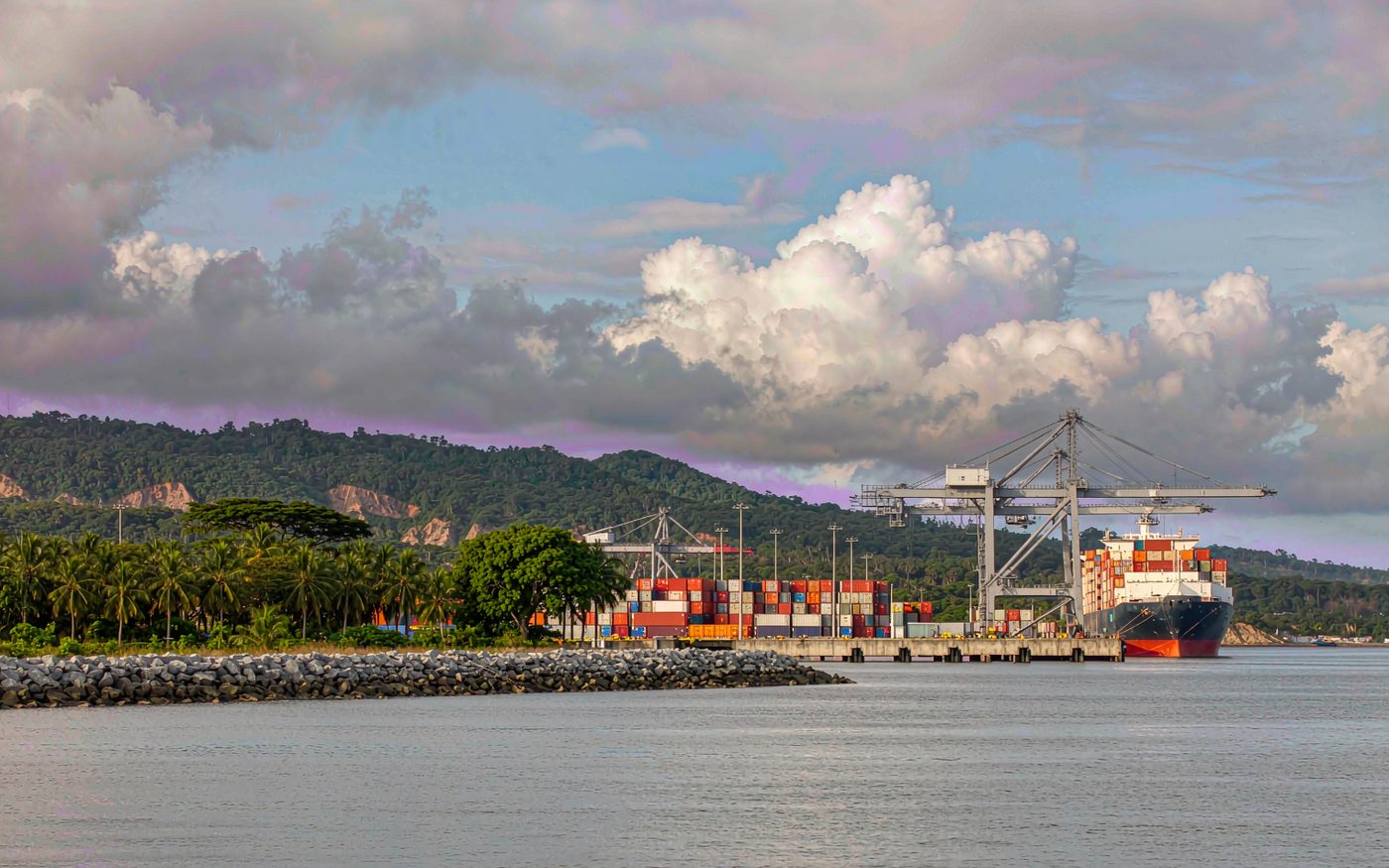
Madagascar is a large island with several commercial ports, but in practice almost everything arrives through one of them. Toamasina, on the east coast, handles the great majority of the country's seaborne trade and nearly all of its containerised imports; the rest is shared among Ehoala, Mahajanga and Toliara.
Two things shape a first shipment here. The BSC cargo tracking note has to be filed before the goods leave origin, and the cyclone season — roughly November to April — affects berthing at Toamasina and the condition of the road inland. Plan around both and the route is straightforward.
At a glance
Main port: Toamasina (Tamatave), handling roughly 90 per cent of seaborne trade; also Ehoala (minerals and project cargo), Mahajanga and Toliara. Air gateway: Ivato International Airport (TNR), Antananarivo. Certificate required: BSC (Bordereau de Suivi de Cargaison), filed before goods depart origin. System: ASYCUDA World via GasyNet, with green, yellow and red risk channels. Duty: roughly 0 to 20 per cent of CIF value by HS code. VAT: 20 per cent on the duty-inclusive value. Excise on alcohol, tobacco, vehicles and luxury goods. Cyclone season: November to April.
How your cargo moves: China to Madagascar
Eight steps from your supplier's door to yours. The last four are the ones shaped by local rules.
- Pickup from your supplierWe collect the goods anywhere in China and bring them to our consolidation point.
- Export clearanceChina customs declaration filed and released before the goods move to the port.
- Loading and departureContainer loaded, sealed and handed to the carrier at the Chinese port.
- Main carriageOcean, air or rail movement booked on the route agreed for your cargo.
- Arrival at the gatewayDischarge at the port or airport of entry, recorded on the carrier's manifest.
- Import clearanceCustoms declaration filed locally, with duty and tax assessed on the declared value.
- Customs releaseGoods released into free circulation once duty and tax are settled.
- Final deliveryOnward movement to your delivery address, warehouse or nominated depot.
Duty rates, VAT rates and clearance times move, and the figure that applies to your goods is the one set for your commodity code on the day of clearance. We check the current position against your code before your goods sail and confirm it to you in writing — ask for that check when you request a quote.
An island where almost everything arrives at one port
Madagascar lists a good number of seaports, but only a handful have container facilities that matter commercially, and one of them dominates. Toamasina handles roughly nine tenths of the country's seaborne trade and almost all containerised imports, and it is where your goods will almost certainly be discharged.
That concentration has an upside: the port has a modern container terminal and the customs establishment that handles nearly every declaration. It also has a downside, which is that congestion and weather at Toamasina affect the whole country's supply chain at once.
From Toamasina, goods move inland to Antananarivo and the rest of the island by road, chiefly on the RN2 corridor. That road is the single artery, and it is worth knowing about before you promise a delivery date.
Toamasina, and the handful of ports that share the rest
Toamasina is the default for containers and for most general cargo. Its container terminal is operated by an international terminal group and handles the bulk of the country's box traffic.
Ehoala in the south serves minerals and project cargo, and Mahajanga and Toliara handle regional flows. They are worth using if your cargo is genuinely destined near them — a mining project in the south, for example — but service frequency is lower and you should confirm the call before planning around it.
Air freight into Ivato International Airport near Antananarivo is the fast option, typically quoted at under a fortnight, and it bypasses Toamasina and the RN2 entirely. Express courier handles parcels and documents door to door.
Why the tracking note must predate loading
Madagascar requires a Bordereau de Suivi de Cargaison, usually shortened to BSC, on imports. It is a pre-shipment document: it has to be filed before the goods depart origin, not on arrival, and it is issued by an authorised verification body, normally arranged by your forwarder.
Practically, that means adding it to the same checklist as export clearance in China. It is one more thing that has to be done while the goods are still on your side of the water, and it is the one most often missed by first-time importers here.
Without a BSC the cargo is held at Toamasina with storage charges accruing daily. It is the most common single reason a Madagascar shipment stalls, and it is entirely avoidable.
ASYCUDA World, GasyNet and the three risk channels
Declarations are filed electronically through ASYCUDA World via the GasyNet portal on behalf of the customs directorate. On filing, the system assigns a risk channel: green means release on the strength of the documents, yellow means a documentary check, and red means a physical inspection.
Which channel you get is partly luck and partly discipline. Most yellow-channel inspections trace back to a mismatch between the invoice, the packing list and the bill of lading, and that is entirely within your control before the vessel sails.
Filing is same-day and standard clearance is quoted at a few business days, with cold chain, pharmaceutical and project cargo taking longer. A licensed broker is not legally mandatory but is strongly recommended, because they manage the channel and the liaison rather than just submitting a form.
The duty code, excise lines, and VAT at 20%
Standard import duty runs roughly 0 to 20 per cent of the CIF value, set by HS code, with most manufactured goods somewhere in the 10 to 20 per cent band. Preferential rates exist under regional and continental arrangements for qualifying origins, and China's least-developed-country zero-tariff treatment took effect from 1 May 2026 for Madagascan exports, which is relevant to your buyer rather than to your import.
VAT is 20 per cent and is applied to the duty-inclusive value — CIF plus customs duty — so it is charged on more than the invoice. Nearly all imports attract it. Excise duties of 5 per cent and upward apply to alcohol, tobacco, vehicles and luxury items, and they vary widely by subcategory.
Work the whole stack out before you quote. Duty plus VAT plus excise plus port and handling is a materially larger number than the duty rate alone.
Getting goods from Toamasina to Antananarivo on the RN2
Once released, goods for the capital and the interior travel the RN2 from Toamasina to Antananarivo. It is the main corridor and the one most inland capacity runs on, so booking inland transport is a real step rather than a formality.
Confirm with your forwarder that they book inland capacity rather than handing the cargo over at the terminal gate. A container released at the port but with no truck arranged starts accruing storage immediately.
Air freight to Ivato sidesteps this entirely if the goods are light, urgent or high value. For anything bulky it is usually not economic.
Cyclone season as a planning variable, not a footnote
Cyclone season runs roughly November to April. Severe weather delays berthing at Toamasina, and heavy rain damage on the RN2 can compress inland road capacity well into the first half of the following year.
The sensible response is to plan booking and inland slots around the season rather than against it. If your cargo has a hard deadline that falls inside the window,ship earlier or use air.
Cargo insurance is worth carrying on this route in any case, and it is inexpensive relative to the value of most shipments.
One-off purchases versus a Malagasy company import
Commercial imports are made by a registered business and, in practice, cleared by a licensed broker. The importer of record has to be identifiable to the administration, and the BSC has to name the right consignee.
Private individuals can import personal effects, and the same documents apply. Where a shipment is declared as personal but is plainly commercial, expect it to be treated as commercial and assessed accordingly.
Several import regimes exist and picking the wrong one is an expensive mistake: standard import, temporary admission, bonded transit, bonded warehousing, and the export processing zone regime. Tell your broker what you are actually doing with the goods — selling them, re-exporting them, storing them — and let them choose.
What your Chinese forwarder covers and what Toamasina requires
In China your forwarder books space, arranges collection and export clearance, issues the bill of lading and applies for the BSC. They also review the commercial documents before sailing, which on this route is where the days are won or lost.
At Toamasina the broker files through GasyNet, manages the risk channel if the declaration is not green, arranges any inspection, and handles the assessment and payment. The importer arranges inland transport and delivery.
What Toamasina requires from you is a document set that agrees with itself. Invoice, packing list and bill of lading with the same consignee, the same values and the same count, plus the BSC and any product certificate.
Three consignments into Madagascar
Building materials, full container, for an Antananarivo contractor. Cement, steel and ceramics, discharged at Toamasina and trucked inland on the RN2. Duty by HS code, VAT at 20 per cent on the duty-inclusive value, inland capacity booked before the container lands.
Mining or project cargo through Ehoala. Heavy or out-of-gauge pieces for a southern site, routed to the port that suits the project rather than the default one, with lifting arranged in advance and the season taken into account.
Pharmaceuticals, air freight, for a distributor. Health permit obtained first, flown to Ivato, cleared with temperature continuity maintained. Air costs more per kilo and removes both the sea wait and the RN2 risk.
Permits: telecoms, pharmaceuticals, food and vehicles
Regulated categories need permits issued in Madagascar before the goods arrive. Pharmaceuticals need a Ministry of Health import permit; chemicals and pesticides need environmental clearance; telecommunications equipment needs approval from the regulator; food products need a health certificate and French labelling; alcohol and tobacco need an excise licence and health certificates; vehicles are subject to age limits and emission standards.
Product certificates sit alongside: phytosanitary certification for food and agricultural products, conformity documentation for electronics and machinery, and safety data sheets for chemicals.
Prohibited items include narcotics and controlled substances, weapons, ammunition and explosives, counterfeit goods and currency, hazardous and toxic waste, and products containing certain ozone-depleting substances.
Counting the days to Toamasina and beyond
Put the pieces together: permit lead time, if any; booking and export clearance in China; the BSC before departure; sea transit commonly quoted at a month or more depending on service and transshipment; clearance of a few business days when the file is clean; and the inland leg on the RN2.
Air freight compresses the transit to days but not the permits. Express courier is the fastest end to end for parcels.
The two things that most often add weeks are a missing BSC and a yellow-channel inspection caused by inconsistent documents. Both are preventable before the vessel sails.
Why importers use Goodhope on this lane
Six things that are different about working with us on China to Madagascar shipments.
Toamasina, and the long run up to Antananarivo
Tell us the goods, the volume and the delivery town. We will confirm the port, file the BSC before departure, and book inland capacity on the RN2 rather than leaving it at the terminal gate.
Get a quote Talk to usRelated pages
Frequently asked questions
Which port handles Madagascar's imports?
Toamasina, also called Tamatave, on the east coast. It handles roughly 90 per cent of the country's seaborne trade and almost all containerised imports. Ehoala serves minerals and project cargo, and Mahajanga and Toliara handle regional flows.
What is the BSC and when must it be filed?
The Bordereau de Suivi de Cargaison is Madagascar's mandatory cargo tracking note. It is a pre-shipment document and has to be filed before the goods depart origin, issued by an authorised verification body, normally arranged by your forwarder. Without it the cargo is held at Toamasina with daily storage charges.
How does customs clearance work?
Declarations are filed through ASYCUDA World via the GasyNet portal. The system assigns a risk channel: green for release on documents, yellow for a documentary check, red for physical inspection. Filing is same-day and standard clearance is quoted at a few business days.
What are the duty and VAT rates?
Standard import duty runs roughly 0 to 20 per cent of CIF value by HS code, with most manufactured goods in the 10 to 20 per cent band. VAT is 20 per cent, applied to the duty-inclusive value, and nearly all imports attract it. Excise applies to alcohol, tobacco, vehicles and luxury goods.
Do I need a customs broker?
Not legally mandatory, but strongly recommended. A licensed broker handles the GasyNet filing, manages the risk channel if the declaration is not green, arranges inspection and deals with the assessment and payment.
How do goods get from Toamasina to Antananarivo?
By road on the RN2, the main inland corridor. Confirm that your forwarder books inland capacity rather than handing over at the terminal gate, because a released container with no truck arranged starts accruing storage immediately.
Does cyclone season matter?
Yes. The season runs roughly November to April. Severe weather delays berthing at Toamasina and rain damage on the RN2 can compress inland road capacity into the following months. Plan booking and inland slots around it rather than against it.
Which goods need permits?
Pharmaceuticals need a Ministry of Health import permit, chemicals and pesticides need environmental clearance, telecoms equipment needs regulator approval, food needs a health certificate and French labelling, and vehicles are subject to age limits and emission standards.
Can I import personally?
Personal effects yes, with the same document set. Anything plainly commercial in nature should be declared as commercial. Also tell your broker what you are doing with the goods, because the standard, temporary admission, transit, warehousing and export processing zone regimes differ.
How long does shipping take?
Sea transit is commonly quoted at a month or more depending on service and transshipment, plus a few business days for clearance when the file is clean, plus the inland leg. Air freight compresses the transit to days but not the permit lead time.