
Home / Shipping to Malta / How to Ship from China to Malta
How to Ship from China to Malta: Freeport, 18% VAT & Island Delivery
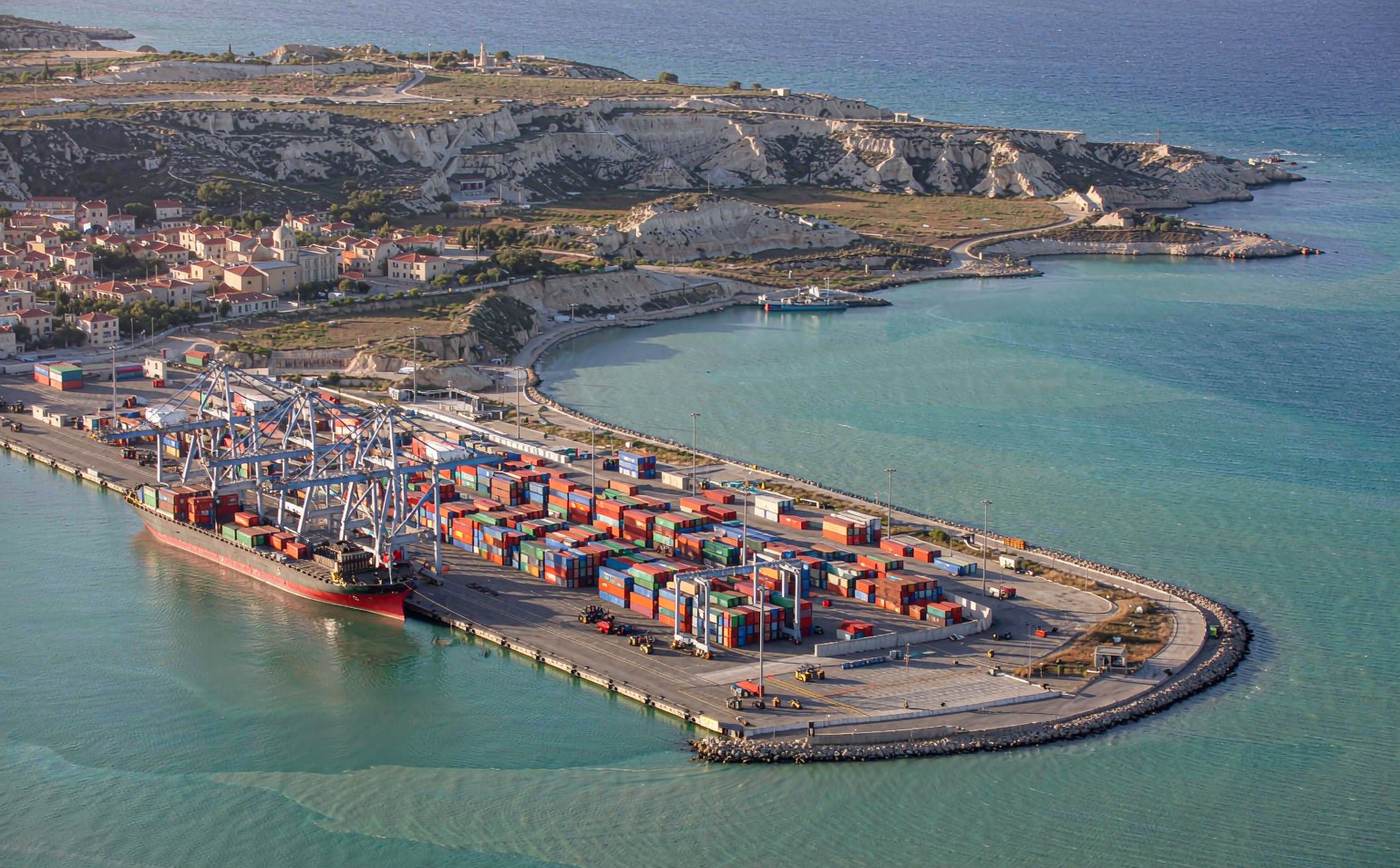
Malta inverts most of the assumptions a first-time importer brings to a small market. Around half a million people live here, but the Malta Freeport at Marsaxlokk is one of the Mediterranean's largest container transhipment hubs — and that is why a small island in the middle of the sea receives direct services from Asia that larger inland markets reach only by feeder. Being small is an advantage on this lane, not a penalty.
The second inversion is fiscal. Malta charges 18% VAT, lower than every member state except Luxembourg, and the rate has not moved since Malta joined the European Union in 2004. On top of that, the Freeport operates as a customs-free zone, so cargo can be held there without paying duty or VAT until it is released into the market. For an importer managing cash flow, that combination is hard to beat anywhere in the EU.
The third is the price of being an island, and it is the one that bites. There is no road or rail fallback. If a shipment misses its consolidation cut-off or its sailing, there is no alternative mode to switch to — the next sailing may be a week away. Malta rewards punctuality more than negotiation.
Everything else is standard European Union. Malta joined in 2004, adopted the euro in 2008 and entered Schengen in 2007. Duty comes from the TARIC commodity code, there is no EU–China free trade agreement, and the Malta Customs Department applies the Union Customs Code with electronic declarations and clearance typically measured in days rather than weeks.
This guide is written for buyers importing from China for the first time. It covers why the Freeport gives Malta direct sailings, how the free zone works and what it defers, the Gozo crossing, transit times by sea air and courier, trade terms in a market with no fallback mode, the documents and the two Maltese identifiers, the 18% rate and the duty rates behind it, recovering import VAT, product certificates, the absence of an e-invoicing mandate, using Malta as a base for Sicily and North Africa, and how to tell whether a forwarder genuinely books this lane.
Malta at a glance
- Containers land at the Malta Freeport, Marsaxlokk — a top Mediterranean transhipment hub with direct China services.
- The Freeport is a customs-free zone — duty and VAT suspended until goods are released into the market.
- VAT is 18%, the second lowest standard rate in the EU, unchanged since 2004. Reduced rates of 12%, 7% and 5%, plus a zero rate.
- Two identifiers: EORI for customs, and a VAT number of MT plus eight digits.
- Clearance typically 1–4 days, on electronic declarations through the Malta customs system.
- Gozo is a second island — the ferry crossing is a separate leg, and often a separate charge.
- No road or rail fallback — a missed sailing can cost a week.
- No e-invoicing mandate as of 2026, and no real-time reporting.
How your cargo moves: China to Malta
Eight steps from your supplier's door to yours. The last four are the ones shaped by local rules.
- Pickup from your supplierWe collect the goods anywhere in China and bring them to our consolidation point.
- Export clearanceChina customs declaration filed and released before the goods move to the port.
- Loading and departureContainer loaded, sealed and handed to the carrier at the Chinese port.
- Main carriageOcean, air or rail movement booked on the route agreed for your cargo.
- Arrival at the gatewayDischarge at the port or airport of entry, recorded on the carrier's manifest.
- Import clearanceCustoms declaration filed locally, with duty and tax assessed on the declared value.
- Customs releaseGoods released into free circulation once duty and tax are settled.
- Final deliveryOnward movement to your delivery address, warehouse or nominated depot.
Duty rates, VAT rates and clearance times move, and the figure that applies to your goods is the one set for your commodity code on the day of clearance. We check the current position against your code before your goods sail and confirm it to you in writing — ask for that check when you request a quote.
Why a small island gets direct sailings from China
Ordinarily, a market of Malta's size would be served by feeder: the container arrives on a large vessel at a major hub, is discharged, and continues on a smaller ship. That adds a handling, a dwell and a dependency on the feeder connection.
Malta avoids most of that, because the Freeport is itself a hub. Marsaxlokk Bay sits on the east–west Mediterranean trunk routes, and carriers call there to tranship cargo between services. The side effect for a Maltese importer is that the same services bringing transhipment boxes also carry local cargo, so Malta gets direct calls from Asia on the mainline rather than a connection.
For you that means fewer handlings between China and Malta, and a shorter and more predictable schedule than a small market would normally command. It does not mean every service is direct — transhipment still happens, and some cargo moves hub to hub — so ask whether your specific service calls Malta directly or tranships, and get the answer in writing.
One thing the hub status does not change: Malta is an EU port, the Union Customs Code applies in full, and the same documents, commodity codes and VAT obligations apply as they would in Rotterdam. The advantage is in the sailing, not in the paperwork.
The Freeport is a customs-free zone, and what that lets you do
This is the most useful and least understood feature of importing through Malta. Under the Malta Freeports Act, goods brought into the Freeport by a licensed company are treated as being outside Malta's customs territory for duty purposes.
In practice:
- Customs duty does not apply while the goods remain in the zone, and Malta's customs rules do not bite until release.
- Indirect taxes, including the 18% VAT, are suspended — so you do not fund duty and VAT at arrival, only when the goods actually enter the Maltese or wider EU market.
- Goods can be stored, consolidated, sorted, re-packed and labelled under customs control without triggering EU import charges.
- Re-export outside the EU is possible without the goods ever bearing EU duty, which is why the Freeport is used as a base for North Africa and the eastern Mediterranean.
The Malta Free Zones Act of 2019 extended the model, allowing further sites to be designated as free zones and an authority to administer them. The government's framing of Malta's position as a bridge between Europe and Africa is not marketing; it is what the legislation is built for.
How to actually use it: the regime runs through Freeport-licensed operators, so it is not automatic for any importer. Ask your broker whether a licensed operator or a customs warehousing arrangement is right for your cargo, and whether the duty and VAT deferral is worth the storage and handling for your volumes. For slow-moving or seasonal stock, it usually is.
Malta and Gozo: the second island adds a leg
Malta is not one island. Gozo is a separate island reached by the Gozo Channel ferry from Ċirkewwa to Mġarr, and a Gozo delivery address is a different job from a Maltese one.
A Gozo delivery adds a ferry crossing, handling at both ends, and waiting for the sailing schedule. Many quotations for "delivery in Malta" quietly exclude it. If the address is in Gozo — Victoria, Xlendi, Marsalforn, or anywhere else — say so at the quote stage, ask whether the crossing is included, and ask how many days it adds.
What is easy is the leg within Malta itself. The island is small, and no Maltese delivery address is a long road journey from the Freeport. The domestic haul is rarely the problem; the island access is.
Four ways onto the island, and the week a missed sailing costs
| Mode | Typical transit | Ends at | Fits when |
|---|---|---|---|
| Sea FCL | About 28–40 days port to port to Marsaxlokk, plus clearance and local delivery | Port to port, or door to door if arranged | Anything that justifies a container; most repeat importers |
| Sea LCL | The sea leg plus roughly 5–10 days for consolidation and deconsolidation | Container freight station at destination | First orders and a few cubic metres |
| Air freight | About 5–9 days, transiting a European hub | Malta International Airport, Luqa | Urgent, high value, or a line waiting on a part |
| Express courier | About 3–7 days door to door | Any Maltese address | Samples, documents, small parcels |
Two qualifications matter. First, Red Sea diversions added time and cost to Mediterranean services in 2026, so treat those sea figures as a planning range and confirm the current schedule for your service. Second, and more importantly, the range hides the real risk: Malta has no road or rail backup. On the continent, a missed connection can be recovered by truck or rail. Here, if the container misses the vessel or the LCL misses its consolidation window, the next option is the next sailing — and that can be a full extra week.
Plan cut-offs accordingly. Give your supplier a goods-ready date that leaves margin, and treat the consolidation cut-off as a hard deadline rather than a target.
Trade terms when there is no road or rail fallback
| Term | Who pays the main carriage | Who clears and pays duty and VAT | What it means here |
|---|---|---|---|
| EXW (Ex Works) | You, from the factory door | You | Most work; only sensible with an agent in China |
| FOB (Free On Board) | You | You, in Malta | Control of the routing, which matters when a missed sailing costs a week |
| CIF | Seller, to Marsaxlokk | You | Seller books the carrier; clearance, duty and VAT stay yours |
| DAP | Seller, to the named place | You | Delivery handled; check whether the Gozo crossing is in the named place |
| DDP | Seller | Seller or their agent | Least work — but ask who the importer of record is, because that decides whether the 18% comes back to you |
The island context sharpens one thing. On a continental lane, a delay can often be bought back with a different mode. On this one, the risk-transfer point in your trade term is doing more work, because there is no fallback behind it. If you are on FOB or CIF and the goods are late to the port, the cost is a week, not a day.
There is also a structural option worth knowing: because the Freeport is a free zone, arrival and clearance do not have to happen at the same time. Goods can land, sit in the zone without duty or VAT, and be released when your buyer is ready — which takes the pressure off the clearance side of a tight schedule.
And the scope question, as always separate from the term: port to port runs from load port to discharge port, airport to airport is the air equivalent, and door to door adds pickup and final delivery. Goodhope works port to port on ocean freight and airport to airport on air freight, and states which one you are buying.
The paperwork Malta Customs expects, and the two local numbers
The Malta Customs Department applies the Union Customs Code, declarations are filed electronically through the Maltese customs e-filing system, and clearance typically takes one to four days where the documents are in order. Local imports are a small fraction of everything moving through the Freeport, which means a well-prepared declaration tends to move quickly.
EORI
The EU customs identifier, needed by any business making a declaration and valid across all 27 member states once issued. Issued in Malta it carries an MT prefix. It is separate from a VAT number, and clearance cannot begin without it.
MT VAT number
A Maltese VAT number is MT followed by eight digits. It appears on invoices and is checked in VIES before an intra-EU business supply is zero-rated. Registration is normally quarterly filing, with the return due one month and fifteen days after the period end.
The document set:
- Commercial invoice — trade term, currency, commodity code, a specific product description rather than a generic phrase, quantities and values, country of origin, and the VAT numbers of both parties on a business sale.
- Packing list — piece count, weights, dimensions and packaging type.
- Bill of lading or air waybill.
- Certificate of origin where a preference is claimed — issued by the Malta Chamber of Commerce, Enterprise and Industry, with EUR.1 for EU FTA partners and the REX system for registered exporters.
- Conformity documentation — EU declaration of conformity and technical file for regulated products.
- Licences for restricted categories — medicines and pharmaceuticals, food and beverages, plants and seeds, and electronics containing lithium batteries.
Two practical notes. Wood packaging must meet ISPM-15 and carry the stamp. And if your goods arrive by post, MaltaPost handles postal customs clearance rather than the port process, typically in two to four days — worth knowing when you are sending samples.
VAT at 18 percent, the second lowest rate in the EU
Malta's standard VAT rate is 18%. Only Luxembourg, at 17%, is lower, and the gap to Hungary's 27% is more than nine points. The rate has been unchanged since Malta joined the European Union in 2004, which is unusual stability by European standards.
| Rate | Applies to |
|---|---|
| 18% standard | Everything not covered by a lower rate — electronics, clothing, alcohol, tobacco, cosmetics, most services |
| 12% | A narrower set of supplies defined in Maltese law |
| 7% | Hotel accommodation; use of sporting facilities |
| 5% | Medical equipment for disabled persons; books other than e-books; newspapers and periodicals; cultural events; minor repairs of shoes, leather goods, bicycles, clothing and household linens; domestic care services; domestic electricity |
| 0% | Food for human consumption other than catering; prescribed medicines; intra-community and international transport; and other defined items |
Import VAT is charged on the customs value — the CIF value plus the duty plus transport to the EU border — not on the invoice value alone. On a shipment with a CIF value of €10,000 attracting 5% duty, duty is €500 and VAT is 18% of the resulting customs value, a little under €1,900. Combined tax of roughly €2,400, or about 24% of CIF, before any excise.
Two thresholds no longer exist. The €22 import VAT relief ended in 2021, so VAT applies from the first euro. And the relief that exempted consignments at or below €150 from customs duty was removed EU-wide on 1 July 2026, replaced by a temporary flat charge of €3 per product category until 1 July 2028.
On registration: an established Maltese business has a turnover threshold of around €35,000, following a reform that consolidated the previously split goods and services figures into a single threshold from 1 January 2025. A business with no establishment in Malta gets no threshold at all and registers from its first taxable supply. Filing is normally quarterly, with the return and payment due one month and fifteen days after the period end — so a quarter ending 31 March is due by 15 May, a longer window than most member states allow. VAT grouping is available, and records are kept for six years.
One change to note if you are in the sector: from 1 October 2026 gambling supplies outside three approved categories move from exempt to taxable, and therefore to 18%. It is a change of scope, not of rate.
Duty rates by product category on a Maltese import
Duty comes from the commodity code in the TARIC database, and there is no EU–China free trade agreement, so goods of Chinese origin are assessed at MFN rates. The indicative ranges below are useful for a first pass, but the rate for your specific code is the one that counts.
| Category | Indicative duty | HS chapters |
|---|---|---|
| Electronics | 0–3.7% | 85 |
| Machinery | 0–4% | 84 |
| Books | 0% | 49 |
| Toys | 0–4.7% | 95 |
| Cosmetics | 2.5–6.5% | 33 |
| Clothing | 12% | 61–62 |
| Footwear | 8–17% | 64 |
| Food products | 0–36% | 01–24 |
Three things follow from the code beyond the rate: whether an anti-dumping duty applies to goods of Chinese origin in that category, whether a licence or certificate is required, and whether excise duty applies, which it does to alcohol, tobacco and energy products.
The authoritative check: the Malta Tax and Customs Administration publishes a tariff browser that returns the applicable import duty, excise duty and VAT for a queried code. For a borderline classification that is the way to settle it, rather than arguing from a category average.
Getting import VAT back in Malta, and whether you must pay it first
A business registered for Maltese VAT recovers import VAT as input tax on its periodic return, normally filed quarterly, with the return and payment due one month and fifteen days after the period end. For a registered importer the VAT is recovered rather than lost.
The open question is whether it has to be paid at clearance first. Published guidance conflicts: some sources state that Malta permits postponed accounting for import VAT with authorisation, while others state that the Maltese Value Added Tax Act contains no general postponed-accounting or deferment mechanism allowing import VAT to be declared on the return instead of paid at importation.
Similarly, guidance differs on whether a non-EU business must appoint a fiscal representative, with some sources saying it is mandatory and others saying it is not required for either EU or non-EU businesses. Check rather than assume.
For non-established businesses, refunds run through the EU mechanisms: Eighth Directive claims for EU-established businesses are due by 30 September of the year following the year the VAT was incurred, and Thirteenth Directive claims for non-EU businesses by 30 June. Minimum claim amounts apply, and reciprocity is formally required although in practice it is reported as not applied.
And the structural alternative, which sidesteps the whole question: hold the goods in the Freeport free zone, where both duty and VAT are suspended until release.
Certificates and labelling that have to be right in China
Product compliance is not freight, but it is the most common reason a shipment arrives and cannot be sold. Nearly all of it has to be arranged before the goods leave China.
| Product | What is needed | When |
|---|---|---|
| Electronics and electrical goods | CE marking with the EU declaration of conformity and technical file; EMC and low-voltage requirements; RoHS; WEEE registration in the market of sale | Before production finishes |
| Lithium batteries and battery goods | UN38.3 test summary, dangerous goods declaration, class 9 labelling and IMDG or IATA packaging; state-of-charge limits on air | Before booking — carriers need it to accept the cargo |
| Food contact materials | Declaration of compliance under the EU framework regulation, with migration testing where required | Before shipment |
| Toys, cosmetics, PPE, medical devices | Sector conformity assessment, notified body involvement where required, and a responsible person established in the EU | Well before shipment |
| Any goods on wood pallets | ISPM-15 heat treatment or fumigation with the stamp visible | Before loading |
One Maltese convenience: Maltese and English are both official languages, so product information and documentation in English are accepted. That removes the translation step that catches importers in markets with a single national language — but confirm the requirement for your specific product category, because sector rules sometimes specify more.
No e-invoicing mandate, and what Malta actually requires
If you are importing into several European markets, Malta will be the easiest of them on invoicing. As of 2026 Malta has no business-to-business or business-to-consumer e-invoicing mandate, and no real-time reporting or fiscalisation obligation. That is a marked contrast with Greece's myDATA, Croatia's Fiscalization 2.0 or Slovenia's monthly VAT ledgers.
What the rules actually say:
- Electronic invoicing is permitted and treated the same as paper, provided authenticity, integrity and legibility are maintained, and subject to acceptance by the recipient.
- B2G only: under Directive 2014/55/EU all Maltese public bodies must be able to receive and process e-invoices complying with the European standard EN 16931. The government uses the Peppol network, with a contracted Peppol service provider serving departments, entities, regional authorities and local councils. Suppliers are not currently legally required to send e-invoices to Maltese public bodies.
- Invoices may be issued in Maltese or English, and may be expressed in any currency provided the tax payable is stated in euro.
- VAT in the Digital Age: mandatory e-invoicing for cross-border B2B transactions is expected across the EU in 2030, so this is a jurisdiction to monitor rather than one with an active mandate today.
The invoicing mechanics that do apply are ordinary ones: a tax invoice carries the supplier's and customer's names and VAT numbers, dates, a sequential number, description, and the VAT rate and amount, issued by the fifteenth day of the month following the chargeable event or the date payment is received, whichever is earlier. Send a complete commercial invoice with the shipment regardless — it is the document customs values the goods on and the document your buyer accounts with.
A private buyer and a Maltese company with an MT number
| Private individual | Registered Maltese company | |
|---|---|---|
| Identifiers | None required for a genuine personal import; commercial quantities change the treatment | EORI, plus a VAT number in the form MT plus eight digits |
| Duty and VAT | Paid at clearance at whatever rate applies | Paid at clearance, or deferred if the goods are held in the free zone |
| Recovery | None — 18% is a real cost | Recovered as input tax on the quarterly return |
| Registration threshold | Not applicable | Around €35,000 for established businesses; none for non-established businesses |
| Filing | Not applicable | Quarterly, due one month and fifteen days after the period end; records kept six years |
The line is drawn by substance. An individual importing commercial quantities for resale is running a business and will be treated as one. For a genuine personal purchase, the paperwork is lighter and the 18% is simply a cost — and on a lane where the VAT rate is already the second lowest in the EU, that cost is smaller here than almost anywhere else in Europe.
Using Malta as a base for Sicily and North Africa
Malta sits roughly ninety kilometres south of Sicily, in the middle of the Mediterranean, and the Freeport is built around that position. It is described domestically as a bridge between Europe and Africa, and the legislation backs the claim.
What that means operationally:
- Non-EU goods can be brought into the Freeport, stored and re-exported without bearing EU customs duty or VAT, provided they never enter the customs territory.
- Storage, consolidation, sorting, re-packing and labelling can all happen under customs control inside the zone.
- Road-and-ferry connections link Malta to Sicily, giving a route onward into southern Italy and the European mainland.
- North African and eastern Mediterranean markets are served by short sea legs from the same hub.
The commercial question to model: if your real market is southern Italy, Tunisia or Libya, compare landing in Malta and distributing from the free zone against discharging directly at a mainland port. Depending on your duty rate and how much stock you need to hold, the deferral alone can justify the extra leg.
Finding a supplier when the market is half a million people
A small market shapes the order pattern before it shapes the freight. Volumes are modest, so most first orders move as LCL, and consolidation windows matter more than they would on a high-frequency lane.
Finding suppliers online through B2B marketplaces is how most first orders happen — fast and broad, but with the usual risks: you may be dealing with a trading company rather than the factory, specifications can drift between sample and production, and goods are often not ready when promised. The pattern that fits is: sample by courier, first real order by LCL, FCL once volumes justify it. Our pages on buying through Alibaba and 1688 and sourcing from 1688 cover the mechanics.
Meeting suppliers at trade fairs costs more and takes longer, but specifications are usually right first time and the relationship survives a dispute. The pattern is larger, less frequent orders.
The Maltese twist is the penalty for lateness. Every missed consolidation window costs a sailing, and a sailing costs a week — so when you set a goods-ready date with your supplier, build in more margin than you would for a continental destination. Consolidation in China matters for the same reason: several suppliers, one container, one set of documents, one clearance. See our pages on warehousing and consolidated shipments.
How to check a forwarder really books the Malta lane
These questions separate a forwarder who books Malta from one who has a rate sheet, and none of them require industry knowledge to ask.
- Which service, and does it call Malta directly or tranship? Get it in writing. The Freeport's hub status means direct calls exist, but not on every service.
- Which terminal? Containers go to the Freeport at Marsaxlokk, not Valletta's Grand Harbour. If they cannot say which, they are working from a rate sheet.
- Do they understand the free zone? Ask whether your cargo can be held in the Freeport with duty and VAT suspended, and what it costs.
- How many days of free time, and what happens if a sailing is missed? On this lane the second question is more important than the first.
- Is the Gozo crossing included? If your delivery address is in Gozo and they have not asked, they have not priced it.
- Are destination charges itemised? Terminal handling, documentation, ISPS, delivery order and the local leg listed separately.
- Who is the importer of record? It decides whether the 18% comes back to you.
- For air, what is the chargeable weight and which hub? There is no nonstop from China, so the transit airport and the connection matter more than the flight.
Warning signs are consistent: a quote with no service name, no answer on direct versus transhipment, silence on the free zone, no question about Gozo, and urgency without a sailing date attached.
From the factory to a Maltese address, in order
Confirm the commodity code and check the duty position
Before you order. Use the MTCA tariff browser for anything borderline, and check whether an anti-dumping measure applies to Chinese origin.
Agree the trade term and the goods-ready date
On this lane the date matters more than usual, because a late container waits for the next sailing.
Get the identifiers in place
EORI for the importer of record, and an MT VAT number if the business is Maltese-registered.
Book space and confirm direct or transhipment
Ask at the same time whether the cargo will be held in the Freeport free zone after arrival.
Collect from the factory, or consolidate
One supplier or several, checked against the packing list, loaded in China. Hit the consolidation cut-off.
China export clearance
Export declaration and release, with a final document check where a mismatch is still cheap to fix.
Main carriage
Sea around 28–40 days port to port to Marsaxlokk, or air into Luqa in about five to nine days via a European hub.
Arrival at the Freeport
Discharge at Marsaxlokk. Either the goods stay in the free zone with duty and VAT suspended, or they go straight to clearance.
Declaration, duty and VAT
Filed electronically through the Maltese customs system. Clearance typically one to four days where documents are in order.
Release and local delivery
Short road journey to any address in Malta — or, for Gozo, the ferry crossing from Ċirkewwa to Mġarr.
Records closed out
Invoice issued by the fifteenth day of the month following the supply or payment, and records kept for six years.
A first container into Marsaxlokk, and the sailing it missed
Three illustrative shipments, drawn from how this lane actually behaves. They are examples, not client records.
A 40ft high-cube of furniture from Foshan for a new hotel. The container arrived at Marsaxlokk six weeks before the fit-out was ready. Rather than clearing immediately and funding duty plus 18% VAT, the goods were held in the Freeport free zone and released in two tranches as the floors completed. The lesson is that on this lane arrival and clearance do not have to be the same event, and separating them is often worth the storage.
An LCL shipment of electronics from Shenzhen. The supplier finished a day after the consolidation cut-off. On a continental lane that would have cost a day or two; here it cost the sailing, and the next one was the better part of a week away. The lesson is to treat cut-offs as hard deadlines, and to set a goods-ready date with margin built in.
A sample consignment flown to a Gozo buyer. The air leg to Luqa was straightforward at about six days, transiting a European hub. What surprised the buyer was the last leg: Ċirkewwa to Mġarr by ferry, plus handling at both ends, and a charge that was not in the original "delivery in Malta" price. The lesson is to declare Gozo at the quote stage.
What Goodhope handles on the Maltese half of a shipment
We are the China end of this lane, and being clear about where that ends is part of the service.
- Ocean freight port to port — FCL and LCL into Marsaxlokk, with the service named and whether it calls directly stated in writing. See our FCL to Malta, LCL to Malta, Malta freight rates 2026 and Malta LCL rates 2026 pages.
- Air freight airport to airport — into Luqa via the European hubs that serve Malta, with chargeable weight worked out before you book.
- Consolidation in China — several suppliers, one container, one set of documents, one clearance. See our dangerous goods to Malta and non-DG chemicals to Malta pages for regulated categories.
- We ask about the Freeport — before the vessel sails, not after it arrives, because holding cargo in the free zone changes your cash flow.
- We ask about Gozo — if the address is on the second island, the crossing is priced rather than discovered.
- Plain answers on what we do not do — Maltese import clearance, VAT registration and accounting, and the Gozo crossing belong to the importer of record or their local representative. We coordinate with them and we do not pretend otherwise.
Why importers use Goodhope on this lane
Six things that are different about working with us on China to Malta shipments.
Price a shipment into Malta, crossing included
Send us the product and its commodity code if you have it, the carton count and total weight or volume, the supplier's city, and the delivery address — including Gozo, if that is where it is going. We will name the service and whether it calls Malta directly, tell you whether holding cargo in the Freeport is worth it for your volumes, and itemise the destination charges so the 18% is a number you have modelled.
Frequently asked questions
Which port does cargo from China arrive at in Malta?
Container cargo arrives at the Malta Freeport in Marsaxlokk Bay, in the south-east of the island. It is one of the Mediterranean's largest transhipment hubs, which is why Malta receives direct services from Asia that many larger inland markets only reach by feeder. Valletta's Grand Harbour handles general cargo, cruise and ferry traffic rather than deep-sea containers. Air cargo goes through Malta International Airport at Luqa, and postal items are cleared by MaltaPost. Confirm the terminal with your forwarder before you book, because the Freeport is a licensed free zone and the handling rules differ from an ordinary port.
How long does shipping from China to Malta take?
Sea freight is commonly quoted at around 28 to 40 days port to port to the Malta Freeport, with additional days for clearance and local delivery, and Red Sea diversions added time and cost to Mediterranean services in 2026. LCL adds roughly five to ten days for consolidation in China and deconsolidation at destination. Air freight into Luqa is about five to nine days, with no nonstop service from China, so cargo transits a European hub. Express courier is about three to seven days door to door. The important qualifier is that Malta has no road or rail fallback, so missing a sailing usually means waiting for the next one rather than switching mode.
Is Malta's 18% VAT really among the lowest in the EU?
Yes. Malta's standard VAT rate is 18%, lower than every EU member state except Luxembourg at 17%, and more than nine points below Hungary's 27%. The rate has been unchanged since Malta joined the European Union in 2004. Reduced rates of 7% and 5% apply to defined categories including hotel accommodation, sporting facilities, medical equipment for disabled persons, books other than e-books, newspapers and periodicals and domestic electricity, and a zero rate covers defined essentials including food for human consumption and prescribed medicines. Malta also has a further reduced rate of 12% on a narrower set of supplies. Confirm the rate for your product with the Malta Tax and Customs Administration or your broker.
What is the Malta Freeport free zone, and can I use it?
Under the Malta Freeports Act, goods brought into the Freeport by a licensed company are treated as being outside Malta's customs territory for duty purposes. While they remain in the zone they are exempt from customs duty, and indirect taxes including VAT are suspended, so you do not pay duty and 18% VAT at arrival. Those become payable only when the goods are released into the Maltese or wider EU market. Goods can be stored, consolidated, sorted and re-packed under customs control, and re-exported outside the EU without ever bearing EU duty. The regime runs through Freeport-licensed operators, so it is not automatic for any importer: ask your broker whether a licensed operator or a customs warehousing arrangement is the right route for your cargo.
Do I need an EORI number to import into Malta?
Yes. Malta is an EU member state and applies the Union Customs Code, so any business making a customs declaration needs an EORI number, and one issued by any member state is valid throughout the EU. Issued in Malta it carries an MT prefix. Alongside it, a Maltese VAT-registered business has a VAT number in the form MT followed by eight digits, which is what appears on invoices and is checked in VIES before an intra-EU business supply is zero-rated. Declarations are filed electronically through the Malta customs e-filing system and clearance typically takes one to four days.
Is there still a duty-free threshold for small parcels into Malta?
No. The EU relief that exempted consignments valued at 150 euro or less from customs duty was removed from 1 July 2026 and replaced with a temporary flat charge of three euro per product category on consignments at or below that value, running until 1 July 2028. Maltese VAT at 18% has never depended on a threshold and is charged from the first euro. Parcels arriving through MaltaPost are cleared by MaltaPost, typically in two to four days, and are assessed like any other import.
Can I recover Maltese import VAT, or do I have to pay it first?
A business registered for Maltese VAT recovers import VAT as input tax on its periodic return, which is normally quarterly, with the return and payment due one month and fifteen days after the end of the period. Whether the VAT has to be paid at clearance or can be accounted for through the return is the open question: published guidance conflicts, with some sources saying postponed accounting is available with authorisation and others saying the Maltese Value Added Tax Act contains no general postponed-accounting mechanism. Confirm the position with the Malta Tax and Customs Administration or your tax adviser before you rely on it. Alternatively, using the Freeport free zone defers both duty and VAT until the goods are released into the market.
Does Malta require electronic invoicing?
No, not yet. As of 2026 Malta has no business-to-business or business-to-consumer e-invoicing mandate and no real-time reporting or fiscalisation obligation. Electronic invoicing is permitted and treated the same as paper, provided authenticity, integrity and legibility are maintained and the recipient accepts it. The only obligation is the EU-wide one for public procurement: Maltese public bodies must be able to receive EN 16931 compliant e-invoices, delivered over the Peppol network, but suppliers are not currently legally required to send them. Mandatory e-invoicing for cross-border B2B transactions is expected across the EU under the VAT in the Digital Age package in 2030. Invoices may be issued in Maltese or English.
Does it cost more to deliver to Gozo?
Usually yes, because Gozo is a separate island reached by the Gozo Channel ferry from Ċirkewwa to Mġarr. A Gozo delivery adds a ferry crossing, handling at both ends and waiting for the sailing, and many quotations quietly exclude it. If your delivery address is in Gozo, say so at the quote stage, ask whether the crossing is included, and ask how many days it adds. Within Malta itself the distances are short, so the domestic leg is rarely the problem; the island crossing is.
What does a Chinese freight forwarder handle on a Maltese shipment?
On the China side a forwarder collects goods from the factory or factories, consolidates them if needed, clears them for export, books space and issues the bill of lading or air waybill, and provides tracking. Goodhope works port to port on ocean freight and airport to airport on air freight, names the service and whether it calls Malta directly, and coordinates with your Maltese broker. Maltese import clearance, VAT registration and accounting, and the Gozo crossing belong to the importer of record or their local representative. Where the Freeport free zone is relevant, we will raise it before the vessel sails rather than after it arrives.