
Home / Shipping to Martinique / How to ship from China to Martinique
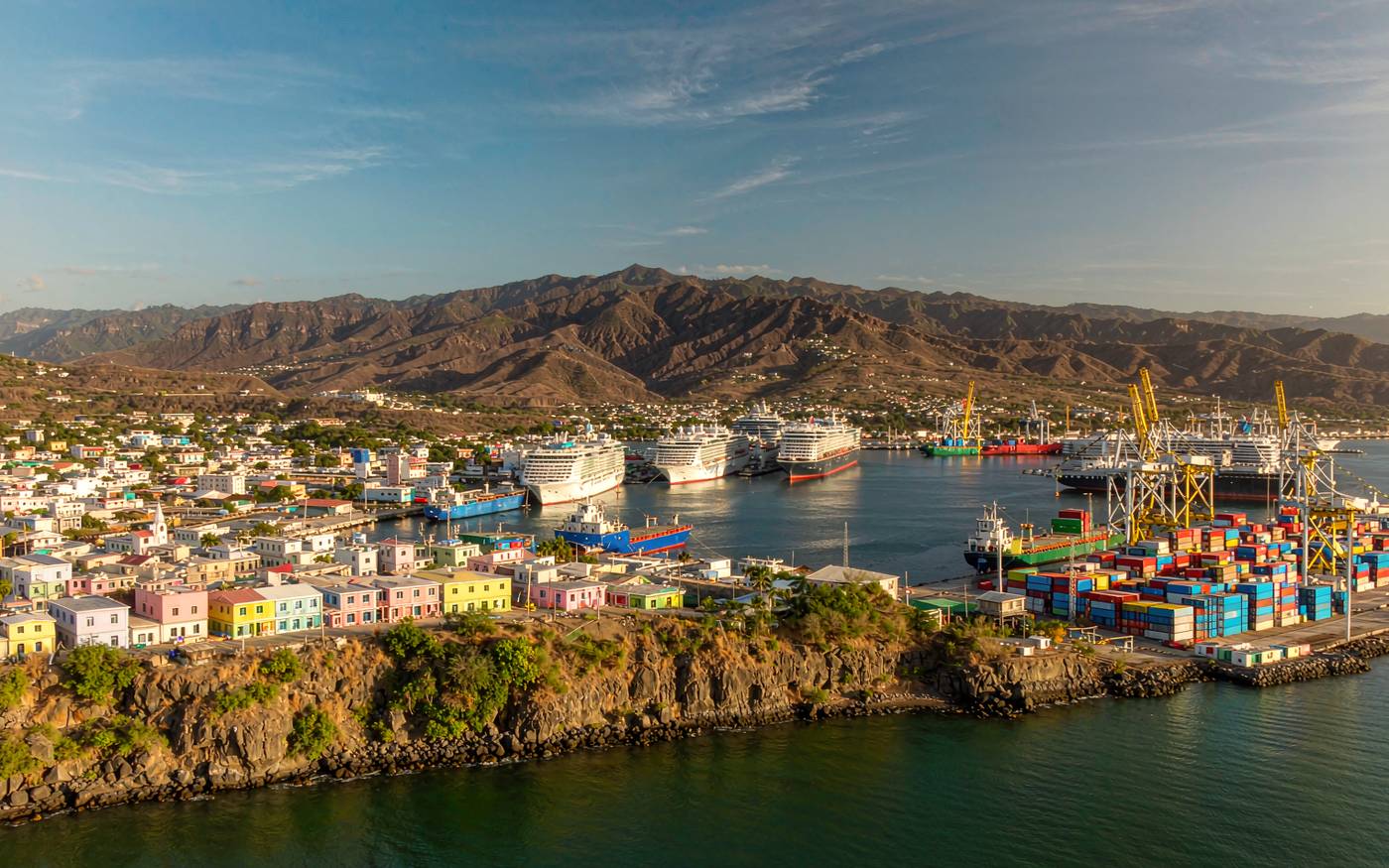
How to ship from China to Martinique
Martinique is a French overseas department in the eastern Caribbean with a population around 350,000. It is an outermost region of the European Union, so the customs entry is a European one, while the taxes at the border are the department's own.
Two numbers explain most of what surprises first-time shippers here. VAT runs at 8.5 per cent rather than the mainland 20 per cent, and there is a substantial list of categories exempted from it entirely. Yet forwarding costs, including dock dues, take roughly a third of the price of imported goods, which is why the shelf price on the island looks the way it does.
This page covers the port, the tax structure, the documents and the timings.
At a glance
Status: French overseas department and EU outermost region, inside the EU customs territory but outside the EU VAT area. Gateway: the Pointe des Grives container terminal at Fort-de-France; Martinique Aimé Césaire Airport, FDF, about 10 kilometres away. Taxes: TVA at 8.5 per cent standard, 2.1 per cent reduced, with exempt categories; dock dues and a regional addition on top. Currency: euro. Population: about 350,000.
How your cargo moves: China to Martinique
Eight steps from your supplier's door to yours. The last four are the ones shaped by local rules.
- Pickup from your supplierWe collect the goods anywhere in China and bring them to our consolidation point.
- Export clearanceChina customs declaration filed and released before the goods move to the port.
- Loading and departureContainer loaded, sealed and handed to the carrier at the Chinese port.
- Main carriageOcean, air or rail movement booked on the route agreed for your cargo.
- Arrival at the gatewayDischarge at the port or airport of entry, recorded on the carrier's manifest.
- Import clearanceCustoms declaration filed locally, with duty and tax assessed on the declared value.
- Customs releaseGoods released into free circulation once duty and tax are settled.
- Final deliveryOnward movement to your delivery address, warehouse or nominated depot.
Duty rates, VAT rates and clearance times move, and the figure that applies to your goods is the one set for your commodity code on the day of clearance. We check the current position against your code before your goods sail and confirm it to you in writing — ask for that check when you request a quote.
A French department in the Caribbean with a VAT rate of its own
Martinique is part of France and part of the European Union's customs territory. The Union Customs Code applies, the tariff is TARIC, and goods released here are in free circulation in the EU.
Tax is a different matter. The department is outside the EU VAT area and outside the EU excise area, and it levies its own much lower rates together with the local dock dues. The European Commission's own description draws exactly this line: EU territory yes, EU VAT rules no, EU excise rules no.
The result is a destination that behaves like a third country for tax purposes while behaving like an EU port for customs ones. Plan for both.
VAT at 8.5 per cent, and the categories that are exempt from it
The standard VAT rate in Martinique is 8.5 per cent, with a reduced rate of 2.1 per cent for certain foodstuffs and medical items and a super-reduced 1.05 per cent for specific press and live-performance categories. Exports are zero rated.
There is also a meaningful exemption list. Under the cost-of-living agreement concluded with the French state, VAT has been removed for a large number of product categories covering several thousand food references, while dock dues were abolished for a separate group of food categories. The local assembly has offset part of that by raising dock dues elsewhere.
That is the reason a blanket 8.5 per cent is also wrong. Some goods carry no VAT at all, and some carry a higher dock dues rate than before. Check your HS code rather than assuming.
Fort-de-France and the Pointe des Grives container terminal
The port of Fort-de-France is managed by the Grand Port Maritime de la Martinique and sits in a sheltered bay on the Caribbean coast, with about 2.7 kilometres of quay across more than 30 hectares. It is the island's commercial gateway.
The container business is handled at the Pointe des Grives terminal: roughly 16 hectares, a 460 metre quay with about 14 metres of draught, three post-panamax gantries and a fleet of shuttle carriers. Reported throughput is around 150,000 TEU a year.
Solid and liquid bulk and Ro-Ro traffic are worked at Pointe des Carrières, while cruise calls use the town quays. Name the right terminal on your instructions, because the two sites are not interchangeable.
Dock dues, forwarding costs and why the shelf price looks the way it does
France's competition authority has measured the structure of import prices here, and the numbers are worth knowing. Forwarding costs account for roughly 33 per cent of the price of goods imported by distributors, up from about 28 per cent a few years earlier. Within that, logistics and port activity is the largest component at about 12.8 per cent, shipping about 10.9 per cent and dock dues about 9.6 per cent.
That is why a cheap ocean freight rate does not translate into a cheap landed price here. The local components are large and they do not move with your negotiation in China.
It is also why the authority has recommended that dock dues rates be made simpler and more predictable, and abolished where no locally produced equivalent exists. If you are quoting a long-term supply arrangement, ask what the current schedule says for your code rather than assuming last year's rate.
Dock dues reach goods sent from France too
This is the point most exporters get wrong. Goods moving from mainland France or another EU member state to Martinique are an intra-EU movement for customs purposes, so no customs duty arises. Dock dues are not customs duty, and they apply to goods entering the department regardless of origin.
Published guidance puts many dock dues rates between 7 and 15 per cent, with a regional addition commonly at 1.5 or 2.5 per cent, and specific products sitting well outside that range. As an illustration used in removals guidance, new furniture has been assessed at 8.5 per cent VAT plus 15 per cent dock dues plus a 2.5 per cent addition.
Do not tell a buyer that European origin means no local tax. It does not, and getting it wrong at quotation stage is expensive.
Air freight to Aime Cesaire and the Paris connection
Martinique Aimé Césaire International Airport, code FDF, is roughly 10 kilometres from the port and handles the island's air traffic, with the main links running to mainland France.
Air cargo capacity therefore follows the passenger network, and the Paris connection is the one that matters. For time-critical parts, electronics, medical supplies and samples it works well; for heavy cargo it does not.
Confirm the aircraft type and the piece dimensions before you commit. A pallet that flies out of Guangzhou without difficulty may not fit the aircraft that lands at FDF.
French-language inventories and the documents customs insists on
The standard set applies: commercial invoice with HS codes and a precise description, packing list, bill of lading or air waybill, and any permit or certificate your goods require. French is the working language of the administration.
Removals and personal-effects guidance is emphatic on one point that also affects commercial cargo: inventories must be in French, dated, valued and signed. English-language inventories are not accepted, and original bills of lading are expected rather than express releases in some procedures.
Wood packaging must meet ISPM 15. Controlled categories include firearms and ammunition, which need authorisation from the prefecture, alcohol and tobacco, which carry excise and dock dues, and plant and food products, which face phytosanitary control.
CARICOM, and the regional question behind it
Martinique's local authority signed an agreement in February 2025 to move toward joining CARICOM, the Caribbean Community and Common Market. It is an early step toward deeper regional integration rather than an immediate change to customs procedure.
For a shipper the interest is prospective. If regional integration progresses, sourcing patterns and routing options in the eastern Caribbean may broaden, which would matter for anyone using Martinique as a base for onward distribution.
Nothing changes in your documentation today. Treat it as context, not as a routing plan.
Packing for the tropics and the reefer capacity at the port
The climate is hot and humid year-round, with a wet season that overlaps the hurricane months. Use barrier packaging and desiccant for moisture-sensitive goods, and specify corrosion protection on exposed metal.
The port handles chilled and frozen cargo, and a large share of what arrives is food and consumer goods, so reefer capability exists. If your goods need temperature control, say so at booking rather than on arrival.
Pack for handling in the open. Containers stand on the quay, and cartons that would survive a covered warehouse will not survive a fortnight of tropical sun and rain.
How long it takes, and which hub to route through
Sea freight from a Chinese port to Fort-de-France typically runs 35 to 50 days including transshipment, most often through a European or Caribbean hub. Air freight is commonly 7 to 12 days door to airport.
Around 80 per cent of the goods arriving here come from mainland France, so the services that exist are shaped around that trade rather than around Asia. Choose a transshipment point that connects into those services frequently.
Then plan for the port component. With forwarding costs at roughly a third of the import price, the cheapest ocean rate is rarely the cheapest landed one.
Why importers use Goodhope on this lane
Six things that are different about working with us on China to Martinique shipments.
Field notes shipping into Martinique
Five shipments bought in China and delivered into Martinique, told end to end — where the order came from, how it moved, where it nearly went wrong, and how it finished. Client names are withheld at their request; the situations and the handling are what we deal with on this lane.
The rate · first container · Shenzhen to Fort-de-France
The purchase. A buyer new to importing worked his landed cost on a European VAT rate he had used elsewhere.
The move. Full container with the local rate applied rather than a mainland one.
Where it nearly went wrong. Being inside the customs union and outside the VAT area means the local rate applies, and it is well below what importers expect from Europe. Getting it wrong upward is almost as damaging as getting it wrong downward, because your quote stops being competitive.
How it finished. We applied the local rate. His quotes became competitive without him changing the goods.
Exempt categories · quoting · Ningbo to Martinique
The purchase. A first-time buyer assumed the local rate applied to every line on his invoice.
The move. Consolidated sea freight with exempt lines identified before quoting.
Where it nearly went wrong. There are exempt categories with their own list. Assuming one rate across the whole invoice overstates the cost on lines that carry none, and quoting high loses the order without protecting you.
How it finished. We checked each line. Two were exempt and he won the order on the corrected price.
Dock dues · shelf price · Guangzhou to Martinique
The purchase. A buyer priced for a European mainland destination and could not explain his shelf price.
The move. Consolidated sea freight with dock dues and the regional addition included in the landed cost.
Where it nearly went wrong. Dock dues and a regional addition apply here on top of the import tax. They are part of why retail prices look the way they do, and leaving them out of the landed cost is leaving money on the table rather than saving it.
How it finished. He builds them in now. His shelf prices have been right on every shipment.
Ten kilometres · air fallback · Yiwu to Martinique
The purchase. A buyer with an urgent order assumed the only option was the next sailing.
The move. Air freight into the main airport, less than a quarter of an hour from the port.
Where it nearly went wrong. The airport sits close to the port here, which makes the air fallback more usable than on most Caribbean islands. Knowing that in advance is knowing you have an option when the sailing does not suit.
How it finished. He uses air for top-up orders now rather than waiting a month.
Small market · consolidation · Shanghai to Martinique
The purchase. A buyer concluded the lane was unviable after being quoted a full container rate.
The move. Consolidated LCL sharing space with other cargo bound for the same terminal.
Where it nearly went wrong. This is a market of roughly three hundred and fifty thousand people. Most profitable shipments into it are consolidated, and treating that as a compromise rather than as the normal mode is what makes the lane look expensive.
How it finished. He consolidates on a regular cycle now. The lane turned profitable for him.
Why importers use Goodhope on this lane
Six things that are different about working with us on China to Martinique shipments.
Have the local levy rate in writing first
Send us the HS code and the cargo details, and we will confirm the VAT treatment, the dock dues band and the regional addition, what Fort-de-France will charge for handling, and whether your consignment needs a permit before it leaves China.
Get a quote Talk to usRelated pages
Frequently asked questions
Is Martinique in the EU for customs purposes?
Yes. It is an outermost region inside the EU customs territory, so the Union Customs Code and TARIC apply and goods released here are in EU free circulation. It is outside the EU VAT area and outside the EU excise area.
What is the VAT rate?
8.5 per cent standard, with 2.1 per cent reduced for certain foodstuffs and medical items and 1.05 per cent super-reduced for specific press and performance categories. A substantial list of food categories has been exempted entirely under the cost-of-living agreement.
Do dock dues apply to goods from mainland France?
Yes. Goods from mainland France are an intra-EU movement so no customs duty arises, but dock dues apply to goods entering the department regardless of origin.
Which terminal handles containers?
Pointe des Grives at Fort-de-France: about 16 hectares, a 460 metre quay, roughly 14 metres draught and three post-panamax gantries. Bulk and Ro-Ro cargo is worked at Pointe des Carrières.
Why is the landed price so high?
Forwarding costs account for roughly 33 per cent of the price of imported goods, up from about 28 per cent a few years earlier. Logistics and port activity is the largest part at about 12.8 per cent, shipping about 10.9 per cent and dock dues about 9.6 per cent.
Do documents have to be in French?
Yes. Inventories must be in French, dated, valued and signed, and English-language inventories are not accepted. Original bills of lading are expected in some procedures rather than express releases.
What goods are controlled?
Firearms and ammunition need authorisation from the prefecture, alcohol and tobacco carry excise and dock dues, and plant material and foodstuffs face phytosanitary control. Wood packaging must meet ISPM 15.
Can I ship air freight?
Yes, through Martinique Aimé Césaire International Airport, FDF, about 10 kilometres from the port. Capacity follows the passenger network and the Paris link, so confirm aircraft type and piece dimensions before promising a date.
Is reefer handling available?
Yes. The port handles chilled and frozen cargo and a large share of imports are food and consumer goods. Declare temperature requirements at booking rather than on arrival.
How long does shipping take from China?
Sea freight including transshipment is typically 35 to 50 days; air freight is commonly 7 to 12 days door to airport. Choose a hub that connects frequently into the services that serve the island.