
Home / Shipping to Mauritania / How to Ship from China to Mauritania
How to Ship from China to Mauritania
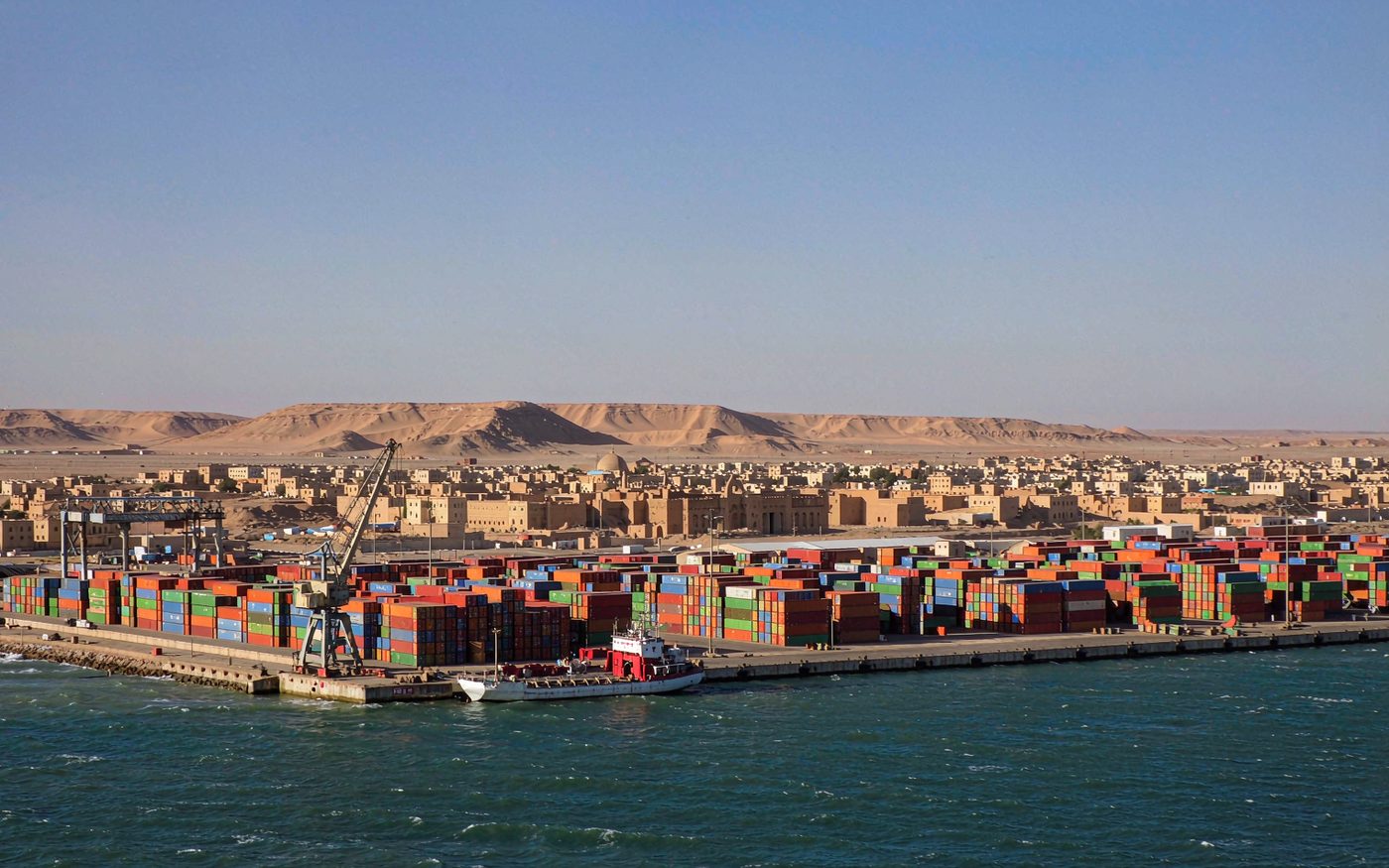
Mauritania is a desert country on the Atlantic with two working ports: Nouakchott, the capital's Port de l'Amitié, which handles most commercial cargo, and Nouadhibou to the north, which serves the fishing and iron ore industries.
It is not a member of the West African common external tariff — it applies its own schedule — and it has a mandatory cargo tracking note and a pre-shipment inspection regime. Both are arranged before the vessel arrives, and both are the reason first shipments here stall.
At a glance
Main ports: Nouakchott (Port de l'Amitié) and Nouadhibou. Certificate required: ECTN / BSC, validated before the vessel arrives. System: ASYCUDA++, with the DUA (Document Unique Administratif) declaration. Pre-shipment inspection by a contracted inspection company, with a clean report needed for clearance. Import duty: commonly quoted 0 to 20 per cent of CIF value by HS code. VAT: commonly quoted at 16 per cent on CIF plus duty — published figures vary between 15, 16 and 18 per cent]. Documentation in Arabic or French. Alcohol and pork products are prohibited.
How your cargo moves: China to Mauritania
Eight steps from your supplier's door to yours. The last four are the ones shaped by local rules.
- Pickup from your supplierWe collect the goods anywhere in China and bring them to our consolidation point.
- Export clearanceChina customs declaration filed and released before the goods move to the port.
- Loading and departureContainer loaded, sealed and handed to the carrier at the Chinese port.
- Main carriageOcean, air or rail movement booked on the route agreed for your cargo.
- Arrival at the gatewayDischarge at the port or airport of entry, recorded on the carrier's manifest.
- Import clearanceCustoms declaration filed locally, with duty and tax assessed on the declared value.
- Customs releaseGoods released into free circulation once duty and tax are settled.
- Final deliveryOnward movement to your delivery address, warehouse or nominated depot.
Duty rates, VAT rates and clearance times move, and the figure that applies to your goods is the one set for your commodity code on the day of clearance. We check the current position against your code before your goods sail and confirm it to you in writing — ask for that check when you request a quote.
Nouakchott and Nouadhibou sit at opposite ends of the country
Nouakchott is the commercial gateway. Its Port de l'Amitié handles the bulk of containerised imports, and capacity there has been improving though it remains limited by regional standards.
Nouadhibou, roughly 480 km to the north, exists largely for two industries: fishing and iron ore. If your cargo is for either, or for a buyer based there, it may be the right discharge port — but confirm that your carrier calls there.
Inland, road infrastructure is poor outside the main cities, so an inland leg to anywhere off the Nouakchott–Nouadhibou axis needs planning and pricing rather than assumption.
The DUA declaration and how ASYCUDA processes it
Imports are declared on the Document Unique Administratif, lodged through the ASYCUDA system, normally by a licensed broker on the importer's behalf. The declaration carries the commercial documents and the inspection report, and the assessment follows from the HS code and the declared value.
Published guidance puts electronic submission a few days ahead of arrival and the paper file within a day of it, with document review taking a few working days and physical inspection applied to a minority of shipments. Confirm the current timing with your broker rather than planning to the published figures.
A customs broker is required for commercial imports. Appoint one before the vessel sails and send the documents ahead, because the clock on storage starts when the ship berths, not when your file is ready.
The tracking note validated while the ship is at sea
An Electronic Cargo Tracking Note, also written BSC, is legally required for ocean freight shipments into Mauritania and has to be validated before the vessel arrives. It is arranged by your forwarder at origin, normally as soon as the bill of lading is issued.
This is not a document you can obtain at destination. A shipment that arrives without a validated tracking note faces fines and the risk of the cargo being held, and neither is cheap relative to the certificate.
Confirm with your forwarder that the tracking note is included in the quote and that they apply for it as soon as the bill of lading exists. It is the single most common preventable delay on this route.
The certificate you must hold before the boat sails
Mauritania operates a pre-shipment inspection regime carried out by a contracted inspection company before the goods ship. The inspection covers quantity, quality and price, and passing it produces the clean report that forms part of the clearance file.
Like the tracking note, this happens at the China end. Book it in advance — published guidance suggests around ten working days before shipment — rather than discovering the requirement after the goods are packed.
Product certification sits alongside: conformity documentation for electronics, safety documentation in French for industrial machinery, and composition reports for textiles.
Band by band: customs duty plus the VAT above it
Import duty is assessed on the CIF value by HS code, with published figures commonly quoting a range of roughly 0 to 20 per cent, though some sources put the top of the range higher. Capital goods and industrial machinery tend to benefit from lower rates while consumer goods sit higher.
VAT is charged on the CIF value plus duty. Be careful here: published figures vary, with 15, 16 and 18 per cent all appearing in current material. Treat 16 per cent as the working assumption and confirm the current rate with your broker before you commit to a landed cost.
Excise applies to tobacco, alcohol and luxury items where they are permitted at all. On a shipment where duty and VAT together account for a large share of landed cost beyond the product price, knowing your HS code in advance is the difference between a quote and a guess.
What is prohibited outright, and what needs a permit
Alcohol is strictly prohibited and pork products are banned, along with narcotics, weapons and ammunition, explosives and flammable materials, counterfeit goods and counterfeit currency. These are not permit categories — they do not come in.
Restricted categories need permits or authorisations: pharmaceuticals and medical devices need a health ministry import authorisation; telecommunications equipment needs type approval from the regulator; food products need to meet halal requirements; food, plants and seeds need health and phytosanitary certificates; electronics with lithium batteries need declarations.
Second-hand machinery is scrutinised, with declarations of year of manufacture, hours of use and technical condition expected, and older equipment sometimes refused entry. Renewable energy equipment has attracted additional quality oversight, with technical approval needed in advance.
Documents in Arabic or French, and why it matters
Mauritanian customs accepts documentation in Arabic or French, and both are in everyday use. English documents are not accepted as they stand, so translation belongs in your preparation timeline.
It matters beyond courtesy. The description in Arabic or French is what the officer classifying your goods reads, and a loose translation can shift an item into a different tariff band. Pharmaceutical labelling, for example, is expected in Arabic.
The standard documents are the commercial invoice, the packing list, the bill of lading or air waybill, the certificate of origin, the tracking note and the inspection report, plus any permit. Certificate of origin is normally issued by the Chinese chamber of commerce.
Individuals and registered Mauritanian firms
Commercial imports need an import licence or authorisation from the Ministry of Commerce for regulated categories, and they are cleared by a licensed broker. The importer should be registered and identifiable to the administration.
Private individuals can import personal effects, and the same document set applies. As elsewhere, anything that looks commercial in volume will be treated as commercial.
The fishing and mining sectors have their own import provisions, so if your buyer is in one of them, ask whether a sector-specific arrangement applies before you assume the standard route.
Splitting the work between China and Nouakchott
In China your forwarder books space, arranges collection and export clearance, issues the bill of lading, applies for the ECTN as soon as the bill of lading exists, and schedules pre-shipment inspection.
At Nouakchott the broker files the DUA through ASYCUDA, arranges any inspection, settles the assessment and obtains release. The importer arranges collection and inland delivery, including the run north to Nouadhibou if that is where the goods are going.
What Nouakchott expects from you is consistency: the same consignee, values and counts across the invoice, packing list and bill of lading, in Arabic or French, with the tracking note and the inspection report attached.
Three consignments into Mauritania
Building materials, full container, for a Nouakchott developer. Cement, steel and fittings, discharged at the Port de l'Amitié, cleared on a DUA with the ECTN and inspection report attached. Duty and VAT on the CIF value.
Fishing industry equipment, container, for Nouadhibou. Discharged at the northern port if the carrier calls there, or trucked up from Nouakchott if not — roughly 480 km, priced as its own line.
Renewable energy equipment, for a solar project. Technical approval sought in advance, because this category has attracted additional quality oversight. Inspection booked early, since the equipment is high value and the inspection covers price as well as quantity.
Bonded warehousing and other options before you clear
Nouakchott has customs bonded warehousing, which allows goods to be held under customs control for a period before they are formally cleared. That is useful if you are consolidating, awaiting a buyer, or want to defer the duty and VAT payment.
It is also useful if your documents are not yet complete, since it keeps the goods out of the demurrage clock while the file is finished. Ask your broker whether it applies to your shipment.
Beyond that, the options are the usual ones: clear immediately, or move under a transit or temporary admission arrangement if the goods are not staying.
Timings, storage and the inland run to Nouadhibou
Put the pieces together: inspection booked before packing, the tracking note applied for as soon as the bill of lading exists, sea transit commonly quoted at several weeks from Chinese ports depending on service, and clearance of a few days when the file is clean.
Free time at Nouakchott is commonly quoted at five to seven days, after which daily per-container charges accrue, and the port sees seasonal congestion. Building a buffer of several days into the plan is normal.
If the final address is Nouadhibou, add the inland run and price it separately. Air freight to Nouakchott compresses the transit to days, and express courier covers parcels and documents door to door.
Why importers use Goodhope on this lane
Six things that are different about working with us on China to Mauritania shipments.
Nouakchott or Nouadhibou, and why it changes the quote
Tell us the goods and whether they are for Nouakchott or Nouadhibou. We will arrange the ECTN and pre-shipment inspection before the vessel sails, and quote the clearance and inland legs as one number.
Get a quote Talk to usRelated pages
Frequently asked questions
Which ports serve Mauritania?
Nouakchott, the Port de l'Amitié, handles most commercial containerised imports. Nouadhibou, roughly 480 km to the north, serves the fishing and iron ore industries. Confirm that your carrier calls there before planning around it.
Is a tracking note required?
Yes. An Electronic Cargo Tracking Note, also written BSC, is required for ocean freight into Mauritania and must be validated before the vessel arrives. Your forwarder applies at origin, normally as soon as the bill of lading is issued.
Do I need pre-shipment inspection?
Yes. A contracted inspection company carries out inspection before shipment, covering quantity, quality and price, and produces a clean report that forms part of the clearance file. Book it in advance of packing.
What is the DUA?
The Document Unique Administratif, the import declaration lodged through the ASYCUDA system, normally by a licensed broker. A broker is required for commercial imports.
What are the duty and VAT rates?
Duty is assessed on the CIF value by HS code, commonly quoted at roughly 0 to 20 per cent, with lower rates for capital goods and industrial machinery. VAT is charged on CIF plus duty; published figures vary between 15, 16 and 18 per cent, so confirm the current rate with your broker before committing.
What is prohibited?
Alcohol is strictly prohibited, as are pork products, narcotics, weapons and ammunition, explosives and flammable materials, and counterfeit goods and currency. These are not permit categories.
What needs a permit?
Pharmaceuticals and medical devices need health ministry authorisation, telecoms equipment needs type approval from the regulator, food needs to meet halal requirements, and food, plants and seeds need health and phytosanitary certificates. Second-hand machinery faces scrutiny over age and condition.
What language should documents be in?
Arabic or French. English documents are not accepted as they stand. Translation belongs in your preparation timeline, and pharmaceutical labelling in particular is expected in Arabic.
Can I import personally?
Personal effects yes, with the same document set. Anything commercial in volume will be treated as commercial. The fishing and mining sectors have their own import provisions, so ask whether one applies.
Is bonded warehousing available?
Yes at Nouakchott, allowing goods to be held under customs control for a period before formal clearance. It is useful for consolidation, for deferring duty and VAT, and for keeping goods off the demurrage clock while a file is completed.